
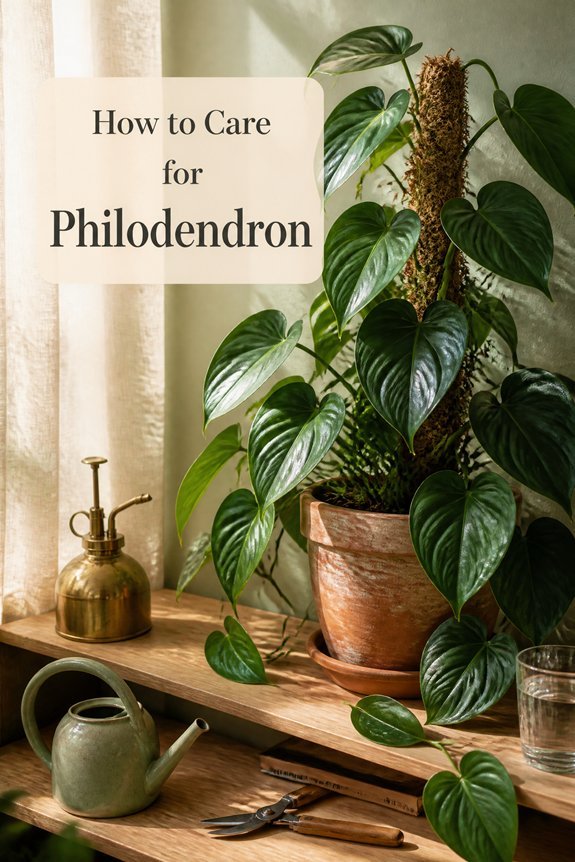
Finding the right spot for your philodendron makes all the difference. East or west-facing windows offer that sweet spot of bright, indirect light these plants crave.
Too much direct sun can scorch their leaves, while too little leaves them leggy and dull.
Tending to watering needs requires a gentle touch and some patience. Let the top inch of soil dry out between waterings, then soak thoroughly until water drains from the bottom. This rhythm mimics their natural tropical environment and keeps root rot at bay.
Warmth and humidity round out the essentials. These tropical natives do best when temperatures hover between 65 and 85 degrees Fahrenheit, with humidity levels somewhere in the 50 to 80 percent range.
A bathroom with decent light or a pebble tray can help bridge the gap in drier homes.
Beyond the basics, thoughtful pot selection, consistent fertilizing, and occasional pruning keep plants vigorous.
Watch for yellowing leaves, though. They usually whisper of overwatering, nutrient gaps, or light stress before problems escalate.
Light Requirements for Philodendrons
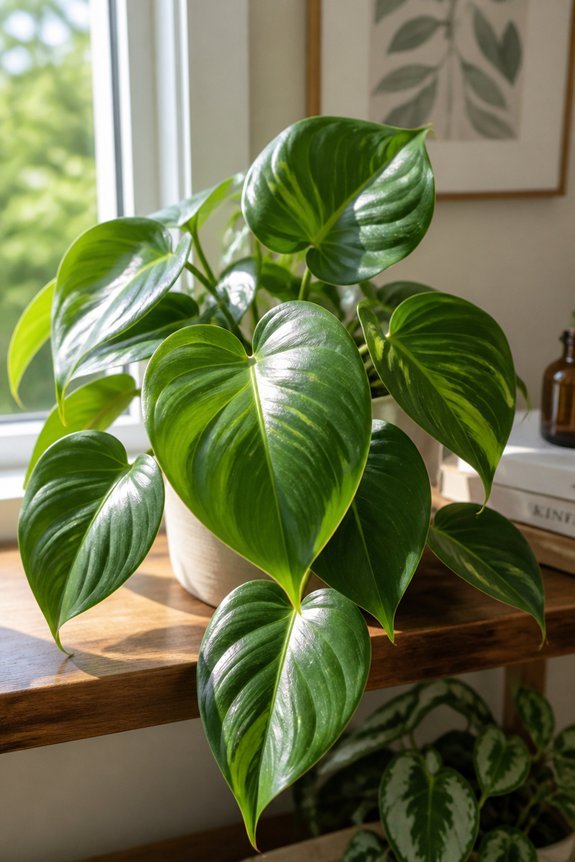
Philodendrons love bright, indirect light. They tolerate shady corners better than most houseplants. An east or west-facing window works perfectly. You get gentle morning or afternoon sun filtered through a sheer curtain.
Direct sunlight scorches leaves and leaves brown patches. North-facing windows keep them alive with minimal growth. Sparse foliage or stretched stems mean it needs more light. Faded leaves signal too much sun. Rotate the pot every two weeks for even growth.
Also read: Are Peperomia Easy to Care for
Watering and Soil Moisture: Finding the Right Balance
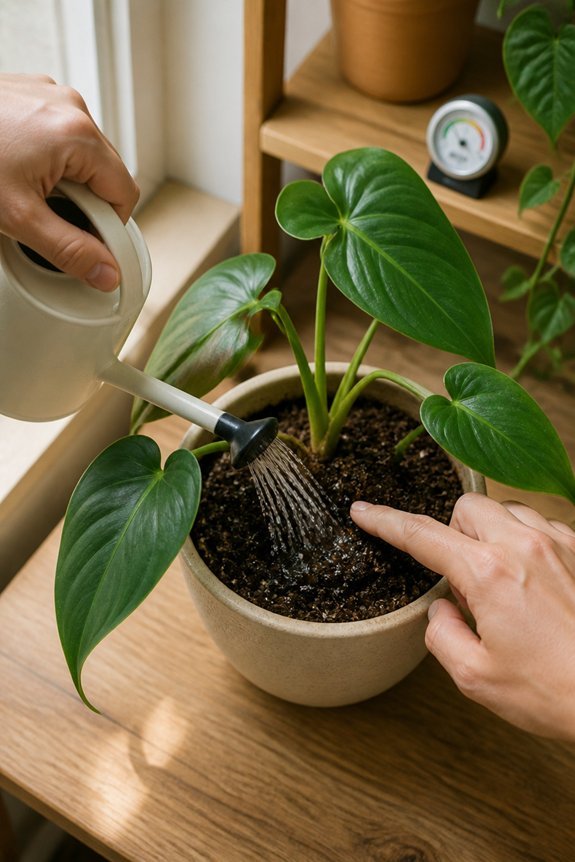
Finding the right watering rhythm takes a little practice. Too much water leads to root rot, while too little leaves your philodendron stressed and thirsty.
Let the top inch of soil dry out before watering again. Stick your finger into the soil to check. Well-draining soil makes all the difference here. A mix of peat moss, perlite, and bark keeps water moving instead of pooling around roots.
Your plant needs more water in spring and summer when it’s actively growing. Cut back during fall and winter. High humidity in your home? You can water less often. Always use pots with drainage holes so excess water has somewhere to go.
Keep Your Philodendron Warm and Humid
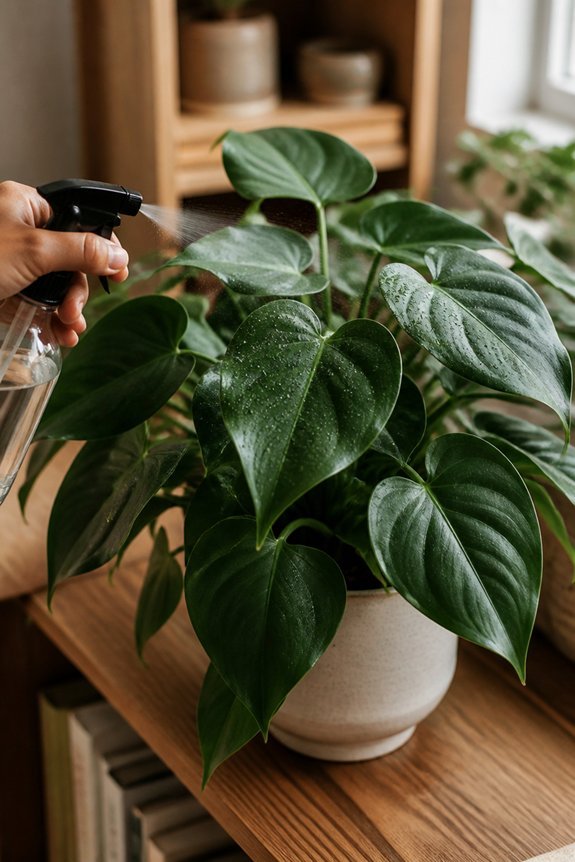
Philodendrons love warmth and humidity. Think tropical conditions, and you’re on the right track.
Your plant will be happiest between 65 and 85 degrees Fahrenheit. At night, don’t let temperatures drop below 60 degrees. Watch out for cold drafts from windows or AC units. These can harm leaves and slow down growth.
Humidity matters just as much. Aim for 50 to 80 percent. Most indoor spaces fall short, especially in winter.
You have options to fix this. Set your plant on a pebble tray with water. Mist the leaves now and then. Group plants together to create a little humidity zone. A humidifier nearby works great too.
Consider your bathroom or kitchen. These spots naturally hold more moisture. Just keep your philodendron away from heating vents and radiators. Dry heat spells trouble for these tropical natives.
Choosing the Right Pot and Soil for Philodendrons
Your pot choice sets the stage for happy roots. Always pick containers with drainage holes. Water needs somewhere to escape, or root rot sneaks in fast.
Terracotta, plastic, and ceramic all work well. Terracotta dries out quickest if you tend to overwater. Size matters more than you might think. Choose a pot just slightly bigger than the root ball. Extra soil means extra moisture sitting around.
—
For soil, think light and airy. Heavy mixes suffocate philodendron roots. Skip the garden soil entirely. It compacts too easily.
A simple blend works wonders. Mix peat moss or coco coir with perlite or orchid bark. Add some compost for nutrients. This combo drains well but holds enough moisture.
Watch for signals that it’s time to repot. Roots poking through drainage holes or slowed growth mean your plant wants more space. Every 12 to 18 months usually does the trick.
Fertilizing Your Philodendron
Your philodendron is settled in and ready to grow. Now it needs the right fuel to keep those leaves lush and vibrant.
Feed your plant every two to four weeks during spring and summer. This is when it’s growing fastest and hungriest. A balanced liquid fertilizer works best. Look for 10-10-10 or 20-20-20 on the label.
Slow down in fall and winter. Cut back to once every six to eight weeks. Growth naturally slows, so your plant won’t need as much.
Always dilute to half strength. Strong fertilizer burns roots. Water the soil first, then add nutrients. This protects your philodendron from damage.
Prefer natural options? Try fish emulsion or kelp extract. They work beautifully.
Watch your leaves closely. Yellowing or stunted growth means something’s off. Adjust your feeding schedule if you spot trouble.
Pruning and Training Your Philodendron
Pruning keeps your philodendron compact and full. It also removes any dead or yellowing leaves that drag down the whole look.
Spring and early summer are your best windows. That’s when the plant is actively growing and can bounce back quickly. Grab some clean, sharp scissors or pruning shears. Cut just above a node, that small bump where leaves pop out. Snip off the top of a stem, and you’ll encourage branching below. More branches mean a bushier, happier plant.
Training lets you guide where your philodendron goes. Stakes, moss poles, or trellises all work great. These plants naturally want to climb, so giving them support unlocks that vertical energy.
Attach stems gently with soft ties. Keep things loose, tight knots can damage the tissue underneath. Stick with regular pruning and training, and you’ll keep legginess at bay. Your plant keeps its shape, structure, and good looks all year long.
Fixing Yellow Leaves, Brown Tips, and Other Common Issues
Your philodendron speaks through its leaves. Yellowing usually means too much water or poor drainage. Check if the soil feels soggy. Brown tips? The air might be too dry, or salts have built up in the pot. Try using filtered water and boost the humidity.
Drooping stems often point to root rot or dim corners. Pale leaves need more light. Watch for tiny pests too. Spider mites and mealybugs leave spots and sticky residue. Wipe leaves clean and inspect often. Fix the cause, and your plant should bounce back within weeks.
Frequently Asked Questions
How Often Should I Repot My Philodendron, and What Size Pot Is Best?
Philodendrons require repotting every 12-18 months during the growing season. Select a pot 1-2 inches larger in diameter than the current one, ensuring adequate drainage holes to prevent root rot and promote healthy growth.
Can Philodendrons Grow in Water, or Do They Need Soil?
Like a ship steering through two routes to the same destination, philodendrons thrive in both water and soil. They develop water roots when propagated hydroponically, though soil cultivation typically produces stronger, more robust growth patterns.
Are Philodendrons Toxic to Pets and Children?
Philodendrons contain calcium oxalate crystals, making them toxic to both pets and children. Ingestion causes mouth irritation, drooling, and difficulty swallowing. Pet owners and parents should keep plants away from curious mouths.
How Do I Propagate Philodendrons From Cuttings Successfully?
One cuts below a node, one places in water, one waits for roots to emerge. Successful propagation requires selecting healthy stems, ensuring nodes remain submerged, and changing water every few days until roots develop sufficiently for soil transfer.
What Pests Commonly Attack Philodendrons, and How Do I Treat Infestations?
Common philodendron pests include spider mites, mealybugs, and scale insects. Treatment involves spraying affected plants with neem oil or insecticidal soap, isolating infested specimens, and removing pests manually with cotton swabs.
Conclusion
Philodendrons remain among the most popular houseplants, with over 489 recognized species. Proper care—bright indirect light, consistent watering, warm temperatures, and regular fertilizing—ensures healthy growth. Most owners succeed by monitoring soil moisture and humidity levels closely. Understanding these fundamental requirements allows plant keepers to maintain thriving philodendrons for years, making them reliable choices for indoor spaces.