
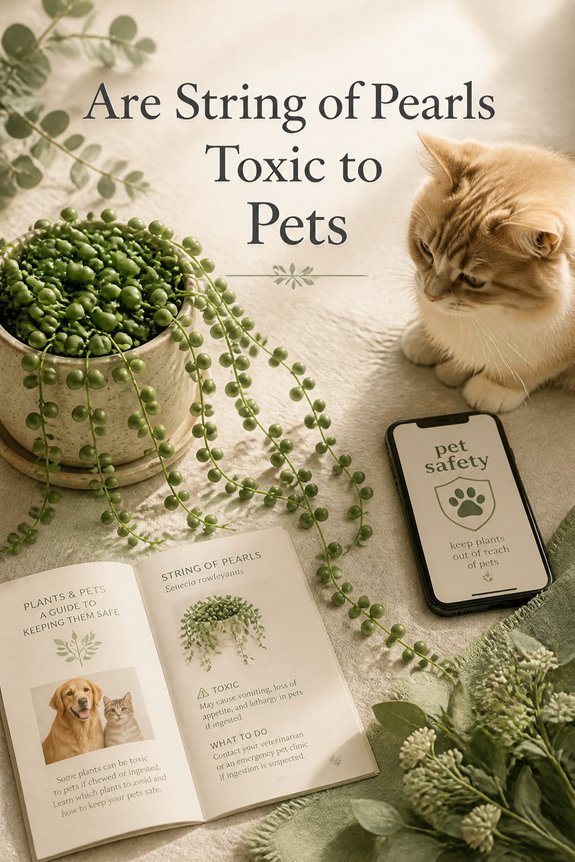
String of pearls plants pose a moderate concern for households with pets, though their toxicity is generally considered mild rather than severe.
Cats and small animals such as hamsters appear more vulnerable than dogs when plant material is consumed. Common symptoms include gastrointestinal distress, vomiting, and diarrhea that typically resolve without intensive treatment.
The curious chewing habits of cats make them particularly susceptible to accidental ingestion. These trailing succulents hang temptingly within reach, and their bead-like appearance may attract playful swatting and nibbling.
Smaller pets face heightened danger simply due to their reduced body mass relative to the amount consumed.
Dogs tend to show less interest in these plants, though individual behavior varies considerably.
Any pet experiencing prolonged symptoms after contact should receive veterinary attention promptly. Understanding which compounds trigger these reactions helps owners make informed decisions about plant placement in pet-friendly homes.
Is String of Pearls Toxic to Cats and Dogs?
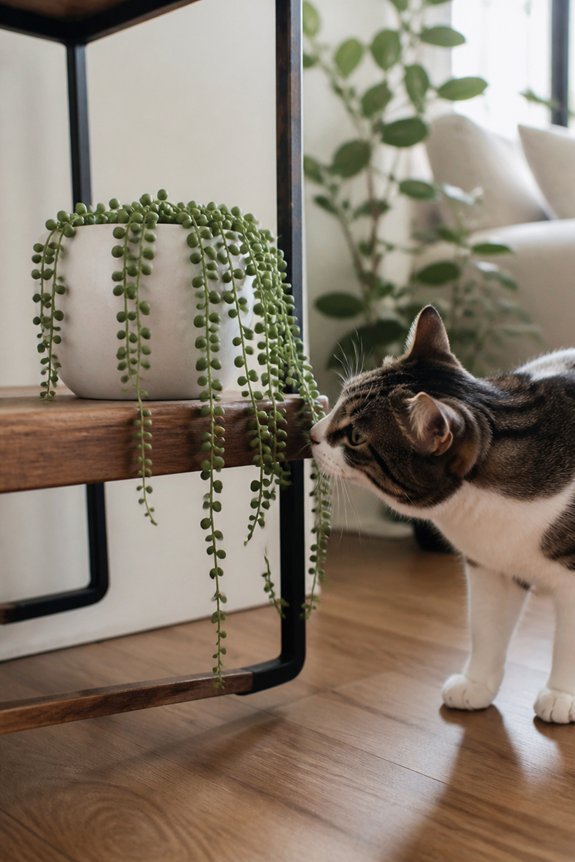
String of pearls plants pose minimal risk to your pets. They contain saponins that can upset stomachs if eaten in large amounts. Most dogs and cats experience only mild symptoms like vomiting or diarrhea.
Cats often notice these plants first. The dangling leaves look like toys to them. Dogs usually leave the plants alone unless they are bored or curious. Keep string of pearls on high shelves or behind closed doors. Watch your pet closely if you suspect they nibbled on it. Call your vet if symptoms last more than a day.
Also read: How to Care for Philodendron
Signs Your Pet Ate String of Pearls
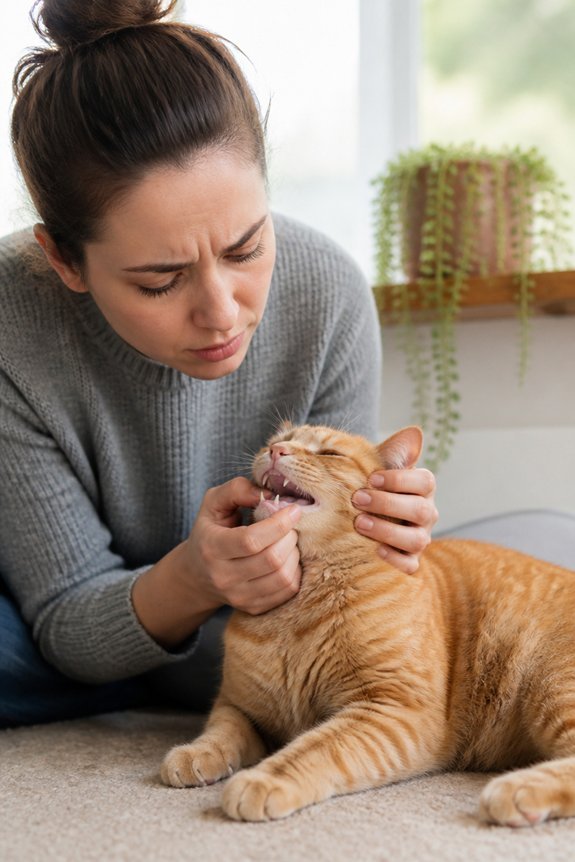
Watch your pet closely if you think they got into a string of pearls plant. The first signs usually show up fast. Vomiting and diarrhea are common within hours. These point to stomach trouble.
Look for other red flags too. Your pet might stop eating or seem unusually tired. They could act restless. Some pets avoid moving because their belly hurts. Drooling or trouble swallowing happens when the plant irritates the mouth. You might also notice wobbliness or shaking. Dehydration can set in, so check for dry gums or heavy panting. Sometimes constipation follows after the initial upset.
Call your vet right away if you spot these symptoms. Quick action leads to better recovery. Tell them exactly what your pet ate. This helps them choose the right treatment and keep a close eye on your furry friend.
What’s Actually Toxic in String of Pearls
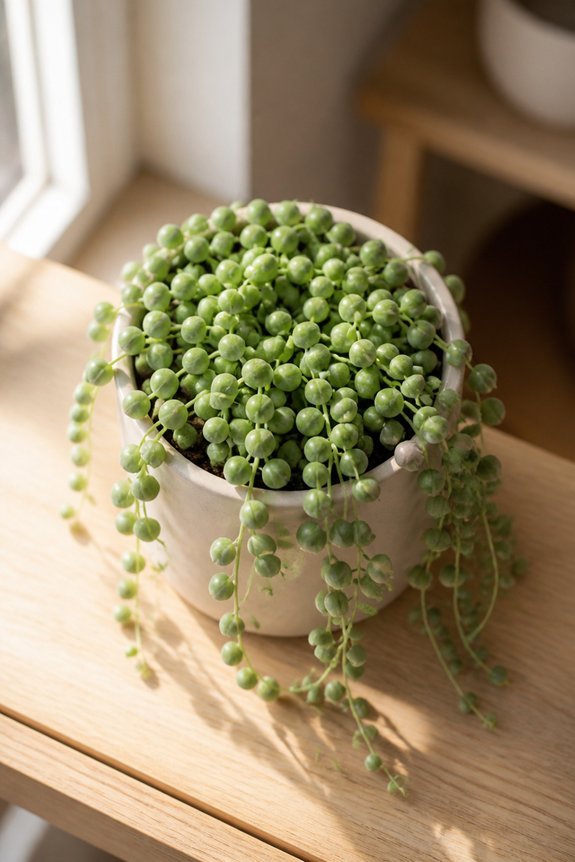
String of pearls plants hide a real danger in those cute, bead-like stems. They contain cardiac glycosides throughout every part. That means the stems, leaves, and pearls all pack the same toxic punch.
These compounds go straight to work if your pet takes a bite. They enter the bloodstream and disrupt normal heart function. At the same time, they irritate the stomach and intestines. Your pet could start vomiting or having diarrhea within hours. Abdominal pain usually follows quickly.
Size matters here. A small cat or dog faces much bigger risks than a large breed from the same nibble. Even a little exposure can spell trouble for tiny pets.
There’s another culprit too. Saponins live in this plant alongside the cardiac glycosides. They team up to worsen the gut irritation. The combined effect makes this plant more dangerous than it looks.
Good news isn’t part of this story. Pets don’t need to eat much before symptoms show up. A single curious bite can be enough.
Which Pets Are Most at Risk From String of Pearls?
Small pets are often the most vulnerable to string of pearls. Hamsters, guinea pigs, and rabbits nibble on greenery constantly. Their tiny bodies cannot handle even small amounts of toxin.
Cats and dogs react differently to this plant. Cats love batting at hanging vines. Small dogs suffer more from little bites than large breeds do. Birds that peck at leaves are also in danger. Even horses sometimes meet these succulents in pastures.
Herbivores and omnivores face bigger risks than meat-eaters. Young animals explore with their mouths. This habit makes accidents more likely.
When to Call Your Vet After Ingestion
Call your vet right away. Even if you only suspect your pet ate string of pearls, don’t wait for symptoms to appear.
Tell your vet how much your pet might have eaten, along with their weight, species, and when it happened. Early notice gives your vet time to plan ahead. Symptoms can take hours to show up, so acting fast matters.
Watch for vomiting that won’t stop, unusual tiredness, refusing food, or belly pain. These signs mean your pet needs urgent care. If 24 hours pass without any symptoms, keep watching anyway. Your vet may need X-rays to find where the plant material went. Bring a photo of the plant or any packaging if you have it.
Keeping Pets Safe Around String of Pearls
Prevention is your best tool here. Keep string of pearls where curious paws can’t reach. High shelves work well. So do hanging baskets or simply a room with a closed door.
Watch your pets closely when they’re outside. Gardens and patios can hide dangers too.
The safest route? Remove the plant completely. Still want to keep it? Set up barriers instead. Baby gates and sturdy plant stands do the job.
Make sure everyone in your home knows this plant is toxic. That way, no one accidentally leaves it within reach.
Store soil, fertilizer, and trimmings somewhere secure. Check your plant often for missing leaves or broken stems. These signs mean your pet may have gotten too close. Act fast if you spot them, and keep an eye out for symptoms.
Pet-Safe Succulents to Replace String of Pearls
String of pearls might look beautiful, but it can be dangerous for your pets. Finding safer replacements lets you keep your green thumb without the worry.
Haworthia fits nicely on any windowsill. Its pointed leaves stay compact and it won’t harm curious cats or dogs.
Echeveria brings color to your collection safely. It comes in soft pinks, blues, and purples that catch the eye.
Jade plants work too. They’re only mildly toxic and far less risky than string of pearls.
These all need bright indirect light and soil that drains well. Water them sparingly. They grow slowly, so you won’t spend much time on upkeep.
Pet-safe succulents keep their looks year-round. Your home stays stylish, and your animals stay safe.
Frequently Asked Questions
How Quickly Do Symptoms Appear After a Pet Ingests String of Pearls?
Symptoms typically appear within two to four hours after a pet ingests string of pearls. Gastrointestinal distress, including vomiting and diarrhea, manifests relatively quickly. Severity depends on the amount consumed and the animal’s size.
Can String of Pearls Toxicity Be Fatal to Pets Without Treatment?
A pet’s body weakens as toxins accumulate unchecked. While fatality remains rare, untreated string of pearls ingestion can cause severe dehydration, organ damage, and life-threatening complications in vulnerable animals.
Are Some Parts of String of Pearls More Toxic Than Others?
String of Pearls plants contain toxins throughout their structure, though the leaves and stems pose the primary concern. No specific part demonstrates markedly higher toxicity levels than others.
How Is String of Pearls Poisoning Treated by Veterinarians?
Veterinarians treat string of pearls poisoning through decontamination, including inducing vomiting or activated charcoal administration. Supportive care addresses gastrointestinal symptoms, while monitoring for complications guarantees proper recovery in affected pets.
Can Pets Develop Tolerance to String of Pearls With Repeated Exposure?
Pets are unlikely to develop a fondness for consuming this botanical specimen despite multiple encounters. Their bodies lack the metabolic adaptation mechanisms necessary to build immunity to the plant’s mildly irritating compounds, rendering each exposure equally problematic.
Conclusion
String of pearls plants require careful placement in homes with pets. While toxicity levels remain low, ingestion causes gastrointestinal issues in susceptible animals. Cats and small rodents face greater risk than larger dogs. Pet owners should keep plants elevated or enclosed, monitor behavior after accidental consumption, and contact veterinarians if symptoms develop. Alternative succulents provide safer decorative options for pet-friendly households.