
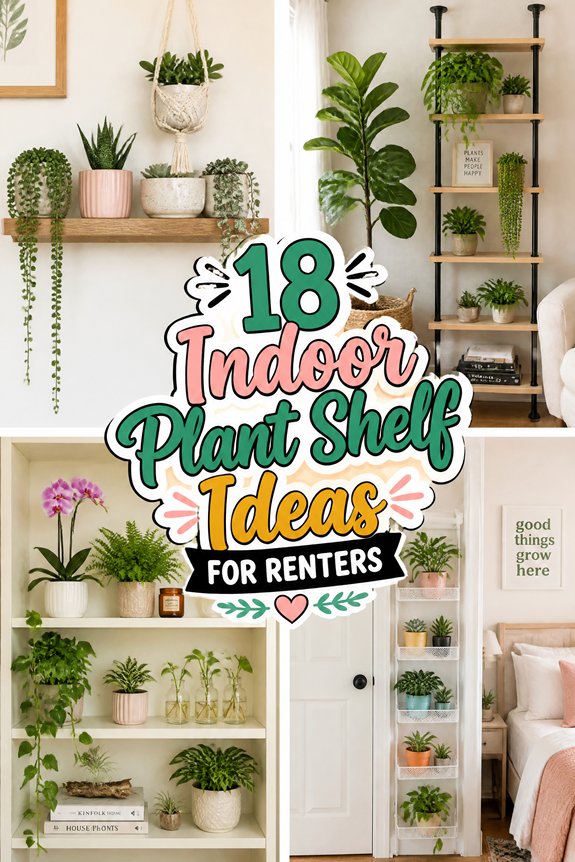
Most renters know the frustration of strict lease agreements. Drilling holes is usually forbidden, which leaves plant lovers searching for creative alternatives. Indoor plant shelves offer an elegant workaround that keeps landlords and greenery happy.
Floor space disappears quickly in compact apartments. Vertical solutions make it possible to build upward instead of outward, transforming empty corners into lush displays. Tension rods, adhesive hooks, and suction cups support impressive loads when installed with care.
Temporary shelving has evolved far beyond flimsy plastic units. Many options now combine solid wood and powder-coated metal to create sturdy, attractive homes for plants.
These setups look intentional while remaining completely removable on moving day.
Styling a shelf becomes much easier when nothing is anchored into drywall. Layering trailing pothos with upright snake plants adds instant dimension and visual interest.
This kind of flexibility helps renters feel truly at home without sacrificing a security deposit.
Start With Your Wall Type, Not the Shelf
Painted drywall, tile, and plaster each hold weight differently, which decides whether adhesive strips or a freestanding unit makes more sense for your space. The ideas below move from pressure-mounted and adhesive systems to fully freestanding options that touch nothing at all. Skim for the ones that suit your surfaces, then narrow by how much floor space you can spare.
Tension Rod Plant Shelves for Windows
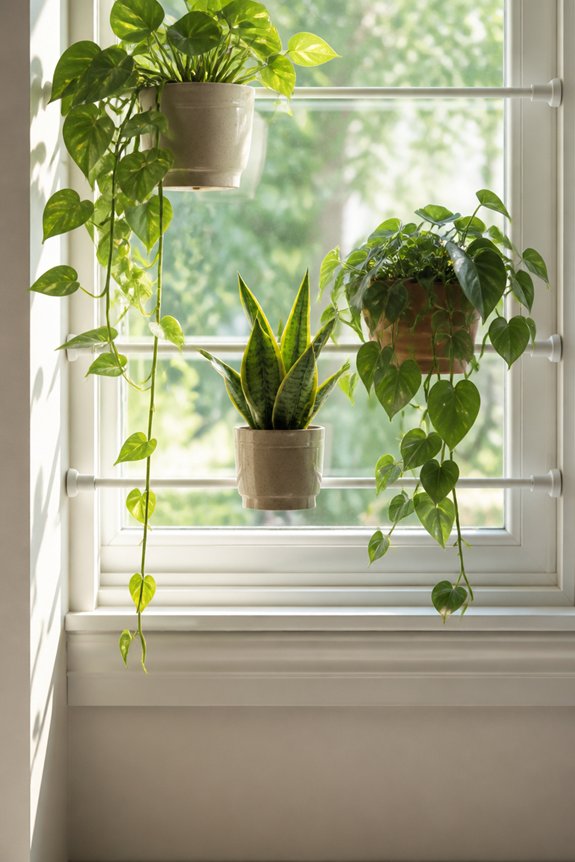
Because tension rods require no drilling or permanent hardware, they offer renters a simple way to create plant shelves within a window frame. A tension rod fits snugly between two sides of a window opening, held in place by spring pressure rather than screws or brackets. Small pots, such as succulents or herbs like basil and thyme, can hang from the rod using S-hooks or macrame slings.
Some renters stack two or three rods at different heights to display multiple plants without blocking sunlight. This method works best in windows with sturdy frames, since weak or uneven surfaces may not hold tension well. Adjustable rod lengths make it possible to fit various window sizes, offering flexibility for apartments with nonstandard dimensions.
Window Sill Extensions for Extra Plant Space
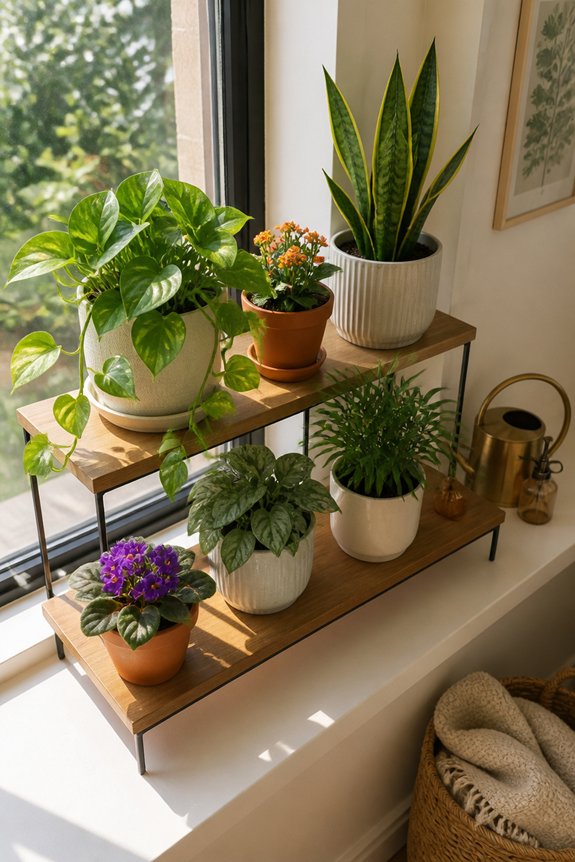
A window sill extension adds extra depth to a narrow sill, giving renters more surface area for pots without altering the window itself. These extensions typically rest on the existing sill, using brackets or weighted bases rather than screws or adhesives, which makes them fully removable. Materials range from wood boards to acrylic trays, with acrylic offering water resistance for plants that get frequent watering.
Renters often choose extensions in these ways: floating wood shelves cut to match the sill width, secured with tension clips; metal wire baskets that hook over the sill edge; or slim acrylic trays that add two to four inches of depth.
Weight limits should be checked before adding multiple pots, since some extensions support only light ceramic or plastic containers.
Suction Cup Plant Shelves for Glass and Tile
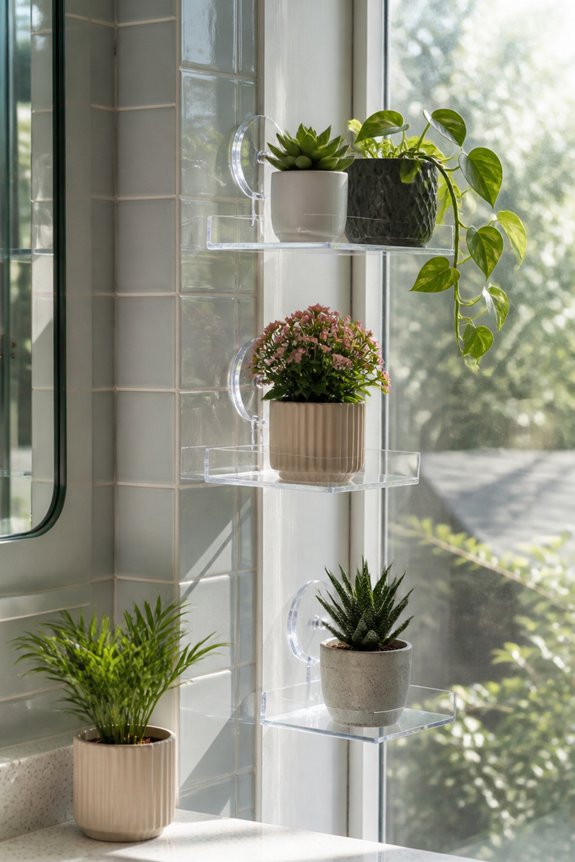
When smooth surfaces like windows, mirrors, or tiled backsplashes are available, suction cup shelves offer a mounting option that requires no drilling or adhesive residue. These shelves use a lever or twist mechanism to create a vacuum seal against glass or glazed tile, holding small platforms in place for lightweight plants. Weight limits typically range from one to five pounds, making them suitable for succulents, small pothos cuttings, or air plants rather than heavier ceramic pots.
Placement near shower tiles, kitchen windows, or glass room dividers allows greenery in spaces without walls to drill into. Suction strength can weaken over time, so periodic checks and reapplication are advised to prevent shelves from detaching unexpectedly and dropping plants.
No-Damage Floating Shelves With Adhesive Strips
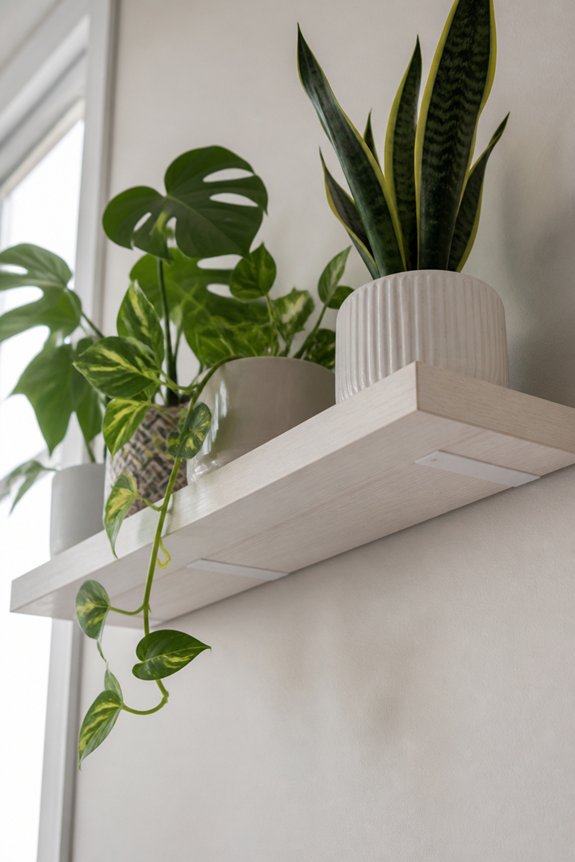
Several brands of heavy-duty adhesive strips now support enough weight to hold small floating shelves without any nails, screws, or wall anchors. Command Strips, VELCRO Heavy Duty Fasteners, and 3M Claw picture hangers all offer weight ratings suited to lightweight plant displays, typically between five and fifteen pounds per shelf. These strips work best on smooth, sealed surfaces like painted drywall, tile, or finished wood, and they should be applied following the manufacturer’s curing time before adding weight.
Renters should choose shelves made of lightweight materials, such as thin wood or plastic, to stay within adhesive limits. Removal usually involves stretching the strip downward to break the bond cleanly, leaving minimal residue on most painted walls.
Command Hook Hanging Shelves for Renters
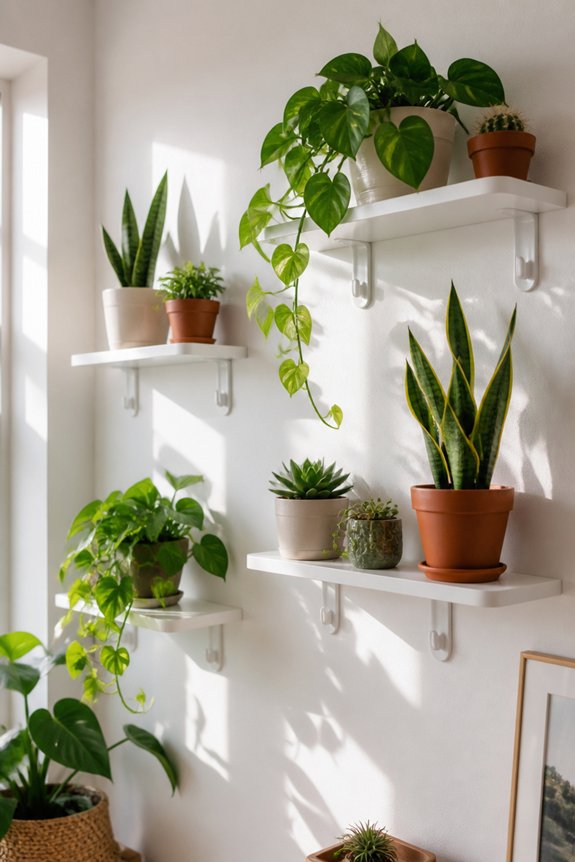
Command Hooks offer another option for renters who want hanging shelves without relying on flat adhesive strips alone. These hooks attach to walls or ceilings, holding small wooden boards, wire baskets, or macrame slings that support potted plants. Renters can choose weight-rated hooks, such as those designed for three or five pounds, matching capacity to the plant and container size. Multiple hooks arranged in a row allow for tiered arrangements, spacing shelves at different heights along a wall.
Removal typically leaves minimal residue when instructions are followed correctly, making this method suitable for lease agreements that restrict permanent fixtures. Common placements include windows, corners, and stairwells, where natural light supports plant growth. This system works well for lightweight plants like pothos, ferns, or succulents.
Macrame Plant Hangers for Damage-Free Display
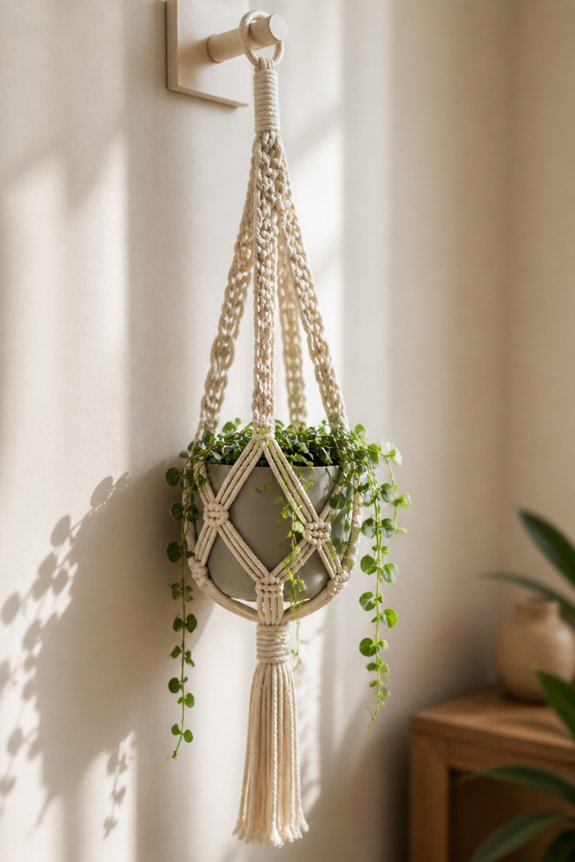
Because they require only a single ceiling hook or ceiling mount, macrame plant hangers provide a damage-free way to display trailing plants without shelving or brackets. Renters can install a hanger using an adhesive ceiling hook rated for the plant’s weight, avoiding drilled holes or wall anchors.
Pothos, string of pearls, and spider plants work well in hanging displays, as their trailing growth benefits from height and open air circulation. Hangers come in various lengths and knot patterns, allowing adjustment for ceiling height and pot size. Multiple hangers can be grouped at different lengths to create a layered look in a single corner or window area. Removing a hanger later leaves only a small hook mark, easily patched or left unnoticed.
Freestanding Ladder Shelves for Plant Lovers
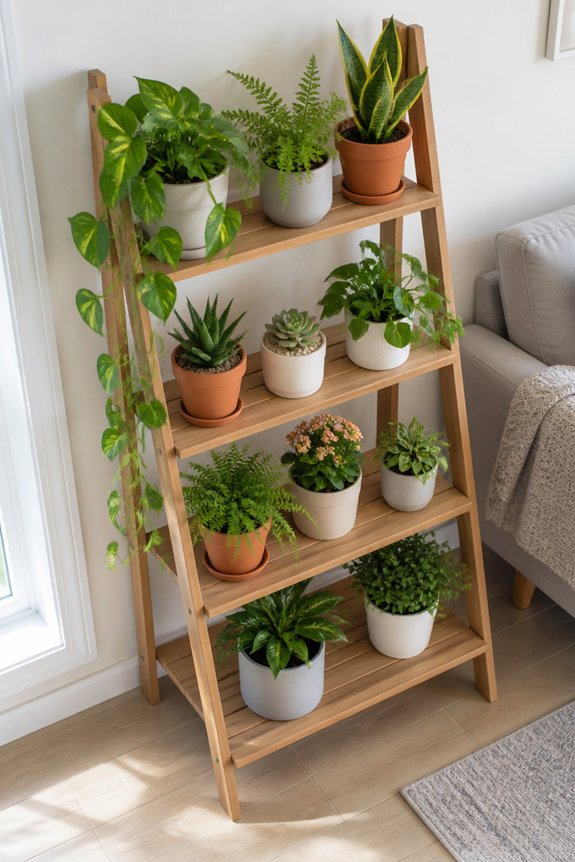
A ladder shelf leans against a wall, needing no mounting hardware, tools, or landlord approval to set up in any room. Its angled frame holds several tiers of open shelving, giving renters a way to display plants at varying heights without drilling. Wide steps near the bottom suit larger pots, such as fiddle leaf figs or pothos in floor planters, while narrower upper rungs work for succulents or trailing vines like string of hearts.
Wood ladder shelves fit rustic or farmhouse interiors, while metal or bamboo versions suit modern or coastal styles. Placement near windows allows plants on upper tiers to receive more light. Because the structure is freestanding, it can be moved between apartments or rearranged within a room as lighting needs change.
Wall-Leaning Ladder Shelves for Renters
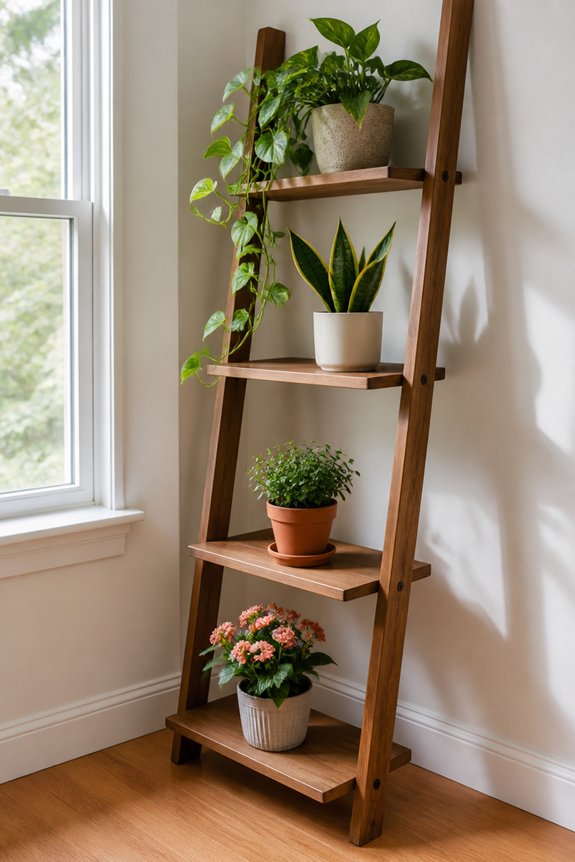
Several styles of wall-leaning ladder shelves offer renters a middle option between freestanding units and drilled shelving, since they rest against a wall but require a small anchor strap for stability. These shelves typically use a wall-hugging bracket or a rubber-tipped strap, which can be attached with removable adhesive hooks rather than screws. Renters often choose models made from bamboo, rattan, or lightweight metal, since these materials keep the structure stable without adding excessive weight.
Popular configurations include five-tier ladder shelves for trailing plants, wide-tier designs for larger pots, and narrow ladder shelves suited to small apartments or hallways. Placement near a window with indirect light works well, allowing pothos, philodendron, or ferns to receive consistent sunlight while remaining visually organized on each tier.
Tiered Plant Stands for Vertical Displays
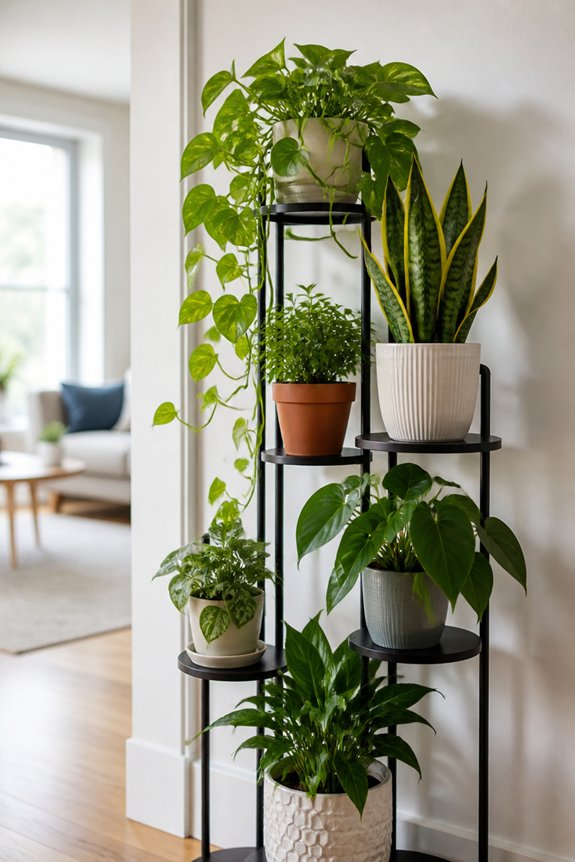
Verticality offers renters a practical solution for displaying multiple plants without requiring wall damage or permanent fixtures. Tiered plant stands, typically featuring three to five levels, allow multiple plants to occupy a small footprint while remaining fully freestanding.
Materials range from metal wire frames to wooden crates, each offering different weight capacities and aesthetic qualities. Rolling stands with caster wheels add mobility, letting renters shift plants toward sunlight throughout the day or move them entirely between rooms. Corner-designed stands maximize unused space, fitting into areas too narrow for standard shelving units.
Placement near windows benefits sun-loving species, while lower tiers can house shade-tolerant plants like pothos or ferns. Because these stands require no installation, they transfer easily between apartments during moves.
Cube Organizer Shelves for Plant Collections
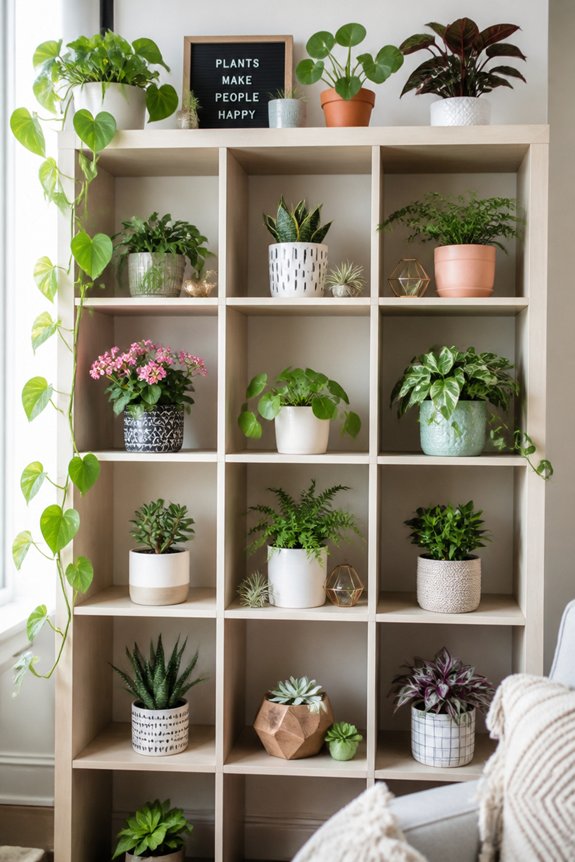
Cube organizer shelves provide renters with modular storage that doubles as a flexible plant display system, since individual cubes can be arranged, stacked, or rearranged without tools in many cases. These units, often made from cardboard, plastic, or laminate wood, are lightweight enough to move between rooms as light conditions change.
Renters can leave some cubes empty for open display and use others as enclosed storage for pots, fertilizer, or watering tools. Placing trailing plants like pothos or string of pearls on upper cubes allows vines to drape naturally over the edges. Because these shelves require no wall mounting, they leave no damage on rental walls.
Adding cube risers or small trays inside sections helps manage drainage and prevents water stains on shared flooring.
Corner Plant Shelves That Need No Drilling
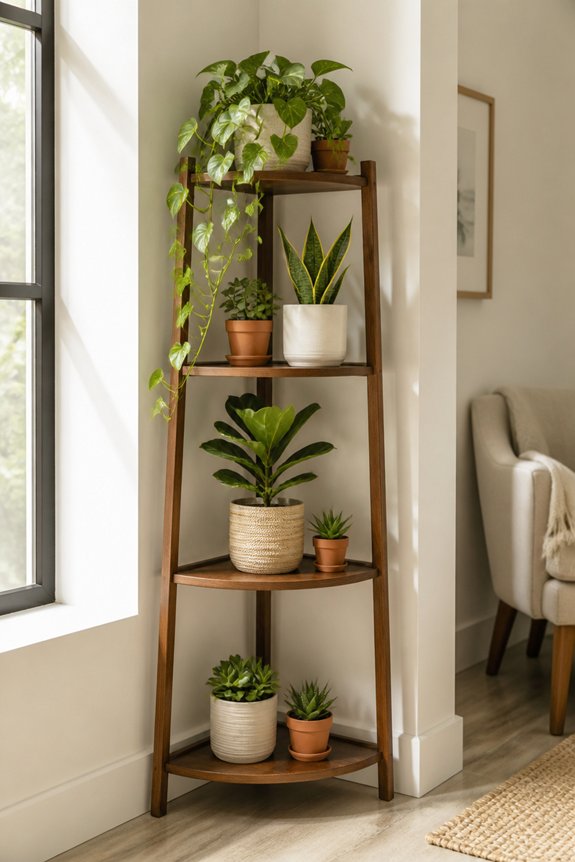
Corner spaces often go unused in rented apartments, yet tension-mounted or freestanding corner shelves can fill them without requiring drills or wall anchors. Tension rod shelving systems press between floor and ceiling, using friction to hold weight, and typically include adjustable shelves that fit into tight corners.
Freestanding corner units, similar to small bookcases, rest directly on the floor and require no installation at all, making them suitable for renters with strict lease terms. Ladder-style corner shelves also work well, leaning against the wall without hardware while offering multiple tiers for plants of varying sizes.
Weight capacity varies by model, so heavier ceramic pots should be placed on lower shelves. Bamboo, metal, and plastic versions are widely available, allowing renters to match existing decor while maximizing unused corner square footage.
Tension Pole Shelves for Endless Adjustability
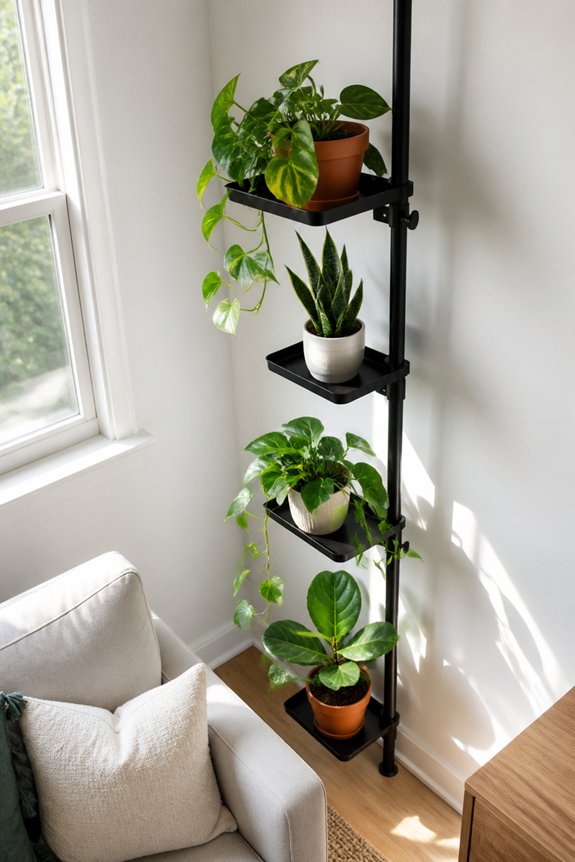
A single pole, extended between floor and ceiling with a tension mechanism, can hold multiple adjustable shelves at whatever height a renter chooses. No screws or brackets touch the wall, since the pole relies on pressure against ceiling and floor to stay upright. Shelves attach to the pole with clamps or brackets, and can be moved up, down, or removed entirely as plant collections grow.
This style works well in corners, next to windows, or beside furniture, since the footprint stays small. Wood and metal finishes are common, with round or square poles available depending on the look desired. Weight limits vary by product, so heavier ceramic pots should be balanced with lighter shelves.
Renters can reposition the entire unit without leaving marks, making it suitable for frequent moves.
Rolling Plant Cart Shelves for Flexible Placement
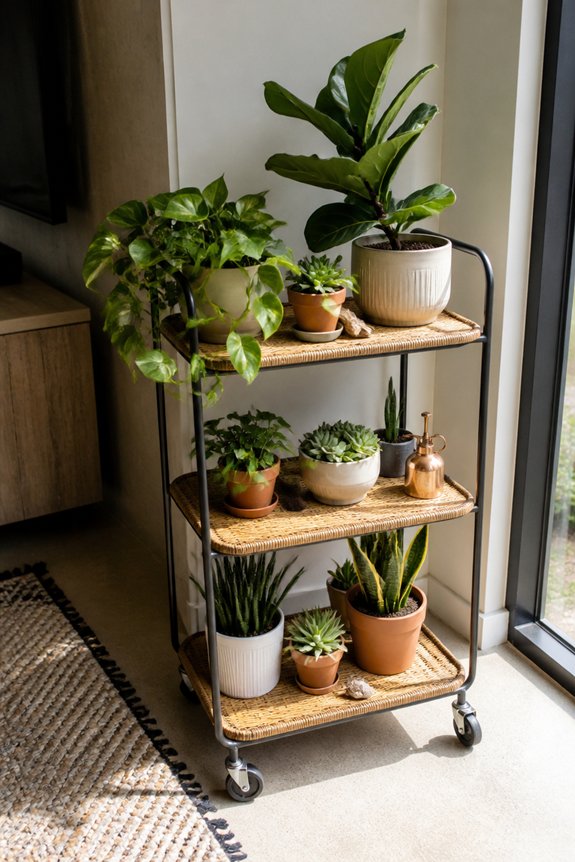
Wheeled carts with multiple tiers give renters a way to display plants without attaching anything to walls, floors, or ceilings. Bar carts, kitchen utility carts, and metal shelving units on casters can all serve as mobile plant stands.
Locking wheels keep the cart steady once it reaches a chosen spot, while free wheels allow quick repositioning for cleaning, sunlight changes, or rearranging furniture. Multiple shelf levels let renters group plants by size or light needs, placing taller specimens on lower tiers and trailing varieties higher up.
Carts with a lip or raised edge help contain soil spills and stray water. Because these units stand independently, renters can move them between rooms or take them along when relocating, without leaving marks behind.
Kitchen Cart Shelves for Mobile Plant Displays
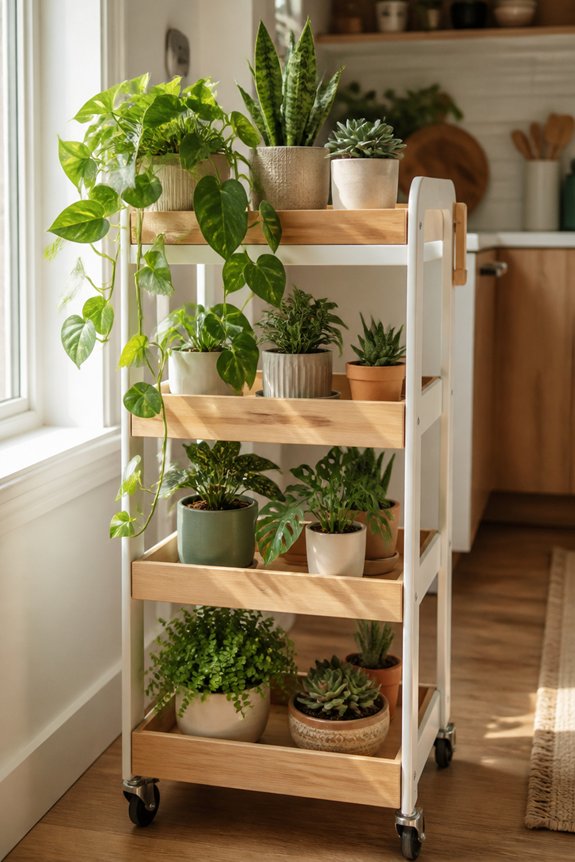
Kitchen carts, originally designed for storing dishes or serving food, work well as mobile plant shelves for renters who need flexible display options. Many models include two or three tiers, giving space to arrange plants of different heights, from trailing pothos on lower shelves to taller snake plants on top.
Wheels allow easy movement between rooms, letting renters follow sunlight patterns throughout the day without leaving marks on floors or walls. Some carts include drawers or lower cabinets, useful for storing watering cans, fertilizer, or pruning shears out of sight.
Butcher block or metal surfaces resist water damage better than untreated wood, making cleanup simpler after watering. Renters can select compact cart designs for small kitchens or apartments, keeping plants organized while preserving limited floor space in shared living areas.
Bookshelf Repurposing for Indoor Plant Collections
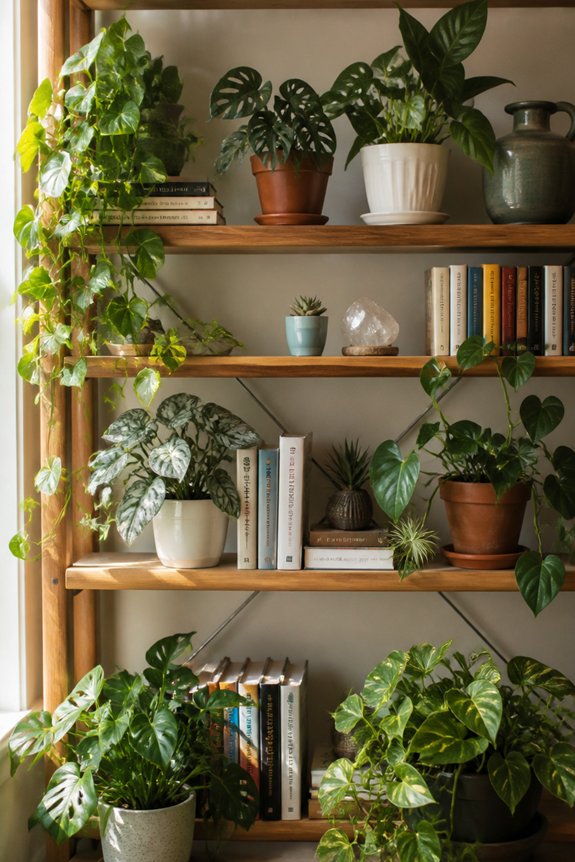
Repurposing an existing bookshelf offers renters an affordable way to create a layered display for growing plant collections without purchasing new furniture. Placing pothos, philodendron, or spider plants on upper shelves allows trailing vines to cascade downward, while sturdier plants like snake plants or ZZ plants can occupy lower, heavier shelves.
Rotating shelf positions periodically helps balance light exposure, since bookshelves often sit against walls with uneven sunlight distribution. Adding trays beneath pots protects wood surfaces from water damage and stains, which matters for security deposits.
Grouping plants by light and humidity needs, rather than by size alone, keeps the collection healthier and easier to maintain. Removable shelf liners or contact paper provide added protection without requiring permanent alterations to the furniture.
Room Divider Plant Shelves for Small Spaces
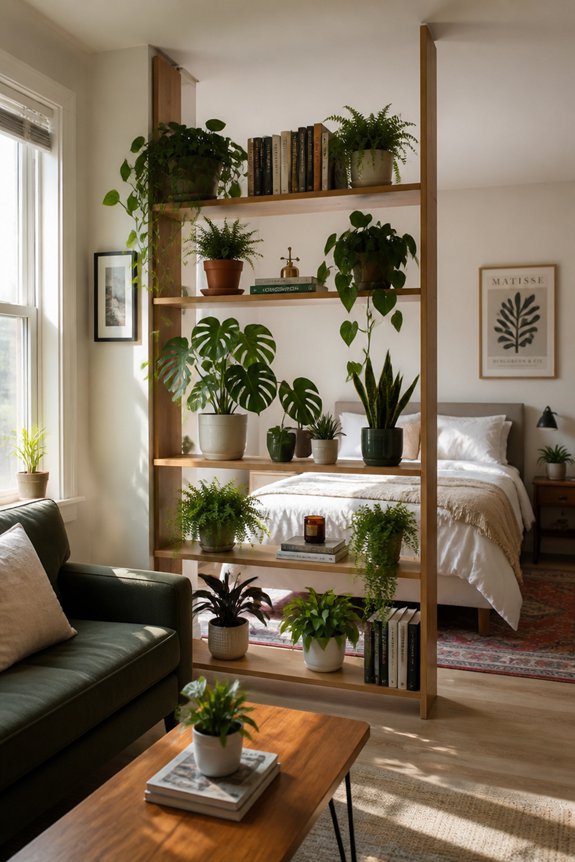
A freestanding shelving unit placed perpendicular to a wall can double as both a room divider and a display space for plants, a useful solution for studio apartments or open-concept layouts. Open-back bookshelves or ladder shelves allow light to pass through, keeping plants healthy while avoiding a fully blocked sightline.
Renters can choose units with adjustable shelves to accommodate pots of varying heights, from trailing pothos to upright snake plants. Placing taller units near a window guarantees adequate light reaches plants on every level, while rotating pots periodically prevents uneven growth. Casters on the shelving base make repositioning easier during cleaning or rearranging.
This approach separates a sleeping area from a living space, or a workspace from a lounge area, without requiring permanent construction or wall modifications.
Tabletop Plant Stands for Small Spaces
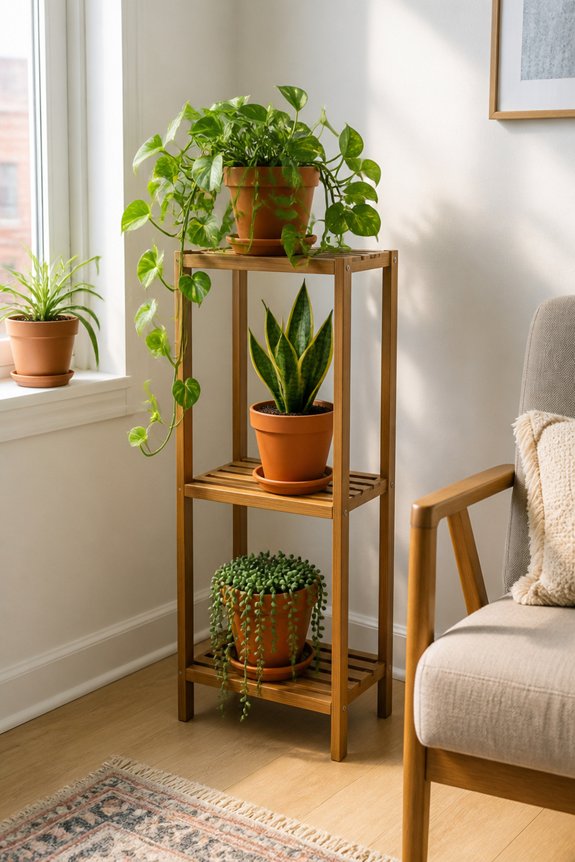
Small tabletop stands offer another option for renters who lack floor space or wall clearance for larger shelving units. These compact stands, often ranging from six to eighteen inches tall, fit easily on desks, dressers, or windowsills, allowing multiple plants to occupy a single surface without crowding.
Tiered wooden or metal designs create vertical arrangement, letting three or four small pots share the same footprint a single planter would need. Materials such as bamboo, rattan, or powder-coated metal resist damage from moisture and daily handling.
Some models fold flat for storage, useful when rearranging furniture or moving between apartments. Rotating stands allow plants to receive even light exposure without frequent repositioning. These stands work well in kitchens, bathrooms, or small home offices where space remains limited.
Over-the-Door Plant Shelf Racks for Renters
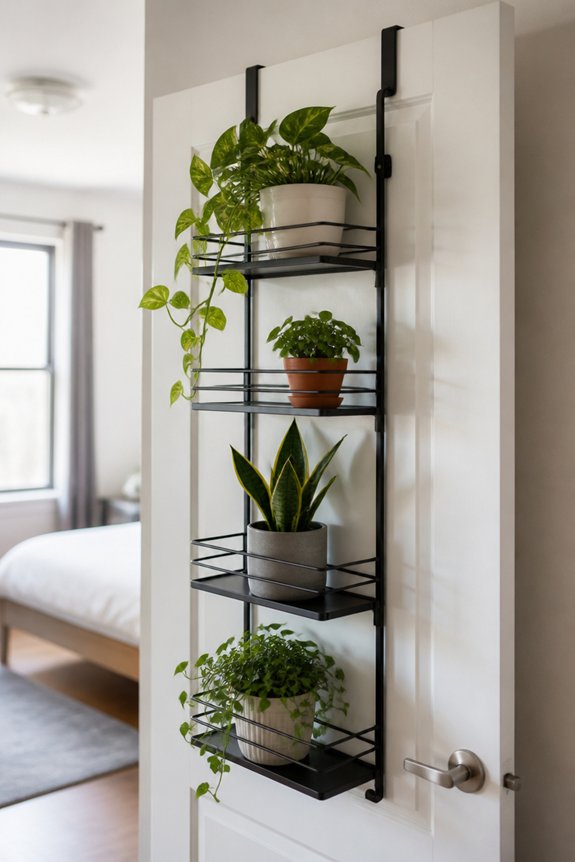
Several racks designed to hang over standard interior doors give renters a way to add plant storage without touching walls or ceilings. These racks typically feature metal hooks that rest over the top of a door, with wire baskets, wooden shelves, or fabric pockets hanging below or attached to the frame.
Most models hold small to medium pots, making them suitable for succulents, herbs, or trailing plants rather than large specimens. Weight limits vary by design, so checking manufacturer specifications helps prevent damage to doors or hinges.
Placement on closet doors, bathroom doors, or pantry doors allows renters to use overlooked vertical space. Because installation requires no drilling, these racks can be moved between rooms or removed entirely when a lease ends.
Frequently Asked Questions
How Much Weight Can Renter-Friendly Plant Shelves Typically Hold?
Most renter-friendly shelves, using adhesive strips or tension rods, safely hold 5-15 pounds per shelf. Heavier-duty options with tension-mounted brackets can support up to 25 pounds, but weight limits depend on wall type, product quality, and installation method.
Will Adhesive Hooks Damage Paint When Removed Later?
Like a gentle tide leaving sand undisturbed, quality adhesive hooks release cleanly when pulled slowly downward. Paint remains intact if surfaces were clean beforehand and weight limits weren’t exceeded. Testing an inconspicuous spot first offers reassurance.
How Do I Prevent Water Damage on Rented Flooring or Walls?
Placing waterproof trays or saucers beneath every pot prevents drips from reaching flooring. Using cork or felt pads under trays protects surfaces further. Regularly checking for overflow and wiping spills promptly keeps walls and floors safe from moisture damage.
What’s the Best Plant Shelf Option for Low-Light Apartments?
A tension-rod shelf near the one sunbeam the apartment receives daily—renters everywhere apparently negotiate leases specifically around that golden rectangle. It holds pothos and snake plants, nature’s ironic tribute to photosynthesis in near-total darkness.
How Do I Choose Shelving That Fits My Lease Restrictions?
Freestanding, tension-rod, or over-the-door shelving units avoid wall damage and satisfy most lease terms. Renters should verify weight limits, avoid adhesive hooks unless removable-rated, and photograph existing wall conditions before installing any unit.
Conclusion
Renters often assume plant displays require permanent fixtures or wall damage, but these 18 ideas prove otherwise. Tension rods, suction cups, adhesive strips, and freestanding units all provide sturdy plant storage without drilling or lease violations. From repurposed bookshelves to over-the-door racks, each option adapts to small spaces and temporary living situations. Choosing the right combination depends on available space, lighting, and plant quantity. These solutions allow renters to maintain greenery collections while preserving security deposits and adhering to lease agreements.