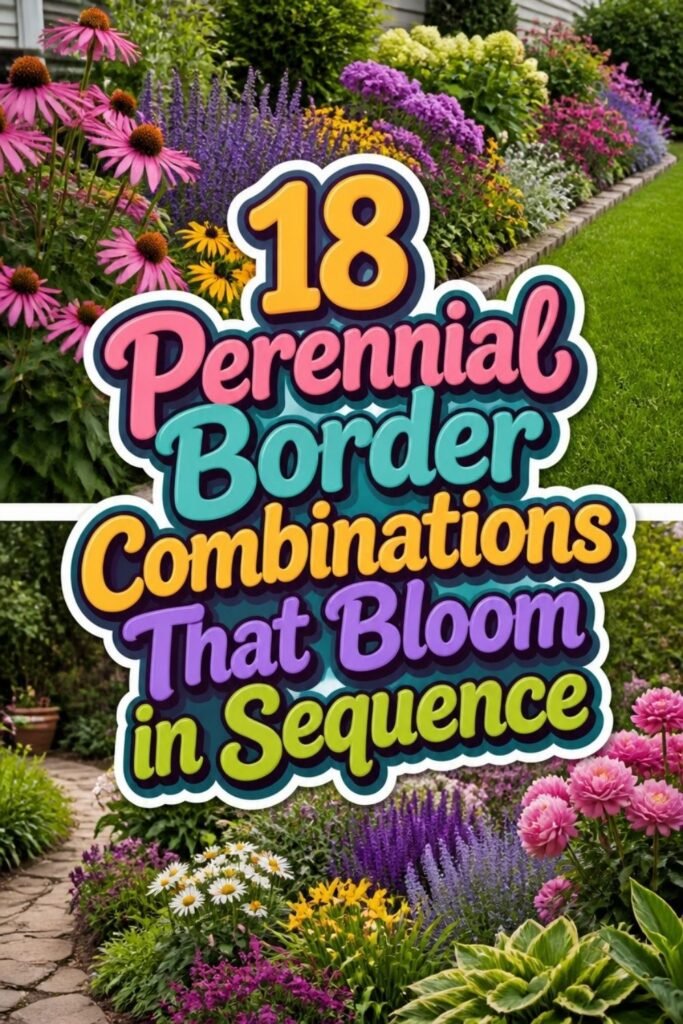
Bare soil has no place in a thoughtful perennial border. The trick lies in choosing plants that pass the floral baton from one season to the next without missing a beat. Snowdrops and hellebores brave the chill of early spring, their nodding blooms often pushing through frost.
By late spring, bleeding hearts and lungwort take center stage, softening the transition with their arching sprays and spotted foliage. Summer demands performers that thrive under the full sun’s gaze. Coneflowers and black-eyed Susans rise to meet this challenge, their daisy-like faces feeding pollinators for weeks on end.
The warm golds and purples create a relaxed, meadow-like atmosphere that feels effortless despite the planning behind it. These midseason workhorses bridge the gap until autumn arrives. Asters and goldenrod then step forward, their clouds of tiny flowers mirroring the color of harvest moons and turning leaves.
This late show often surprises gardeners who assumed the garden had finished for the year. Meanwhile, hellebores and jasmine ensure the border never becomes a blank slate, offering structure and subtle fragrance even in the quietest months.
None of this happens by accident. Soil enriched with compost, spacing that accounts for mature growth, and a calendar marked with bloom times all contribute to the illusion of an always-flowering garden. The result rewards patience with months of continuous color.
Spring Awakening: Early Bulbs and Hellebores
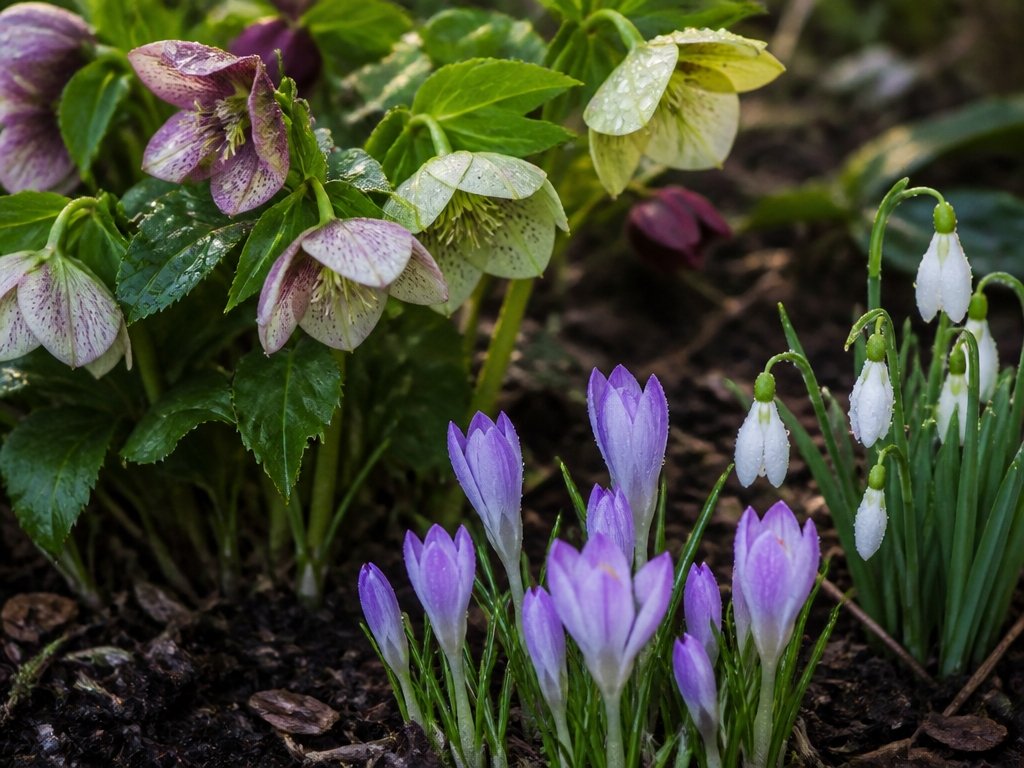
Early spring gardens benefit from combining cold-hardy bulbs with hellebores, plants that bloom when most perennials remain dormant. Snowdrops, crocuses, and early daffodils emerge first, followed by hellebores in shades of purple, white, and green.
These combinations extend the blooming season and provide visual interest during late winter months. Planting bulbs in clusters near hellebores creates balanced, layered displays that maximize early-season color.
Transition Into Late Spring: Bleeding Hearts and Lungwort
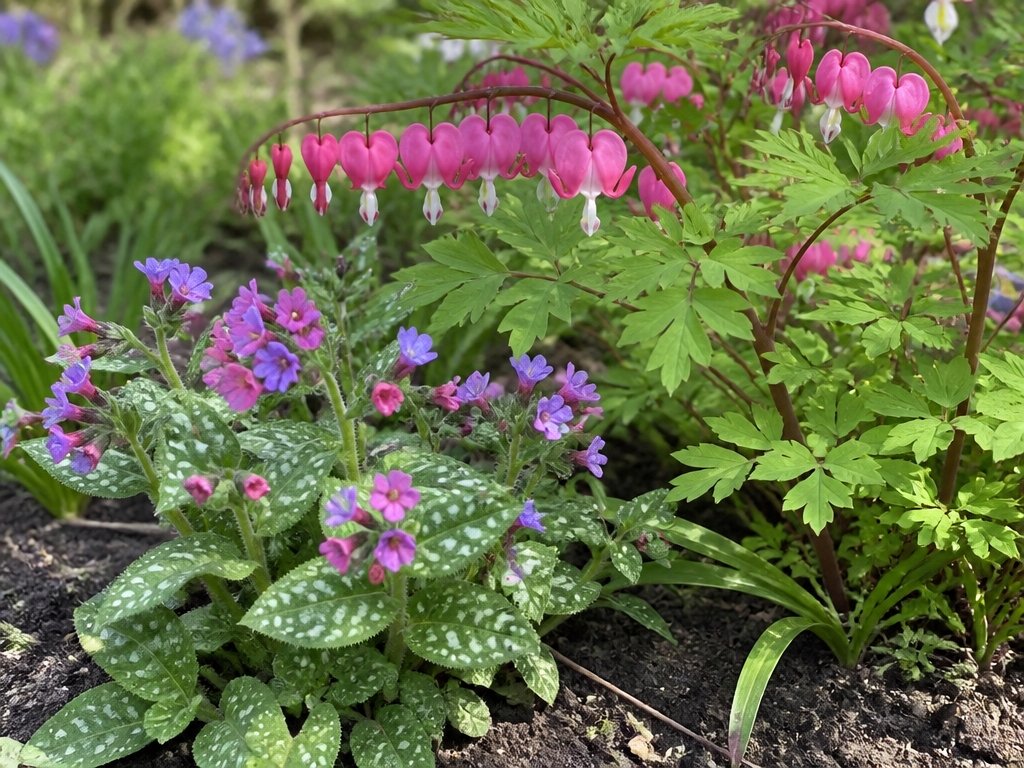
As hellebores fade and bulbs complete their cycle, bleeding hearts and lungwort assume prominence in the late spring garden. Bleeding hearts produce distinctive heart-shaped flowers in pink or white, thriving in shade with consistent moisture. Lungwort offers spotted foliage and delicate blooms in blue, pink, or white.
Both plants tolerate partial shade, require moderate watering, and establish themselves reliably in woodland-style borders. Their combined textures create depth and visual interest throughout late spring months. Layered planting helps keep both plants visible while maintaining the soft, natural look of an English border.
Late Spring Standouts: Alliums and Late Tulips
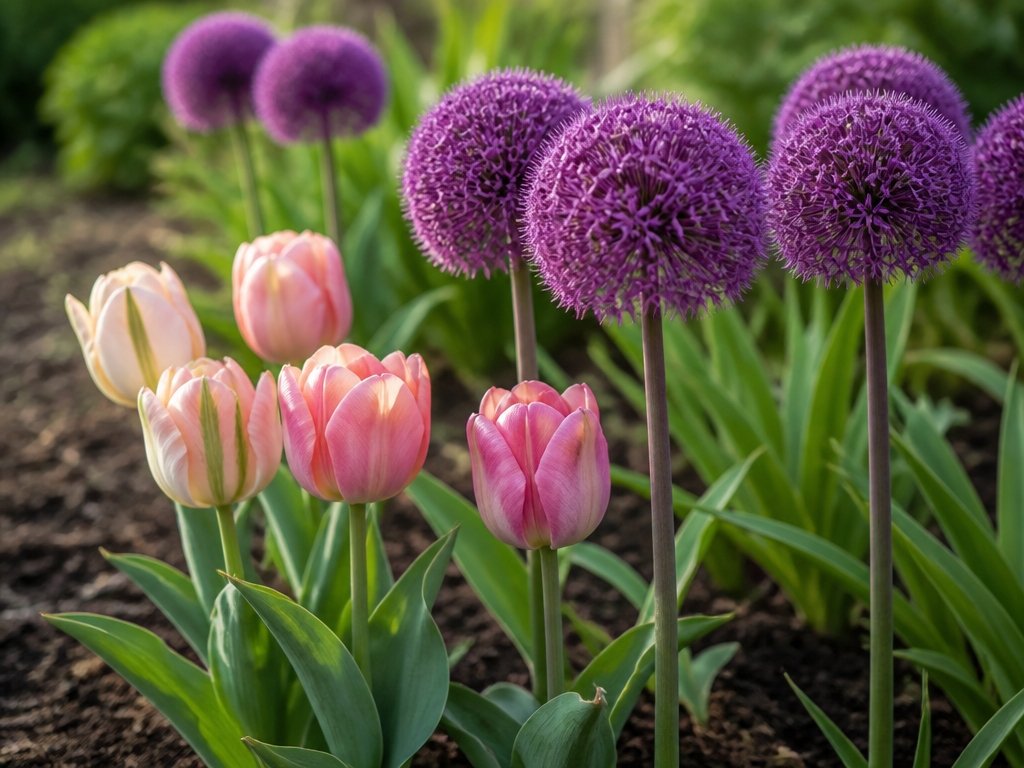
While bleeding hearts and lungwort provide reliable color through late spring, alliums and late tulip varieties offer distinct architectural forms and extended flowering periods that complement woodland plantings.
Allium giganteum produces purple spherical blooms on tall stems, creating vertical interest. Late tulip cultivars, including Maureen and Black Parrot, extend the season through May, offering varied heights and colors that pair effectively with emerging perennial foliage.
Early Summer Color: Catmint and Coral Bells
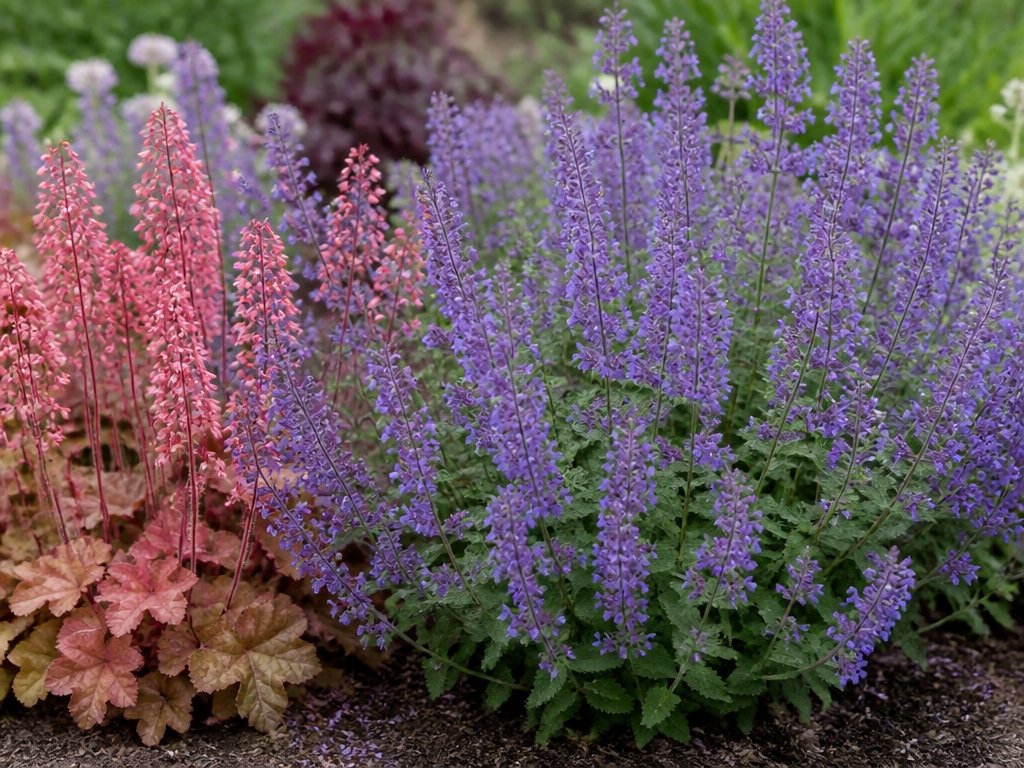
Two reliable perennials shift the garden into early summer: catmint and coral bells. Catmint produces lavender-blue flowers on airy stems, reaching two to three feet tall. Coral bells contribute colorful foliage in burgundy, bronze, or chartreuse shades, staying lower at one to two feet. These plants pair well together, offering complementary heights, flower colors, and textural contrast throughout the season.
Midsummer Powerhouses: Coneflowers and Black-Eyed Susans
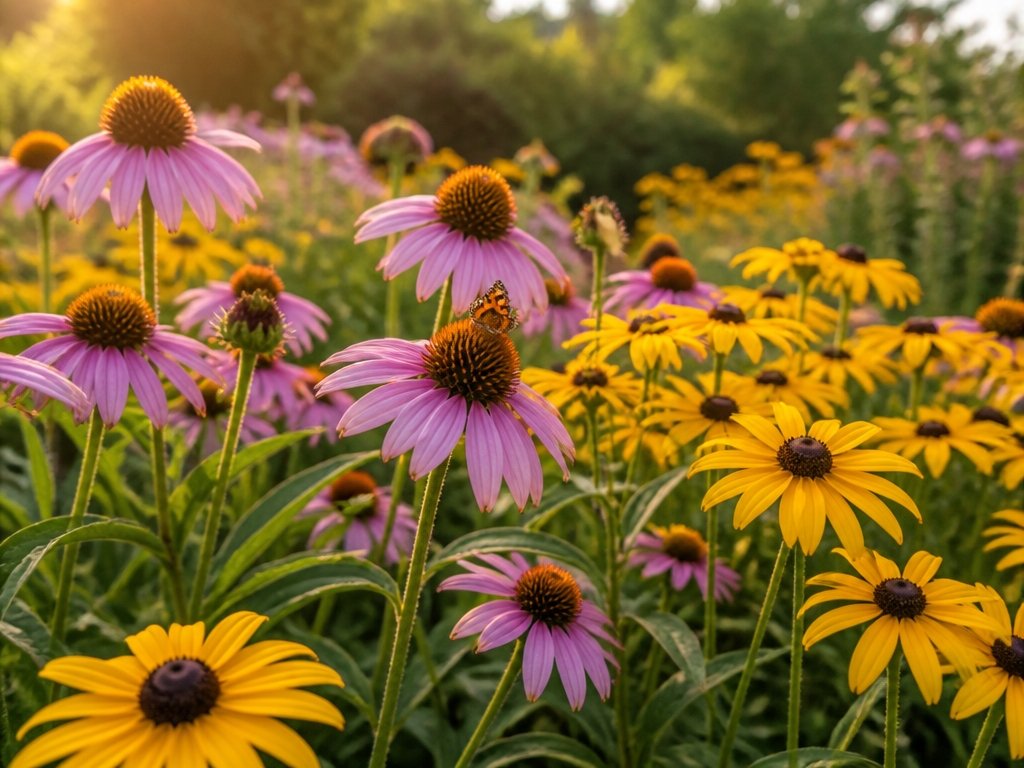
Coneflowers and black-eyed susans dominate garden beds during midsummer months, delivering reliable blooms in purple, pink, orange, and yellow tones. These hardy perennials attract pollinators, tolerate drought conditions, and require minimal maintenance.
Echinacea and Rudbeckia varieties bloom six to eight weeks, extending color through late summer. Plant them in full sun locations with well-draining soil for peak performance and longevity.
Summer Extension: Salvia and Daylilies
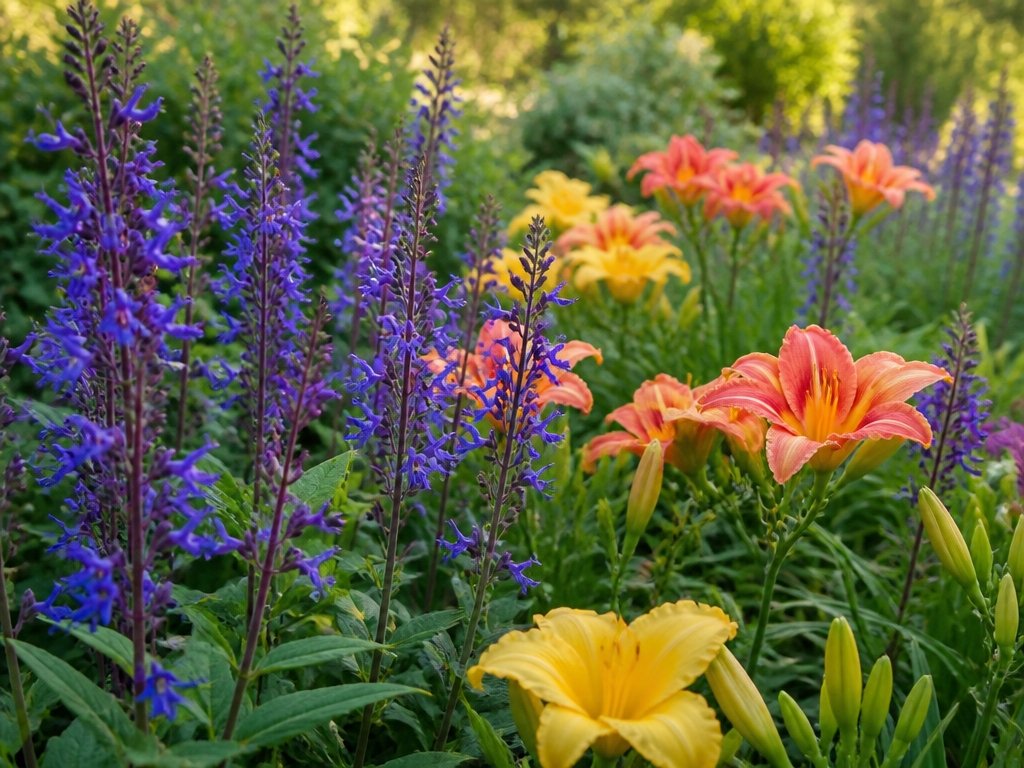
Salvias and daylilies extend the flowering season well into late summer and early fall, providing consistent color when many spring bloomers have faded. Salvias like Black and Blue offer deep purple flowers, while daylilies such as Stella de Oro bloom repeatedly.
Both plants tolerate heat and drought conditions, require minimal maintenance, and attract pollinators throughout their extended flowering period.
Mid to Late Summer: Phlox and Rudbeckia
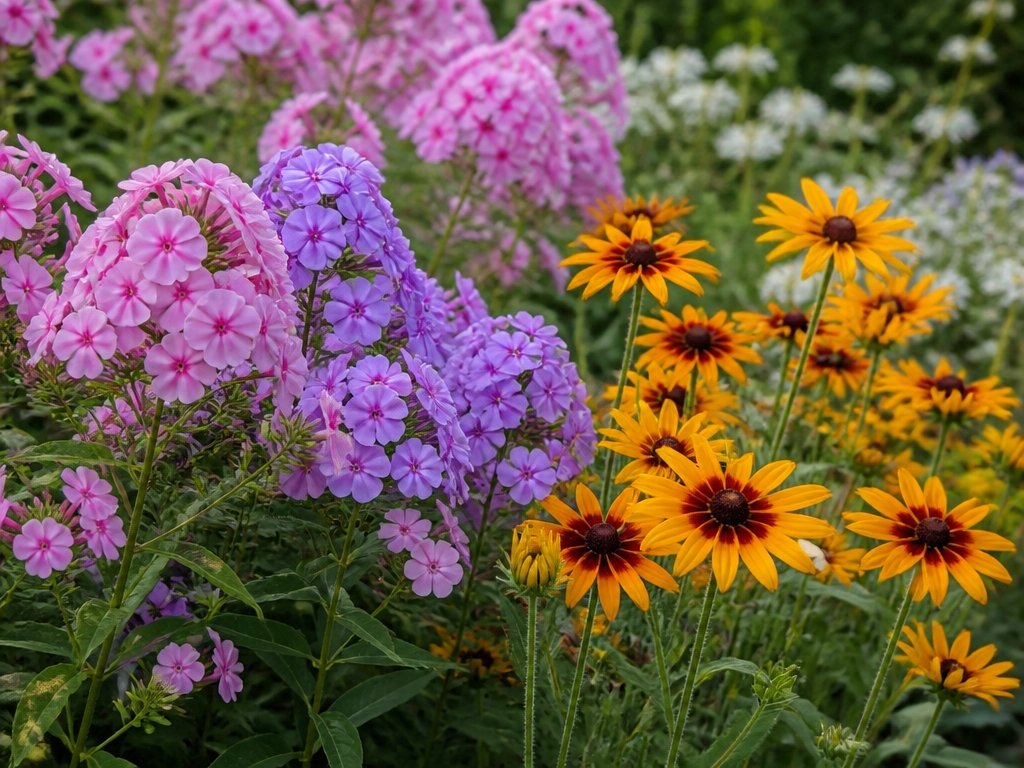
Phlox and rudbeckia take over the garden stage when summer shifts toward fall, delivering reliable blooms through August and September. Tall phlox varieties like David produce fragrant pink flowers, while rudbeckia species offer yellow and orange petals with dark centers.
Both plants thrive in full sun, tolerate average soil conditions, and require minimal maintenance once established, making them dependable choices for sequential border displays.
Heat-Tolerant Pairings: Yarrow and Sedum
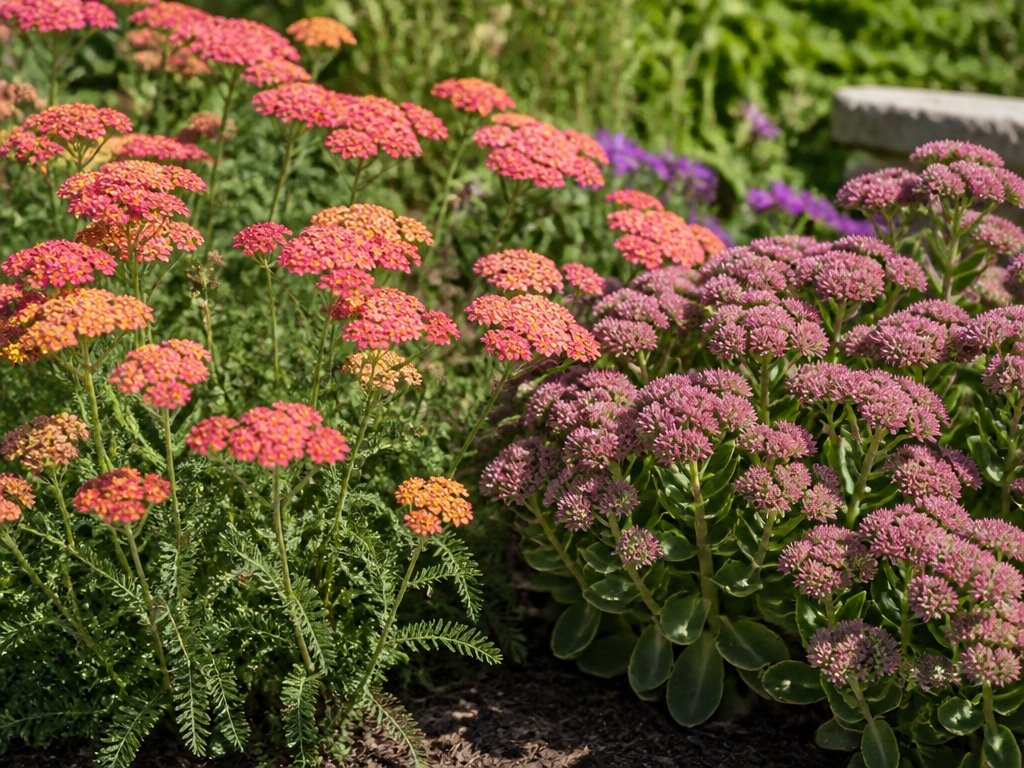
As summer intensifies and temperatures climb, gardeners benefit from selecting plants that withstand heat and drought with minimal intervention. Yarrow and sedum pair effectively during this season.
Yarrow produces flat flower clusters in yellow, red, or pink throughout summer. Sedum offers succulent foliage and late-season blooms in pink or burgundy. Both species require full sun, well-drained soil, and infrequent watering, making them reliable choices for hot garden conditions.
Late Summer Succession: Joe-Pye Weed and Coreopsis
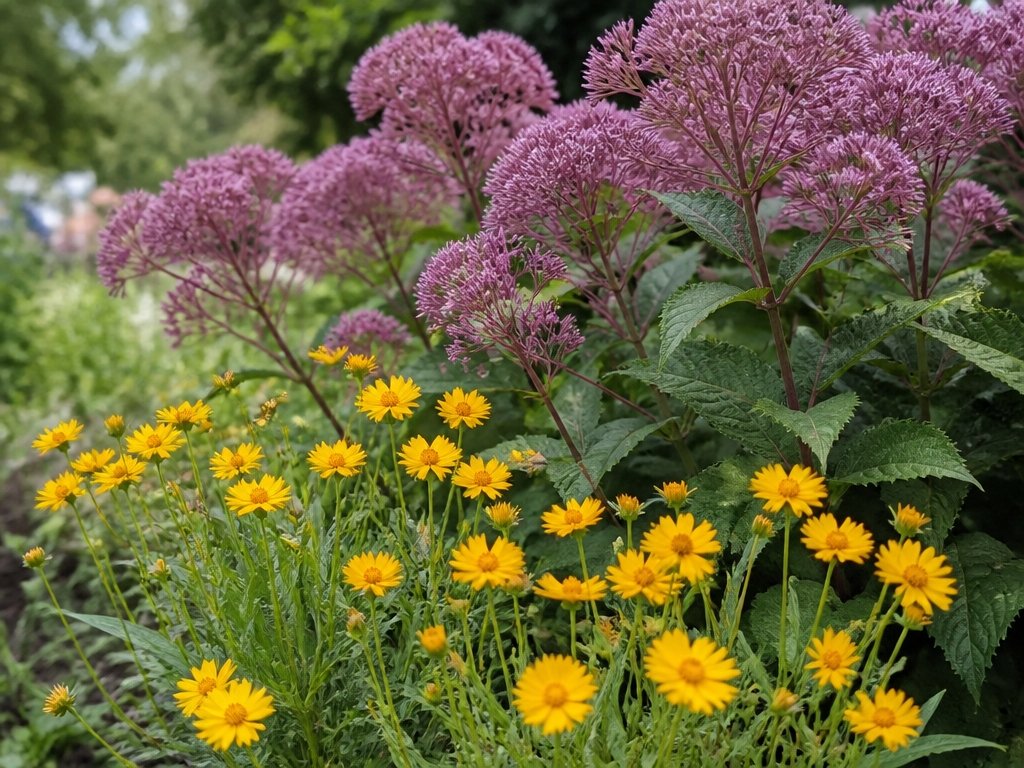
The shift from mid-summer to fall requires perennials that bloom during the changing season, maintaining garden color as spring bloomers fade. Joe-Pye weed produces tall pink or purple clusters in late summer, reaching five to seven feet. Coreopsis provides low, yellow blooms simultaneously, creating vertical contrast. This pairing extends the border’s visual interest through September and October.
Fall Transition: Helenium and Blanket Flower
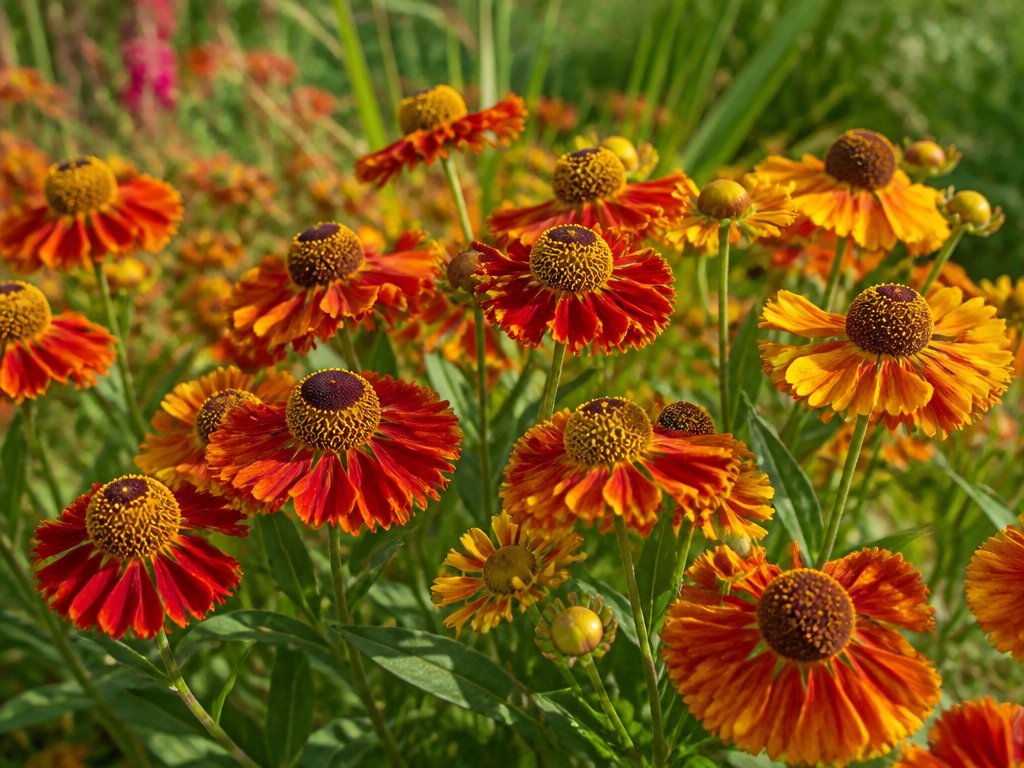
Helenium and blanket flower sustain border color as summer heat releases its grip on the garden. Helenium produces daisy-like blooms in red, orange, and yellow tones throughout fall months. Blanket flower offers similar warm hues with distinctive bicolored petals.
Both plants tolerate poor soil and drought conditions, requiring minimal maintenance once established in full sun locations.
Early Autumn Richness: Asters and Goldenrod
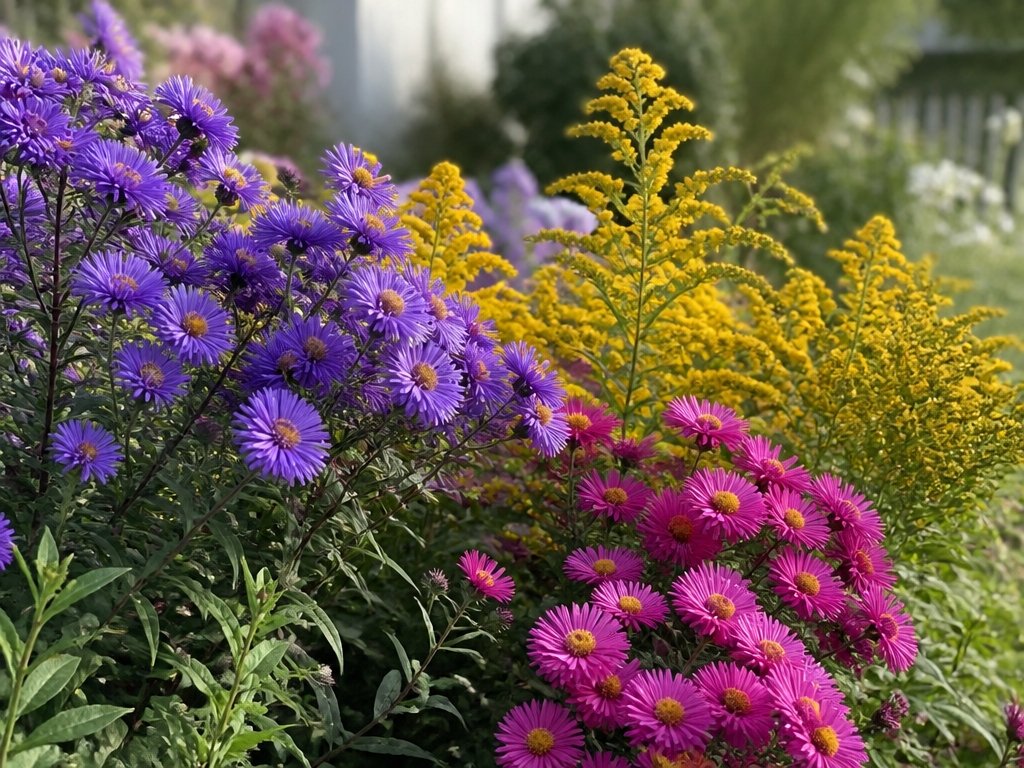
Asters and goldenrod arrive as summer bloomers fade, offering gardeners reliable color sources for early autumn displays. Asters produce daisy-like flowers in purple, pink, and white varieties, while goldenrod contributes bright yellow plumes.
Both plants attract pollinators, require minimal maintenance, and tolerate various soil conditions. Pairing these species creates sustained color from August through October, establishing visual continuity in maturing borders.
Mid-Autumn Drama: Anemones and Ornamental Grasses
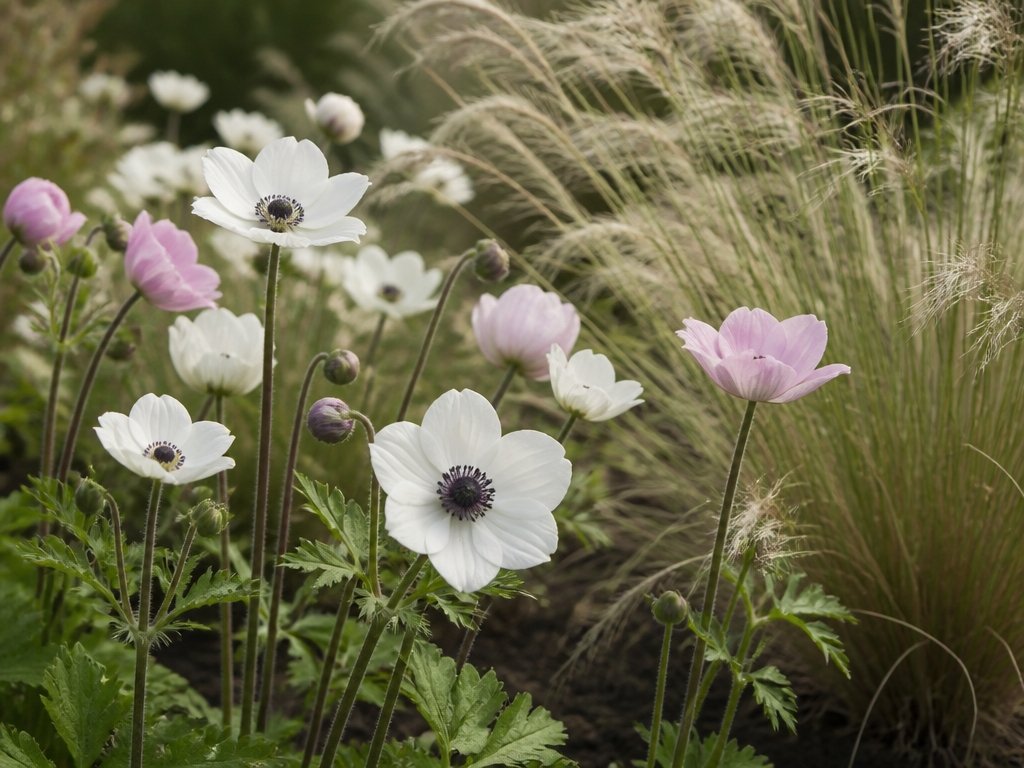
As summer shifts into autumn’s cooler months, anemones and ornamental grasses provide gardeners with layered texture and extended seasonal interest. Japanese anemones produce tall stems with pink or white flowers, while grasses like Miscanthus and Panicum add movement and bronze tones.
These plants thrive in well-draining soil, full sun to partial shade conditions, and require minimal maintenance once established in garden borders.
Late-Season Bloomers: Mums and Russian Sage
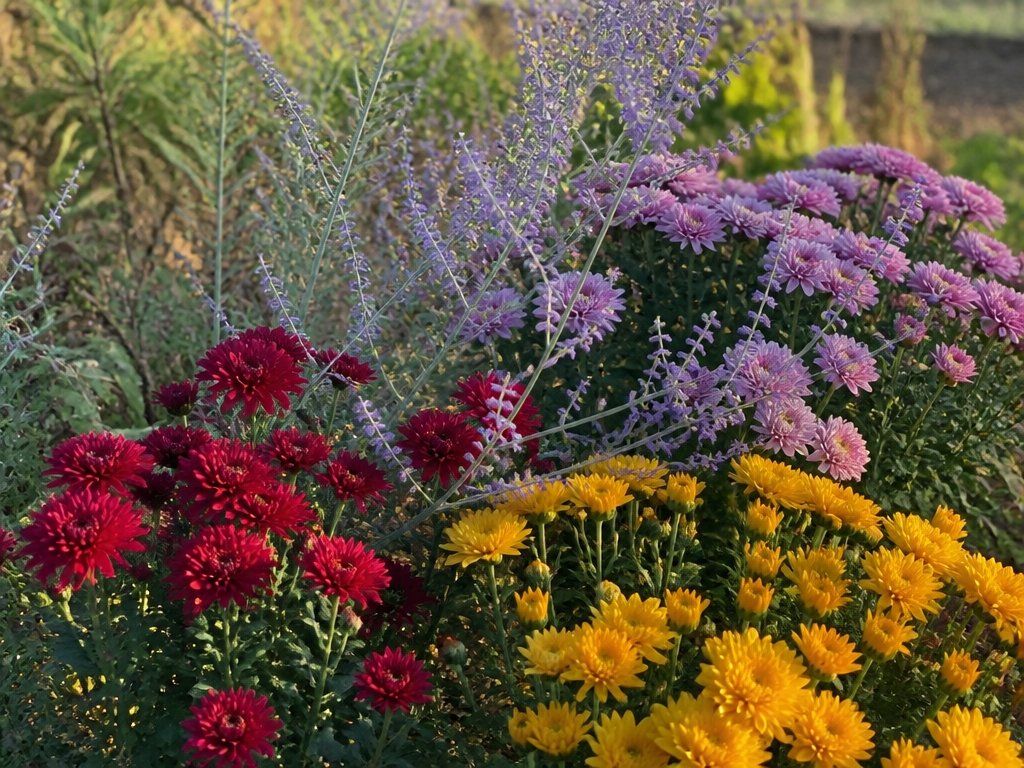
Chrysanthemums and Russian sage extend the garden’s flowering period into late autumn and early winter, providing color when most perennials have faded. Mums offer dense blooms in purple, pink, white, and yellow varieties. Russian sage produces airy, lavender flowers on tall stems. Both plants tolerate frost, bloom simultaneously from September through November, and require full sun and well-drained soil for peak performance.
Winter Interest: Hellebores and Winter Jasmine
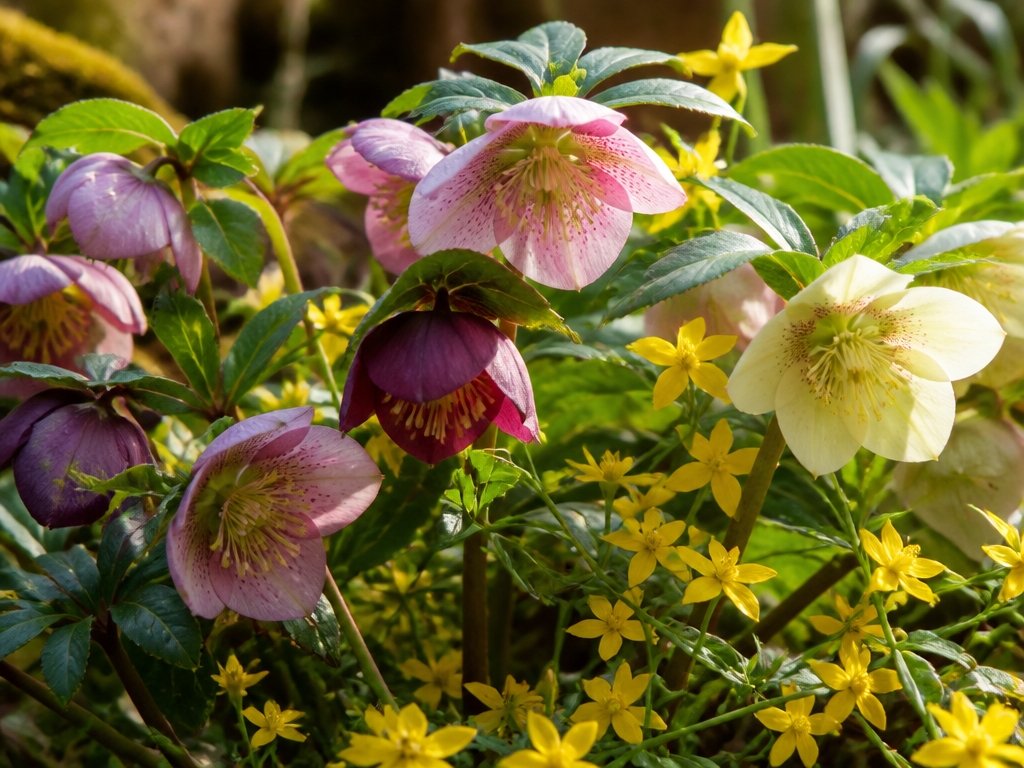
While late-season bloomers fade as temperatures drop, winter interest plants sustain garden color and structure through the coldest months. Hellebores produce nodding flowers in shades of burgundy, pink, and white, blooming from December through February. Winter jasmine displays bright yellow flowers on arching stems.
Both plants tolerate shade and poor soil conditions, requiring minimal maintenance once established in perennial borders.
Why Timing Matters: How Bloom Cycles Prevent Bare Gaps
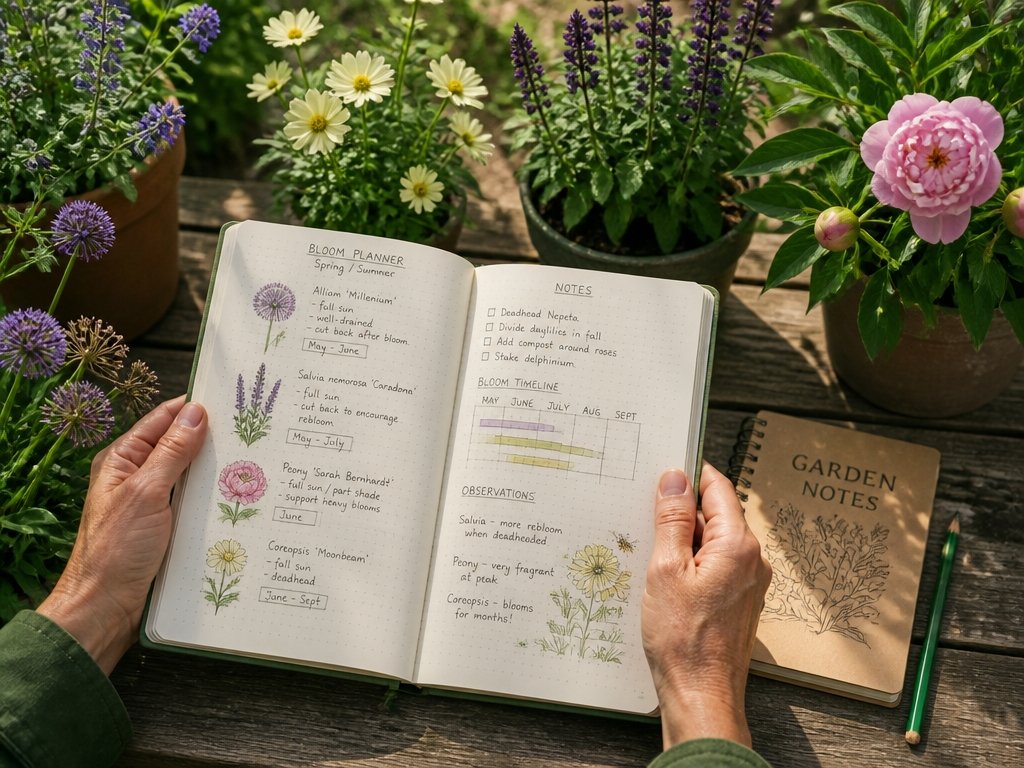
Strategic plant selection based on bloom timing creates continuous color throughout the growing season, eliminating the visual gaps that occur when all plants flower simultaneously.
Early bloomers like hellebores shift to spring perennials such as tulips and bleeding heart, followed by summer performers including coneflowers and black-eyed Susans, then fall asters and sedum extend interest through season’s end.
Build Depth: Tall, Mid, and Ground-Level Layering
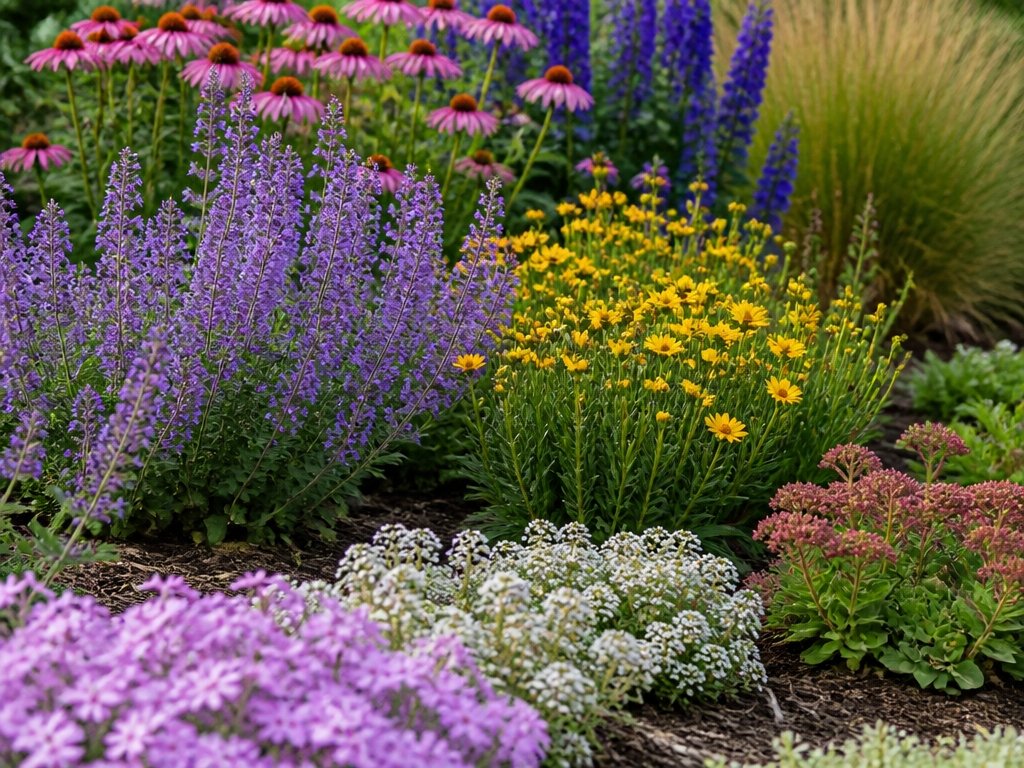
Creating visual depth in a perennial border requires organizing plants by height into three distinct layers: tall plants in back, mid-height plants in the middle, and ground-level plants in front.
Delphiniums and hollyhocks anchor the rear, while coreopsis and salvia occupy the middle tier. Low-growing sedums, creeping thyme, and catmint fill foreground spaces. This arrangement guarantees all plants receive adequate sunlight and visibility throughout the growing season.
Prepare Once, Bloom All Season: Spacing and Soil Setup
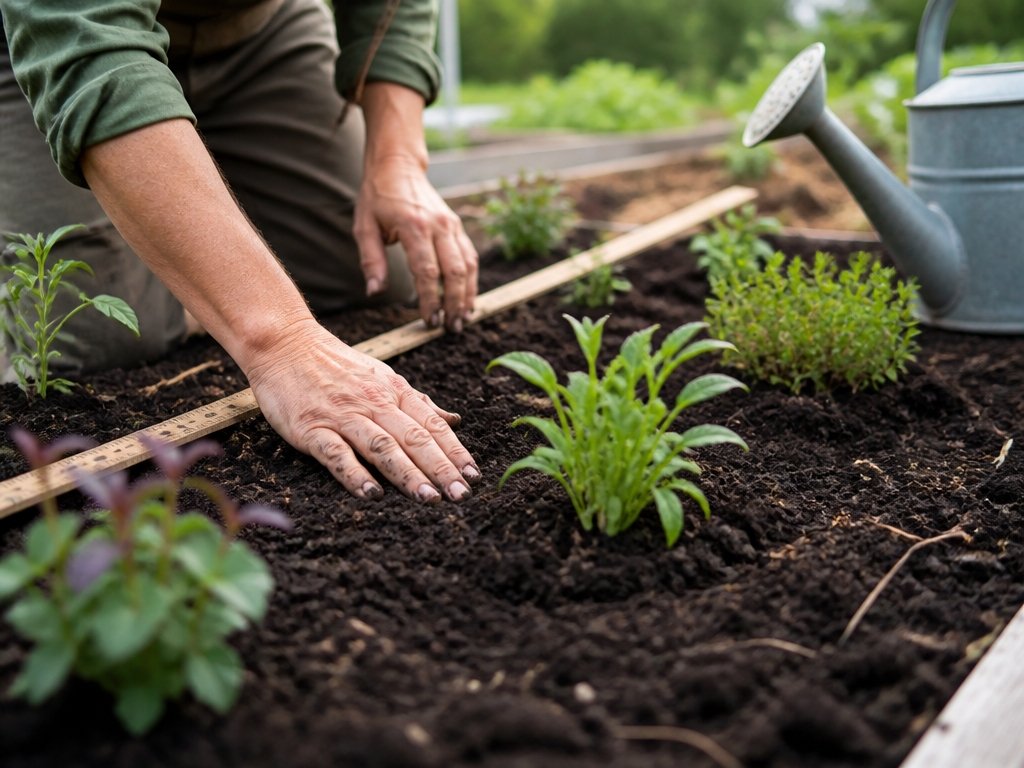
Once plants are positioned by height, attention shifts to the ground conditions that support their growth. Proper spacing prevents competition for nutrients and water, while well-amended soil containing organic matter guarantees perennials establish strong root systems.
Spacing varies by species; hostas require eighteen inches apart, whereas sedums need only twelve inches. Rich, draining soil amended with compost promotes consistent blooming throughout the season.
Keep Blooms Going: Deadheading and Seasonal Care
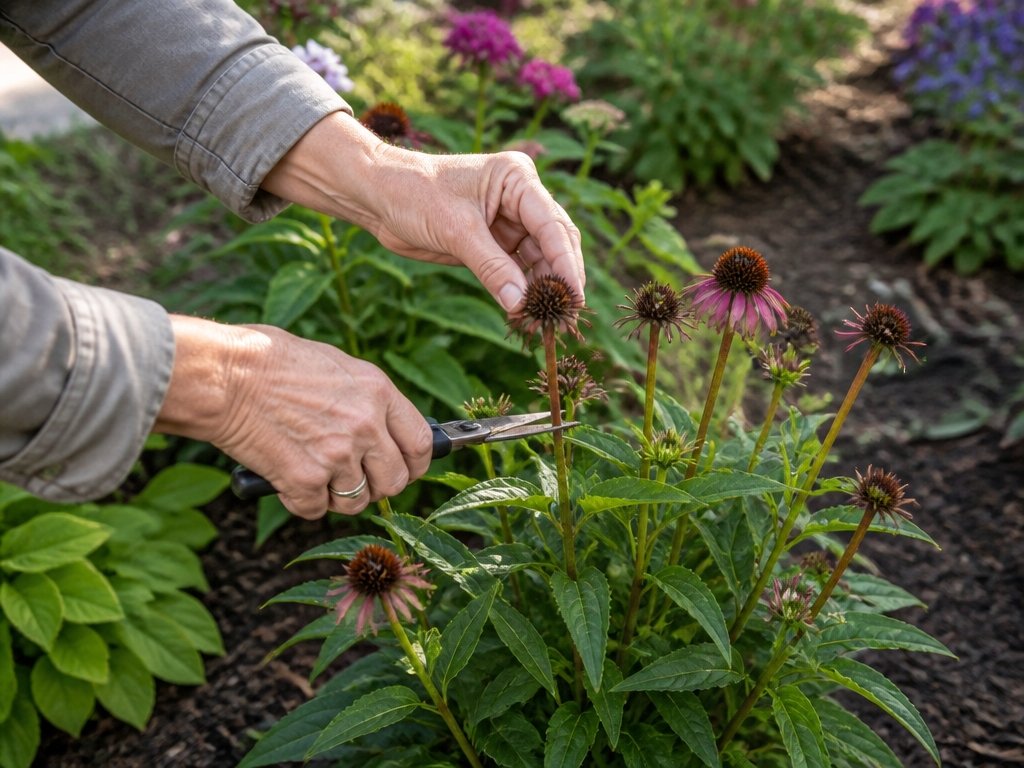
Removing spent flowers, called deadheading, extends the blooming period of most perennials by redirecting plant energy from seed production to new flower formation. Gardeners should deadhead coneflowers, zinnias, and daylilies regularly throughout the season. Cutting back spent stems to the next leaf node encourages branching.
Fall cleanup, including removing dead foliage and applying mulch, prepares borders for winter dormancy and spring regrowth.
Frequently Asked Questions
How Do I Choose Perennial Combinations if My Garden Has Partial Shade Conditions?
One should select shade-tolerant perennials such as hostas, hellebores, astilbe, and coral bells. Gardeners must verify each plant’s specific light requirements and combine varieties with staggered bloom times to guarantee continuous seasonal color throughout the garden space.
What Is the Best Way to Divide Established Perennials for Garden Expansion?
One divides established perennials in early spring or fall when soil moisture is adequate. The gardener carefully digs up the plant, separates rootballs by hand or knife, and replants divisions immediately in prepared soil with proper watering.
Can I Use These Combinations in Container Gardens or Raised Beds?
Yes, perennial border combinations work well in containers and raised beds. Gardeners should select smaller cultivars, guarantee adequate drainage, and provide regular watering since container plants dry faster than in-ground specimens.
How Do I Protect Perennial Borders From Common Pests and Diseases?
One might assume chemical pesticides are necessary, yet gardeners discover organic methods prove equally effective. Proper spacing guarantees air circulation, removing diseased foliage prevents spread, and introducing beneficial insects naturally controls pest populations while maintaining ecosystem balance.
What Budget-Friendly Methods Exist for Starting a Perennial Border Garden?
Gardeners can save money by propagating existing perennials through division and seeds, purchasing smaller starter plants, composting yard waste for soil enrichment, and collecting seeds from mature plants for next season’s growth.
Conclusion
A perennial border cycles through seasons like a painted canvas unfurling layer by layer. Early snowdrops give way to bleeding hearts, then summer’s golden coneflowers, autumn’s purple asters, and winter’s evergreen structure. This sequence, achieved through careful spacing and soil preparation, eliminates bare patches. Deadheading spent blooms encourages continuous flowering. The result: a garden displaying consistent color and texture from spring thaw through frost, requiring minimal intervention once established.