Summer window boxes get all the attention, then sit empty from the first frost until spring. Yet they’re the easiest spot on the house to dress for the holidays, right at eye level and already full of soil. These Christmas window box ideas fill them with real fir, cedar, magnolia, birch and berries, built to look festive at Christmas and hold up through the rest of winter.
You’ll find a classic fir and holly box with a velvet bow, live dwarf spruces you can replant in spring, Christmas roses that bloom in the cold, and a box that glows on battery lights with no outlet in sight. There are also boxes for windy upper floors, mild-winter regions, kitchen windows, and homes with pets that sniff everything.
Each one follows the same simple layering method, so once you’ve built one box, the rest come easily. Pair them with your front yard Christmas decorations and the whole front of the house pulls together.
QUICK BOX CHECK
What does your window box need this year?
Check the Box Before You Fill It
Empty out the spent summer plants, but keep the soil if it’s in decent shape, because damp soil is what holds cut stems upright. Give each box a firm push to make sure its brackets are tight. Then water the soil so it’s evenly damp before the first stem goes in.
1. A Classic Fir, Cedar, and Holly Box With a Velvet Bow
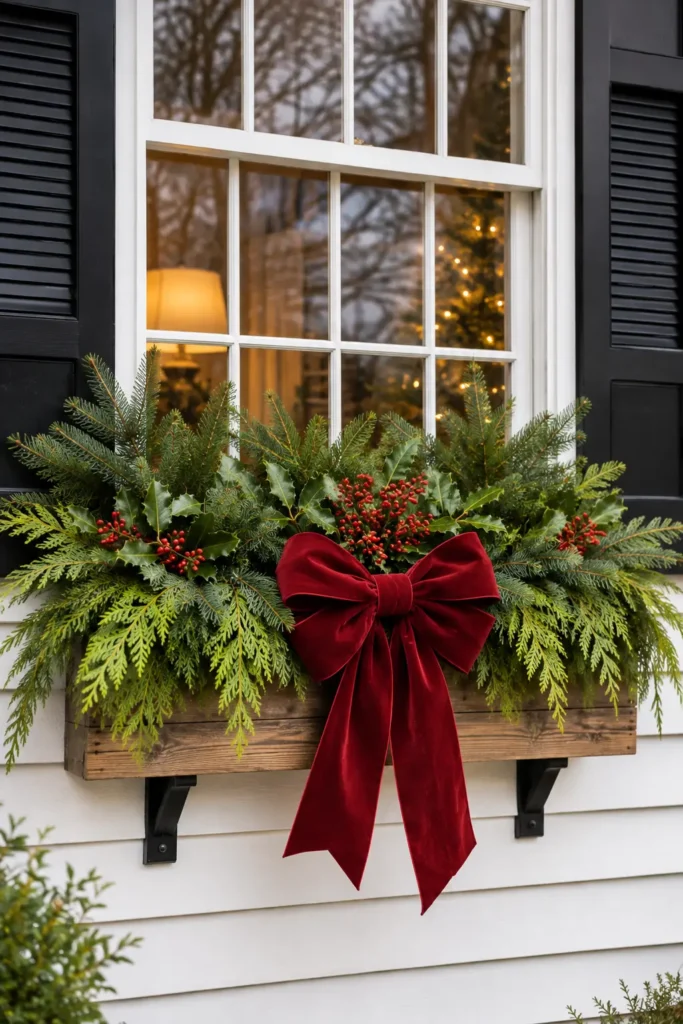
Start with the box most people picture when they think of Christmas window boxes: a long wooden box under a front window flanked by black shutters, packed with fir, cedar and red-berried holly.
Clear out the summer annuals but keep the damp soil, which holds cut stems upright all winter. Push tall fir tips along the back for height, fill the middle with shorter fir and cedar, and let soft cedar sprays spill over the front edge. Tuck the holly in last, clustering the berries toward the center, then wire a wide red velvet bow to the middle of the front. Pack the box tighter than feels right. Nothing will grow in over the winter, so a full box on day one stays full.
For more container combinations that use the same greens, see these outdoor Christmas planter ideas.
The winter window box formula
2. Magnolia Leaves and White Pine in a White Window Box
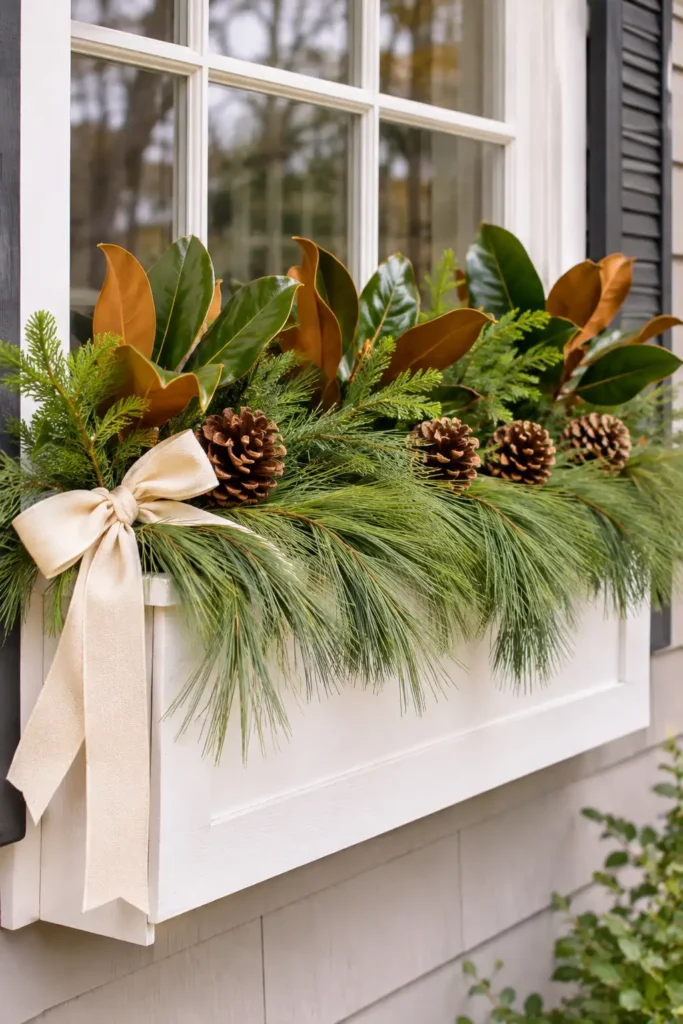
The bronze underside of a magnolia leaf looks its best against a white box. Fill a white wooden window box with long-needle white pine so the soft tufts spill over the front edge. Then push stiff magnolia sprays up through the middle, turning some leaves green side out and some bronze side out.
Pine’s loose, feathery texture next to magnolia’s leathery leaves gives the box contrast without adding a single extra color. A few large pinecones along the front and a cream ribbon at one end finish it. Magnolia also holds its shape outdoors far longer than softer greens, so the box still looks crisp in January.
3. A Wire-Grid Box for Windy Upper-Floor Windows
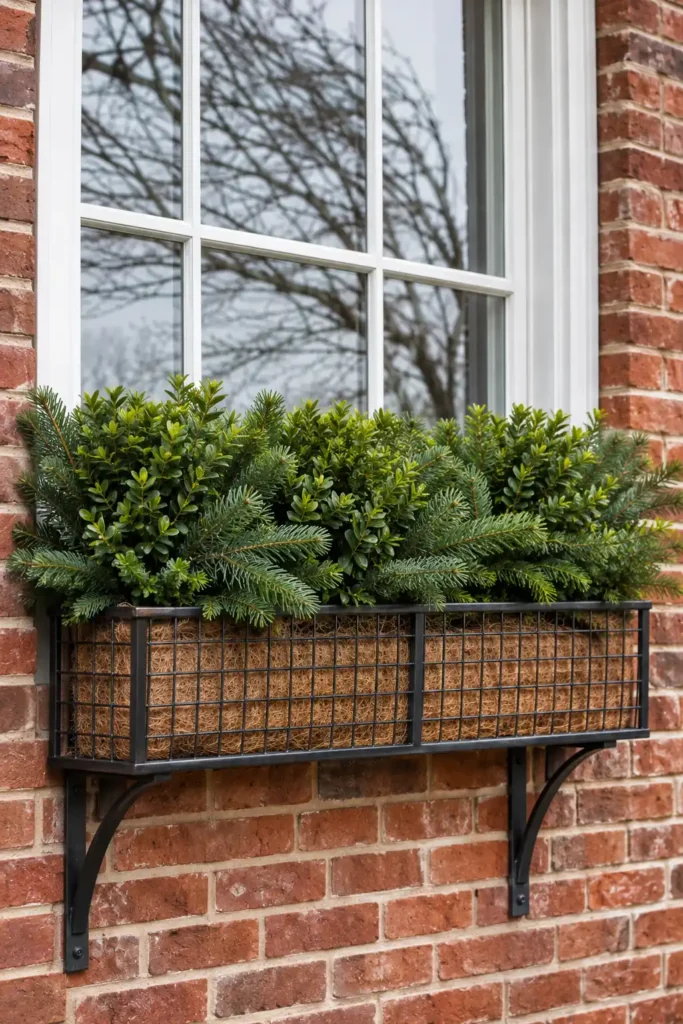
Wind at an upper-floor window hits harder than it does at the front door, and a box that’s been rocked loose is a real hazard above a sidewalk. Before adding a single green, check that the brackets holding the box are tight and that the box doesn’t shift when you push on it. If it moves, have it reattached properly first.
Then build the display to stay put. Lay a piece of chicken wire across the top of the damp soil and push every stem through the grid and deep into the soil below. The wire grips the stems so gusts can’t pull them out, and it weighs far less than packing the box with sand. Choose short, dense greens like boxwood and fir over tall, floppy sprays, which catch the wind like sails.
4. Three Live Dwarf Spruces Planted for the Season
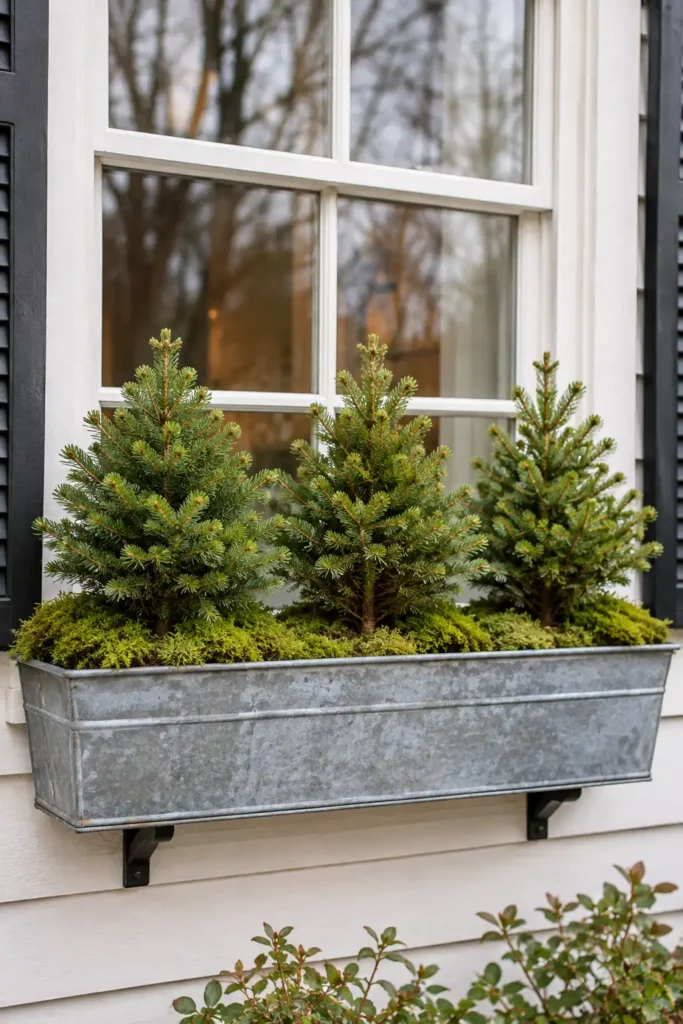
Cut greens fade by late winter, but living trees keep going. Plant three small dwarf spruces in a row in a galvanized metal window box, spacing them evenly so each reads as its own little tree. Cover the soil between them with green sheet moss, which hides the dirt and helps it hold moisture.
The three matching trees give the window a tidy, almost formal rhythm, and the galvanized metal adds a cool shine against the blue-green needles. Water whenever the soil isn’t frozen, because roots in a narrow box dry out faster than roots in the ground. If the needles start to drop early, check these signs your live Christmas tree is dying. Come spring, plant all three in the yard.
5. Dried Hydrangeas Tucked Into Eucalyptus and Silver Fir
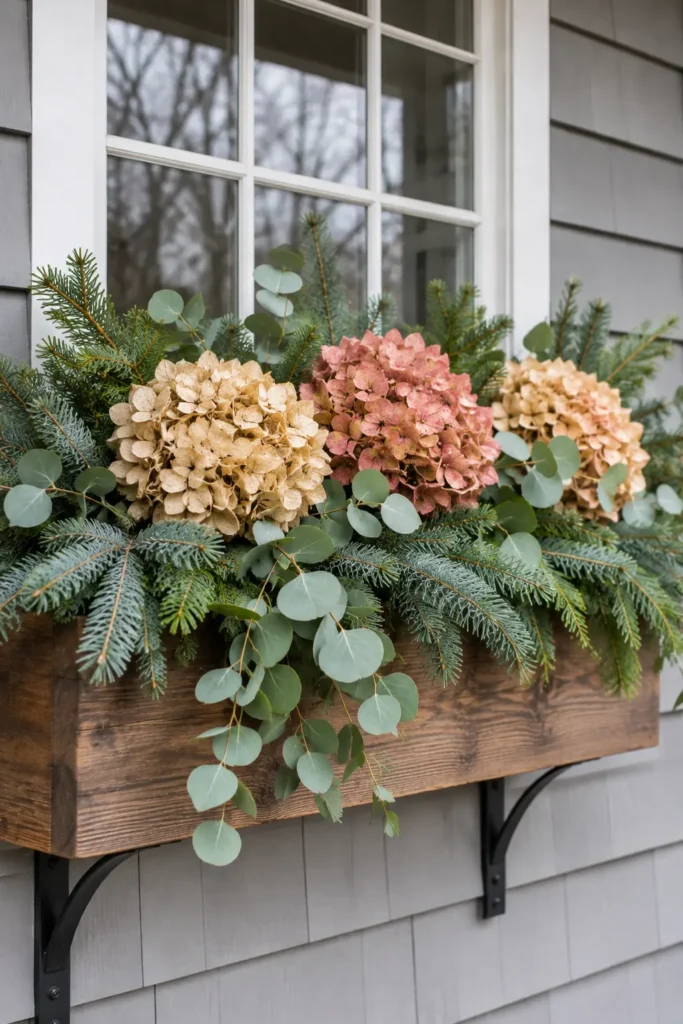
Big dried hydrangea heads in faded cream and blush are what make this box look different from every other one on the street. Push three of them into the center of a box filled with silver dollar eucalyptus and blue-gray noble fir, then let a few eucalyptus stems drape over the front.
The papery hydrangea petals soften all that green and gray, and the cool palette suits a white or gray house better than bright red ever could. Dried hydrangeas hold up best under an overhang, so if your window takes direct rain, set them toward the back where the greens shield them. Cut them from your own shrubs in early fall and let them dry on the plant first.
6. A Window Wreath Hung Above an Evergreen Box
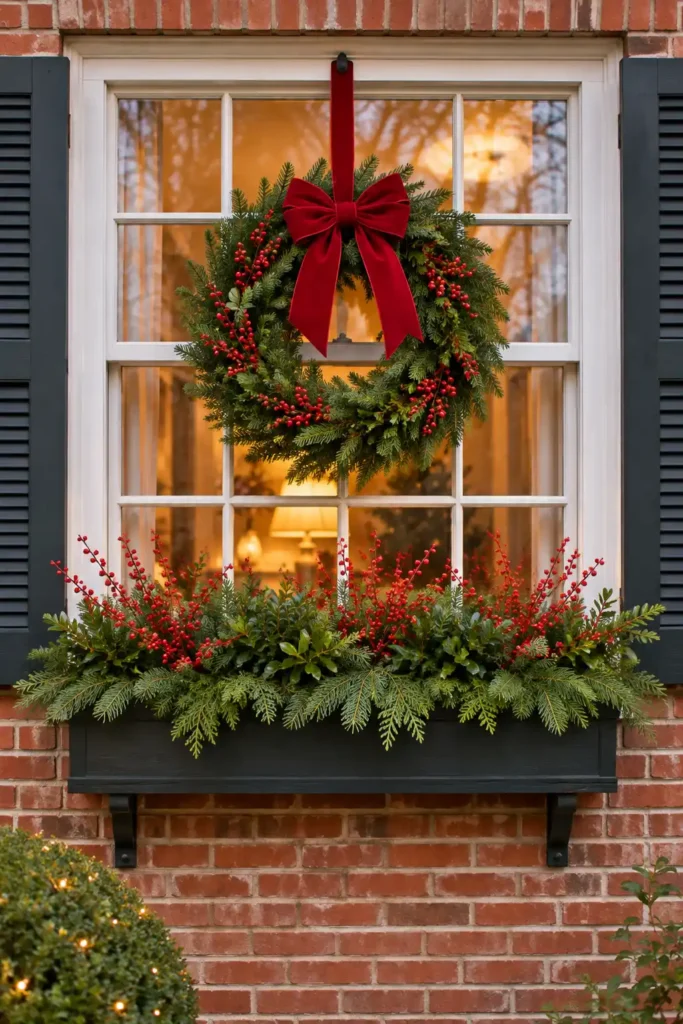
A window box on its own decorates the bottom of the window. Add a wreath hung in the glass above it, and the whole window becomes one display.
Fill a box under a front window on a red brick house with fir and boxwood, tucking in branches of red winterberry. Then hang a round fir wreath with the same winterberry and a matching red bow, centered on the window above the box. The repeated berries and bow tie the two pieces together, so they read as one design instead of two decorations. Hang the wreath from a ribbon tied to a small hook at the top of the window frame, which keeps the sash free to open.
Pieces like these sit well with other outdoor Christmas decorations that look classic.
7. A Mild-Winter Box of Cyclamen, Pittosporum, and Eucalyptus
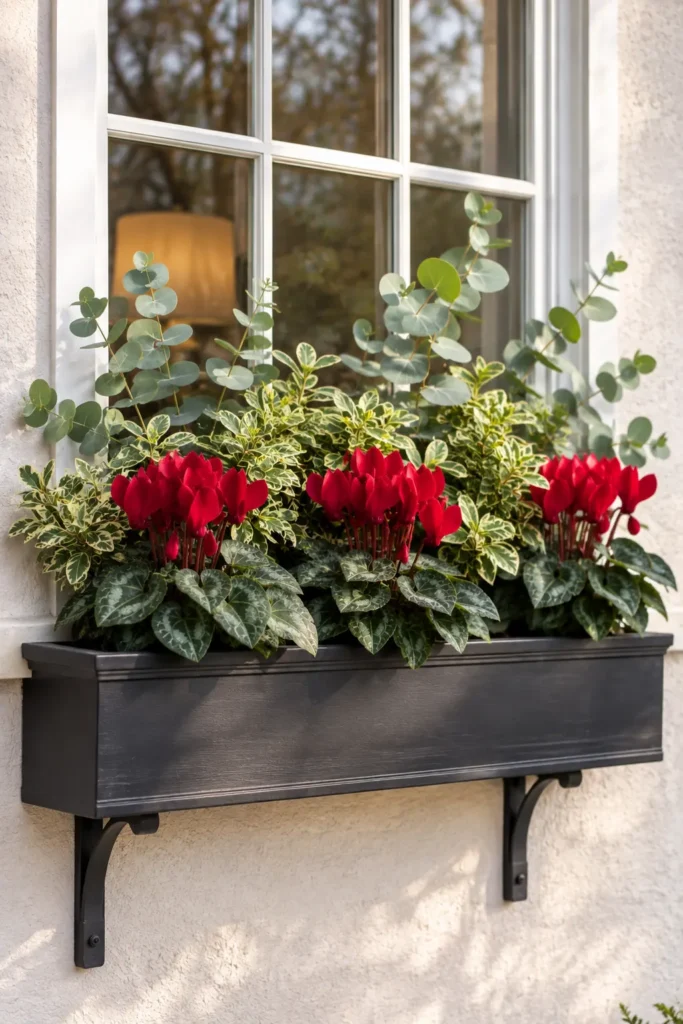
Not every Christmas comes with frost. In mild-winter regions, where most Christmas window box ideas assume snow, a box can be planted with things that actually flower. Set three red cyclamen in the front of the box, tuck variegated pittosporum sprays behind them, and let eucalyptus stems rise at the back.
The cyclamen’s upswept red blooms bring living Christmas color, the cream-edged pittosporum lightens the box, and the eucalyptus adds height and a silvery tone. Cyclamen like cool weather but dislike hard freezes, so if a cold snap is forecast, throw a frost cloth over the box overnight.
8. Birch Log Bundles Standing at Each End of the Box
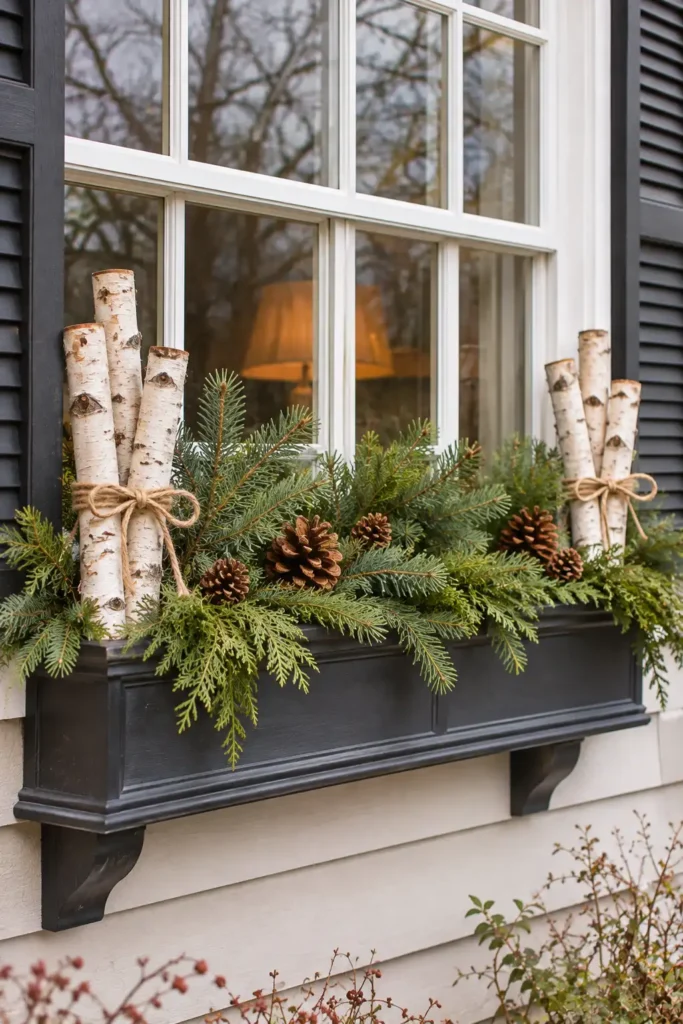
The white bark is what stops people. Stand a small bundle of three short birch logs upright at each end of a dark window box, pushing them well into the soil so they don’t tip. Fill the space between with spruce tips and pinecones.
The pale logs bookend the greenery and give the box height at both ends, which frames the window instead of just sitting under it. Their white bark also catches the light on gray days, when green alone can look flat. Birch logs often come cheap or free from neighbors clearing fallen trees, and they’re worth keeping for next year.
9. Christmas Roses Planted With Boxwood and Juniper
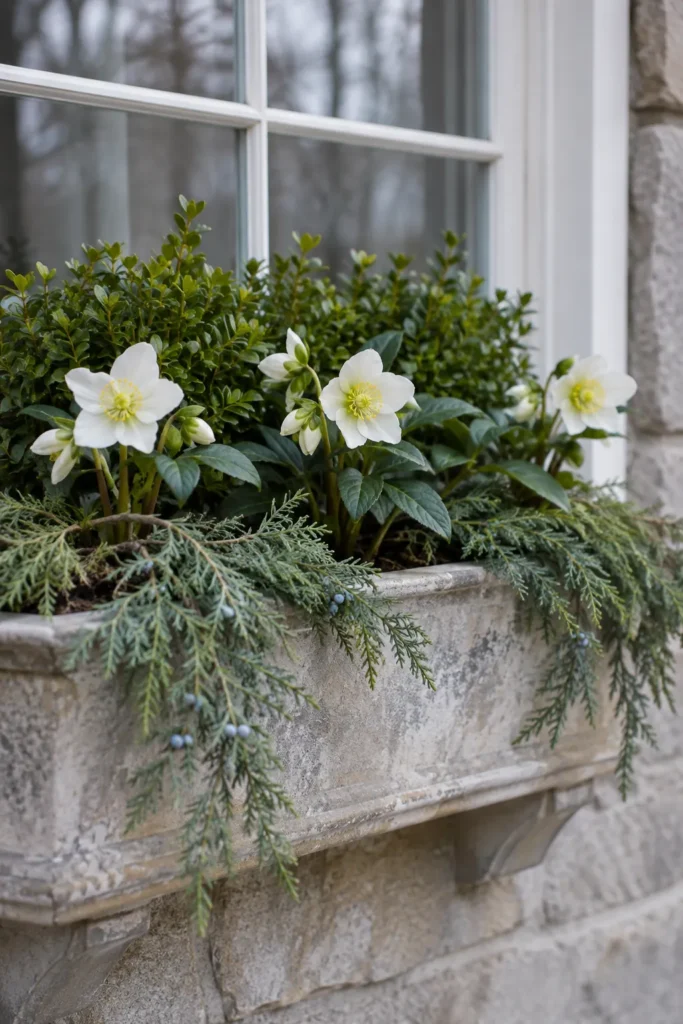
Christmas roses bloom right when everything else has stopped, which is what makes them worth planting in a window box. Plant two or three hellebores with white flowers along the front of a stone-look box, then fill behind them with small boxwoods and let juniper sprays trail over the edges.
The white blooms against dark boxwood leaves look clean and wintry, and the juniper softens the hard edge of the box. Hellebores are tough perennials that handle cold well, so the box keeps flowering through winter. When spring comes, move them into a shady bed, where they’ll come back year after year.
10. A Glowing Box of Cedar, Pine, and Battery Micro Lights
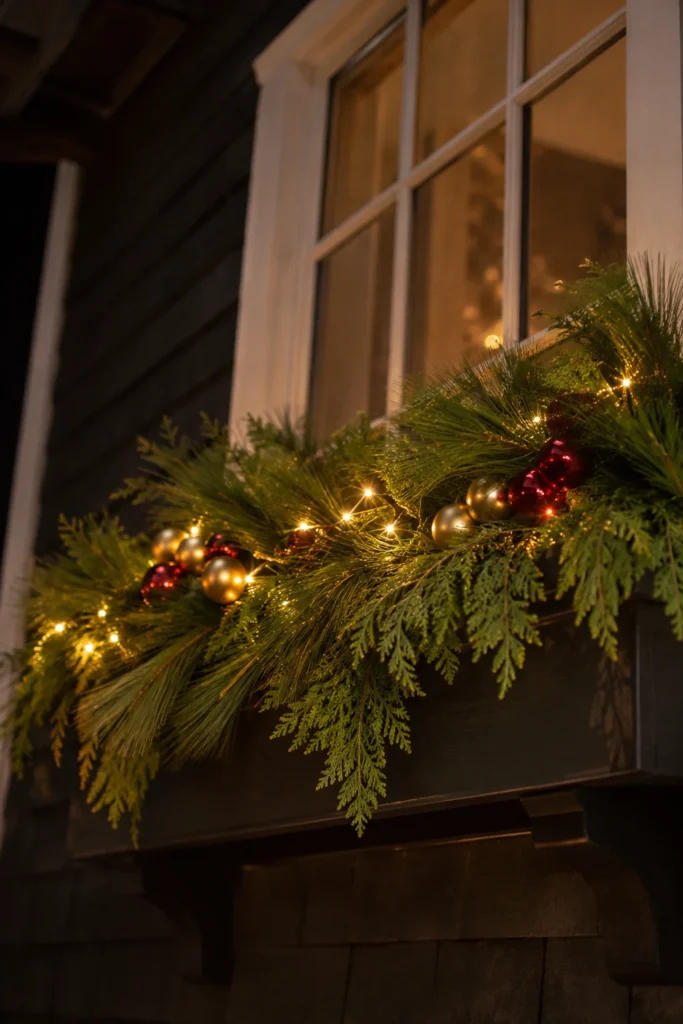
Most window boxes sit nowhere near an outdoor outlet, so a plug-in strand means a cord running across the wall. Battery micro lights on thin copper wire avoid the problem.
Fill a box with cedar and pine, then wind the micro lights from the center outward, pushing the wire deep into the greens so the bulbs glow from inside. Tuck the battery pack into a small zip-top bag at the back corner of the box, under the greens, where it stays dry. Add a few clusters of red and gold shatterproof ornaments near the lights so they catch the glow. Choose a light set with a built-in timer and the batteries last far longer. That also settles whether to leave Christmas lights on all night.
11. A Kitchen Window Box of Rosemary, Sage, and Pine Sprigs
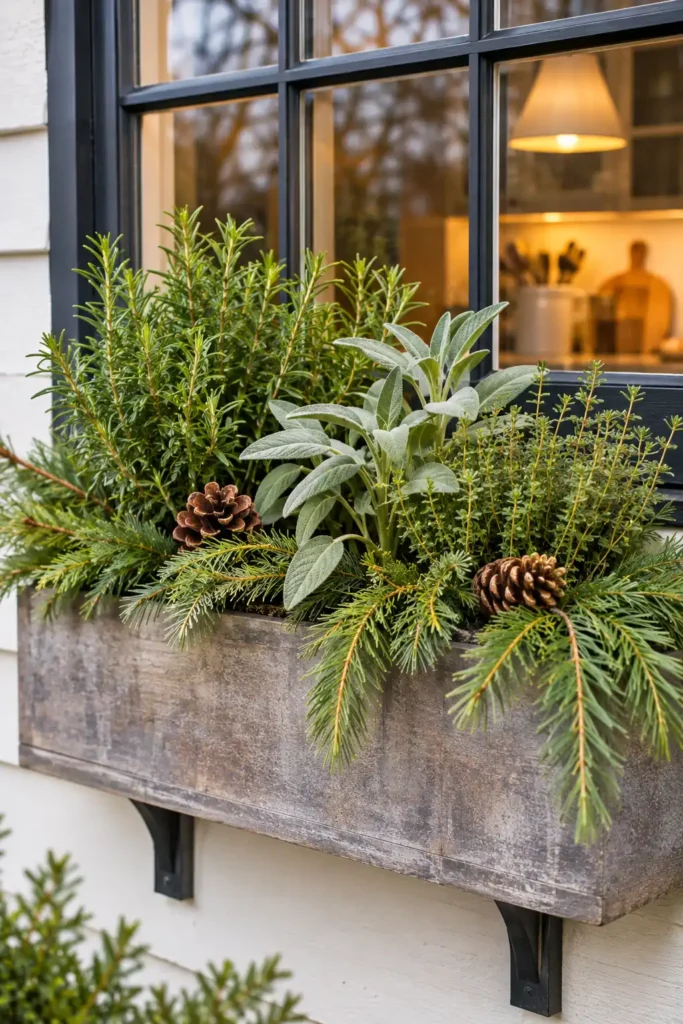
A window box outside the kitchen can earn its keep after the holidays. Plant rosemary, sage and thyme together in a box outside the kitchen window, then tuck short pine sprigs and a few small pinecones in around them for Christmas.
The silvery sage and needle-like rosemary look almost like evergreens themselves, so the herbs and pine blend into one arrangement. You get a festive box from the street and a handful of fresh herbs every time you cook. Snip from the back of each plant so the front stays full. Rosemary and sage can struggle in hard freezes, so in cold regions, enjoy the box through the holidays and plan to replant the herbs in spring.
12. A Berry-Free Box for Homes With Curious Pets
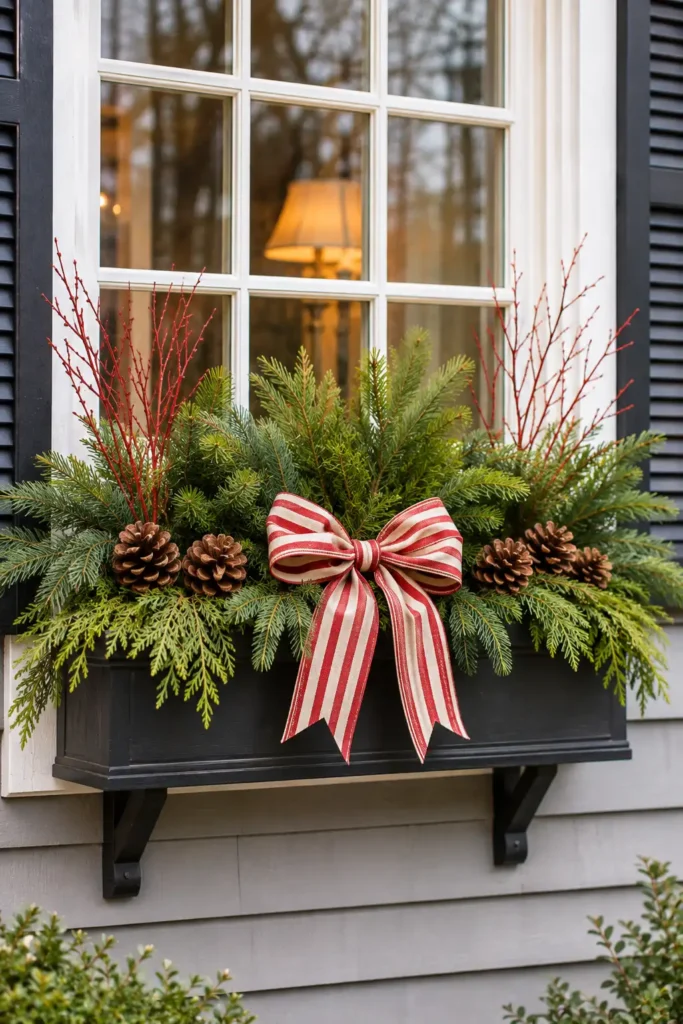
Cats who sit on the windowsill and dogs who sniff everything near the front steps make berry-heavy boxes a worry. This box gets its Christmas color from somewhere else. Fill it with fir and cedar, stand a few red twig dogwood stems at the back for height, and wire clusters of pinecones along the front. Finish with a wide red and white striped ribbon tied in a bow at the center.
The red stems and striped ribbon carry the festive color, and the pinecones add the natural texture berries usually provide. Leaving the berries out removes the most common worry, but greens can still bother some pets, so check a reliable pet safety list before you build.
13. A Box That Carries From Christmas Into February
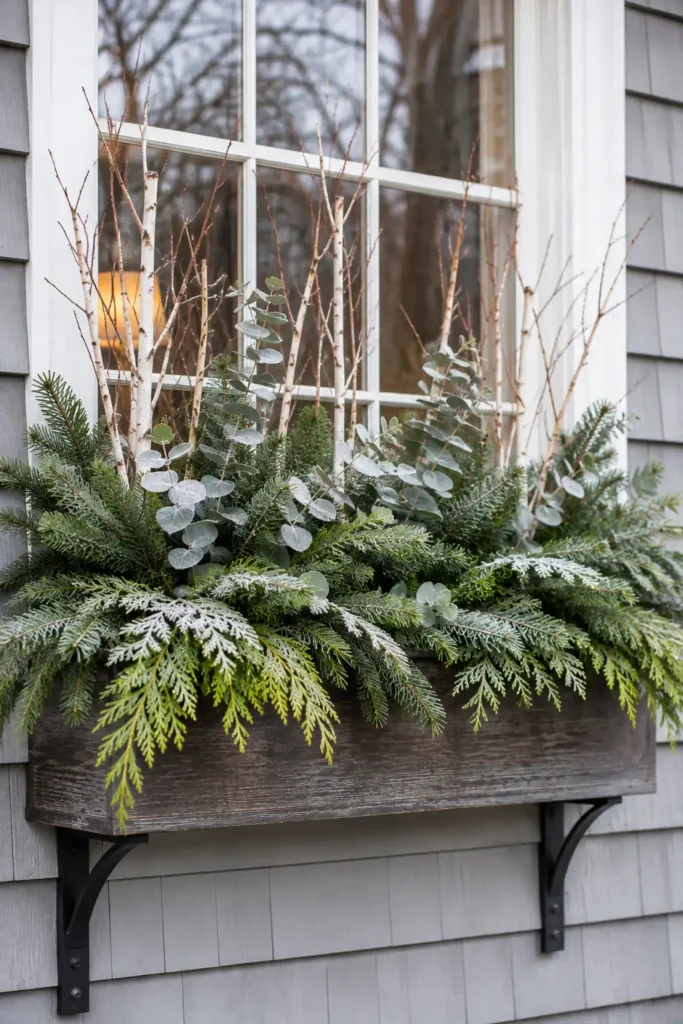
Most Christmas boxes look out of date by January 2. This one changes with the season instead. Build the box on a base of fir and cedar for the holidays, with red ribbon and shatterproof ornaments. Then, after New Year’s, pull the ribbon and ornaments, push white birch twigs in along the back, and add silver eucalyptus stems through the middle.
The evergreens stay put the whole time, so the swap takes minutes. The white twigs and silver leaves give the box a fresh winter look that suits January and February without saying Christmas. Replace any greens that have browned. If you’re clearing the tree out at the same time, these ways to reuse Christmas tree needles put the leftovers to work.
14. Yellow Twig Dogwood and Blue Spruce in the Snow
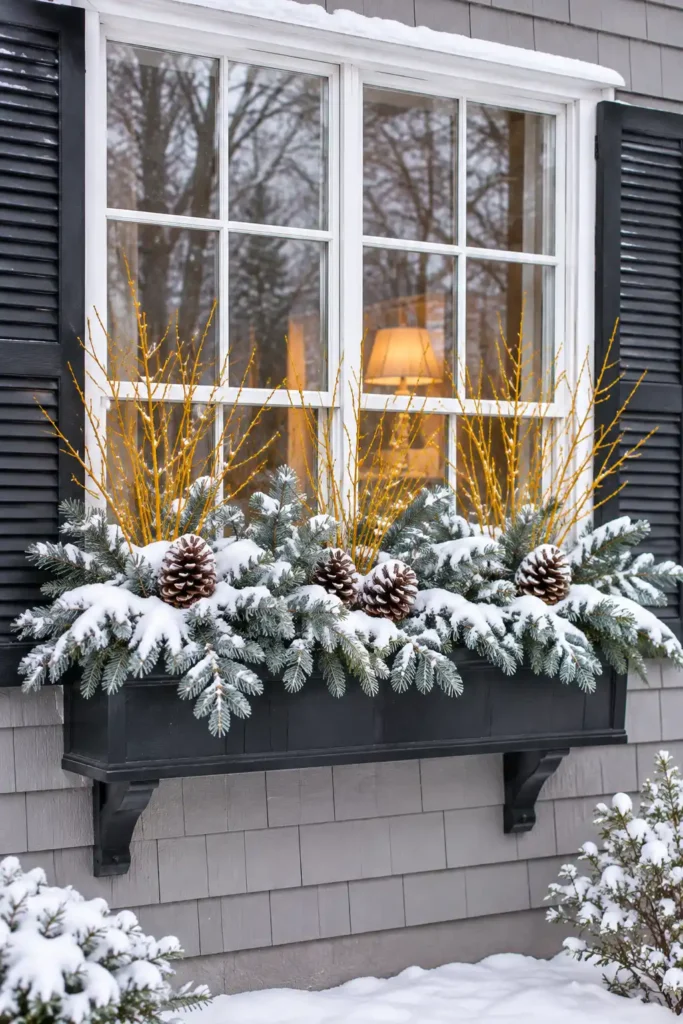
Bright yellow twig dogwood stems rising out of blue spruce look their best under a fresh layer of snow. Stand a row of yellow twig stems along the back of a black window box, pack the front with blue spruce boughs, and scatter large pinecones across the top.
Golden stems against blue-gray needles is an unexpected pairing, cool and warm at the same time, and the black box makes both colors look sharper. When snow settles on the spruce and pinecones, the box looks like a scene from a winter walk in the woods. It’s also one of the few Christmas boxes that looks right straight through to March.
Christmas Window Box FAQ
How long do cut evergreens last in a window box?
In cold weather, cut evergreens set in damp soil usually stay green for several weeks, often well past New Year’s. Tough greens like fir, boxwood and magnolia last longest, while cedar fades sooner in strong sun. Ideas 2 and 13 rely on the longest-lasting greens.
How do I keep window box greens fresh?
Recut the stems and soak them overnight before arranging, then push them deep into damp soil. Water the box whenever the soil is thawed and dry, and mist the greens on mild, dry days. The same advice for keeping a Christmas tree fresh all season works here too.
What can I put in a winter window box if I don’t have fresh greens?
Ask a Christmas tree lot for its trimmings, prune your own shrubs, or mix a few faux stems in among the real ones. Pinecones, birch logs and bare twigs fill space for very little money, as ideas 8 and 14 show, and they can be saved for next year.
When should I put together a Christmas window box?
Late November works well in most regions, once the summer plants are done and the weather is cold enough to keep cut greens fresh. Add ribbon, ornaments and lights closer to the holidays, then swap them out in January, as idea 13 does.
Conclusion
A good window box looks planned from inside the house and from the sidewalk at the same time. Start with damp soil, set the tall pieces at the back, fill the middle, and let the soft greens spill over the front. Then choose one of these Christmas window box ideas to set the mood: classic holly and velvet, cool blue spruce with yellow twigs, or herbs you can snip for dinner. Pack it full and keep it watered, and it will carry the front of the house well past the holidays.
Save this for the first cold weekend of the season.