Every December, the yard quietly fills up with free wreath material. The cedar by the fence needs a trim, the magnolia drops leaves on the path, and the holly is loaded with berries whether you asked for them or not. These Christmas wreath ideas start there, with what’s already growing outside your door.
Below are 18 natural wreaths built from garden greenery. They include mixed cedar, fir, and pine, southern magnolia, and holly with red berries. There are also kitchen herbs, pinecones that shrug off frost, and dried hydrangea and seedheads saved from last summer. A few go beyond the front door: onto a fence for the birds, into the windows of a rental, and flat on the dining table around candles.
Each idea names exactly what to cut and how to put it together. It also covers the details that decide how long a fresh wreath lasts, like shade, wind, and indoor heat. You’ll find a fix for a sunny door too, plus an option for warm climates where cut greens fade fast.
QUICK DOOR CHECK
Where will your wreath hang?
18 Natural Wreaths to Make From Your Garden Greenery
Each wreath below starts with greens you can cut from your own yard, a neighbor’s hedge, or the lower branches of your Christmas tree. The list opens with the classics, then moves on to wreaths for sunny doors, windy fences, warm climates, and the dining table. For every one, you’ll learn what to cut, how to wire it, and where it lasts longest.
1. Cedar, Fir, and Pine: The Whole Yard in One Wreath
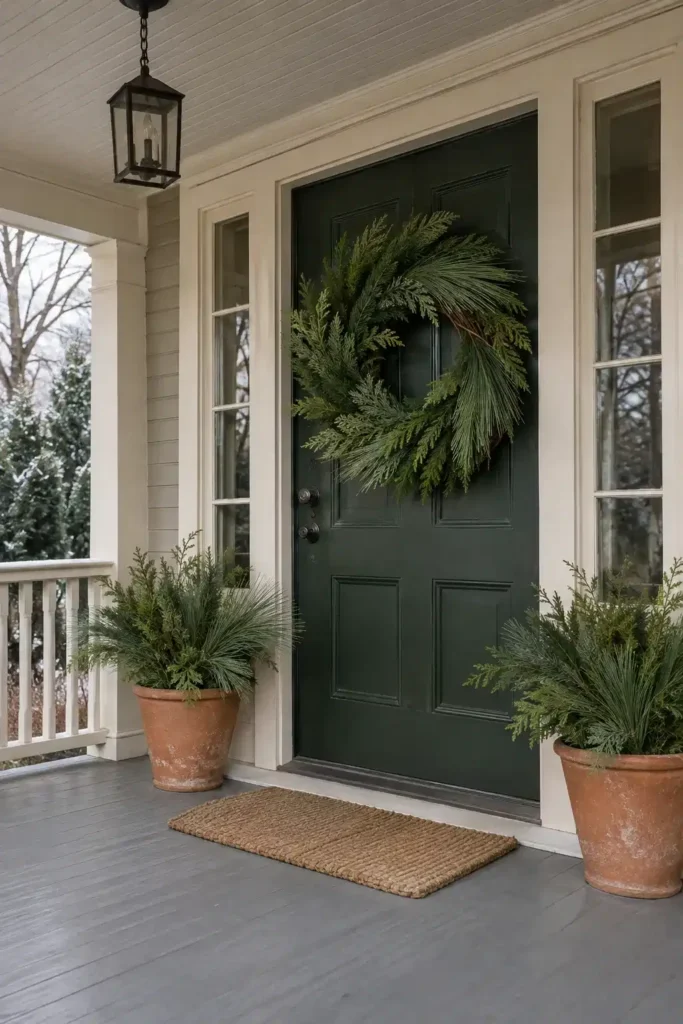
A wreath made from three evergreens in your yard looks richer than one kind bought by the box. Feathery cedar brings softness. Fir brings stiff, dark needles that hold their shape, and long-needled white pine adds a loose, brushy edge. The fir does the structural work, so the cedar can drape without the wreath going flat.
Bundle one stem of each together. Wire the bundles onto a grapevine base, all pointing the same way, so each new bundle hides the wire of the last. Soak the cut stems in a bucket of water overnight first, because thirsty greens dry out faster on a door.
You will need: a grapevine wreath base, cedar, fir, and white pine clippings, green floral wire, pruners, and a shady front door.
Clip a few extra stems for the pots by the door too, and borrow from these outdoor Christmas planter ideas so the whole porch reads as one look.
2. Southern Magnolia Leaves With Their Bronze Backs Showing
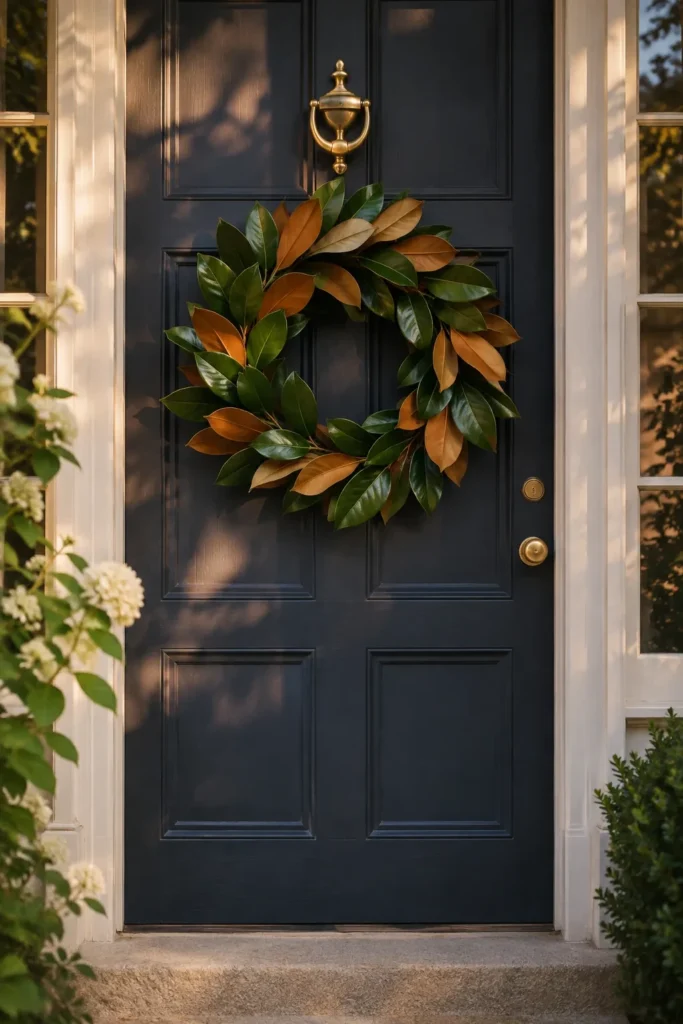
The best part of a magnolia leaf is the side most people hide. Flip one over and the underside is a soft, suede-like cinnamon brown, a warm contrast to the glossy green top.
Wire the leaves in clusters of three, two green faces and one bronze, working around a wire wreath frame so the colors alternate in a loose rhythm. That mix keeps a magnolia wreath from feeling heavy. The big leaves read bold from the street, and the brown backs stop all that green from turning into one dark ring on a black or navy front door.
Southern magnolia is also one of the longer-lasting greens for a wreath. As the leaves dry, they tend to keep their shape and curl a little at the edges.
No magnolia nearby? Bay laurel leaves make a smaller, finer version of the same idea.
3. Glossy Holly and Red Berries for a Classic Front Door

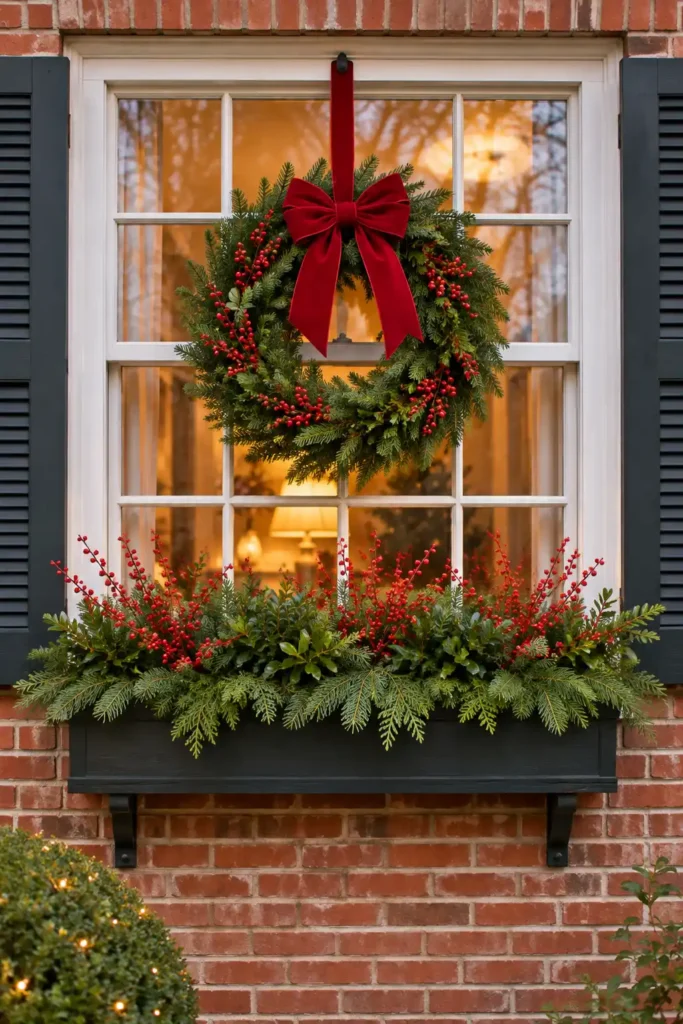
Holly is the wreath most people picture first, and it earns that spot. Glossy dark leaves and clusters of red berries look sharpest against a white or cream front door, finished with a wide red velvet ribbon tied at the top.
On its own, holly is stiff and gappy. A base layer of fir or cedar fills the spaces between those spiky leaves, which keeps the wreath full instead of see-through. The berries then sit on top, where they catch the light.
Styling note: Wear leather gloves, and wire the holly on last, after the base is full, so the leaves don’t snag every stem you add. Hang the wreath above the reach of small kids, since the berries are a choking risk, and check a reliable pet safety list if you have animals.
If that red velvet carries onto your tree, these velvet bow ideas for the tree tie the front door and the living room together.
4. Dried Orange Slices and Fir for a Warm Winter Glow
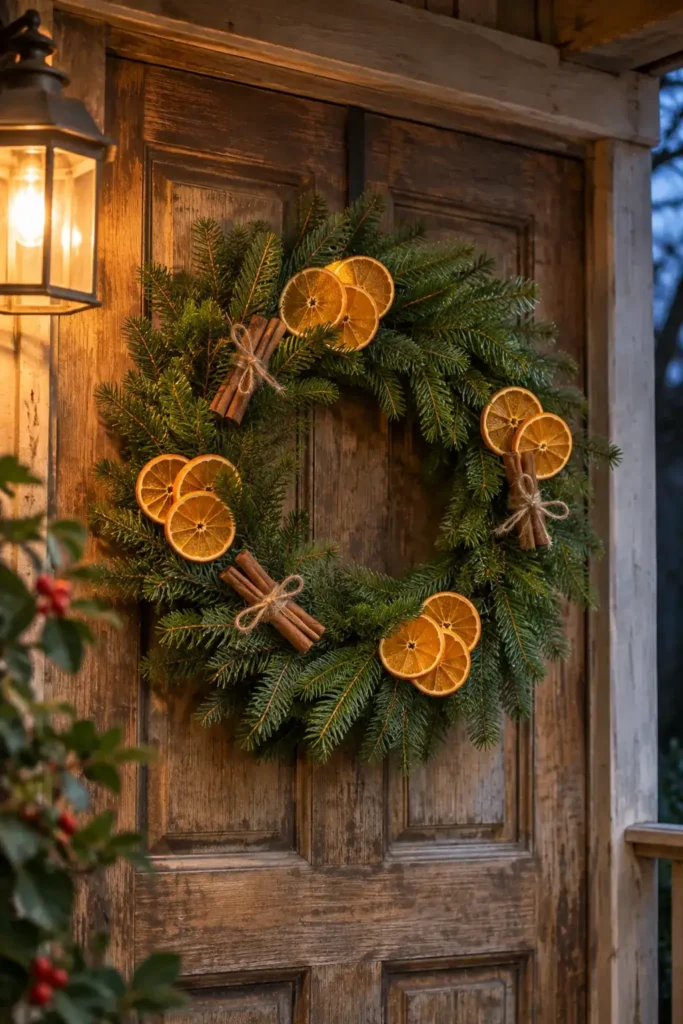
Deep green fir with dried orange slices is one of the most cheerful natural Christmas wreath ideas, and the oranges come from your fruit bowl. Slice them thin and dry them on a rack in a low oven for several hours. Flip them now and then until they feel leathery.
Wire the slices in clusters of three, each with a small bundle of cinnamon sticks tied in jute twine, and the wreath looks warm and planned. Scatter single slices everywhere and it looks like a fruit bowl tipped over. The dark fir makes the orange glow, especially when the porch light hits it at dusk.
Hang this one under a covered porch. Rain softens dried fruit quickly, and soggy slices turn sticky and brown.
5. A Rosemary, Bay, and Sage Wreath for the Kitchen
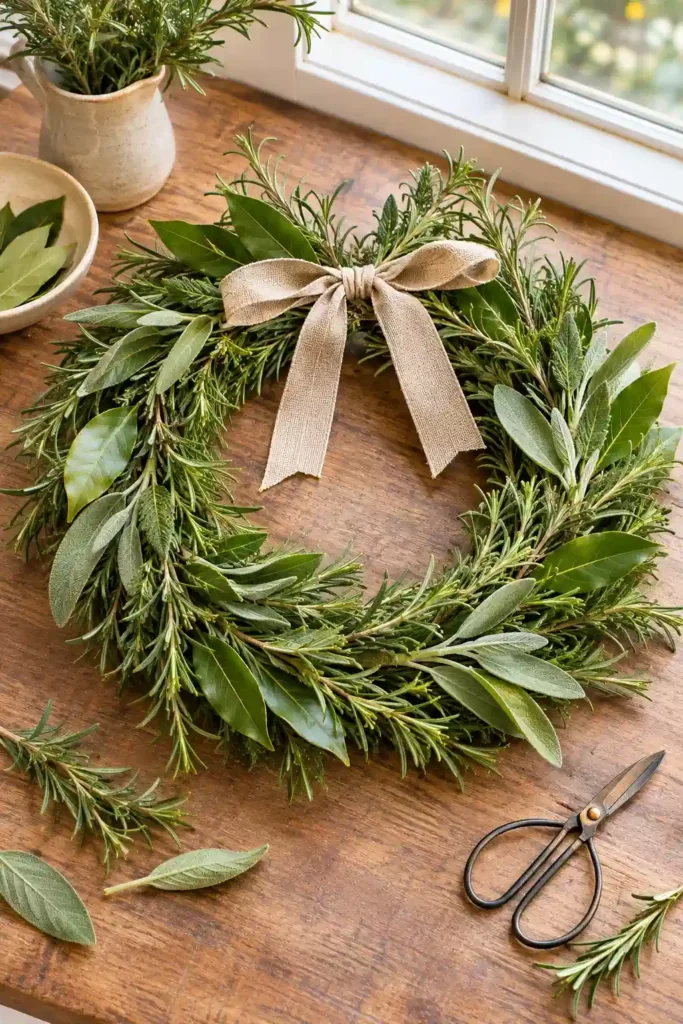
Herbs make the one wreath you’re allowed to pick at while dinner cooks. Long rosemary stems give the base its shape, bay sprigs add flat, glossy leaves, and soft gray-green sage fills the gaps with a velvety texture. Wired onto a slim wire frame, the three make a tidy, tonal ring for a kitchen window or a pantry door.
The mix also dries well. Rosemary and bay keep much of their color and scent as they dry, so the wreath still looks good in January, and you can snip a sprig for the roasting pan whenever you need one. Sage will curl and darken a little, which looks rustic rather than tired.
Get the look: a slim wire wreath frame, long rosemary stems, bay sprigs, garden sage, green floral wire, a narrow natural linen ribbon.
6. The Free Wreath Hiding in Your Christmas Tree Trimmings
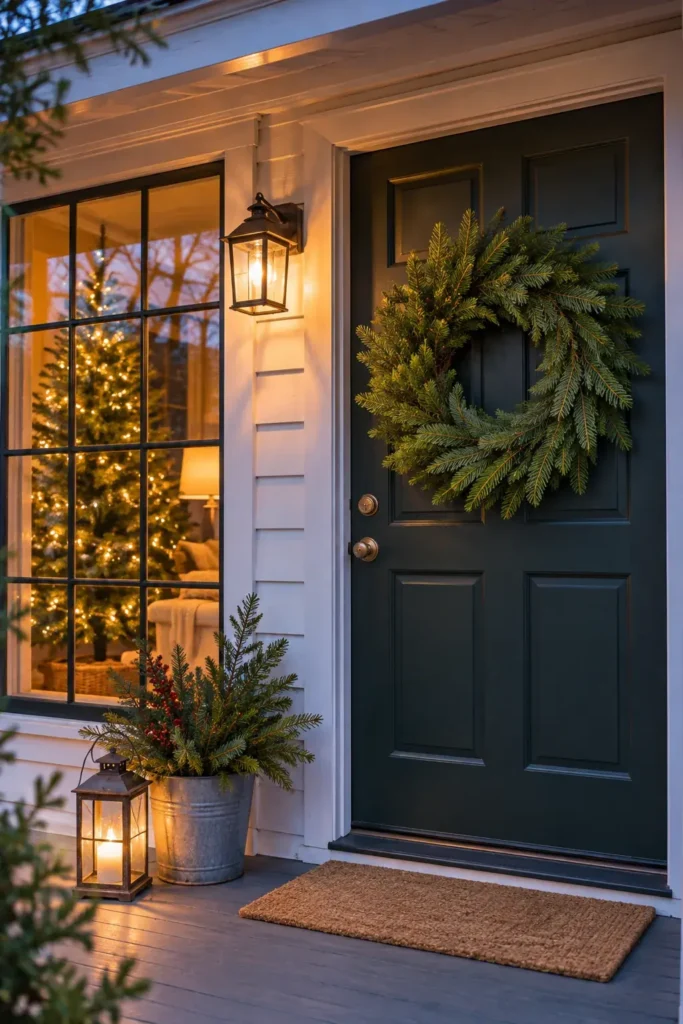
Store-bought fresh wreaths cost real money, and many people leave the makings of one lying in the driveway. When you trim the lowest branches off a fresh-cut fir so the trunk fits the stand, keep them. They’re already the right greenery for a DIY evergreen wreath.
Cut the branches into short, hand-length pieces and bundle them in threes. Wire the bundles onto a grapevine base, overlapping each one over the last. The front door wreath then matches the tree inside, in scent and in color, which ties the house together without any extra shopping. Buying a tree from a lot? Ask for the trimmed branches they cut off for other customers too.
While the wreath goes up, these tips for keeping your Christmas tree fresh help the tree inside last as long as the greens on the door.
7. Dried Hydrangea Heads Set Into Deep Green Cedar

Look closely at a hydrangea head left on the shrub into late fall. The color has faded to antique pink, dusty blue, or papery green, and those muted tones make a garden greenery wreath feel soft rather than strictly red and green.
Cut the heads on a dry day and hang them upside down indoors to finish drying. Then wire three or five of them in a loose cluster at the bottom of a cedar wreath on a wire frame. The cedar’s flat, deep green frames the faded petals so they don’t look washed out, and the odd-numbered cluster keeps the arrangement looking natural.
One mild warning: dried hydrangea is fragile and hates rain. Hang this wreath indoors, or on a door under a deep porch roof.
8. A Tight Boxwood Ring With Bright Nandina Berries
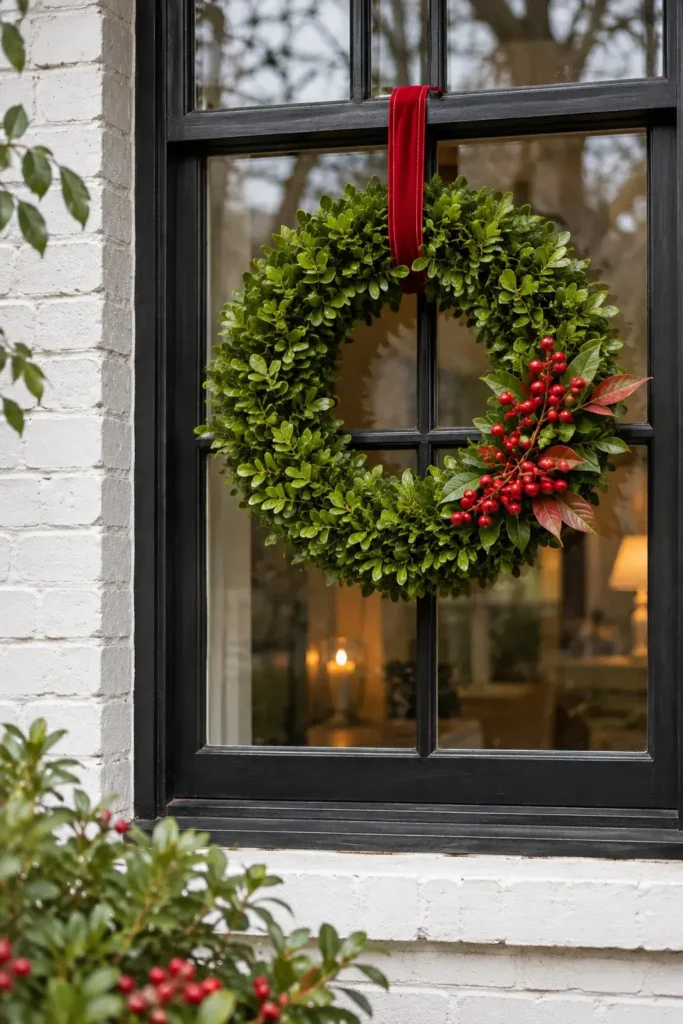
Boxwood makes the neatest wreath in the garden. Its small, rounded leaves pack into a dense, even ring that looks clipped and tailored. It suits a black window frame, a small door, or a narrow entry where a big shaggy wreath would crowd the space. A few clusters of red nandina berries tucked at one side give it color without spoiling the clean shape.
For the smoothest look, cut every boxwood sprig to the same short length and angle them all the same way around the frame. That uniform direction gives boxwood its almost sculpted finish. Boxwood also holds up well once cut, so it’s a smart choice for a wreath that needs to last the season. If you have pets, check a reliable pet safety list before bringing berries indoors.
9. Eucalyptus and Incense Cedar Over the Mantel

Most fresh Christmas wreath greenery struggles in a warm living room, and a mantel puts it right above the heat. Eucalyptus and incense cedar handle indoor life better than most. Silver-blue eucalyptus dries fast but gracefully, holding its shape and much of its scent. Incense cedar adds flat, bright green sprays with a clean, spicy smell.
The warm green of the cedar keeps the cool eucalyptus from feeling icy against a white painted mantel, so the pair reads as one soft color story.
Hang it above the mantel only if the fireplace stays unlit. With a working fireplace or wood stove, move it to a nearby wall, well clear of flames and heat. Mist the back every few days. Dry winter air is the other problem, and the advice on running a humidifier near your Christmas tree applies to fresh greens on the wall too.
10. Spruce and Larch Cones Wired Over a Fir Base
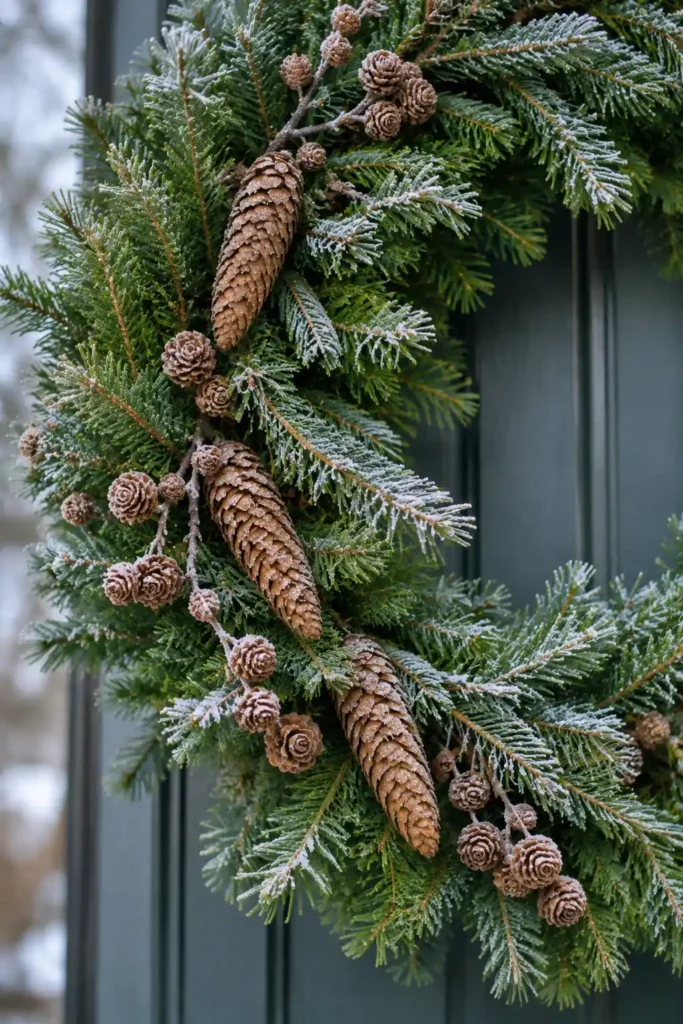
Pinecones are the hardest-working accent in a natural wreath because they shrug off rain and frost that would ruin dried fruit or flowers. Lay long, slender spruce cones along the curve of a fir wreath, then add small larch cones in clusters, still on their twigs. The dark fir makes the warm brown cones stand out, even from the end of the front walk.
Wire them on and the wreath looks the same in week five as it did on day one. Hot-glue them on a cold, open porch and the first hard freeze can pop them loose. Wrap floral wire around the bottom row of scales, twist it into a tail, and wire that tail straight to the frame.
11. Faux Wreath, Fresh Clippings: The Sunny Door Fix
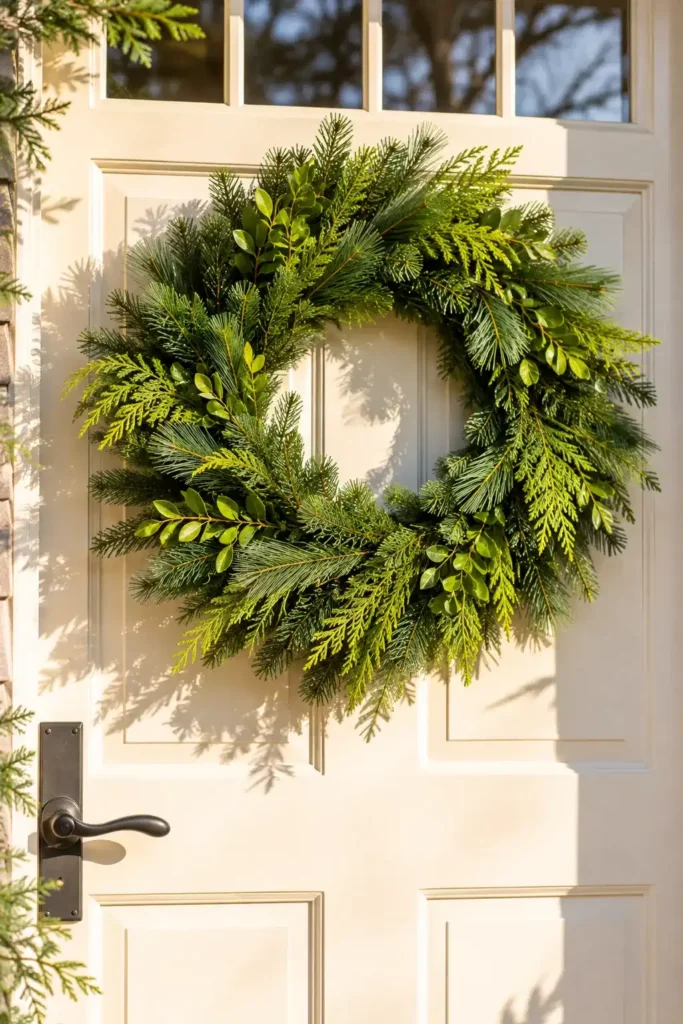
A front door that bakes in afternoon sun is hard on fresh greens, which brown fastest in direct light. A good faux pine wreath solves half the problem. Tuck fresh cedar and boxwood sprigs into it and you get the scent and texture of real greenery on a base that never dries out.
Styling note: Fluff the faux branches first, the same way you’d fluff a faux Christmas tree, then push the fresh stems in at the same angle as the faux tips so the two blend. When the fresh pieces fade, pull them out and tuck in new ones from the yard.
| Where the wreath hangs | What tends to work |
|---|---|
| Shady, covered front door | Any fresh mix: cedar, fir, pine, holly |
| Door in full sun | Faux base with fresh tucks, or southern magnolia |
| Indoors near heat | Herbs or eucalyptus that dry well, kept clear of vents and fireplaces |
| Windy gate or fence | Tight bundles of juniper or boxwood, wired firmly and tied at top and bottom |
12. Seedheads and Grass Plumes for a Wild Meadow Wreath

The fluffy silver seedheads of clematis, left on the vine after flowering, are where this wreath starts. Add tan ornamental grass plumes, a few spiky teasel heads, and a little juniper at the base for green, all wired onto a loose willow hoop. It’s a homemade Christmas wreath from the garden in the truest sense, made from everything you didn’t cut back in fall.
The stiff teasel gives the soft grass plumes something to lean against, so the wreath keeps its shape instead of going limp. A light mist of unscented hairspray on the plumes helps stop shedding indoors. Rain flattens grasses quickly, so keep this one inside or under a porch roof.
13. A Bird-Friendly Crabapple and Rose Hip Fence Wreath

A bare winter garden can look empty from the kitchen window. A wreath on the fence fixes the view and feeds the birds at the same time. Build a juniper base, then wire on small crabapples still on their stems, clusters of red rose hips, and a few seedheads. It’s a foraged Christmas wreath meant to be picked apart, slowly, by visitors with feathers.
Wind is the real enemy out there. Wire every bundle tightly and tie the wreath to the fence post at both the top and the bottom so it can’t swing and shed. Skip glitter, paint, and plastic picks, since the birds will be pecking at all of it. It sits happily alongside other backyard Christmas decorating ideas for long winter nights.
14. A Curly Willow Crescent With Greenery on One Side

A full ring of greens says traditional. Leave most of a curly willow hoop bare and pile greenery on just one side, and the same front door looks modern.
Wind a few twisty curly willow branches into a loose hoop, then wire a crescent of cedar and a few juniper sprigs along the lower left curve. Finish with an undyed linen ribbon, knotted once, with long tails. The bare willow does as much work as the greens, because its empty curve gives the eye somewhere to rest on a white or pale gray door. It also takes about a third of the greenery a full wreath needs, which helps when the shrubs are looking thin.
15. A Living Succulent Wreath for Mild Winter Climates
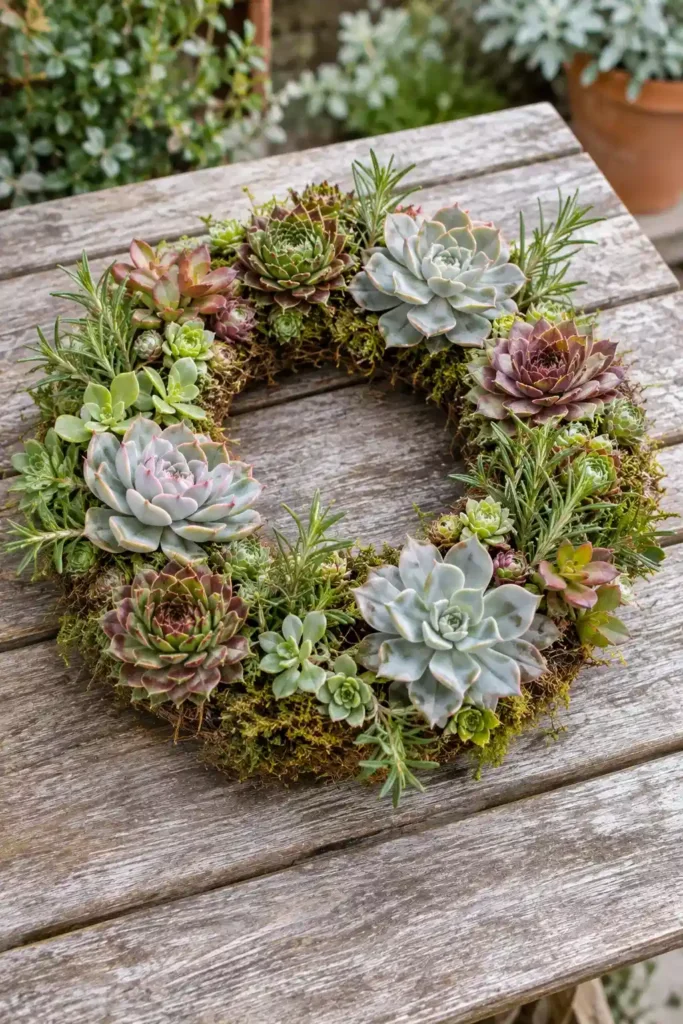
In warm regions, cut greens can dry out within a couple of weeks. Plant the wreath instead. Rosettes of hen and chicks and gray-green echeveria tucked into a moss-filled wire wreath form give soft blush and silver tones that last well past Christmas. A few sprigs of rosemary woven between them keep it feeling festive.
The damp moss holds moisture around the stems, which lets the rosettes root in and grip the form.
Planting note: Let the finished wreath lie flat in bright shade for a few weeks so the plants root before you hang it. Water by soaking the form whenever the moss feels dry. Most echeveria dislike frost, so bring the wreath under cover if a cold night is forecast.
16. Three Mini Juniper Wreaths Hung on Ribbon in the Windows
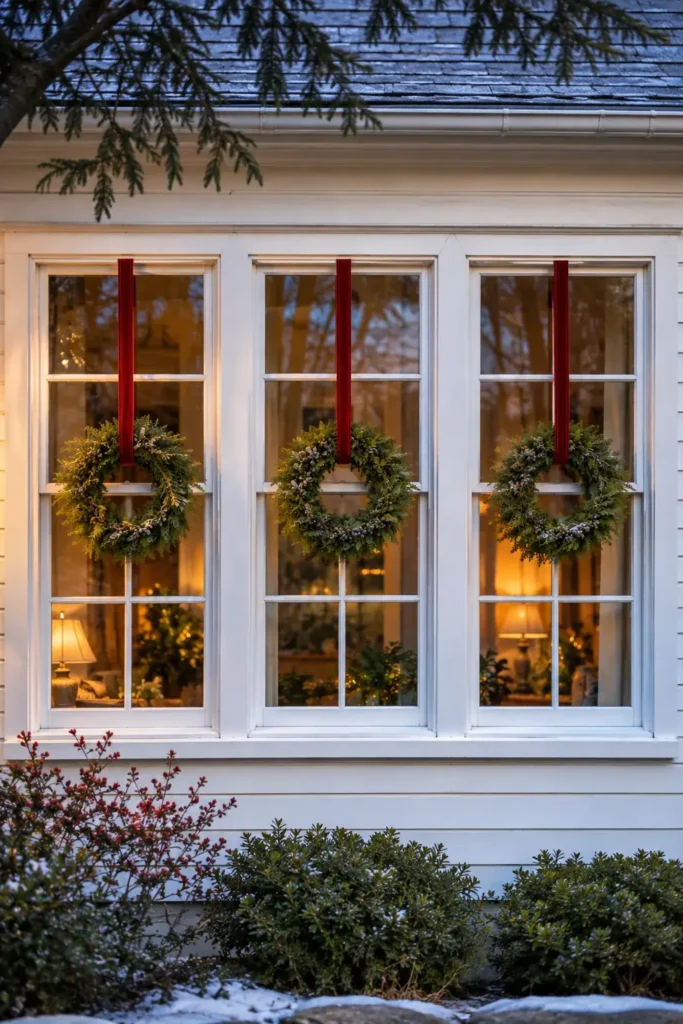
Small windows and rental doors don’t need one big wreath. Three little juniper rings, each hanging from a long red ribbon in a row of front windows, read clearly from the street and repeat the same note three times, which looks deliberate instead of sparse.
Hang them on the outside of the glass from removable outdoor hooks at the top of each frame. Juniper stays fresher in cold air than in a heated room, and nothing gets nailed into a landlord’s trim. Cut every ribbon to the same length so all three wreaths hang level.
You will need: three small wire wreath rings or wooden embroidery hoops, juniper clippings, green floral wire, long red ribbon, removable outdoor hooks.
17. Pine, Birch Twigs, and White Berries Through February
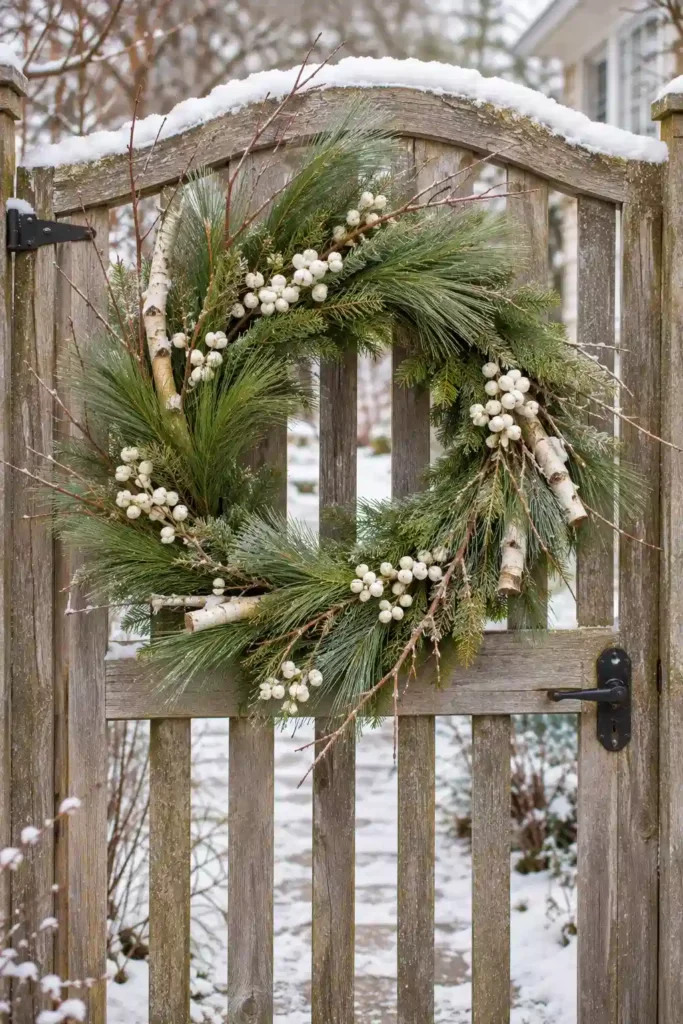
Red bows and holly start to look dated on December 26. A wreath of soft white pine, slim birch twigs, and clusters of white snowberries keeps working until the spring bulbs show up. Hung on a garden gate, it says winter, not Christmas, so nobody feels rushed to take it down. White pine also tends to hold up well outdoors in cold weather.
Let the birch twigs poke a little past the pine so the outline stays airy. The white berries pick up the pale bark, which holds the palette together without any red at all. Skip the ribbon, or use a plain cream one. No birch? Red twig dogwood prunings do the same job with more color. If the gate faces the street, it sits comfortably with classic front yard Christmas decorations.
18. Christmas Wreath Ideas for the Table: Cedar Around Hurricanes
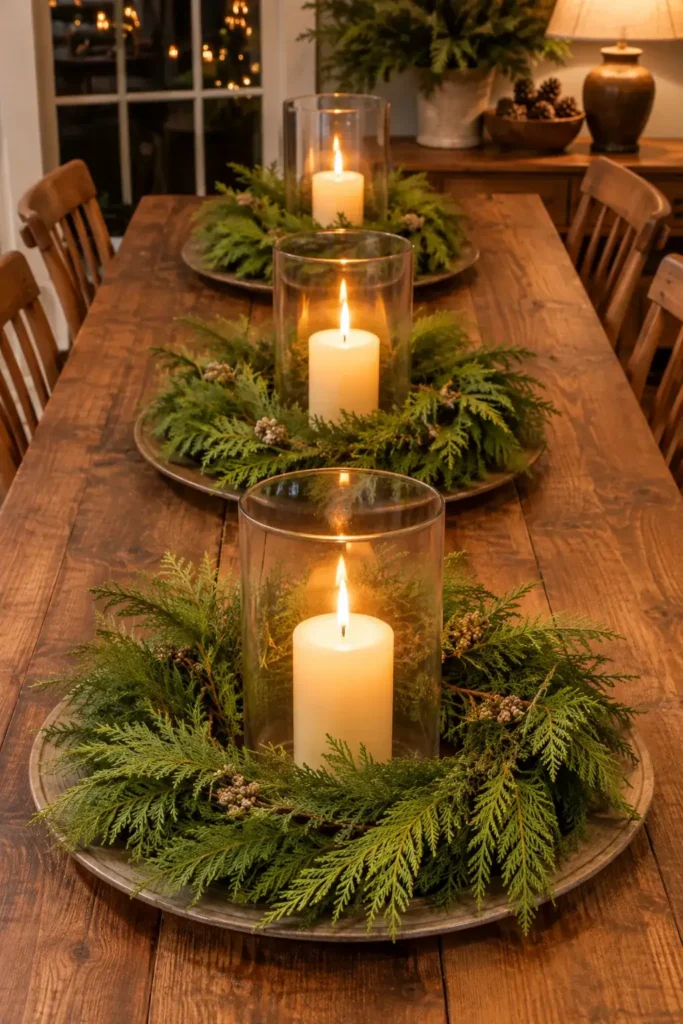
A wreath doesn’t have to hang. Lay a cedar wreath flat in the center of the dining table, set a tall glass hurricane with a cream pillar candle in the middle, and you have a centerpiece that smells like the garden. For a long farmhouse table, run two or three in a row.
The low ring of greens keeps sightlines open across the table, so guests can talk over it instead of around it.
Host tip: Build it on a flat wire frame and set it on a large tray or platter to protect the wood from sap and damp stems.
⚠️ Watch Out
Keep the flame inside a hurricane that stands taller than the candle, and never let greenery lean against the glass. Never leave lit candles unattended. Cut greens burn more easily as they dry, so switch to battery pillar candles once the cedar feels crisp.
How to Make a Fresh Wreath That Lasts the Season
Most of the wreaths above follow the same simple pattern. Soak your cut stems in a bucket of water overnight so they start fully hydrated. Cut them into hand-length pieces and gather them in small bundles, usually one sturdy green with one softer one.
Wire each bundle onto a grapevine base or wire frame, all pointing the same direction, so every new bundle hides the wire of the one before. Add cones, berries, or fruit last, and wire them on rather than gluing. Then hang the wreath in shade, out of strong wind, and mist the back every few days. Indoors, keep it well clear of heat.
Natural Christmas Wreath FAQ
How long does a fresh Christmas wreath last?
Outdoors in a cool, shady spot, a fresh wreath usually looks good for several weeks, and often longer in cold climates. Indoors, plan on about two to three weeks. Sun, wind, and indoor heat shorten that, so shade and regular misting help. Ideas 1 and 11 cover placement.
Can you hang a fresh wreath indoors?
Yes, as long as it stays away from heat vents, radiators, and working fireplaces, which dry greenery fast. Mist the back every few days. Greens that dry well, like eucalyptus, rosemary, and bay, handle indoor life best. Ideas 5 and 9 are built for inside.
What greenery lasts longest in a wreath?
As a rule of thumb, fir, cedar, juniper, white pine, boxwood, and southern magnolia tend to hold up best. Pairing a sturdy green with a softer one helps the wreath keep its shape as it ages. Ideas 1, 2, and 8 lean on these long-lasting choices.
Can you add real greenery to a fake wreath?
Yes, and it’s the easiest answer for a door in full sun. Fluff the faux branches, then push fresh cedar or boxwood stems in at the same angle as the faux tips. Swap in new clippings as the old ones fade. Idea 11 shows the method.
What do you need to make a wreath from garden clippings?
You need a base, either a grapevine wreath or a wire frame, plus green floral wire, sharp pruners, and gloves for prickly greens like holly. A bucket of water for soaking the stems overnight is worth adding too. Ideas 1 and 6 walk through the bundling method.
Conclusion
The best natural wreaths rarely start at the store. They start with a walk around the yard with pruners and a bucket of water, and an honest look at which door gets sun and which corner gets wind. Pick one or two Christmas wreath ideas from this list that suit your space, and cut a little more greenery than you think you need. The leftovers can fill the porch pots or go into a few DIY outdoor Christmas decorations for the porch and yard. When the holidays wind down, the pine and birch wreath can stay up for weeks. Save this for the weekend you finally get the pruners out.