A driveway takes up a surprising amount of visual space in the front yard, so leaving all the attention to the lawn and flower beds can make the whole entrance feel unfinished. The best front yard driveway landscaping ideas treat the pavement as part of the landscape rather than something the plants simply stop beside.
You do not need an elaborate gate or a completely new driveway to get that pulled-together look. Crisp paver borders, repeated evergreen shrubs, ornamental grasses, flowering perennials, low landscape lighting, and a clearly defined walkway can change how the entire approach to the house feels.
The strongest layouts also solve practical problems. Plants stay clear of car doors, lower growth protects street sightlines, and deeper beds give shrubs room to mature instead of spilling onto the pavement.
These 19 ideas range from simple planting changes to stronger hardscape details, with plenty of options for long driveways, wide concrete surfaces, circular drives, narrow borders, sunny pavement, and awkward garage corners.
1. Layer Evergreen Shrubs Along the Driveway
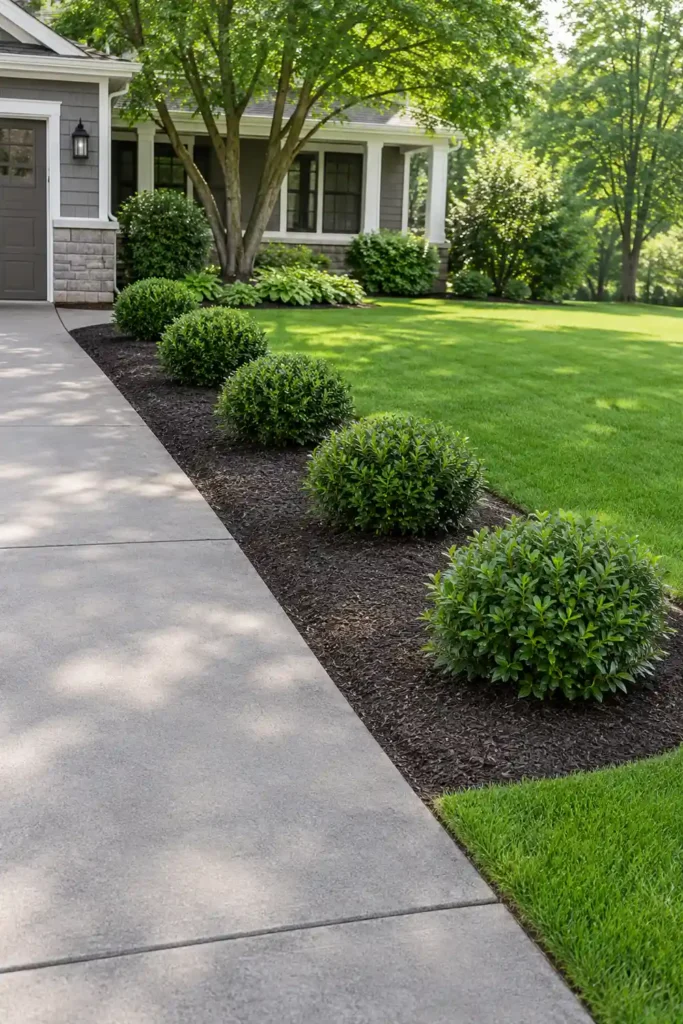
A repeated row of evergreen shrubs can make a basic concrete driveway feel much more considered. Keep the shrubs in generous planting beds rather than squeezing them against the pavement, then finish the soil with one consistent mulch. Rounded forms work especially well because they soften the hard driveway edge without making the front yard look busy.
The expensive-looking part is the repetition. Three or five matching shrubs create rhythm, while small gaps between them keep the planting from turning into a solid green wall. Choose plants based on their mature size so car doors and mirrors still have breathing room.
For more planting inspiration, these front yard bushes and shrubs show how structured greenery can carry a landscape even when flowers are not doing the work.
2. Frame the Driveway Entrance With Ornamental Trees
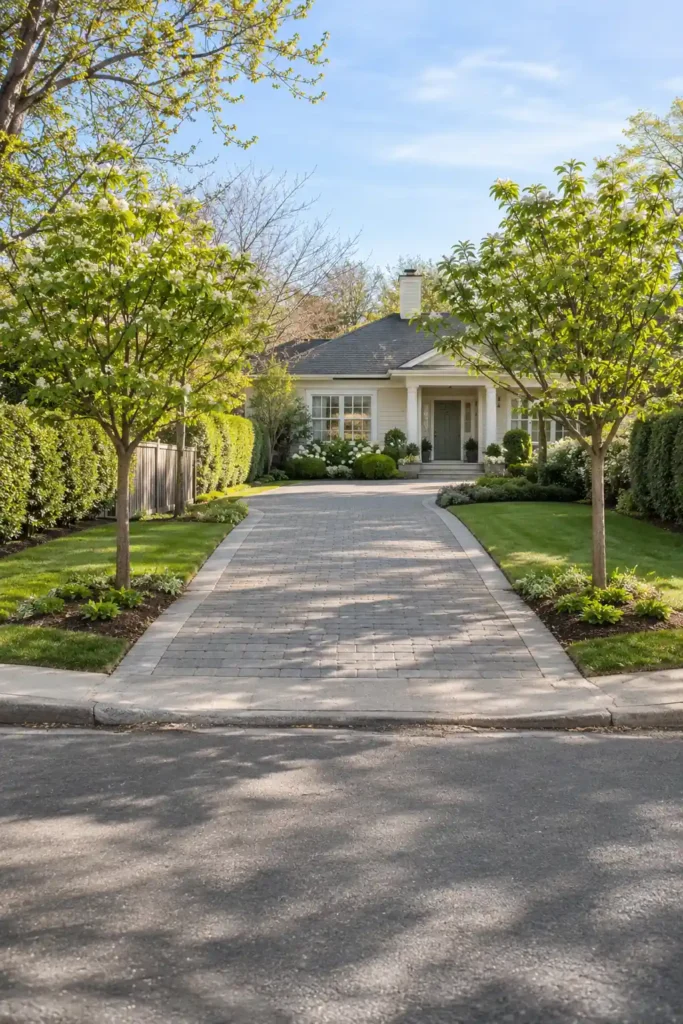
Two small ornamental trees placed near the driveway entrance create an obvious arrival point without needing columns, gates, or a major hardscape project. Set them well back from the street edge, then keep the planting beneath them low with groundcover and a clean mulch line.
That height difference does the design work. The trees draw your eye upward, while the low planting keeps the entrance open and helps preserve clear views toward the road. A matching pair feels formal, but the surrounding bed does not need to be symmetrical down to the last leaf.
Garden Tip: Check the expected mature width before planting. A tree that looks petite at the garden center can become awkward surprisingly fast when it is sitting beside a driveway.
3. Run a Crisp Paver Border Beside Concrete
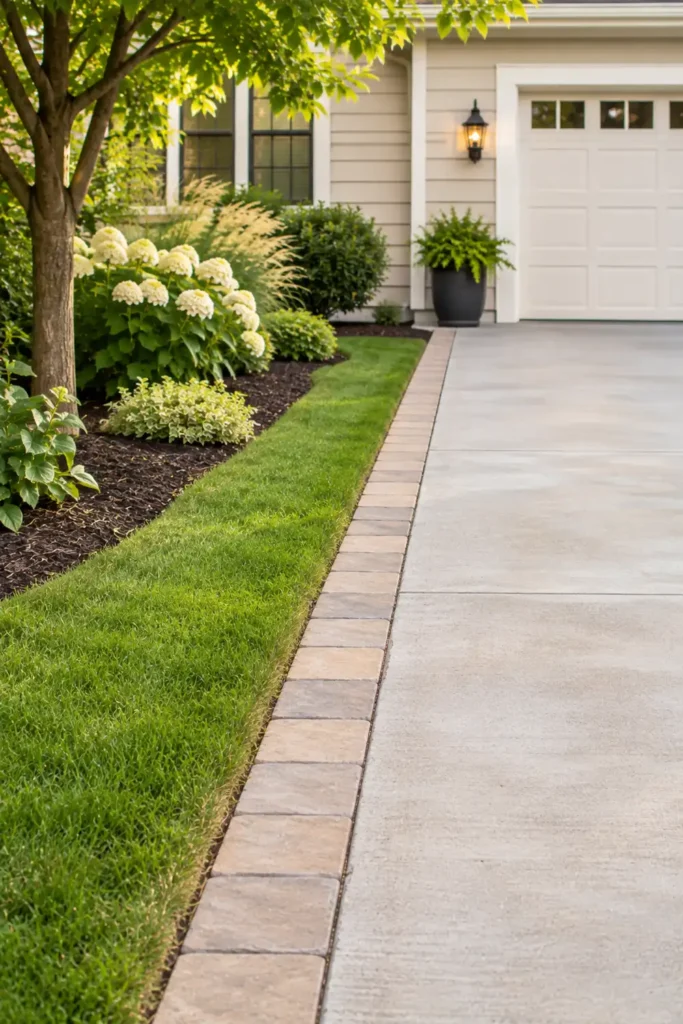
A narrow paver border is one of the simplest ways to make an ordinary poured concrete driveway look more intentional. Use brick, concrete pavers, or natural-looking stone in a tone that already appears on the house, then keep the border consistent from the street toward the garage.
The contrast gives the driveway a clear frame, which makes the larger concrete surface look finished instead of purely functional. It also creates a clean break between paving and lawn or planting beds.
Keep the material palette restrained. One border material, one driveway surface, and one nearby planting treatment usually reads better than mixing several stones just because they are available.
4. Layer Hydrangeas Behind Low Groundcovers
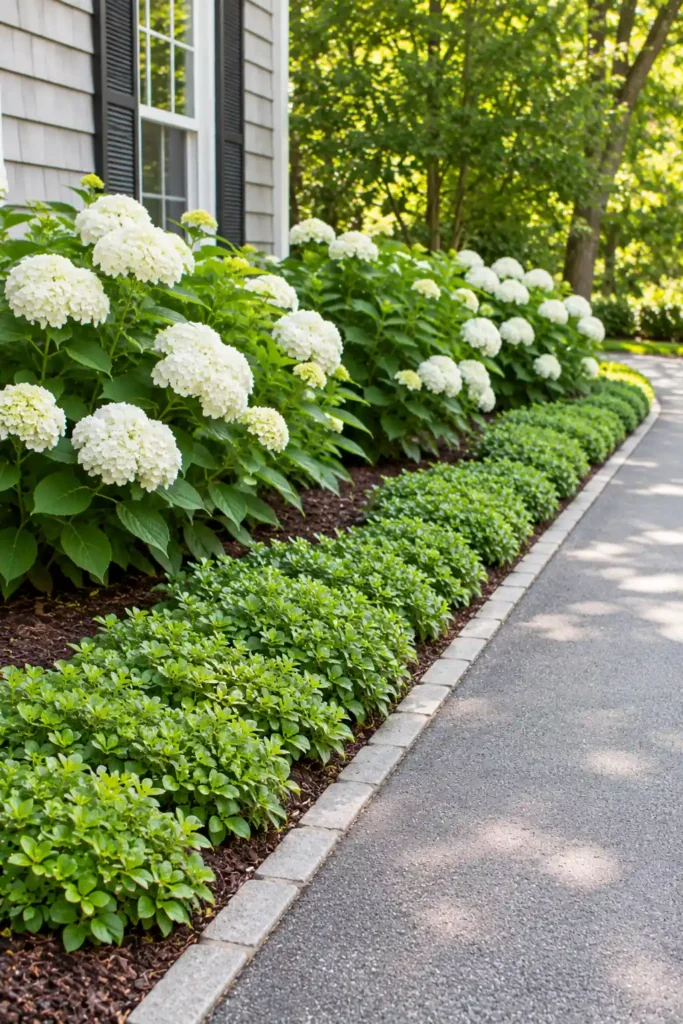
Hydrangeas give driveway border landscaping enough volume to feel established, but they look better when something lower finishes the front of the bed. Place the larger flowering shrubs toward the back, then run a simple groundcover along the edge where mulch would otherwise meet the pavement.
The low layer hides bare stems and keeps the planting connected visually to the driveway. Hydrangeas provide the broad leaves and flowers, while the groundcover creates a quieter base beneath them. That mix of heights makes the bed look deeper than a single row of shrubs.
For a cleaner result, repeat the same groundcover throughout the section rather than switching plants every few feet. The driveway already creates a strong line, so the planting can afford to stay calm.
5. Repeat Ornamental Grasses in Clean Drifts
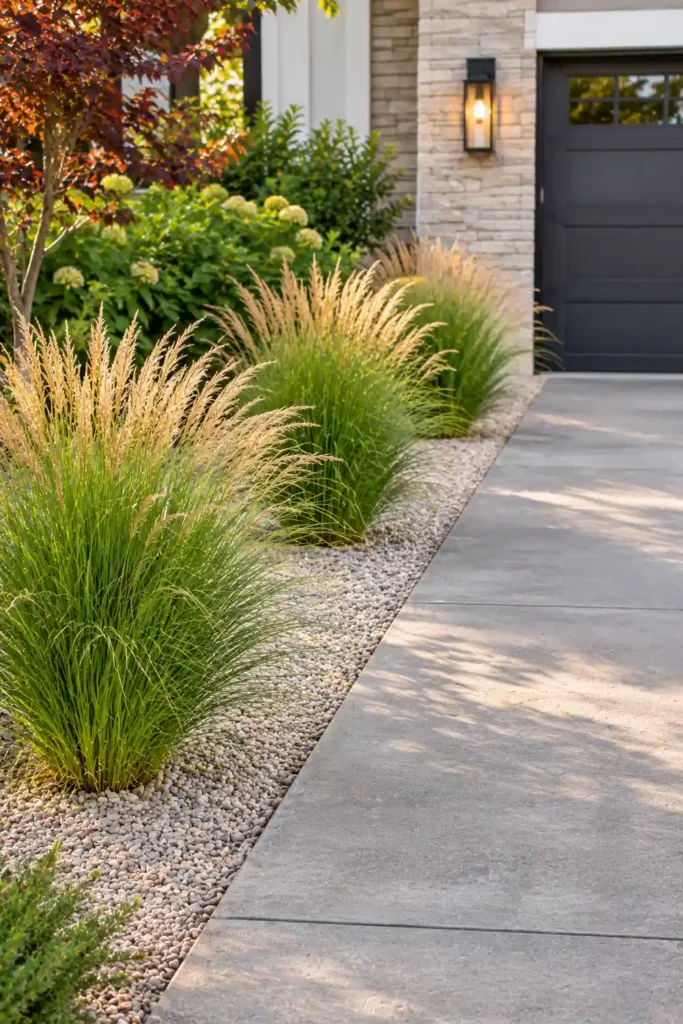
Ornamental grasses look far more polished beside a driveway when they are planted in repeated groups instead of scattered one at a time. Choose one grass type and let several matching clumps run along a gravel or mulch border, leaving enough space for each plant to reach its natural shape.
The repetition gives a long driveway rhythm without making it feel formal or stiff. Fine blades also soften the hard edge of concrete, while their upright form keeps the planting from spilling into the driving area.
For the cleanest result, keep the border material consistent from beginning to end. A simple gravel strip works especially well because it separates the grasses from the pavement and keeps the whole edge visually calm.
6. Build a Stone-Edged Gravel Driveway Border
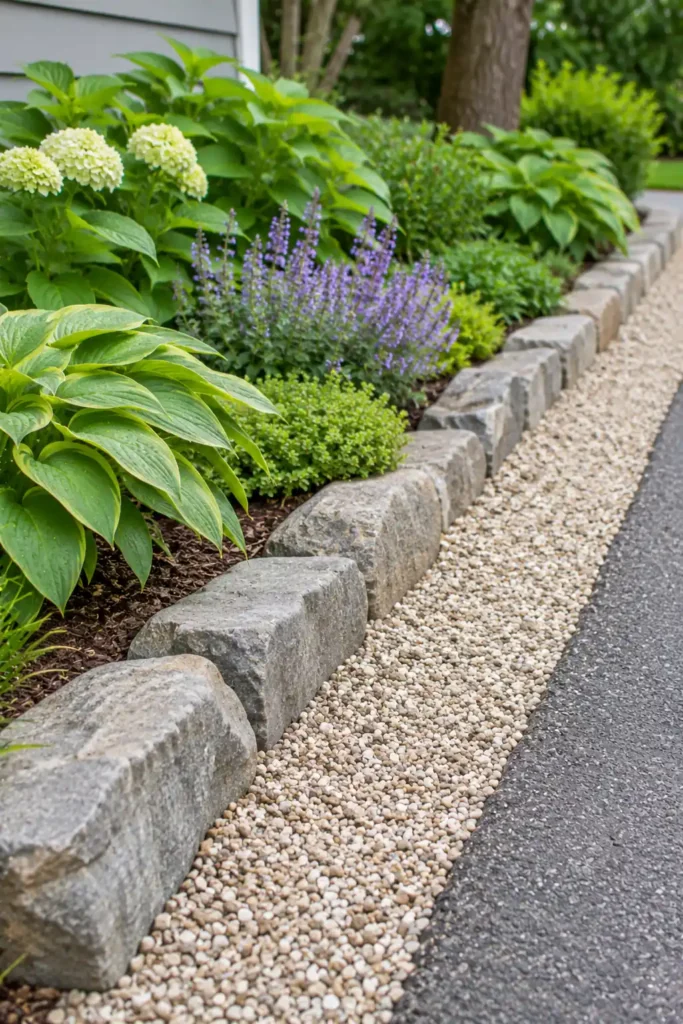
A loose gravel edge can look unfinished until it has something solid holding the line. Add a row of natural stone or simple rectangular edging stones between the driveway border and the planting bed, then fill the inner strip with one gravel color.
That stone edge gives the gravel a deliberate stopping point, while the gravel creates breathing room between pavement and plants. The mix also introduces texture without demanding a large planting scheme.
Skip tiny decorative stones in several colors. One gravel tone paired with one larger stone material looks more composed and is easier to repeat along the full driveway. If the front yard already uses stone near the house, echoing that material here helps the driveway feel connected to the rest of the landscape.
7. Plant a Low Flower Ribbon Beside the Driveway
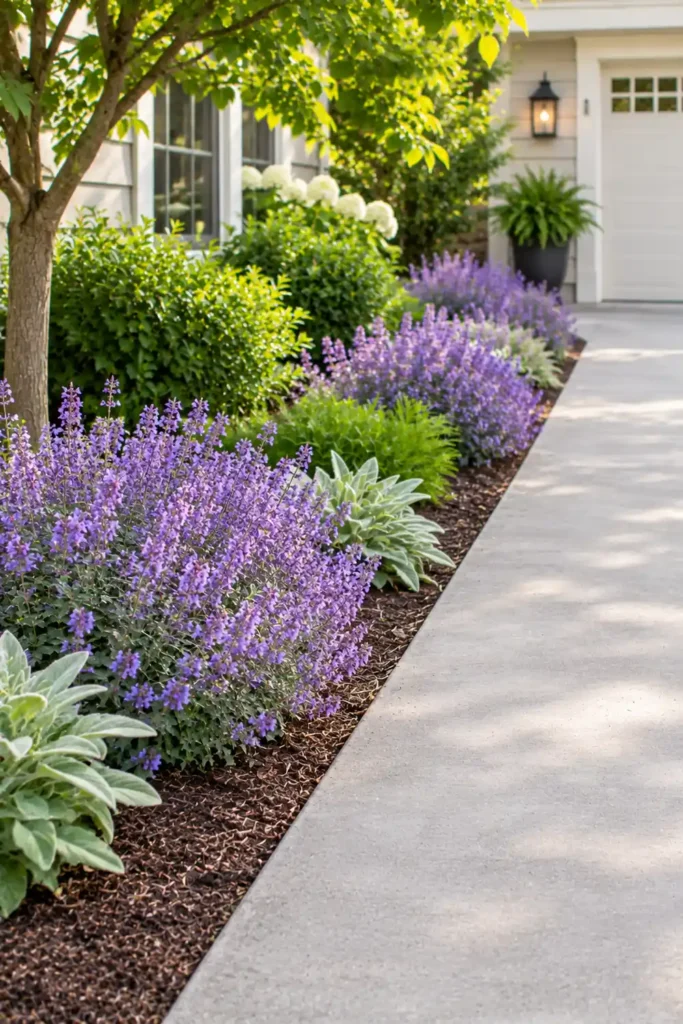
A low ribbon of flowering perennials can bring color to a driveway without turning the border into a crowded flower bed. Repeat one main flowering plant along the edge, then use a second low plant only where you need a little contrast in foliage or bloom shape.
Keeping the planting low protects sightlines and makes the driveway edge feel neat instead of overgrown. The flowers soften the pavement, while the repeated pattern keeps the border looking intentional even when some blooms fade.
Planting Tip: Leave a little breathing room between the mature plant width and the driveway. Leaves and flowers brushing constantly against tires or car doors will make even a carefully planned border look messy.
8. Add Warm Landscape Lights Along One Edge
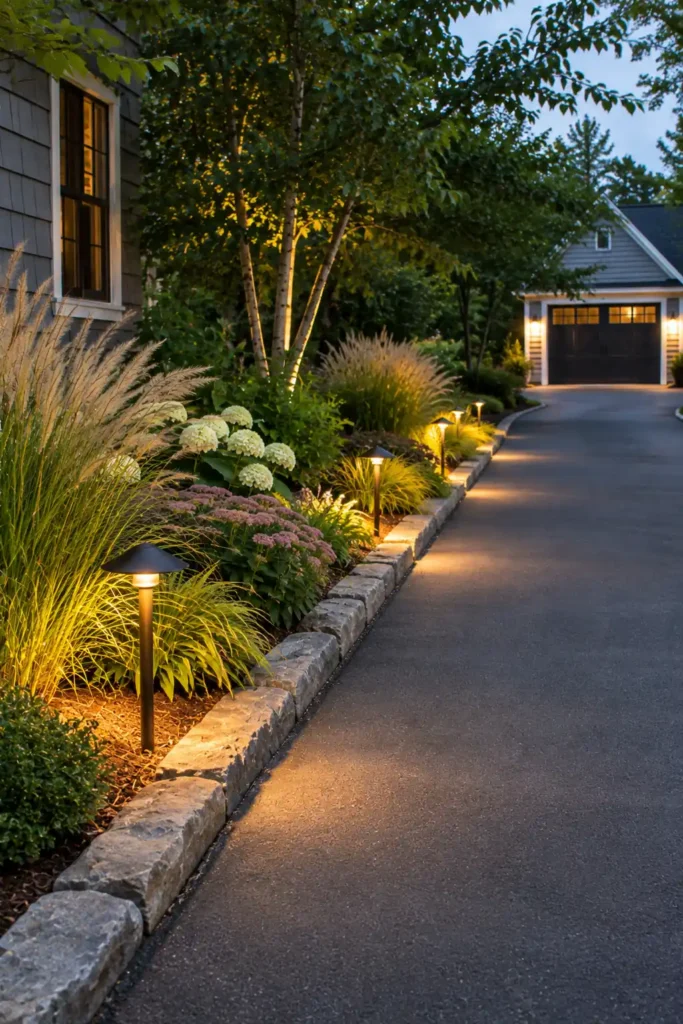
A few low landscape lights can make driveway landscaping work after sunset instead of disappearing into darkness. Place them along one edge where they can wash light across ornamental grasses, low shrubs, or the border itself rather than lining both sides like an airport runway.
Lighting the planting as well as the pavement gives the whole front yard more depth. The glow picks up leaf texture and stone edges, while the driveway remains easy to read from the street.
Keep fixtures low and the spacing restrained. Too many lights flatten the effect and create glare. For more ideas on keeping outdoor lighting subtle, see these front yard lighting ideas.
9. Build a Layered Bed at the Garage Corner
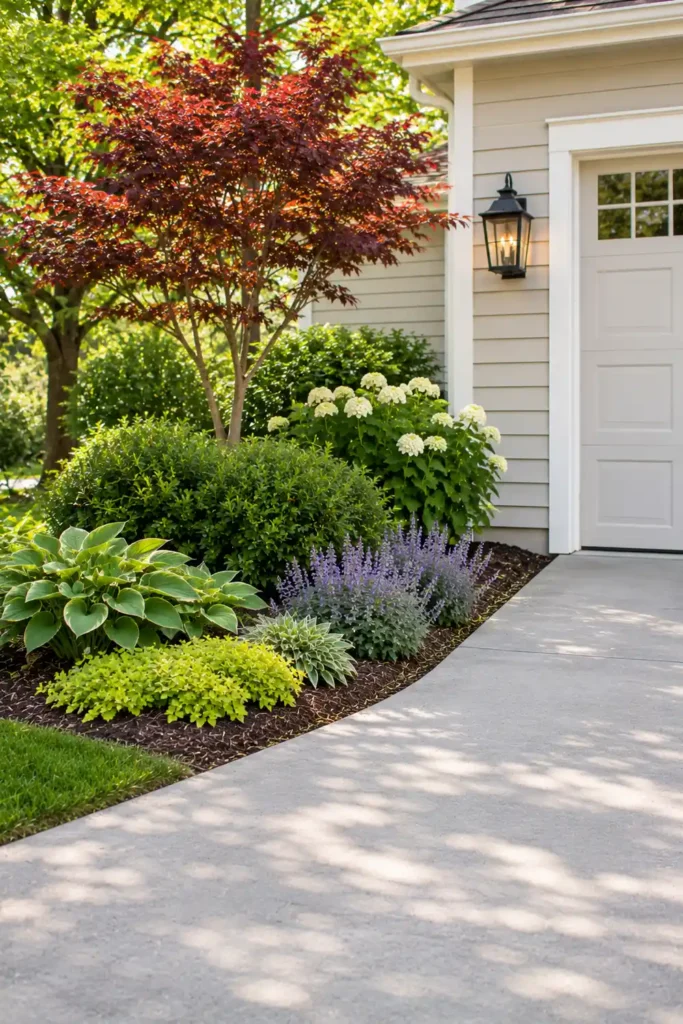
The point where a driveway meets the garage often looks bare because pavement, siding, and the garage door all compete for attention. Soften that corner with one small ornamental tree, a lower group of evergreen shrubs, and a front layer of compact perennials or groundcover.
The height changes are what make the bed work. The tree breaks up the wall, the shrubs give the planting weight, and the low front layer keeps the edge from feeling abrupt. Keep the bed broad enough that mature branches and foliage stay clear of vehicles.
A simple three-layer planting usually looks more considered than squeezing several unrelated plants into a narrow strip.
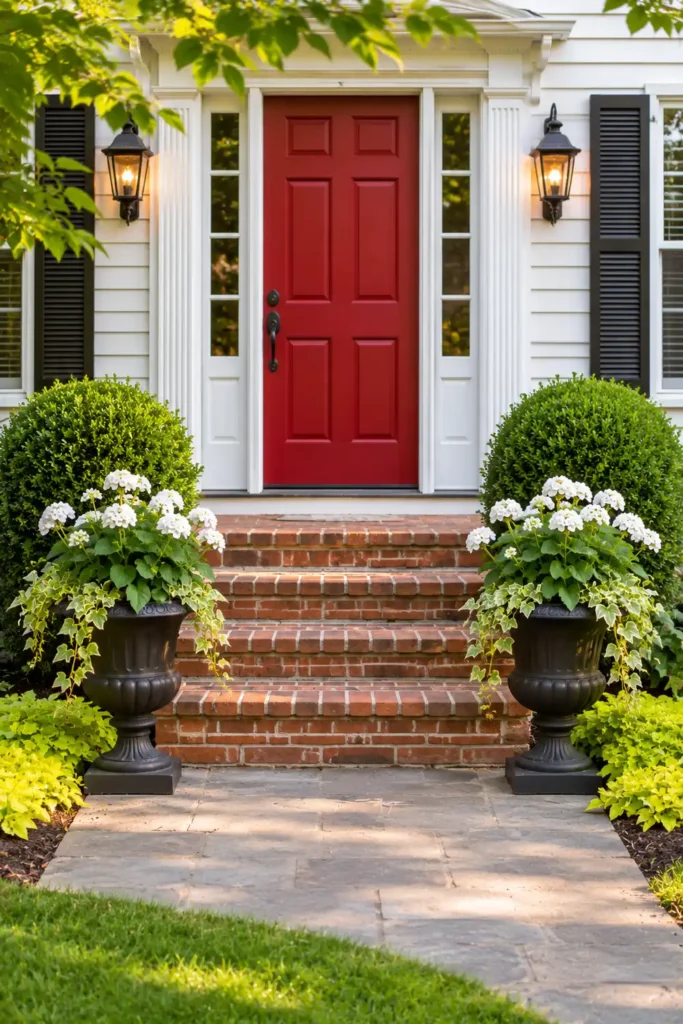
10. Use Matching Planters at the Driveway Entrance
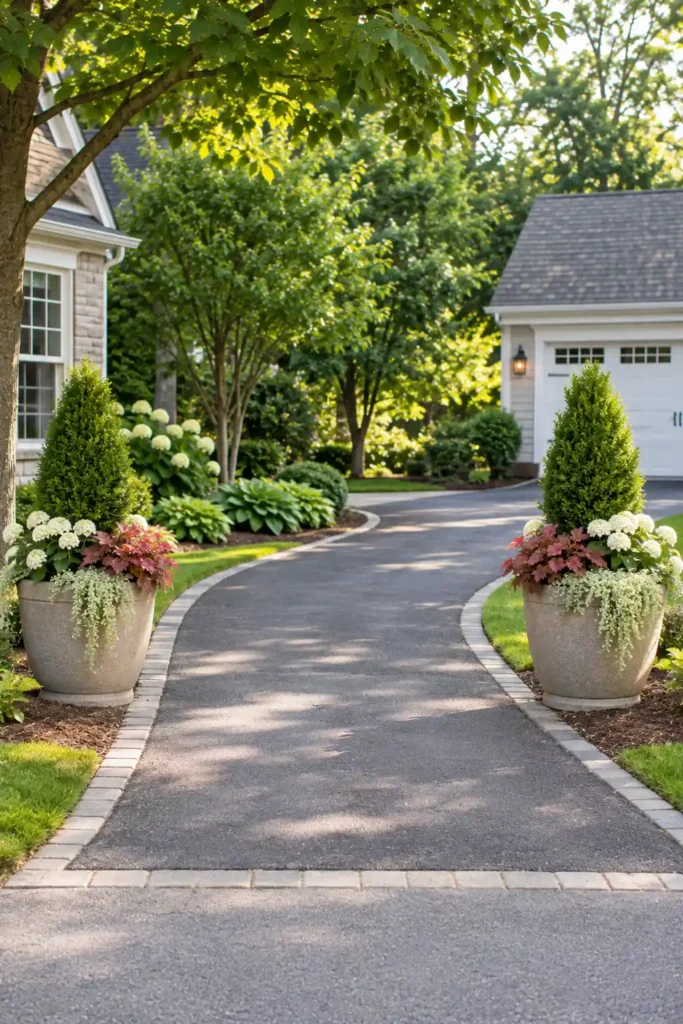
A pair of substantial planters can give a driveway entrance structure without adding gates, walls, or permanent masonry. Choose matching containers with simple shapes, then fill each with the same evergreen centerpiece and a smaller seasonal plant around the base.
Because the planters repeat each other, they act like visual brackets around the entrance. That symmetry makes even a straightforward driveway feel more deliberate, while the seasonal layer lets you change the look without rebuilding anything.
Set the containers far enough back that they never narrow the usable driveway or interrupt sightlines. For smaller front yards, container-based landscaping can also give you more flexibility than another permanent bed. These front yard container garden ideas offer more ways to work planting into limited space.
11. Break Wide Concrete With Green Planting Strips
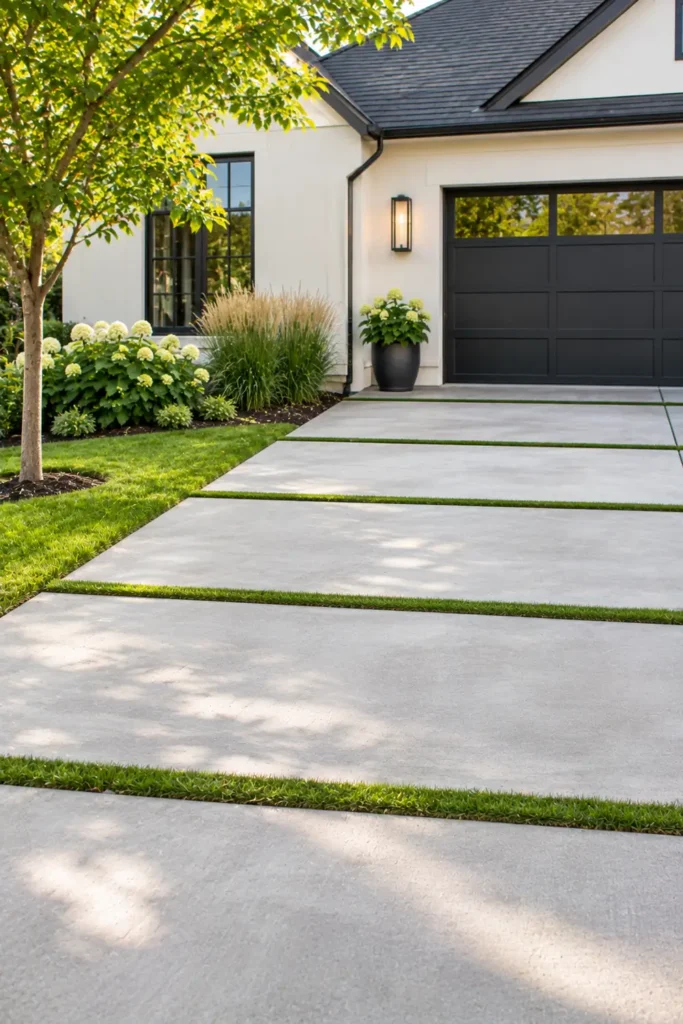
A broad concrete driveway can dominate a small front yard, especially when the paving runs uninterrupted from the street to the garage. Breaking the surface visually with narrow grass or groundcover strips between large concrete sections can make the hardscape feel lighter.
The green joints create contrast and repeat the lawn or planting elsewhere in the yard, so the driveway stops reading as one oversized slab. This treatment works best when the lines stay simple and the planting is kept low and tidy.
The paved sections still need to handle vehicle loads properly, so any structural changes to an existing driveway should be designed and installed by a qualified professional.
12. Turn a Circular Driveway Island Into a Garden
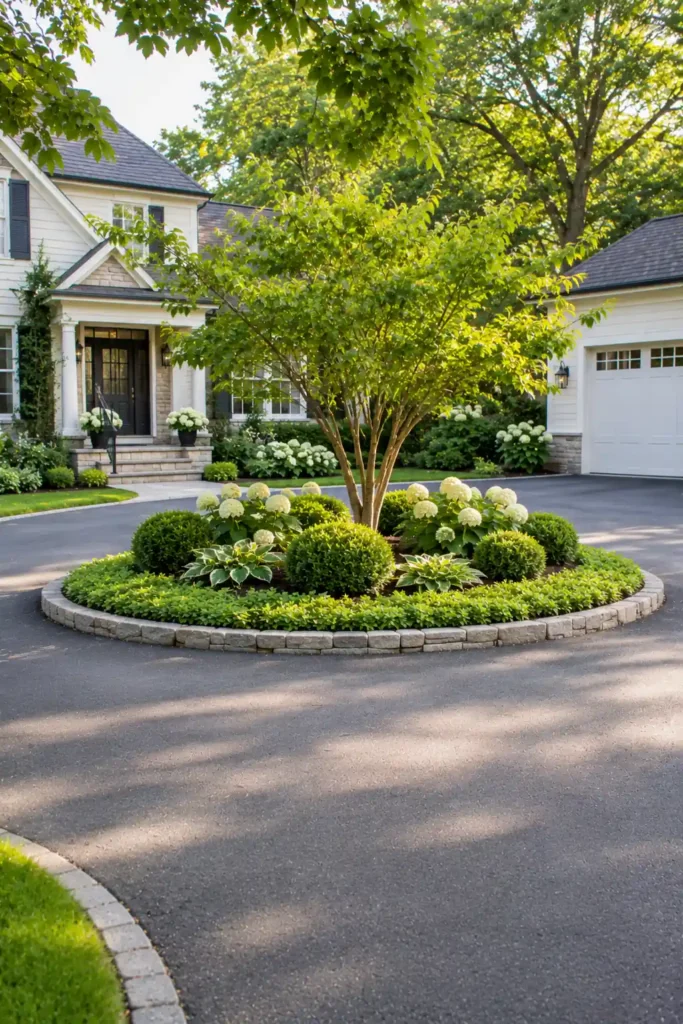
The center of a circular driveway deserves more than an accidental patch of lawn. Use one ornamental or small specimen tree as the focal point, then surround it with a broad ring of low groundcover, restrained shrubs, and a clean stone or mulch edge.
Keeping the planting lower around the tree lets the canopy remain the main event and helps preserve views across the drive. The circular bed also repeats the shape of the driveway, which makes the whole layout feel planned rather than pieced together.
Avoid filling every inch with different plants. One tree, one repeated shrub or groundcover, and one consistent edging material are often enough to make the island feel substantial.
13. Line a Long Driveway With Spaced Trees
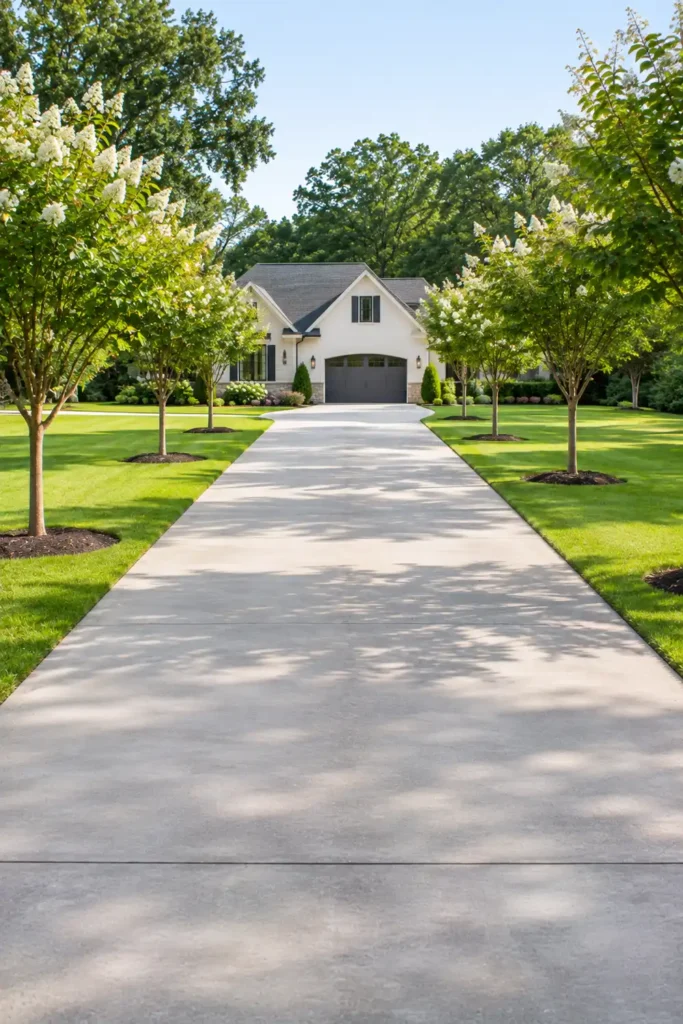
A long driveway can feel bare even when the lawn around it is perfectly healthy. Spacing small ornamental trees along one or both sides gives the approach rhythm and helps the drive feel connected to the house instead of simply cutting through the yard.
The trick is restraint. Leave generous gaps between trees so each canopy has room to develop and the view toward the house stays open. Repeating the same tree type creates a stronger effect than mixing several shapes and leaf colors along the route.
Keep trunks and mature branches well clear of vehicle paths, and avoid planting so tightly that the driveway becomes a maintenance problem years later. The expensive look comes from repetition and space, not from filling every gap.
14. Repeat the House Stone in the Driveway Beds
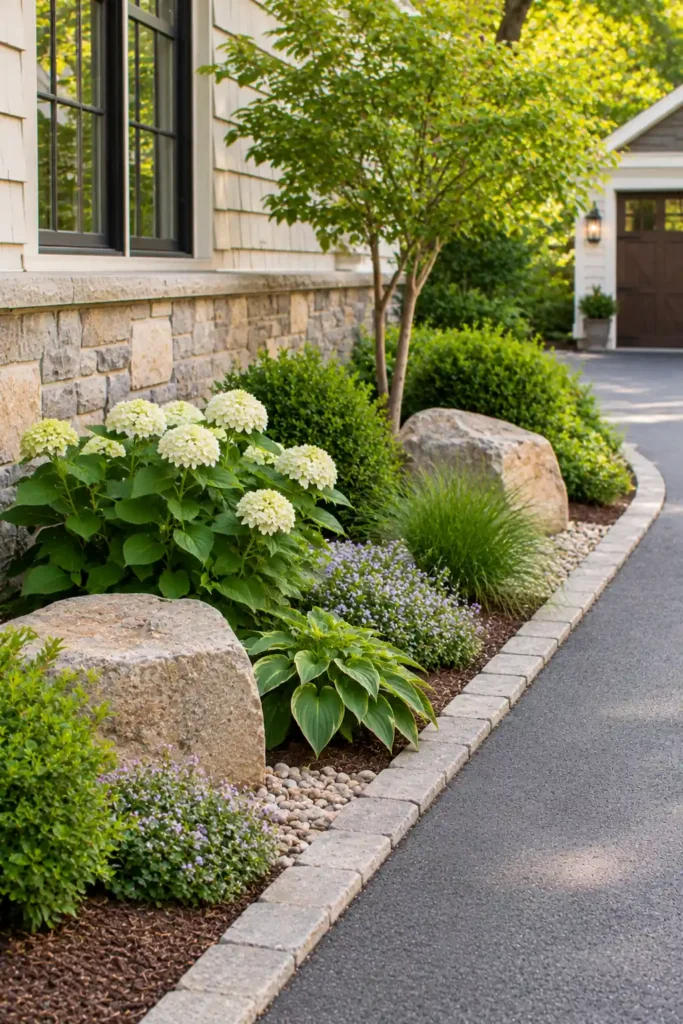
Driveway landscaping looks more cohesive when one hardscape material appears in more than one place. If the house already has stone on the foundation, porch, or columns, bring a similar-looking stone into the driveway beds as a few substantial boulders, a low edging course, or a restrained gravel accent.
That repetition visually ties the landscape back to the architecture. Plants soften the stone, while the stone keeps the bed from feeling disconnected from the house.
Use the material sparingly. A few well-placed pieces usually look stronger than covering the entire border with several stone types. The same principle applies across the wider front yard, which is why a coordinated front yard landscape design tends to feel more finished than a collection of unrelated upgrades.
15. Carve a Deep Curved Bed Beside the Driveway
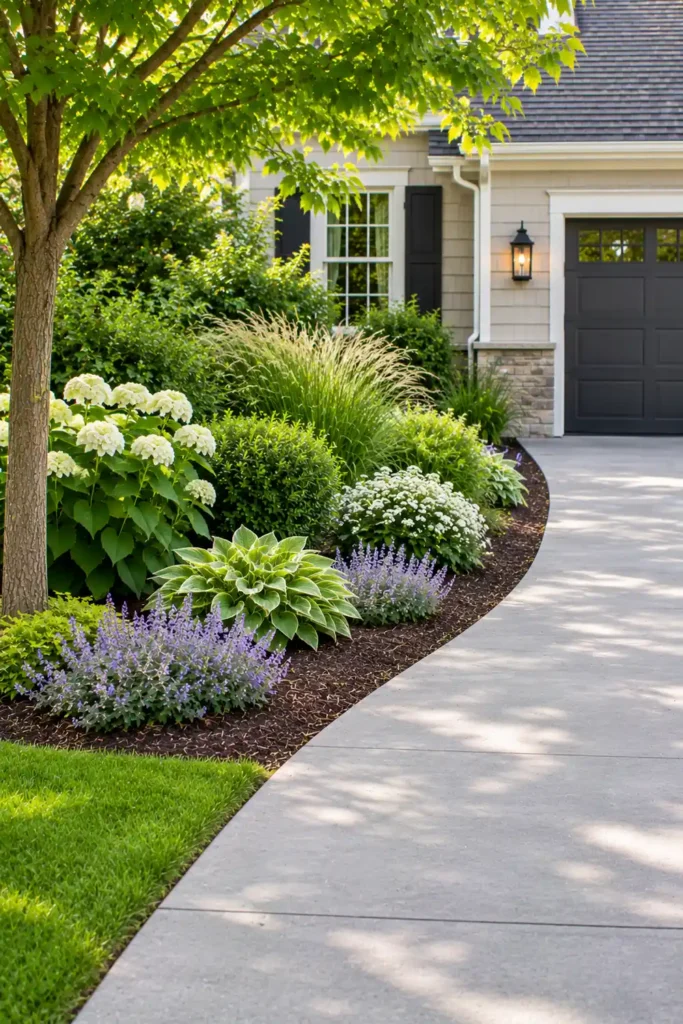
A skinny planting strip can make even good shrubs look squeezed against the pavement. Where the yard allows it, widen the bed into a gentle curve and give the planting enough depth for low perennials at the front, medium shrubs through the middle, and taller forms farther back.
The curve breaks up the straight driveway edge, while the deeper bed lets plants overlap in layers instead of standing in a single row. That depth is what makes the border feel established and professionally planned.
Do not force a dramatic curve into a tiny lawn. One broad, gradual sweep looks calmer than several small waves, and it leaves more usable grass between the driveway and the house.
16. Keep the Street End Low and Layer Taller Behind
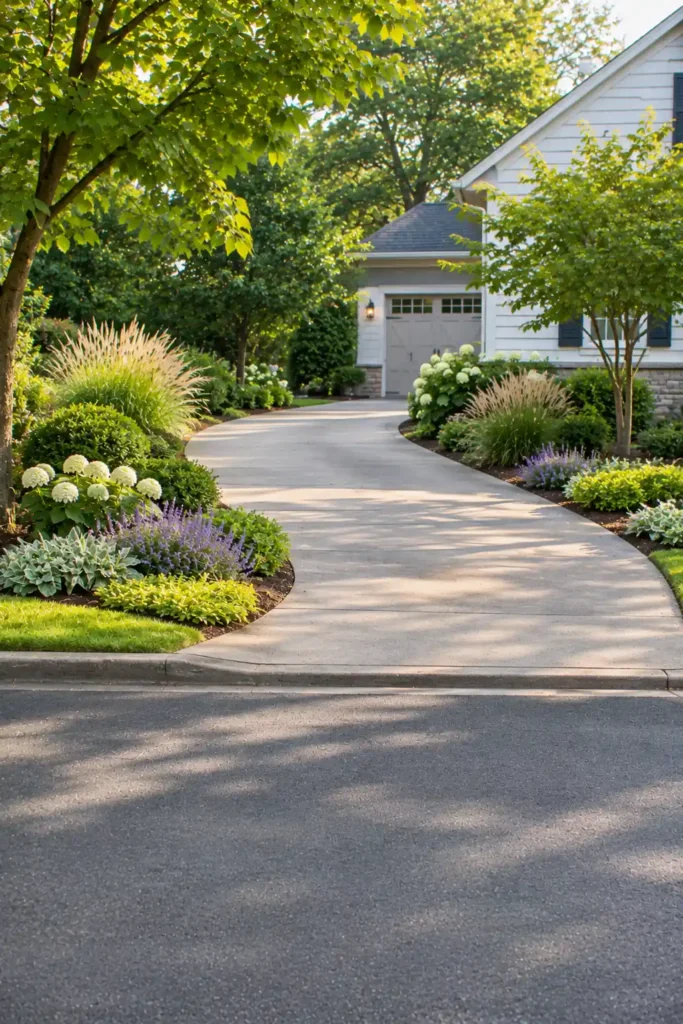
The first stretch of driveway near the street is a good place for groundcovers, low perennials, and compact shrubs rather than tall hedges. Keep the lowest planting closest to the road, then gradually increase height farther up the driveway with fuller shrubs or ornamental grasses.
That stepped arrangement gives the border depth without closing off the entrance. It also helps preserve clearer views between the driveway, sidewalk, and street, which matters far more than squeezing in one extra tall plant.
Garden Tip: Judge plant height by mature size, not how small it looks when you buy it. The neatest driveway entrance is one that still works after the planting fills out.
17. Use Heat-Tough Plants Beside Sunny Pavement
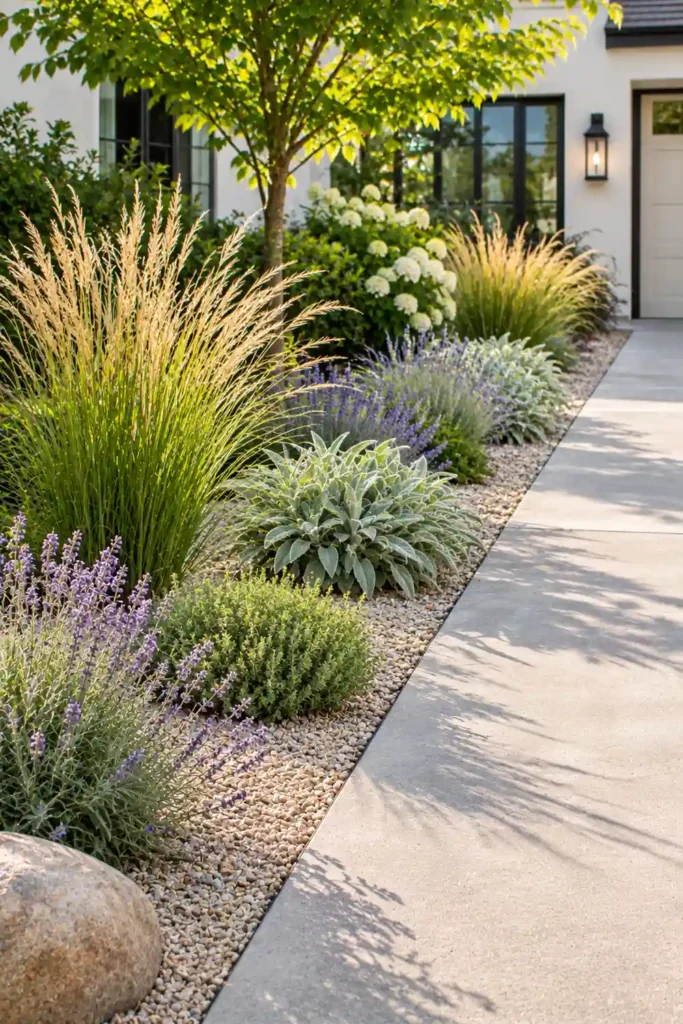
The edge of a sunny driveway can be one of the harshest planting spots in the front yard because pavement holds and reflects heat. Use plants that tolerate dry-looking conditions well, such as ornamental grasses, silver-leaved perennials, and other durable low growers, then leave enough space around each one for air and mature spread.
The mix works because the soft foliage breaks up the hard surface without demanding dense planting. Gravel mulch can also suit this kind of border, especially when you want a cleaner, drier look than shredded bark.
Keep irrigation and drainage practical for the site rather than assuming every driveway edge behaves the same way. The hottest strip is rarely the place for plants that wilt at the first dry afternoon.
18. Turn Driveway Runoff Into a Planted Swale
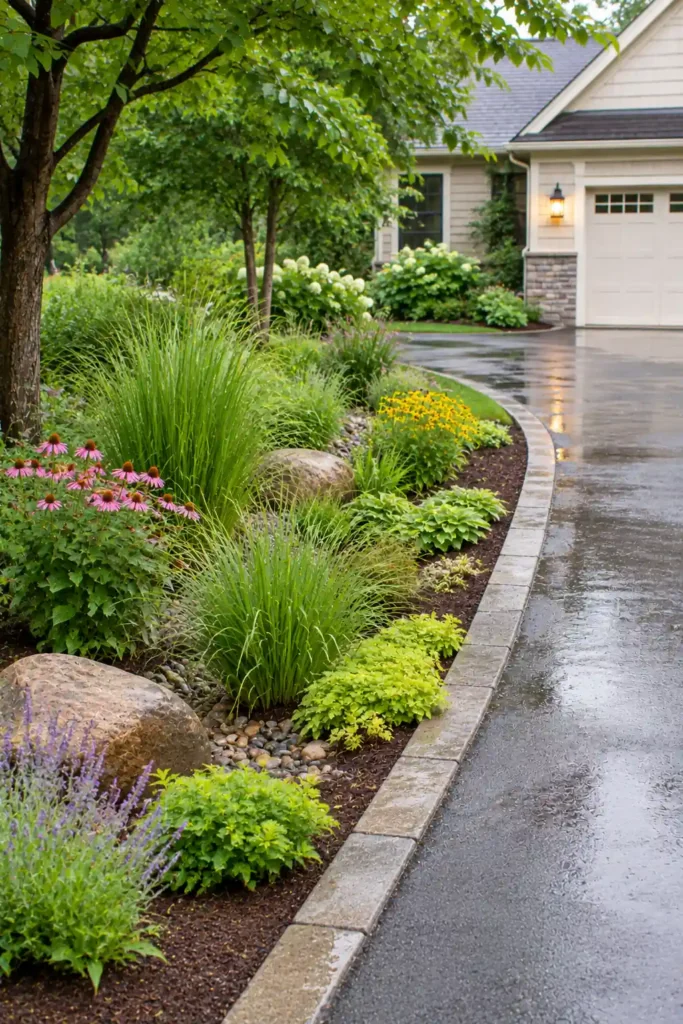
Where runoff naturally collects beside the driveway, a shallow planted swale can make that low area look intentional instead of neglected. Use moisture-tolerant grasses, low perennials, and a few larger stones to define the channel without making it look like a drainage trench.
The plants soften the route water takes, while the stone helps give the bed structure when the weather is dry. Keep the planting low enough that it still reads as part of the front yard rather than a hidden utility strip.
Drainage work depends on grading, soil, and where water is allowed to go, so a professional should assess the site before any major reshaping. The design goal is simple: make the water path useful and visually integrated.
19. Connect the Driveway to a Defined Front Walk
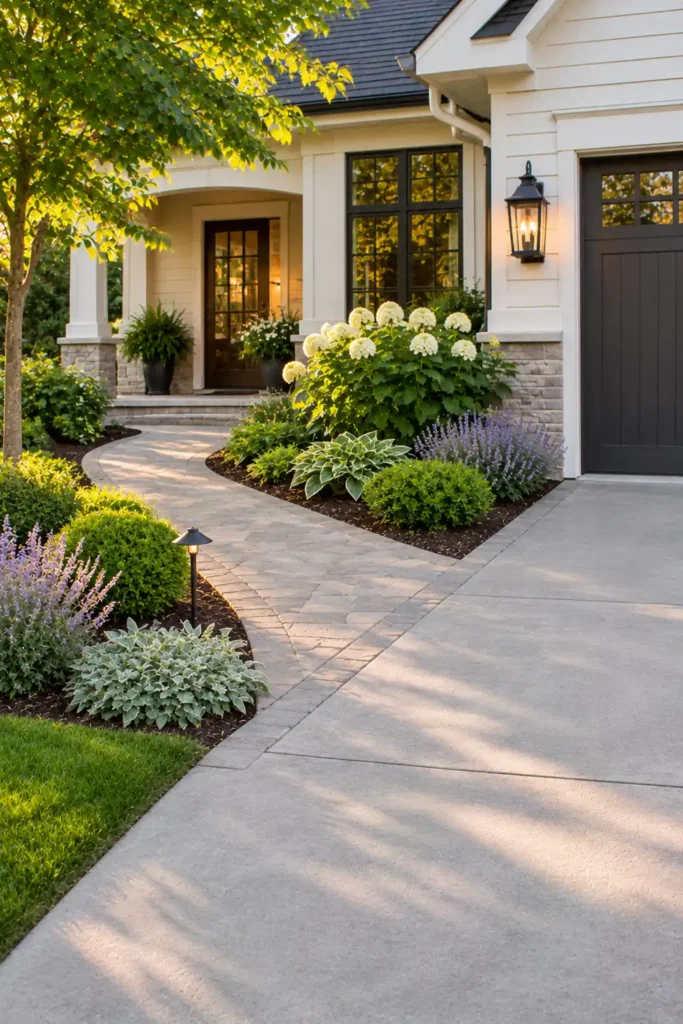
A driveway feels far more finished when the route from car to front door is obvious. Use a paved walkway that connects cleanly to the driveway, then soften the transition with low shrubs, groundcover, and one stronger focal plant near the turn toward the house.
That clear connection gives the front yard a sense of arrival. The paving handles movement, while the planting guides the eye toward the entrance without crowding the path. Repeating one material from the driveway edge or house exterior can make the transition feel even more intentional.
Keep the walkway opening generous and easy to spot from where a car parks. A polished front yard should make visitors know where to go without thinking about it.
A Simple Formula for Expensive-Looking Driveway Landscaping
The most polished driveway landscapes usually repeat a few basic moves rather than relying on lots of different plants and materials.
The easy driveway landscaping formula
You can use all four moves or just two. What matters most is consistency. A simple concrete drive with a clear border and repeated planting usually looks more considered than an expensive surface surrounded by unrelated landscaping.
Front Yard Driveway Landscaping FAQ
What should I plant along a driveway?
Choose plants that fit the available bed width and will stay clear of vehicles when mature. Low perennials, groundcovers, ornamental grasses, and compact shrubs are useful starting points. Ideas 1, 5, 7, and 17 show different ways to build a driveway border without overcrowding the pavement.
How can I make a plain driveway look more expensive?
Give the driveway a defined edge and repeat a limited number of materials and plants. A paver border, clipped shrubs, ornamental grasses, low lighting, or a structured planting bed can make basic concrete feel much more intentional. Ideas 1, 3, 5, and 8 are good examples.
How should I landscape the entrance to my driveway?
Keep the street end visually open and use low planting near areas where drivers need clear views. Small ornamental trees, matching planters, groundcovers, and compact shrubs can mark the entrance without creating a wall. Ideas 2, 10, and 16 take three different approaches.
What works beside a hot, sunny driveway?
Plants with foliage and growth habits that handle exposed, dry-looking conditions are often easier to manage beside heat-holding pavement. Ornamental grasses and durable low perennials are useful options. Gravel can also create a clean buffer between plants and the driveway, as shown in ideas 5, 6, and 17.
How do I connect driveway landscaping to the front door?
Create an obvious walkway between the parking area and entrance, then repeat a plant or material already used elsewhere in the front yard. This keeps the driveway from feeling visually separate from the house. Idea 19 shows the clearest version of this approach.
Conclusion
Good driveway landscaping is less about filling every empty patch and more about creating strong edges, useful planting layers, and a clear connection between the street and the house. The best front yard driveway landscaping ideas repeat materials, give plants enough room, protect sightlines, and make the approach to the front door easy to understand.
Start with the part that bothers you most. That might be a bare concrete edge, an awkward garage corner, or an entrance that disappears into the lawn. One well-planned change can make the next decision much easier.
Save these ideas before you start planning your next front yard project.