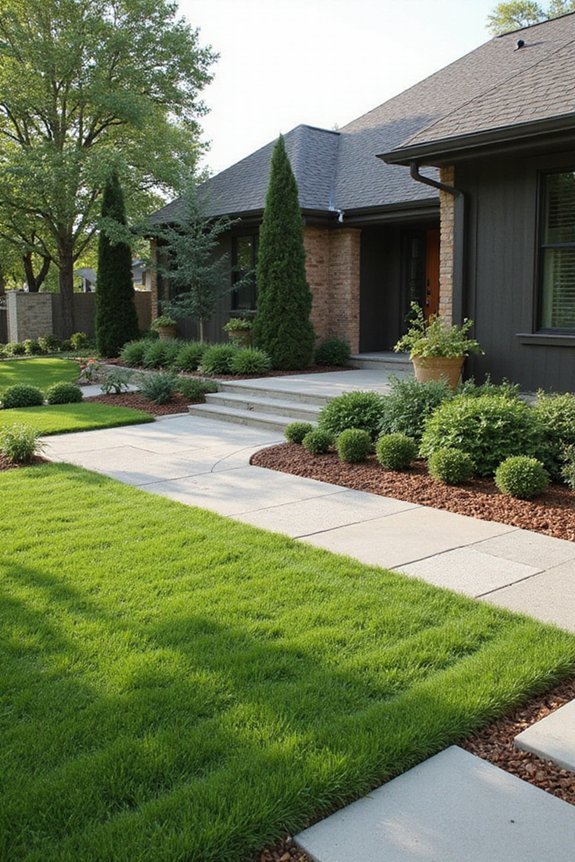
Your front yard serves as the first impression visitors have of your home, and transforming it doesn’t require expensive renovations or professional landscaping services. By implementing straightforward strategies—such as removing clutter, maintaining consistent lawn care, and strategically arranging plants and hardscaping elements—you can create a polished, intentional outdoor space that dramatically boosts your home’s curb appeal. Discover how these accessible improvements work together to achieve a clean, cohesive aesthetic that reflects your property’s true potential.
Remove Clutter and Unnecessary Lawn Ornaments
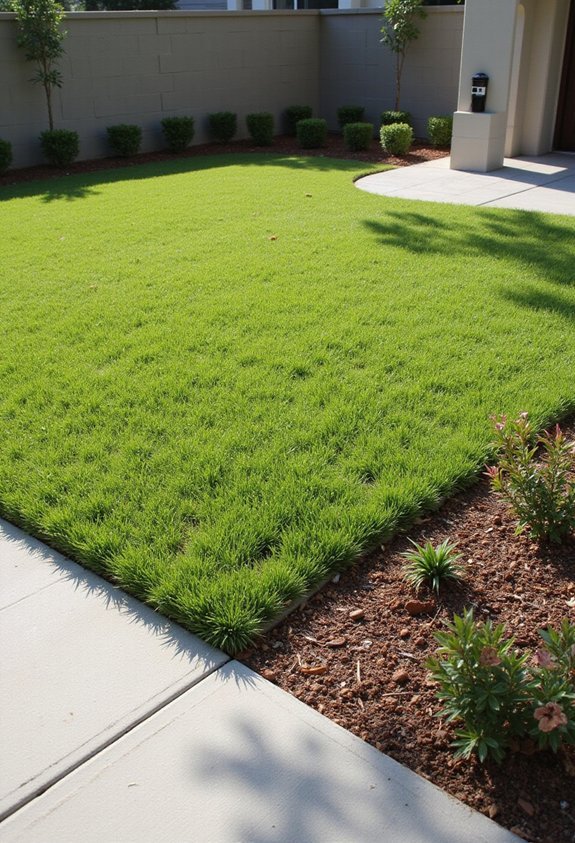
Before you’ll be able to transform your front yard into an inviting outdoor space, you’ll need to assess what’s currently there and decide what doesn’t belong. Walk around your yard and identify items that clutter the space, such as broken garden statues, old birdbaths, or weathered planters that no longer serve a purpose. Remove anything that’s damaged, outdated, or doesn’t contribute to your overall design vision. Consider the lawn ornaments you’re keeping, ensuring they’re functional and aesthetically pleasing. Store seasonal decorations properly rather than leaving them visible year-round. By eliminating unnecessary items, you’ll create a cleaner foundation for your landscaping improvements. This strategic removal process allows focal points to stand out and gives your front yard a more polished, intentional appearance that welcomes visitors with a sense of order and care.
Also read: 20 FRONT YARD CURB APPEAL Upgrades With Big Impact!
Pressure Wash Your Driveway and Entryway
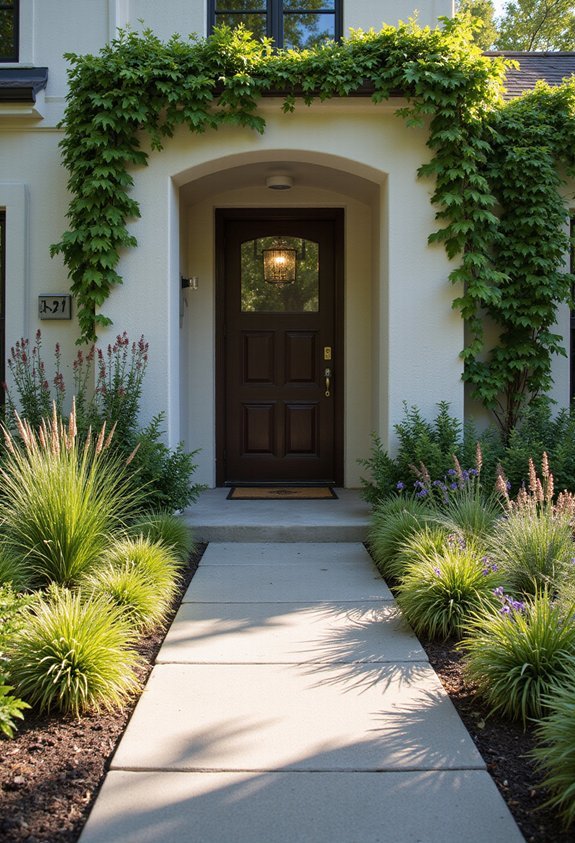
Now that you’ve cleared away the clutter and created a cleaner foundation, it’s time to tackle the surfaces that greet visitors first—your driveway and entryway. Pressure washing removes built-up dirt, algae, and stains that’ve accumulated over time, instantly transforming these areas. You’ll need a pressure washer, which you can rent from most hardware stores, along with appropriate safety gear including goggles and gloves. Start by sweeping away loose debris, then apply the pressure washer in smooth, overlapping strokes, maintaining consistent distance from the surface to prevent damage. Pay special attention to corners and crevices where dirt collects. For stubborn stains, use a cleaning solution designed for pressure washers. After washing, allow surfaces to dry completely before walking on them, ensuring your front yard presents a fresh, well-maintained appearance.
Maintain a Regular Lawn Care Schedule
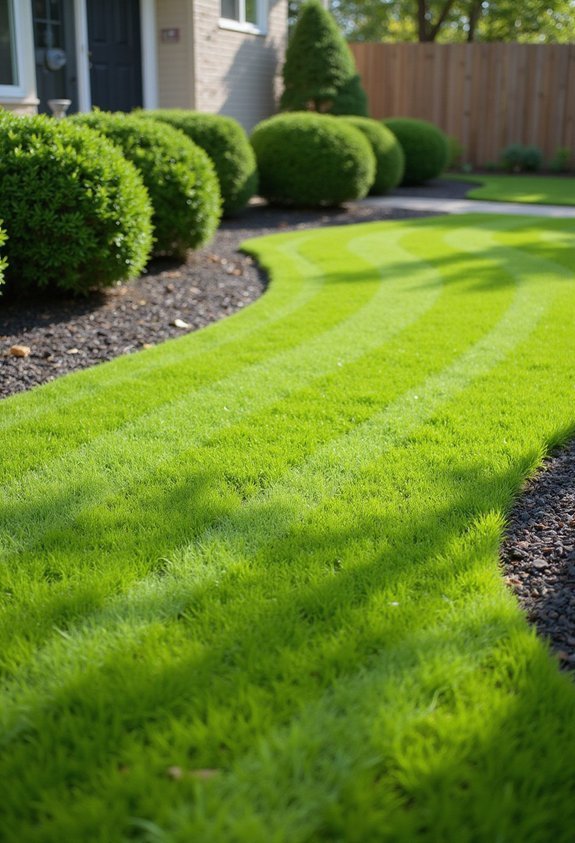
Once you’ve pressure washed your driveway and entryway, establishing a consistent lawn care routine becomes essential for maintaining your front yard’s overall appearance and health. You’ll want to mow your grass weekly during growing season, keeping it between two and three inches tall, which promotes healthy root development and prevents weed growth. Watering deeply but infrequently encourages deeper root systems, making your lawn more drought-resistant. You should fertilize seasonally, applying nutrients that match your grass type and soil composition. Don’t forget to rake leaves promptly in fall and remove debris regularly, as these materials can suffocate grass and harbor pests. By committing to this structured schedule, you’ll maintain a vibrant, well-groomed lawn that considerably enhances your home’s curb appeal and property value.
Keep Your Lawn Neatly Edged and Trimmed
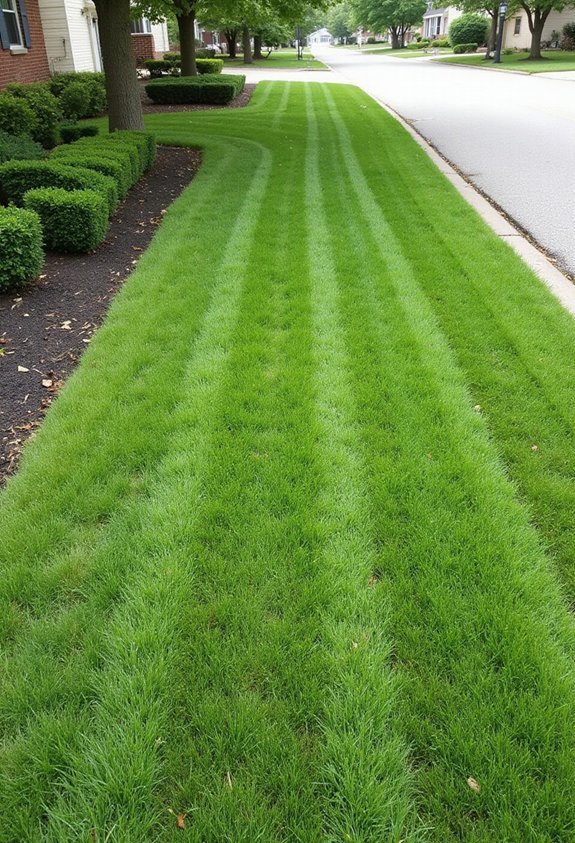
While a well-maintained lawn is important, the edges and borders of your yard deserve equal attention because they’re what frame your entire landscape and create clean, finished lines around your home’s perimeter. You’ll want to trim the grass along sidewalks, driveways, and garden beds regularly using a string trimmer or edging tool, which prevents grass from creeping into these areas and maintains sharp, defined boundaries. Edge your lawn at least once monthly during the growing season, cutting a clean line between your grass and hardscaping surfaces. This practice not only enhances your yard’s appearance but also prevents grass from competing with other plants in flower beds. By keeping edges crisp and borders tidy, you’re establishing a polished, well-organized front yard that demonstrates intentional care and landscaping precision.
Add a Clean Gravel or Mulch Border
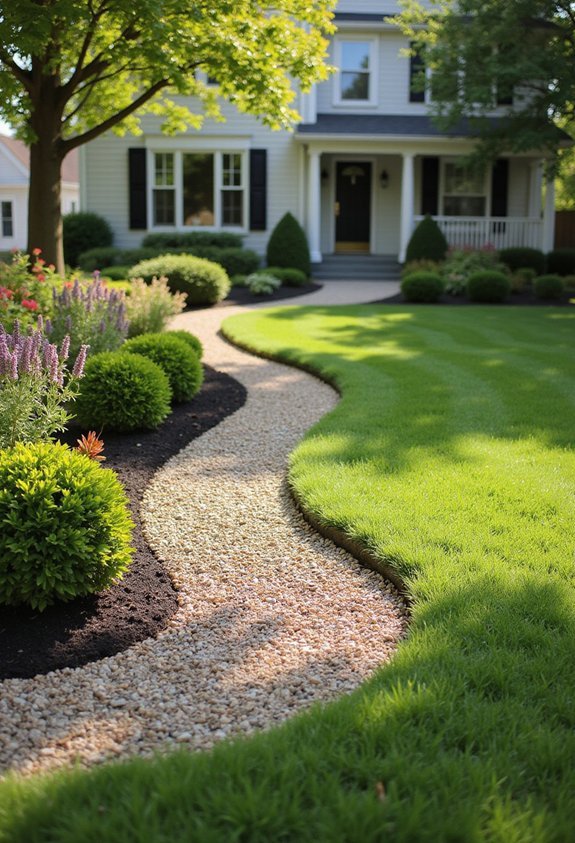
Beyond maintaining crisp lawn edges, you’ll find that installing a clean gravel or mulch border between your lawn and garden beds creates an additional layer of definition that strengthens your yard’s overall appearance. You can choose from various materials like wood chips, bark mulch, or river rocks, depending on your aesthetic preferences and climate. Before laying your border material, install edging—such as plastic, metal, or stone strips—to contain the gravel or mulch and prevent it from spreading into your lawn. Apply a two to three-inch layer of your chosen material, ensuring even coverage throughout. This border not only enhances visual appeal but also helps retain soil moisture, suppress weeds, and protect plant roots from temperature fluctuations, making it both functional and attractive.
Apply Fresh Mulch for That Just-Done Feel
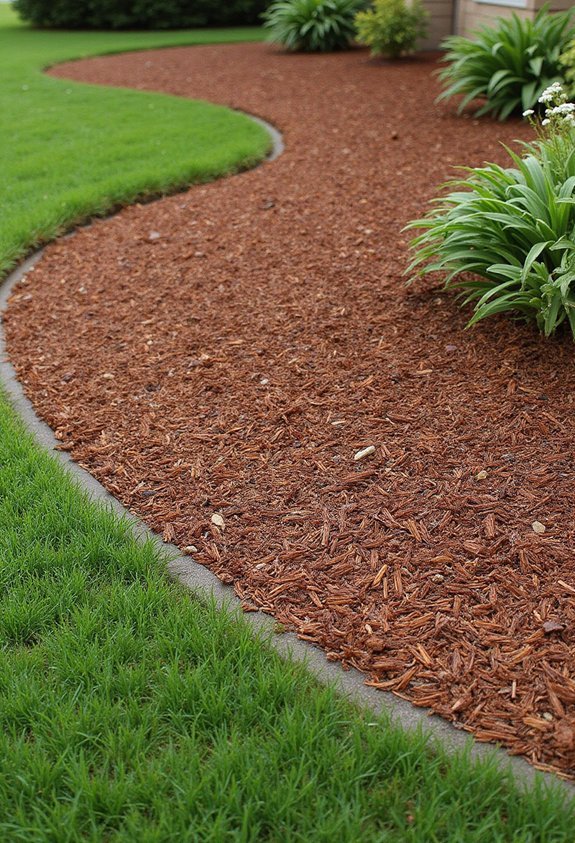
To refresh your front yard’s appearance and maintain the health of your garden beds, applying a new layer of mulch is one of the most effective improvements you can make. You’ll want to remove old, decomposed mulch first, then spread fresh mulch evenly across your beds to a depth of two to three inches. This thickness provides adequate coverage without suffocating plant roots. When applying mulch, you should keep it several inches away from tree trunks and plant stems to prevent moisture buildup and potential rot. Choose mulch that complements your landscape design, whether you prefer wood chips, shredded bark, or colored varieties. Fresh mulch not only enhances your yard’s visual appeal immediately but also conserves soil moisture, regulates temperature, and suppresses unwanted weeds.
Paint Your Front Door a Bold, Welcoming Color
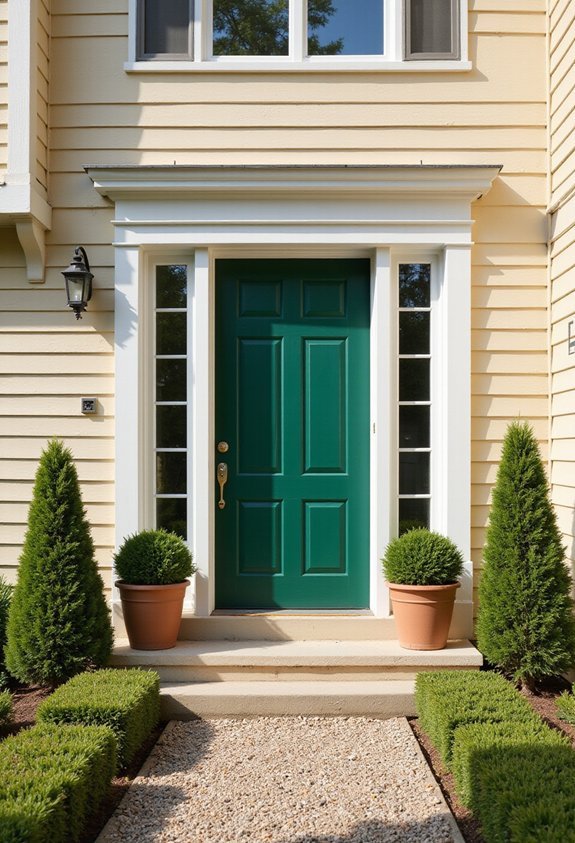
Your front door’s color serves as the first impression visitors get of your home, so selecting a bold, welcoming shade can dramatically transform your curb appeal. You’ll want to choose colors that complement your home’s exterior, such as deep blues, rich greens, or warm terracottas that create visual interest without clashing. Before painting, you should clean the door thoroughly, sand any rough spots, and apply primer to guarantee proper adhesion. Use high-quality exterior paint designed to withstand weather conditions and UV exposure. Apply two coats for even coverage, allowing adequate drying time between applications. A freshly painted front door signals that you maintain your property well, immediately elevating your home’s overall appearance and welcoming guests with intentional style and care.
Upgrade Your Mailbox to Match Your Home’s Exterior
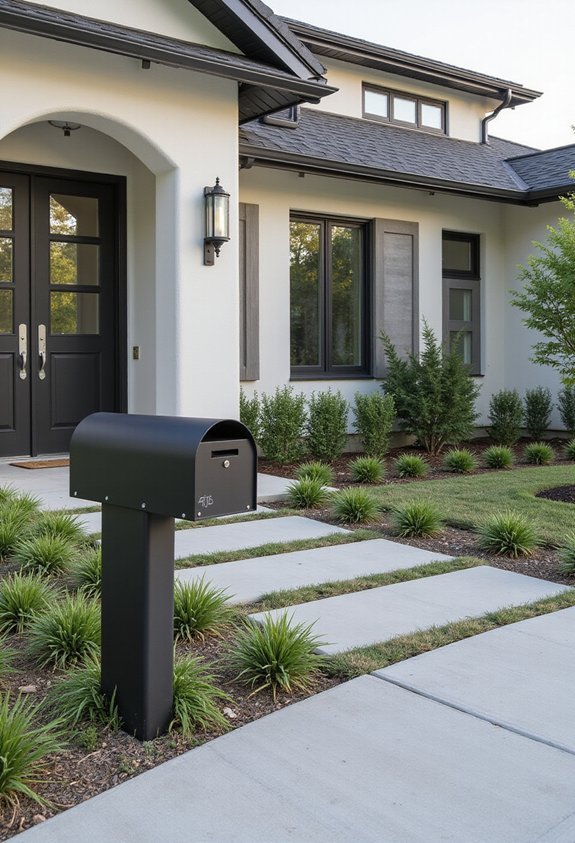
While your front door captures immediate attention, your mailbox deserves equal consideration since it’s a functional element that visitors see regularly and that reflects your home’s overall aesthetic. You should select a mailbox style and finish that complements your home’s exterior materials, whether that’s matching your siding color, coordinating with your trim, or echoing your door’s boldness. Consider upgrading to a high-quality mailbox constructed from durable materials like powder-coated steel or weather-resistant composites that’ll withstand seasonal changes. You can enhance your mailbox further by adding decorative house numbers nearby, installing it on a attractive post or bracket, or surrounding it with landscaping. These coordinated upgrades create visual cohesion throughout your front yard, demonstrating intentional design choices that elevate your home’s curb appeal substantially.
Add a Fresh Coat of Paint to Siding or Trim
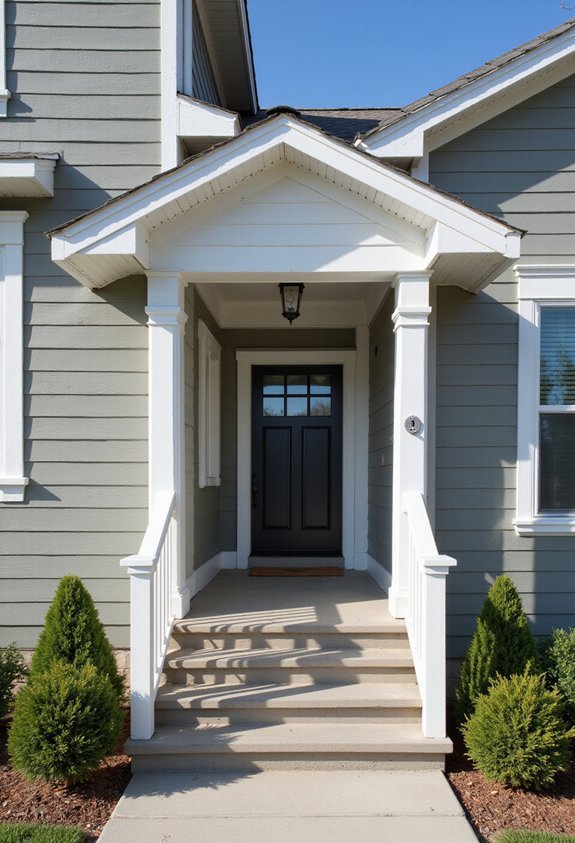
One of the most transformative improvements you can make to your home’s exterior is applying a fresh coat of paint to your siding or trim, which instantly revitalizes your front yard’s appearance and protects your home’s structural elements from weather damage. Before you begin, you’ll need to prepare the surface by cleaning it thoroughly, removing dirt, mildew, and loose paint with a pressure washer or scraper. Next, you should inspect the siding or trim for cracks or damage, repairing any issues with caulk or wood filler. Once everything’s dry and smooth, apply primer to guarantee better paint adhesion and coverage. Finally, apply two coats of high-quality exterior paint, allowing proper drying time between coats for robust durability and a professional-looking finish.
Install a Simple Walkway to Your Front Door
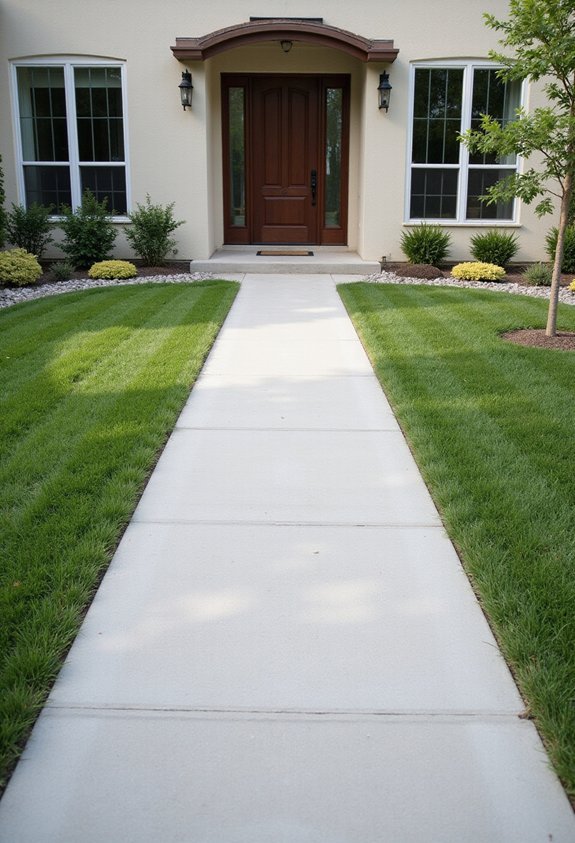
A welcoming pathway from your driveway or street to your front door not only improves your home’s curb appeal but also provides practical benefits like guiding visitors safely and preventing wear on your lawn. You can create a simple walkway using various materials, including pavers, gravel, or concrete stepping stones, depending on your budget and aesthetic preferences. Begin by marking the desired path with chalk or spray paint, then prepare the ground by removing grass and leveling the soil. If you’re using pavers or stones, arrange them with consistent spacing, ensuring they’re stable and won’t shift underfoot. For gravel pathways, you’ll want to install edging to contain the material. A well-constructed walkway transforms your front yard’s functionality while enhancing its visual appeal considerably.
Match Plant Colors to Your Home’s Exterior
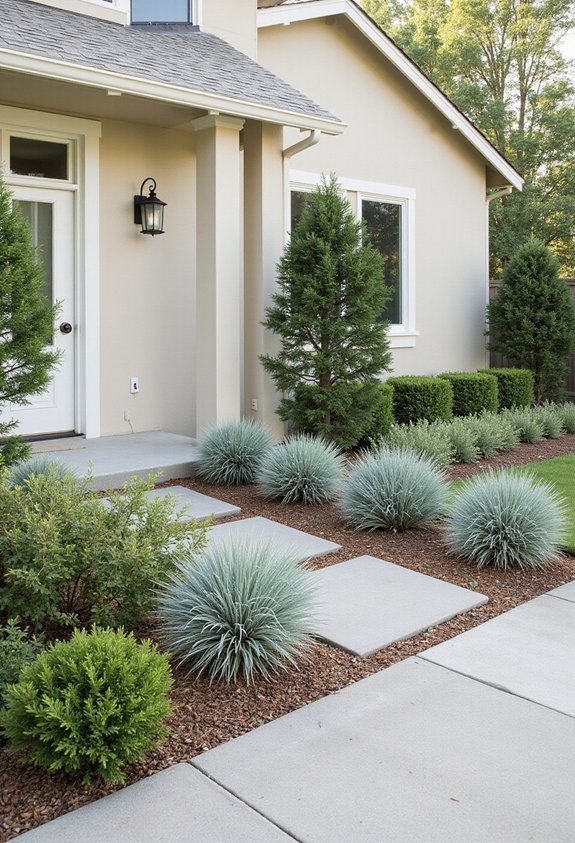
How can you make your front yard feel cohesive and intentional rather than randomly assembled? By matching your plant colors to your home’s exterior. Start by identifying your home’s dominant color—whether it’s brick red, white siding, or tan stone—then select plants that complement rather than clash with this palette. Green foliage pairs well with nearly every home color, but you’ll create visual harmony by adding flowering plants in coordinating tones. If your house is warm-toned, choose plants with yellow or orange blooms; for cool-toned homes, select blue or purple flowers. This strategic approach ties your landscaping directly to your architecture, making your front yard appear professionally designed and thoughtfully planned rather than haphazardly planted.
Select Evergreen Shrubs for Year-Round Structure
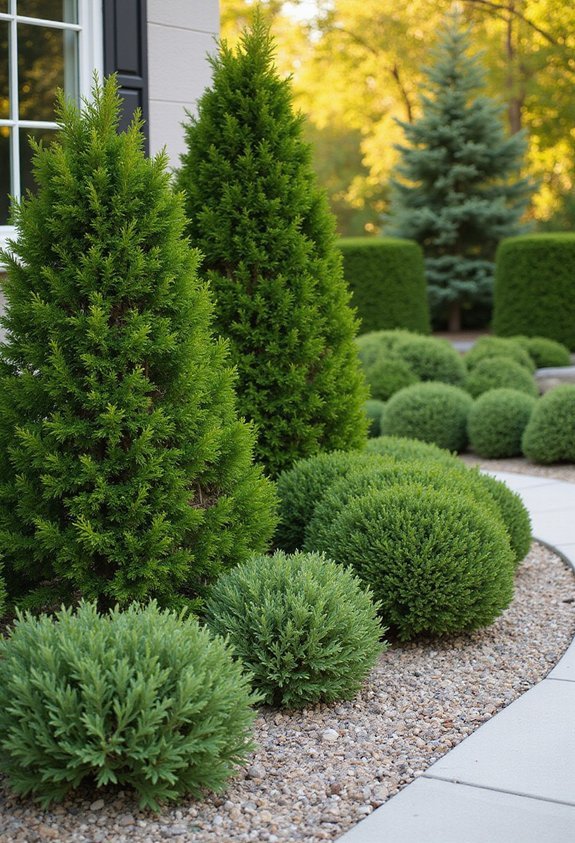
While matching plant colors to your home’s exterior creates visual harmony, you’ll also want plants that maintain their appearance throughout all four seasons, and that’s where evergreen shrubs come in. Evergreen shrubs retain their foliage year-round, providing consistent structure and visual interest even during winter months when deciduous plants lose their leaves. You should select varieties that thrive in your climate zone and match your landscape’s sunlight conditions. Popular options include boxwood, holly, and juniper, each offering different heights, textures, and growth patterns. When planting, space shrubs appropriately so they’ll have room to mature without crowding. Regular pruning keeps them shaped and healthy, preventing overgrowth. Strategically positioning evergreens along your foundation, near entryways, or as border plants creates a polished, well-maintained appearance that enhances your home’s curb appeal consistently throughout the year.
Arrange Container Plants Near Entry Points
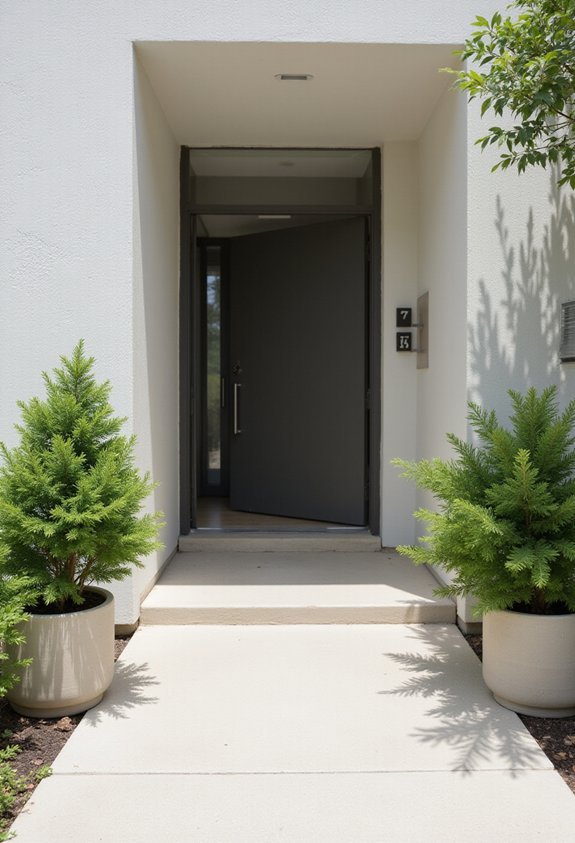
Because container plants offer flexibility and immediate visual impact, they’re an excellent complement to your foundation plantings and can transform your entryways into welcoming focal points. You’ll want to position containers strategically on either side of your front door, creating balanced symmetry that draws visitors’ eyes upward and inward. Select containers that complement your home’s architectural style, whether that’s modern, traditional, or cottage-inspired designs. Choose plants suited to your climate and light conditions, considering height and texture to create visual interest. Seasonal rotation allows you to refresh your entryway throughout the year, keeping your landscape dynamic and well-maintained. Regular watering and nurturing guarantees your container plants thrive, providing consistent curb appeal that enhances your home’s overall appearance and creates an inviting entrance.
Layer Plants: Tall Backdrop, Mid-Level Shrubs, Low Groundcover
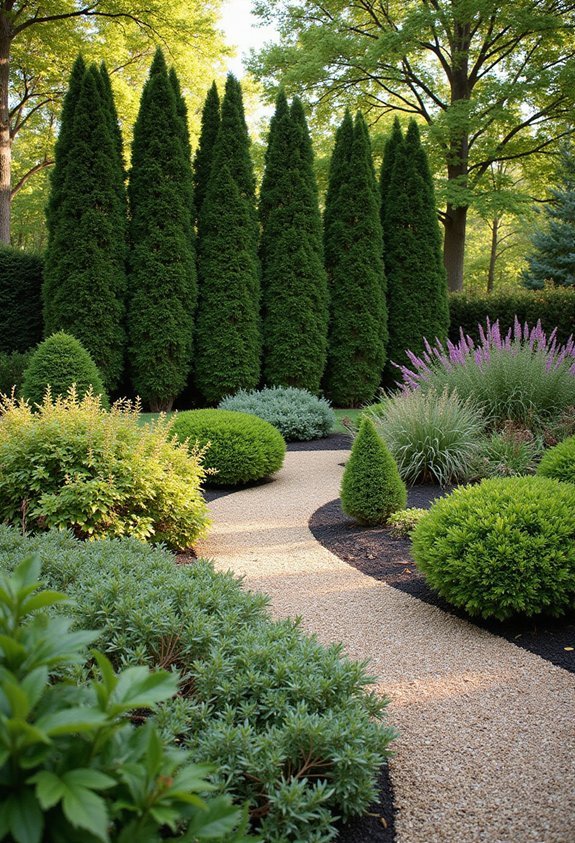
Creating depth and visual interest in your front yard requires you to arrange plants in distinct layers, much like arranging furniture in rooms of different heights throughout your home. Start by planting tall trees or shrubs along the back to create a backdrop that frames your entire landscape. In the middle layer, position medium-height shrubs that fill the space between ground level and your taller plants, establishing structure and density. Finally, add low-growing groundcover plants in front, which soften edges and add texture while requiring minimal maintenance. This three-tier approach prevents your yard from appearing flat and one-dimensional. The layering technique guides the viewer’s eye progressively through your landscape, creating a polished, intentional appearance that enhances your home’s curb appeal considerably.
Install Window Boxes for Added Curb Appeal
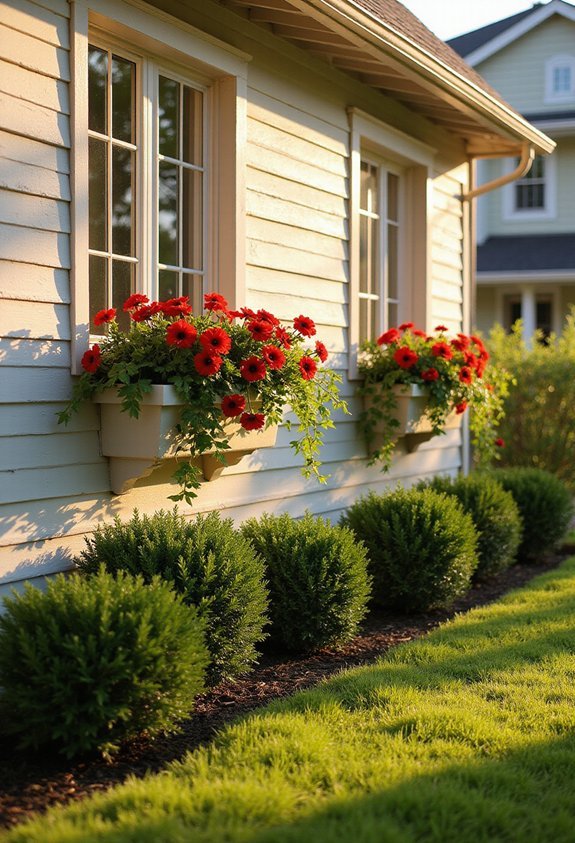
Window boxes offer an excellent way to extend your layered planting design upward, drawing attention to your home’s architectural features while adding vibrant color and texture at eye level. You’ll want to install them directly beneath your windows, securing them firmly with sturdy brackets rated for your box’s weight when filled with soil and plants. Choose boxes that complement your home’s style, whether wooden, metal, or composite materials. Fill them with trailing plants like petunias or ivy that cascade downward, combined with upright specimens for visual interest. Plant seasonal flowers to refresh your display throughout the year, ensuring consistent watering since elevated boxes dry quickly. This strategic layering creates a polished, intentional appearance that markedly enhances your home’s overall curb appeal and architectural charm.
Install Outdoor Lighting for Evening Appeal
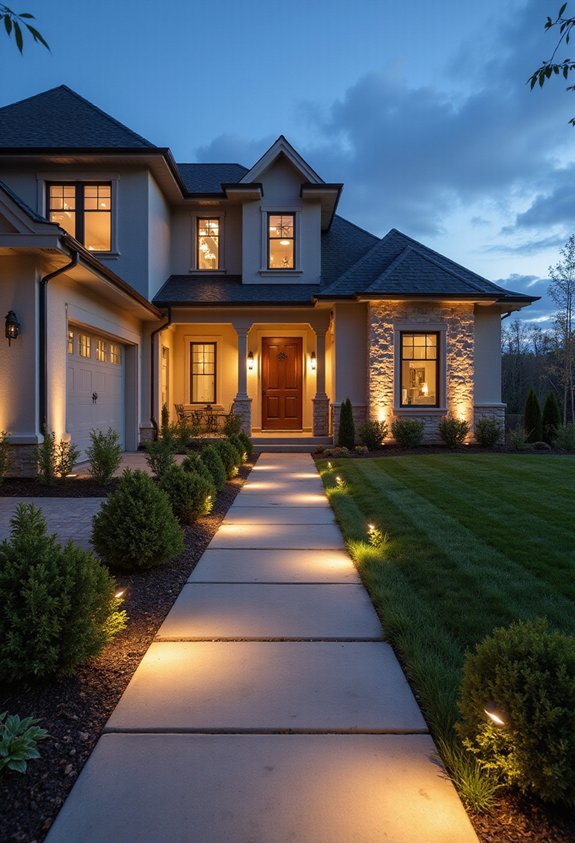
While your front yard looks beautiful during daylight hours, strategic outdoor lighting transforms it into an inviting nighttime focal point that extends your home’s visual appeal well after sunset. You’ll want to install pathway lights along walkways to guide visitors safely while highlighting landscaping features. Consider uplighting trees and shrubs to create depth and dimension after dark. Wall-mounted sconces flanking your front door provide both functional illumination and aesthetic appeal. Solar-powered options offer energy-efficient solutions requiring minimal maintenance. Position lights at varying heights to avoid flat, monotonous appearance. Guarantee lighting angles direct beams downward, preventing harsh glare that detracts from overall design. Well-planned outdoor lighting doesn’t just enhance nighttime visibility; it establishes welcoming atmosphere, increases home security, and showcases your front yard’s architectural and landscaping elements effectively.
Add a Low Fence or Decorative Border
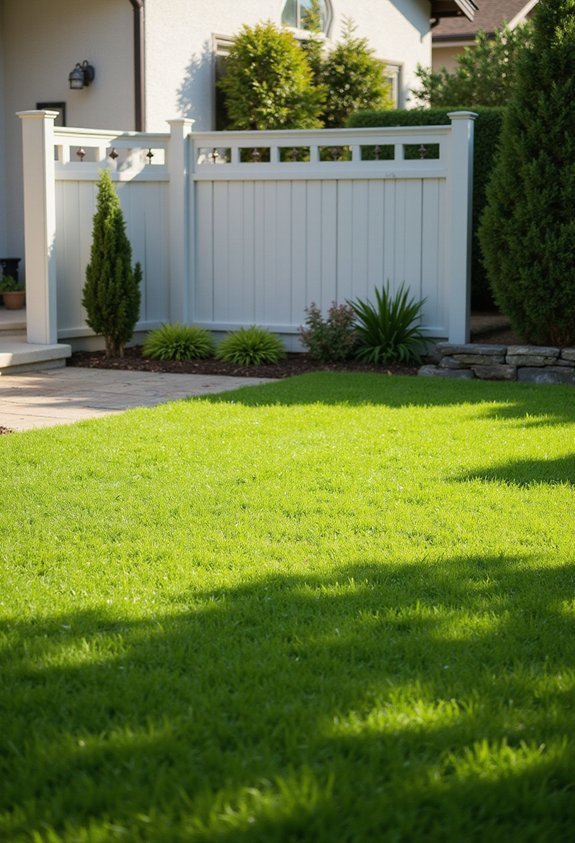
A low fence or decorative border serves as both a functional boundary and a visual frame that clearly defines your front yard’s perimeter while adding structure and polish to your landscaping design. You can choose from various materials like wood, vinyl, metal, or stone, depending on your home’s style and your budget. A low fence typically ranges from two to four feet tall, creating a welcoming barrier without blocking sightlines from the street. Decorative borders made from stone or composite materials work well for defining garden beds and pathways. You’ll want to guarantee proper installation by setting posts securely and checking alignment regularly. Maintenance requirements vary by material, so select options that fit your willingness to invest in upkeep. These elements combine functionality with aesthetic appeal, elevating your yard’s overall appearance considerably.
Use Hardscaping to Reduce Lawn Maintenance
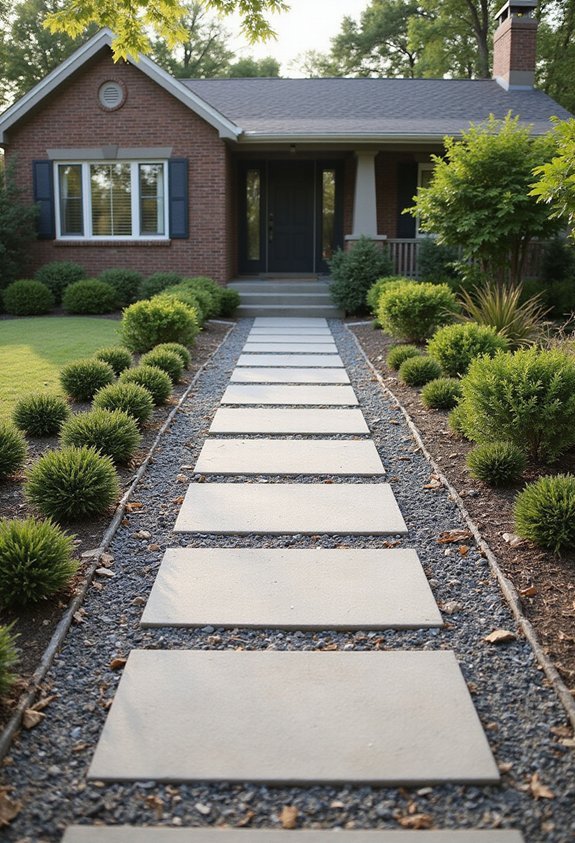
If you’re tired of spending weekends mowing, edging, and maintaining large grass areas, hardscaping offers a practical solution that’ll dramatically reduce your lawn care responsibilities while enhancing your yard’s visual appeal. Hardscaping involves using non-plant materials like pavers, gravel, stone pathways, and decorative concrete to replace portions of your lawn. You can install a gravel garden bed, create stepping stone pathways, or build a patio area, all of which require minimal upkeep compared to grass. These materials also improve drainage, prevent soil erosion, and add texture and dimension to your landscape. By strategically placing hardscape elements throughout your front yard, you’ll spend less time maintaining grass and more time enjoying your outdoor space, while simultaneously creating a modern, polished appearance.
Swap Thirsty Grass for Drought-Hardy Groundcover
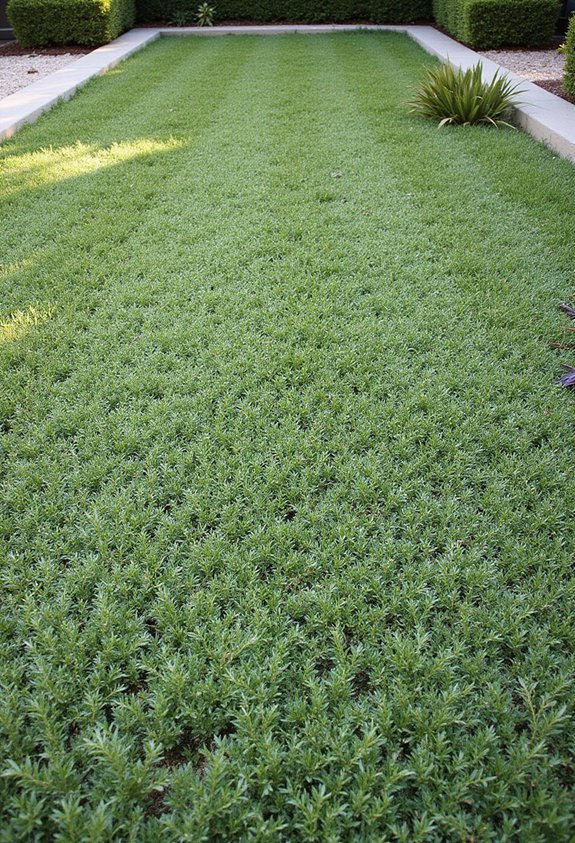
Traditional lawn grass demands consistent watering, regular fertilizing, and frequent mowing, making it one of the most resource-intensive elements of your front yard landscape. You can swap this thirsty grass for drought-hardy groundcover that requires substantially less maintenance and water. Plants like creeping thyme, sedums, and ornamental grasses thrive in dry conditions while still providing attractive coverage for your yard. These alternatives grow low to the ground, eliminating the need for mowing entirely. You’ll spend less time maintaining your landscape and reduce your water consumption significantly. Additionally, drought-hardy groundcovers support local ecosystems by providing habitat for beneficial insects. When selecting replacements, choose plants suited to your climate zone and soil conditions to guarantee they’ll flourish with minimal intervention, creating a sustainable and visually appealing front yard.
Build Planting Beds With Clean Borders
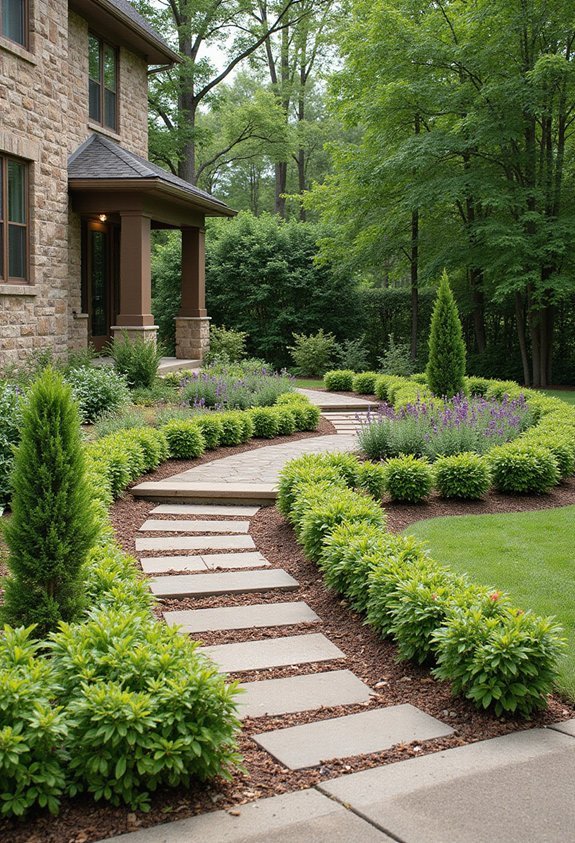
Well-defined planting beds create structure and visual organization in your front yard while making it easier to manage your plants and groundcovers. You’ll want to establish clear borders using materials like steel edging, stone, or brick that’ll keep soil contained and prevent grass from creeping into your beds. When you’re creating these borders, guarantee they’re level and secure so they won’t shift over time. You should mark out your bed shapes before installation, considering curves or straight lines based on your yard’s design. Properly bordered beds enhance your landscape’s appearance, simplify maintenance tasks, and protect your plantings from foot traffic. This investment transforms your front yard into a polished, organized space that looks intentional and well-maintained.
Create a Small Seating Area Near Your Entrance
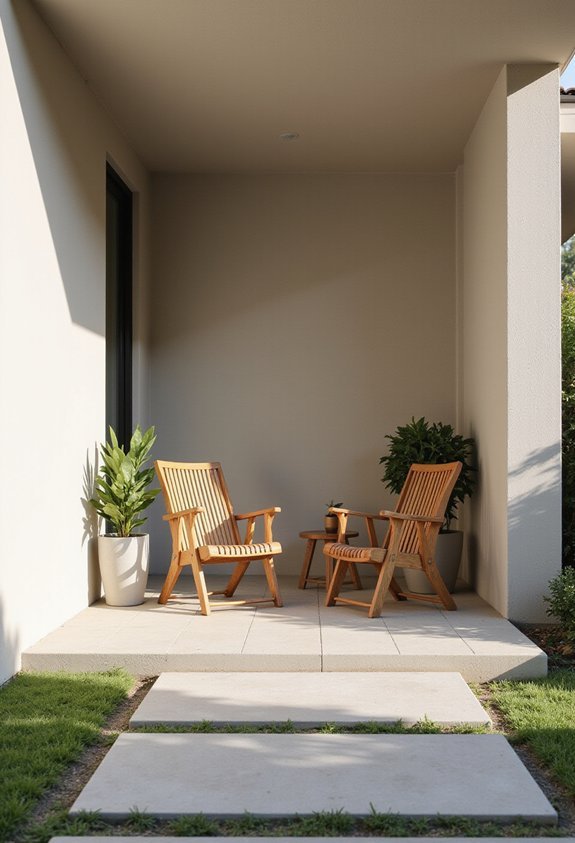
Since your front entrance is the first thing visitors notice about your home, adding a small seating area there’ll make your front yard more welcoming and functional. You can place a bench, pair of chairs, or a small bistro set in a corner near your door, ensuring the arrangement doesn’t obstruct walkways or sightlines. Choose furniture made from durable, weather-resistant materials like teak, metal, or resin wicker that can withstand outdoor conditions year-round. Position your seating to face your yard or street, creating an inviting spot where you can relax, greet neighbors, or enjoy morning coffee. Add cushions in neutral tones for comfort, and consider a small side table for beverages or plants. This practical addition enhances curb appeal while providing a functional outdoor space.
Add Raised Garden Beds for Structure and Interest
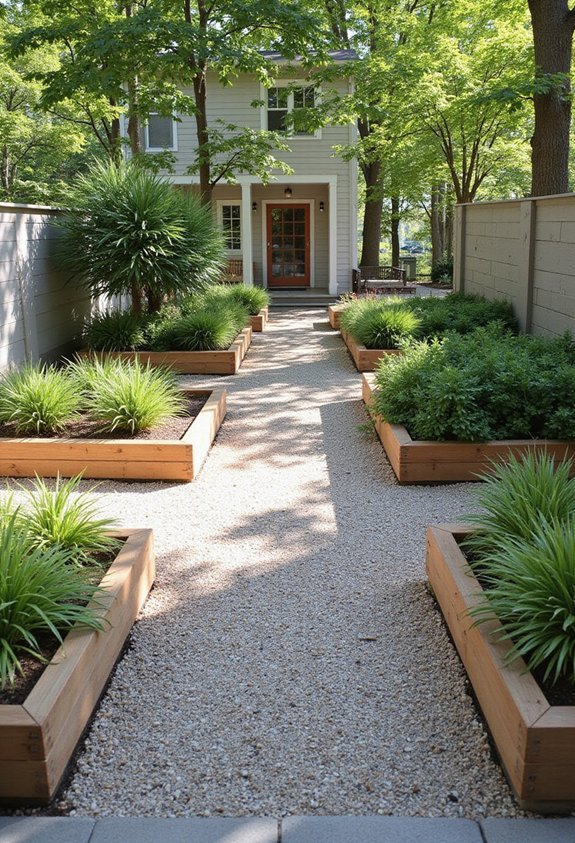
Raised garden beds offer you a practical way to introduce organized planting areas, defined borders, and visual depth to your front yard while making gardening easier and more accessible. You can position these beds along your property line or near your entrance to create structured focal points that draw the eye. When you select materials like wood, composite, or metal, you’ll establish clean lines that enhance your yard’s overall appearance. You should fill your beds with quality soil and plant flowers, vegetables, or shrubs that complement your home’s style. Raised beds also improve drainage, reduce weeds, and allow you to control soil quality precisely. By arranging multiple beds in geometric patterns, you’ll create visual interest and demonstrate intentional landscaping design throughout your front space.
Sweep and Seal Walkway Cracks Monthly
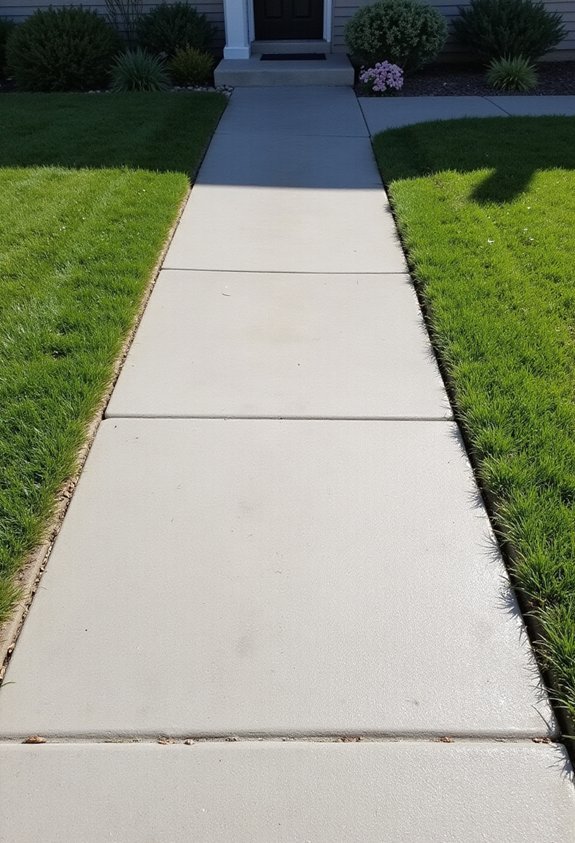
To prevent small cracks in your walkway from becoming major structural problems, you’ll want to establish a regular maintenance routine that involves sweeping and sealing these openings every month. Start by thoroughly sweeping debris, dirt, and leaves from all visible cracks, which helps you see their actual size and condition. Next, use a pressure washer or garden hose to rinse away remaining particles and allow the surface to dry completely. Once dry, apply a quality concrete crack sealant using a caulking gun, pushing the material deep into each crevice. Smooth the sealant with a putty knife for a neat finish. This monthly upkeep prevents water infiltration, which causes expansion and deterioration during freeze-thaw cycles, ultimately extending your walkway’s lifespan and maintaining your front yard’s polished appearance.
Plant Symmetrical Landscaping for Visual Balance
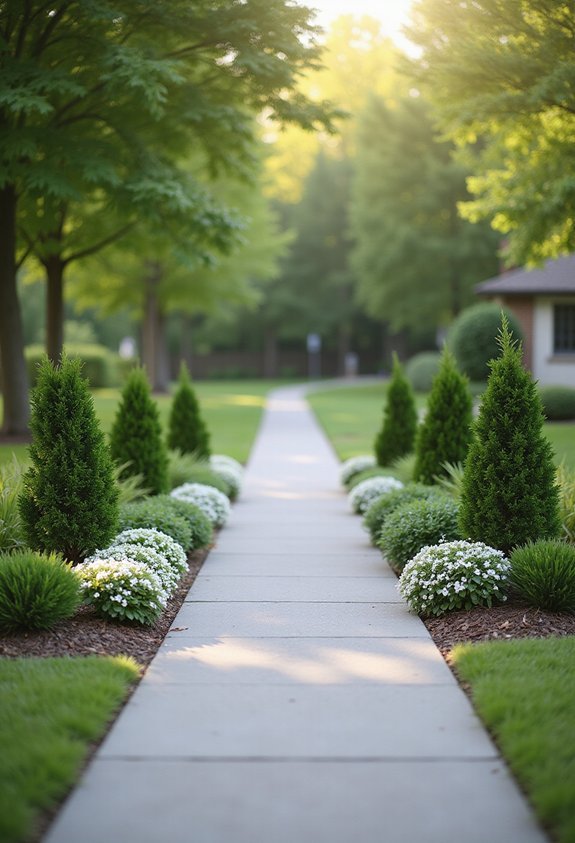
While maintaining your walkway keeps the hardscape looking sharp, you’ll also want to focus on how you arrange plants and flowers throughout your front yard, because strategic placement creates a sense of order that makes your entire property feel more intentional and well-designed. You can achieve this balance by planting matching shrubs, flowers, or trees on both sides of your entryway or driveway, which naturally guides the viewer’s eye and creates a cohesive appearance. Consider using identical plantings in corresponding locations, such as matching urns with seasonal flowers flanking your front door or symmetrical hedge rows lining your walkway. This mirrored approach doesn’t require identical specimens; you can vary textures and colors while maintaining balanced placement, resulting in a polished, organized front yard aesthetic.
Conclusion
You’ve now got a million ways to transform your front yard into a clean, welcoming space that’ll make your home the envy of the neighborhood. By combining regular maintenance like edging and pressure washing with strategic improvements such as raised beds and symmetrical planting, you’ll create a polished outdoor area that reflects your home’s true potential and vastly boosts its curb appeal and overall value.