
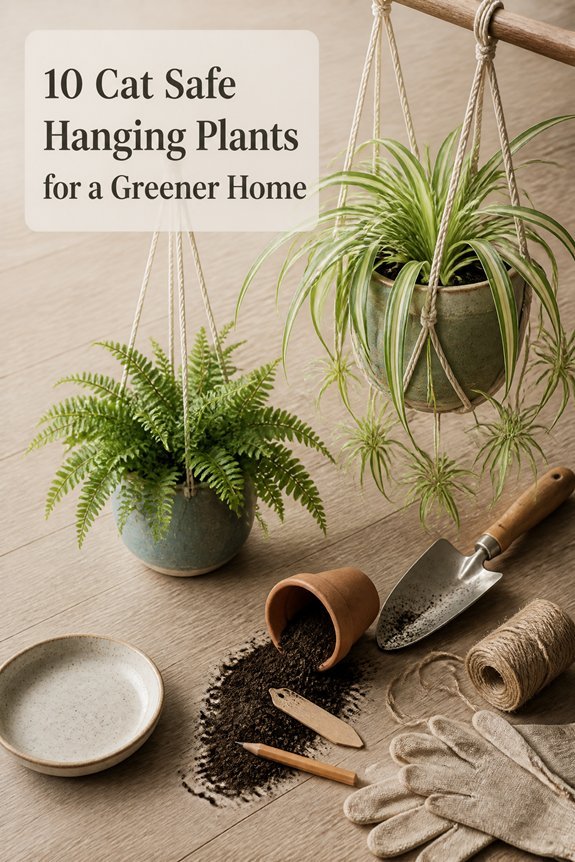
Finding pet-friendly greenery can feel like navigating a minefield for cat owners. Many beloved hanging plants hide toxins that pose real dangers to curious felines who love to nibble.
Yet the desire for lush, cascading foliage doesn’t have to end in compromise. Spider plants, Boston ferns, and parlor palms stand out as genuinely safe choices. These varieties deliver the visual impact of trailing vines and full foliage without the worry.
Peperomia adds another excellent option with its thick, attractive leaves that resist occasional pawing.
Simply selecting non-toxic species solves only part of the puzzle. Secure mounting hardware prevents disastrous plant tumbles during feline acrobatics. Placement matters too, keeping soil out of reach from cats who dig in potting mix.
With thoughtful installation and proper watering routines, both cats and plants thrive together in shared spaces.
The investment pays off in daily moments of greenery-filled calm. Cats gain environmental enrichment through safe exploration. Owners enjoy cleaner air and natural beauty without constant vigilance.
This balance transforms homes into healthier ecosystems for every resident.
Are Your Hanging Plants Safe for Cats? Here’s What You Need to Know
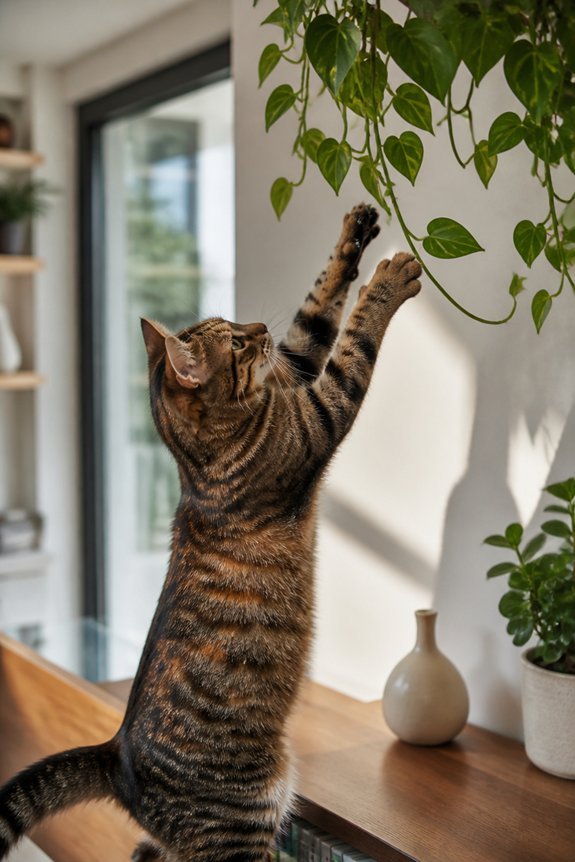
Cats love to swat at things that dangle. This makes hanging plants especially tempting for curious kitties.
Some plants can make your cat sick if they take a bite. Lilies are particularly dangerous. Even a small nibble can damage their kidneys. Dieffenbachia and philodendron aren’t safe either. They can cause drooling, vomiting, and mouth irritation.
The good news? You have plenty of safe options. Spider plants and Boston ferns work well in homes with cats. African violets add color without the worry. These varieties won’t harm your pet if they decide to sample a leaf.
Always check a plant’s safety before you buy it. The ASPCA website offers a helpful toxic plant database. Your vet can also point you toward reliable resources.
Keep in mind that height alone won’t stop a determined cat. Clever climbers find ways to reach apparently out-of-reach spots.Choose your plants wisely from the start.
Also read: How Fast Do Pothos Grow
Spider Plant: Nearly Indestructible and Irresistible to Cats
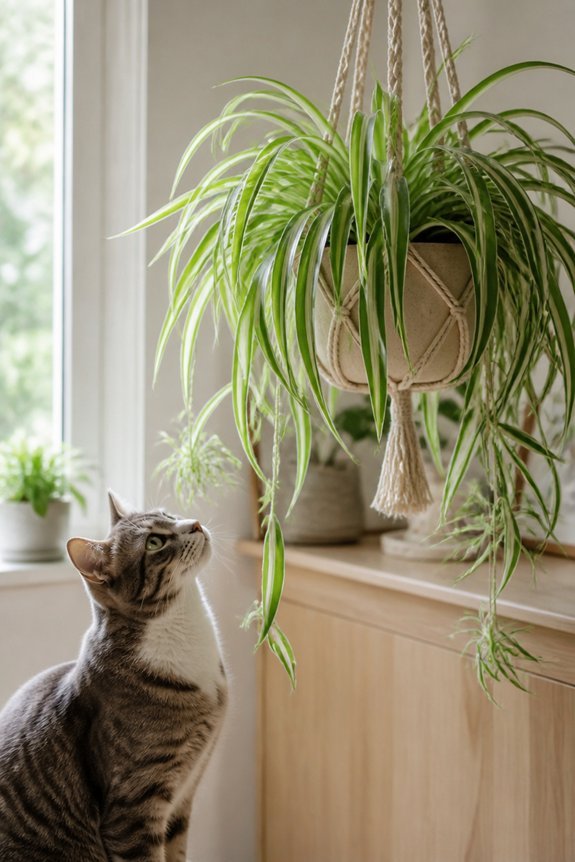
Spider plants are a solid pick for cat owners who want greenery without the worry. They’re completely non-toxic, so a curious nibble won’t send you rushing to the vet.
These plants forgive just about everything. Irregular watering, dim corners, forgotten feedings? No problem. Even rough play from your cat usually just bounces right off them.
Cats love the dangly leaves. The movement triggers that hunting itch, and you’ll probably catch your cat batting at them now and then. Good news: spider plants grow back fast, so a little chew damage barely slows them down.
Older leaves might look worn over time. That’s normal. New growth keeps coming, so the plant stays full and green.
Want fewer cat attacks? Hang them up high or use tall shelves. Crafty cats might still find a way, though.
Boston Fern: Lush, Non-Toxic Greenery for Your Space
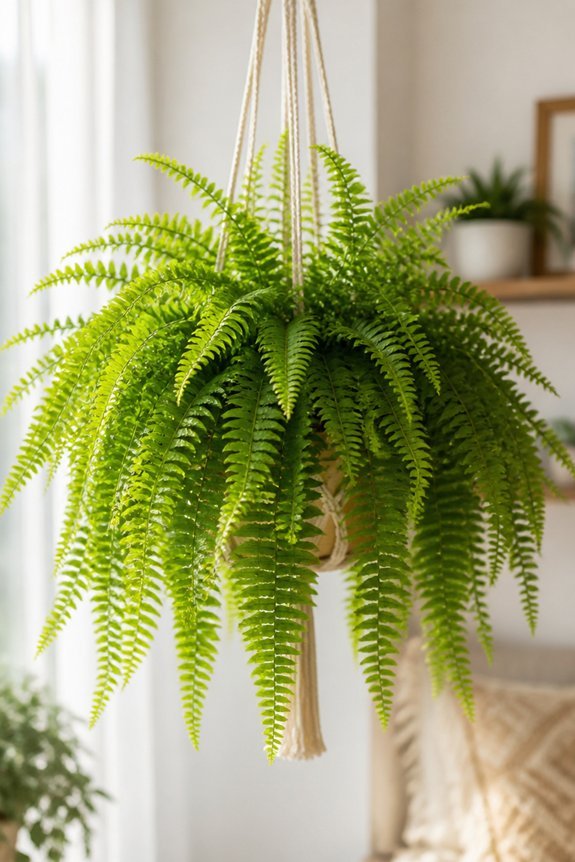
Boston ferns bring a soft, airy feel to any room. Their feathery fronds sway gently in hanging baskets, offering a completely different look than sturdier plants like spider plants. You get that full, forest-floor vibe without worrying about your cat.
These ferns are completely safe around curious cats. Even if your pet takes a nibble, nothing bad will happen. They love bright, indirect light and humid air. Bathrooms and kitchens are perfect spots since they naturally hold more moisture.
Keep the soil damp but not soggy. Mist the leaves regularly, especially in dry months. Trim away any brown fronds to keep things tidy. Growth is slow but steady, and you’ll notice a fuller shape developing over time. Place them on shelves, in corners, or let them cascade from a hanging planter, just keep them away from direct sun and heaters.
Parlor Palm: Cat-Safe Tropical Vibes
Looking for a tropical touch that won’t worry you? The parlor palm fits beautifully into cat-friendly homes. Its feathery fronds arch gently from a slender trunk, adding soft texture to any corner.
This plant forgives less-than-perfect conditions. Bright, indirect light keeps it happiest, though it handles dimmer spots better than most tropical varieties. Water when the soil feels dry to the touch. Occasional misting helps, especially when humidity drops below fifty percent.
Growth stays slow and manageable. Most indoor specimens reach four to six feet over time. Best of all, you can relax around your cats. No toxins hide in those elegant leaves, making this palm a stress-free choice for pet households.
Peperomia: Compact and Completely Non-Toxic
Peperomia brings a cozy, compact vibe to any space. It stays small and bushy, perfect for tight corners or hanging spots. Best of all, it’s completely safe for curious cats.
This little plant packs personality into thick, textured leaves. You’ll find varieties in red, green, and variegated patterns. It grows slowly and asks for very little attention.
Give it moderate indirect light and soil that drains well. Water only when the top inch of soil dries out. That’s really all it needs.
Popular picks include Peperomia obtusifolia and Peperomia caperata. Tuck one on a shelf, desk, or in a hanging basket. Those trailing stems create a lovely cascade without any fuss.
African Violet: Delicate Blooms That Won’t Harm Your Pet
African violets bring delicate color to your home without any worry for your cat. These pretty plants are completely safe around pets.
They love indirect light and moderate humidity. That makes them perfect for living rooms and bedrooms where your cat already spends time.
Keep the soil moist but never soggy. The soft, velvety leaves and purple, pink, or white blooms add gentle charm to any space.
Try placing them in hanging baskets or on high shelves. This keeps the foliage out of reach of curious paws.
Water every few days with room-temperature water. They grow slowly and need little beyond good light and proper watering.
Cat owners can enjoy these blooms with total peace of mind.
Haworthia: Sculptural Succulents Your Cat Can Safely Explore
Haworthia brings a fresh angle to pet-friendly plants. These compact succulents show off tight rosettes and spiral leaf patterns that look almost architectural. Both Haworthia attenuata and Haworthia fasciata stay completely non-toxic for your curious cats.
Bright, indirect light keeps them happy with minimal watering needed. At just three to six inches tall, they tuck nicely onto high shelves or into hanging planters away from playful paws. The stiff leaves handle gentle bumps, and slow growth means you’ll rarely need to repot.
Bamboo Palm: Air-Purifying and Pet-Friendly
Cats love to explore. They will jump on shelves. They will nibble leaves. You cannot stop this instinct. So picking safe plants matters.
Bamboo palm checks every box. It cleans your air. It removes formaldehyde and benzene. Your cat stays safe even if she takes a bite.
The fronds look delicate and feathery. They add softness to any room. Bright, indirect light keeps them happy. Keep the soil moist but not soggy.
Place your palm up high if you can. A hanging basket works well. Your cat might still bat at the leaves. That is fine. No toxins mean no trips to the vet.
Mist the plant now and then. Water when the top inch feels dry. This palm rewards little effort with clean air and peace of mind.
Prayer Plant: Eye-Catching Patterns Without the Risk
You get stunning visuals without any toxicity worries for your cats. Oval leaves display bold red veins and dark spots. Every part stays completely pet-safe.
Place these in indirect light with moderate humidity. Watch for the nightly show when leaves fold upward like hands in prayer. They thrive with consistent moisture and well-draining soil in hanging baskets kept out of reach.
Hanging and Caring for Cat-Safe Plants: Installation Guide and Maintenance Tips
Start with the right hardware. Sturdy hooks, wall brackets, and ceiling hangers keep everything secure. No one wants a plant crashing down mid-cat chase.
Pick spots your cat can’t easily reach. High shelves, tight corners, and doorways work well. Leave space between plants and any climbing furniture your cat uses. The harder you make it, the less likely they’ll investigate.
Water on a regular schedule and check soil moisture often. Spider plants, Boston ferns, and African violets like steady moisture but hate soggy roots. Feed them monthly when they’re actively growing.
Take a close look each week. Catch pests, wilting, or damage early. Snip off dead leaves to keep plants healthy and your floors clean.
Frequently Asked Questions
If My Cat Ingests a Cat-Safe Plant, Should I Still Contact a Veterinarian?
While cat-safe plants are non-toxic, monitoring the cat remains advisable. If vomiting, diarrhea, or lethargy occurs, veterinary consultation is recommended. Some cats may experience mild digestive upset despite safety classifications.
How Can I Prevent My Cat From Digging in Hanging Plant Soil?
Why allow preventable soil disruption when solutions exist? One can elevate plants higher, use decorative soil covers, or apply citrus peels around the base. Placing plants on sturdy shelves or using hanging baskets with secure hooks deters feline digging effectively.
Are Cat-Safe Plants Still Safe if Treated With Pesticides or Fertilizers?
Cat-safe plants lose their safety designation when treated with pesticides or fertilizers. These chemical applications become toxic to cats upon ingestion or contact, regardless of the plant’s natural safety profile. Pet owners should use only cat-safe treatments.
What Should I Do if My Cat Has an Allergic Reaction to Plants?
If a cat experiences a catastrophically severe allergic reaction to plants, one must immediately contact a veterinarian. The feline requires professional medical evaluation and treatment to manage symptoms, determine the triggering plant, and prevent future exposure to harmful botanicals.
Can I Use Regular Potting Soil for Cat-Safe Hanging Plants Safely?
Regular potting soil can generally be used safely for cat-safe hanging plants. However, one should verify the soil contains no added fertilizers, pesticides, or perlite that might cause digestive upset if ingested by curious cats.
Conclusion
Creating a cat-safe home with hanging plants requires careful plant selection and proper placement. Spider plants, Boston ferns, peperomia, and parlor palms offer non-toxic options that thrive indoors. Like a garden suspended in air, these plants beautify spaces while protecting feline companions. Confirm lighting and humidity needs, install plants securely out of reach, and monitor your cat’s behavior around new greenery. Regular maintenance guarantees both plant health and pet safety.