
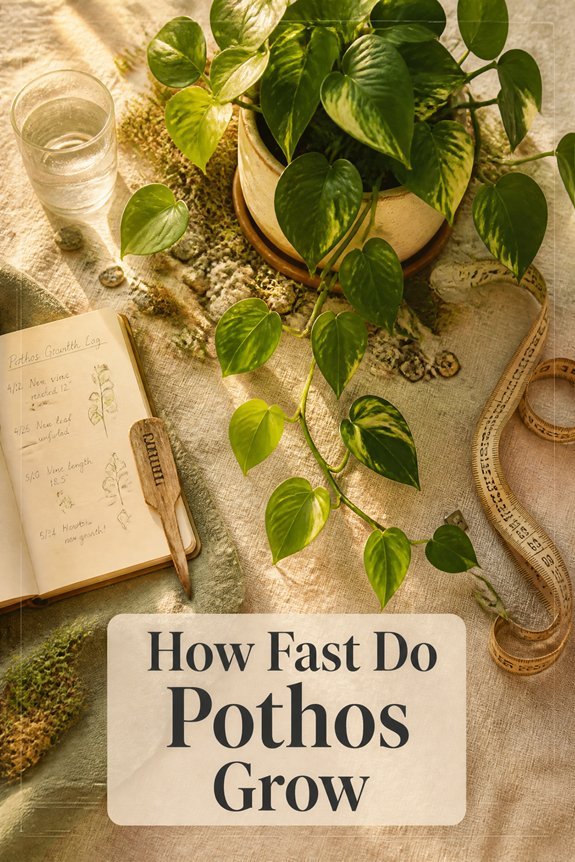
Pothos plants are surprisingly vigorous climbers during their active seasons. Between spring and summer, healthy vines can extend 6 to 12 inches in a single month. That kind of momentum makes them favorites among impatient gardeners.
Once autumn arrives, the energy shifts. Growth tapers off noticeably as daylight hours shrink and temperatures drop. By winter, most pothos enter full dormancy and pause almost entirely, waiting for longer days to return.
What separates a thriving specimen from a sluggish one? Light quality sits at the top of the list, followed closely by consistent warmth and adequate humidity.
Watering habits matter too, as does the occasional boost from balanced fertilizer. Each factor works together to determine whether your plant pushes out lush new leaves or simply holds steady.
Average Pothos Growth Rate: Timeline and Expectations

Pothos plants grow steadily when conditions are right. They push out new vines and leaves all through the growing season. You can expect about six to twelve inches of fresh growth each month in spring and summer. Things slow down once fall arrives. Your plant will take a rest through winter.
Light, warmth, humidity, and soil all shape how fast your pothos stretches. Bright, indirect light keeps things moving. Dim corners will stall your plant significantly. Keep temperatures between sixty-five and eighty-five degrees for best results. Water when the top inch dries out, and use a mix with peat moss or coconut coir. Mature vines can hit six to ten feet easily. Give them something to climb and watch the leaves get bigger with age.
Also read: Are Peperomia Easy to Care for
How Light Conditions Speed Up Pothos Growth
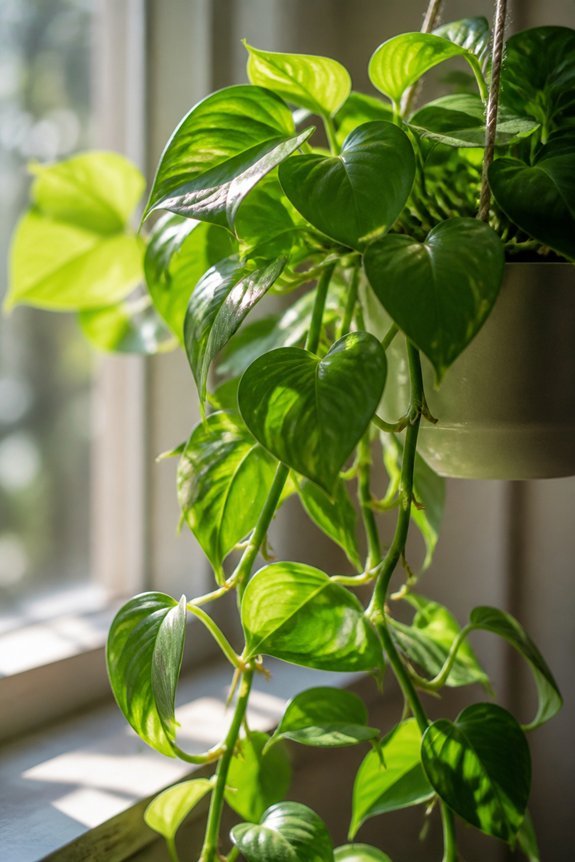
Light makes or breaks your pothos. Give it brightness, and it rewards you with steady, visible growth.
East-facing windows hit the sweet spot. Your plant gets gentle morning rays without the harsh afternoon burn. In these conditions, expect several inches of fresh vine each month. Dim corners slow things down to a crawl. Sometimes just an inch or two.
Watch out for direct sun, though. Those leaves scorch faster than you’d think. No ideal window nearby? Grow lights work beautifully. LED or fluorescent setups keep things moving. Ten to twelve hours daily makes a real difference.
Low light isn’t just slow. It starves the plant. Photosynthesis stalls, and new leaves simply stop coming. Your pothos needs that energy to push out vines and unfurl fresh growth.
How Temperature and Humidity Affect Pothos Growth
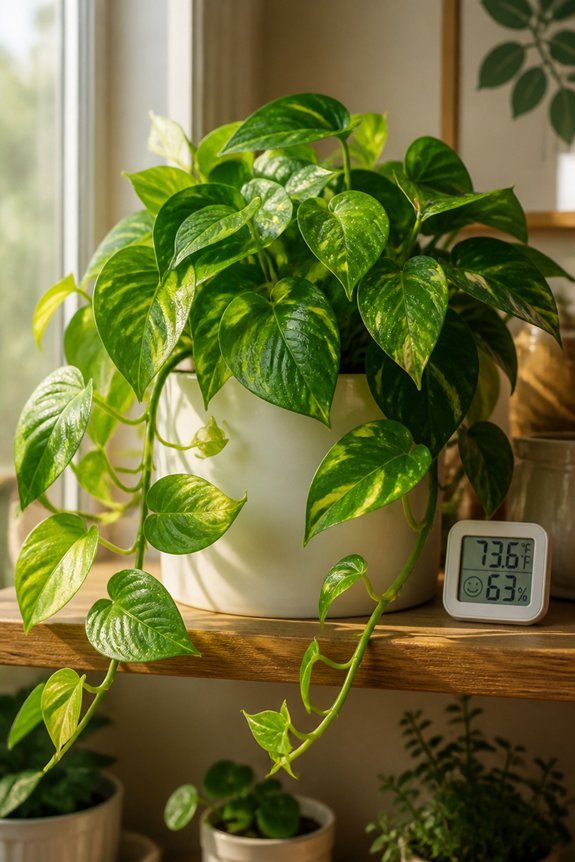
Light gets the attention, but temperature and humidity do the quiet work. Pothos settles in best between 65 and 85 degrees Fahrenheit. Below 60, growth slows to a crawl.
Cold snaps push the plant into dormancy. It stops taking up nutrients. Leaves stop forming. The plant is protecting itself, not thriving.
Humidity matters just as much. Fifty to seventy percent keeps leaves soft and growing. Dry air blocks water from entering through the foliage. You will notice crispy brown edges first. Then growth stalls.
Too much moisture backfires. Above 80 percent, fungi move in. Roots rot. The plant suffocates in its own soil.
Keep temperatures steady. Drafts, heating vents, and cold window sills all cause trouble. Your pothos likes boring, predictable air.
Boost humidity without gadgets by grouping plants together. Each one releases moisture. They share it. A small humidifier works too. Just aim for that middle zone.
Watering and Nutrient Schedules for Faster Growth
You’ve got the temperature and humidity sorted. Now let’s talk about what really makes your pothos take off: water and nutrients.
Your pothos likes soil that stays lightly damp, not soggy. During growing season, water every 7 to 10 days. Adjust based on how much light it gets and how large the pot is. Letting the top layer dry between waterings actually builds stronger roots. Stronger roots mean faster vines.
Feed your plant every two weeks with a balanced fertilizer. Look for a 10-10-10 NPK ratio on the label. Nitrogen, phosphorus, and potassium all work together to push growth. When winter hits, cut back to once a month. Growth slows naturally then, so your plant needs less fuel.
Stick to this routine. Water consistently. Feed regularly. You’ll see longer vines and fuller leaves within a few months.
Golden Pothos Grows Faster: Here’s Why (And What Other Varieties Do)
Golden pothos wins the race every time.
It simply grows faster than other varieties. You’ll see longer vines and fuller foliage month after month.
Marble queen moves slowly. Its white variegation limits light absorption, so photosynthesis drops. Neon falls somewhere in the middle. Jade brings up the rear.
Why the speed difference? Leaf size matters. Chlorophyll content matters too. Golden pothos excels at both.
Remember: any variety speeds up with good light, proper watering, and occasional feeding.
Why Your Pothos Stopped Growing: 5 Quick Fixes
Why does a pothos suddenly stop producing new leaves and vines? Several common factors can halt growth. Insufficient light, poor watering habits, nutrient deficiency, temperature stress, and pot-bound roots are the usual suspects.
Inadequate light is often the main culprit. Pothos plants need bright, indirect light to thrive. When light is too low, photosynthesis slows down. Growth stalls as a result.
Watering issues can also stop progress in its tracks. Overwatering leads to root rot. Underwatering leaves the plant dehydrated. Aim for soil that stays consistently moist but never soggy or bone dry.
Nutrient deficiency happens when your pothos lacks nitrogen, phosphorus, and potassium. A monthly feeding during spring and summer usually fixes this.
Temperature matters more than you might think. Pothos do best between 55 and 75 degrees Fahrenheit. Cold drafts and heat stress both put the brakes on new growth.
Sometimes the problem is simply crowded roots. When roots run out of room, they can’t take up enough nutrients or water. Moving your plant to a larger pot with fresh soil often gets things growing again.
Pruning Techniques to Boost Pothos Growth and Fullness
Prune during spring through early fall for best results. This is when pothos actively pushes out new growth. Cut back about one-third of the vine length to stimulate branching. Your plant won’t feel stressed by this moderate trim.
Regular tip pinching maintains shape and encourages sideways growth. Pluck off yellow or damaged leaves so energy flows to healthy parts. Those cuttings you remove? Root them in water or soil. You’ll get free new plants.
Small, frequent trims work better than one big chop. Your pothos stays balanced and lush this way.
Frequently Asked Questions
Can Pothos Grow in Water Indefinitely, or Do They Need Soil Eventually?
Pothos can grow indefinitely in water without soil. They develop water roots adapted for aquatic environments. However, growth typically slows compared to soil cultivation, and regular nutrient supplementation becomes necessary for long-term health.
At What Age Does a Pothos Plant Reach Its Maximum Mature Size?
Pothos plants can reach maturity within 3-5 years, though some cultivars take longer. A mature pothos typically measures 6-10 feet in length, with leaves spanning 2-4 inches wide under ideal conditions.
How Do I Propagate Pothos Cuttings to Create New Plants Quickly?
One propagates pothos cuttings by cutting four-to-six-inch stems below leaf nodes, placing them in water or moist soil, and maintaining warm temperatures. Roots typically develop within one to two weeks, after which plantlets can be transplanted into individual containers.
Will Pothos Grow Faster in a Pot or Hanging Basket?
Pothos plants perform prolifically in both containers, though hanging baskets boost growth slightly by allowing roots to spread freely downward. Pot placement matters less than proper drainage, light exposure, and consistent watering for ideal development.
Can Pothos Survive Outdoors Year-Round in Cold Climates?
Pothos cannot survive outdoors year-round in cold climates. This tropical plant dies when exposed to temperatures below 50°F. It thrives indoors or outdoors only in warm, frost-free regions.
Conclusion
Pothos plants grow 6 to 12 inches monthly under ideal conditions, including bright indirect light, temperatures between 65-85°F, and consistent watering with bi-weekly fertilization. A gardener maintaining these standards observed vine growth of approximately 10 inches within four weeks. Growth rates decline considerably during fall and winter months due to dormancy. Adjusting light, temperature, humidity, and nutrients directly impacts the plant’s development speed and vine fullness.