
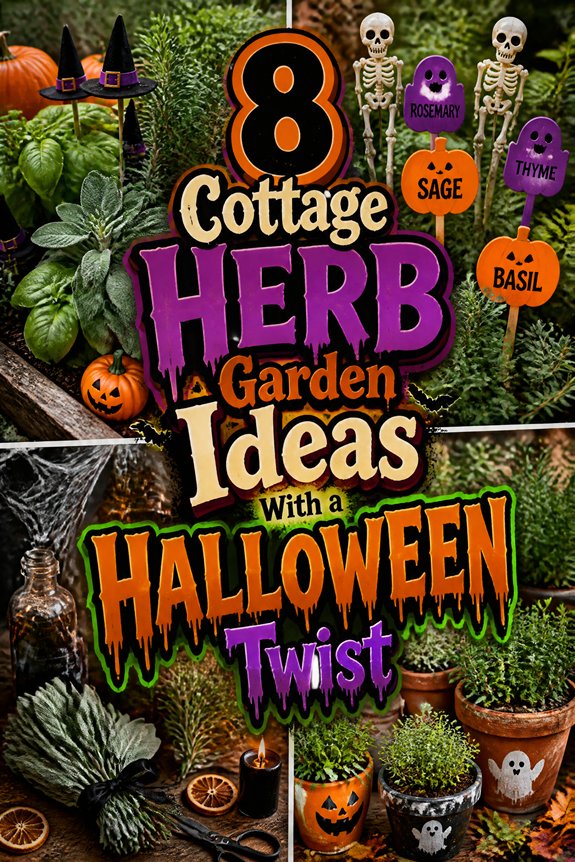
A cottage herb garden offers the perfect canvas for autumn creativity. By weaving in dark, moody varieties alongside traditional favorites, the space becomes both practical and atmospheric. Black basil and purple sage thrive as temperatures drop, their deep hues catching the fading light in unexpectedly dramatic ways.
Shaping the beds themselves adds another layer of storytelling. Curved borders or circular arrangements feel more enchanted than rigid rows. Companion planting with marigolds in burnt orange or near-black violas reinforces the seasonal palette without sacrificing harvest potential.
Color choices extend beyond foliage alone. Silver-leaved plants like lavender and artemisia catch moonlight, while seed heads left standing create ghostly silhouettes against autumn skies.
These small decisions accumulate into something genuinely atmospheric. The garden remains fully functional throughout this transformation. Herbs continue their culinary service even as they contribute to the visual narrative.
With thoughtful planning, the space rewards both the cook and the storyteller well past Halloween itself.
Grow Dark Herbs for Your Spooky Cottage Garden
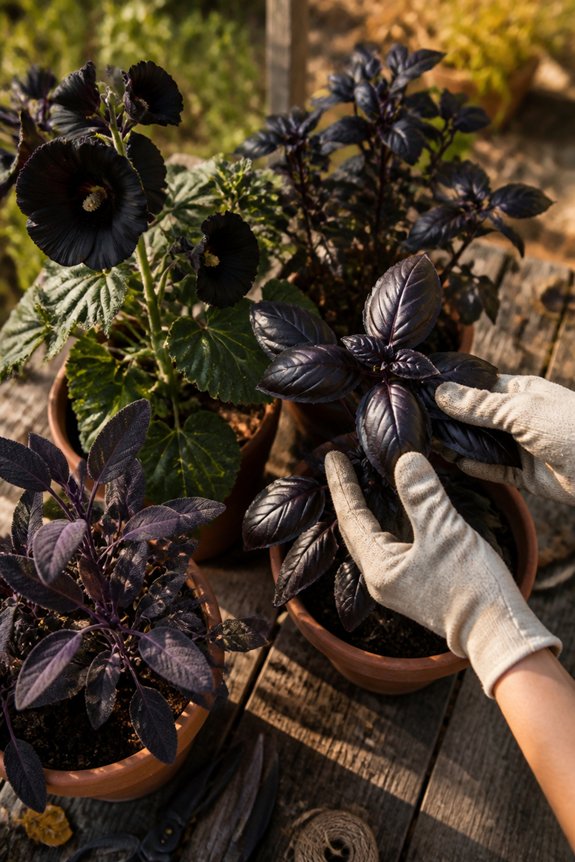
How might a gardener create visual interest in a cottage garden? Dark herbs provide an effective solution.
Black basil, dark opal basil, and purple sage offer deep foliage colors. These plants thrive in full sunlight and well-draining soil.
Dark herbs serve dual purposes, functioning as ornamental elements while remaining useful for culinary applications. Their moody appearance enhances autumn garden aesthetics.
Plant on a Halloween Timeline: When to Sow and Harvest
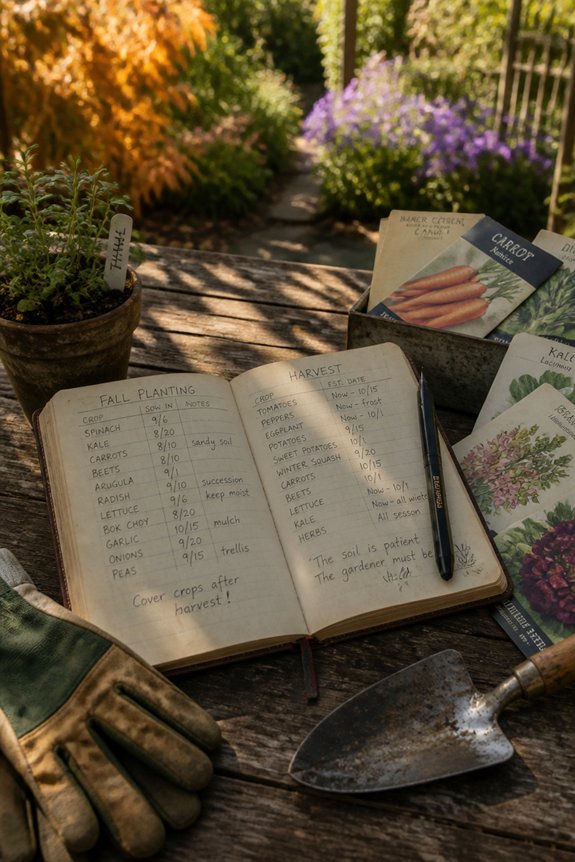
Timing shapes the success of dark herbs in a cottage garden, particularly when aiming for dramatic fall harvests. Black hollyhock and dark purple sage require early spring sowing, around March or April, for October blooms. Dark basil varieties need late spring planting in May.
Harvest occurs in late September through November, coinciding with Halloween preparations and peak color intensity for seasonal arrangements.
Discover Herbs That Witches Actually Used (Plus Growing Tips)
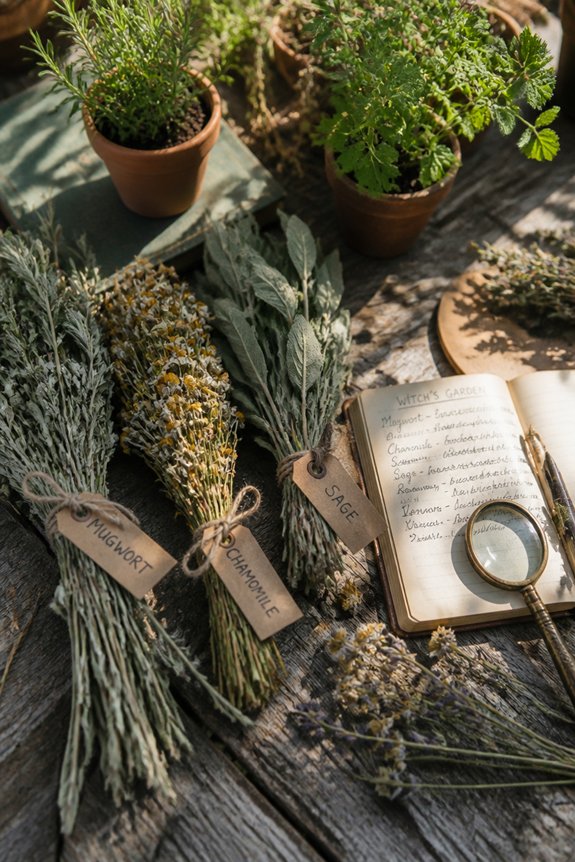
Many historical herbs served practical purposes in medieval and early modern gardens, with several varieties appearing in documented witch trial records and herbalist texts. Belladonna, henbane, and mandrake were documented in historical accounts. Sage, mugwort, and wormwood also appeared frequently in period records.
These plants grew in cottage gardens for medicinal, culinary, and practical uses, not supernatural purposes.
Pick Halloween Colors: Deep Purple, Black, and Dark Green
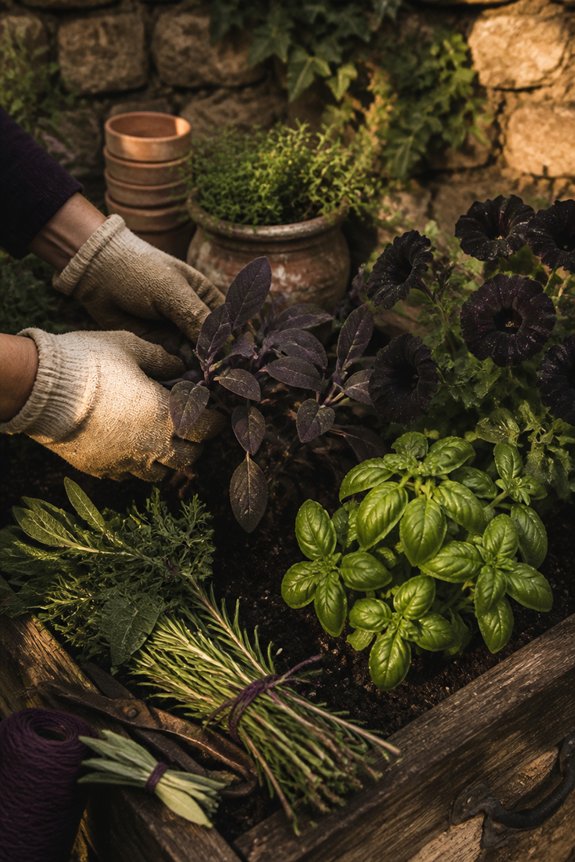
A cottage herb garden benefits from a deliberate color scheme that complements both the plants and the season. Deep purple basil, black petunias, and dark green sage create visual depth. Pairing these darker hues with silvery artemisia or pale variegated plants provides contrast.
This palette enhances the garden’s autumn atmosphere while maintaining practical functionality for herb harvesting and maintenance throughout the growing season.
Design Cottage Herb Bed Shapes: Cauldrons, Bats, and Spirals
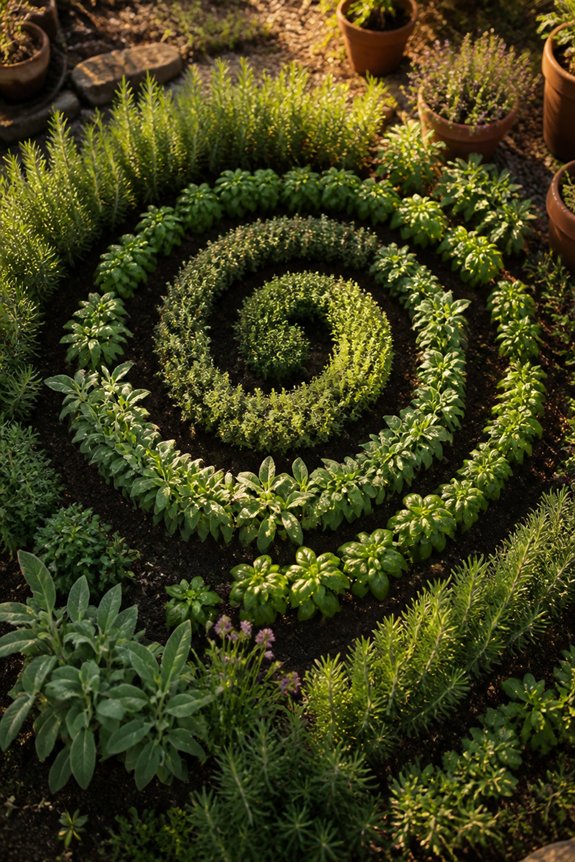
Because cottage gardens blend functionality with seasonal themes, the bed shapes chosen should reflect both practical herb growing and Halloween aesthetics.
Cauldron-shaped beds work well for basil and thyme. Bat silhouettes accommodate mint and oregano effectively. Spiral designs, a traditional cottage garden feature, maximize space while growing rosemary and sage. These shapes combine visual interest with efficient herb cultivation and harvesting.
Grow Herbs Together for Better Looks and Better Taste
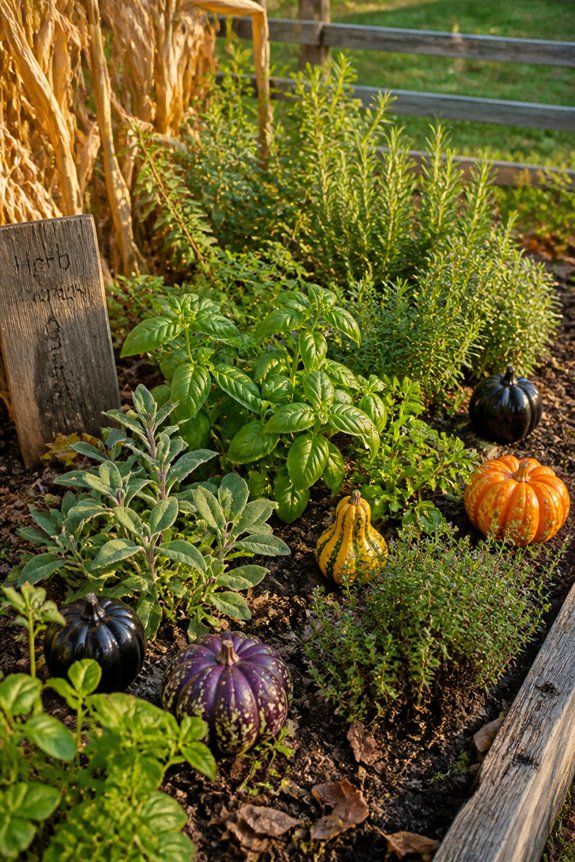
Once the bed shape is established, selecting which herbs to plant together becomes the next consideration. Basil, parsley, and chives thrive in similar conditions, making them compatible companions. Rosemary prefers drier soil, so it works best planted separately.
Grouping herbs by water and sunlight requirements guarantees healthy growth, while proximity creates visual appeal and convenient harvesting for cooking purposes.
Harvest and Cook Your Halloween Herbs
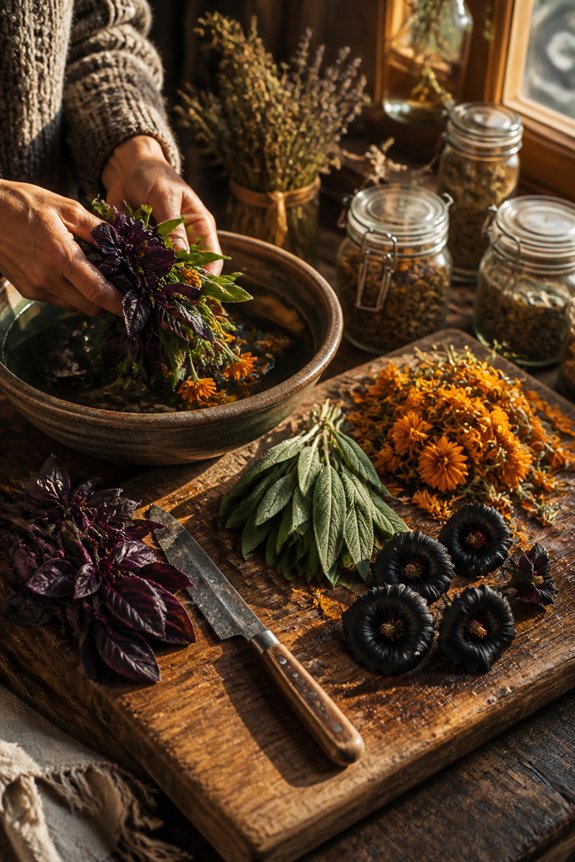
The ideal time to harvest herbs arrives when plants reach sufficient maturity, typically in mid to late autumn. Gardeners should pick sage, thyme, and rosemary in the morning after dew dries.
These herbs work well in Halloween-themed recipes, including soups, roasted vegetables, and herb butters. Proper timing guarantees maximum flavor concentration and oil content in harvested plants.
Decorate Your Cottage Herb Garden for Halloween
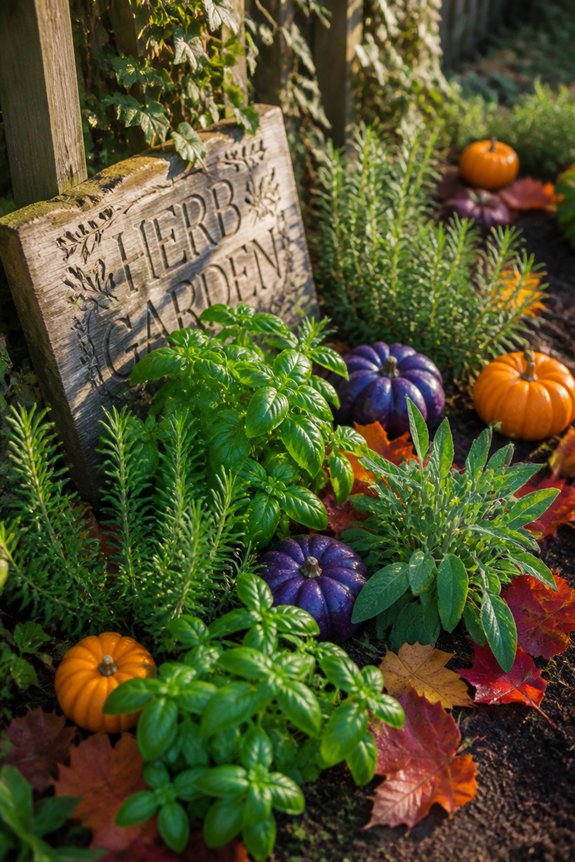
Gardeners frequently enhance their herb gardens with seasonal decorations that complement the autumn harvest period. Orange pumpkins, placed near basil and rosemary plants, create visual interest. String lights wound around garden beds provide evening illumination.
Small scarecrows positioned among thyme and oregano add rustic appeal. Black decorative crows, placed on stakes, complement the garden’s natural elements without interfering with plant growth or maintenance routines.
Frequently Asked Questions
What Pests Commonly Attack Dark Herbs, and How Do I Prevent Them Organically?
Common pests attacking dark herbs include spider mites, aphids, and whiteflies. Organic prevention methods include introducing beneficial insects like ladybugs, spraying neem oil regularly, maintaining proper plant spacing for air circulation, and removing affected leaves promptly.
Can I Grow Halloween-Themed Herbs Indoors if I Lack Outdoor Garden Space?
Yes, Halloween-themed herbs thrive indoors with proper conditions. Black basil, purple sage, and dark parsley grow well in containers near sunny windows. Guarantee adequate light, drainage, and humidity for successful indoor cultivation without outdoor garden space.
Which Dark Herbs Are Safe for Pets Living in Cottage Garden Homes?
Dark herbs safe for pets in cottage gardens include basil, parsley, and mint. These culinary varieties pose minimal toxicity risks. However, owners should avoid dark-leafed plants like certain ornamental varieties, as many herbs can cause gastrointestinal upset in cats and dogs.
How Do I Preserve Halloween Herbs for Year-Round Cooking and Crafting?
Studies show dried herbs retain 70% of their potency for up to one year. One can preserve Halloween herbs through air-drying, freezing in ice cube trays with oil, or dehydrating. These methods enable year-round culinary and craft applications.
What Soil Amendments Best Support Dark Herb Growth in Cottage Gardens?
Dark herbs thrive in cottage gardens when amended with compost, peat moss, and perlite. These additions improve drainage while increasing organic matter. Sulfur lowers pH for acid-loving varieties, while bone meal provides phosphorus essential for deep foliage development.
Conclusion
A Halloween herb garden combines functional growing with seasonal aesthetics, merging dark basil, purple sage, and artemisia into deliberate bed shapes. Timing harvests with autumn guarantees peak flavor and visual appeal. Grouping herbs by water and sunlight needs supports growth while creating cohesive design. Using a smartphone to document garden progress, gardeners can photograph herb arrangements, track harvests, and plan future seasonal adjustments effectively.