
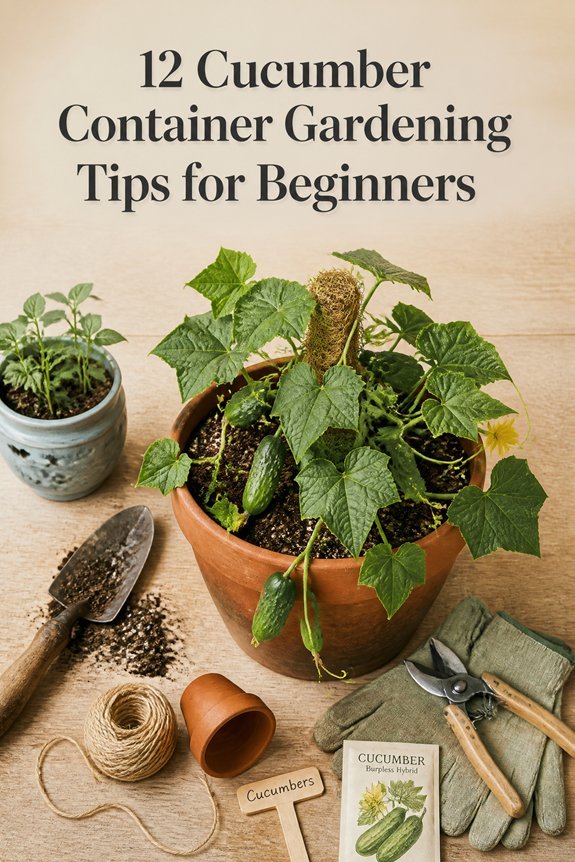
Growing cucumbers in containers opens up possibilities for gardeners working with patios, balconies, or small yards. Success hinges on getting a few key details right from the start. The payoff is fresh, crisp cucumbers just steps from your kitchen.
Container selection matters more than many beginners realize. Cucumbers develop deep root systems, so aim for pots at least 12 inches wide and deep. Quality potting mix with good drainage prevents the root rot that often ruins promising plants. A sturdy trellis or cage keeps vines off the ground and improves air circulation.
Sunlight and variety choice work hand in hand. Most cucumbers want six to eight hours of direct sun daily, though some compact varieties tolerate partial shade better.
Bush types suit small containers, while vining varieties need more vertical support but often produce higher yields. Matching your space constraints to the right plant prevents frustration later.
Regular watering and vigilant pest monitoring round out the essentials. Containers dry out faster than garden beds, especially in summer heat.
Check soil moisture daily and watch for cucumber beetles or aphids that can quickly overwhelm young plants. With these foundations in place, even first-time growers can expect satisfying results.
Select the Right Container Size and Material
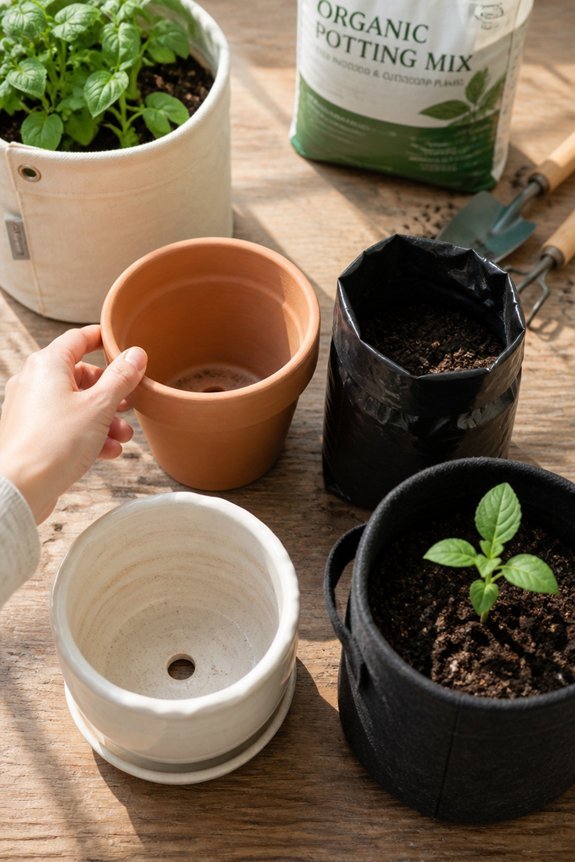
Cucumbers need room to stretch. Give them at least five gallons to start, but ten works even better. Their roots want space and steady moisture to thrive.
You have options for materials. Plastic holds water longer, so you water less often. Fabric lets roots breathe and air-prunes them naturally. Ceramic looks nice and keeps soil temperatures steady. Just pick what suits your setup.
Drainage holes are a must. No exceptions. Without them, you risk rotted roots and soggy disaster.
Think about color too. Dark pots soak up heat, perfect for cooler spots. Light colors bounce heat away when summers get intense.
Depth matters. Aim for twelve to eighteen inches at minimum. Width counts just as much since cucumber roots spread sideways, not just down.
Match your container to your climate, how much tending you like to do, and what space you actually have. Then you are set for growing success.
Also read: 7 Container Gardening Ideas for Small Spaces
Choose a High-Quality Potting Mix for Container Cucumbers
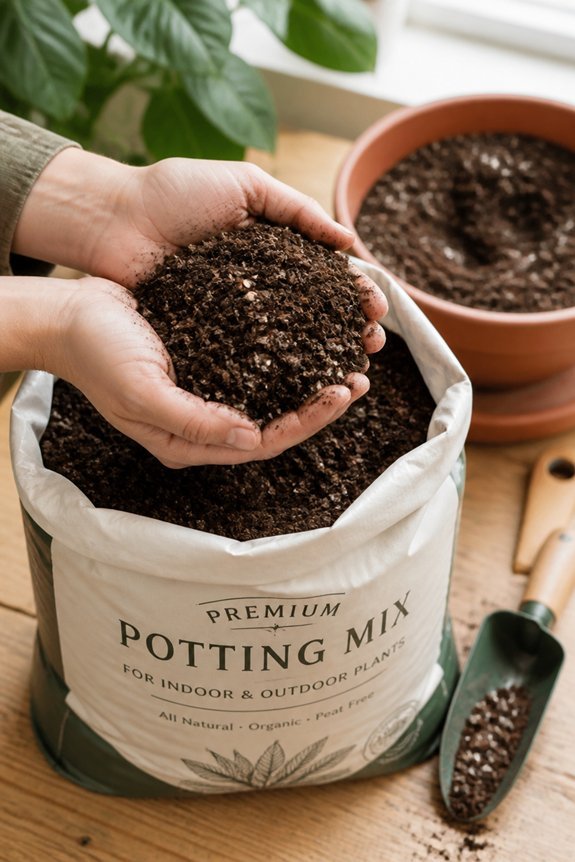
Your potting mix can make or break your cucumber harvest from the very start. Look for blends containing peat moss, coconut coir, and perlite or vermiculite. These ingredients work together to create the drainage and aeration roots crave. Cucumbers need soil that releases excess water yet stays evenly moist.
Skip the garden soil from your yard. It packs down hard in containers and chokes root development. Commercial vegetable mixes work beautifully for this crop. Stir in some compost for extra nutrients and better moisture retention.
Test the texture by squeezing a handful. It should crumble apart easily and feel light, never dense. This prevents the dreaded trio of container problems: waterlogging, rot, and malnutrition. Check soil moisture regularly to time your watering right. Start fresh each growing season with new mix to ensure your plants stay healthy and well-fed.
Pick a Cucumber Variety Suited to Container Growing
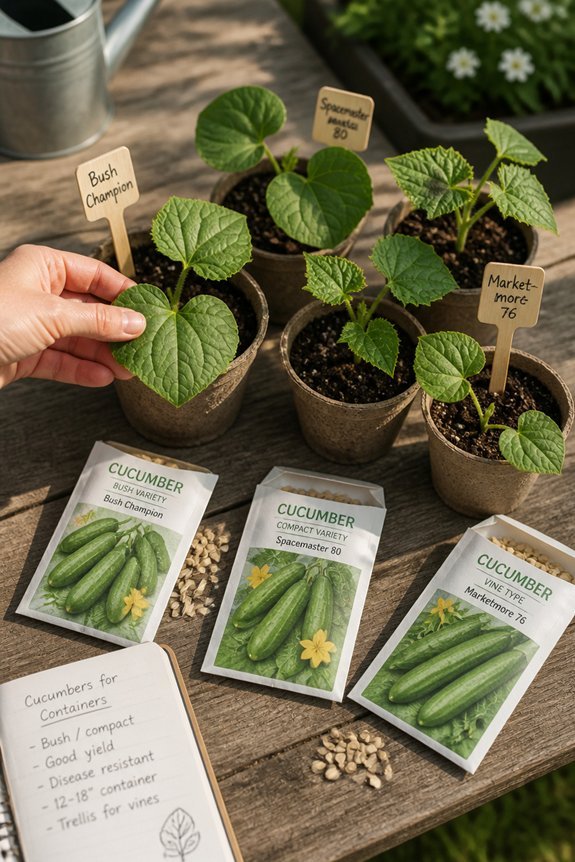
Not all cucumbers belong in sprawling garden beds. Some varieties actually prefer the cozy confines of a pot.
Bush and compact cultivars are your best bet for containers. They need less space and support than their vining cousins. Look for ‘Spacemaster’, ‘Bush Pickle’, or ‘Patio Princess’. These stay small at just 12-24 inches tall. Yet they still produce full-sized fruit.
Determinate types work wonders in pots too. They were bred specifically for this purpose. Their harvest comes in a shorter window, which many gardeners appreciate.
Dwarf varieties like ‘Lemon Cucumber’ fit nicely in tight spots. Just check your seed packets for container-friendly labels before buying.
Compact cucumbers ask for less pruning. Their trellising stays simple. Maintenance feels minimal compared to traditional garden types. Beginners with limited space often find them forgiving and fun to grow.
Position Your Containers for Maximum Sunlight
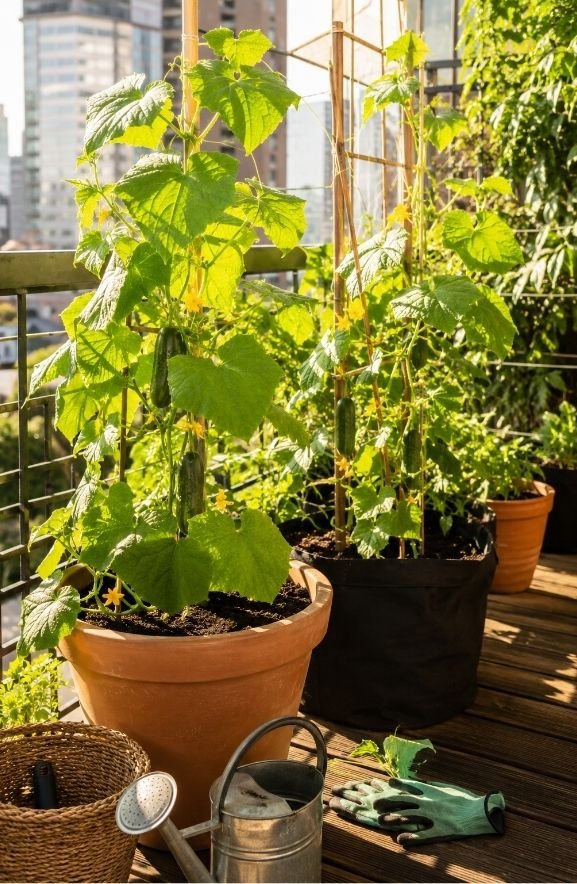
Cucumbers are sun lovers. They need six to eight hours of direct light each day to really thrive and produce well.
South-facing or west-facing spots give you the strongest, most reliable sunlight. Look for these locations on your patio, balcony, or in your garden.
Watch out for shadows. Trees, buildings, and fences can block that precious morning and afternoon light. Scout your space carefully before setting down your containers.
Living somewhere hot? A little afternoon shade actually helps. It protects leaves from scorching and keeps your soil from drying out too fast.
The beauty of containers is their flexibility. You can move them as seasons shift and sun patterns change. Morning sun is especially valuable. It dries off overnight dew quickly, which means less chance of disease.
Take time to observe your light throughout the day. A few quick checks now will keep your cucumbers happy and productive all season long.
Plant Seedlings or Seeds at the Right Depth
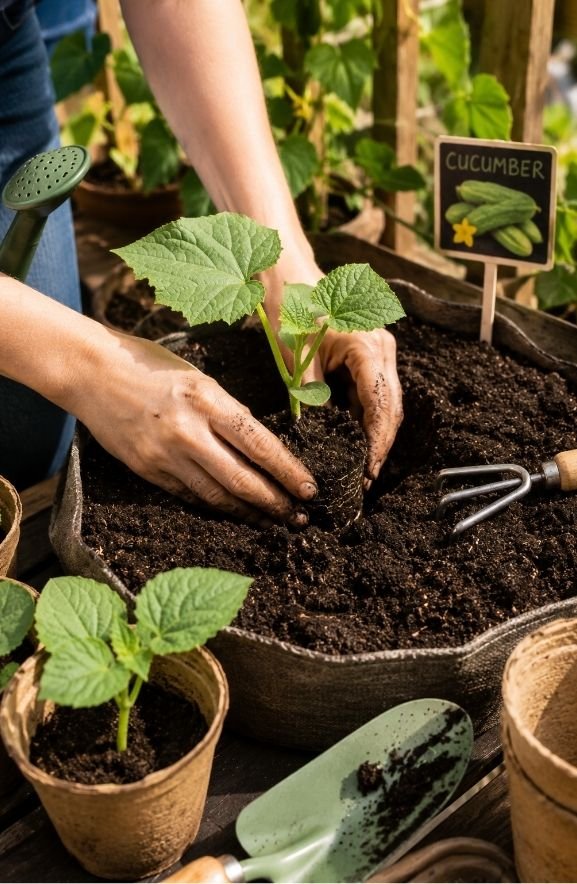
Getting the depth right really matters for your cucumbers. Seeds should go about one inch down. This gives them enough moisture without making the sprout work too hard to break through.
Go too shallow and the seed might dry out. Plant too deep and it can get stuck under heavy soil. You’ll want at least six to eight inches of soil in your container so roots have room to spread.
For seedlings, keep the root ball right at soil level. Don’t bury it deep and don’t let it sit too high. When you move seedlings to bigger pots, match the soil level they had before. This keeps stems healthy and helps plants settle in quickly.
Build Support Systems Before Planting
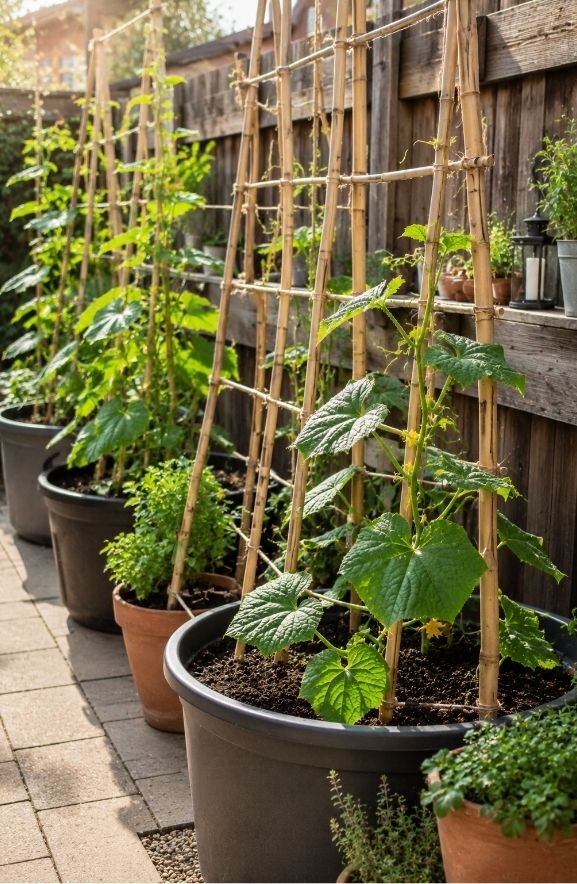
Cucumber vines need room to stretch. They’ll climb up and sprawl out as they grow. That’s why it pays to set up your supports before you put a single seed in the soil.
Trellises, stakes, or cages all work well. Just pick your setup and install it first. This simple step keeps roots safe from damage later. Driving stakes into planted soil can hurt those delicate roots you’ve worked so hard to nurture.
You’ve got solid options to choose from. Wooden trellises, metal cages, and bamboo stakes are all popular picks. Trellises let vines climb high and catch more breeze. Cages fit nicely in tight spots with bushy varieties. Stakes need a bit more attention, you’ll tie up the vines as they grow with soft twine or cloth strips.
Place your supports on the north side of the container. This keeps sunlight flowing to your plants all day. Anchor everything down tight so wind and heavy fruit won’t topple your setup. Good support means easier picking and fewer sick plants down the road.
Choose a Balanced Fertilizer and Feed Every Two Weeks
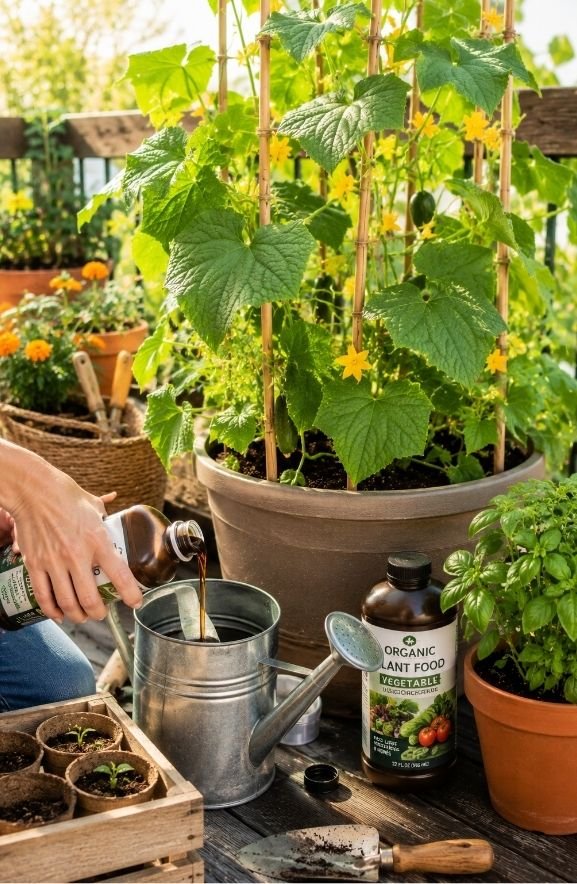
Your container cucumbers are hungry plants. They need regular feeding to keep producing fruit all season long.
A balanced fertilizer gives them what they need. Look for numbers like 10-10-10 or 5-5-5 on the label. These equal parts nitrogen, phosphorus, and potassium support leaves, flowers, and fruit.
Feed your plants every two weeks during the growing season. Liquid fertilizers work fast. Granular types release nutrients slowly instead. Always follow the package directions. This prevents overfeeding and protects your plants from nutrient burn.
You have plenty of options. Fish emulsion and vegetable-specific blends work well. Compost tea and seaweed extract appeal to organic gardeners. The key is consistency. Regular feeding keeps plants strong and productive through summer and into early fall.
Thin Seedlings to Prevent Overcrowding
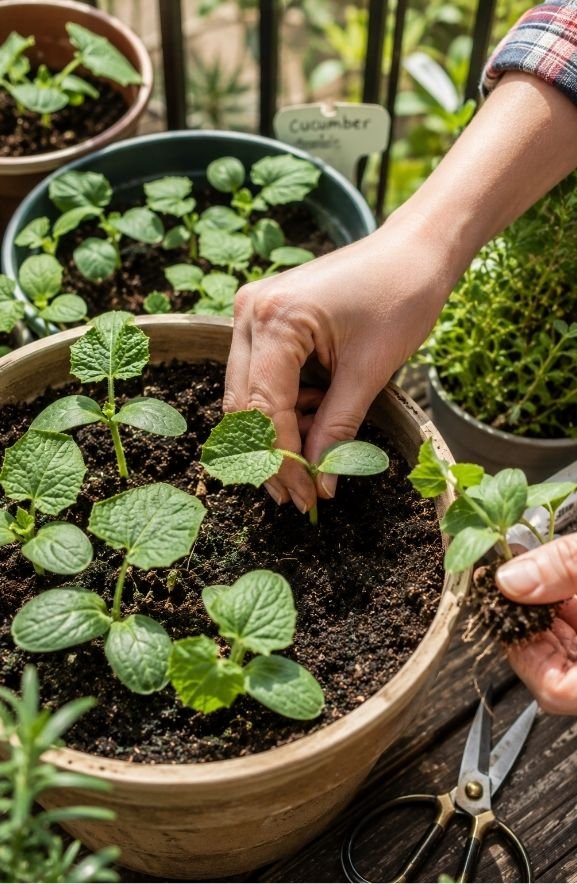
overcrowding is a common mistake. Multiple seeds in one pot compete for water, nutrients, and light. This leads to weak, spiny plants that struggle to thrive.
wait until seedlings show their first true leaves. Then pick the strongest one. Remove the rest by pinching at soil level or gently pulling them out. Give your chosen seedling room to breathe. Good spacing means better air circulation and fewer fungal problems like damping off.
cucumbers especially need their own space. Thin them early to avoid root tangling and transplant shock later. Healthy roots now lead to better fruit production down the line.
Scout for Pests and Diseases Weekly
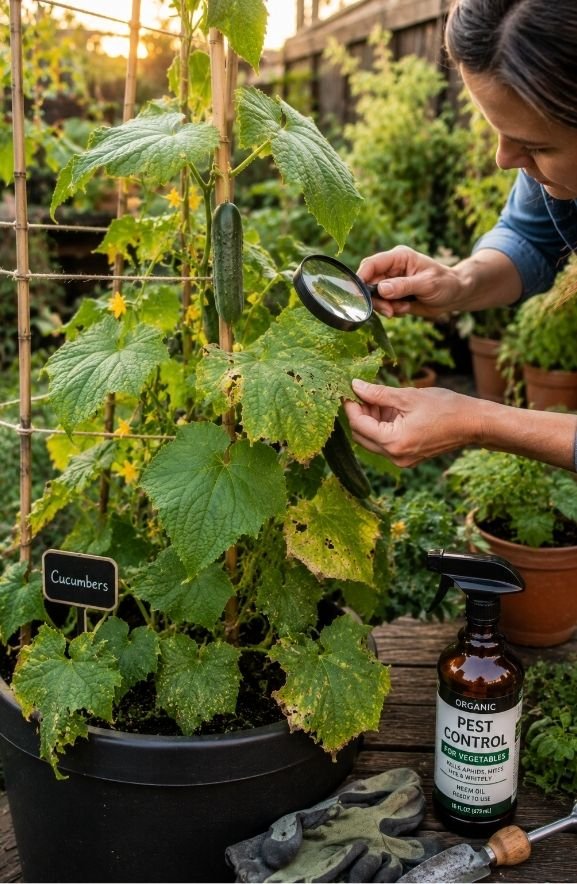
Make pest and disease checks a weekly habit for your container cucumbers. Flip leaves over to check both surfaces. Pests love hiding underneath. Look closely at stems too. Discoloration or soft spots mean trouble.
Spider mites leave fine webbing and yellow patches. Aphids gather on new growth and stunt your plants. Powdery mildew shows up as a white coating. Bacterial wilt happens suddenly even with proper watering.
Catch problems early to stop them from spreading. Remove damaged leaves right away. Toss them far from your garden space. Space your containers well and thin dense foliage to boost air flow. For stubborn cases, neem oil or insecticidal soap works well. Always follow the label.
Prune for Better Air Circulation
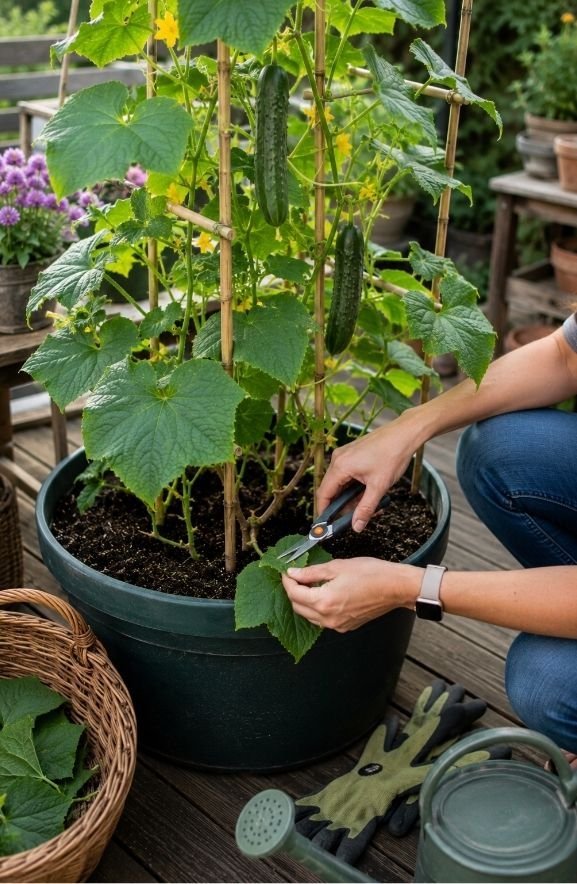
Your container cucumbers need room to breathe. Trim away lower leaves that touch soil or water to stop fungal problems before they start. Snip off anything yellow or damaged while you’re at it. Pay attention to leaves blocking sunlight from reaching young fruit.
Thin out dense growth so moisture doesn’t sit on the plant. This simple step fights off powdery mildew naturally. Remove side shoots and watch your plant channel its energy into strong vines and better harvests.
Prune during dry weather to keep diseases from spreading. Stick with it all season long. Your container cucumbers will thank you with healthier growth and more fruit to pick.
Pick Cucumbers at Peak Ripeness and Size
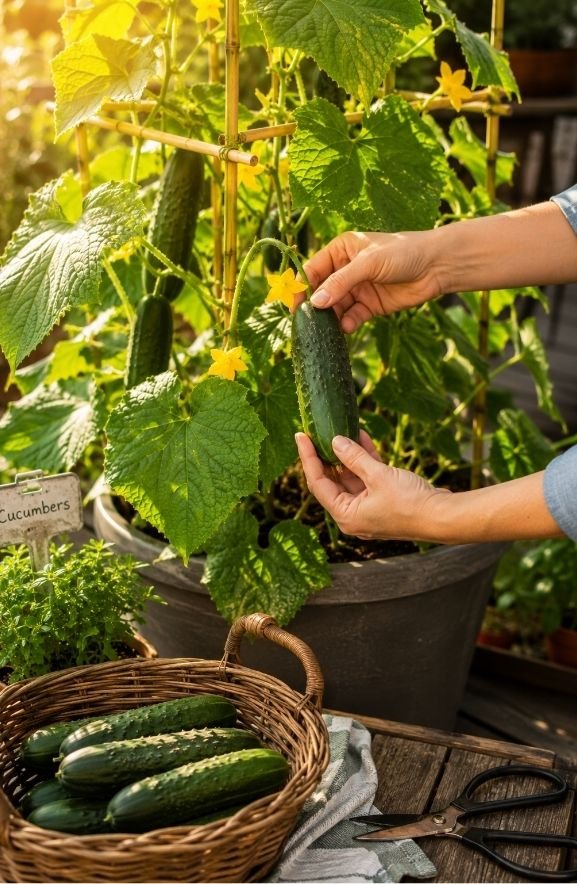
Harvest cucumbers when they hit six to eight inches. They should feel firm and show deep green skin. Skip any with yellow spots or soft patches.
These prime cucumbers taste great fresh or pickled. Check your plants every two or three days during peak season. They grow fast, and timing matters.
Overripe cucumbers turn soft and bitter. They also get seedy inside. Container varieties like ‘Spacemaster’ mature quicker than others. Keep an eye on those.
Cut the stem just above the fruit with pruning shears or a sharp knife. Never pull. This protects the vine from damage.
Pick regularly. This triggers more flowers and fruit all season long.
Protect Container Cucumbers From Early Frost
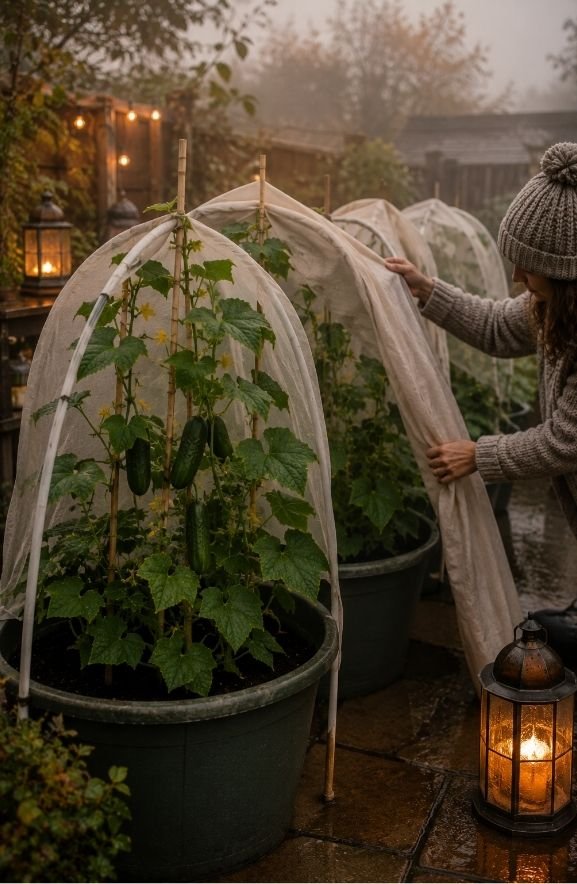
Your container cucumbers start to struggle once temperatures hit below 50°F. Nighttime is usually when the danger strikes hardest.
Keep an eye on spring and fall forecasts. Frost warnings pop up when you least expect them.
Cover your pots with frost cloth or old blankets. This simple step traps precious warmth right where your plants need it.
Got a spot near your house wall? Tuck containers there. Under eaves works great too. Wind exposure drops fast in these sheltered nooks.
Cluster your pots together. They share warmth this way and create their own little protected zone.
Cold frames or temporary tunnels add extra insurance. Mulch on top keeps soil temps steadier.
Water thoroughly before frost hits. Well-hydrated cells handle cold snaps much better.
Your harvest stays safe from wilting, spotted leaves, and lost fruit. A little prep goes a long way.
Frequently Asked Questions
How Often Should I Water My Container Cucumbers During Hot Weather?
During hot weather, container cucumbers require daily watering, often twice per day. The soil should remain consistently moist but not waterlogged. Gardeners should check soil moisture regularly and water when the top inch feels dry to the touch.
Can I Grow Multiple Cucumber Plants in One Large Container Together?
Multiple cucumber plants can share one large container, though they’re like dancers needing space on stage. Gardeners should space plants 6-12 inches apart, provide adequate soil depth of 18-24 inches, and guarantee robust drainage to prevent root competition and disease.
What Is the Ideal Temperature Range for Growing Cucumbers in Containers?
Cucumbers thrive in temperatures between 70-95°F (21-35°C). They prefer warmer conditions and struggle below 60°F. Containers allow gardeners to move plants to ideal sun exposure and protect them from temperature fluctuations.
How Long Does It Take for Cucumbers to Mature From Planting?
Cucumbers typically mature between 50 to 70 days from planting, depending on the variety selected. Container-grown specimens may reach maturity slightly faster due to controlled growing conditions and ideal soil temperatures maintained throughout the season.
Can I Reuse Potting Soil From Previous Seasons for New Cucumber Plants?
Reusing potting soil is possible but requires revitalizing. One should replace the top third with fresh soil, add compost, and guarantee proper drainage. Testing soil pH and nutrient levels beforehand proves beneficial for ideal cucumber growth.
Conclusion
Container cucumber gardening requires attention to fundamentals: proper pot size, quality soil, suitable varieties, adequate sunlight, and consistent maintenance. Like tending a small ecosystem, gardeners must monitor pests weekly, prune strategically, and harvest regularly. Success depends on combining these elements systematically. Beginners who establish trellises early, water consistently, and fertilize monthly create conditions for productive plants. Frost protection extends the growing season, ensuring sustained yields throughout summer months.