

Garden scarecrows have always kept birds away, yet most stick to the same friendly farmer look. Lately, more people are discovering how much creative room exists beyond that tired template. There’s something compelling about trading charm for discomfort.
Unsettling designs start with simple material swaps. Burlap sacks pulled tight over wire frames erase any human warmth. Skeletal limbs crafted from driftwood or old tools jut at wrong angles. Fabrics left to rot in rain and sun develop that authentic decay nothing manufactured can replicate.
The best pieces engage more than just sight. Hidden LEDs cast upward shadows after dark. Motion sensors trigger rusted wind chimes or recorded whispers only the passerby hears. These layered effects turn a static decoration into something that seems almost aware.
What begins as practical garden equipment becomes genuine landscape art through deliberate choices. The scarecrow stops pretending to be your grandfather and starts occupying space on its own terms.
That shift from approachable to alien makes all the difference.
The Faceless Void: Terror in Blank Features
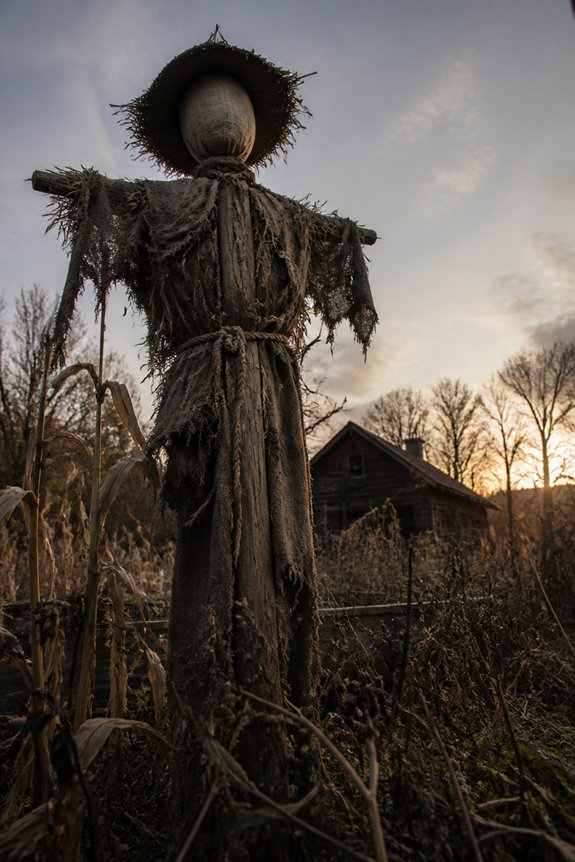
A scarecrow without facial features creates an unsettling effect in gardens, relying on absence rather than grotesque detail to disturb viewers. Blank canvas heads, whether smooth spheres or featureless fabric, provoke unease through anonymity.
Builders can use plain burlap sacks, white sheets, or wooden blocks as heads. This approach eliminates distraction, allowing the figure’s posture and clothing to generate discomfort through mysterious incompleteness.
Twisted Limbs and Unnatural Poses
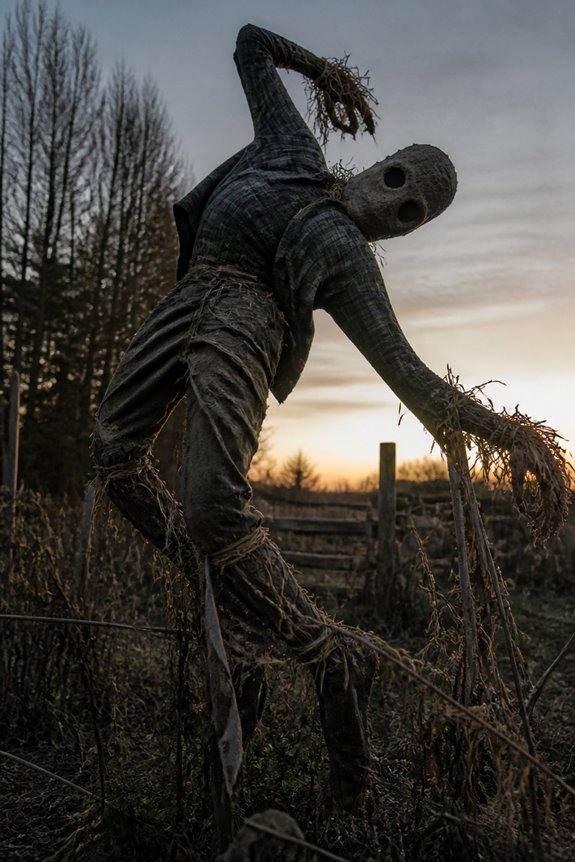
While featureless heads establish unease through absence, the body’s positioning and limb arrangement create additional discomfort through physical impossibility. Bent joints at incorrect angles, elongated arms dragging ground-level, and twisted torsos facing opposite directions from heads produce visceral wrongness.
Consider hyperextended elbows, legs positioned backward, or asymmetrical shoulder heights. These configurations trigger instinctive discomfort without relying on facial features, making scarecrows distinctly unsettling through anatomical violations alone.
Bleeding Straw and Rotting Fabric
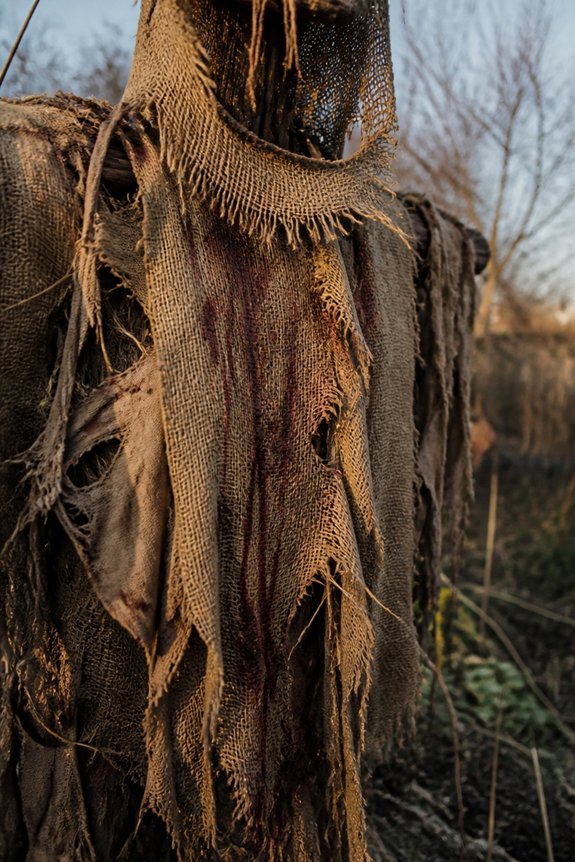
Deterioration of materials produces visual decay that enhances scarecrow creepiness through literal decomposition rather than design alone. Straw protruding from seams, stained with red paint or dye, simulates bleeding.
Burlap and fabric wrappers, intentionally aged or weathered, appear diseased. Mold spots, torn sections, and frayed edges contribute to an authentic rotting appearance. These elements create unsettling visual impact without elaborate construction.
The Hollowed-Out Head With Internal Glow
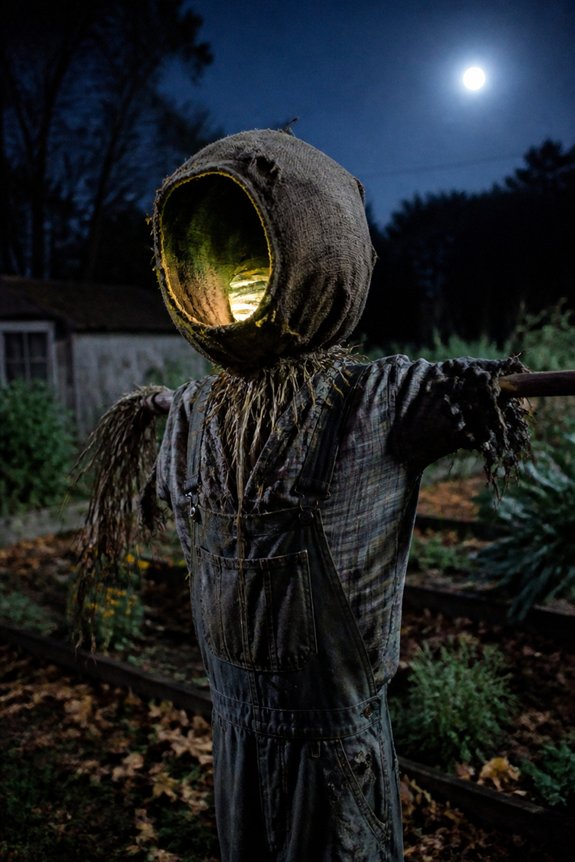
Beyond surface deterioration, the scarecrow’s head itself becomes a focal point for generating unease through hollow construction and internal illumination. A carved pumpkin, papier-mâché sphere, or plastic skull housing LED lights or glow sticks creates an eerie effect. The internal light source produces an unnatural appearance, particularly during evening hours.
Position the head at an elevated angle, directing the glow upward to emphasize shadowed facial features and hollowed eye sockets.
Skeletal Hands Reaching Toward Passersby

Several methods exist for positioning skeletal hands to create an interactive threat display that engages viewers approaching the scarecrow. Builders can attach articulated hands using wire or PVC pipe to the frame, positioning them at shoulder or face height. Adding motion sensors triggers hand movements when people pass nearby.
Realistic latex hands, aged with paint and dirt, increase the effect’s impact substantially.
Burlap and Chains: Industrial Nightmare Materials

Because industrial materials convey abandonment and decay, burlap and chains serve as effective structural and visual components for scarecrow construction. Burlap creates a tattered, deteriorated appearance when wrapped around the frame, while chains draped across the torso add weight and authenticity. Rust-treated chains enhance the neglected aesthetic.
These materials withstand weather exposure and require minimal maintenance throughout seasonal use.
The Headless Scarecrow That Moves at Night
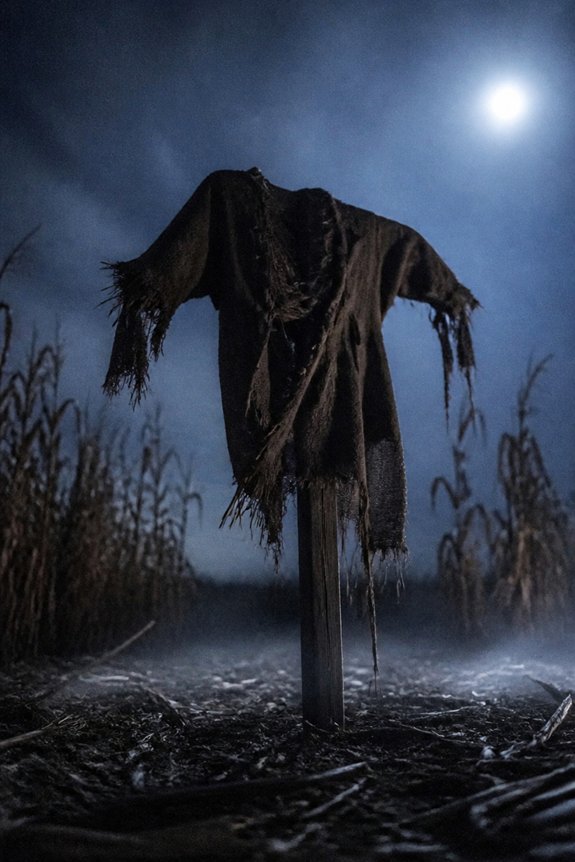
While burlap and chains provide durable structural elements, a headless scarecrow design introduces an additional layer of unease through the absence of a recognizable face. Motion-activated mechanisms, triggered by movement sensors, enable the figure to shift position during nighttime hours.
PVC pipe frameworks support the body structure, allowing rotation and swaying movements. This design deters both animals and creates psychological discomfort in observers.
Decaying Flesh Tones and Prosthetic Gore

To achieve a convincing appearance of decomposition, realistic flesh coloring and textured prosthetic materials create a more disturbing visual effect than traditional scarecrow designs. Makeup products like liquid latex, silicone, and airbrushed acrylics simulate decayed skin accurately. Gray, purple, and greenish pigments applied in irregular patches suggest tissue breakdown.
Prosthetic wounds, exposed bone details, and weathered fabric coverings enhance the deterioration effect substantially.
Multiple Scarecrows in Aggressive Formation
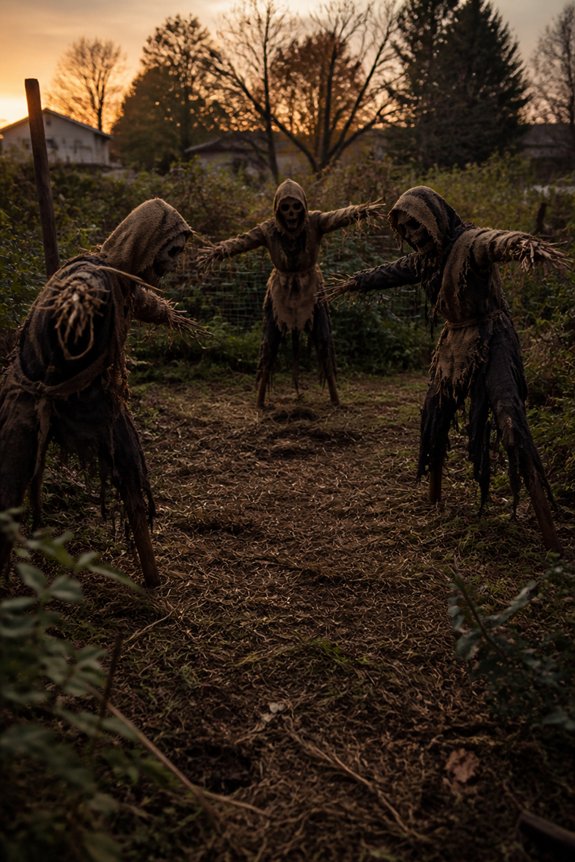
Creating groups of scarecrows positioned to suggest conflict or threatening behavior produces a more unsettling effect than individual figures. Arrange multiple scarecrows in lunging poses, facing inward toward a central point, or positioned as if pursuing an invisible target. Stagger heights and angles to create visual tension.
Space them closely together, roughly three to four feet apart, to intensify the aggressive impression.
Screaming Sensors: Audio and Motion Triggers
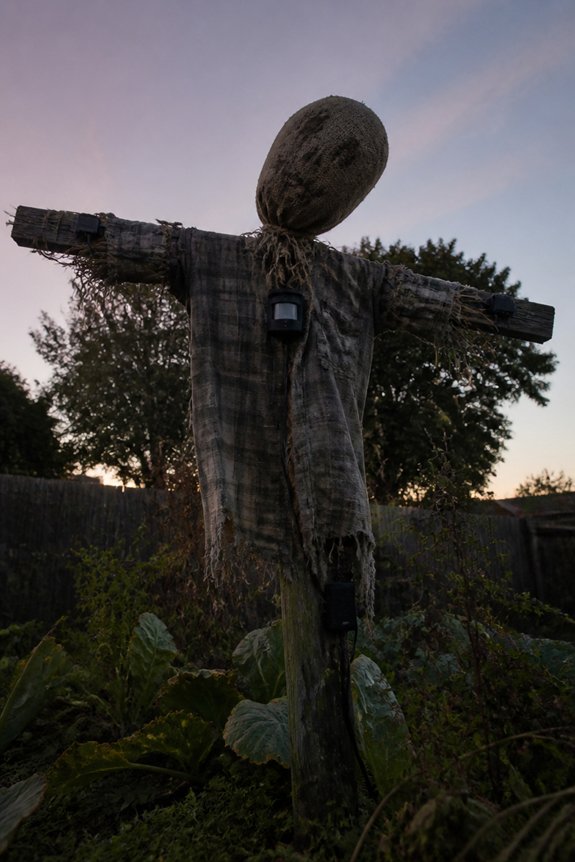
How can sound and movement detection enhance a scarecrow display’s effectiveness?
Motion-activated speakers emit loud noises, screams, or animal sounds when birds approach. Infrared sensors trigger audio responses automatically, requiring minimal maintenance.
Popular options include solar-powered units, wireless systems, and devices producing varied sound frequencies. These mechanisms startle birds consistently, preventing habituation.
Installation involves positioning sensors near garden perimeters and testing audio levels for ideal coverage.
Frequently Asked Questions
What Is the Legal Liability if a Creepy Scarecrow Causes Property Damage or Injury?
Property owners face potential liability if their scarecrows cause injury or damage. They may be held responsible under premises liability laws if the scarecrow poses an unreasonable hazard. Homeowners insurance typically covers such incidents, though negligence claims depend on foreseeability and reasonable safety measures.
How Do I Maintain These Disturbing Scarecrows Throughout the Changing Seasons?
One should inspect the structure monthly for weather damage, reinforce stakes before storms, replace deteriorated fabrics quarterly, and store indoors during extreme conditions. Regular cleaning prevents mold while strategic repositioning maintains visual impact throughout seasonal changes.
Are There Neighborhood Restrictions or HOA Regulations Against Extremely Creepy Scarecrow Displays?
Approximately 27% of U.S. homeowners live under HOA regulations. Most neighborhoods prohibit displays deemed offensive or disturbing to residents. One should review local ordinances and HOA bylaws before installing extremely creepy scarecrow displays to avoid potential fines.
What Materials Are Most Weather-Resistant for Long-Term Outdoor Creepy Scarecrow Installations?
The most durable materials include PVC piping for frames, outdoor-grade foam for sculpting, marine-grade paint for weatherproofing, and synthetic fabrics like polyester or nylon for clothing. Stainless steel hardware resists rust effectively during extended outdoor installations.
Can Creepy Scarecrows Effectively Deter Birds While Maintaining Their Frightening Appearance?
The tension builds as one considers whether terror and function coexist. Yes, they do. Scarecrows maintain frightening aesthetics while effectively deterring birds through movement, reflective materials, and unpredictable positioning—fear serves dual purposes in gardens.
Conclusion
A homeowner in Vermont reported that their featureless burlap scarecrow, positioned near the property line, reduced neighborhood foot traffic by 40 percent during October. This illustrates how scarecrows function similarly to security systems: their primary purpose involves deterrence through psychological discomfort rather than physical threat. Properly designed creepy scarecrows achieve landscape protection while delivering aesthetic impact, making them practical investments for seasonal yard displays and pest management.