
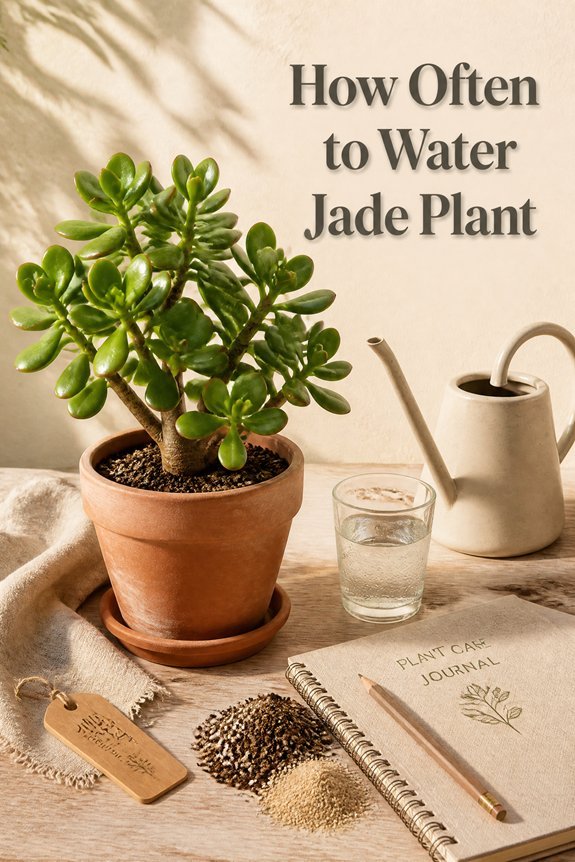
Jade plants are surprisingly forgiving when it comes to watering schedules. The key rule is simple: wait until the soil has dried out completely. This basic guideline gets a seasonal twist, with spring and summer calling for water every two to three weeks, then stretching to three to four weeks once fall and winter arrive.
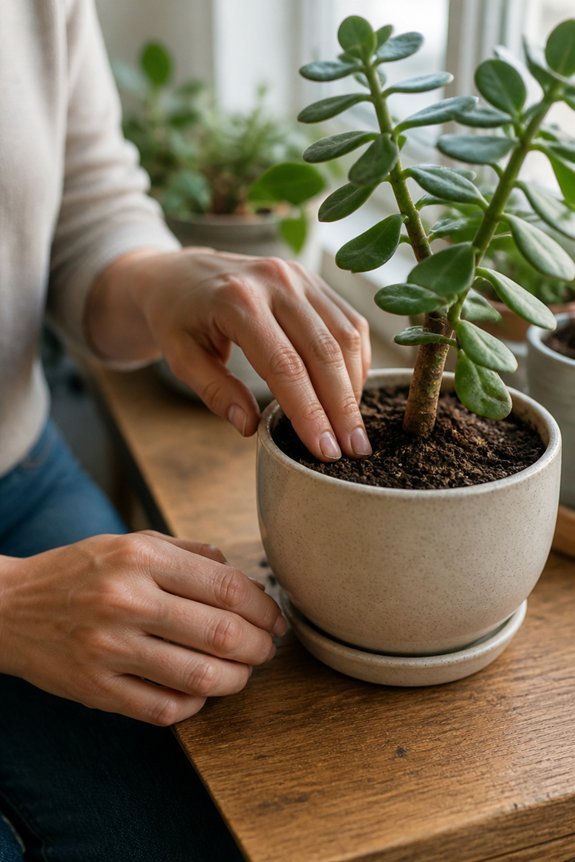
Getting your hands dirty is the best way to check. Poke a finger about an inch into the soil, and if it feels dry, it’s time to water. If there’s any moisture, hold off. This small habit removes the guesswork and keeps your plant thriving.
Of course, the real world complicates things. Sunlight exposure, humidity levels, pot size, and even indoor air conditioning can all shift how quickly soil dries.
What works for a jade on a sunny windowsill won’t match one tucked into a dim corner, so staying observant matters more than following any fixed calendar.
The Basic Watering Rule for Jade Plants
Jade plants march to their own beat when it comes to water. Let the soil dry out completely between drinks. This sets them apart from thirsty houseplants that need constant attention.
Your jade is a succulent at heart. It hoards water in those plump leaves and stems for weeks. Overwatering is the fastest way to kill one. Root rot and fungal problems love soggy soil.
Check before you water. Stick your finger one inch down. Feel any dampness? Wait a few more days. Patience pays off here.
Winter changes the game. Growth slows way down, so water even less. During spring and summer, expect to water every two to three weeks. Your home’s light, humidity, and temperature will shift that timeline. Watch your plant, not the calendar.
Also read: Are Peperomia Easy to Care for
Signs Your Jade Plant Needs Water
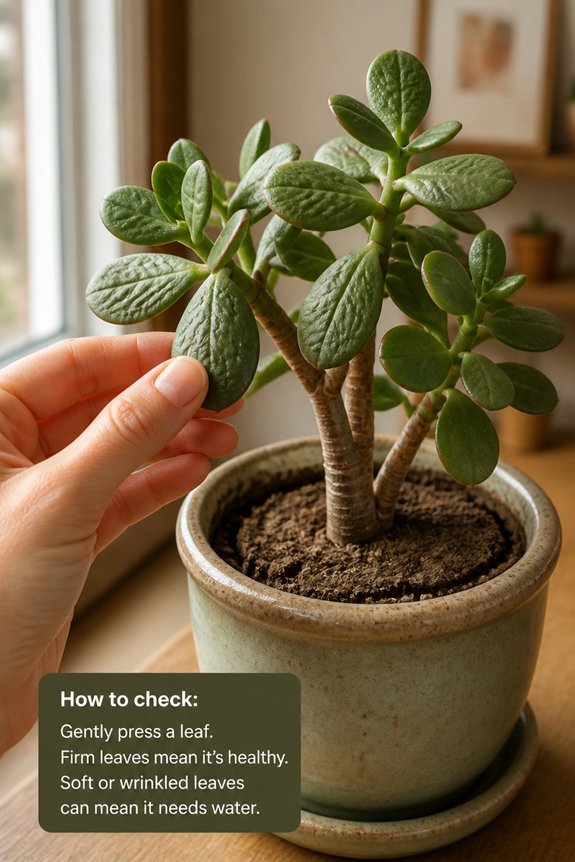
Looking at your jade plant tells you so much more than any calendar ever could. Start with the soil. Stick your finger about an inch down. Completely dry? Time to water.
Your plant speaks through its leaves too. They might look a bit wrinkled or feel softer when it’s been too long between drinks. This happens after some time, so don’t worry if you spot it.
Pick up the pot when you get a chance. Light as a feather means dry soil inside. Heavy? It’s still holding moisture.
Seeing droopy leaves? Check the soil before doing anything. They can mean too much water or too little. A quick poke with your finger clears up the mystery fast.
How Seasons Change Your Watering Schedule
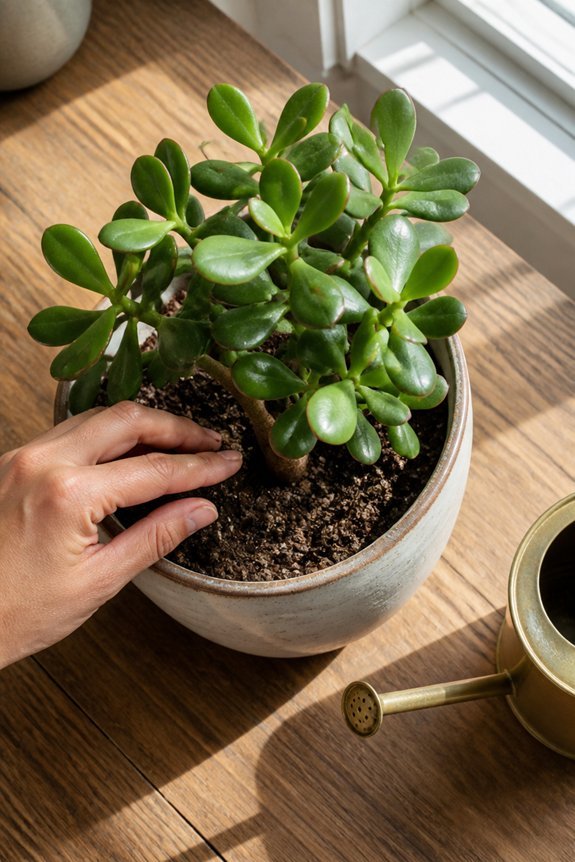
Because jade plants grow differently throughout the year, their watering needs shift with the seasons.
Spring and summer bring warm temperatures and longer days. Your jade plant enters active growth and needs water every two to three weeks. Heat speeds up evaporation, so the soil dries out faster.
Fall and winter slow things down. Water every three to four weeks instead. Cooler temperatures mean slower evaporation and less thirst from your plant. The soil stays moist longer.
Indoor heating can dry out winter air, so check your plant more often than outdoor ones. Skip the rigid calendar. Stick your finger in the soil, feel the moisture, and adjust from there.
What Soil and Pots Work Best for Jade Plants
Soil and pots can make or break your jade plant’s health. You might water perfectly, but the wrong setup still causes trouble.
Jade plants hate wet feet. Grab a cactus or succulent mix from your local garden store. It drains fast and keeps roots happy. Regular potting soil stays soggy too long and invites rot. You can fix standard soil by mixing in perlite or coarse sand. That extra grit lets water pass through quickly.
Your pot needs holes in the bottom. No exceptions. Terracotta works beautifully because it wicks moisture away and dries faster than plastic or glazed ceramic. Pick a pot only slightly bigger than the root ball. One to two inches of extra space gives room to grow without drowning unused soil.
Plan to repot every two or three years. Fresh soil and breathing room prevent roots from getting cramped and tangled. Get these basics right, and watering becomes much simpler.
Common Watering Mistakes That Kill Jade Plants
Overwatering kills more jade plants than anything else. These succulents store water in their thick leaves and stems. They simply don’t need frequent drinks.
Many gardeners grab the watering can too often. They assume soil should stay moist for happy plants. That’s a recipe for disaster. Root rot sets in fast. The roots turn mushy and die. Your plant follows soon after.
Bad drainage makes everything worse. No holes in the pot? Water sits at the bottom. The roots can’t breathe. They suffocate slowly.
Dense soil mixes trap moisture too. Water lingers where roots live. That’s trouble waiting to happen.
Fixed schedules don’t work either. Check the soil with your finger first. Wait until the top inch feels bone dry. Winter means even less water. Growth slows way down. Your jade barely needs a sip.
How Light and Temperature Affect Watering Frequency
Light and temperature work together to set your watering schedule. More light means faster drying. Less light means slower drying.
Bright, indirect light speeds up evaporation. Your jade plant will need water more often during active growing periods. Move that same plant to a dim corner, and moisture hangs around much longer.
Temperature adds another layer. Warm rooms between 65-75°F pull water from soil quickly. Cool spots below 50°F slow everything down. Your plant drinks less and grows slower.
Winter hits twice. Shorter days mean less light. Colder rooms mean less thirst. You might water only once a month during these quiet months.
Summer flips the script. Heat plus longer days equals faster drying. Check soil more often. Adjust as you go.
How to Fix an Overwatered Jade Plant
Your jade plant is sending you a message. Yellow leaves. Soggy soil. Something’s wrong below the surface.
Take the plant out of its pot. Look at the roots. Healthy ones feel firm and look pale. Rotted ones turn dark and mushy. They might smell bad too.
Cut away the damaged parts with clean scissors. Be thorough here. Any rot left behind will spread.
Now repot in fresh, dry soil. Pick a pot with drainage holes. This matters more than you’d think.
Wait a few days before watering. Let the roots settle and heal. Going forward, let the soil dry out completely between drinks.
Move your jade somewhere brighter with better airflow. Light and circulation help prevent the same problem twice.
Frequently Asked Questions
Can I Use Tap Water or Should I Use Filtered Water for My Jade Plant?
Tap water is acceptable for jade plants, though filtered water is preferable. Tap water contains chlorine and minerals that may accumulate in soil over time. Filtered or distilled water prevents mineral buildup, promoting healthier plant growth.
Is Misting Jade Plants Beneficial, or Does It Cause Root Rot Issues?
A gardener’s jade plant thrived when she stopped overhead watering, treating leaves like desert skin—better left dry. Misting causes rot; jade plants prefer soil watering instead, avoiding moisture on foliage entirely.
How Do I Know if My Jade Plant’s Pot Has Adequate Drainage Holes?
One can examine the pot’s bottom for visible holes by lifting it and looking underneath. Adequate drainage typically means multiple holes, allowing water to flow freely rather than pooling at the base.
Should I Water My Jade Plant From the Top or Bottom Method?
Like roots seeking light through darkness, jade plants thrive with bottom watering. This method allows soil to absorb moisture gradually, preventing rot while encouraging deeper root development. Bottom watering proves superior to top watering for these succulent plants.
What’s the Best Time of Day to Water My Jade Plant?
Early morning watering is ideal for jade plants, allowing foliage to dry throughout the day and reducing fungal disease risk. Avoid watering in evening when moisture lingers overnight on leaves and soil.
Conclusion
Watering jade plants successfully requires understanding soil moisture, seasonal changes, and environmental factors. The key to thriving plants involves checking soil dryness before watering, adjusting frequency between seasons, and avoiding overwatering. Proper pot drainage and lighting conditions support appropriate moisture levels. By following these guidelines consistently, plant owners won’t put all their eggs in one basket, instead building reliable care habits that keep jade plants healthy and stable.