
A neighbor stops mid-step on the sidewalk. She can’t help it. Your front yard just caught her eye.
Hydrangeas have that power. They bloom in blues, pinks, purples, and whites that look almost too perfect to be real. One cluster by your door and suddenly the whole house feels more welcoming. More intentional. More *you*.
But color alone won’t carry the day. Where you plant them matters just as much as which type you choose. Tuck them along a winding path. Let them frame your porch. Create a single bold statement near the entrance.
Each choice changes the mood entirely.
The best part? These flowers don’t demand expertise. Even tentative gardeners can make them thrive. Water them well. Give them morning light.
Watch them reward you with months of effortless beauty. That’s the real secret. Everyone thinks you worked harder than you did. Let them.
Create a Hydrangea-Lined Walkway Entrance
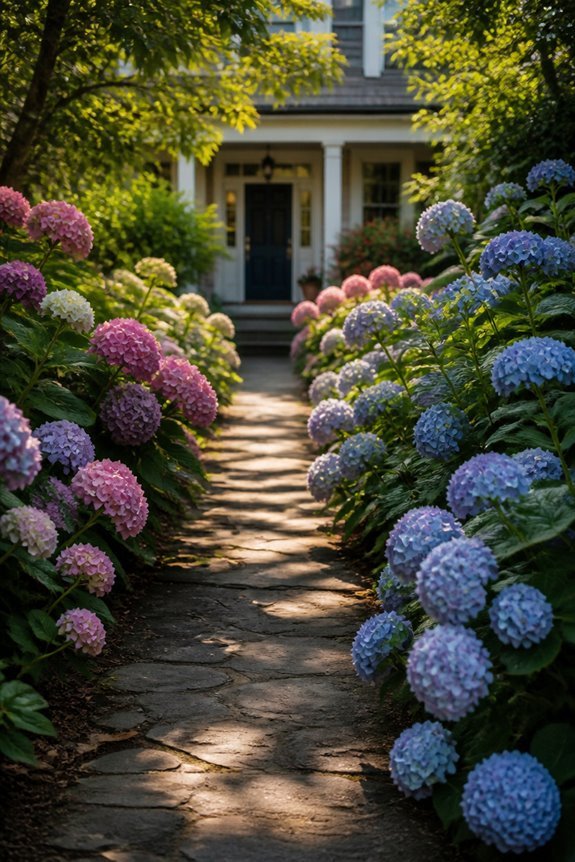
Why do guests always remember your entrance? Because hydrangeas stop them in their tracks.
You can turn any ordinary path into something magical. Plant these beauties 3 to 4 feet apart on both sides. They’ll create a stunning tunnel effect. Pink, blue, or purple blooms will frame every step. Your guests won’t know where to look first.
Add stepping stones down the middle for easy walking. Mulch keeps the roots happy and weeds away. White flowers work great too if you want something elegant. Your friends will actually gasp walking up to your door.
The best part? These shrubs bloom for months. Your entrance stays gorgeous from spring through fall. Even your mailman will notice the beauty. Hydrangeas give your home personality without you saying a word.
Also read: 18+ FRONT YARD ENTRANCE Ideas That Feel Welcoming!
Design a Statement Hydrangea Focal Point
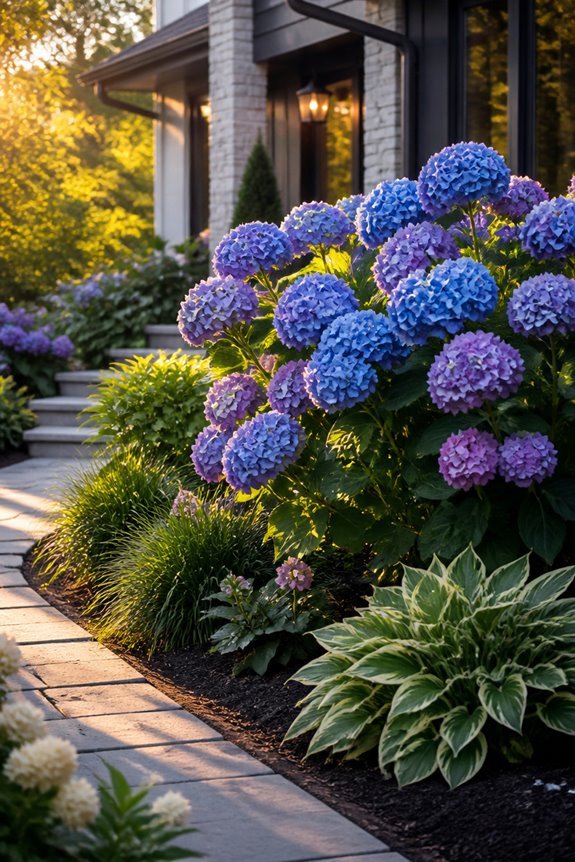
Want your neighbors to slow down and stare? One hydrangea can do that. Plant a massive specimen dead center in your front yard. It becomes instant drama.
Pick a variety that blooms huge. Pink or blue mopheads work perfectly. Some grow as large as a basketball. Position it where afternoon sun will hit it just right. A 4-to-6-foot hydrangea commands real presence.
Ring the base with a circular mulch bed about 3 feet wide. This frames your plant and blocks weeds. Add a simple bench nearby. You’ll catch neighbors pausing mid-step to admire your work. One well-placed hydrangea really does drop the mic.
Plant Hydrangeas in Foundation Beds
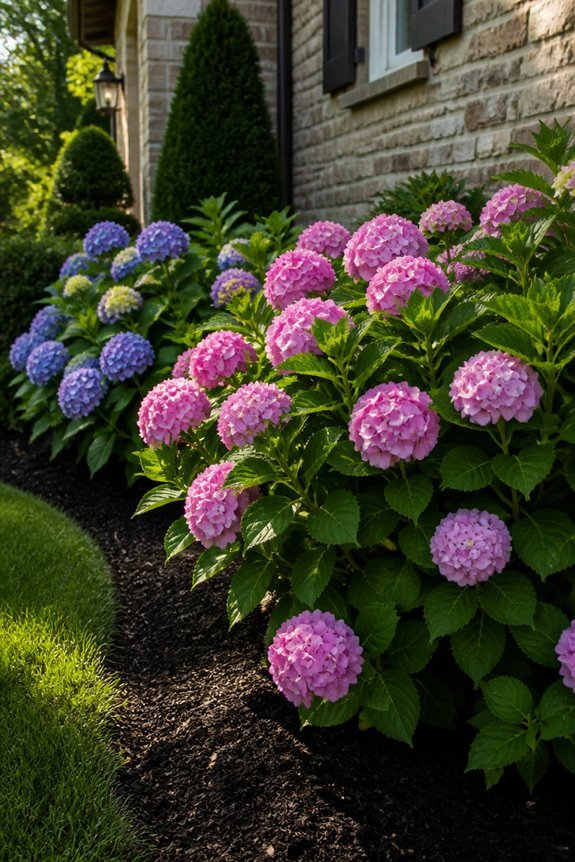
Your foundation looks bare. You walk up to your front door and something feels missing. Hydrangeas can fix that.
Plant them 3 to 4 feet apart in a row along your house. They grow 4 to 6 feet tall, so your windows stay clear. Morning sun and afternoon shade keeps them happy. Well-drained soil matters too. Wet roots rot fast, and no one wants that headache.
Give them some space from your house for airflow. Water deep at planting time. Soon you’ll have a polished, welcoming frame for your home. Those bare walls will finally feel finished.
Mix Hydrangea Colors for Visual Impact
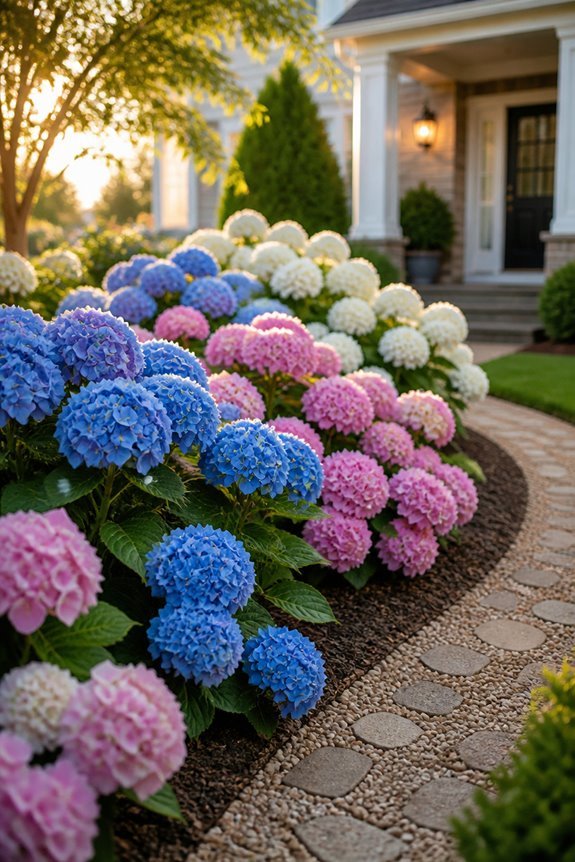
Most gardeners pick one hydrangea color and stop there. You can do better.
Try planting pink next to blue. Watch how each shade seems to brighten the other. Add white in the middle for a simple trio that stops people mid-step. Purple hydrangeas work perfectly between bolder choices. They soften the edges without fading away.
Space your plants about four feet apart. Crowding makes them struggle, and you want each color to stand on its own. Your foundation bed can become a quiet showpiece with just this one change. Different shades talk to each other across the garden. The result looks thoughtful, not accidental. No magic required, just your own two hands.
Build a Hydrangea Hedge Border
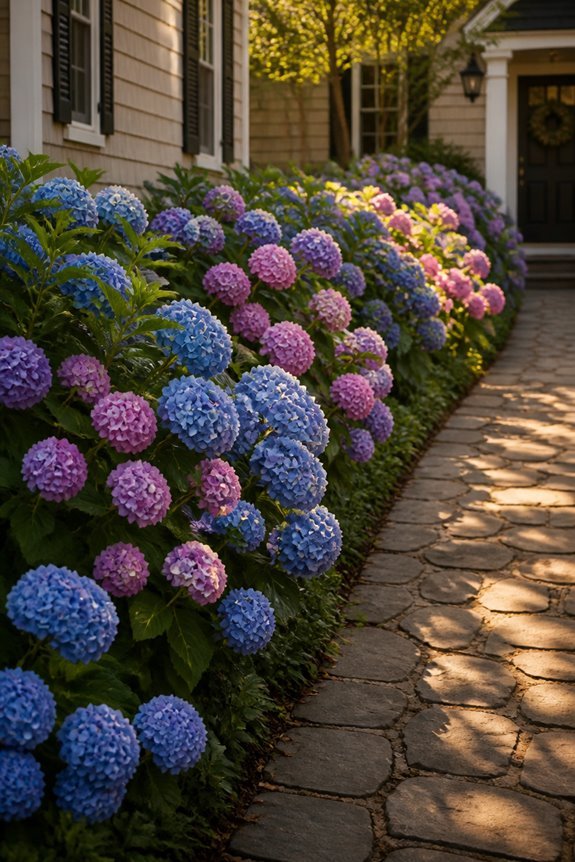
Hydrangeas aren’t just for hiding your home’s foundation anymore. You can turn them into a living fence that actually looks good. Your messy garage? Totally concealed behind a wall of blooms.
Space your plants 3 to 4 feet apart in a straight line. Watch them grow together into a proper barrier. Mix pink, blue, and white varieties for that ombré effect your neighbors will slow down to see. These shrubs hit 4 to 6 feet tall, so you get real privacy without a boring board fence. Add mulch underneath and your yard suddenly looks like something from a magazine. You’ll need to water and prune regularly. But that summer bloom show? Worth every minute. Your property line just became the interesting one on the block.
Pair Hydrangeas With Complementary Plantings
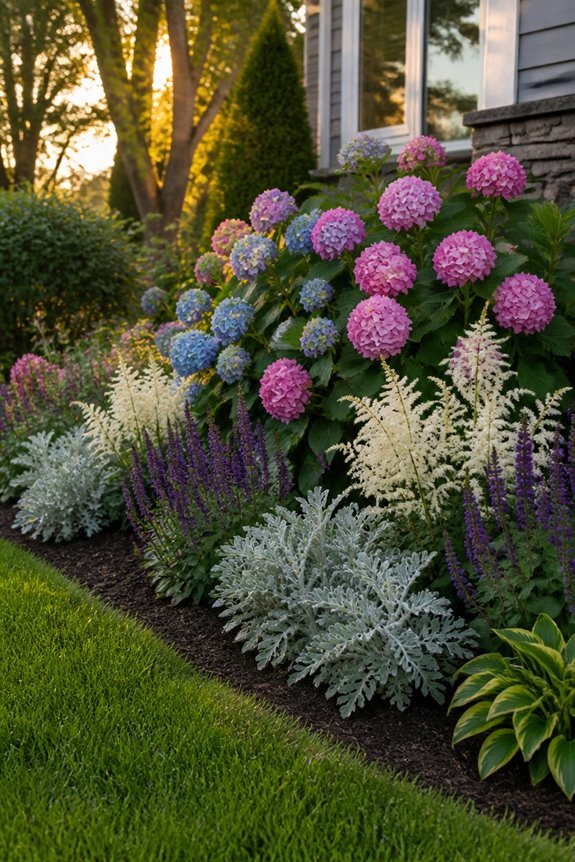
Your hydrangeas look great. But have you noticed their lower stems? Sometimes they get a bit bare.
Tuck some hostas in front. They’re short, maybe two feet tall, and they hide those leggy bits perfectly. Add ornamental grasses nearby. They move with the breeze and stay subtle. Purple salvias pop against blue blooms. White zinnias do the same for pink ones.
Ferns work well too. They like the same afternoon shade your hydrangeas crave. Plant a few repeat bloomers around the edges. That way your garden keeps its color after the hydrangeas finish their show.
Think of it as building a team. Everyone plays a part. The result looks intentional, not accidental.
Arrange Hydrangeas in Tiered Garden Levels
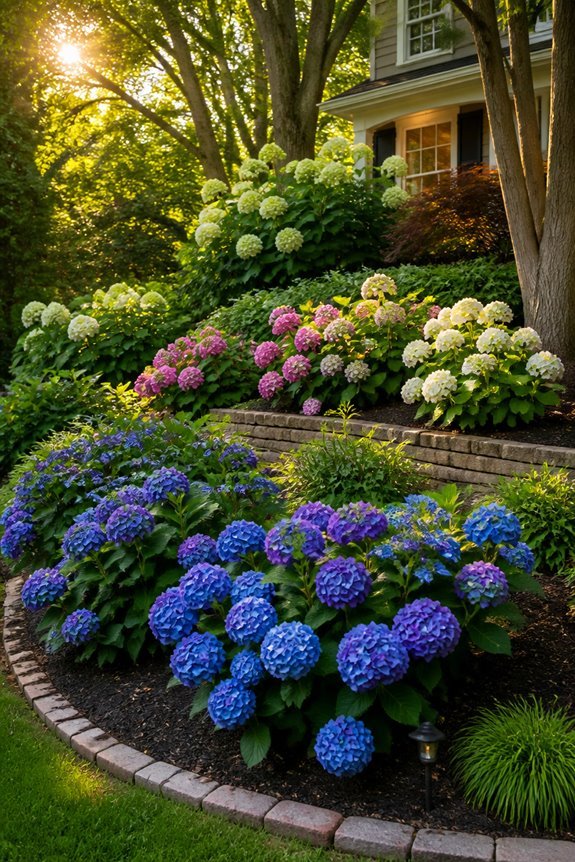
You want depth in your garden, not a flat green wall. That’s where tiered planting saves the day.
Start tall in the back. Think 6-foot hydrangeas like ‘Limelight’ or ‘Pinky Winky’. Drop to 3-4 feet in the middle with ‘Endless Summer’ or cityline varieties. Finish with 2-3 foot dwarfs up front. ‘Bobo’ works perfectly here. Now every bloom catches light. Now you can actually see them all.
Color makes this even better. Tuck deep blues behind soft pinks. Let white varieties catch the eye up front. Your garden stops looking accidental. It starts looking like you planned every inch.
Frame Your Front Door With Hydrangeas
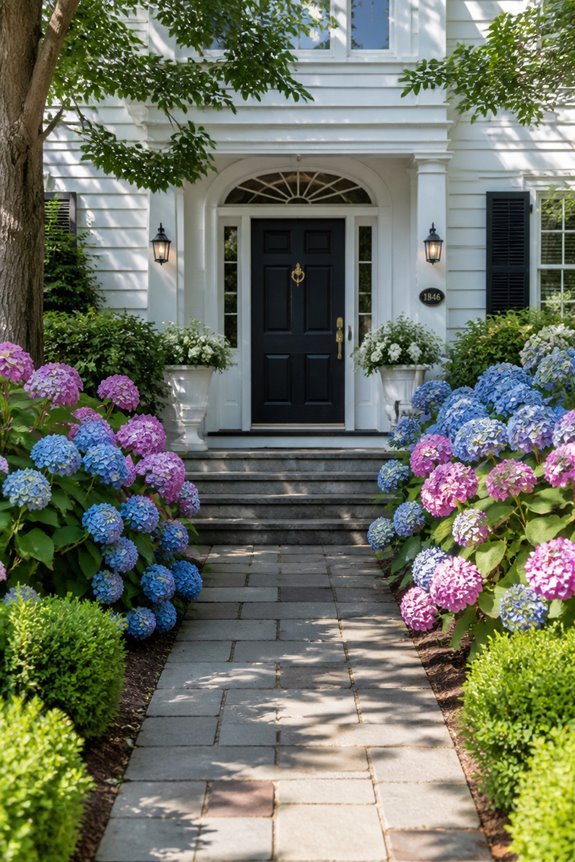
Want to make your front door feel like a warm hug? Skip hiding your hydrangeas behind other plants. Bring them front and center instead.
Plant one on each side of your entrance. They’ll greet guests like old friends. They’ll also hide that messy garage you keep meaning to organize. Nobody needs to know your secrets.
Match your hydrangeas to your door’s personality. Pink feels romantic and soft. White looks crisp and elegant. Blue keeps things calm and collected. Pick what speaks to you.
Keep them about three feet from the door. Any closer and they’ll swallow the entrance whole. Any farther and they lose their framing power. You want that sweet spot where they feel present but not pushy.
Your guests will notice the difference. Instead of a plain porch, they’ll step into something special. Small change, big impact.
Create a Hydrangea Container Garden Display
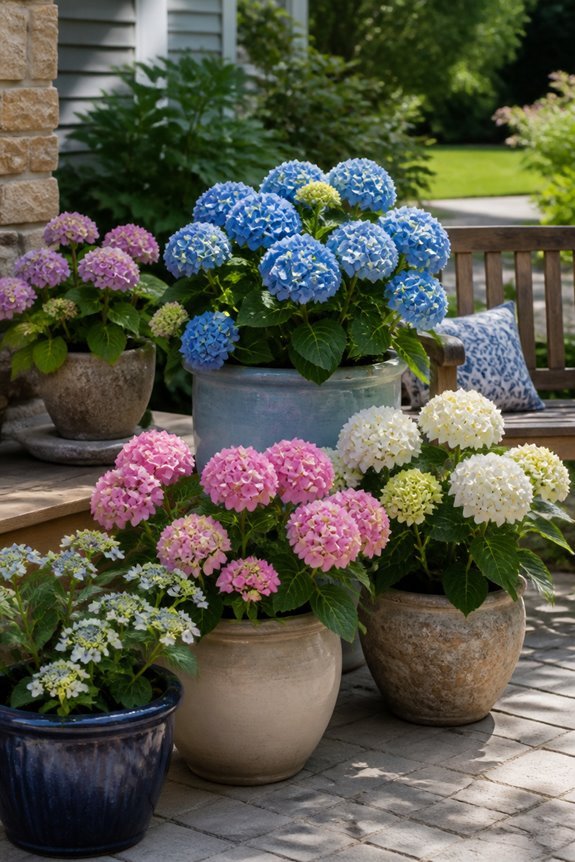
Limited space? No problem. You can still enjoy hydrangeas on your patio or balcony.
Start with a pot at least 18 inches wide and deep. Fill it with quality potting soil, not garden dirt. Your hydrangea needs morning sun and afternoon shade, so scout your space carefully. Water regularly. Dry hydrangeas wilt fast and look sad.
Group several containers together for bigger impact. Rotate the pots now and then so your plants grow straight and even. Those pink, blue, or purple blooms will turn any boring corner into something special. Your guests will notice.
Layer Hydrangeas for Seasonal Texture and Dried Bloom Interest
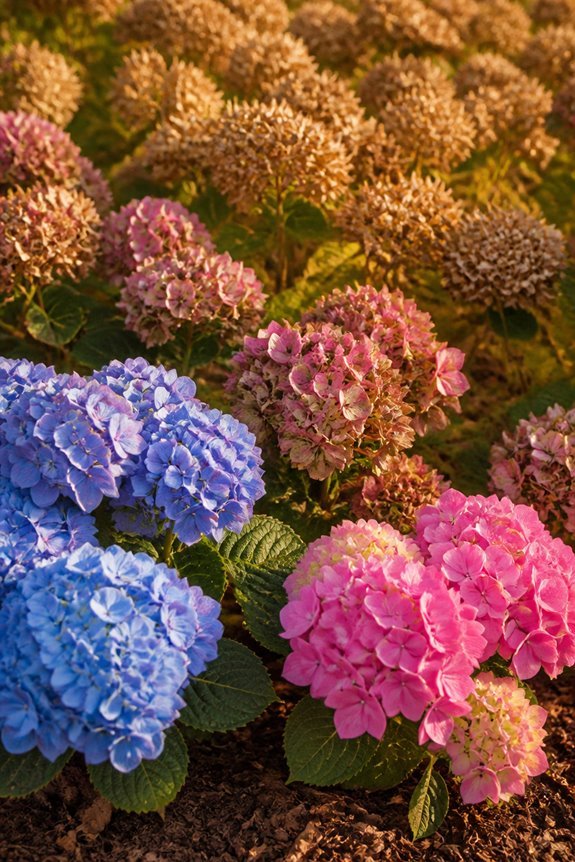
Want your garden to look good even when everything else gives up? Hydrangeas have you covered.
These flowers keep working long after summer ends. Their pink and blue petals fade into warm peach and bronze tones. Leave the dried blooms alone. They catch frost and sparkle on cold mornings. You get magic without lifting a finger.
Layer different heights for the best effect. Put shorter varieties up front, around two to three feet tall. Tuck taller ones behind them, four to six feet high. Add some evergreen shrubs nearby for contrast. The dried heads give your garden structure through winter. Everything else looks bare, but your hydrangeas stay stunning.
Select Cold-Hardy or Heat-Tolerant Hydrangea Varieties
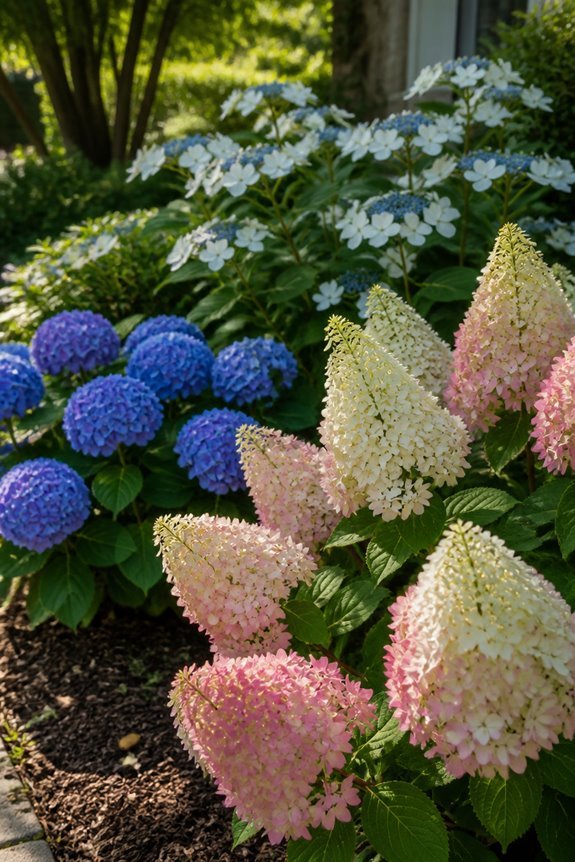
You want hydrangeas that won’t quit on you the first time the weather gets nasty. Good news: some varieties are built tough.
Panicle hydrangeas laugh at cold snaps. They’ll survive winters that turn other shrubs into sad brown twigs. Temperatures drop below zero? No problem. These plants keep coming back with those cone-shaped blooms you love.
Live somewhere steamy instead? Try oakleaf or smooth hydrangeas. They shrug off heat that wilts everything else around them. Blazing afternoons won’t faze them, and you’ll still get those gorgeous flower heads.
Here’s the catch. Your growing zone matters more than you think. Plant a heat-lover in Minnesota, and you’re basically running a plant hospice. Do the opposite in Phoenix, same sad result.
Check your zone first. Match the variety to your climate. Get this right, and your hydrangeas reward you with blooms from spring through fall. Get it wrong, and you’re stuck nursing a pot of expensive sticks.
Get More Blooms From Your Hydrangeas
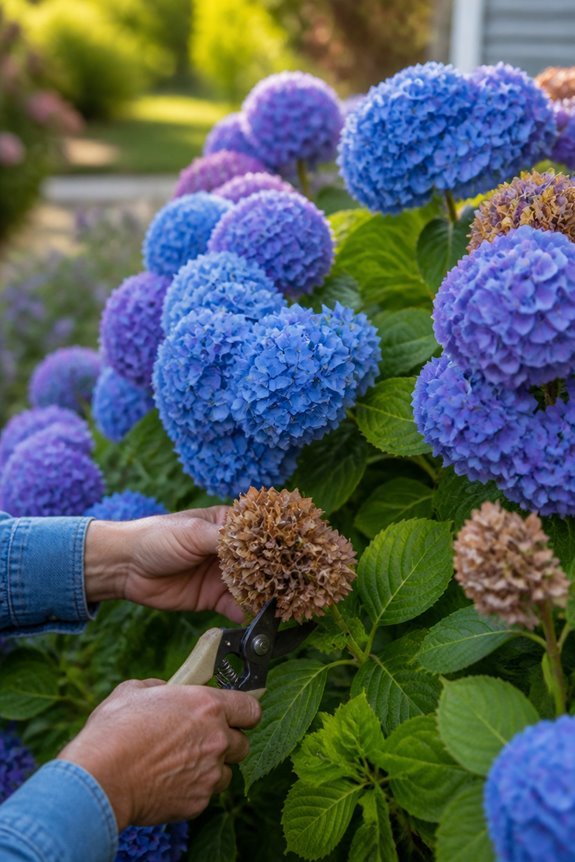
Want your hydrangea to put on a real show? You’ve already chosen the right variety for your zone. Now let’s make it bloom like crazy.
Water deeply, not just a light sprinkle. Soak that soil all the way down. Your plant will thank you with bigger, lusher flower clusters.
Here’s a neat trick: snip off those fading blooms. Deadheading tricks your plant into producing more flowers instead of wasting energy on seed making. It really does work. Feed your hydrangea in spring and early summer with a balanced fertilizer to keep it fueled up.
Timing your pruning is everything. Cut back spring bloomers right after they finish flowering. Wait until late winter for summer bloomers getting ready for their big moment. Get this wrong and you might accidentally remove next year’s buds.
Too much shade? You’ll get leafy growth but shy on blooms. Find a spot with gentle morning sun. Your neighbors will definitely notice when those massive flower heads start turning heads.
Frequently Asked Questions
How Often Should I Water My Front Yard Hydrangeas During Drought Conditions?
During drought conditions, hydrangeas require deep watering two to three times weekly. One should provide approximately one inch of water per week, delivered slowly to guarantee soil penetration. Mulching around plants helps retain moisture and reduces watering frequency.
What Is the Best Time of Year to Plant Hydrangeas in My Front Garden?
Studies show hydrangeas can live for 50 years or more. Fall and spring represent ideal planting seasons, with fall offering advantages as cooler temperatures reduce transplant stress. Spring planting works equally well in most climates.
Can Hydrangeas Grow in Full Sun or Do They Need Afternoon Shade?
Hydrangeas typically thrive in partial shade, particularly afternoon shade in hot climates. Most varieties tolerate morning sun but prefer protection from intense afternoon heat, which can stress plants and fade blooms. Full sun exposure may cause wilting.
How Do I Change the Color of My Hydrangea Flowers From Pink to Blue?
One can shift hydrangea blooms from pink to blue by lowering soil pH through aluminum sulfate or sulfur applications. Acidic soil conditions enable the plant to absorb aluminum, which produces blue flowers naturally.
What Pests and Diseases Commonly Affect Hydrangeas and How Do I Treat Them?
Like sentinels facing invisible invaders, hydrangeas battle powdery mildew, leaf spot, and root rot. Spider mites and aphids feast upon foliage. Treatment involves fungicides, insecticidal soap, proper drainage, and air circulation to vanquish these persistent adversaries.
Conclusion
Hydrangeas transform front yards from blah to “wow, did you hire a landscaper?” Plant them in walkways and borders. Mix colors for pizzazz. Stack them for drama. Pick varieties that won’t freeze or fry. And boom—your entrance becomes the neighborhood’s favorite photo spot. Your curb appeal skyrockets. Visitors swoon. Even your mailman does double-takes. These blooming beauties deliver serious yard glow-up magic.