A neighbor pauses at your curb. They glance up at your house. That’s the moment your front yard speaks first.
Most lawns just sit there. Green, flat, forgettable. But yours could greet people like a firm, warm handshake. The kind that lingers in a good way.
What stops us? Usually the myth that beauty requires heaps of money or hired help. It doesn’t. Small shifts—texture, layers, a place for the eye to rest—work quietly together.
You already own the canvas. Now imagine someone slowing their walk to admire it.
Choose Your Front Yard Color Palette First
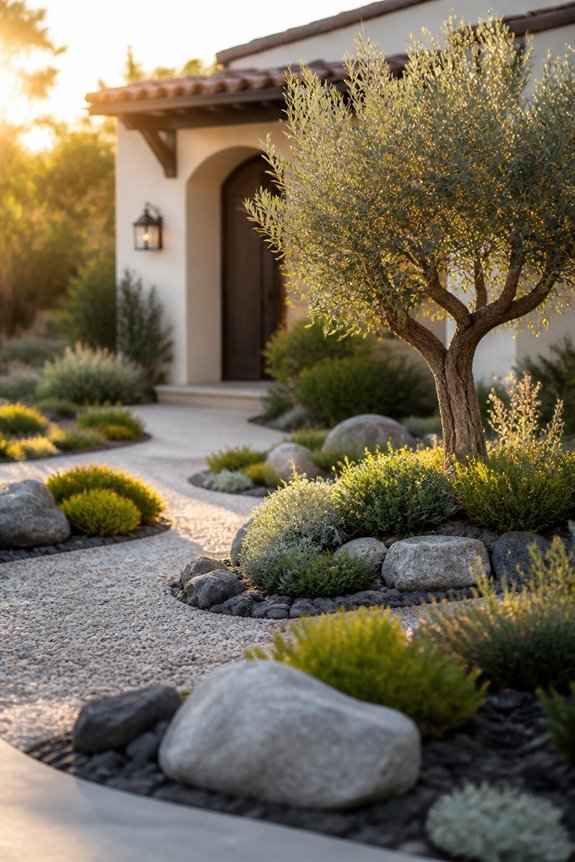
You walk outside and see your front yard. Green. Just green. Sound familiar?
Here’s a secret. Pick your colors first. Everything gets easier after that.
What makes you happy? Warm oranges and yellows? Cool blues and purples? Maybe clean grays and whites? Grab two or three colors that feel like you.
Now use them everywhere. Paint your door something bold. Plant flowers in your chosen shades. Add a bright mailbox or colored garden stones. Your yard stops looking like the neighbors’. It gets a real personality.
A little planning now beats regret later. No neon green shutters by accident. Start with color, and watch your curb appeal change.
Also read: 18+ FRONT YARD ENTRANCE Ideas That Feel Welcoming!
Design Depth With Layered Plant Heights and Focal Points
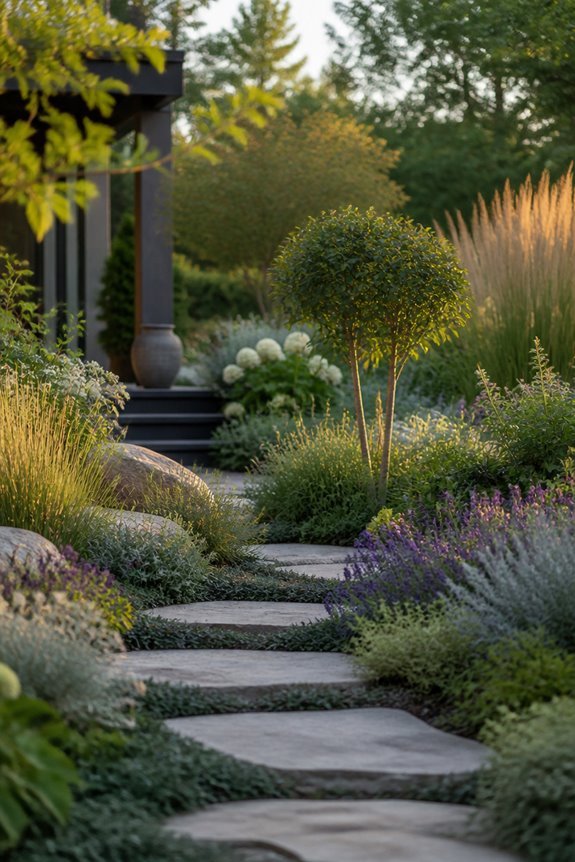
Your yard feels like it’s missing something. Maybe it looks flat. Maybe everything seems to blend together at one height.
Layering fixes this fast. Start with tall plants in back. Ornamental grasses work great. They hit 3 to 4 feet. Medium shrubs fill the middle at 2 to 3 feet. Short plants cozy up front. Suddenly your yard has depth. It looks bigger than it actually is.
Now add a focal point. A birdbath works. So does a stone bench or a bright statue. Place it slightly off-center. Your eye catches it, then travels through the layers. You notice new details each time.
Your plants aren’t just standing there anymore. They’re arranged on purpose. The result feels designed, not random. That’s the difference layering makes.
Create Visual Interest With Hardscaping Materials
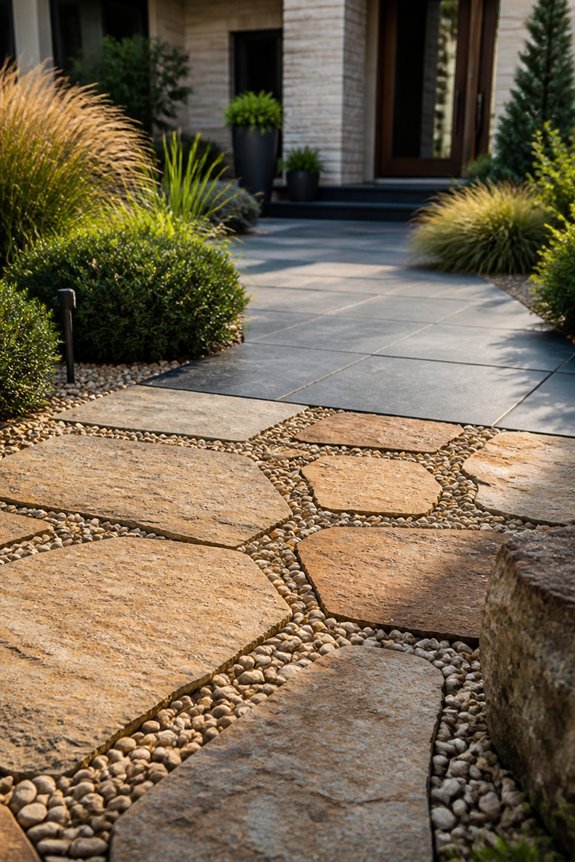
You know that feeling when your front yard looks like it’s trying but not quite succeeding? Plants work hard, but they need backup. That’s where hardscaping steps in. It turns chaos into intention, fast.
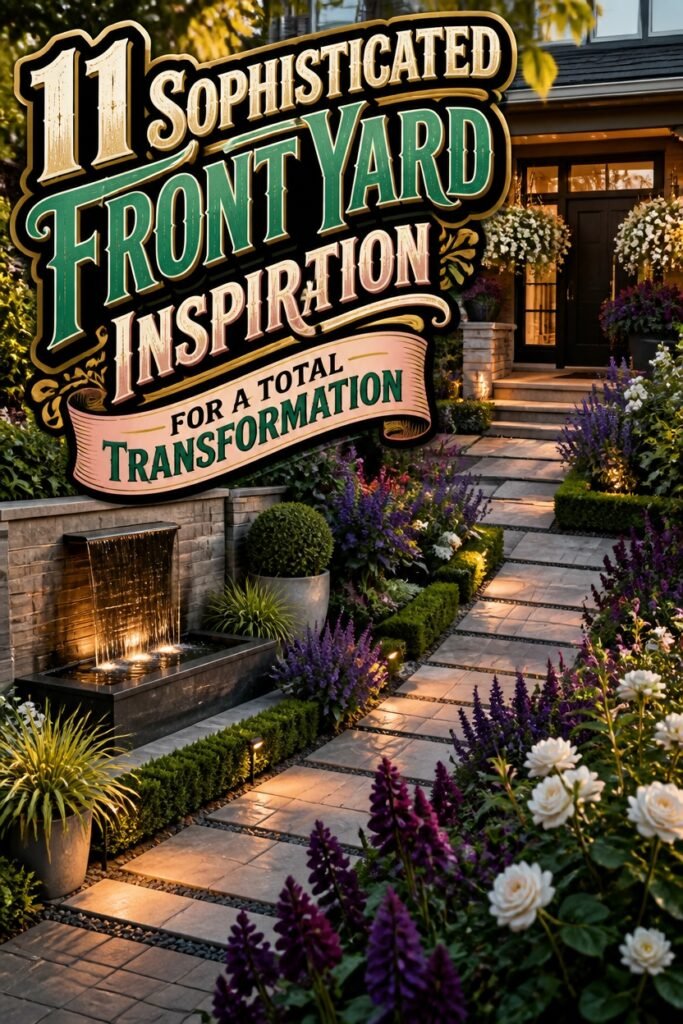
Try a 3-foot-wide stone walkway leading straight to your door. Natural stone in warm grays or taupes plays beautifully against green foliage. Prefer something budget-friendly? Gravel delivers that satisfying crunch underfoot for way less cash.
Raised beds framed in wood or metal give your plants sharp, clean edges. Think of them as tailored suits for your tomatoes and hostas. Add a simple bench, a bubbling water feature, or a few well-placed boulders. These anchor points give the eye somewhere to rest.
Hardscape and softscape need each other. The contrast between stone and leaf, gravel and bloom, creates depth that makes both shine. Your yard stops looking accidental and starts looking designed.
Light Your Front Yard for Dramatic Evening Appeal
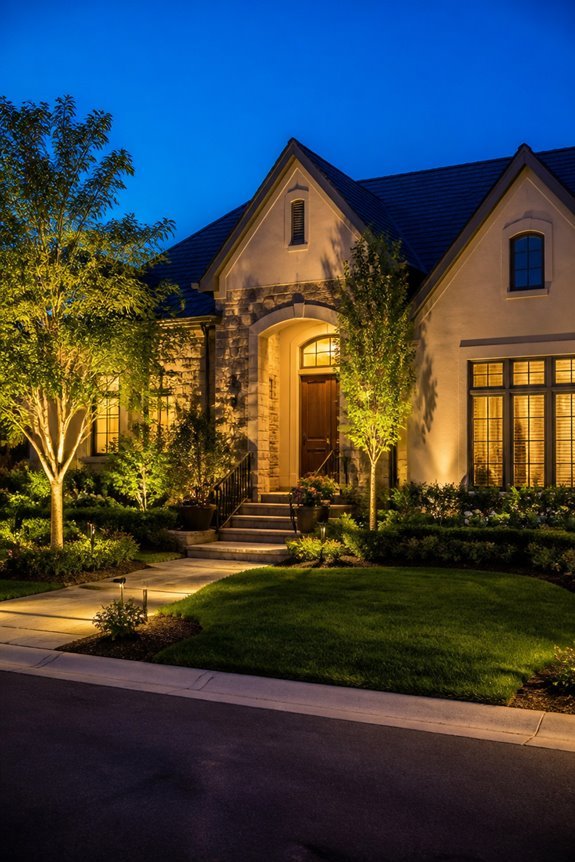
Have you ever driven past a home at night and thought, “Wow, that looks stunning”? That’s the power of lighting done right. And yours could be that house.
Start with uplights placed at the base of trees and shrubs. They cast beautiful shadows upward through branches. It’s an instant depth upgrade. Path lights do double duty. They keep guests safe and add instant charm. Try warm white bulbs at 2700K. They feel cozy, not clinical. Avoid anything that turns your yard into a parking lot vibe. Position lights low and aim upward. This prevents that harsh, flat look. No one wants their home to resemble a deer caught in headlights. Solar fixtures are your friend here. Zero wiring, zero bills, zero hassle. Your evening curb appeal sends a message. Make it one that says you care about the details.
Build a Welcoming Pathway to Your Entrance
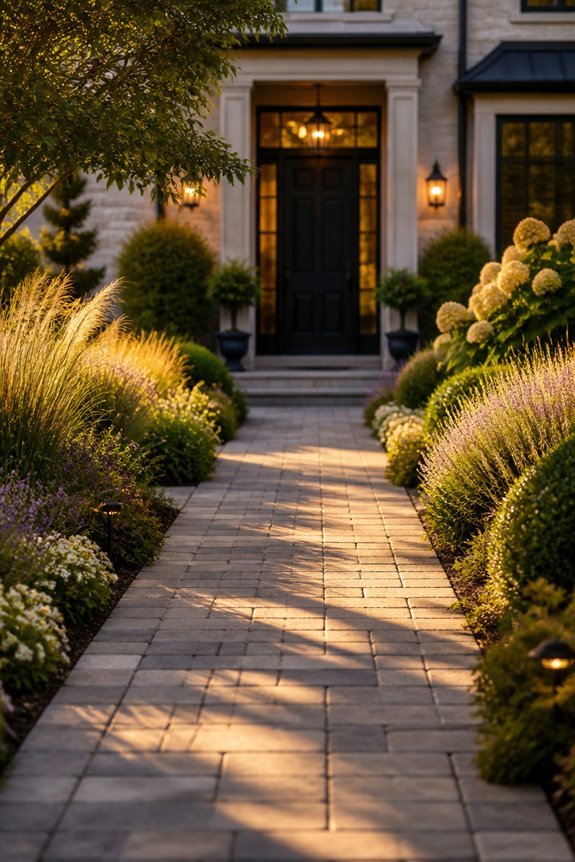
Your front entrance is your home’s first impression. You want guests to feel like VIPs, not confused hikers searching for the door.
Wide stepping stones work best. Space them about 18 inches apart so no one needs awkward giant steps. Line your path with low solar lighting. It costs less than your morning coffee and works without any wiring.
Add plants on both sides for natural charm. Hostas, ornamental grasses, or bright petunias do the job beautifully. Mulch beds in warm browns or grays keep everything neat and make those plants stand out.
Want a little drama? Try a small arbor or trellis overhead. It adds style without going overboard. The real goal here is simple: make visitors think you’ve got everything together, even if your garage tells a different story.
Go Low-Maintenance With Xeriscaping and Strategic Plants
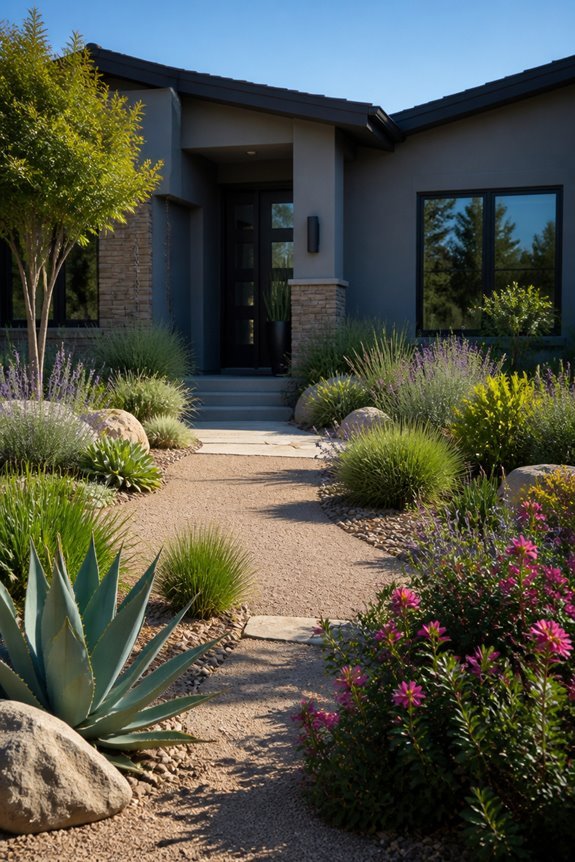
Tired of dragging hoses around every weekend? Xeriscaping might be your answer. This method trades thirsty lawns for plants that actually want dry soil. Try ornamental grasses, sedums, or desert roses. They survive on neglect and still look great.
Cluster plants by how much water they need. It saves you from overwatering some while underwatering others. Top the soil with mulch or rocks to lock in moisture. Native plants are worth considering too. They already know how to handle your local weather.
Your water bill drops. Your free time grows. And your yard still looks like you hired a pro.
Use Evergreens to Define Your Home’s Borders
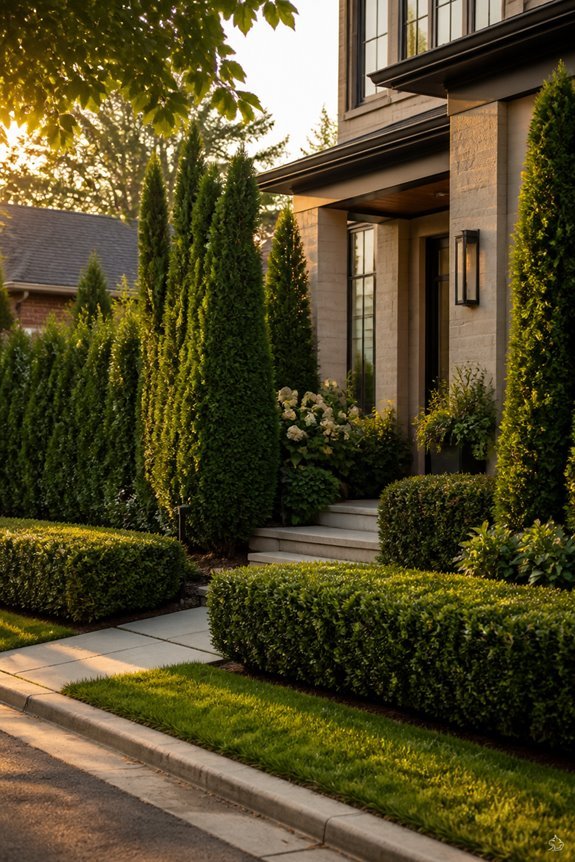
Want a yard that looks put together even in February? Evergreens are your answer. They show up looking sharp every single day. No off season. No excuses.
Boxwoods, junipers, and arborvitaes make perfect border guards. Think of them as a living fence. You get structure without the splinters. Your property lines deserve this kind of effortless polish.
Plant them three to four feet apart. In a few years, they fill in and create something solid. Dark green backdrops frame your house beautifully. They never ghost you come November like those deciduous trees do.
These plants hide the ugly stuff too. Foundation issues? Covered. Nosy neighbors? Blocked. They even absorb street noise better than you’d expect. Once established, they barely need you. Water occasionally. Step back. Watch your curb appeal climb without the headache.
Create Structure With Raised Beds and Borders
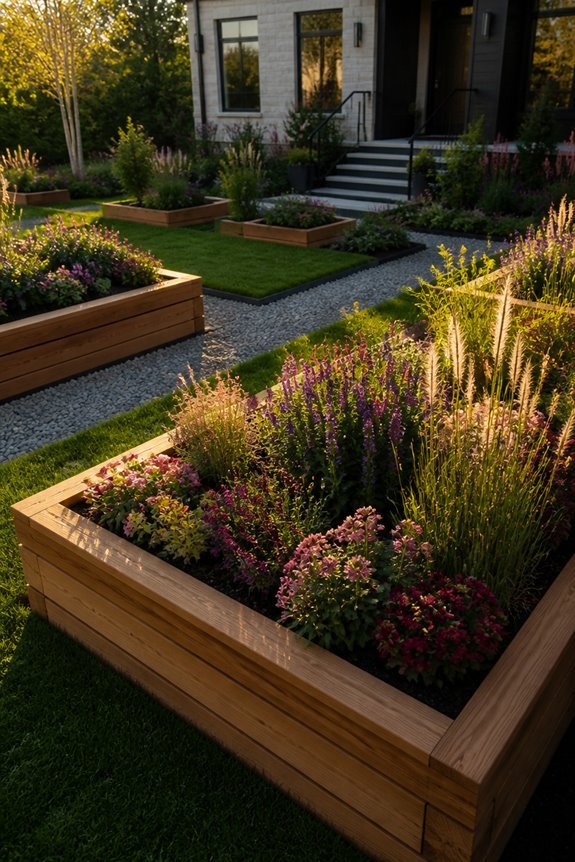
Ever feel like your garden looks more like happy chaos than actual design? Raised beds solve that fast. They’re simple frames that corral your plants right where you want them. Build yours about two or three feet wide. Fill them with rich, dark soil. Suddenly your vegetables and flowers look like they belong there.
Borders work quietly behind the scenes. They stop mulch from creeping onto your lawn. They define spaces without shouting about it. Paint them to match your house, or let the wood age naturally. Now comes the fun part: layering. Put short plants up front, taller ones behind. Everyone gets seen. Everyone looks good.
Add Water Features for Calming Visual Interest
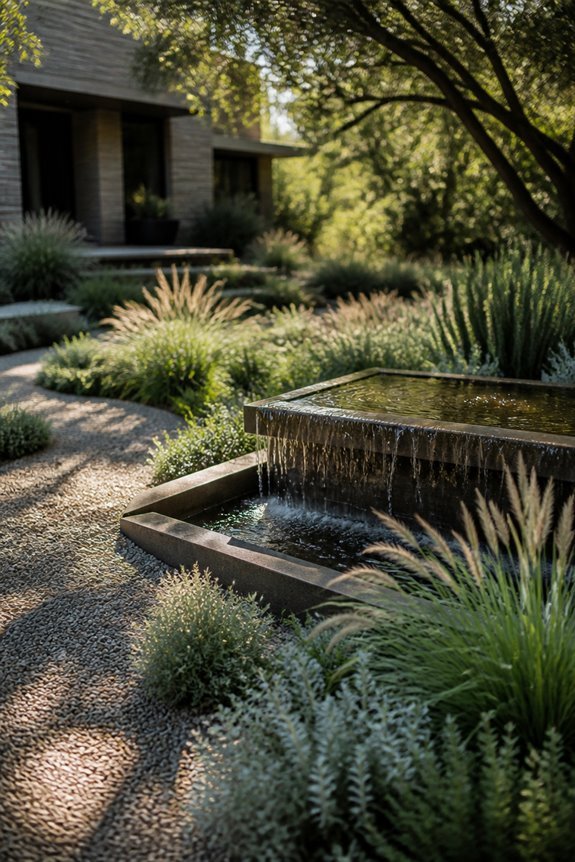
Does your front yard feel a bit too still and silent? You can fix that with water.
A small fountain or simple birdbath adds instant life and motion. You don’t need anything fancy or expensive here. Even a modest two-foot feature creates gentle sounds that mask traffic and other noise. Your brain actually responds to trickling water with lower stress. Position it near your entrance so guests hear it right away. Birds will treat your birdbath like their personal spa, splashing and preening for your entertainment. Add a few aquatic plants or floating flowers for extra color. Water catches the light beautifully at sunset too. You end up with sound, movement, and reflection that turn a dull yard into somewhere you actually want to sit.
Balance Open Lawn With Defined Planting Zones
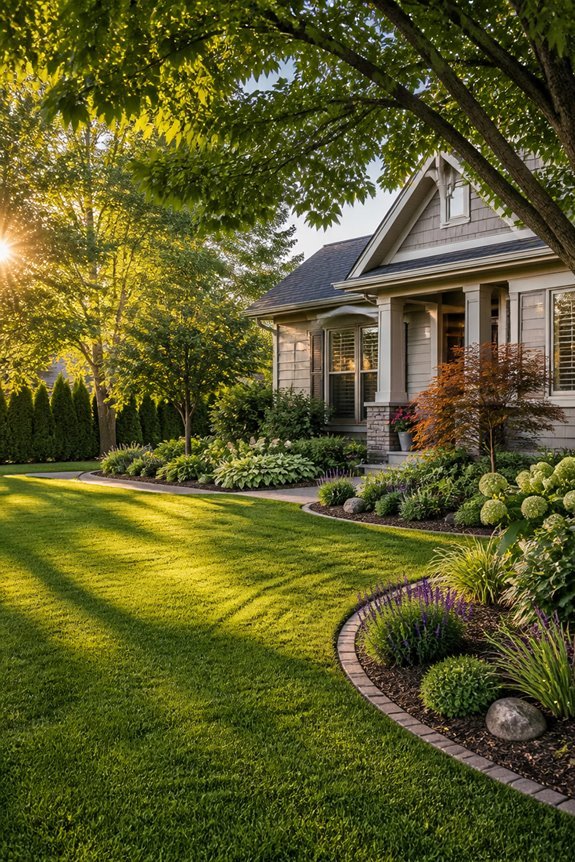
A big open lawn looks nice enough. But does yours feel flat and empty? Like something’s missing? You’re not alone.
Try this: carve out planting zones to break up all that green. Add flower beds along your front edges, about 3 to 4 feet wide. Tuck shrubs near your foundation. Dot smaller plants throughout. Suddenly your yard has rhythm. Your eye travels from spot to spot instead of landing on endless grass.
Skip perfect symmetry. That gets dull fast. Mix tall with short. Layer in some color. Keep your lawn breathing room, but give it life. You’ll end up with a yard that feels personal, not plain.
Plan Year-Round Curb Appeal With Seasonal Color
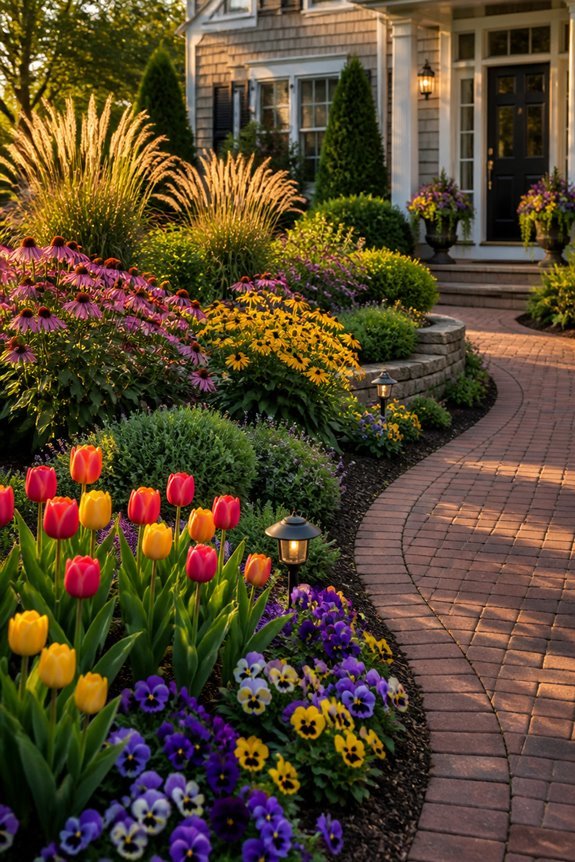
You want a yard that stops traffic for good reasons, right? Not the kind where neighbors pity you from their windows. The trick is flowers that never quit. Think of them as your seasonal performers, each taking their turn in the spotlight.
Start with spring bulbs like tulips and daffodils. Aim for 12-inch heights that shout “winter’s over.” Summer calls for bold zinnias and marigolds in hot pinks and sunny oranges. These are your extroverts. They love attention. Fall brings ornamental grasses and burgundy mums. Even winter works for you here. Plant red-twig dogwood and compact evergreens. They add color when everything else sleeps.
Layer these in 3 to 4-foot zones near your house and mailbox. Swap your color palettes as seasons change. Your curb appeal stays crisp and your neighbors notice. That dead-yard problem? Gone for good.
Frequently Asked Questions
What Is the Average Cost to Professionally Transform a Front Yard Completely?
A complete front yard transformation typically costs between $5,000 and $25,000 professionally. The final expense depends on project scope, existing conditions, landscaping complexity, hardscaping features, and regional labor rates. Premium designs may exceed these estimates considerably.
How Long Does It Typically Take to See Results After Implementing These Changes?
Professional front yard transformations typically yield visible results within two to four weeks. Hardscaping elements appear immediately, while plantings require six to twelve months for full maturation and aesthetic impact.
Which Front Yard Plants Are Most Resistant to Pests and Diseases?
Native plants such as coneflowers, black-eyed Susans, and ornamental grasses demonstrate exceptional resilience. Lavender and rosemary also thrive with minimal pest interference. These species naturally resist common insects and fungal issues without requiring extensive chemical treatments.
Do I Need Permits Before Adding Hardscaping or Water Features to My Yard?
Like a ship requiring navigation charts before sailing unfamiliar waters, most municipalities require permits before installing hardscaping or water features. Homeowners should contact their local building department to verify specific regulations, as requirements vary considerably by location and project scope.
How Can I Prevent Weeds in Newly Designed Planting Beds and Borders?
Homeowners can prevent weeds in newly designed planting beds by applying 2-4 inches of mulch, installing landscape fabric beneath plantings, and regularly removing any emerging weeds by hand or with herbicides before they establish roots.
Conclusion
A fabulous front yard isn’t magic—it’s a garden that blooms from smart choices and a little elbow grease. Layer those plants, light up the night, and add hardscaping like you’re building a masterpiece. Your entrance transforms into a showstopper that makes neighbors green with envy. The best part? Year-round beauty means your curb appeal never takes a nap. Now go forth and create your outdoor sanctuary—your home’s glow-up starts here.