The real cost of a backyard isn’t the plants or the pavers. It’s the Saturday mornings. Low maintenance backyard landscaping wins those mornings back by designing the chores out before they start. That means less lawn to mow, beds mulched so weeds can’t get started, drip lines that water while you sleep, and plants that look good without pruning, deadheading or fussing.
These 19 ideas are for busy homeowners who still want a yard that looks cared for. You’ll find native perennials and ornamental grasses that need one haircut a year, and an evergreen backbone that holds the yard together in winter. There’s hardscape that keeps weeds out, plus fixes for the tricky spots: deep shade under a tree, a slope you hate mowing and the soggy patch by the downspout. Small yards and tight budgets get their own ideas too. For even more backyard ideas worth copying, keep that list nearby. Start with the chore you dread most and work outward from there.
⏳ How much time can your yard really have?
What Actually Eats Your Weekends
Before you buy a single plant, list the chores your yard asks for now. In most yards they come down to five: mowing, watering, weeding, pruning and the big fall cleanup. Every idea below goes after at least one of them.
Find your biggest time sink. If mowing takes the most hours, start with ideas 1 and 10. If it’s watering, go to 3, 9 and 16. If it’s weeds, go to 4, 6 and 12.
Match plants to the spot. A plant in the wrong light or soil needs constant rescuing. Before you shop, note where the sun hits all afternoon and where the shade lingers.
Use fewer kinds of plants, and more of each. Big sweeps of a few reliable plants look calmer, and they’re far easier to care for than one of everything.
Get those three right and the rest of the yard needs very little from you.
1. Keep Grass Only Where Kids and Dogs Actually Play
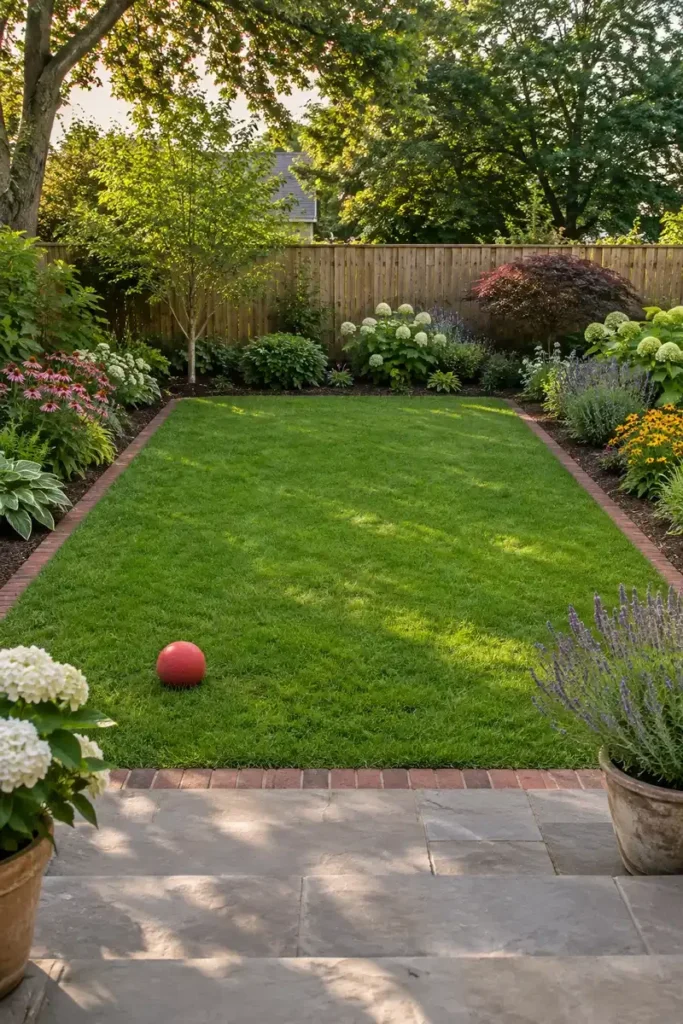
Most lawns are bigger than anyone actually uses. Look at where the grass gets worn, usually one patch by the back door where kids kick a ball and the dog does laps, and keep only that. Turn the rest into planted beds, and mowing shrinks to a few minutes.
Frame the lawn you keep with a brick mowing strip, which is a flat row of bricks set level with the soil. One mower wheel rides along the brick, so the edge gets cut in the same pass and the string trimmer stays in the garage. A simple rectangle mows faster than wiggly curves. For the patch that takes the most wear, choose a tough turf grass suited to your area.
2. Native Perennial Border That Never Needs Deadheading
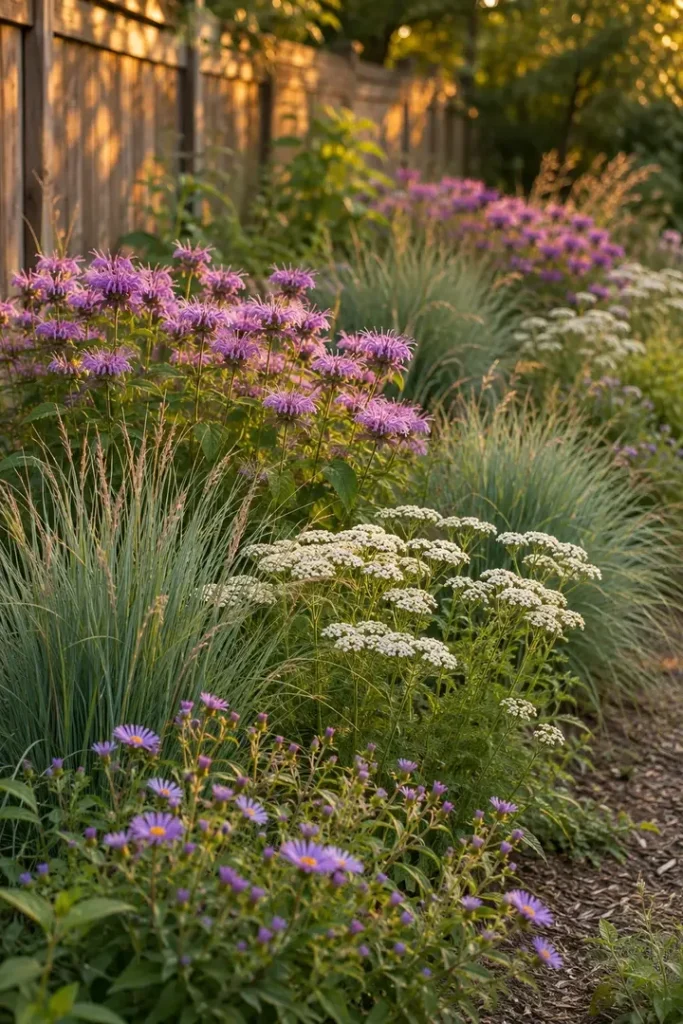
Bee balm is the plant that sells this idea. It blooms, fades and sets seed heads that look good on their own, so nobody has to walk the border with pruners every week. Build a whole border around plants like that and the work drops to almost nothing.
Lavender-pink bee balm, flat white yarrow, purple asters for late color and clumps of little bluestem grass give the border a long season with no deadheading. These are low maintenance plants for a backyard because, as a rule of thumb, natives suited to your region need little watering once they’re settled. Plant them in groups of three or five so the bed reads as bold sweeps instead of polka dots. Check a local native plant list before you buy.
3. Drip Irrigation on a Smart Timer, Hidden Under Mulch
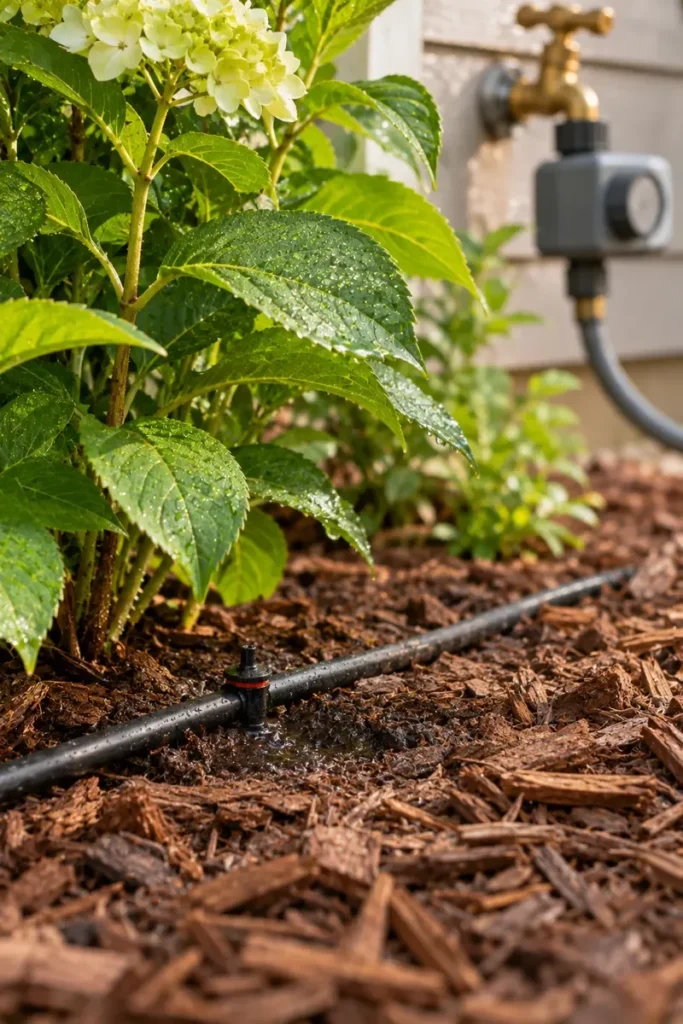
Hand watering is the chore that eats summer evenings, and drip irrigation on a smart timer takes it off your list. Black drip line runs along the base of each plant, tucked under the mulch. It delivers water straight to the roots instead of spraying the leaves and paths. The timer on the hose spigot runs it early in the morning, and a smart model can skip a day when rain is in the forecast.
Setup note: Let it run for a few weeks, then push a finger a few inches into the soil. If it’s damp but not soggy, the schedule is right. Adjust it once in spring and once in midsummer, then leave it alone.
4. Large-Format Pavers With Tight, Weed-Resistant Joints
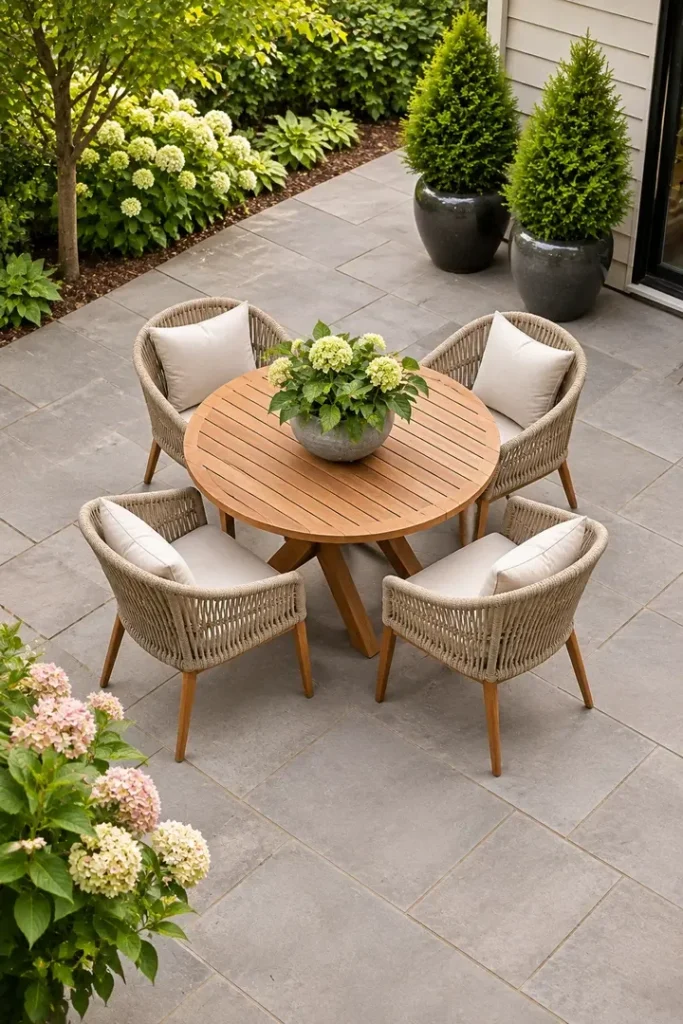
Every joint in a patio is a place for a weed to start, which is why big pavers beat small ones in a low maintenance backyard. Large-format gray concrete pavers cover more ground with fewer seams. Sweeping polymeric sand into the joints locks them up, so weeds have a much harder time getting a foothold. After that, the patio needs little more than a broom and an occasional rinse with the hose. Have a pro prepare the base for a large patio, because the base decides whether it stays flat. These backyard patio ideas for any space can help with the layout.
Get the look: large-format gray concrete pavers, polymeric sand joints, a round wood dining table, four woven rope chairs, two dwarf conifers in charcoal pots.
5. Ornamental Grass Drifts That Need One Spring Haircut
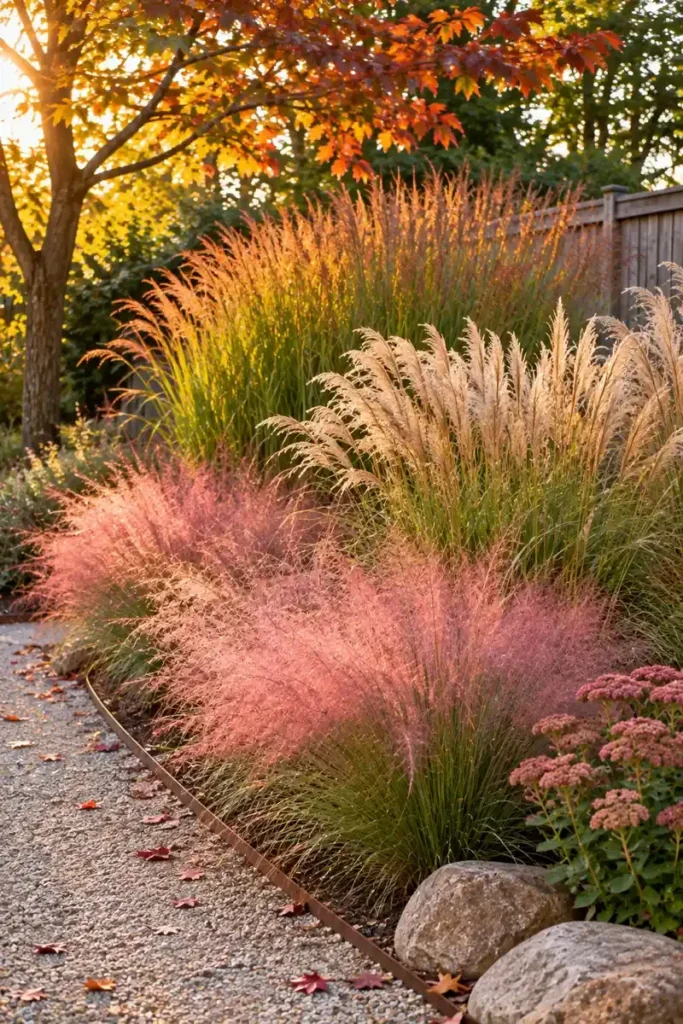
Ornamental grasses ask for one job a year. Cut the clumps back to a few inches in late winter or early spring, before new growth starts, and that’s the whole maintenance plan.
Plant a border of flowering annuals and you’re deadheading and replanting every season. Plant drifts of grasses and you get movement, sound and fall color from a single afternoon of work. Tall switchgrass at the back, feather reed grass in the middle and low clouds of pink muhly grass in front layer the border, so every clump catches the low autumn light.
Before you cut, cinch each clump with twine. The cut stems come off in one bundle that goes straight into the yard waste bin.
6. Shredded Hardwood Mulch, Laid Thick and Kept Off Stems
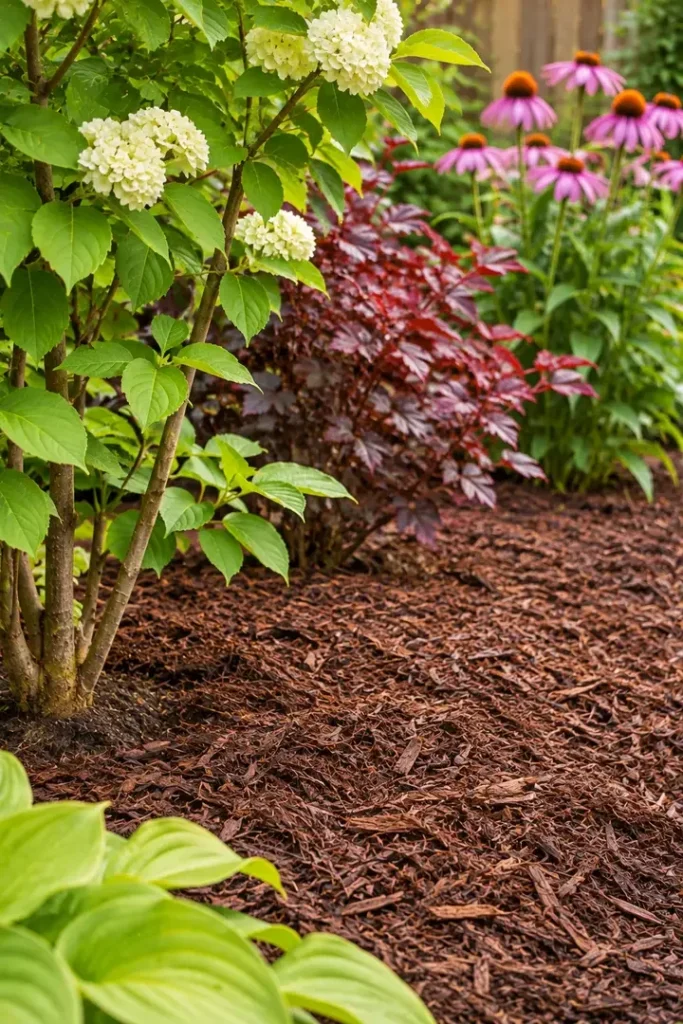
A thick layer of shredded hardwood mulch is the cheapest weed control you’ll ever buy. Spread a few inches across every bed. It blocks the light weed seeds need, holds moisture so you water less, and frames viburnum, ninebark and coneflowers in a tidy dark brown. Shredded mulch knits together better than nuggets, so it stays put in a storm.
Refresh it once a year in spring by raking the old layer loose before you top it up. Pull it back a hand’s width from shrub stems and tree trunks, because mulch piled against bark holds moisture where it can cause rot.
Shredded hardwood in shrub and perennial beds, where it feeds the soil as it breaks down.
Pine straw on slopes, because the needles lock together and stay put in heavy rain.
Landscape fabric under bark in planting beds. As the bark breaks down, weeds root right into the fabric.
Dyed mulch, which tends to fade fast and needs topping up sooner to keep its color.
7. Hellebores, Ferns, and Coral Bells Under a Shade Tree
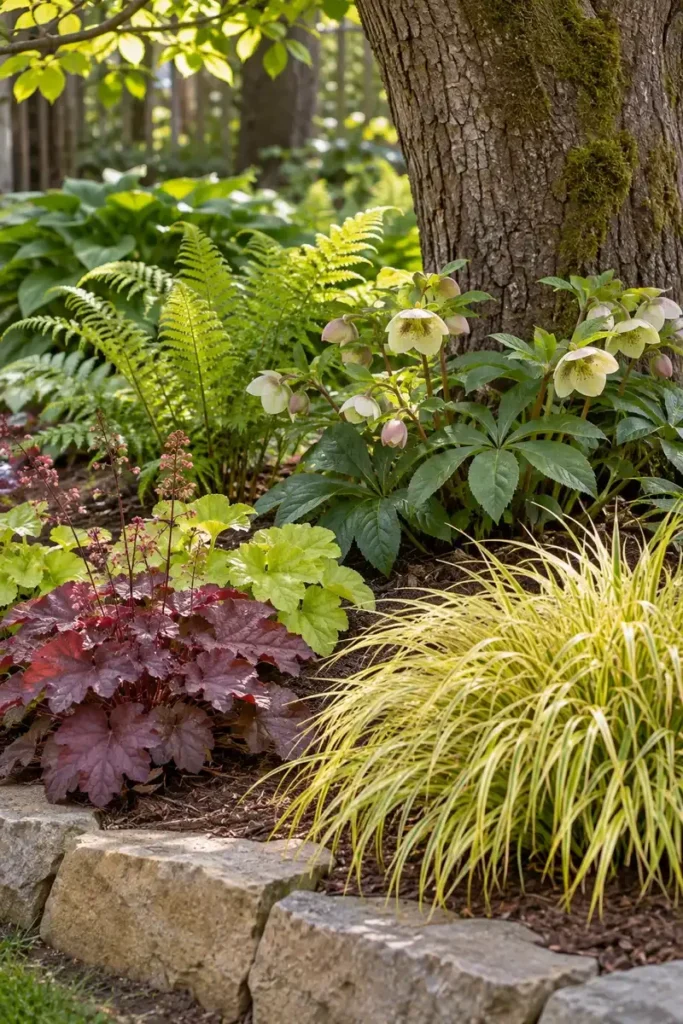
The ground under a big shade tree is where most yards look patchy, because both grass and sun-lovers struggle there. Plant for the shade and the spot becomes the easiest bed in the yard. Hellebores bloom in late winter and keep their leathery leaves most of the year. Ferns fill the middle, and coral bells add burgundy and lime leaves at the front. Japanese forest grass spills over the edge in a soft gold wave.
As a rule, shade plants grow slowly, so they rarely need dividing or trimming. Plant a little away from the trunk, where the roots are thinner, and water through the first summer while the plants settle in. If your pets nibble plants, check hellebores against a reliable pet safety list.
8. Evergreen Shrub Backbone That Still Looks Good in January
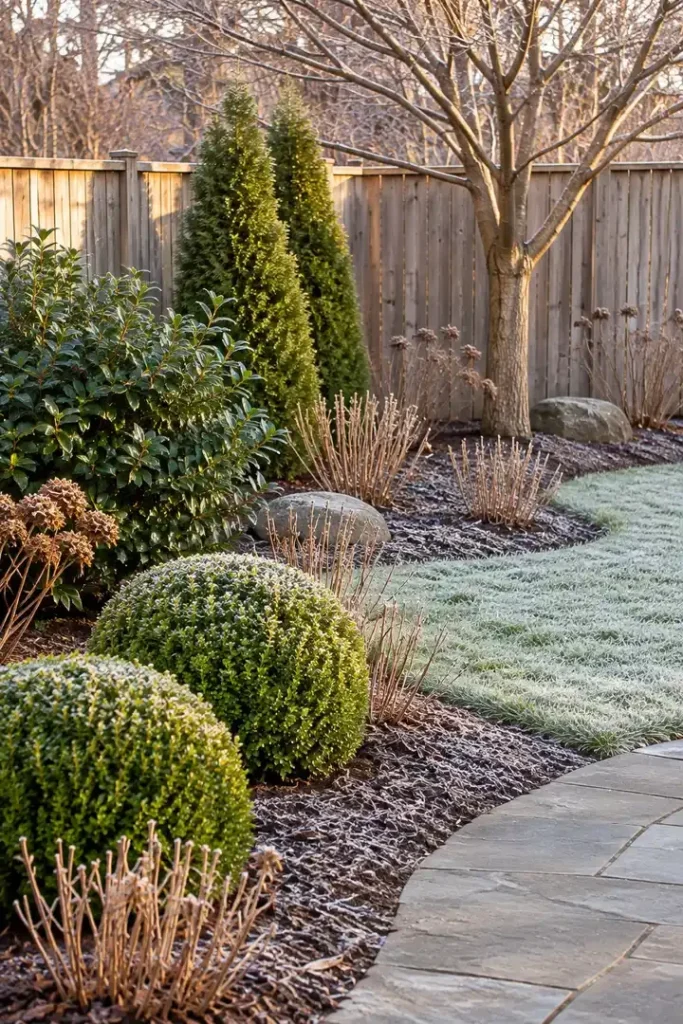
Frost on a boxwood ball is when an evergreen backbone proves its worth. In midwinter the perennials are cut back and the trees are bare, but a few well-placed evergreens keep the yard looking designed instead of abandoned.
Round boxwood, a broad dark green inkberry holly and two upright dwarf conifers at the corners of the beds give the yard structure all year. Choose these low maintenance shrubs by their mature size, not their size in the nursery pot, so they fit without regular shearing. That one choice saves more pruning time than any tool. Most need only a light trim once a year, if that.
9. Oversized Glazed Pots With One Bold Plant Each
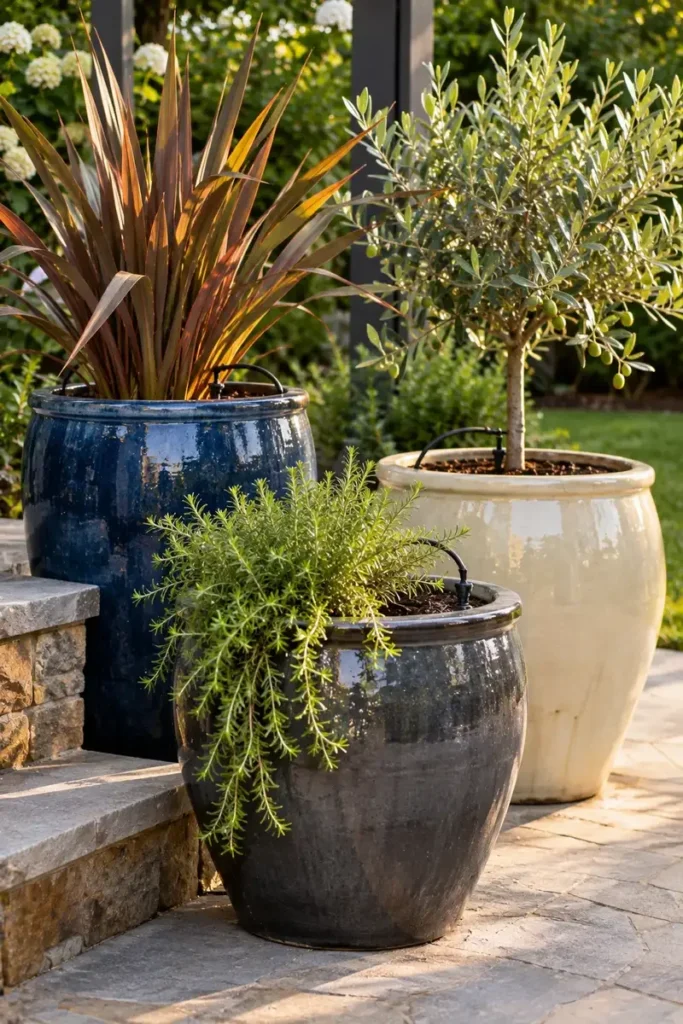
Big pots are easier than small ones. A large glazed ceramic pot holds more soil, so it dries out more slowly. One bold plant per pot means no fussy arrangements to replant every season. Set three oversized pots by the patio steps, one deep blue, one cream and one charcoal. Fill them with a spiky bronze New Zealand flax, a small olive tree and a trailing rosemary.
Potting note: Glazed pots hold water better than terracotta, which wicks moisture out through its walls. Run a thin drip line into each pot from the same timer that waters your beds, and the pots water themselves.
10. A Robotic Mower for the Lawn You Decided to Keep
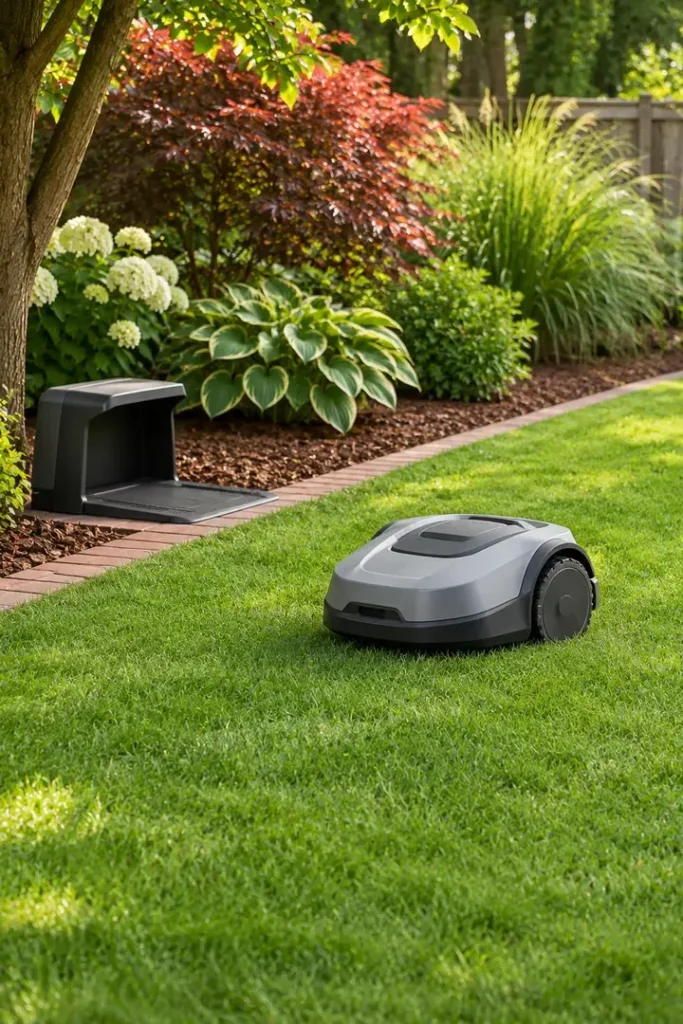
A robotic lawn mower turns the weekly mow into something that happens while you’re at work. The small cordless mower trims a little every day or two and leaves fine clippings that feed the lawn. When it’s done, it rolls back to its charging dock on its own. It works best on a simple, fairly flat lawn with clean edges, which is one more reason to keep your grass in a tidy shape.
Schedule it for times when kids and pets are inside, and pick up toys, sticks and dog balls before it runs. Some models need a boundary wire pegged around the lawn, which takes an afternoon to lay. Most still miss the very edge, so a brick mowing strip around the lawn finishes the job.
11. Gravel Garden With Lavender, Lamb’s Ear, and Sedum
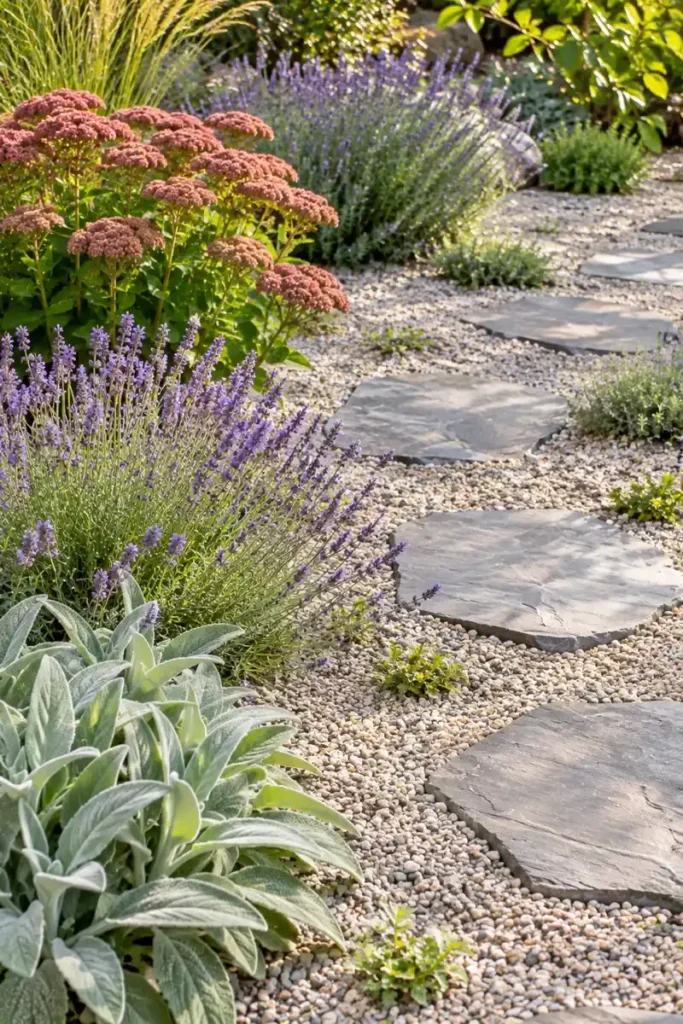
Dry-climate gardeners worked this out long ago: plant straight into gravel and you water far less. Spread a few inches of pea gravel over the soil and plant drought tolerant perennials through it. The stone acts as mulch, keeping the base of each plant dry and showing off every plant as its own small sculpture. That’s drought tolerant landscaping at its simplest. Silver lamb’s ear softens the front, mounds of lavender bring scent, and upright sedum turns rusty pink in late summer. Self-sown seedlings will pop up in the gravel, and you can pull them or let them grow. These backyard garden ideas that feel lush have more plant pairings.
Get the look: pale pea gravel, lavender, lamb’s ear, upright sedum, flat stone stepping stones.
12. Plant Close and Fill the Gaps With Free Divisions
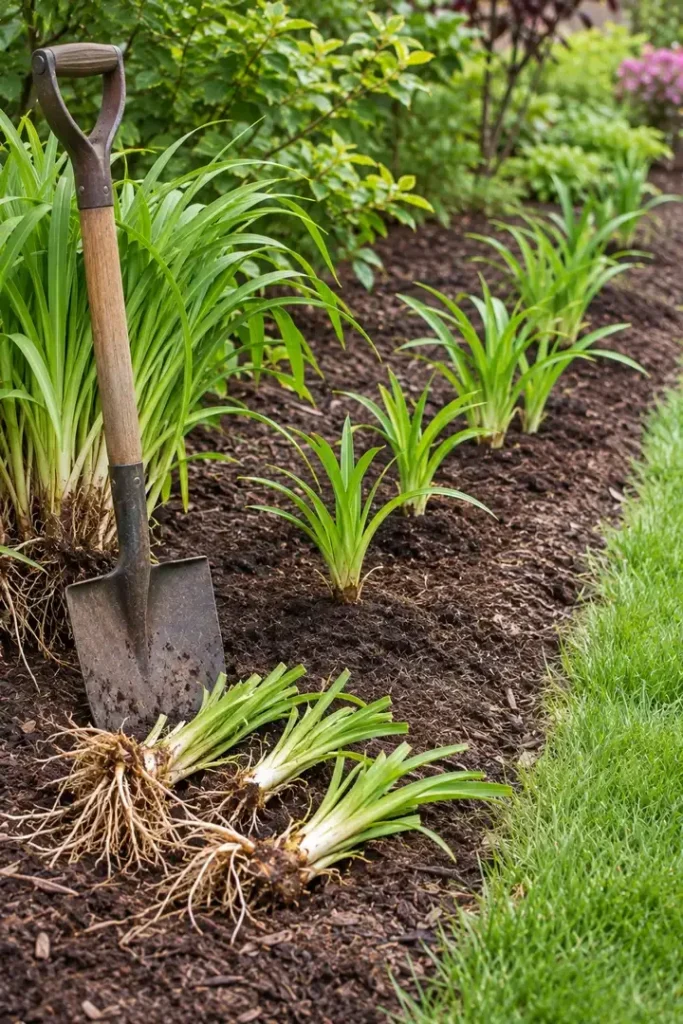
Bare soil invites weeds. Leave gaps between plants and weeds move in within weeks. Fill those gaps and there’s nowhere for them to land.
Plant perennials a little closer than the tag suggests so they grow into a solid carpet sooner. Stretch your budget with divisions. Every few years, dig up a big clump of daylilies, split it into pieces with a spade, and replant the pieces in the empty spots. One overgrown clump of orange daylilies can fill a whole border edge for free, which makes this one of the easiest backyard landscaping ideas on a budget. Cat owners should check daylilies against a pet safety list first.
13. Creeping Juniper Ground Cover on the Slope You Hate Mowing
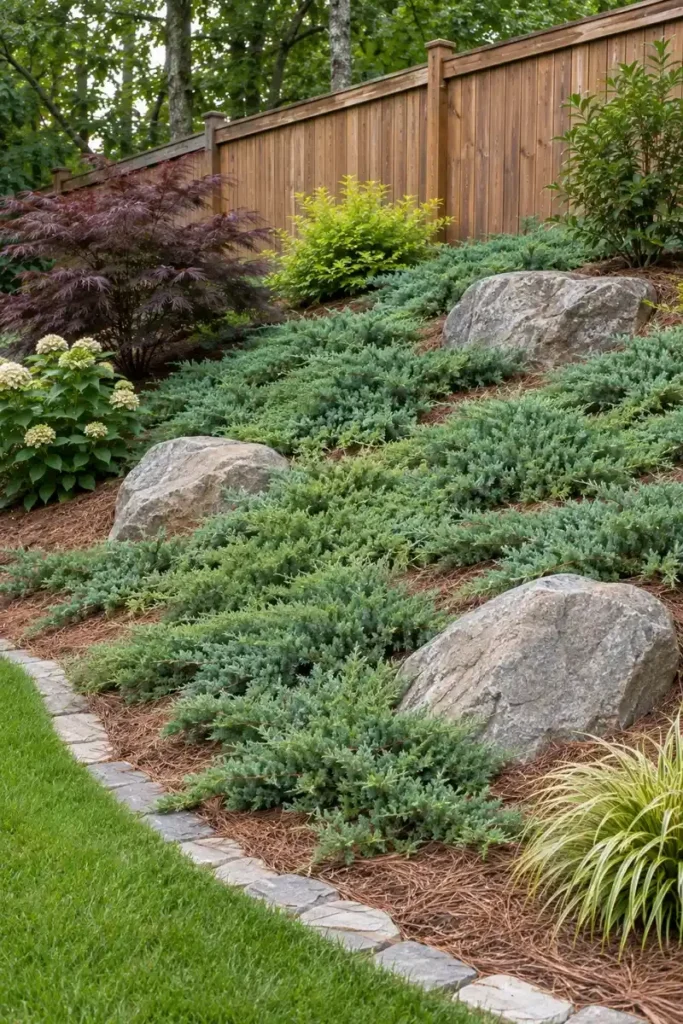
Mowing a slope is miserable and a little risky. Plant it with creeping juniper and you never have to set foot on it again except to admire it. The low blue-green branches spread across the bank and root as they go. The slope fills in, holds its soil in heavy rain and shades out most weeds. Set a few chunky gray boulders into the hillside while you plant, to break up the green and make the slope look settled.
Mulch between the young plants with pine straw until they meet, which usually takes a few growing seasons. Pine straw holds better on a bank than bark does. Of all the low maintenance landscaping ideas here, this is the one you’ll notice least, and that’s a good thing. If the slope is steep enough to need a retaining wall, hire a pro.
14. A Rain Garden Where the Downspout Floods the Yard
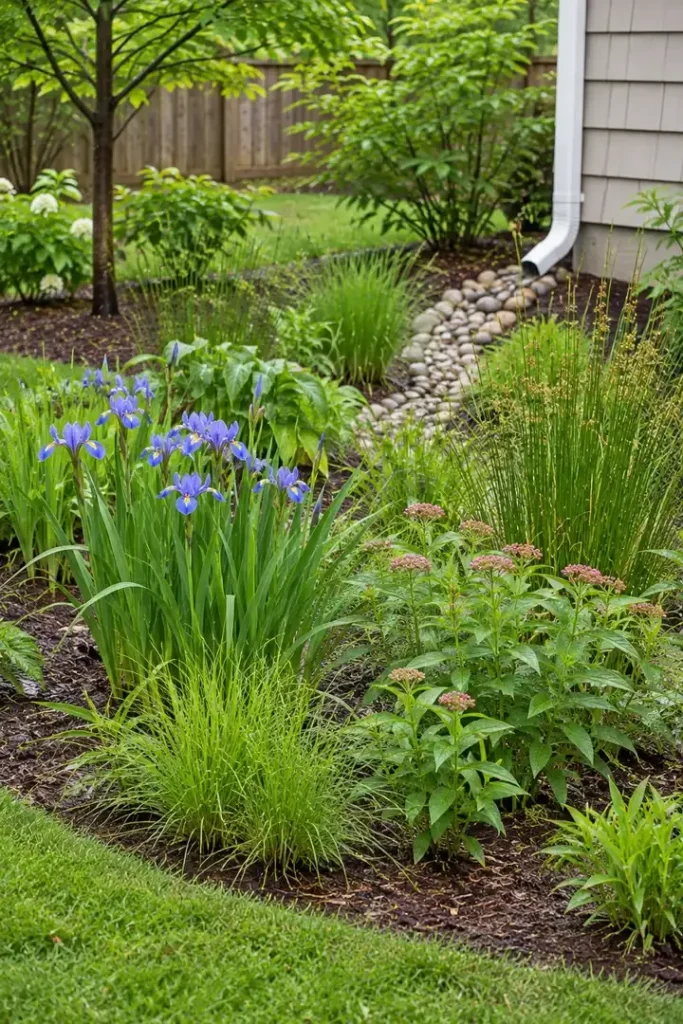
The soggy patch at the end of a downspout can become a rain garden. That’s a shallow planted dip that catches roof runoff and lets it soak in, usually within a day or so. Fill it with plants that handle both wet feet and dry spells, like blue flag iris, swamp milkweed, soft rush and sedges. A strip of river rock where the water enters slows it down, so it spreads out instead of carving a channel. Once it’s planted, it needs less watering than any other bed, because every storm waters it for you.
Placement note: Build it well away from the house foundation, never right against it, and call 811 before you dig so buried lines get marked. If water already pools near the foundation, have a drainage pro look first.
15. Porcelain Paver Courtyard With Steel Planters for Small Yards
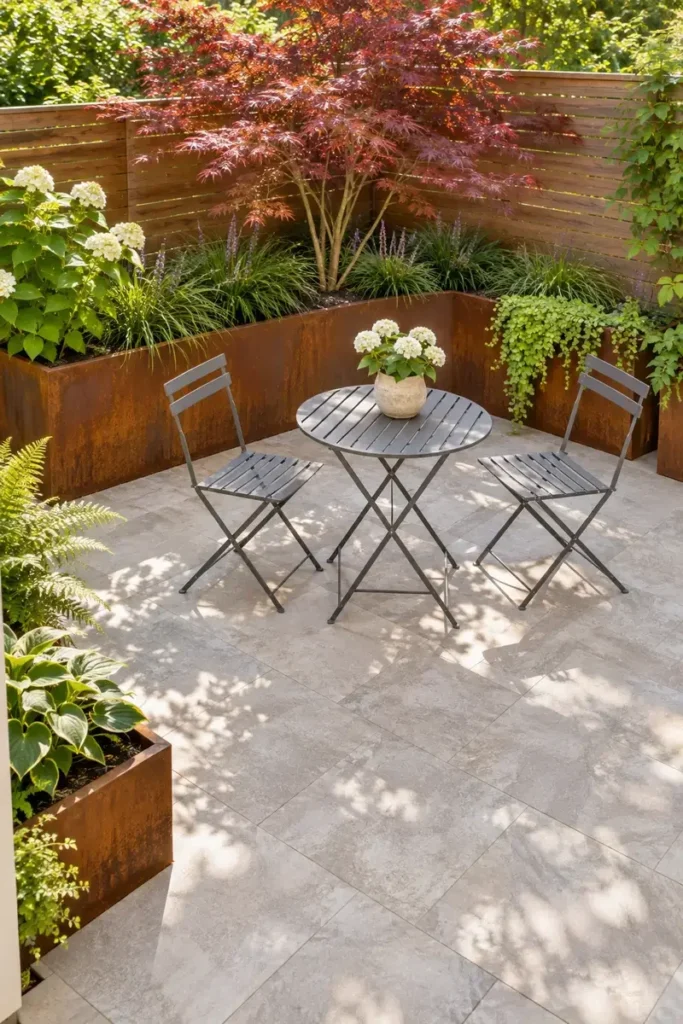
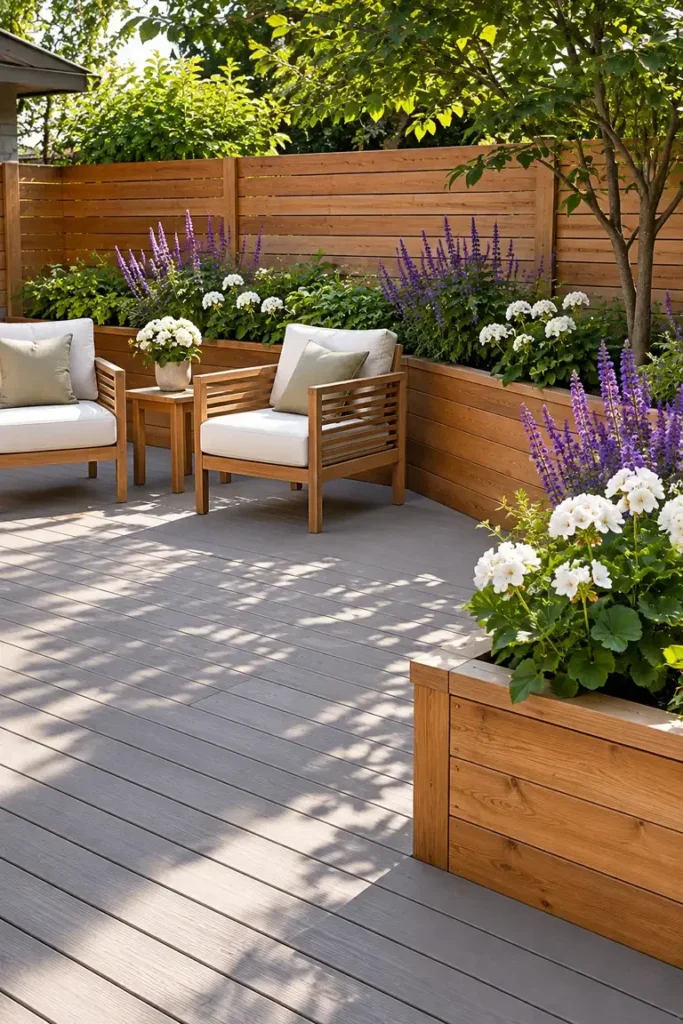
In a small backyard, every square foot gets walked on, so a tough surface pays off. Porcelain pavers in a pale stone color resist stains and moss and hose clean in minutes, which makes them a smart floor for a tight courtyard. Rust-toned weathering steel planters along two sides hold liriope and a small Japanese maple. The raised beds put the green at eye level, and the floor stays clear for a two-seat bistro set. More layouts live in these small backyard ideas that feel bigger.
Get the look: pale porcelain pavers, rust-toned weathering steel planters, liriope, a small Japanese maple, a two-seat bistro set.
16. Thirsty Plants Near the Hose, Tough Shrubs Far Away
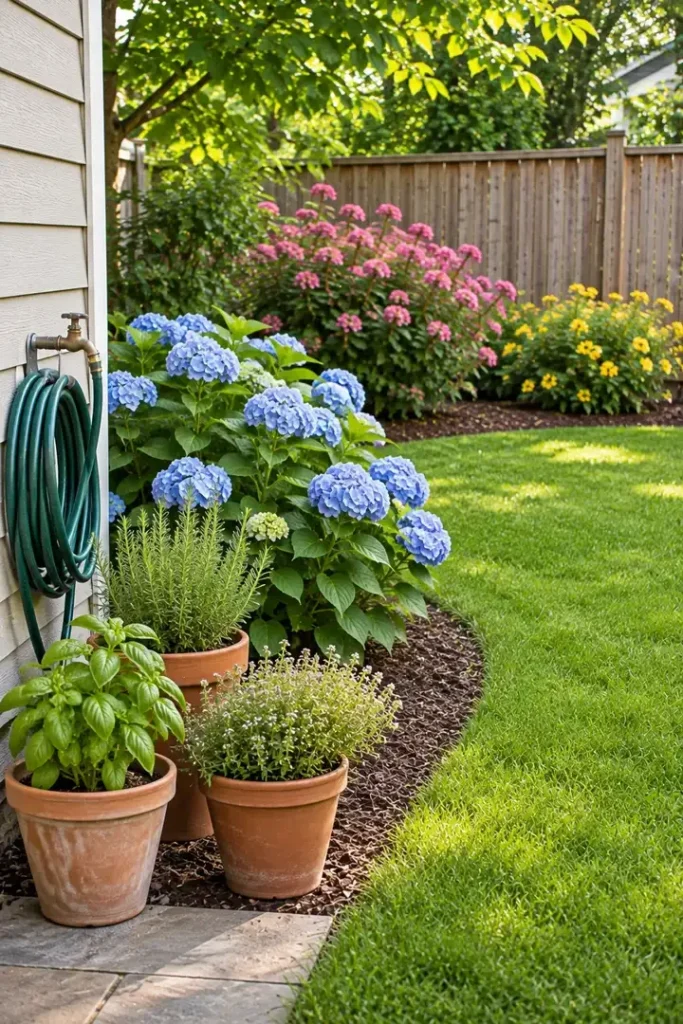
In this layout, the hose spigot decides where everything goes. Plants that want regular water, like blue hydrangeas and a few pots of herbs, go in the bed right beside the spigot, where watering takes a minute. Tough shrubs like pink spirea and yellow-flowered potentilla go in the far corners, where they mostly live on rainfall once they’re settled. Designers call this grouping by water needs. In an easy care backyard, it means you never drag a hose across the whole yard again.
Sketch the beds on paper with the spigot marked, and the layout almost plans itself.
17. One Small Flowering Tree Instead of a Fussy Flower Bed
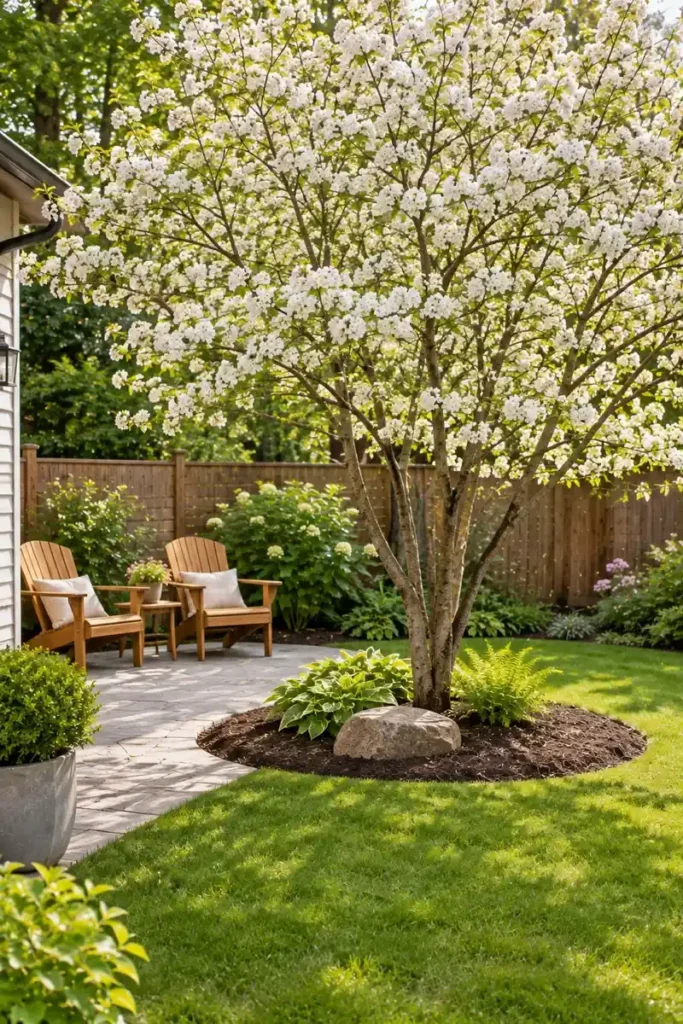
A small flowering tree gives a backyard more for less work than almost any bed of flowers. Serviceberry blooms white in early spring and sets berries the birds clean up. In fall it turns orange and red, and it stays small enough for a modest yard. Prefer pink? An eastern redbud does a similar job with bright magenta flowers.
Plant it where it can shade a patio corner, and give the base a wide circle of mulch instead of grass. Water it deeply through its first couple of summers. After that, most years it needs nothing more than a quick look for dead branches.
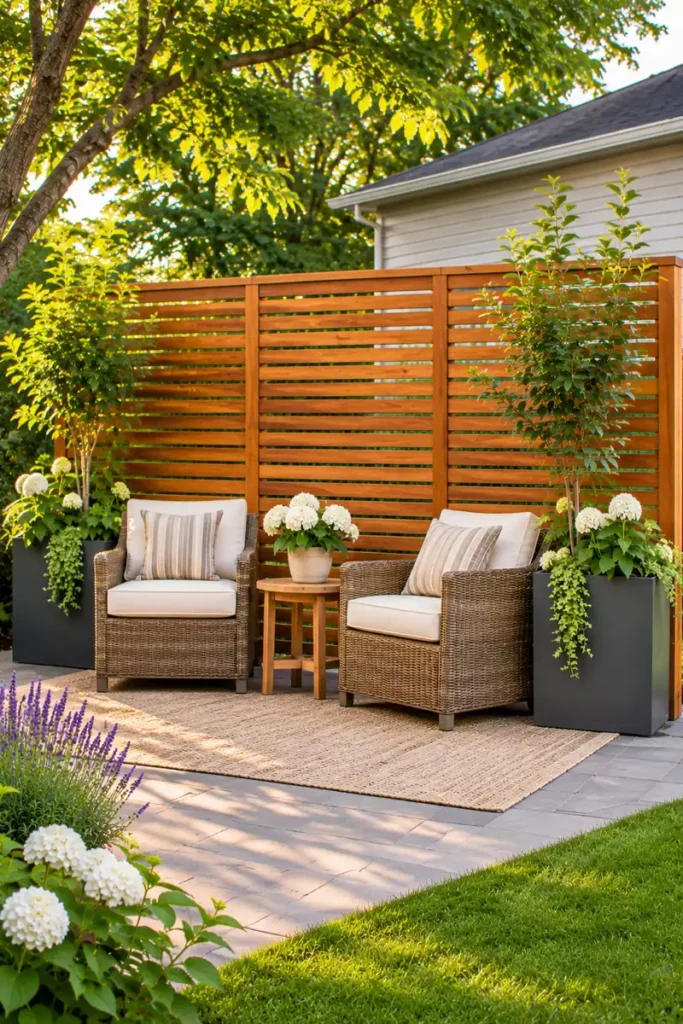
18. Cedar Slat Privacy Screen With Columnar Evergreens
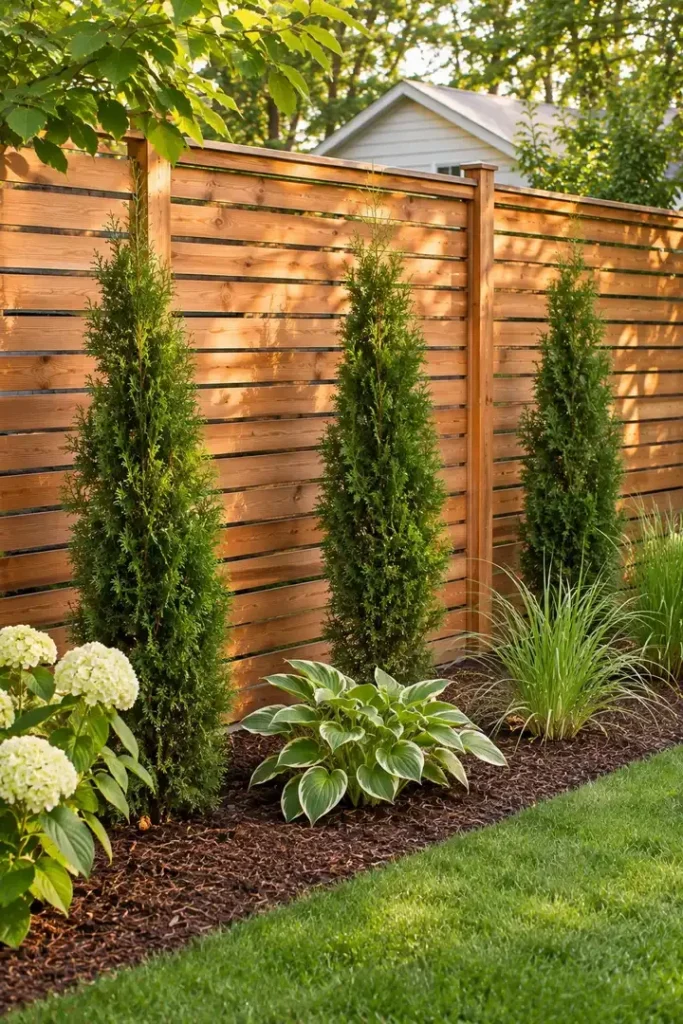
A fast-growing hedge gives you privacy quickly, and a trimming job forever. A horizontal cedar slat privacy screen gives you privacy the day it goes up, and asks only for a coat of sealer now and then. Plant three slow-growing columnar evergreens in front of it, and the green softens the wood without ever outgrowing the space. Slow growers stay narrow and tidy with little or no clipping, which is the whole point. Have a pro set the posts for a tall screen, and check local fence height rules before you start.
19. Leave Seed Heads Standing and Skip the Fall Cleanup
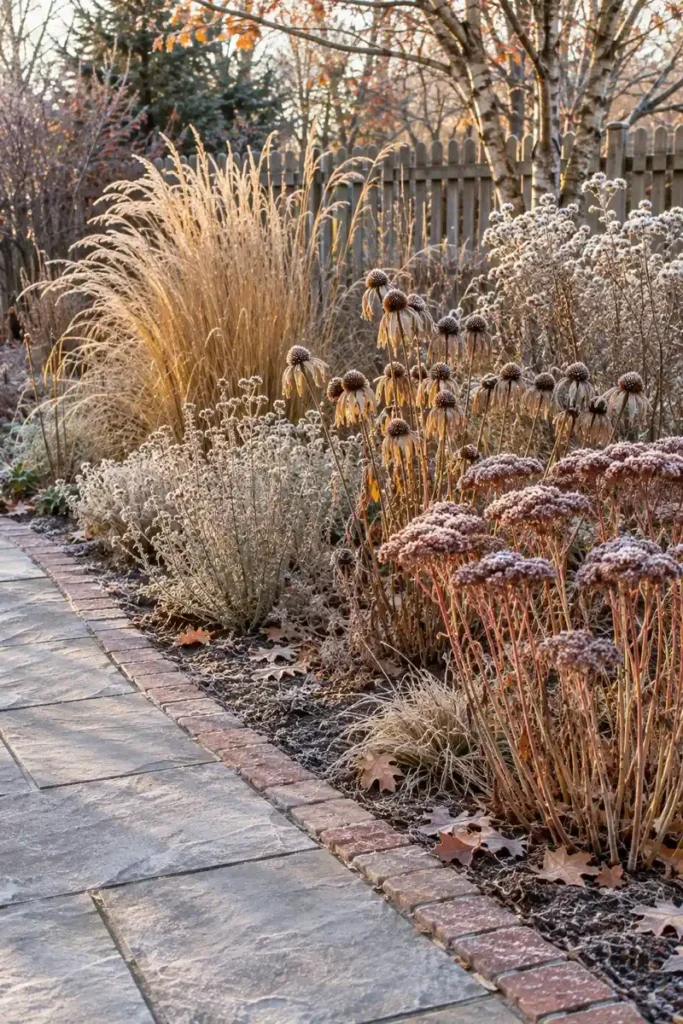
The easiest fall cleanup is no fall cleanup. Leave coneflower and sedum seed heads, ornamental grasses and aster stems standing through winter. Birds pick at the seeds, frost turns the border silver, and many beneficial insects spend the winter in the old stems. Rake fallen leaves off the paths and into the beds instead of bagging them, and they break down into free mulch. Then cut everything back once in late winter, in a single afternoon.
Winter note: Keep one tidy edge, like a swept path or a crisp mowing strip. A resting border then reads as intentional to the neighbors, not neglected.
How to Plan a Low Maintenance Yard for Busy Homeowners
The yards above share one pattern. Shrink the lawn to the patch you use. Cover every inch of soil with plants, mulch or gravel, and choose plants that fit their spot at full size. Put the watering on a timer, group plants by how thirsty they are, and give every bed a crisp edge, so the yard looks tended even when you haven’t touched it. Then let the seasons set the schedule. Most of the remaining work fits into four short sessions a year.
Your whole yard year in four short Saturdays
Low Maintenance Backyard Questions, Answered
What is the lowest maintenance landscaping for a backyard?
A small lawn, or none at all, surrounded by mulched beds of native shrubs and perennials, with a hard surface where you sit. Add drip irrigation on a timer and most of the weekly work disappears. Ideas 1, 2 and 3 together cover the biggest time savers in low maintenance backyard landscaping.
What plants need the least maintenance?
The ones matched to your climate and light. As a rule of thumb, native perennials, ornamental grasses, slow-growing evergreen shrubs and drought tolerant plants like lavender and sedum need the least water and trimming once they’re settled. Ideas 2, 5, 8 and 11 show them at work.
How do I keep weeds out of garden beds without spraying?
Cover the soil. A few inches of shredded mulch, plants spaced close enough to touch, and ground covers on slopes leave weeds nowhere to sprout. Pull the few that do appear while they’re small. See ideas 6, 12 and 13.
How can I make my backyard low maintenance on a budget?
Spend on the basics that save time, like mulch and a drip kit, and save on plants. Divide perennials you already own, buy smaller shrubs and let them grow in, and choose gravel over pavers for paths. Ideas 3, 6 and 12 cost the least to start.
Is gravel or mulch lower maintenance?
Gravel lasts for years and rarely needs topping up, but it doesn’t feed the soil, so it suits drought tolerant plants best. Organic mulch breaks down and needs a yearly refresh, but it improves the soil for shrubs and perennials. Ideas 6 and 11 show each one in a real bed.
Conclusion
Low maintenance doesn’t mean no garden. It means a yard designed so the work happens once, not every weekend. Pick the chore that wears on you most, solve it with one idea from this list, and add another next season. Native perennials, a thick layer of mulch, a drip timer and a smaller lawn will do more for your free time than any new tool in the garage. Give it a year, and your low maintenance backyard landscaping will look better than the yard you used to fuss over every Saturday. Save this for the first warm weekend of spring.