Outdoor lighting completely transforms how a backyard feels once the sun goes down. String lights draped overhead create an instant cozy atmosphere for evening gatherings.
Fire pits bring both literal warmth and a natural focal point for conversation. Tiki torches can shift the whole mood toward something more tropical and relaxed.
Not every light needs to be decorative. Pathway lighting keeps guests from tripping, while motion-sensor fixtures add a layer of security around dark corners.
Smart systems have made it easier than ever to control everything from a phone, dimming or brightening different zones without stepping outside. The trick is balancing what looks beautiful with what actually works for your space.
Fairy lights woven through shrubs or hanging pendants over a dining area lean heavily into style.
Each choice shapes how often you’ll actually want to use your yard after dark. Mood, safety, and practicality all pull in different directions, so the best setups mix several approaches.
Start with how you want to spend time outside, then build the lighting around that.
Decide Where You Actually Spend Evenings
Lighting works best when it follows how you already use the yard rather than spreading evenly across it. A dining table needs light directly overhead, while a walkway needs low, edge-defining fixtures that never shine into anyone’s eyes. The ideas below move from atmospheric options through safety fixtures to accent lighting, so you can pull one or two from each group and build a layered setup instead of relying on a single bright source.
String Lights That Turn Any Patio Into a Party
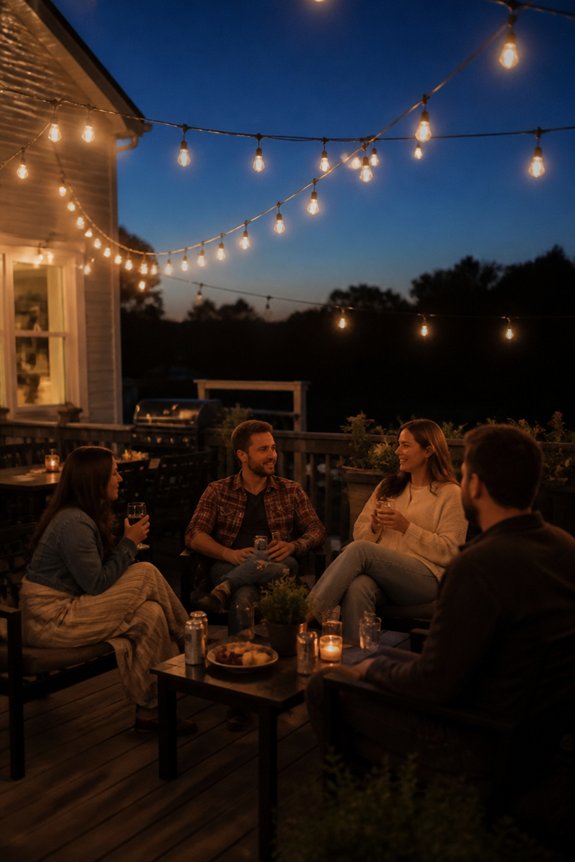
A simple strand of string lights can transform an ordinary patio into a welcoming gathering space with minimal effort. Homeowners can drape them along fence lines, wrap them around porch railings, or hang them overhead between posts, trees, or a pergola.
Warm white bulbs create a soft, inviting glow, while multicolored options suit casual, festive occasions. Globe-style bulbs offer a slightly more polished look, often used for outdoor dining areas or seating arrangements. Solar-powered versions eliminate the need for nearby outlets, making placement more flexible across larger yards. LED strands, meanwhile, use less energy and last longer than traditional incandescent bulbs. Many strings include dimmer settings or timers, allowing adjustments based on the time of day or size of a gathering.
This lighting style works well for both small patios and larger backyard spaces.
Fairy Lights Woven Through Pergolas and Trellises
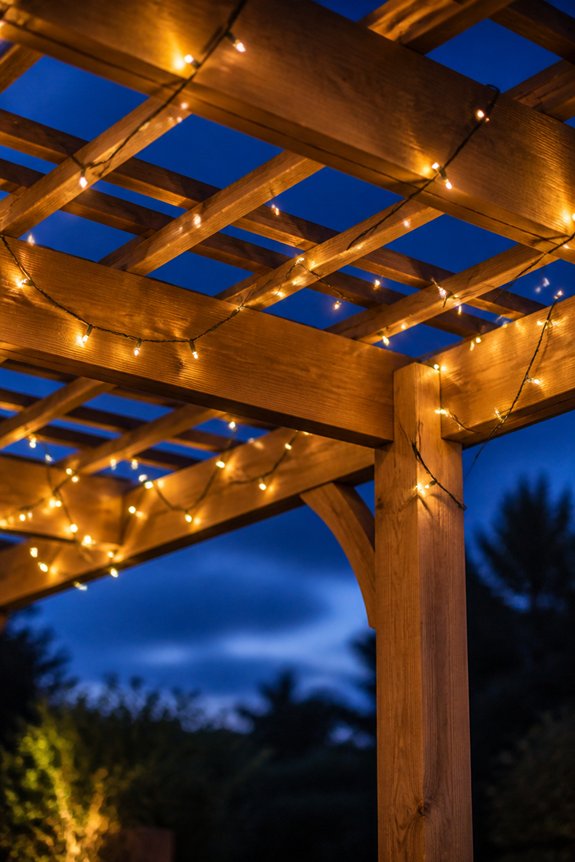
Where string lights suit open patio areas, fairy lights bring a finer, more delicate texture to structures like pergolas and trellises. Their thin wires and small bulbs allow them to be wrapped around wooden beams, lattice panels, and climbing vines without overwhelming the structure’s natural shape.
Weaving fairy lights through crossbeams creates a layered, dappled glow overhead, while wrapping them around vertical posts adds vertical interest. Battery-operated strands work well for trellises without nearby outlets, while plug-in versions suit permanent pergola installations. Warm white bulbs highlight wood grain and greenery, while multicolor options suit more casual settings.
For best results, lights should be spaced evenly, secured with clips or ties, and layered with existing plants such as jasmine or wisteria for added texture.
Lanterns That Add Rustic Charm to Any Corner
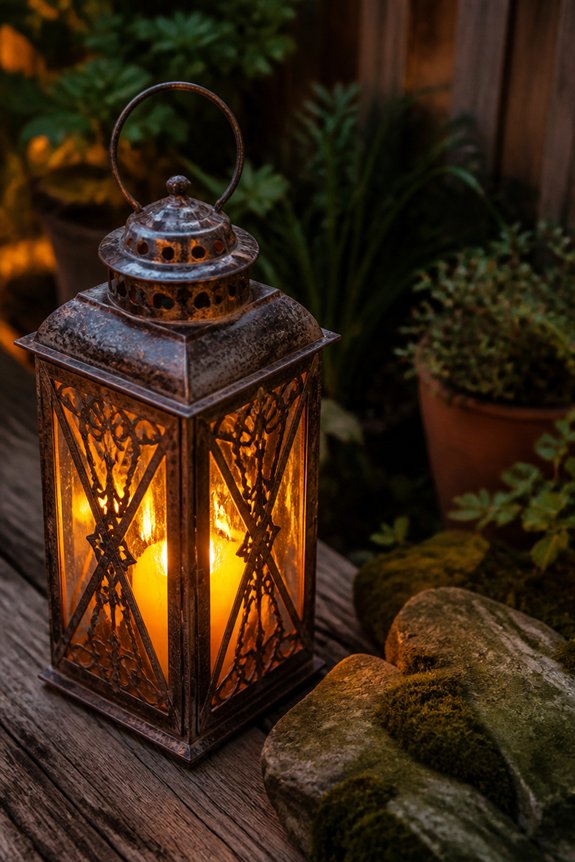
Lanterns provide a sturdier, more grounded source of light for quiet corners of the backyard. Metal or wooden lanterns placed on patios, steps, or garden beds create pools of warm light without requiring wiring.
Battery-operated candles inside glass lanterns offer a safe alternative to open flames, while solar-powered versions recharge during the day and turn on automatically at dusk. Hanging lanterns from shepherd’s hooks or low tree branches adds height variation. Grouping several lanterns of different sizes along a pathway creates a layered effect.
Rustic finishes, such as distressed metal or aged wood, suit farmhouse-style yards. Galvanized steel or wrought iron options pair well with more traditional garden designs.
Tiki Torches for a Tropical Backyard Vibe
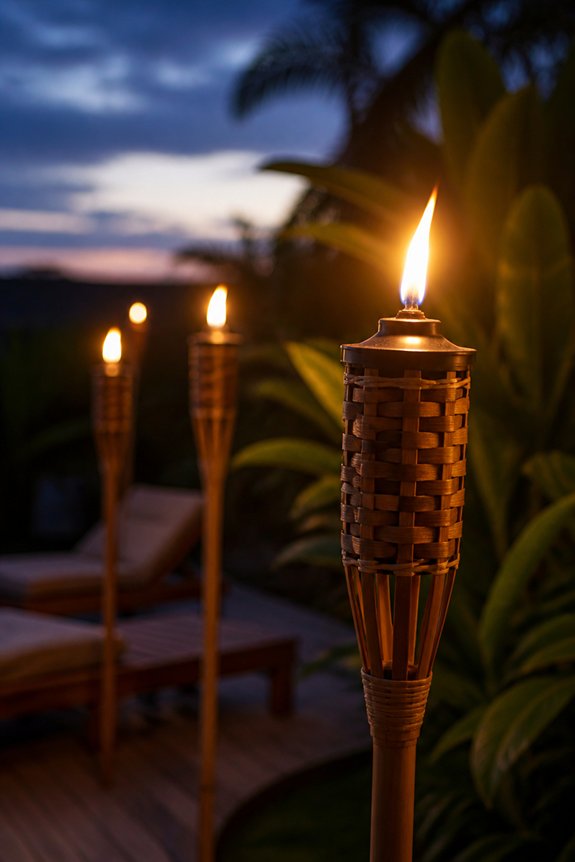
Several tiki torches placed around a patio or lawn can instantly bring a tropical, island-inspired feel to a backyard. These torches typically use citronella oil or fuel canisters, which helps repel insects while providing ambient light. Homeowners often position them along walkways, near seating areas, or around a pool to create a defined perimeter of light.
Bamboo, metal, or rattan-style torches are common choices, offering different textures that complement other outdoor decor. Some designs include adjustable flame heights, allowing for control over brightness and fuel consumption. For added safety, torches should be placed away from flammable materials, such as dry grass or wooden furniture.
Pairing tiki torches with tropical plants, like palms or hibiscus, can enhance the overall theme, creating a cohesive outdoor atmosphere.
Fire Pits That Double as a Light Source
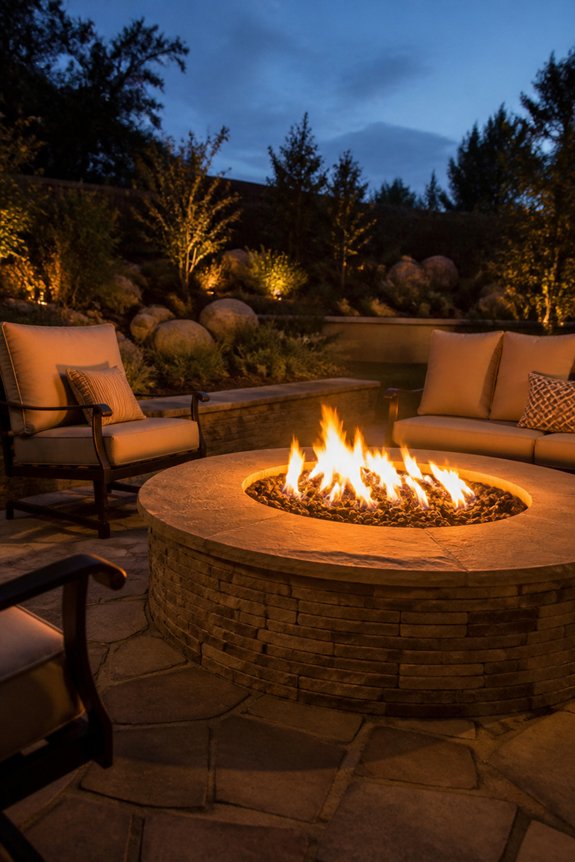
A single fire pit can serve as both a gathering point and a functional light source, casting a warm glow across a patio or backyard lawn. Wood-burning models produce taller flames and brighter light, making them useful for larger spaces where more illumination is needed.
Gas-powered fire pits offer steady, controllable flames, often paired with glass beads or lava rocks that reflect additional light. Placement matters, as positioning the pit near seating areas maximizes both warmth and visibility.
Some homeowners add a ring of stones or bricks around the base to direct light outward while containing heat safely. Portable models allow flexibility, letting the light source move to different areas of the yard depending on the occasion or the number of guests present.
Solar Path Lights That Guide Guests After Dark
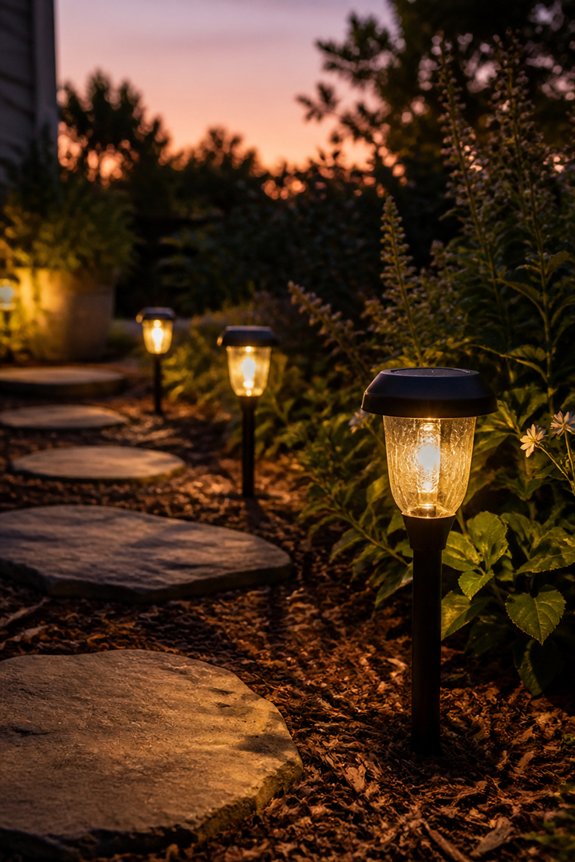
Pathways lined with solar lights help guests navigate a backyard safely once the sun goes down, marking the edges of walkways, steps, or garden borders. These fixtures charge during daylight hours through small photovoltaic panels, then switch on automatically at dusk using built-in light sensors.
Homeowners can choose from stake-mounted lights for soft grass or garden beds, or flush-mounted versions for patios and stone paths. Spacing matters, since lights placed too far apart leave dark gaps, while those set too close can look cluttered.
Most models run on rechargeable batteries that last several hours, though performance drops in winter or cloudy climates. Because they require no wiring, solar path lights remain a low-maintenance option for defining outdoor routes after dark.
Step Lights That Prevent Nighttime Stumbles
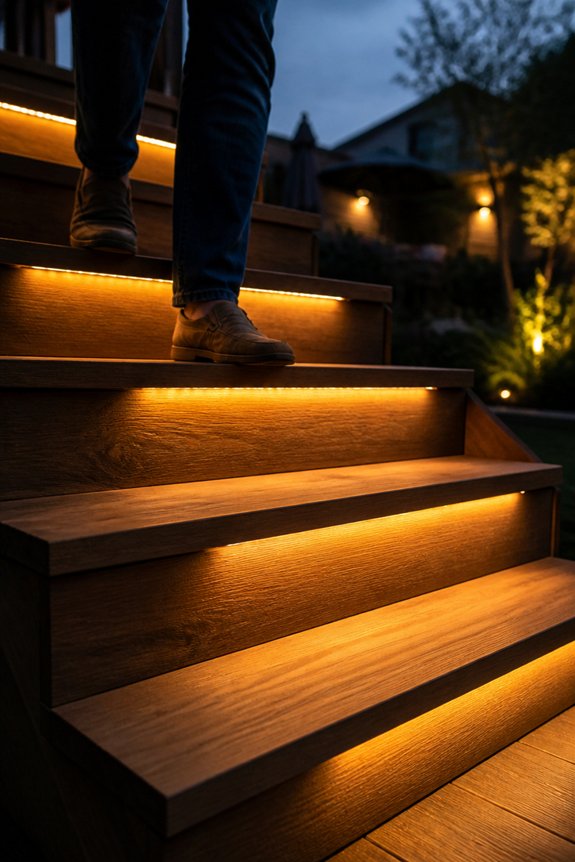
Uneven steps pose a common tripping hazard once darkness falls, making dedicated step lighting a practical safety measure for any backyard. Small fixtures mounted directly onto risers, treads, or adjacent walls illuminate the edges of each step, helping guests judge depth and distance accurately.
Low-voltage LED units remain popular, offering long bulb life and minimal energy use, while some homeowners choose solar-powered versions to avoid running additional wiring. Recessed lights create a clean, built-in appearance, whereas surface-mounted fixtures allow easier installation on existing structures. Placement matters, since lights spaced too far apart can leave dark gaps between steps. Warm white bulbs, typically between 2700 and 3000 Kelvin, provide enough visibility without creating harsh glare that could temporarily blind someone walking down.
Motion-Sensor Lights for Safety and Convenience
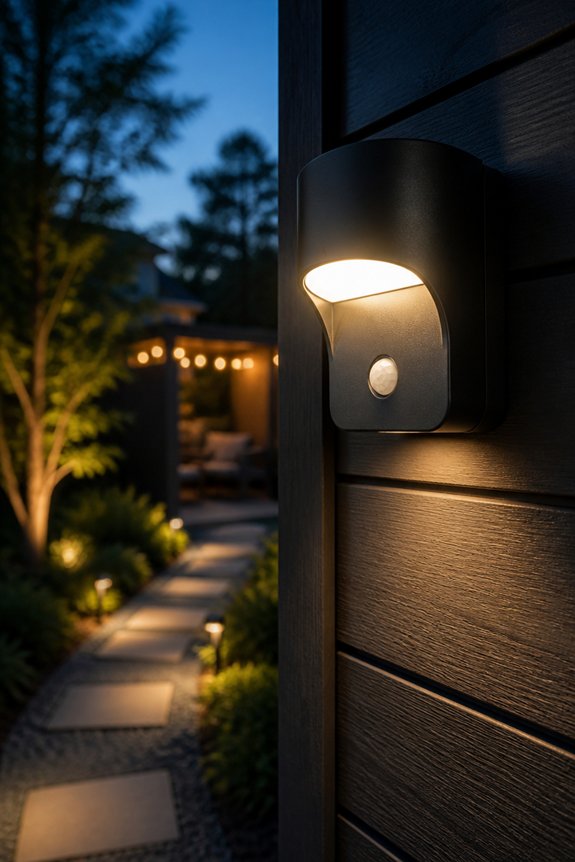
Darkness often hides intruders and obstacles alike, which is why motion-sensor lights serve a dual purpose in backyard security and convenience. These fixtures detect movement within a set range, activating instantly to illuminate patios, driveways, and side yards. Homeowners often install them near entry points, garages, and dark corners where visibility is limited, deterring potential intruders while reducing energy use compared to lights left on continuously.
Common options include floodlights mounted under eaves or on exterior walls, solar-powered units placed along fences or garden paths, and adjustable sensors that control detection distance and sensitivity.
Placement matters, as sensors positioned too high or too low may miss movement entirely. Combining motion-sensor lights with timers or smart controls adds further flexibility for nightly use.
Deck Post Lights That Define Your Space
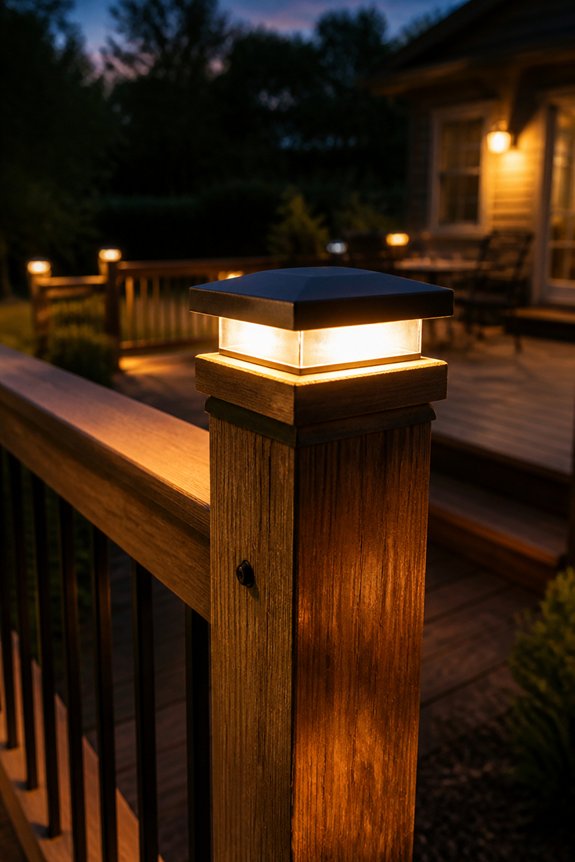
Because deck posts already provide a natural mounting point, they offer an easy way to add both structure and light to a backyard layout. Post cap lights, mounted directly on top of each post, create a clean, uniform look while marking the deck’s boundaries clearly after dark.
Solar-powered versions require no wiring, making installation simple, while hardwired options provide steadier, brighter output for larger decks. Square or round caps can match the post style, keeping the design consistent throughout the space.
These lights work well for defining stairs, railings, and perimeter edges, helping people move safely without relying on overhead lighting. Placed evenly across each post, they create a balanced glow that outlines the deck without overwhelming the surrounding yard.
Tree Uplights That Create a Magical Glow
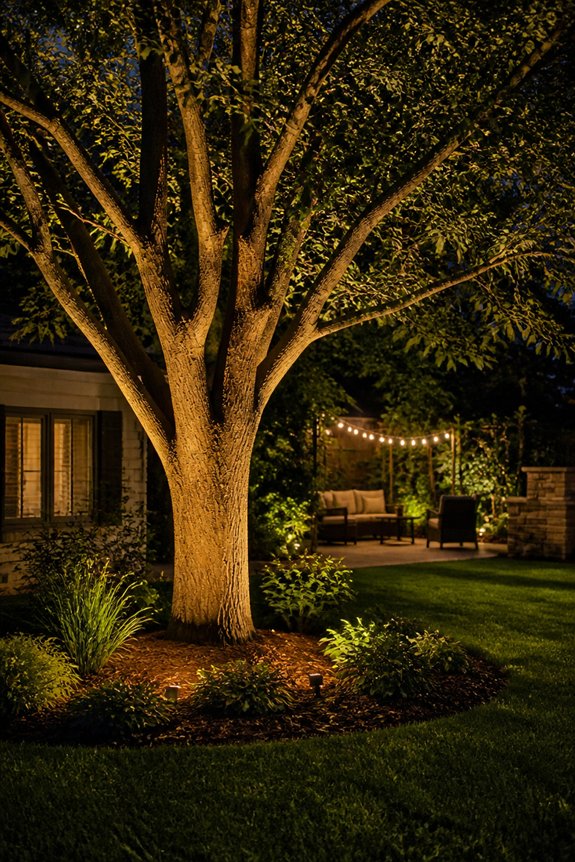
A few well-placed uplights can transform ordinary trees into striking focal points once the sun goes down. Positioning small spotlights at the base of a tree, angled upward, highlights the trunk, branches, and canopy, creating dramatic shadows across the yard. Warm white LED bulbs, ranging from 2700K to 3000K, produce a natural glow that complements bark texture and leaf color without appearing harsh.
Uplights work best on trees with interesting shapes, such as oaks, maples, or crepe myrtles, where branching patterns cast visible shadows on nearby surfaces. Placing fixtures at varying distances from the trunk adds depth, while staggering brightness levels prevents a flat appearance.
Solar-powered options reduce wiring needs, though hardwired systems offer more consistent output for larger trees.
Spotlights That Highlight Your Favorite Garden Features
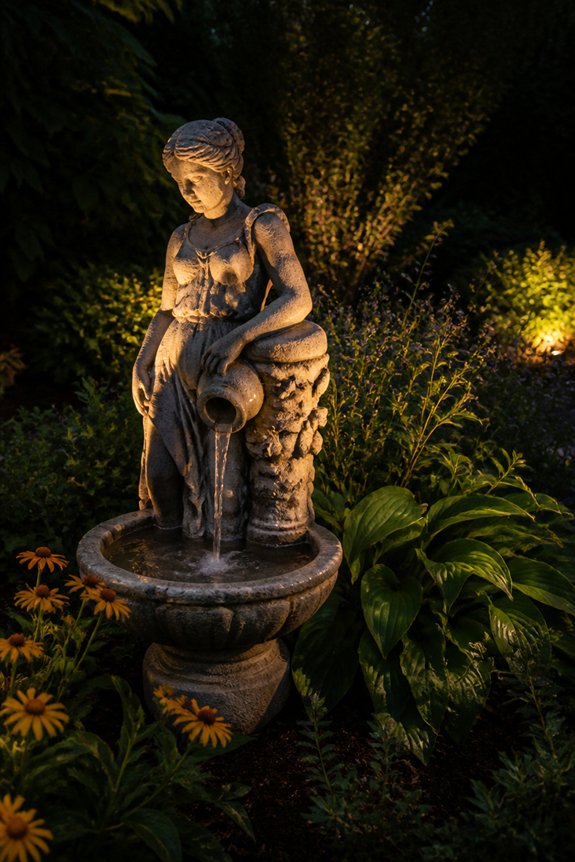
Beyond trees, spotlights direct attention to specific garden elements like statues, water features, or dense flower beds, giving them prominence after sunset. These fixtures use a narrow, focused beam to isolate one object, avoiding the broad wash of light that general fixtures produce. Homeowners often place them at ground level, aiming upward toward a sculpture or fountain to create depth and contrast against the surrounding darkness.
Adjustable heads allow the angle to be changed as plants grow or garden layouts shift over time.
Common placements include: Near stone or metal garden statues, around koi ponds or fountains, along raised flower beds with seasonal blooms , beside architectural elements like arbors or trellises.
Choosing warm-toned bulbs, around 2700 to 3000 Kelvin, keeps colors looking natural rather than harsh or clinical.
Underwater Lights That Make Ponds and Pools Shimmer
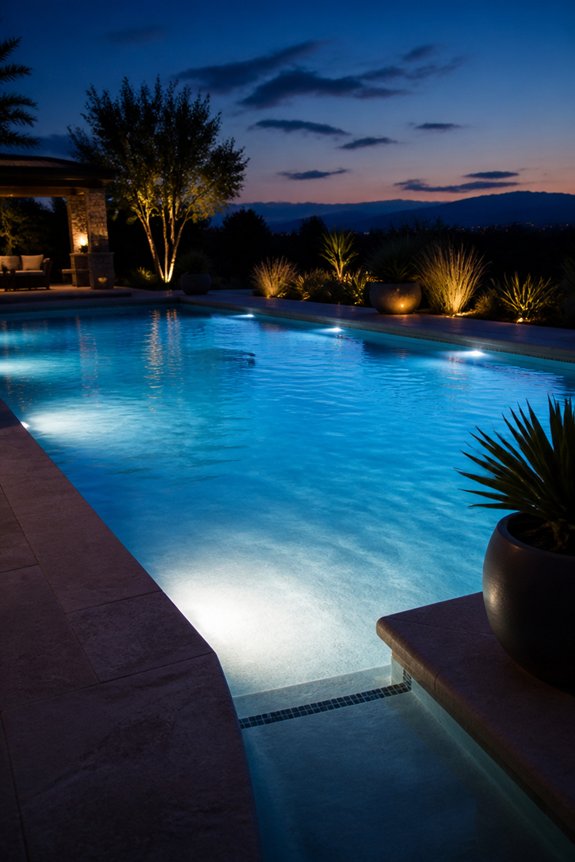
Many backyard ponds and pools benefit from submerged fixtures that add movement and glow to standing water after dark. LED pond lights, often mounted on weighted bases or attached to rocks, cast steady color through moving water, highlighting fish, plants, or fountain spray.
Pool lights, typically installed during construction or added through retrofit kits, illuminate the entire basin, creating a soft blue or white glow that outlines steps, ledges, and walls. Color-changing models allow homeowners to shift between white, blue, or multicolor settings for different occasions.
Solar-powered floating lights offer a simpler option for ponds, drifting across the surface without wiring. Placement near waterfalls, jets, or bubblers increases the shimmering effect, since moving water scatters light more than still water does.
Wall Sconces That Elevate Outdoor Walls
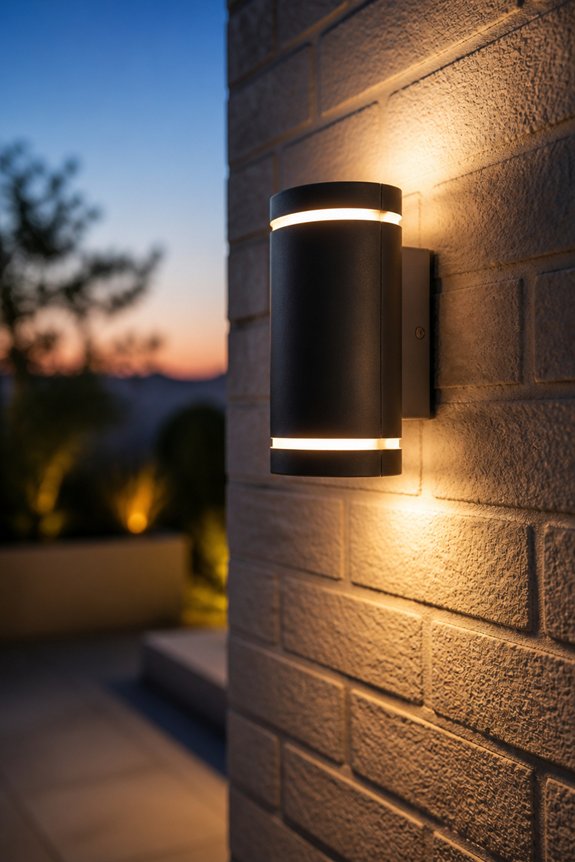
Since flat vertical surfaces often go unused after sunset, wall sconces give backyard walls, fences, and garage exteriors a functional layer of light. Mounted at even intervals, they create a rhythm of light and shadow along pathways or seating areas, guiding movement without requiring overhead fixtures.
Up-down sconces, which cast beams both above and below the fixture, work well on brick or stone, highlighting texture while lighting the ground nearby. Lantern-style sconces suit rustic settings, while flush-mounted cylinders fit modern facades.
Motion-sensor models add security benefits near entry points, garages, or storage sheds. Dimmable options allow adjustment between bright task lighting and softer ambiance. Positioned at consistent heights, sconces also help define a yard’s layout after dark.
Hanging Pendant Lights for a Cozy Outdoor Dining Area
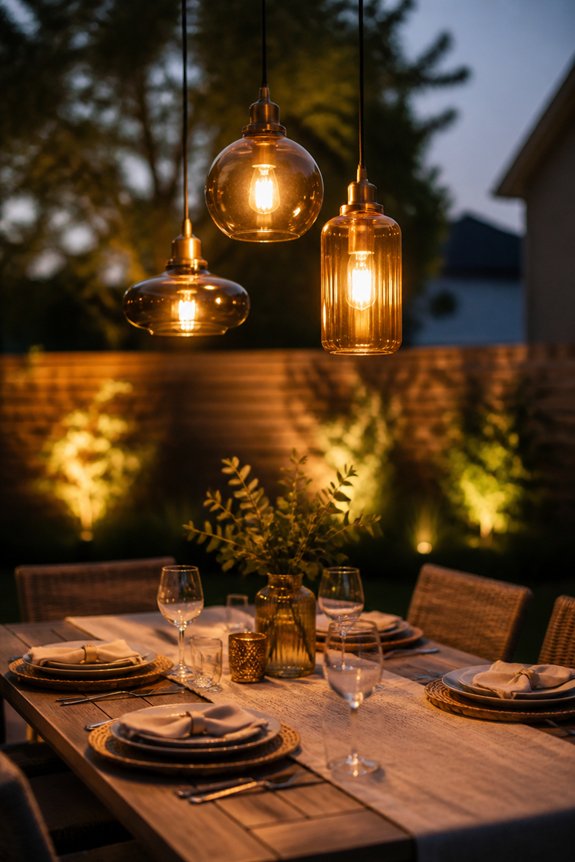
When an outdoor dining table lacks overhead light, pendant fixtures suspended from a pergola beam, tree branch, or dedicated post can fill that gap directly above the eating surface. Choosing fixtures rated for outdoor use protects them from rain, humidity, and temperature swings that indoor pendants cannot handle.
Metal cage pendants, glass globe lights, or lantern-style fixtures each bring a different look, and hanging height matters, since fixtures placed too low can block sightlines across the table. Wiring options vary, with hardwired pendants offering permanence and plug-in versions allowing flexibility for renters or seasonal setups. Grouping two or three pendants in a row above a long table creates even lighting, while a single fixture works better over smaller, round tables.
Smart Systems That Control Lighting From Your Phone
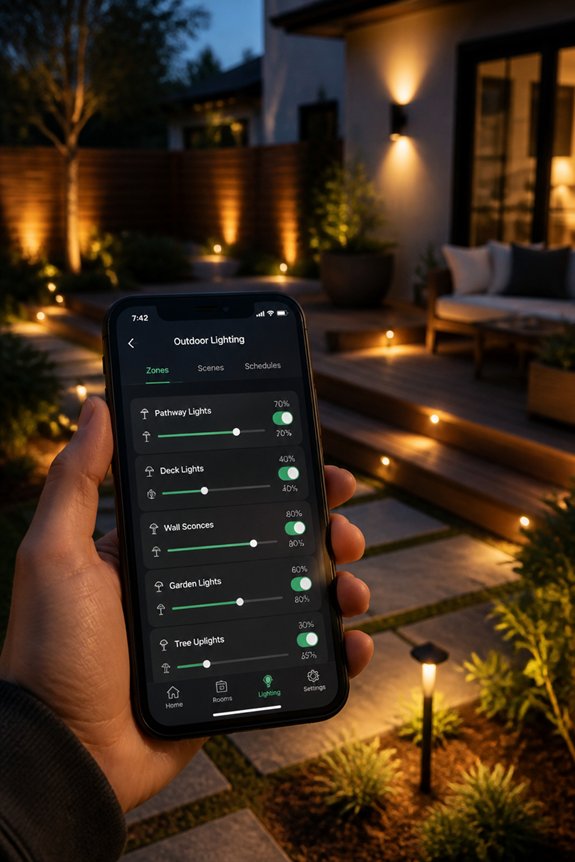
Pendant fixtures and other hardwired features can also connect to smart systems, giving homeowners control over brightness, timing, and color from a mobile app rather than a manual switch. Brands such as Philips Hue, Lutron Caséta, and Ring Smart Lighting allow users to schedule when lights turn on or off, adjust brightness for different activities, and set colors for holidays or gatherings.
Many systems integrate with voice assistants, including Alexa or Google Home, letting users control lighting through spoken commands instead of a screen. Some setups include motion sensors, triggering lights automatically when someone enters the yard. Smart systems can also group multiple fixtures, such as string lights, path lights, and pendants, into one control zone for easier management across a backyard.
Frequently Asked Questions
How Much Does It Cost to Install Outdoor Backyard Lighting?
Costs typically range from $1,500 to $5,000 for a standard backyard, depending on fixture quality, lighting design complexity, and square footage covered. Professional installation, wiring, and transformers add expense, while DIY solar or low-voltage kits considerably reduce overall project costs.
Are Outdoor Lights Safe to Use Around Children and Pets?
Properly installed, low-voltage outdoor lighting proves perfectly protective for playful pets and curious children. Fixtures should feature shielded bulbs, secure wiring, and weatherproof casings, ensuring households enjoy illuminated evenings without exposing loved ones to unnecessary electrical hazards or overheating risks.
How Do I Protect Outdoor Lighting From Rain and Weather Damage?
Weatherproofing requires IP-rated fixtures (IP65 or higher), sealed wiring connections, and proper drainage. Homeowners should install covers over exposed bulbs, use waterproof junction boxes, and position fixtures away from direct water pooling to prevent corrosion and electrical damage.
What’s the Best Way to Hide Outdoor Lighting Wires and Cords?
Burying cords seems tedious, but it’s worth the effort. Wires should be run through protective conduit, buried several inches underground, or tucked along fence lines and under mulch. Cord covers work well for pathways.
How Much Electricity Do Outdoor Lights Typically Consume Monthly?
Monthly costs typically range from $5 to $20, depending on fixture count, wattage, and usage hours. LED options consume considerably less energy than traditional incandescent bulbs, often reducing consumption by 75%, making them a cost-effective, longer-lasting choice for homeowners.
Conclusion
Outdoor lighting choices, from string lights to smart systems, can transform a backyard while also improving energy efficiency. According to industry estimates, LED fixtures use up to 80% less energy than traditional incandescent bulbs, making them a practical option for features like fairy lights, tiki torches, and wall sconces. Homeowners can combine style and function by selecting energy-efficient options that support both ambiance and long-term savings, creating a backyard that glows without excessive costs.