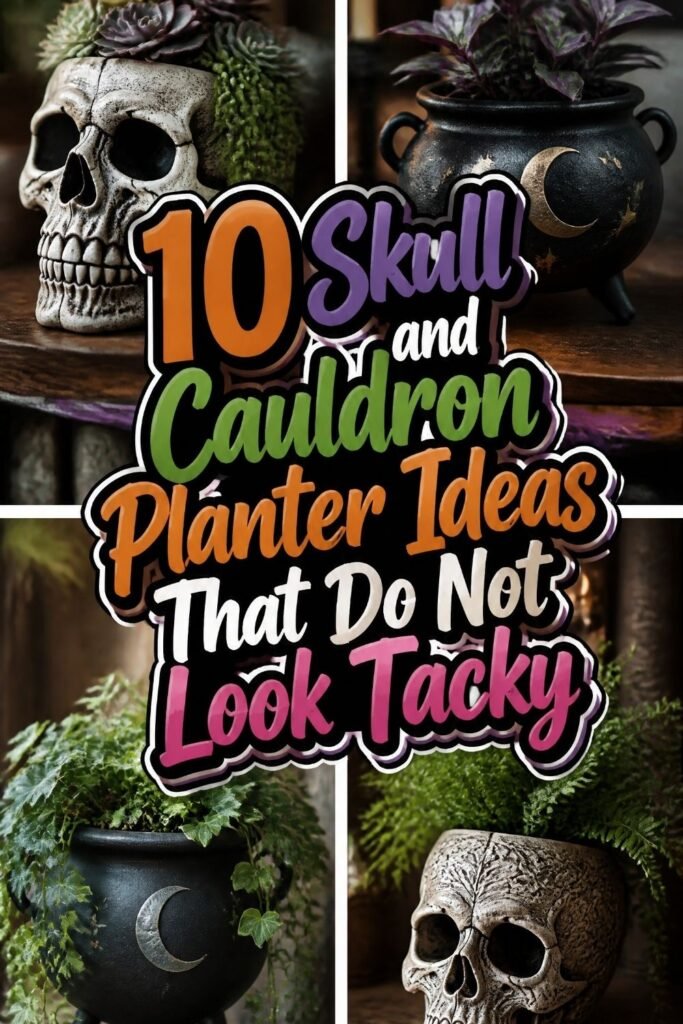
Skull and cauldron planters often get a bad reputation. Poor execution tends to leave them looking cheap or trapped in a single holiday aesthetic. Yet with the right approach, these dramatic vessels can become genuinely striking design elements.
The transformation starts with material quality. Ceramic, concrete, or aged metal finishes feel substantial and intentional rather than plastic and disposable. Neutral palettes—think matte bone, weathered bronze, or soft charcoal—ground the macabre shape in sophistication. A few well-placed metallic details catch light without screaming for attention.
Plant selection matters just as much as the container itself. Trailing ivy, sculptural succulents, or delicate ferns soften the gothic edges. The contrast between organic greenery and stark form creates visual tension that reads artistic rather than novelty.
Placement completes the evolution. Nestled among books on a shelf, paired with natural wood textures, or set against clean white walls, these planters settle into everyday spaces.
Suddenly the skull or cauldron becomes a conversation piece that works in March as comfortably as October.
Minimalist Monochrome: Skulls and Clean-Lined Greens
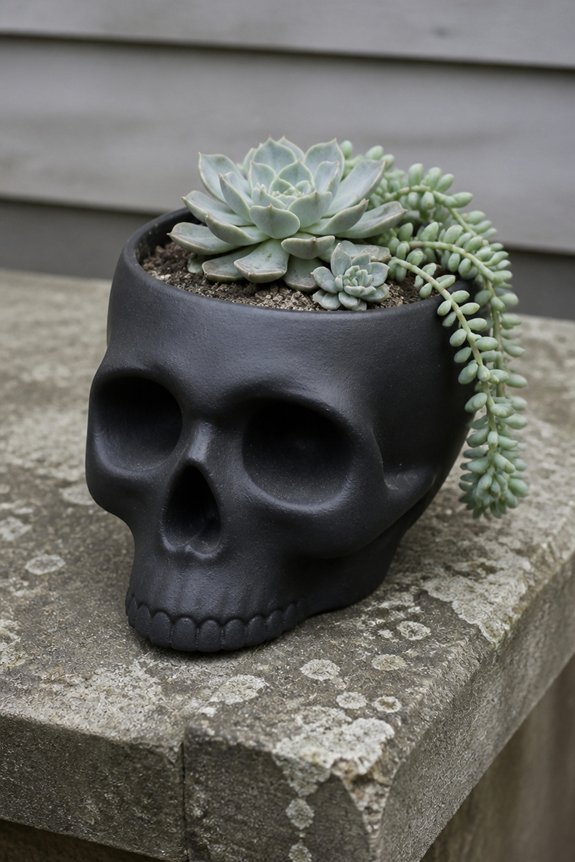
The monochrome skull planter pairs dark or white ceramic skulls with simple, low-growing green plants, creating a balanced visual composition. Succulents, pothos, or string of pearls work well in this arrangement.
The neutral color palette prevents visual chaos, allowing the skull form to function as sculptural décor rather than Halloween spectacle. This approach suits modern, minimalist interiors effectively.
Gothic Skull Gardens: Dark Metals and Trailing Ivy
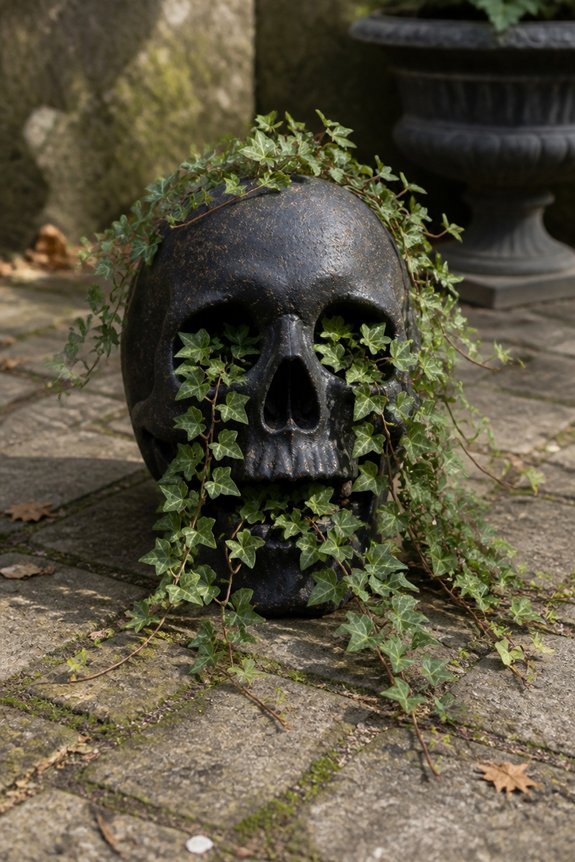
While minimalist designs emphasize restraint and simplicity, gothic skull gardens embrace darker aesthetics, ornate materials, and abundant foliage. Iron planters, blackened metal urns, and cast resin skull vessels serve as containers. Trailing ivy, creeping fig, and string of pearls cascade over edges, softening hard surfaces.
Pairing dark metals with lush green vegetation creates visual balance and established gothic atmosphere without appearing excessive or costume-like.
Witchy Elegance: Black Cauldrons and Succulents
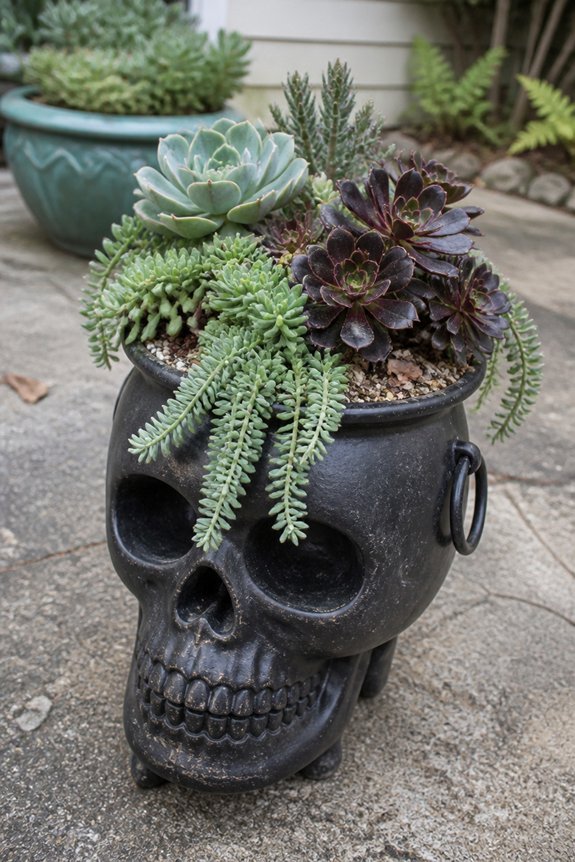
Black cauldrons filled with succulents offer a practical approach to witchy-themed planting, combining functional containers with low-maintenance vegetation. Echeveria, jade plants, and aloe varieties thrive in cauldrons due to their shallow root systems and drought tolerance. The dark metal finish complements pale green and silvery foliage effectively.
Drainage holes remain essential for preventing root rot.
Victorian Skull Vessels: Layering Rust, Cream, and Sage
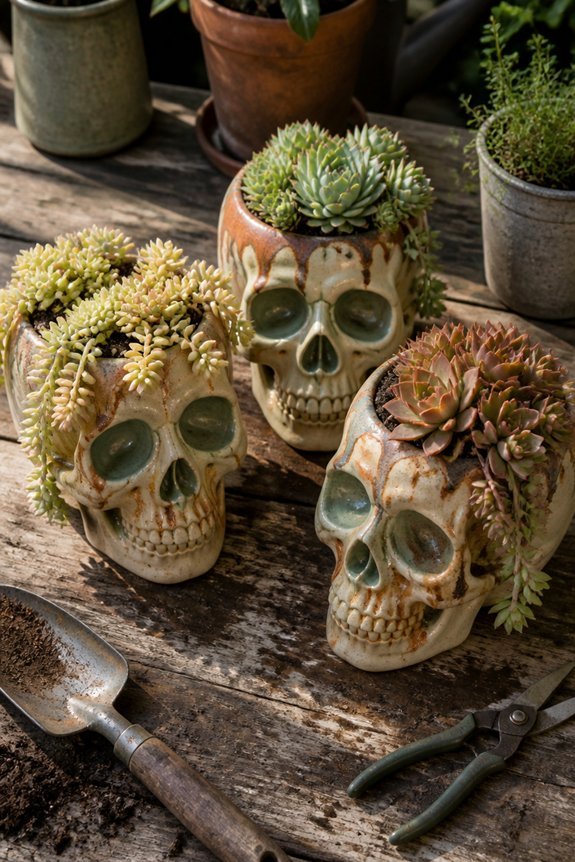
Victorian skull vessels offer a distinct aesthetic approach to themed planting, achieved through careful color layering in rust, cream, and sage tones. These neutral hues create visual sophistication when applied in horizontal bands or gradient patterns across ceramic skull planters.
Pairing these vessels with silver-leafed succulents or dusty miller plants enhances the refined appearance. This produces a cohesive, intentional design that avoids appearing costume-like or exaggerated.
Mixed Metals on Skull Planters: Copper, Bronze, Matte Black
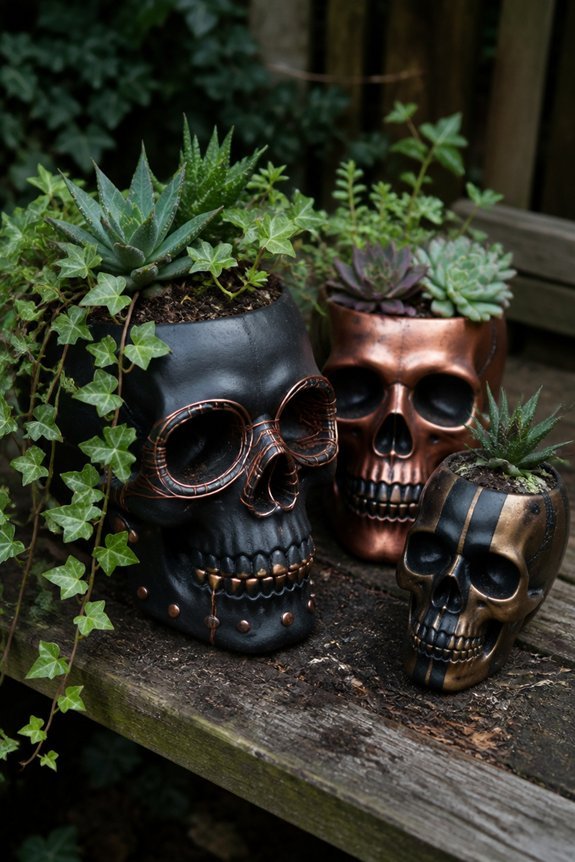
Metallic finishes applied to skull planters create visual contrast and contemporary appeal through the combination of copper, bronze, and matte black surfaces. Copper accents highlight cheekbones and eye sockets, while bronze provides warm undertones.
Matte black serves as a grounding base, preventing the piece from appearing overly shiny. This three-metal approach maintains sophistication and complements modern or industrial home décor without excess ornamentation.
Oversized Skulls as Porch and Patio Anchors
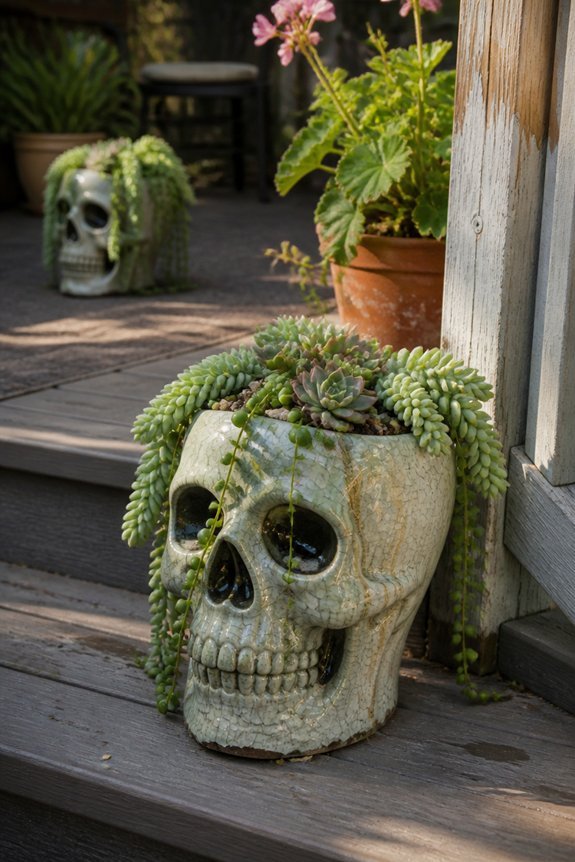
When selecting outdoor focal points, oversized skull planters serve as commanding design elements that define entryways and seating areas. Large specimens, measuring 18 to 24 inches tall, establish visual weight without appearing frivolous. Positioned near garage doors or patio corners, they create intentional landscape anchors.
Concrete or resin materials guarantee durability through weather exposure. Monochromatic finishes in charcoal or cream maintain sophistication appropriate for residential settings.
Clustered Vessels: Building Impact Through Repetition
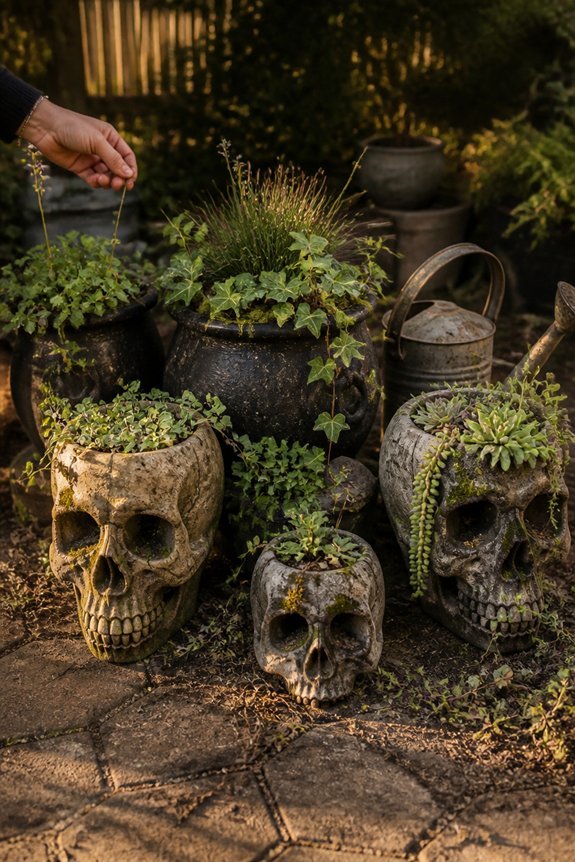
Multiple skull and cauldron planters grouped together create stronger visual impact than single specimens placed in isolation. Arranging three to five vessels in varying heights produces balanced, intentional displays. Clustering different skull styles, sizes, and finishes, matte black, metallic, ceramic, adds visual interest without appearing disorganized.
Grouping planters on front steps, along pathways, or across mantels establishes cohesive seasonal arrangements that elevate overall outdoor decor.
Seasonal Plants for Skull Cauldrons Year-Round
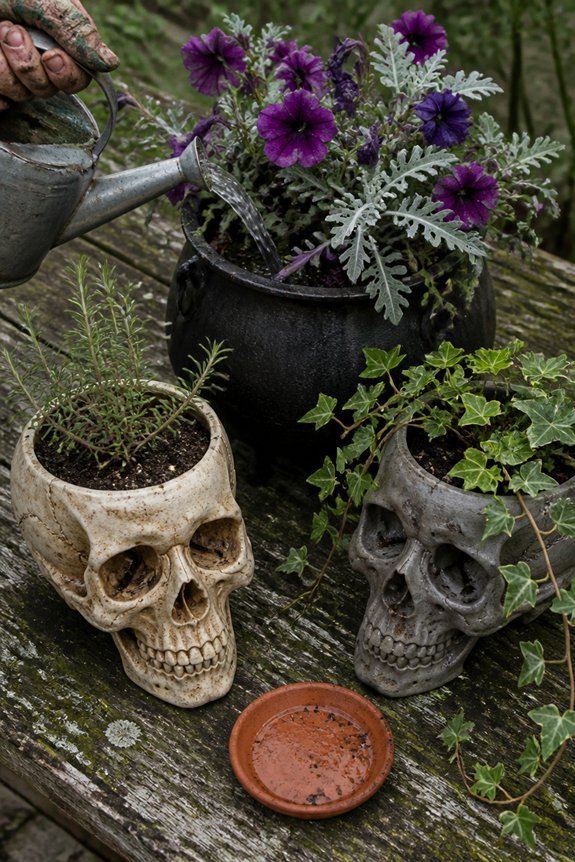
Once clustered vessels establish visual presence, selecting appropriate plants guarantees the arrangement maintains appeal throughout changing seasons. Spring calls for pansies and snapdragons, summer demands impatiens or begonias, fall suits ornamental grasses and chrysanthemums, while winter benefits from evergreen foliage, decorative cabbage, or berry-producing plants.
Rotating selections prevents visual monotony and sustains the display’s refined aesthetic year-round.
Shelf and Mantel Displays: Skull Planters Indoors
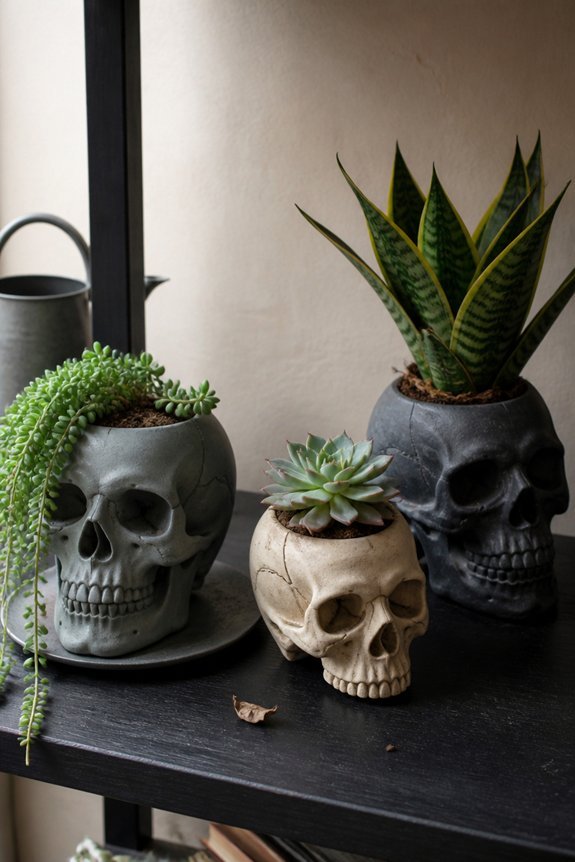
Transforming skull planters from outdoor gardens to interior spaces requires attention to lighting, humidity, and structural support. Bookshelf displays work well with trailing succulents, while mantelpieces accommodate shallow-rooted plants like echeveria or jade varieties.
Guarantee adequate drainage holes and place protective coasters underneath ceramic skulls. Consider room temperature stability and indirect sunlight positioning for ideal plant health indoors.
Ceramic and Stone Skulls: Premium Materials for Elevated Style
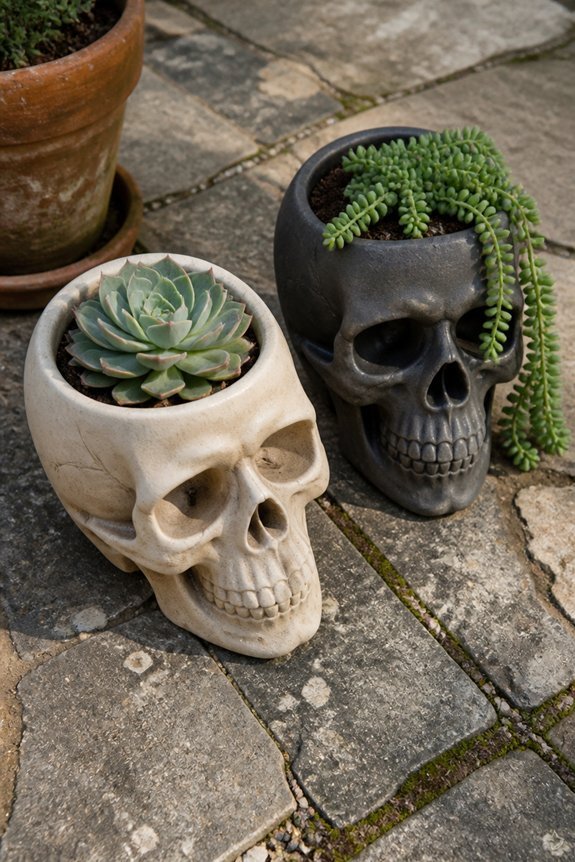
Ceramic and stone materials offer distinct advantages over plastic alternatives, providing durability, weight, and aesthetic refinement for interior and exterior displays. Ceramic skulls resist weathering and fading, making them suitable for patios and gardens.
Stone options, including limestone and granite, deliver permanence and sophistication. Both materials complement succulents and trailing plants effectively, creating polished arrangements that enhance décor without appearing frivolous or costume-like.
Frequently Asked Questions
How Do I Prevent Water Drainage Issues When Using Skull Planters Indoors?
One should place a waterproof saucer or tray beneath the skull planter to catch excess drainage. Alternatively, one can line the interior with plastic before adding soil, ensuring water doesn’t seep through porous materials onto surfaces below.
What’s the Best Way to Clean and Maintain Skull Planters Long-Term?
Like antique porcelain requiring gentle care, skull planters need regular dusting with soft cloths and mild soap solutions. One should avoid harsh chemicals, inspect drainage holes monthly, and treat mineral deposits with diluted vinegar to preserve their appearance.
Can Skull Planters Work in Modern or Contemporary Home Decor Styles?
Skull planters can complement modern and contemporary interiors when selected thoughtfully. Minimalist designs in neutral tones or monochromatic finishes integrate seamlessly into clean aesthetic spaces. Pairing them with architectural plants and curated displays elevates their sophistication and appeal.
Where Should I Source Affordable Skull Planters That Maintain Quality Standards?
Like hunting for buried treasure, one should explore online marketplaces such as Etsy and Amazon, specialty garden retailers, and local artisan shops. These sources offer affordable options while maintaining quality standards through customer reviews and seller ratings.
How Do I Anchor Large Skull Planters Safely on Windy Patios?
One secures large skull planters on windy patios by installing weighted bases or underground anchoring systems. Alternatively, they can be positioned against structural supports, filled with dense soil for stability, or fastened using industrial-grade brackets and concrete footings designed for outdoor conditions.
Conclusion
Skull and cauldron planters shift from seasonal décor to year-round design elements through intentional material choices, color palettes, and plant selection. Monochrome schemes, metallic accents, and premium ceramics create visual sophistication. Clustering multiple vessels amplifies impact on shelves and mantels. Rotating seasonal plants—echeveria, ivy, and neutral florals—maintains aesthetic relevance throughout the year, ensuring these macabre planters function as elegant interior features rather than temporary Halloween accessories.