There’s usually one patch of a sloped yard where the mower slips sideways, the mulch ends up on the driveway, and nobody ever sits. These sloped backyard ideas on a budget start with that patch and give it a job. Most of them use things that cost little or nothing: fieldstone from your own digging, wood chips from a tree crew, and ground cover plugs instead of sod.
The 17 ideas below include stone slab steps, creeping thyme in place of a lawn, a gravel fire pit nook, raised timber beds, a dry creek bed that steers rainwater, and a slide for the kids. There are also fixes for shady hills, sunny rocky banks, and the steep stretch you never want to mow again.
Each idea explains what to use, how to put it in, and why it holds up on a slope. You’ll also find clear notes on which jobs are safe to do yourself and which belong to a professional.
QUICK SLOPE CHECK
What is your hill like?
17 Ways to Make a Sloped Backyard Work for You
Every idea below works with the hill instead of trying to flatten it. The list opens with the essentials, steps, ground cover and a place to sit, then moves on to drainage, food beds, play, shade and the steepest ground. Each one names the materials and plants to use, and why they hold up on a slope without a big budget.
1. Flat Stone Slab Steps Set Right Into the Hill
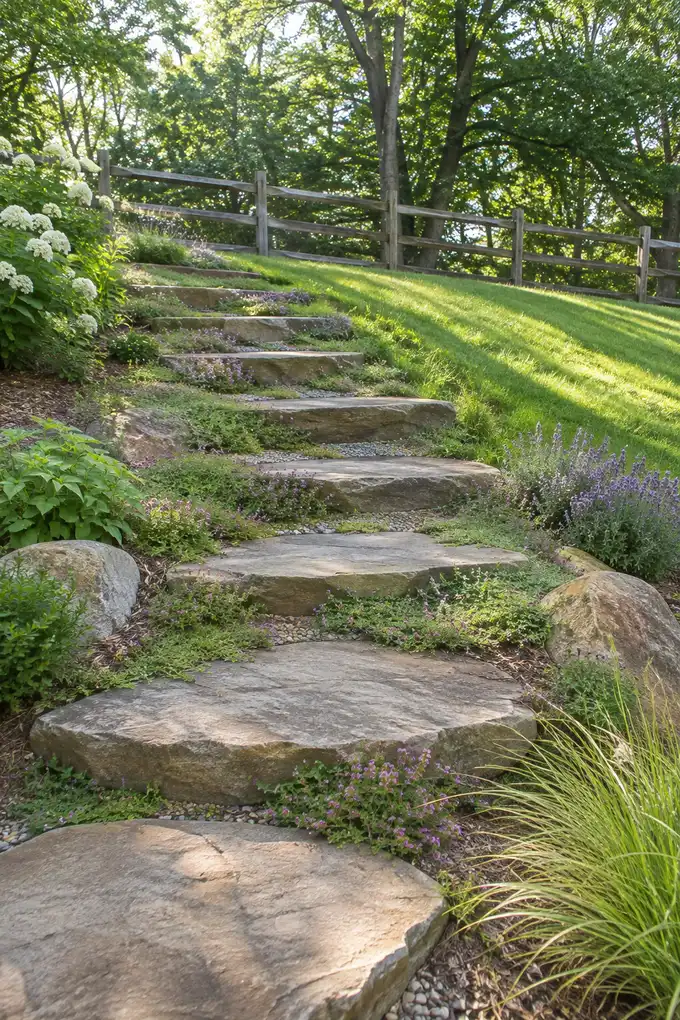
A set of flat stone slab steps turns a hill you scramble up into a walk you take on purpose. Lay each slab into a shallow notch cut in the slope, so it sits flat and firm, with its back edge tucked under the soil above. Fill the joints with gravel, and tuck creeping thyme between the stones so the steps look like they grew there.
The slabs give your feet a level landing on every step, and the thyme softens the hard edges. Most sloped backyard landscaping ideas start here, because once you can get up the hill, you start using it.
You will need: flat fieldstone or flagstone slabs, a spade, gravel, creeping thyme plugs.
On a long or very steep run, add a flat landing partway up, and hire a pro for anything that needs railings.
2. Creeping Thyme and Phlox Instead of a Lawn You Can’t Mow
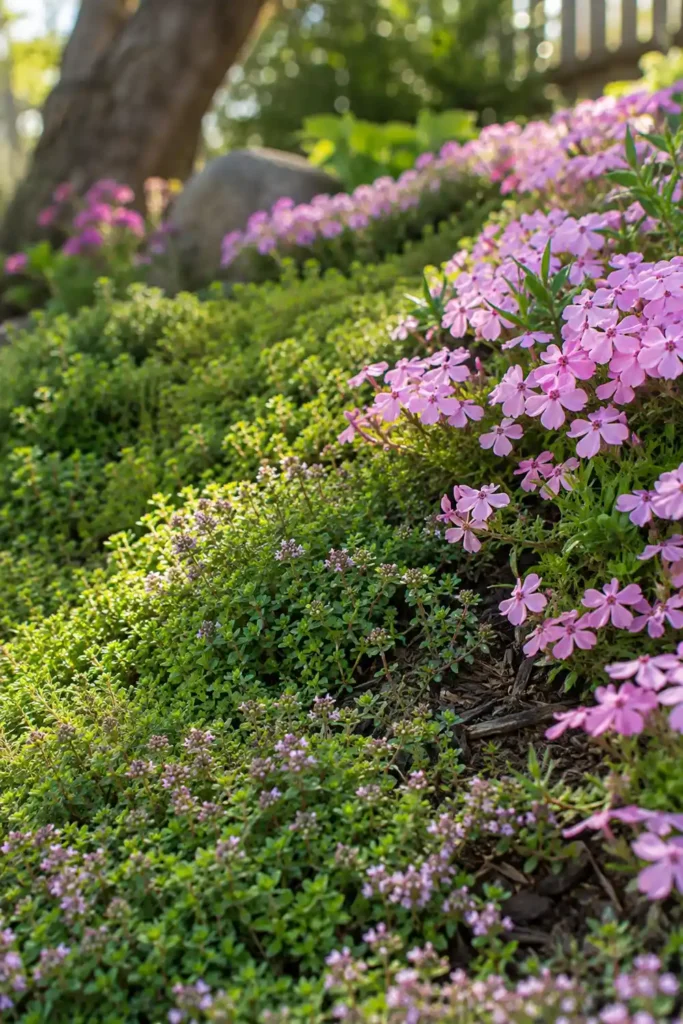
Mow a steep strip of grass once and you’ll know why so many people give up on it. Replace it with creeping thyme and creeping phlox, and the hill takes care of itself.
Both are low, mat-forming ground covers for slopes in sun. Creeping thyme stays green and soft, and the phlox covers the bank in pink, purple or white each spring. Plant them in a loose checkerboard so the two weave together, and their spreading stems knit the topsoil in place as they fill in.
Plugs cost far less than sod, and the patch only gets fuller each year. Mulch the bare soil between the plugs until they meet, so weeds don’t get there first.
3. Low Fieldstone Borders That Make Planting Pockets
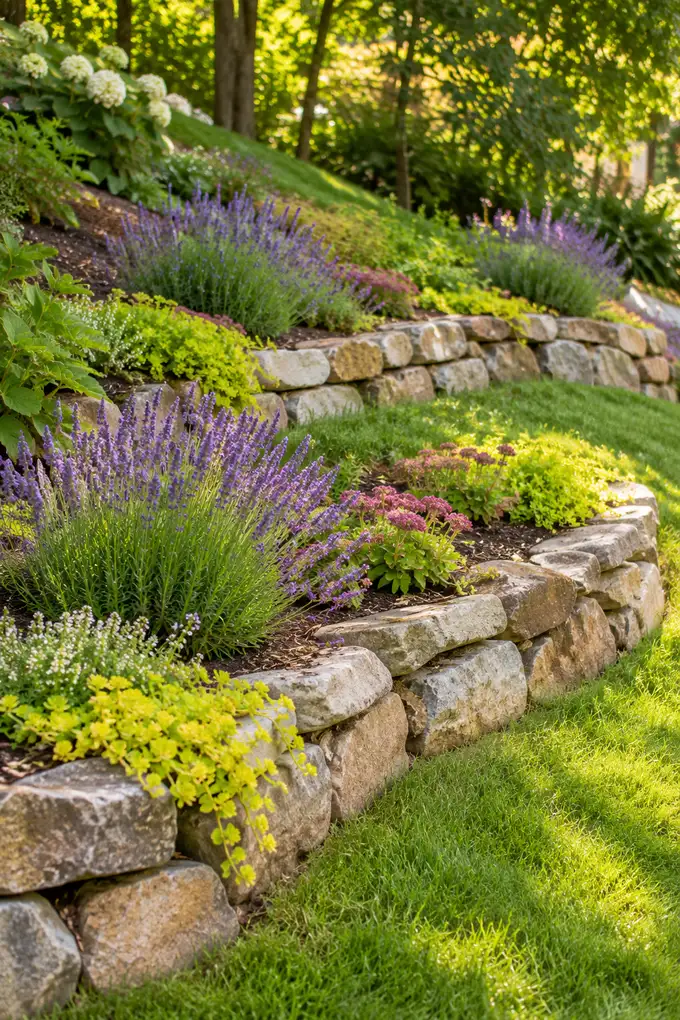
A low border of fieldstone, one or two stones high and laid across the hill, does more than it looks like it should. Each row slows rainwater and catches soil on its uphill side, which turns a bare bank into a series of small, flat planting pockets.
Fill the pockets with sedum, lavender and other tough perennials. The stones hold heat, and the plants spill over the edges to hide the joints. It’s one of the most useful DIY sloped backyard ideas, and the stone is often free from your own digging or a neighbor’s pile.
Styling note: Follow the contour of the hill with each row, not a straight line, so the borders look natural and water spreads out instead of rushing to one spot.
🪨 When a Stone Border Becomes a Pro Job
Anything taller than a low border, or anything holding back a real wall of soil, is a retaining wall. That is structural work for a professional, and local rules often apply. Before any digging, call 811 a few days ahead so buried lines can be marked for free.
4. A Gravel Fire Pit Nook With Log Seats
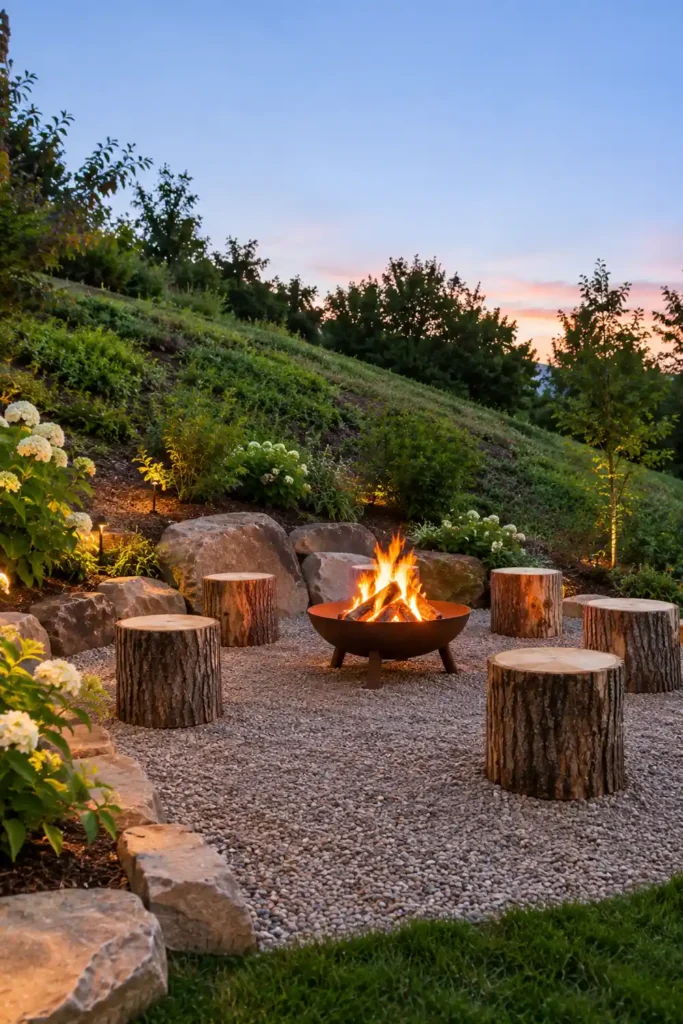
Most slopes have no flat spot to sit, so nobody sits outside at all. Make just one. Pick the flattest patch the hill already offers and level a small circle. Spread it with pea gravel, set a steel fire bowl in the center, and ring it with log rounds for seats.
The gravel drains fast, so the nook dries out quickly after rain, and it gives sparks nowhere to catch. The log seats cost nothing if you have a fallen tree, and they make the spot feel tucked into the woods instead of perched on a hill.
Keep the fire bowl well clear of overhanging branches and dry grass, and check your local burn rules. For more layouts, browse these backyard fire pit ideas.
5. A Dry Creek Bed That Drains Into a Rain Garden
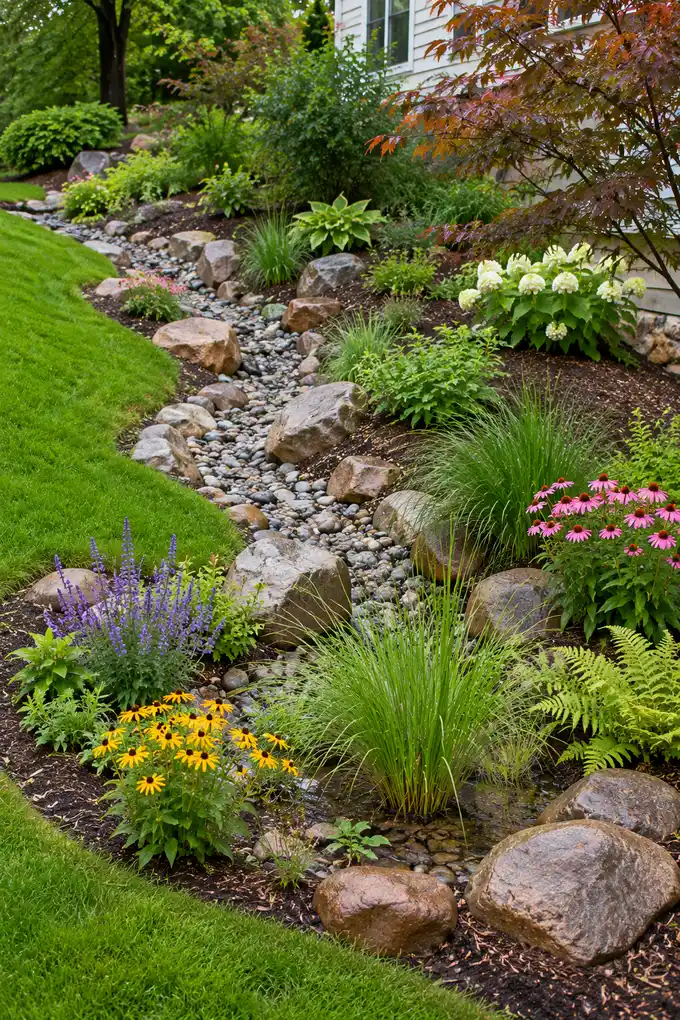
Watch the slope during a heavy rain. The path the water takes is the outline of your dry creek bed. Dig a shallow, winding channel along that line, then line it with river rock, setting larger boulders along the edges so the bank holds its shape.
At the bottom of the hill, the creek empties into a rain garden: a shallow basin planted with native plants that can handle both soggy and dry spells. The rock slows the water, and the plants soak it up instead of letting it pool near your foundation. Between storms, the creek reads as a deliberate garden feature.
Good erosion control on a slope often looks like decoration. If water is already reaching the house, have a pro look at the grading first.
6. Boulders, Sedum, and Hens and Chicks for a Rock Garden
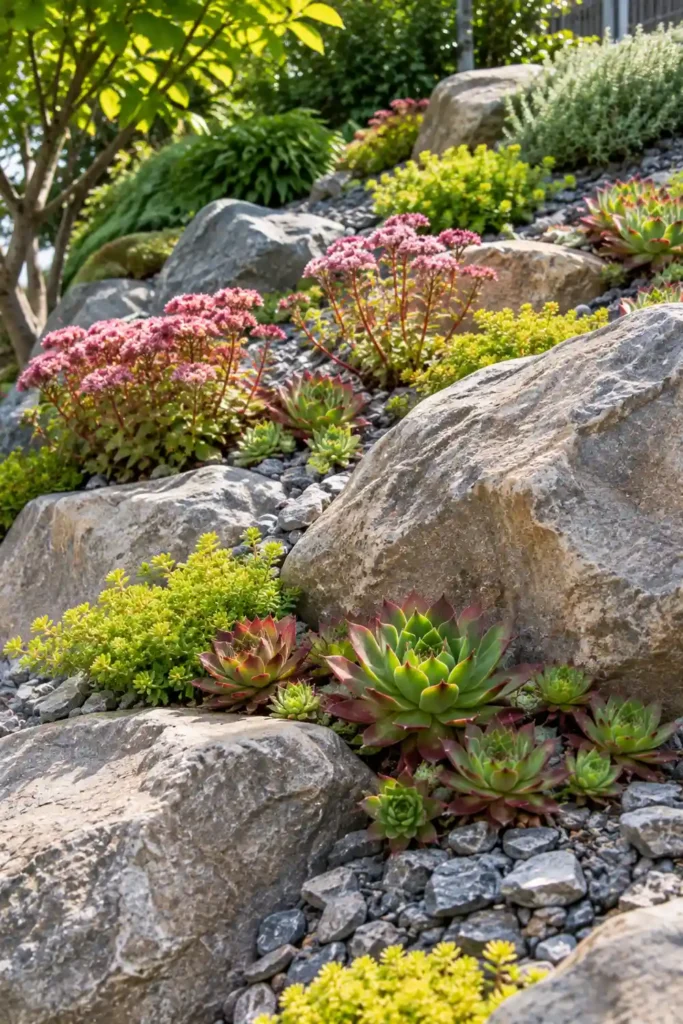
A hot, dry slope in full sun is where a rock garden belongs. Set a few large boulders into the hillside, burying a good part of each one so it looks like it has always been there and won’t roll. Then plant sedum and hens and chicks in the gaps between them.
Cover the soil with angular gravel rather than smooth river rock. Its rough edges lock together on a slope, while round stones slide downhill.
Planting note: Both sedum and hens and chicks like dry, lean soil and very little water once they settle in. That’s why they thrive in the hottest, fastest-draining spots on a bank, where most plants fail.
7. Raised Timber Beds That Step Down the Hill
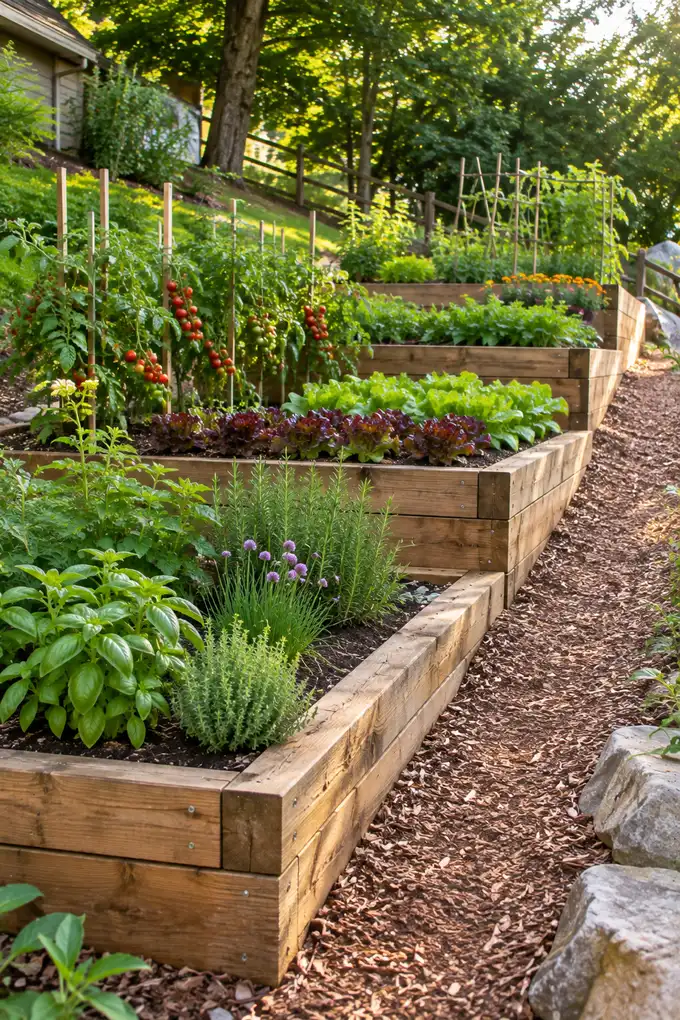
A slope can grow food, as long as each bed sits level. Build low raised beds from landscape timbers and set them one below the next, like wide stairs down the hill. Fill them with garden soil, herbs, lettuce and tomatoes.
Each bed holds its own soil and water, so nothing washes downhill when you water the top bed. The beds also give you a flat surface to kneel by. It’s a terraced backyard on a budget that pays you back in salad.
Get the look: landscape timbers, garden soil, herbs and vegetable starts, a gravel or mulch path between beds.
Keep the beds low and short. Anything tall enough to hold back a real wall of soil is a job for a pro. More planting ideas are in these backyard garden ideas.
8. A Hillside Slide Built Into the Lawn

The hill is already the best part of the yard for kids. An in-ground slide set into a gentle grassy slope proves it. Lay the slide in a shallow trench that follows the grade and anchor it according to the kit’s instructions, so it hugs the ground and never sits high in the air.
The grass on both sides hides the edges, which makes the slide look built in rather than bolted on. At the bottom, a wide landing of soft wood mulch takes the bumps.
Safety note: Choose a gentle stretch of hill, and clear every rock and root from the landing zone. Kids still need an adult nearby, especially when the slide is wet.
9. A Switchback Wood Chip Path Across the Slope
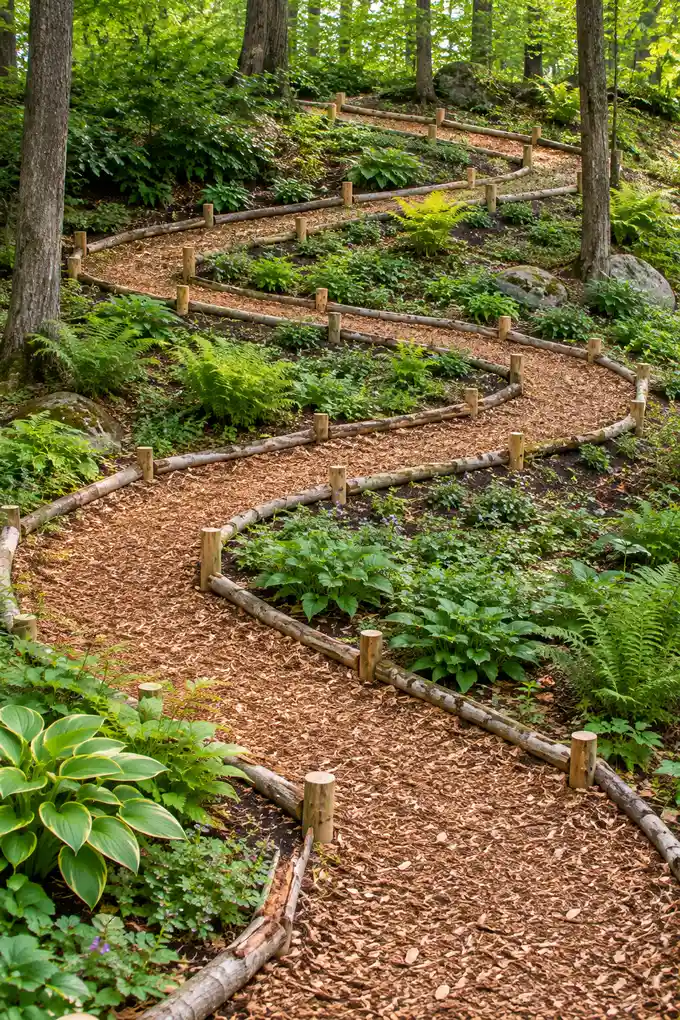
A path that runs straight up a hill is hard on knees and turns into a gully in the first big storm. A switchback fixes both. Zigzag the path across the slope in long, gentle runs, so you climb a little at a time and rain spreads out instead of rushing down.
Surface it with wood chips and edge it with fallen branches pinned in place with wooden stakes. The chips cushion every step, and the branch edging keeps them on the path. It’s one of the most practical hillside landscaping ideas on a budget, because local tree crews often give chips away.
Top up the chips every year or so as they break down into the soil.
10. Switchgrass and Native Shrubs With Roots That Hold
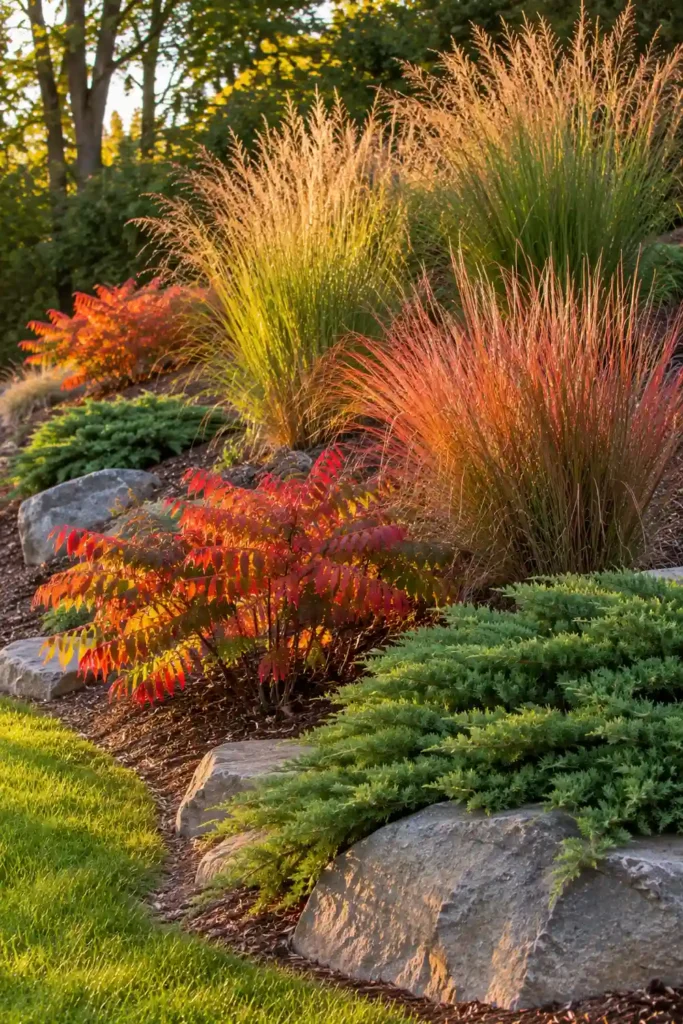
Pull up a clump of switchgrass and you’ll see why it belongs on a hill. Its roots run deep and dense, holding soil far below the surface. Pair it with little bluestem, which turns copper in fall, and a few low shrubs like fragrant sumac and creeping juniper.
The grasses fill the open ground, and the shrubs anchor the slope at intervals. Together they hold soil better than a lawn and almost never need mowing. Cut the grasses back once in late winter, and leave the shrubs alone.
Plant in fall, when cooler weather gives roots time to settle before summer heat.
11. Log Round Steps Through a Wooded Slope
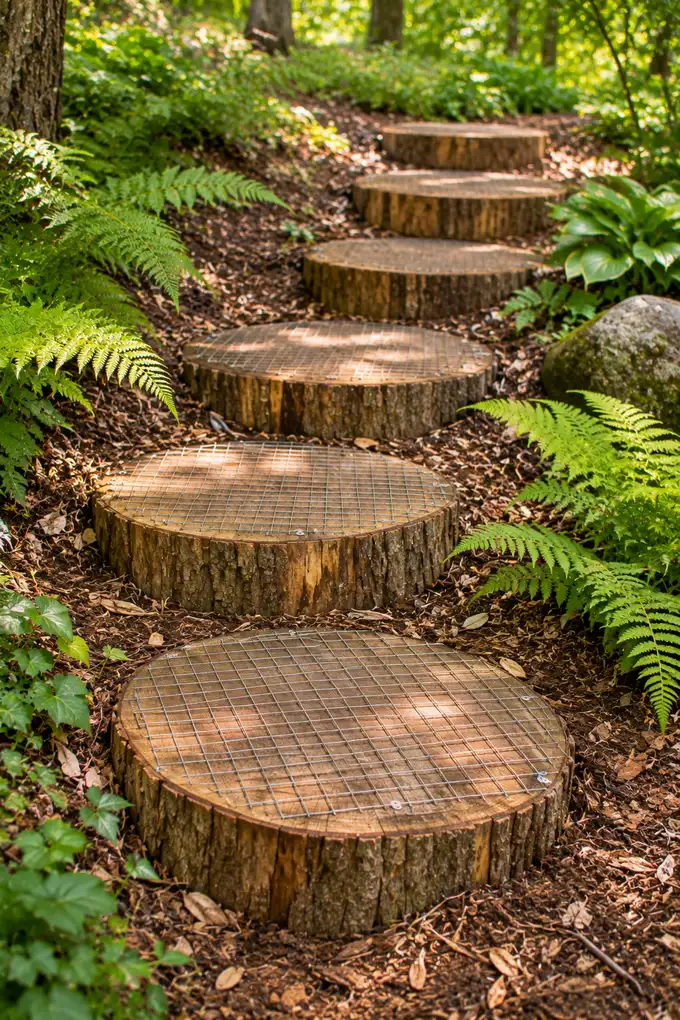
Concrete steps on a wooded hill look like they belong in a parking lot. Log rounds cut from a fallen tree look like part of the woods. Set each round flat into the slope, with its top flush with the soil, and fill around it with leaf mulch. Ferns along the edges finish the trail.
The wood blends into the shade and costs nothing if you already have a downed tree. Rounds can get slick when wet, so roughen the tops or staple wire mesh across them. Expect to replace the softest rounds every few years as they rot back into the hillside.
12. Ferns, Hostas, and Sweet Woodruff for a Shady Hill
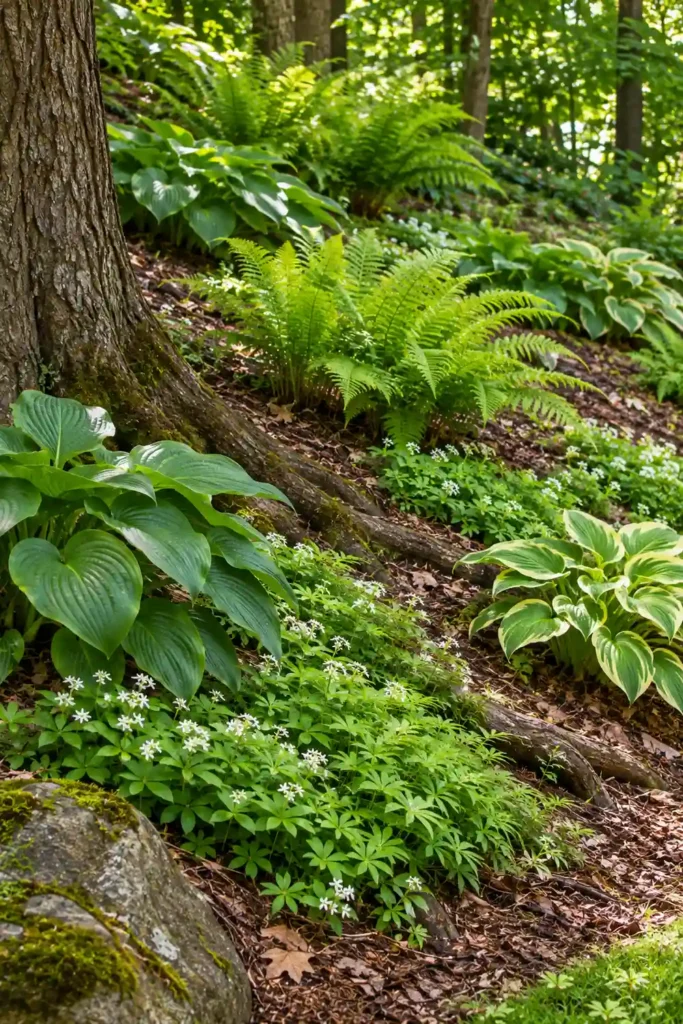
A slope under big trees stays bare because grass needs sun and the roots drink every drop of water. Shade lovers handle it. Plant ferns and hostas in loose drifts, and let sweet woodruff fill the ground between them with its small, starry leaves.
The ferns and hostas give the slope height and texture, and the sweet woodruff knits the soil together underneath. Mulch with shredded leaves, which the trees supply for free.
Planting note: Tuck small plants into the pockets between tree roots, and don’t pile new soil over the roots, which can harm the trees. Sweet woodruff spreads quickly, so give it room or edge it in.
13. Jute Netting and Coarse Mulch That Stay Put
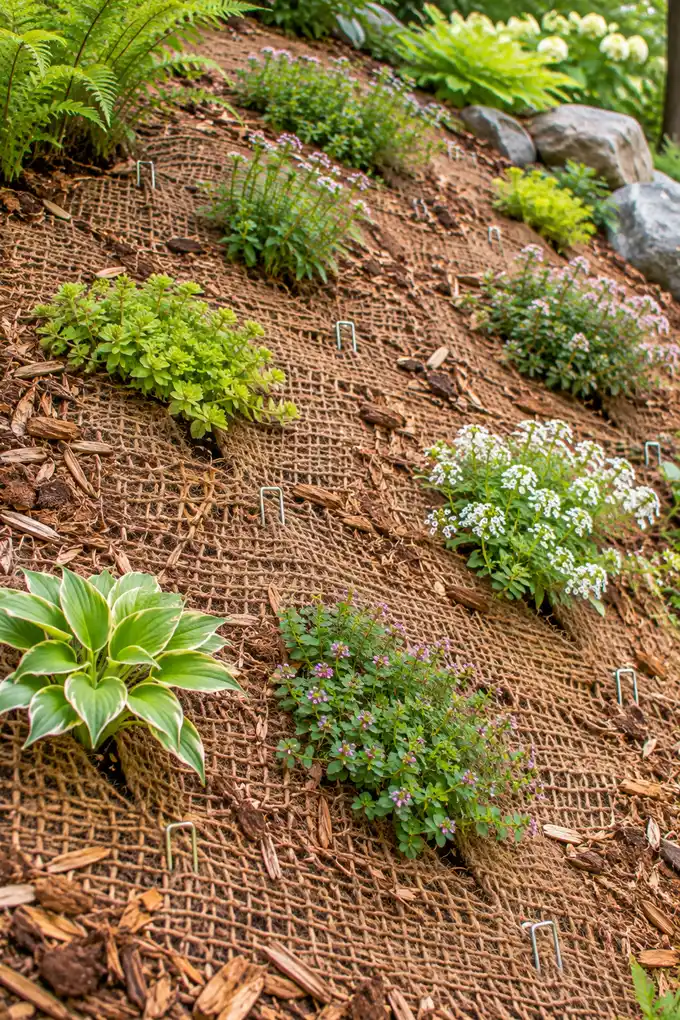
Mulch spread on a bare slope tends to end up at the bottom after the first big storm. The fix is a layer that grips. Pin jute netting over the prepared soil with landscape staples, cut small X-shaped slits for ground cover plugs, and plant through them. Then cover everything with coarse shredded hardwood mulch.
The shaggy mulch catches on the netting’s open weave, and the plugs root down through it. As the jute breaks down, the plants take over the job of holding the soil. That’s how to landscape a slope cheaply without watching the mulch wash away. Skip slick plastic weed barriers, which help mulch slide right off.
Planting note: Fall planting gives plugs the cool, damp weeks they need to root before summer.
| How the slope feels | What usually holds it |
|---|---|
| Gentle, easy to walk up | Ground cover, mulch, and rocks on their own |
| Steep enough that you lean into it | Jute netting under plants and coarse mulch |
| So steep you reach for your hands | Terraces or retaining walls, built by a professional |
14. One Flat Landing With a Bench Halfway Up
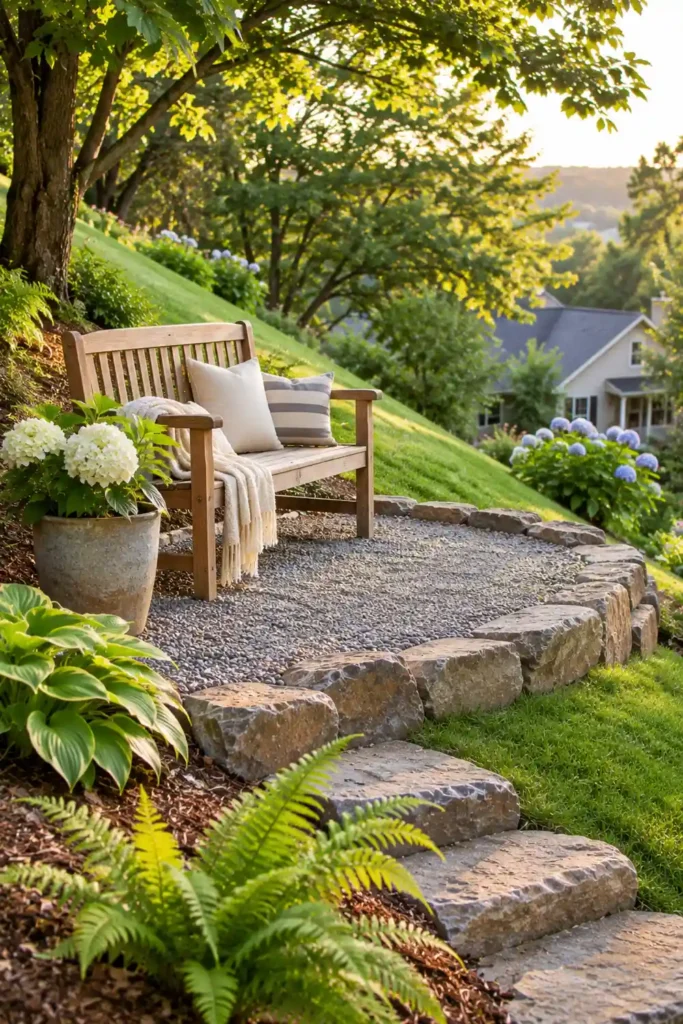
Full terracing is the expensive way to use a hill. A single flat landing halfway up gives you most of the payoff for a fraction of the work. Find a spot where the slope eases off naturally, level just enough room for a bench, and surface it with gravel edged in fieldstone.
The landing breaks a long climb into two shorter ones, and the bench turns the top of the yard into a view seat. Face it downhill, toward the house or the best tree. If you want to grow the idea into a bigger seating area later, these backyard patio ideas are a good next step.
Keep the dig small. Cutting deep into the bottom of a slope can weaken everything above it.
15. A Native Wildflower Meadow on the Steepest Part

The steepest part of the yard is the part you’ll never want to mow, and a native wildflower meadow lets you stop. Rake the bare soil, scatter a regional native seed mix of wildflowers and grasses, and cover it lightly with straw so the seed stays put while it sprouts.
The grasses build roots that hold the bank, and the flowers bring color and pollinators all summer. It’s one of the lowest-maintenance steep backyard ideas, though it takes patience. The first year looks mostly green, and the flowers fill in after that.
Cut it back once a year in late winter with a string trimmer, never a mower on a steep pitch.
16. Galvanized Stock Tank Planters Set Level on the Slope
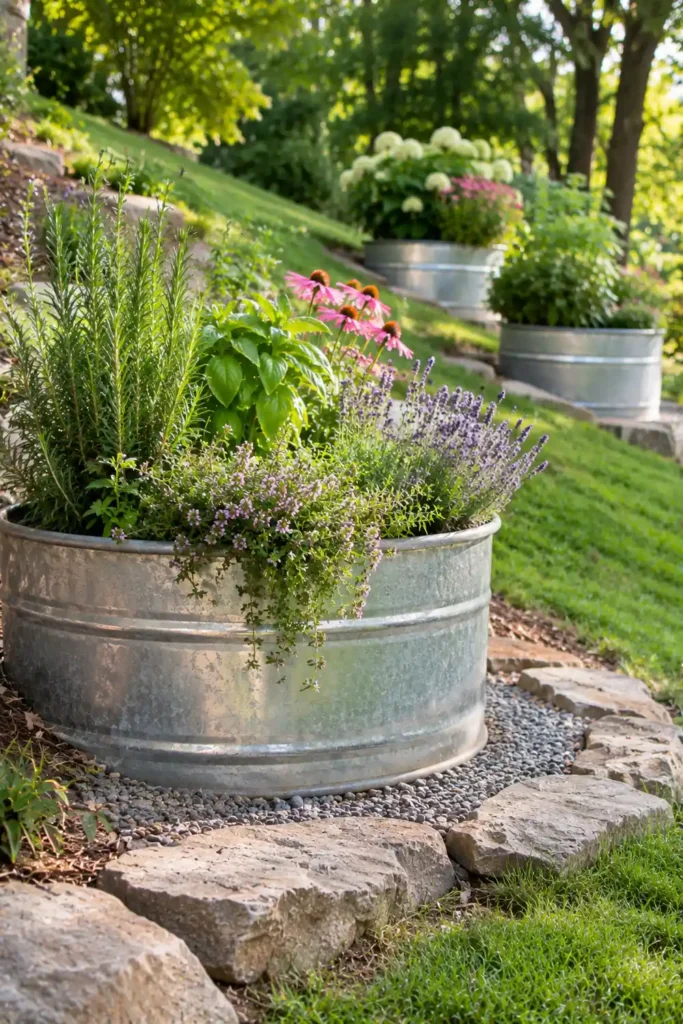
No digging, no walls, and you can take them with you when you move. Galvanized stock tanks set on small leveled gravel pads give a slope instant flat planting space. Drill drainage holes in the bottoms, fill them with potting soil, and plant herbs, flowers or a small shrub in each.
The gravel pads keep each tank level and draining, so it doesn’t tilt or sit in water. A row of two or three, stepped down the hill, looks deliberate and suits renters, who can’t dig up the yard.
Get the look: galvanized stock tanks, gravel, a drill, potting soil, herbs or flowers.
Set the tanks in place before filling them, since they’re too heavy to move once full. For more space-saving ideas, see these small backyard ideas.
17. Solar Stake Lights for Sloped Backyard Ideas on a Budget
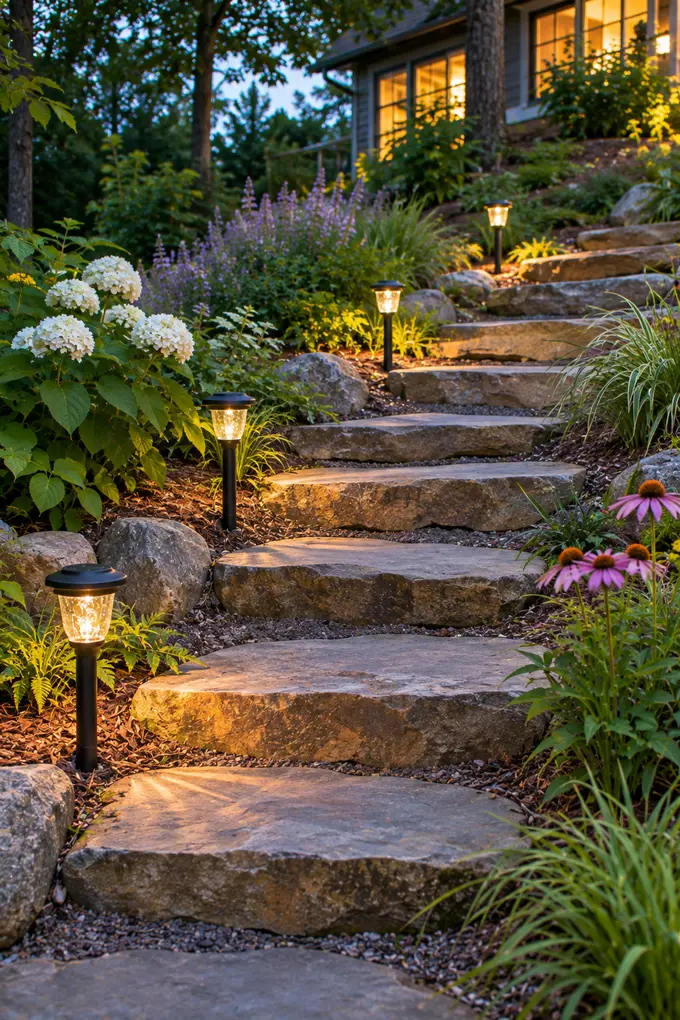
Steps and paths on a slope are easy to misjudge once the sun goes down. Solar stake lights solve it without a single wire. Push one into the soil beside every other stone step, or along the edge of a path, and they’ll mark the way each night on their own.
Each light charges in the sun all day, so place them where they get direct light, not under a shrub. The small glow along the steps makes the climb safer, and from the house, the whole hill reads as a lit path after dark.
Wipe the panels clean now and then, because dusty panels charge less and the lights fade early.
How to Landscape a Slope Cheaply, Step by Step
Most of these ideas follow the same order, and doing it in that order saves money. Start by calling 811 so buried lines are marked, then watch where rainwater runs during a storm. Deal with that water first, with a dry creek bed or low stone borders, because nothing else lasts if the soil keeps washing away.
Next, add a way to get up the hill: steps or a switchback path. Then cover every bit of bare soil with ground cover, deep-rooted grasses or mulch over jute netting. Save seating and extras for last, and call a professional for anything that holds back a real wall of soil.
Sloped Backyard FAQ
What is the cheapest way to landscape a sloped backyard?
Ground cover plugs and mulch are usually the cheapest fix, especially with free wood chips and stone from your own yard. Plugs cost far less than sod and spread to cover the hill on their own. Ideas 2, 9, and 13 lean on free or low-cost materials.
How do I stop erosion on a hill?
Keep the soil covered and slow the water. Plant ground covers or deep-rooted grasses, pin jute netting under mulch on steeper ground, and give runoff a planned route, like a dry creek bed. Ideas 5, 10, and 13 tackle erosion from three different angles.
Do I need a retaining wall on a sloped yard?
Not always. As a rule of thumb, gentle slopes can be held with plants, mulch and low stone borders. Very steep slopes, or anything holding back a real wall of soil, need a retaining wall built by a professional. The table in idea 13 shows where that line usually falls.
What ground cover is best for a slope?
For sunny slopes, creeping thyme, creeping phlox and sedum spread well and hold soil. For shady slopes under trees, sweet woodruff and ferns do the same job. Ideas 2, 6, and 12 cover sun, dry heat, and shade.
When is the best time to plant on a slope?
Fall is usually best. Cooler weather and steady moisture give roots weeks to settle in before summer heat, which matters on a slope where water runs off quickly. Ideas 10 and 13 both recommend fall planting.
Conclusion
A hill stops being a problem the day it gets a purpose. Pick one or two of these sloped backyard ideas on a budget to start: a set of stone steps, a patch of creeping thyme, or one flat landing with a bench. Then build out from there as time and money allow. Most of the materials are free or cheap, and the plants do more work every year they grow. For ideas that suit the flatter parts of the yard, browse these backyard ideas you’ll want to copy. Save this for the weekend you finally take on the hill.