
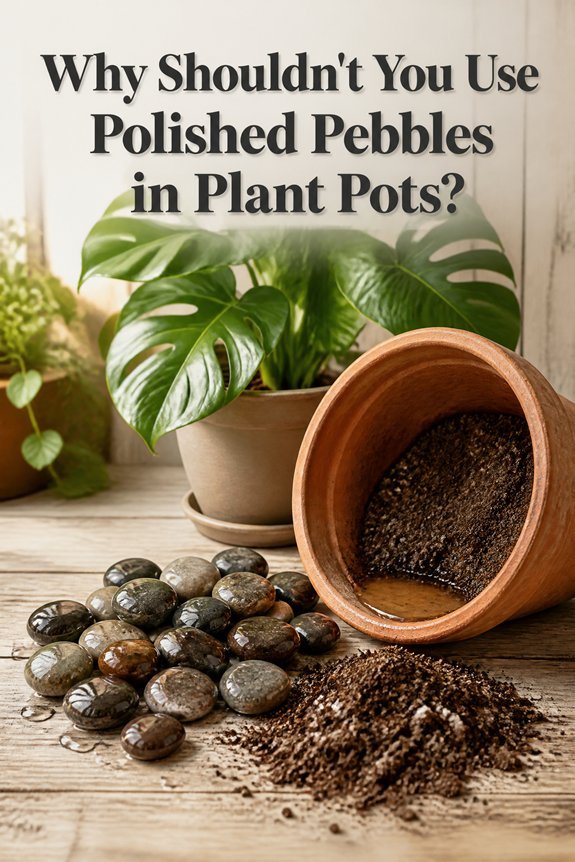
Polished pebbles might look attractive on the surface, but they cause serious drainage headaches for container plants. Their glassy, sealed surfaces don’t absorb water like porous materials do. Instead, moisture lingers around delicate root systems, creating the perfect breeding ground for rot and fungal diseases.
Many gardeners don’t realize how these decorative stones compact over months and years. What starts as a tidy top layer gradually presses down, squeezing out the air pockets that soil organisms need to survive.
Without these beneficial microbes and invertebrates, your potting mix becomes lifeless and compacted. Plants like succulents and cacti, which evolved for arid conditions, struggle most in these suffocating environments.
Happily, switching to natural alternatives transforms plant health almost immediately. Coarse gravel, bark chips, or even simple terracotta shards allow water to flow through while maintaining essential structure.
These materials work with nature rather than against it, supporting robust root development and thriving soil ecosystems.
How Polished Pebbles Trap Moisture and Damage Roots
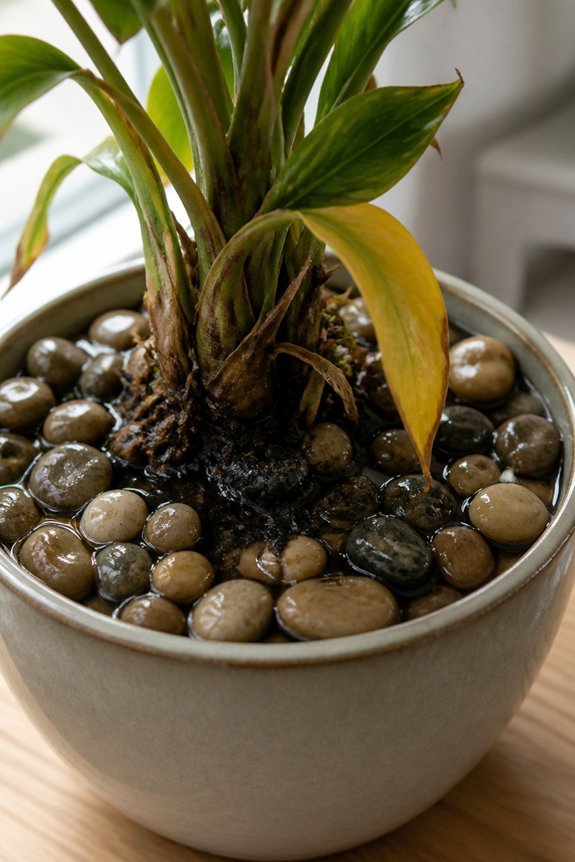
Polished pebbles look stunning on top of your plant soil. But they come with a hidden cost.
The smooth, sealed surface blocks water from draining properly. Moisture gets trapped around the roots instead of escaping. This creates the perfect setup for root rot and fungal problems.
Porous materials like clay or unglazed stone actually pull water away from the soil. Polished pebbles do the opposite. They hold moisture right where you don’t want it.
Succulents and cacti suffer the most from this setup. Their roots sit in soggy conditions with little oxygen. The plant starts to decay from the bottom up.
Over time, these pebbles pack down even tighter. Drainage gets worse, not better. Your plant’s health declines slowly until it’s too late.
Skip the polished look for something more practical. Your plants will thank you with stronger roots and better growth.
Also read: How to Care for Philodendron
Why Sealed Surfaces Block Airflow and Cause Fungal Issues
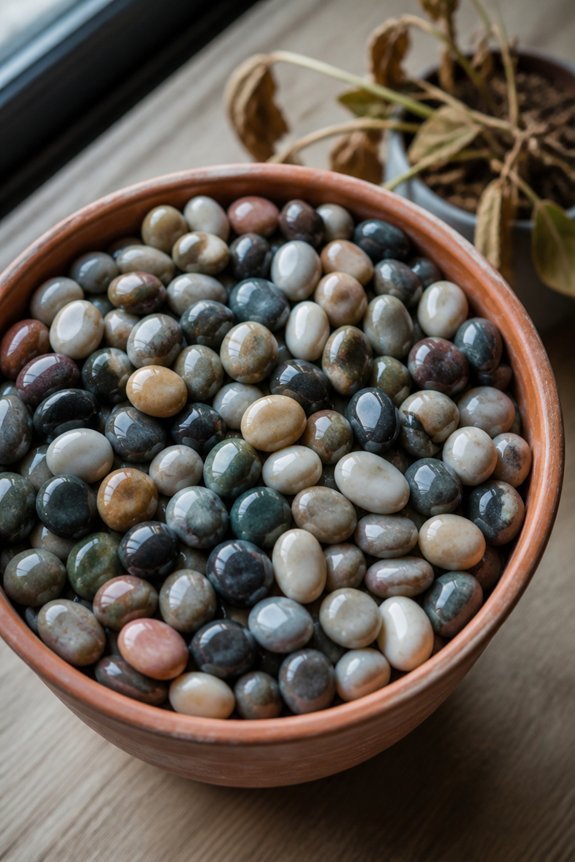
Sealed surfaces on top of soil create another serious problem beyond moisture retention. Polished pebbles form a barrier that blocks air circulation within the pot. Oxygen can’t reach the root zone.
Without adequate airflow, fungal spores thrive in the humid environment. Root rot, damping off, and powdery mildew become common issues. Plants need consistent oxygen exchange at soil level to stay healthy.
Trapped moisture plus stagnant air creates perfect conditions for fungal growth. The sealed layer also prevents beneficial soil microorganisms from doing their job.
Replace polished pebbles with porous alternatives instead. Unglazed clay, terracotta, or breathable mulches allow proper gas exchange. Your soil structure stays intact while roots get the air they need.
Direct Sunlight Heat Damage and Uneven Soil Drying
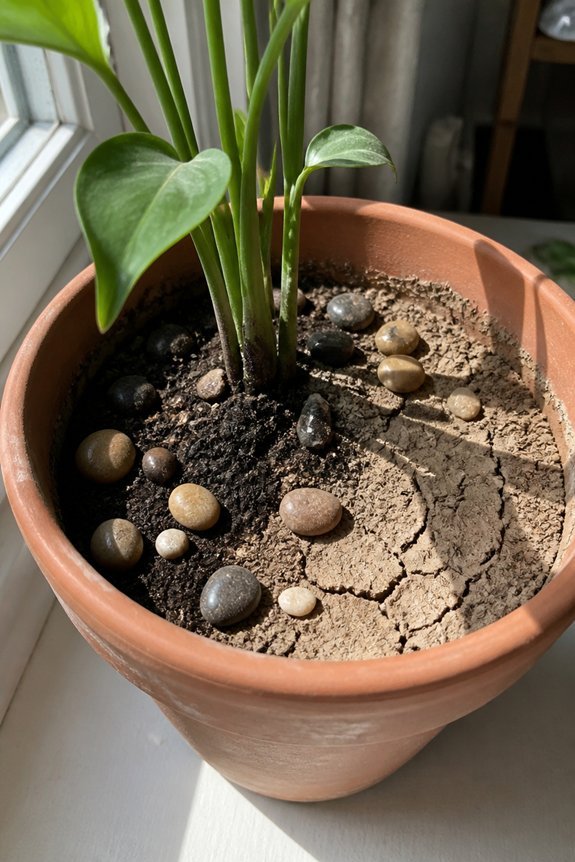
Pebbles sitting on soil under hot sun soak up heat fast. Then they push that heat right back into the pot. Small containers get hit hardest. Roots cook in shallow soil that swings between baking hot and oddly cool.
Polished dark stones are the worst offenders. They pull in more heat than lighter ones. Most houseplants can’t handle soil that hot for long.
Water movement gets messy too. Some spots under pebbles stay wet forever. Other areas dry out in hours. Roots end up with no happy middle ground. Half drown while neighbors beg for water.
Succulents and cacti handle this better than fussy tropicals. Ferns, orchids, and African violets really struggle.
Check your soil in several places before you water. One spot lying. The real picture hides underneath.
Best Natural Top Dressing Alternatives for Healthy Plants
Polished pebbles look nice, but they cause real problems. They trap heat and create patchy moisture around roots. Natural options solve both issues while feeding your soil.
Organic materials break down slowly and release nutrients as they go. Coconut coir, bark, and wood chips all do this job well. Your plants get steady benefits instead of static decoration.
Compost pulls double duty as both coverage and fertilizer. Soil texture improves bit by bit with each watering.
Straw and hay insulate the surface while breaking down underground. Pine needles work beautifully for acid-loving plants like blueberries. They gently shift pH where needed.
Leaf mulch handles moisture better than stones ever could. It holds water evenly without sudden swings. Peat moss keeps hydration levels stable too, minus the temperature spikes.
These choices reduce root stress and keep soil life thriving. Just match your material to your specific plants and local weather.
Bark Mulch, Coconut Coir, and River Rock Compared
Picking the right top dressing comes down to three popular choices. Each one changes how your plants grow and how much work you’ll need to put in.
Bark mulch holds water well and feeds your soil as it breaks down. The catch? You’ll need to replace it often since it decomposes fast. Coconut coir keeps moisture locked in and comes from a renewable source. Plants that hate dry roots love this stuff. Just watch out for compaction. It can squeeze tight over time and choke off air flow.
River rock gives you the opposite approach. Water runs right through it, so overwatering becomes nearly impossible. These smooth stones also skip the whole replacement cycle. The trade-off is heat reflection and zero nutrients for your soil.
Match your choice to your plant’s personality. Tropical moisture-lovers thrive with coconut coir. Cacti and succulents do better with river rock keeping things dry. Bark mulch hits that middle ground for plants wanting steady moisture plus some organic goodness. Your maintenance tolerance matters too. Busy growers might prefer river rock’s set-it-and-forget-it nature.
Why Natural Materials Improve Drainage and Soil Health
Beyond choosing between moisture retention and drainage, the materials themselves shape how soil functions beneath the surface.
Natural materials like bark mulch, coconut coir, and river rock break down over time. They create organic matter that improves soil structure. This decomposition increases nutrients for plant roots to absorb.
Bark mulch adds carbon while suppressing weeds. It also regulates temperature fluctuations. Coconut coir retains water efficiently yet lets excess moisture drain. This prevents root rot.
River rock promotes airflow around soil particles. It stops compaction that restricts root growth. These materials also encourage beneficial microorganisms and earthworms. They aerate soil naturally.
Polished pebbles provide none of these benefits. They remain chemically inert and never decompose into soil-enriching components.
How to Safely Replace Polished Pebbles in Existing Pots
Replacing polished pebbles takes some planning, but it’s easier than you might expect. Start by moving your pot out of direct sun. This keeps roots cool while you work.
Grab a small trowel or fork and gently lift the top pebbles. Water the soil a few hours before you begin. Soft soil protects roots from damage as you dig.
Work from the outer edges toward the center. Remove pebbles little by little rather than all at once. This keeps the process gentle on established plants.
Now for the upgrade. Swap in pumice, lava rock, or broken terracotta. These materials drain better and hold soil in place more effectively than smooth stones.
Timing matters for older plants. Spring works best since roots heal quickly during active growth. Keep your sessions short to limit stress on the plant.
Watch your watering schedule afterward. New drainage materials can change how fast soil dries out. Check moisture more often for the first few weeks until you learn the new rhythm.
Frequently Asked Questions
Are Polished Pebbles Safe for Pets and Children Who Might Ingest Them?
Polished pebbles pose significant ingestion risks for pets and children. Sharp edges from broken pieces can cause intestinal blockages, choking hazards, and internal injuries. The polishing chemicals may also prove toxic if consumed, making them unsuitable for households with young children or curious animals.
Can Polished Pebbles Be Cleaned and Reused for Other Gardening Purposes?
Polished pebbles can technically be cleaned and reused, though many gardeners question their practical value. They retain their aesthetic appeal but offer minimal drainage benefits compared to standard growing media, making them unsuitable for most gardening applications.
Do Polished Pebbles Affect Soil pH or Nutrient Availability for Plants?
Polished pebbles typically do not notably alter soil pH or nutrient availability. However, their smooth surface prevents water and nutrient absorption, creating a barrier that reduces plants’ access to essential minerals and moisture.
How Much Do Polished Pebbles Cost Compared to Natural Alternative Materials?
Polished pebbles cost a million times more than their natural counterparts. Polished varieties typically range from two to five dollars per pound, while unpolished stones and gravel cost mere cents, making budget-conscious gardeners cringe.
Will Polished Pebbles Work Adequately in Outdoor Container Gardens or Hanging Baskets?
Polished pebbles can function in outdoor containers, though their smooth surface reduces water drainage and aeration compared to natural alternatives. They retain excessive moisture, potentially causing root rot and fungal issues in hanging baskets and container gardens.
Conclusion
Polished pebbles function like a sealed lid on plant pots, trapping moisture and suffocating roots through poor drainage. Gardeners should replace them with natural alternatives such as bark mulch, coconut coir, or river rock, which allow water and air circulation. These materials support healthy soil, prevent fungal growth, and protect plants from root rot. Making this switch requires minimal effort but yields significant improvements in plant longevity and vigor.