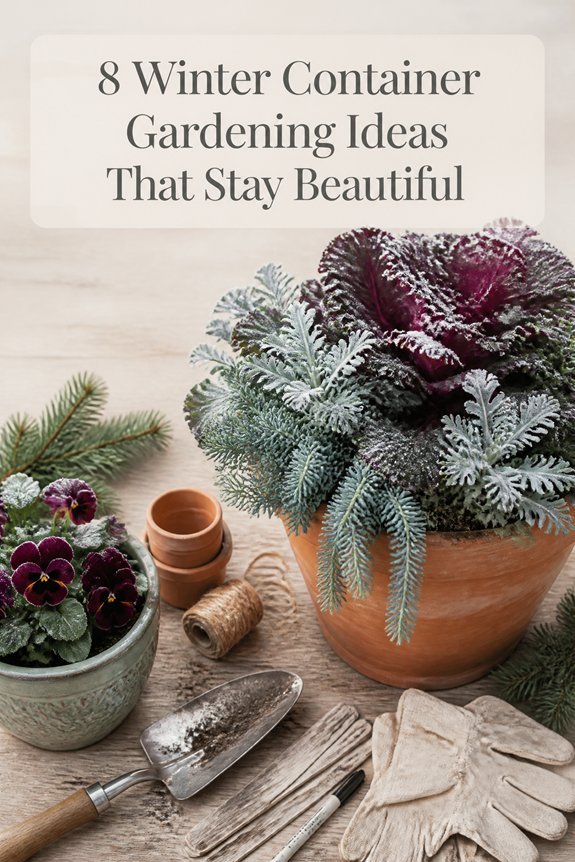
Winter container gardening keeps outdoor spaces inviting even when temperatures drop. Selecting the right plants and containers makes all the difference for cold-weather curb appeal.
Evergreens form the backbone of any successful winter display. Compact varieties of spruce, holly, and boxwood provide structure and color when everything else has faded. Layering in branches with berries, seed heads, or colorful twigs adds unexpected texture and visual warmth against gray skies.
The choice of container matters more than many gardeners realize. Frostproof materials like fiberglass, concrete, or thick terracotta withstand freezing temperatures without cracking. Proper drainage prevents waterlogged soil, while placement near walls or windbreaks offers additional protection from harsh conditions.
Winter-blooming flowers such as hellebores, pansies, and witch hazel bring genuine color to the coldest months. Pairing these with trailing ivy or ornamental grasses creates dynamic arrangements that look intentionally designed rather than merely surviving.
A few simple strategies ensure these containers remain beautiful from first frost through early spring.
Container Materials That Withstand Winter Freezes
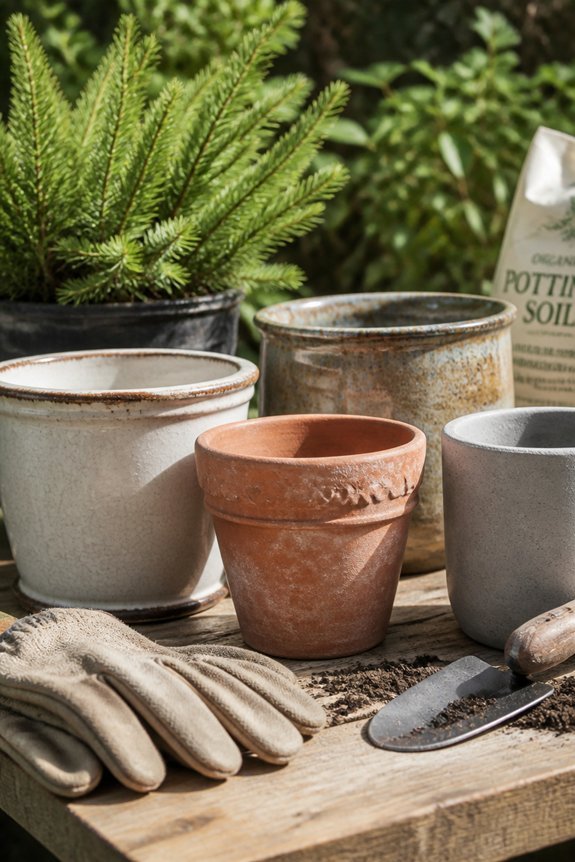
Some containers handle winter better than others. Here’s what actually works.
Ceramic and terracotta crack when water freezes inside them. Use ones with drainage holes, and give them some protection from the worst cold.
Concrete, stone, and composite containers hold up well through freeze-thaw cycles. They’ll last several winters without much fuss. Plastic stays flexible in cold weather, so it won’t split right away. Just know it can get brittle after a few seasons.
Wood needs sealant and regular upkeep, but it manages fine. Metal conducts cold fast, which can hurt roots. Glazed ceramic resists frost better than unglazed types.
Pick the right material from the start. Your containers will survive the season, and you won’t be replacing them every spring.
Also read: 7 Container Gardening Ideas for Small Spaces
Evergreens and Ornamental Grasses for Structure
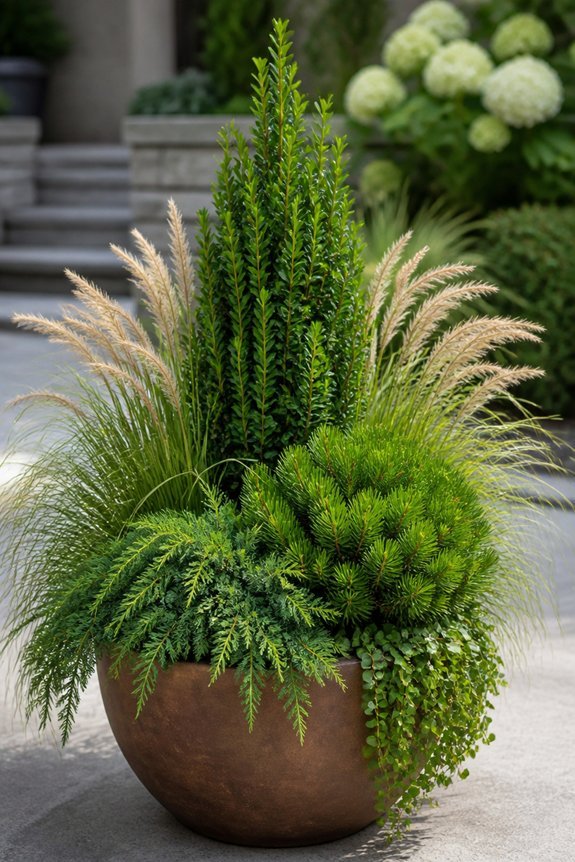
Winter containers need plants that can stand up to the cold and still look good. Evergreens are your reliable backbone here. They keep their color and shape when everything else goes bare.
Boxwood, arborvitae, and dwarf conifers stay full and green through months of chill. They give you consistent height and structure that lasts.
Ornamental grasses add another layer entirely. Feather reed grass and blue fescue hold their form even in freezing weather. Their dried seed heads catch morning light and frost, creating subtle sparkle and movement.
Try placing taller evergreens in the center of your container. Tuck grasses around the edges where they can sway and catch snow. This pairing needs very little care but delivers serious visual impact all winter long.
Winter-Blooming Flowers for Cold-Climate Containers
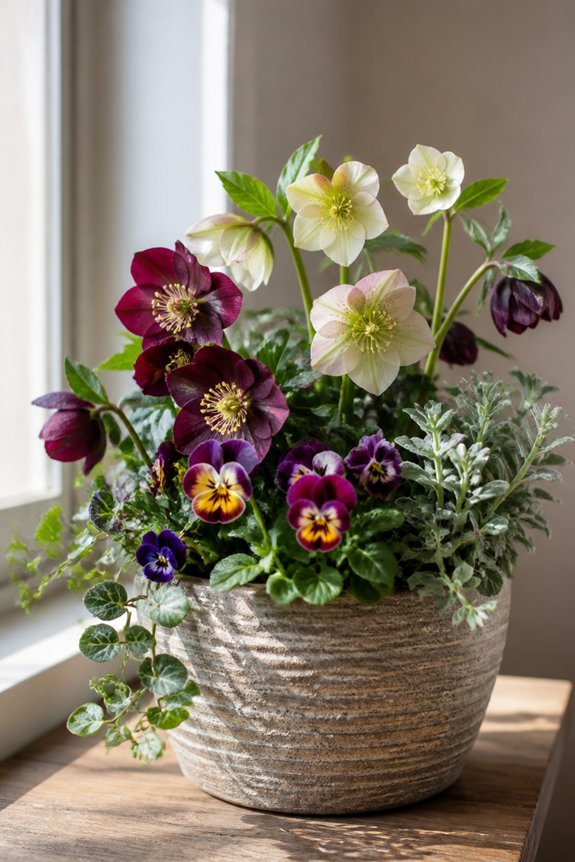
Evergreens create the structure, but flowers deliver the color. Winter pansies and violas hardly notice the freezing temps. They bloom steadily through the coldest months. Hellebores offer delicate petals in pink, purple, and white. Ornamental kale contributes cool foliage with subtle blooms.
Cyclamen coum opens in late winter with tiny pink or white flowers. Winter heathers add texture along with their small blooms. Snowdrops and winter aconite appear early to signal the season is shifting. These plants prefer well-draining soil and steady moisture. Combine multiple varieties for layered interest that lasts until spring.
Layering Textures With Branches, Berries, and Bark
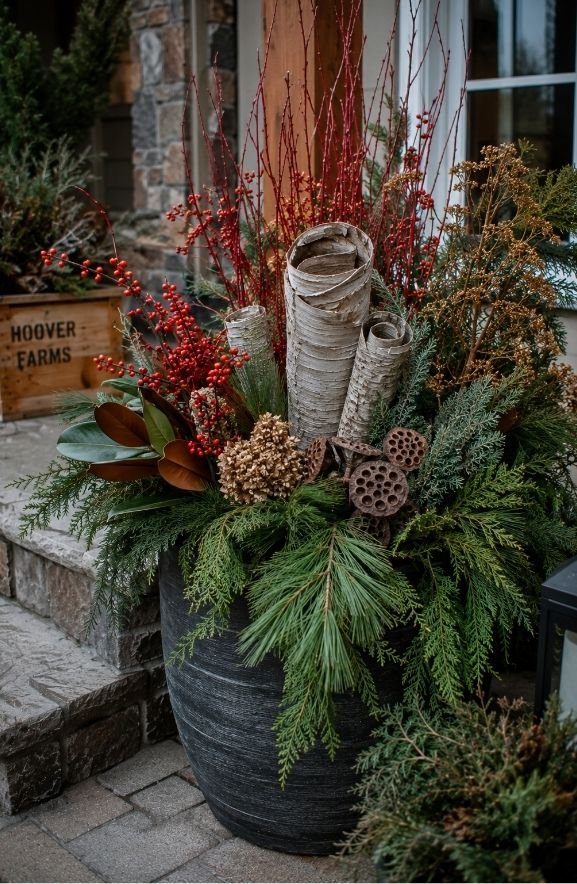
Branches, berries, and bark step up when flowers bow out. They carry containers through the quiet months with plenty to look at.
Curly willotwists and turns. Birch peels in papery strips. Dogwood glows in red or yellow stems. These branches reach upward and catch the breeze. They add height without feeling stiff.
Berries bring the color. Winterberry hangs in bright clusters. Skimmia keeps its fruit low and tight. Cotoneaster drapes and weeps. Each one reads clearly from across the garden.
Bark anchors the whole thing. Rub your fingers across paperbark maple. Watch red-twig dogwood flare against dark green background plants. Texture matters just as much as color.
Build your layers like a small scene. Stick tall branches in first. Tuck berries at middle height. Let barky plants spill at the edges. Step back. Adjust. The eye should travel naturally through the arrangement.
Light changes fast in winter. Morning frost catches on twigs. Low afternoon sun backlights the stems. Your container keeps working through all of it. No blooms required.
Winter Colors: Burgundy, Gold, and Silver Foliage
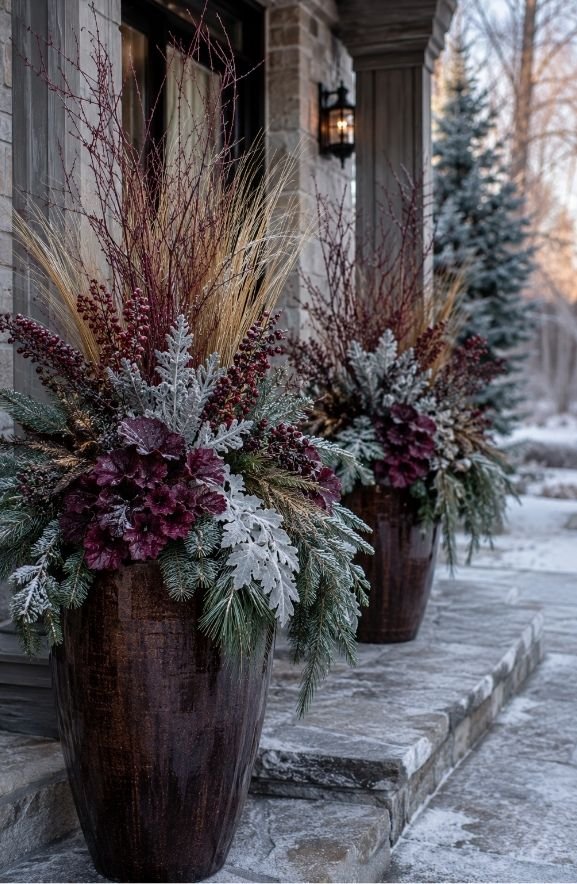
Color without flowers arrives through foliage that shifts its palette when temperatures drop. Burgundy-leafed plants like Japanese maples and ornamental cabbage provide deep, rich tones. These colors only intensify as the weather chills.
Gold foliage from golden duranta or winter-blooming heathers adds warm highlights to container arrangements. Silver-leafed plants such as dusty miller and senecio create contrast and brightness. They reflect what little light winter brings.
Combine these three families for balanced, sophisticated displays. Burgundy anchors the center with visual weight. Gold accents draw the eye upward. Silver softens the connections between bolder colors and prevents harsh edges.
Most of these plants tolerate frost well. Their coloring holds through the season. You’ll find they need little care once settled into proper soil with good drainage.
Design Principles for Maximum Visual Impact
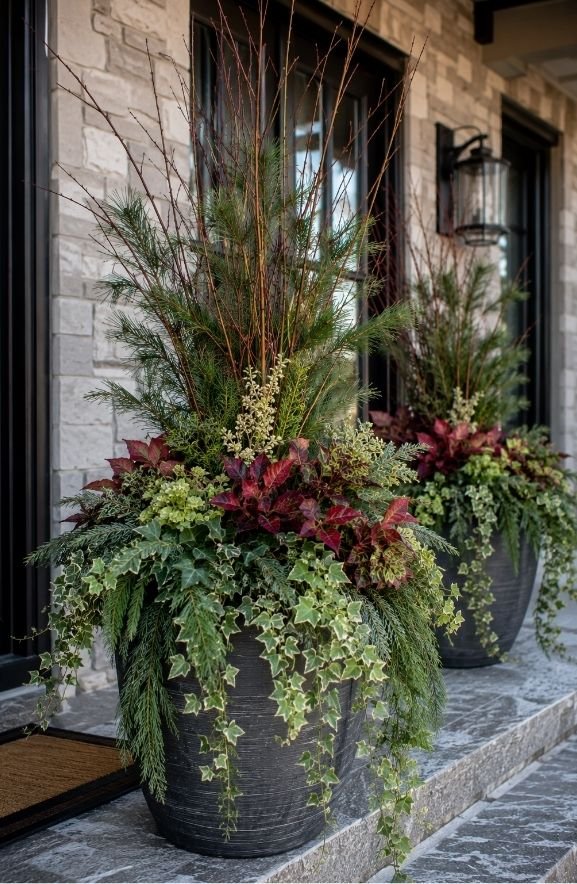
Start with height to bring your containers to life. Taller plants like boxwood or columnar junipers belong at the back. Shorter grasses and sedums sit up front. This layering keeps everything from looking flat.
Color tells a story in winter.
Try burgundy Japanese maples against silver dusty miller. Add a gold conifer for warmth. These tones play well together without fighting for attention.
Grouping matters more than you think.
Odd numbers feel right to the eye. Three pots work. Five do too. Space them unevenly for extra depth. Repeat one plant across several containers to tie everything together.
Winter Weather Protection Strategies
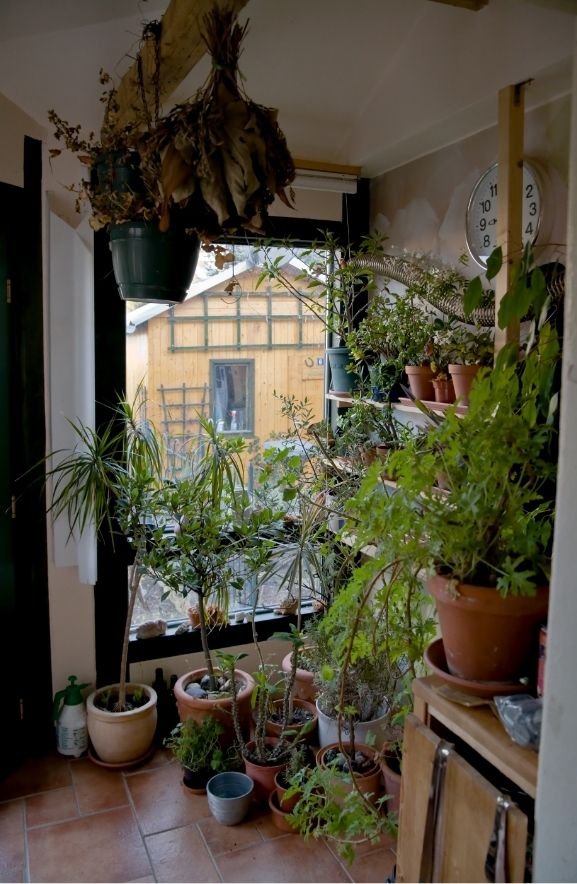
Winter brings real challenges for container plants. Frost, ice, wind, and sudden temperature swings can damage or kill them. Here are practical ways to keep your plants safe.
Start with placement. Move containers against walls. Structures hold heat and block wind. It’s simple but effective.
Wrap pots with burlap or frost cloth. This insulates roots and soil from freezing. Group pots together too. They protect each other and create a warmer pocket of air.
Add mulch on top. Bark chips or straw stabilize soil temperatures around roots. This prevents the repeated freezing and thawing that harms plants.
Choose wisely from the start. Evergreens, ornamental grasses, and winter bloomers handle cold naturally. Tender plants struggle no matter what you do.
Watch your watering. Frozen soil won’t absorb moisture. Water less often to avoid ice buildup and rotting roots in dormant plants.
Layer these strategies together. Good placement plus insulation gives your containers the best shot at making it through.
Refreshing Displays as Seasons Shift
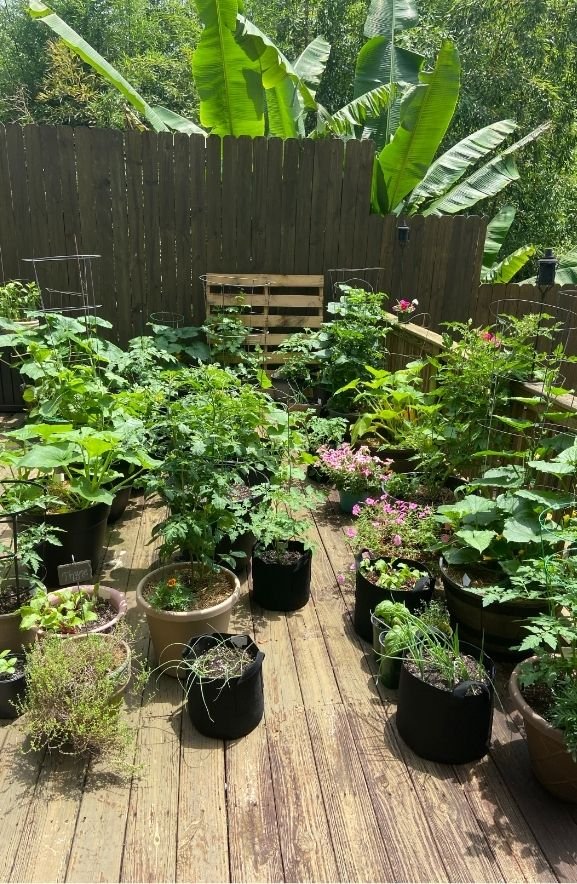
Your containers made it through winter. Now it’s time to wake them up.
Start by clearing out what’s finished. Cut away dead leaves and swap tired soil for fresh mix. Early spring welcomes cool-season flowers like pansies, primrose, and hellebores. These plants handle lingering chill without complaint.
Warm days call for a different approach. Trade spring blooms for summer favorites such as petunias, marigolds, and begonias. Come autumn, lean into texture with ornamental kale, mums, and sedum.
Smart refreshes go beyond new plants. Peek at your drainage holes. Test soil moisture with your finger. Move pots to catch better light. A simple rotation prevents worn-out soil and keeps growth balanced all season long.
Frequently Asked Questions
How Often Should I Water Container Plants During Winter Months?
Container plants require less frequent watering during winter months since evaporation rates decrease in cold temperatures. Gardeners should water when the soil surface feels dry, typically every one to two weeks, depending on plant species and environmental conditions.
What Is the Best Time of Year to Plant Winter Containers?
One might wonder when the best moment arrives. Late summer through early fall proves ideal for planting winter containers. This timing allows plants to establish roots before harsh temperatures arrive, ensuring vibrant displays throughout the colder season.
Can I Reuse Soil From Previous Seasons in Winter Containers?
Gardeners can reuse soil from previous seasons in winter containers, though rejuvenating it with compost or new potting mix improves drainage and nutrients. This practice reduces waste while maintaining plant health.
How Do I Prevent Rodents From Nesting in Winter Container Gardens?
Like a fortress guards its perimeter, gardeners protect containers through barriers. Elevate pots on stands, use fine mesh screens around drainage holes, remove debris promptly, and apply rodent-deterrent sprays to soil surfaces regularly.
What Budget Should I Allocate for a Seasonal Container Garden Display?
A seasonal container garden display typically requires $100-$500, depending on container size, plant selection, and soil quality. Budget increases with premium decorative pots and specialty winter plants like evergreens or ornamental grasses.
Conclusion
Winter containers resemble evergreen trees in forests: their survival depends on structure, protection, and layering. Like trees that shed leaves yet remain standing through snow and ice, well-designed containers endure harsh seasons through durable materials, mulch insulation, and strategic placement. Homeowners who combine boxwood, pansies, and textured branches create displays that persist through freeze-thaw cycles, proving that careful planning guarantees year-round garden beauty.