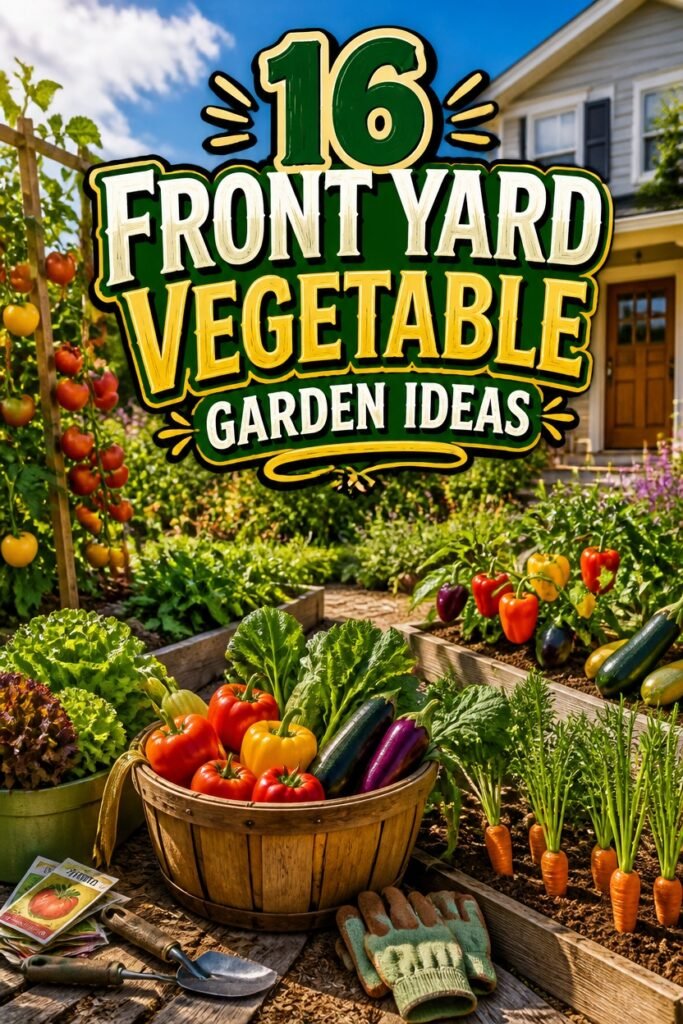
A stranger stops on the sidewalk. They’re staring at your tomatoes. This happens more than you’d think.
Your front yard could do more than just sit there. Right now, it’s probably just grass and obligation. But food can grow there. Real food. The kind that tastes better because you grew it.
Raised beds work for some people. Others swear by containers. Vertical trellises solve problems you didn’t know you had.
Every yard has its own personality. Its own quirks. Finding the right setup matters more than copying your neighbor.
Some folks will want your advice. Others will quietly envy your harvest.
Either way, you’ll eat well. That’s not a bad deal for a patch of ground you already own.
Raised Beds: The Foundation of Front Yard Growing
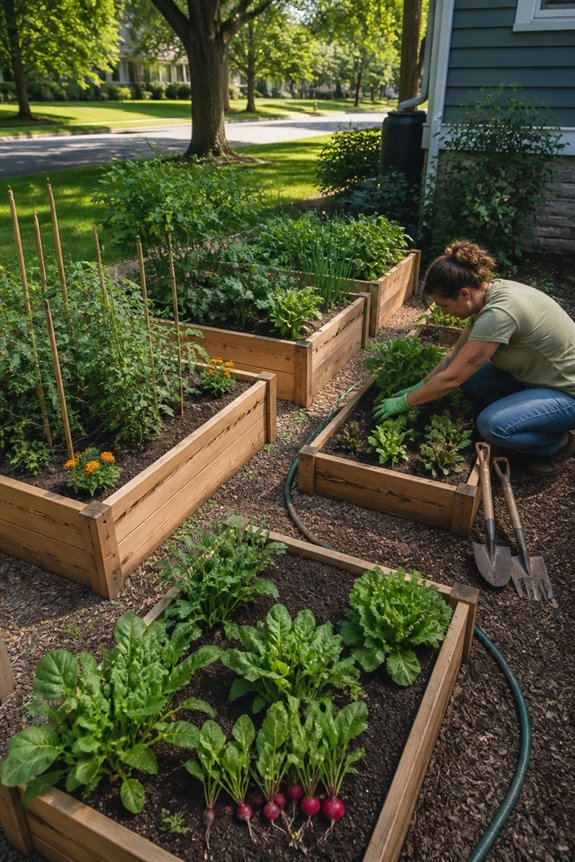
Ever tried digging straight into your lawn? You might hit roots that refuse to budge. Save yourself the headache. Raised beds sit right on top of your grass. No digging needed.
Most gardeners start with the classic size: 4 feet by 8 feet, about 12 inches deep. You fill them with quality soil from day one. Your plants get a fresh start. Your knees stay happy too. The wood frames look tidy and keep weeds from creeping in. They also warm up faster in spring. That means earlier planting and happier vegetables. Sometimes the easiest path really is the best one.
Also read: 18+ FRONT YARD ENTRANCE Ideas That Feel Welcoming!
Container Gardens for Maximum Flexibility
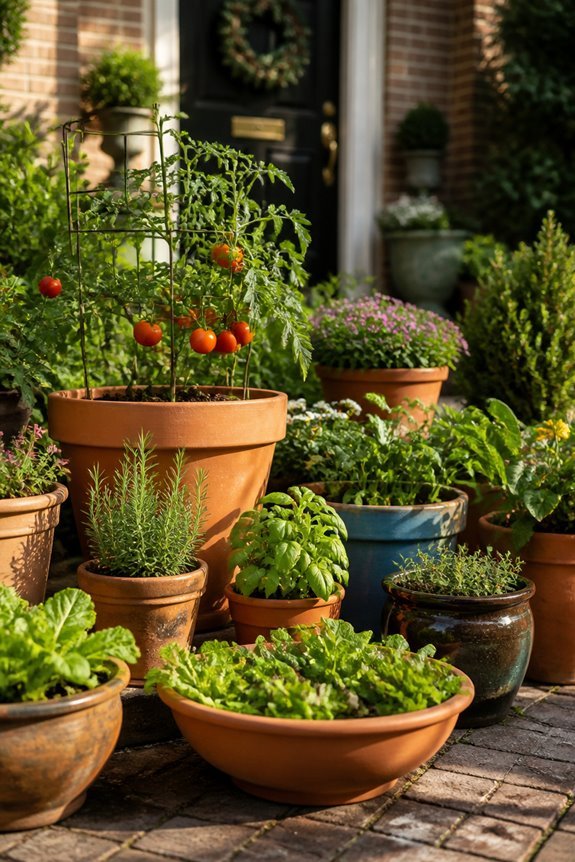
Your yard isn’t perfect. Maybe it’s sloped, shady, or paved solid. That’s exactly where container gardens shine.
You can set pots anywhere. Tuck tomatoes by your porch steps. Line peppers along your driveway. Stack containers on a tricky slope that laughs at traditional beds. You get flexibility without looking like you gave up.
Size matters here. Grab a 5-gallon bucket for tomatoes. Scale up to 10 gallons for peppers or squash. Lettuce and herbs happily squeeze into smaller homes. During heat waves, you simply scoot thirsty plants into shade. Move your strugglers to a quieter corner where neighbors won’t notice.
Drainage holes make or break you. Skip them and roots rot fast. Fill with quality potting mix, not scoops from your yard. Your containers heat up quicker in spring, giving you extra weeks of growing time.
All you need is porch space and some grit.
Vertical Trellises and Wall-Mounted Systems
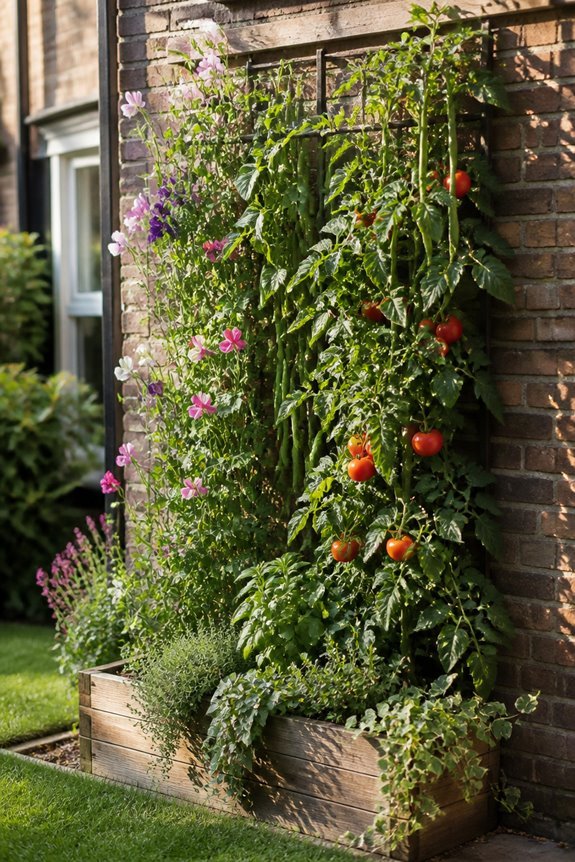
Running out of room? Go up instead of out. Vertical gardening turns tight spaces into thriving green walls that stop people in their tracks.
Tomatoes, cucumbers, and beans love to climb. Grab a simple trellis and lean it against your wall or fence. Your vines shoot upward, not sideways. You reclaim every inch of ground space. Wall-mounted pouches work too. They look polished but forgive beginner mistakes.
Better sun and airflow come free with height. Plants stay healthier and pump out more vegetables. Harvesting happens at chest level. No more creaky knees. That 6-foot trellis against your fence becomes a living wall. Neighbors will slow down and ask questions.
Tiered Beds: Growing Vertically Without Height
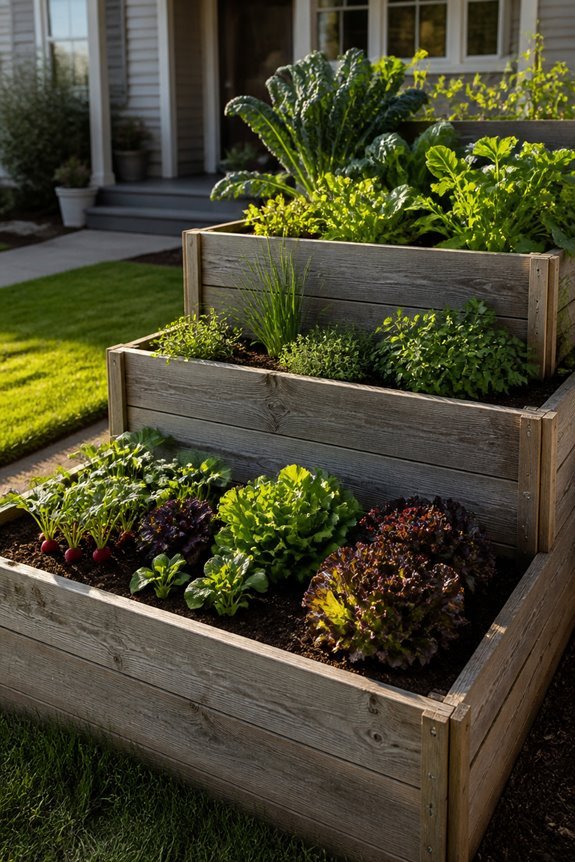
Want more harvest from the same small yard? You can stack your way to abundance. Picture wooden boxes shrinking as they rise, each tier tucked neatly above the last. Your bottom bed hugs the ground like normal. Upper levels step up about a foot each. You get a pyramid of growing space right in your front yard.
Lettuce, herbs, and strawberries love this setup. Soil drains faster. Sun reaches every plant evenly. You skip the backbreaking bent-over weeding too. Water trickles down through the levels, so one watering session hydrates everything below. Your vegetables become actual garden art. Neighbors will stop to ask how you did it. Growing more never required going higher. You just needed to build smarter.
Keyhole Gardens: Circular Design With Built-In Composting
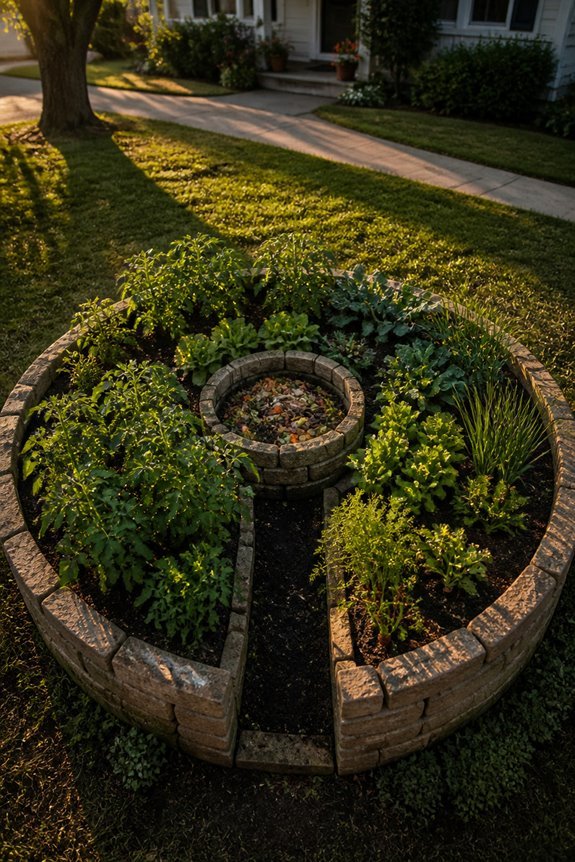
Frustrated by wasted water and disappearing nutrients? You need a keyhole garden. These circular beds work like magic. A narrow path cuts right into the center. A compost basket sits at the end. That’s it. Simple design, brilliant results.
Here’s what happens next. You toss kitchen scraps into that central basket. Water filters through. Nutrients drip straight down to your plant roots. No runoff. No waste. Your garden literally feeds itself. Plants spiral around in neat, curved rows. Your neighbors will ask questions. You’ll grow more food with less effort.
Front Yard Hedgerows: Vegetables as Borders
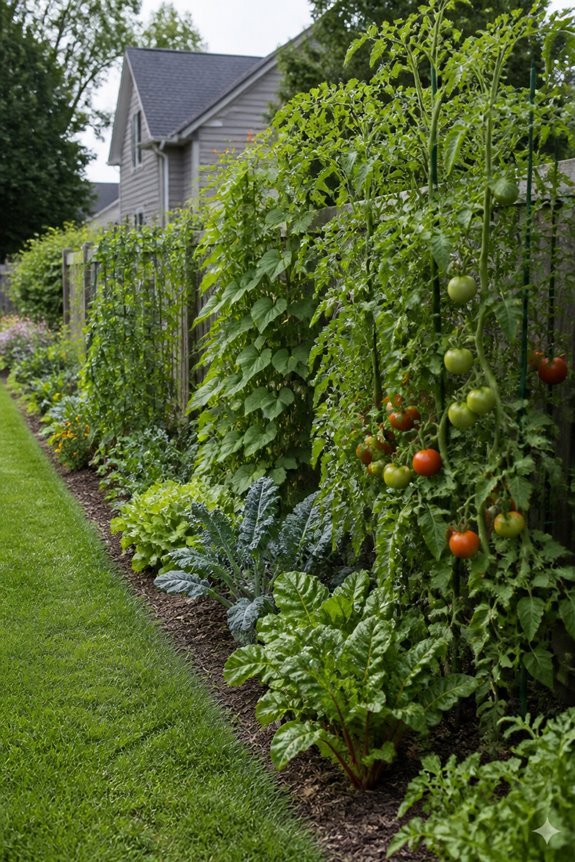
Tired of staring at that plain fence every morning? You can turn it into something alive and useful.
Plant edible shrubs and tall vegetables along your property line. Tomatoes, beans, and peppers grow into living borders that give you privacy plus dinner. Your neighbors might peek over, but they’ll see purple eggplants and green vines instead of boring posts.
Space your plants 18 to 24 inches apart so they can breathe. Put taller ones in back, shorter up front. Let green beans climb trellises. Tuck leafy greens into any gaps. You get a barrier that looks good and feeds your family.
Function beats boring every time. These edible walls give you bragging rights at the block party. Plus, thieves tend to skip yards where neighbors can see every plant. Security and snacks together.
Herb Spirals for Your Front Yard Garden
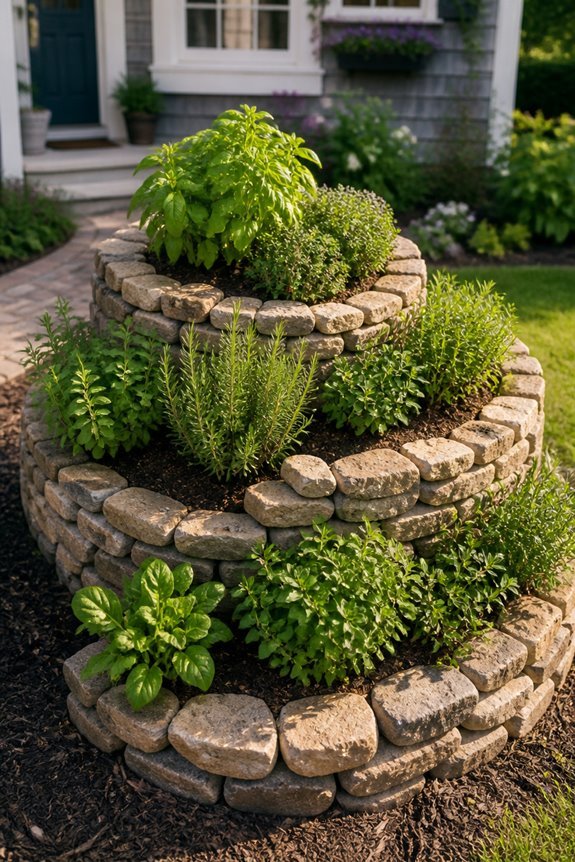
Short on space but hungry for more? Edible borders help with privacy, sure. But herb spirals squeeze way more growing power into tight spots.
Think vertical. Picture a cone-shaped stack of stones or wood about three feet high. Fill it with soil. Suddenly you’ve got a tiny herb factory that barely touches your yard. Basil loves the top. Thyme and oregano settle in the middle. Rosemary spreads along the lower edges. Water trickles down naturally, so roots stay happy and drainage handles itself.
A weekend of work and about twenty dollars transforms your front yard. You get fancy curb appeal plus dinner ingredients. Best part? No constant bending to snip herbs. Your back stays grateful.
Front Porch Potted Vegetables
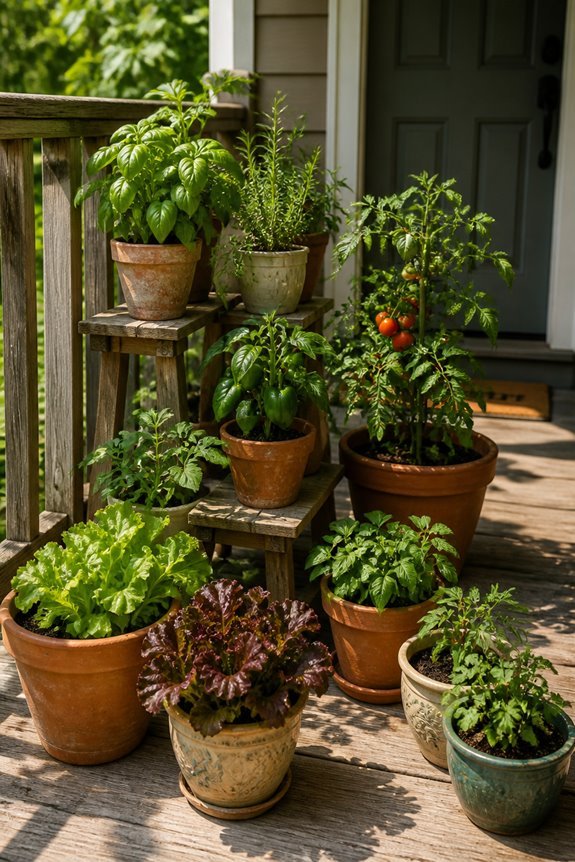
You walk up to your front door every day. Why not make that trip more interesting?
Containers by your entrance can turn a plain porch into your personal produce stand. You can grow tomatoes in ten-inch pots right near the door. They’ll stand tall and greet you like old friends. Peppers love sunny spots and won’t demand much attention. Lettuce works great in smaller pots too. Harvest it young before it gets leggy and bitter. Herbs like basil and parsley squeeze into tight corners without fuss.
Your guests will do a double take. Is this a home or a market? Neighbors will linger and ask how you got those cherry tomatoes so perfect. Here is what you need to know. Water regularly because dry plants look as sad as wilted grocery store greens. Place your containers where they soak up six hours of sun daily. Your porch can become the most productive spot on the block. You might even start giving vegetables away.
Companion Planting in Front Yard Gardens
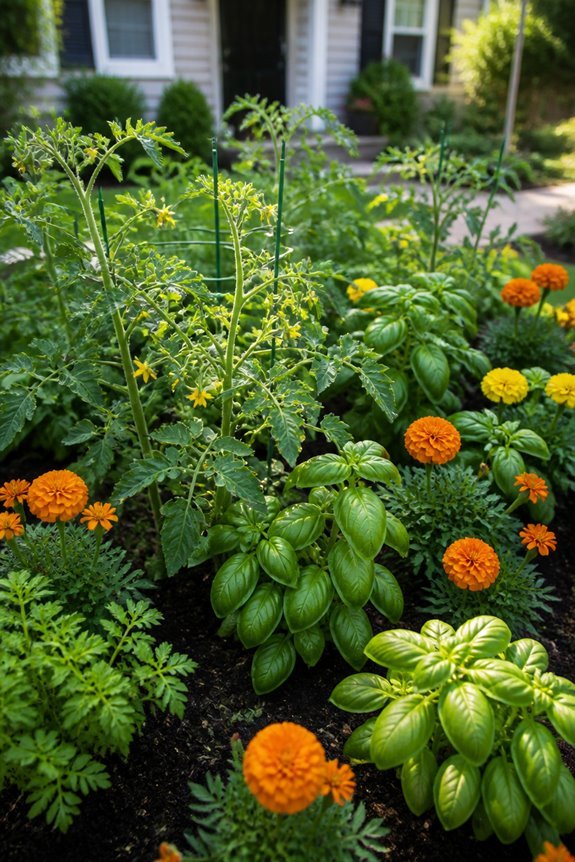
Tired of watching your porch plants struggle while you hover with a watering can? You can make them thrive by pairing them strategically.
Try this: tuck basil 12 inches from your tomatoes. Basil repels flies and mosquitoes, and some gardeners swear it makes tomatoes taste sweeter. Your carrots will thank you for planting onions nearby. Onion smell confuses carrot flies, so pests stay away. Want to use vertical space? Plant pole beans at the base of corn stalks. Beans climb those 6-foot stalks and add nitrogen back into your soil while they’re at it. Slip lettuce underneath taller plants like tomato cages. It craves that cool shade, especially in July heat. Marigolds work hard too. Plant them as borders, and they’ll guard your vegetables from aphids and beetles. Just keep fennel in its own container. It doesn’t play well with others. These partnerships mean less spraying, less fretting, and a front yard that looks alive and intentional.
Pretty Borders: Edging That Doubles as Design
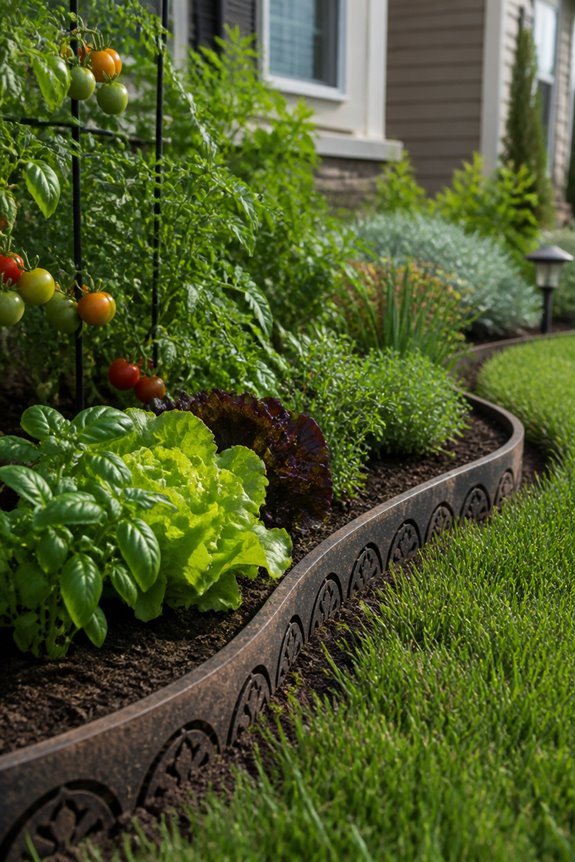
Most front yards have that sad, blurry line where garden meets lawn. You know the one. It looks tired and unfinished.
Edging fixes that fast. You can frame your vegetable beds like a picture frame around your masterpiece. Or your comedy of errors. Either way, it looks intentional.
Try raised metal edges for a sleek, modern vibe. Terracotta tiles add warmth and character. Curved stone gives you those elegant swoops you see in magazines. Wood feels cozy and rustic, but plan on replacing it eventually. Slugs love it like an appetizer.
Colored plastic strips work cheap and come in fun hues. Go six inches deep to stop grass from invading like an unwanted guest. Good edging also prevents lawn mower accidents and that untidy sprawl that drives you crazy.
Your front yard transforms from “what is that?” to “wow.” Neighbors will actually notice. Choose something that makes you smile when you see it daily.
Succession Planting: Harvesting Spring Through Fall
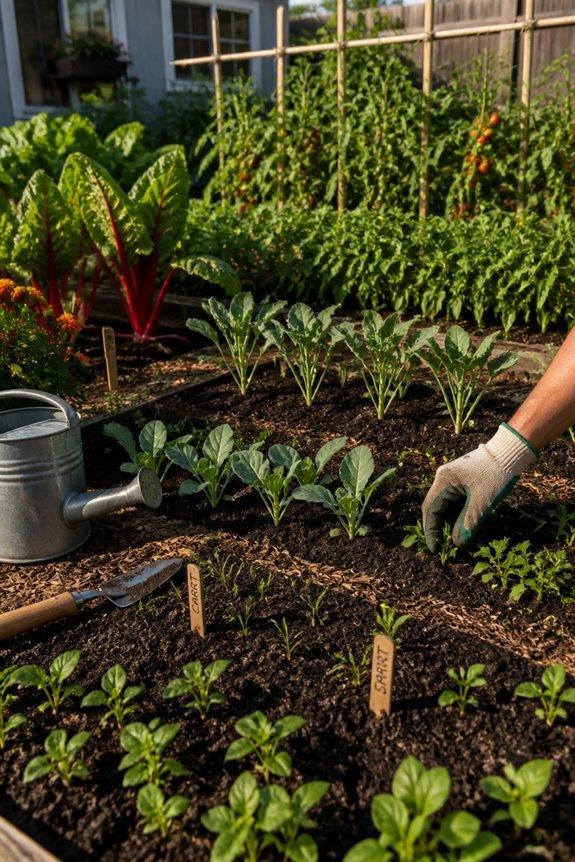
You’ve seen it happen. One weekend your lettuce patch explodes. The next, you’re staring at empty soil. Sound familiar?
Here’s the fix: succession planting. Sow seeds every two weeks instead of all at once. Plant lettuce in March, then April, then May. No more bitter bolted disasters. Beans go in April, then again in June for round two. May carrots keep producing through fall. You stagger everything so something’s always ripe.
Neighbors peek over your fence and wonder how you keep it going. Let them wonder. You’ll know the secret: steady, small plantings beat one big gamble every time. Spring sunshine to chilly autumn, your harvest never quits.
Best Vegetables for Front Yard Visibility and Beauty
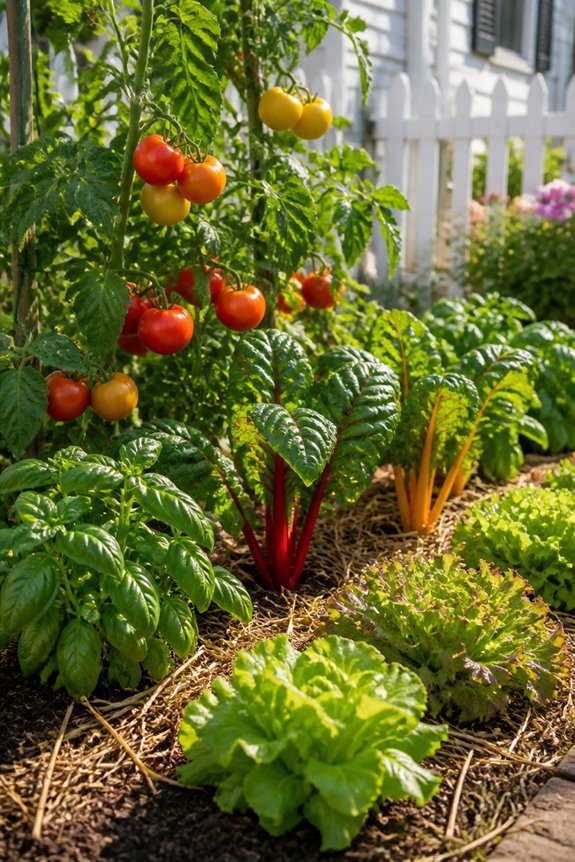
Tired of your front yard blending into every other lawn on the block? You can turn it into something that stops traffic in the best way.
Tomatoes give you instant drama. Those bright red fruits hang like little lanterns, and neighbors will slow their walks to stare. Lettuce works magic too. Plant it as a border and you get soft green waves that look too good to be real. Rainbow carrots hide their best colors underground, but their orange, purple, and yellow shoulders peek out like buried treasure. Swiss chard brings the sunset with it. Those pink and yellow stems catch golden hour light and glow from the curb.
Don’t forget the climbers and fillers. Pole beans scale trellises fast, turning bare fences into living green walls. Kale sits pretty in front beds with ruffled leaves that look almost too fancy to eat. Basil and rosemary stake out the edges with perfume that hits you as you walk by. Marigolds are your secret weapon. They aren’t vegetables, but they chase pests away while pumping out gold and orange blooms. Soon your yard becomes the one where strangers pause and ask, “Wait, can I actually eat that?”
Sunlight Mapping: Where to Position Your Garden
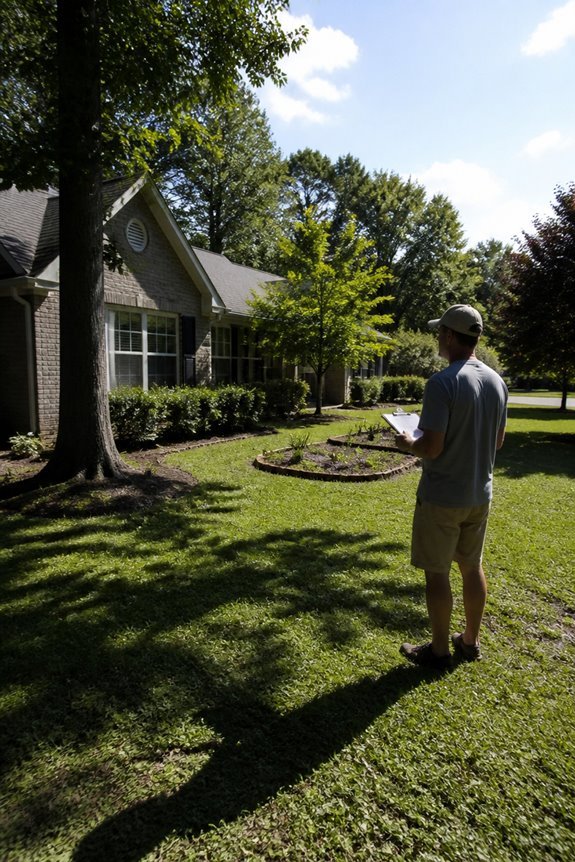
You’ve probably eyed that perfect spot in your yard already. But wait. Most vegetables need six to eight hours of direct sun every single day. No exceptions.
Track shadows for a week before you commit. Trees shift. Shadows grow. What looks sunny in March might disappoint by June. South-facing areas give you the steadiest light, so start there. Mark a few options with chalk or tape. Check them morning, noon, and evening. Your future tomatoes will thank you for the effort.
Skip the guesswork if you want. A sunlight meter app does the counting for you. Shady corners mean spindly plants and quiet dinner tables. Sun-drenched beds mean harvests worth sharing.
Soil Preparation and Drainage for Front Yard Success
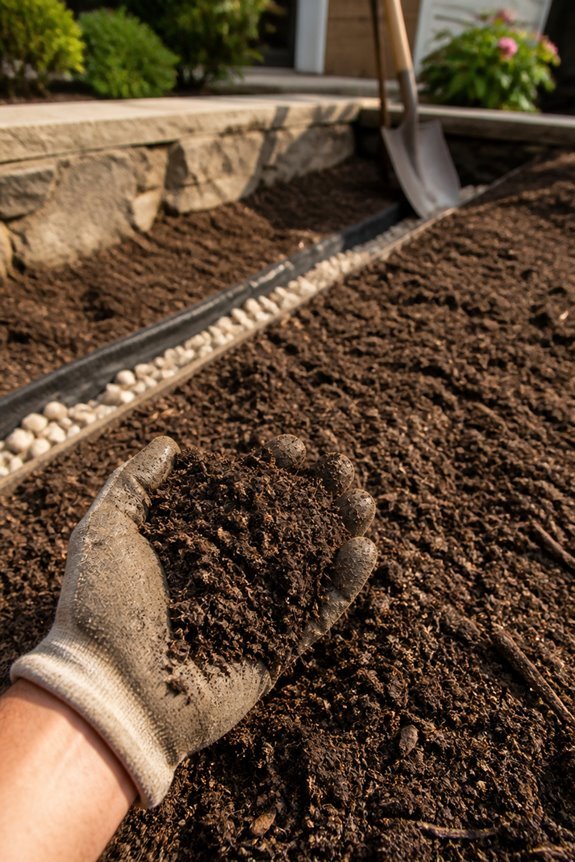
Good soil separates thriving gardens from disappointing ones. You need to know what you’re working with before you plant a single seed.
Test your soil first. It’s a simple step that saves you months of frustration. You want loose, dark soil that crumbles in your hand. Mix in 2 to 3 inches of compost or aged manure. Your vegetables will grow with energy instead of struggling just to survive.
Drainage deserves your attention too. Waterlogged soil suffocates roots quickly. Watch your yard after rain. Does water pool on the surface? That’s your warning sign. Add perlite or coarse sand to heavy clay. Build raised beds if the problem persists. Good drainage and rich soil together? That’s when gardening becomes the joy you hoped for.
Keeping Foot Traffic Out and Pests Away
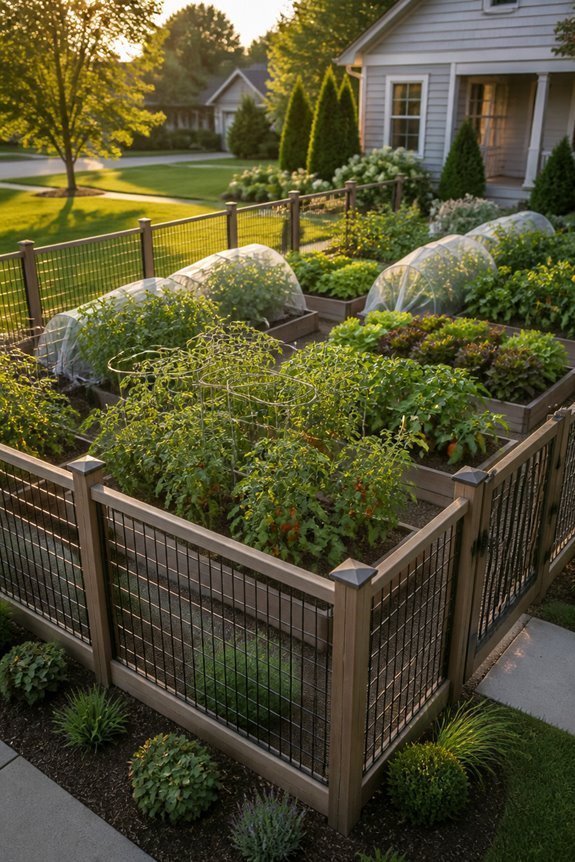
You’ve worked hard on your garden. The last thing you want is strangers cutting through it or rabbits treating your lettuce like a buffet.
A simple fence fixes the first problem. Go for something three to four feet high. White paint looks crisp against green plants. Natural wood blends in if you prefer that look. Add a small gate so you can get in easily. It also makes the space feel intentional, not accidental.
Now for the hungry visitors. Row covers keep insects off your seedlings. Netting stops birds from stealing your tomatoes. Scatter crushed eggshells around tender plants. Slugs will crawl the other way. Plant marigolds near your vegetables. Their smell confuses rabbits and keeps them moving.
Mulch paths or stepping stones keep feet on track. This protects your plants from well-meaning visitors. A small sign asking people to stay on the path can work wonders. Check your garden each morning. Catching problems early saves your harvest from becoming a free lunch.
Turning Lawn Into Garden: Low-Effort Conversions
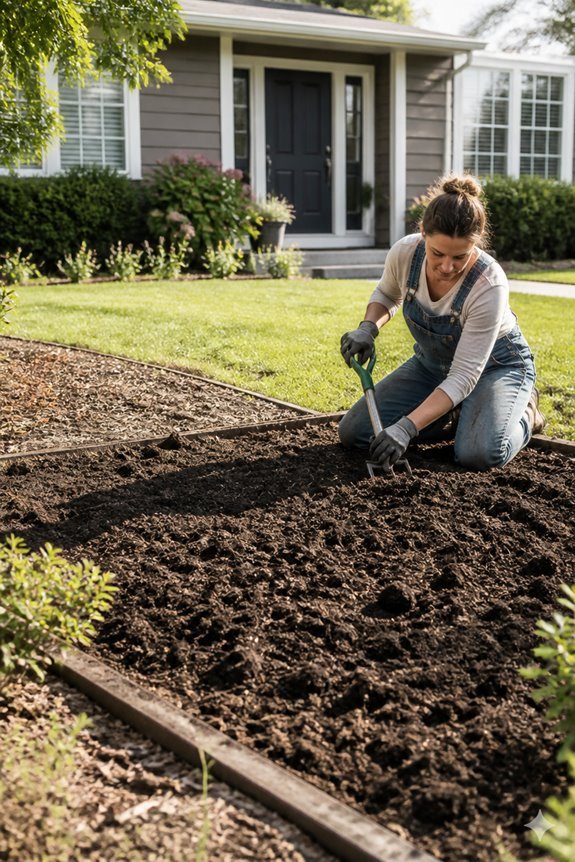
Ready to kiss your lawn goodbye? You don’t need fancy tools or a strong back for this. Just grab some cardboard.
Thick brown sheets work best. Lay them over your grass and overlap the edges by about a foot. Hose everything down so your hard work doesn’t blow down the street. Then pile on compost and topsoil. Eight to twelve inches does the trick.
The cardboard smothers the grass underneath. It breaks down slowly and feeds your plants later. No digging means no sore muscles tomorrow. You get an instant raised bed without spending hundreds on lumber.
Wood borders work great. So do old tires if you want something free. In a few weeks, you’ll have vegetables growing where grass used to be. Your neighbors might start asking for your secrets.
Frequently Asked Questions
How Much Does It Cost to Start a Front Yard Vegetable Garden?
One can establish a front yard vegetable garden for $50–$500, depending on scale and quality. Basic expenses include soil, seeds or seedlings, tools, and garden beds. Budget-conscious gardeners can minimize costs using recycled materials and starting from seeds rather than transplants.
What Permits or HOA Regulations Apply to Front Yard Vegetable Gardens?
Front yard vegetable gardens often require zoning permits in urban areas. Many homeowners associations restrict visible gardens or mandate aesthetic standards. Residents should consult local municipal codes and HOA bylaws before installation.
How Do I Protect My Front Yard Garden During Winter Months?
Gardeners can protect their front yard vegetables during winter by installing cold frames, applying mulch layers, using row covers, and selecting cold-hardy plant varieties. Proper drainage prevents frost damage, while strategic positioning shields plants from harsh winds.
Can I Grow Vegetables in Shaded Front Yard Areas Successfully?
Yes, one can successfully grow vegetables in shaded front yard areas. Leafy greens like lettuce, spinach, and kale thrive in partial shade. Root vegetables such as beets and carrots also tolerate reduced sunlight effectively, requiring minimum six hours daily.
How Much Time Weekly Does Front Yard Gardening Require for Maintenance?
Front yard vegetable gardening typically requires 3-5 hours weekly for maintenance. Tasks include watering, weeding, pest monitoring, and pruning. Time demands vary based on garden size, vegetable types, climate conditions, and soil quality. Established gardens need less attention than newly planted ones.
Conclusion
Front yard vegetable gardens genuinely give gardeners gorgeous growing grounds. They transform tired turf into thriving, tasty treasures. Whether picking raised beds, containers, or vertical vines, these verdant ventures promise profound pleasure. Your front-facing garden grows gorgeous greens and glorious gains—plus serious street cred. So stop stalling and start planting. Your neighbors will be seriously jealous watching your veggie victory unfold.