

Many homeowners are turning away from chemical fertilizers and discovering the benefits of manure for lawn care. This natural approach introduces organic matter into the soil, which improves water retention and creates a thriving environment for beneficial microbes. The shift toward sustainable practices has made animal manure an increasingly popular choice for those seeking healthier, more resilient grass.
Different types of manure offer unique advantages depending on your lawn’s needs. Horse manure tends to be well-balanced and easy to work with, while cow manure provides excellent moisture retention. Chicken manure packs the highest nutrient concentration but requires more careful handling due to its potency. Matching the right source to your specific soil conditions makes all the difference in achieving optimal results.
Timing and preparation matter just as much as selection. Fresh manure can harm grass through nutrient burn and may introduce harmful pathogens, so aging or composting beforehand is essential.
Applying manure during cooler months allows nutrients to integrate properly without stressing the lawn. With thoughtful attention to these details, manure transforms from a humble farm byproduct into the foundation of a truly vibrant green lawn.
Why Manure Beats Commercial Fertilizers
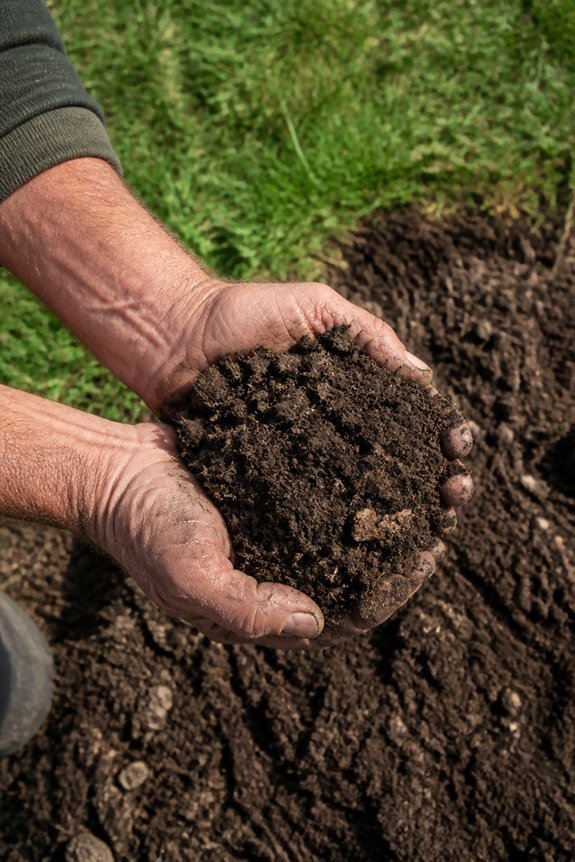
When choosing between manure and commercial fertilizers, homeowners discover that manure offers distinct advantages for long-term lawn health. Manure contains organic matter that improves soil structure, water retention, and microbial activity. Commercial fertilizers provide quick nutrient spikes but lack these soil-building properties.
Manure releases nutrients slowly, reducing burn risk and supporting steady growth. It costs less than synthetic products over time. Horse manure, cow manure, and chicken manure each provide different nutrient ratios suited to various lawn needs.
Commercial fertilizers require repeated applications throughout the season, whereas manure establishes lasting soil quality. Properly aged manure eliminates weed seeds and pathogens while enriching soil composition for years.
5 Manure Mistakes That Kill Grass
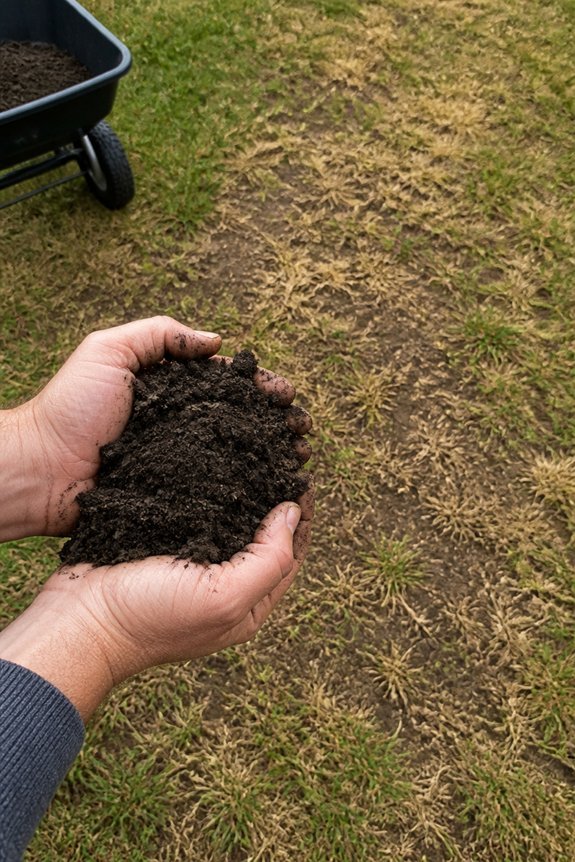
While manure delivers considerable benefits for lawn health, improper application creates serious problems that damage grass and soil alike.
The first mistake involves applying fresh manure directly to grass, which burns blades through high nitrogen concentration and introduces weed seeds. Applying excessive amounts, more than one inch annually, overwhelms soil and creates nutrient imbalances. Timing matters greatly: applying manure during summer heat stress compounds damage to already weakened grass.
Using manure from animals treated with persistent herbicides contaminates soil for months or years, killing desirable plants. Finally, failing to age or compost manure before application allows harmful pathogens and fly larvae to survive in lawn environments. Proper manure selection, appropriate timing, and measured application rates prevent these common issues effectively.
Horse, Cow, or Chicken Manure: Pick the Right Type
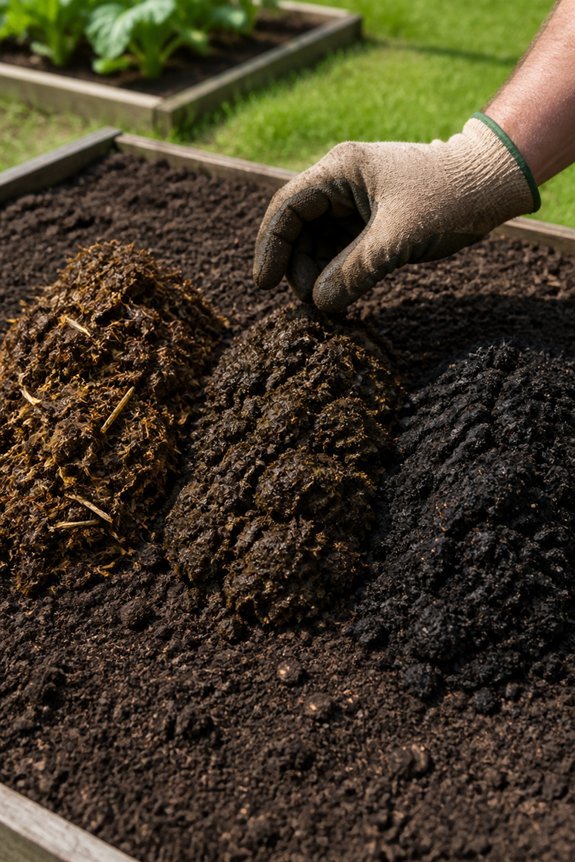
Which manure type suits a lawn best depends on nitrogen content, weed seed presence, and availability in the local area. Horse manure contains moderate nitrogen levels and generally fewer weed seeds than other types, making it suitable for most lawns.
Cow manure offers lower nitrogen content but breaks down slowly, providing long-term soil improvement. Chicken manure delivers high nitrogen concentration, requiring careful application to avoid burning grass.
Each type requires aging before use to reduce pathogens and ammonia. Horse and cow manure benefit from six months of composting, while chicken manure needs longer processing, typically eight to twelve months.
Local farms determine practical availability and cost. Testing soil nitrogen levels before application helps determine which manure type best addresses specific lawn deficiencies.
Apply Manure Without Burning Your Grass
Since manure contains concentrated nutrients, improper application causes grass damage, leaf burn, and patchy growth. Proper timing and quantity prevent these problems effectively.
Fresh manure should age for several months before spreading, allowing nutrient concentration to decrease. Well-composted manure poses less risk than raw material. Apply manure during spring or fall when grass grows actively and soil moisture levels remain adequate.
Spread manure thinly across the lawn, using approximately one-quarter to one-half inch of depth. Heavy application rates, exceeding one inch, frequently burn grass blades and create dead zones.
Water the lawn thoroughly after application, diluting nutrient concentration in the soil. This step reduces burn potential markedly. Testing soil beforehand identifies existing nutrient levels, preventing unnecessary over-application of manure products.
Fresh or Aged Manure: Which Prevents Burn?
How does manure age affect grass safety? Fresh manure contains high nitrogen levels, ammonia, and salts that burn grass blades and damage roots. Aged manure, decomposed for six months to two years, breaks down these harmful compounds considerably.
Fresh manure risks include severe leaf scorching, root damage, and nitrogen runoff into soil.
Aged manure benefits include reduced burn risk, slower and steadier nutrient release, improved soil structure, and lower ammonia content.
Composted manure, aged longest, presents minimal burning potential because decomposition neutralizes reactive compounds. The decomposition process converts raw nitrogen into stable forms plants absorb safely.
For immediate lawn application without burn damage, aged or fully composted manure proves superior to fresh material. Fresh manure requires additional composting time before safe lawn use.
NPK Nutrients: What Each Does for Your Grass
The three primary nutrients in lawn fertilizers, nitrogen, phosphorus, and potassium, each serve distinct functions for grass growth and health. Nitrogen promotes leafy, green growth by supporting blade development and color intensity. It works quickly, producing visible results within weeks of application.
Phosphorus strengthens root systems, enabling grass to absorb water and nutrients more effectively from soil. This nutrient proves especially valuable during establishment phases. Potassium increases overall plant hardiness, helping grass resist drought, disease, and temperature stress. It enhances cellular function and improves wear tolerance on high-traffic lawns.
Balanced fertilizers typically display ratios like 10-10-10 or 15-5-10, reflecting these three nutrient concentrations. Selection depends on specific lawn conditions and growth stage, making soil testing a practical first step.
Timeline: Your First-Season Results
Lawn improvement follows a predictable sequence when fertilizer applications align with grass growth cycles and seasonal conditions. During spring, grass responds to nitrogen by producing shoots and green color within two to three weeks. Summer applications maintain density, though heat stress may limit visible growth.
Fall feeding strengthens root systems over several weeks, preparing grass for winter dormancy. By season’s end, treated lawns typically show improved density, deeper color, and reduced bare patches compared to untreated areas. Results depend on baseline soil quality, existing grass health, and application timing.
Most homeowners observe noticeable improvements by mid-season, with substantial transformation evident after one complete growing cycle. Consistent management produces better outcomes than single applications.
Frequently Asked Questions
How Much Manure per Square Foot Should I Apply to My Lawn?
One should apply approximately 0.5 to 1 pound of well-composted manure per square foot of lawn. This guarantees adequate nutrient enrichment without overwhelming soil organisms. Application rates depend on soil quality and manure type.
Can I Use Manure From Animals Treated With Antibiotics or Medications?
Using manure from antibiotic-treated animals is generally safe for lawns. Most antibiotics break down in soil within weeks. However, one should verify the animal’s medication won’t negatively affect grass or soil microorganisms before application.
What Is the Best Time of Year to Apply Manure to Grass?
The ideal period for manure application is fall or early spring. Fall application allows decomposition over winter, enriching soil before spring growth. Early spring application provides nutrients as grass awakens. One should avoid summer application, as it may burn grass during heat stress.
How Long Does Manure’s Nutrient Content Remain Effective in Soil?
How long can gardeners expect manure’s benefits to last? Manure’s nutrient content typically remains effective in soil for six months to two years, depending on decomposition rate, manure type, and environmental conditions. Well-composted manure provides longer-lasting benefits than fresh varieties.
Will Manure Attract Rodents, Insects, or Parasites to My Lawn?
Manure can attract rodents, insects, and parasites, particularly if improperly applied or not fully composted. Fresh manure poses greater risks than aged or composted varieties. Proper incorporation into soil and complete decomposition markedly reduce pest attraction concerns.
Conclusion
The choice between manure types, application timing, and aging methods determines whether lawns flourish or fail. Homeowners who master nitrogen, phosphorus, and potassium ratios witness dramatic transformations by season’s end. However, one critical mistake—applying fresh manure or using incompatible types—can reverse all progress. Success requires testing soil, selecting appropriate manure, and monitoring results carefully. The difference between thriving grass and damaged turf hinges on these decisions.