
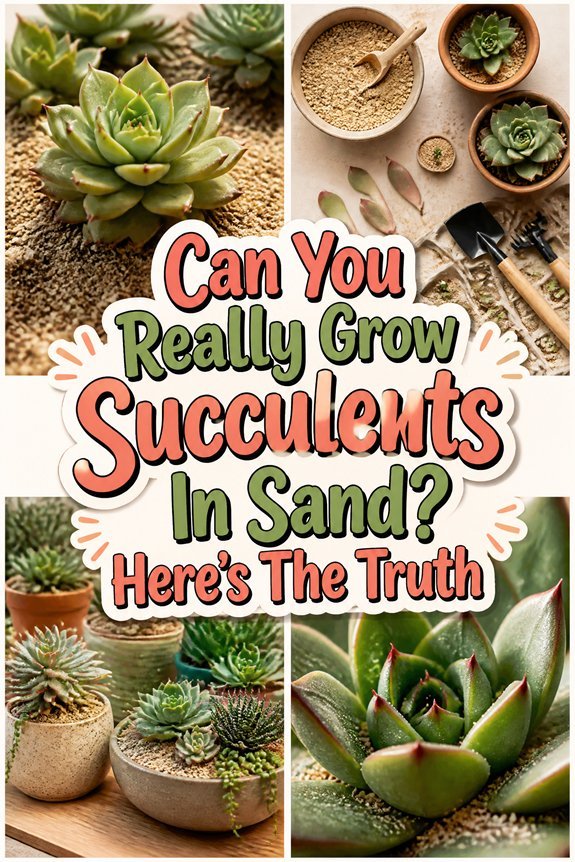
Growing succulents in pure sand seems intuitive. Desert plants, desert conditions, right? Yet this common assumption trips up countless gardeners.
Sand presents several dealbreakers for healthy succulent growth. It contains virtually no nutrients to feed your plants. Over time, it packs down hard, squeezing out the air pockets roots desperately need. What starts as a well-meaning experiment often ends with wilting, unhappy plants.
Container gardening simply cannot replicate natural desert environments. In the wild, succulents tap into deep, complex soil systems with organic matter and drainage patterns impossible to mimic in a pot. The difference between surviving and thriving becomes stark when you understand what these plants actually require.
Smart growers skip the pure sand approach entirely. Instead, they blend gritty amendments like perlite or pumice into quality potting soil. This creates the fast-draining, oxygen-rich environment succulents love while preserving essential nutrients.
Your plants will reward you with fuller leaves and stronger root systems.
Why Growing Succulents in Pure Sand Actually Fails
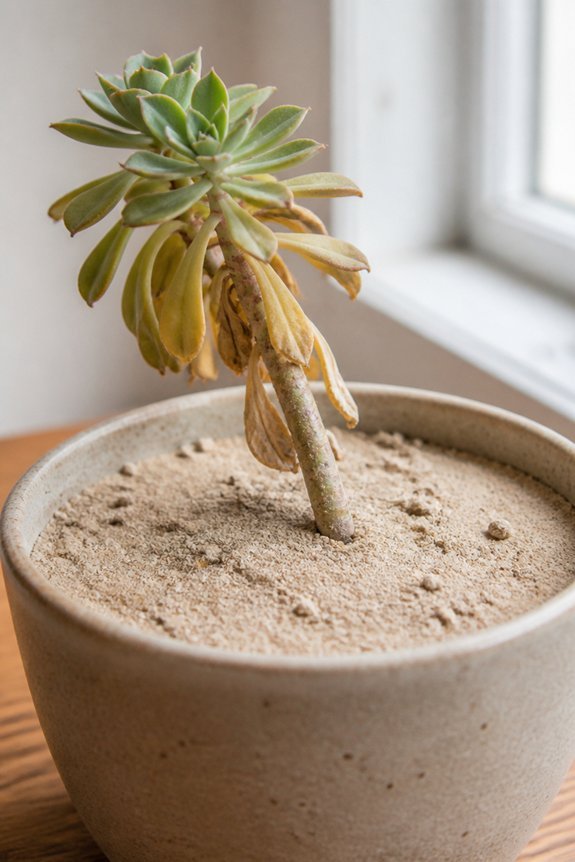
Why does pure sand fail as a growing medium for succulents, despite its excellent drainage properties? Sand lacks essential nutrients that plants require for growth, including nitrogen, phosphorus, and potassium. Water drains through sand so rapidly that roots cannot absorb sufficient moisture between waterings.
Sand particles compact over time, reducing oxygen availability and root penetration. Pure sand also fails to retain beneficial microorganisms and mycorrhizal fungi that assist nutrient uptake. The medium provides no structure for root stability, causing plants to become loose and unstable.
Succulents like echeveria and aloe need some water retention capacity; sand offers none. Additionally, sand cannot buffer pH changes or support the microbial activity necessary for plant health.
A successful succulent medium combines sand with perlite, pumice, and organic matter to balance drainage with nutrient retention and structural support.
The Real Problem: What Your Succulent’s Roots Need
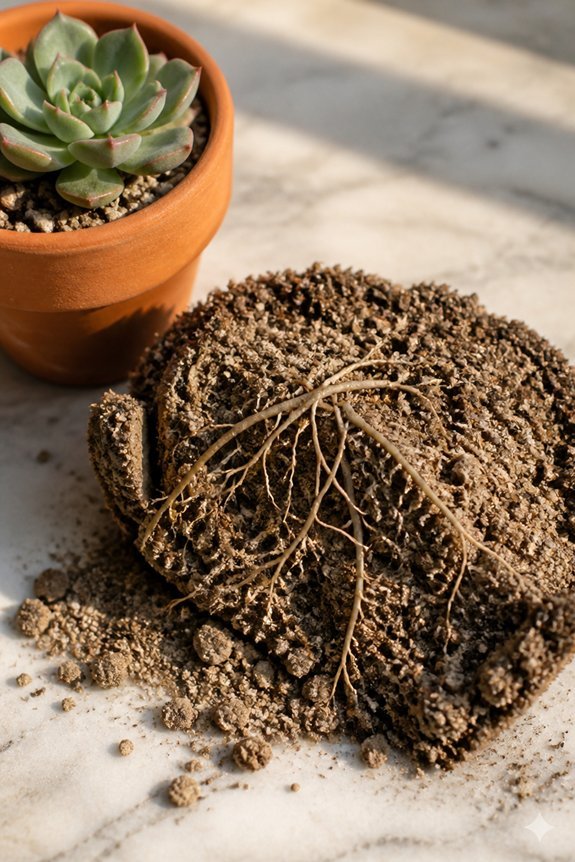
What do succulent roots actually require to thrive in a growing medium? Succulent roots need three essential elements: drainage, aeration, and minimal nutrient retention.
Pure sand fails because it lacks structure and nutrients. Sand particles are uniform and compact easily, restricting oxygen flow to roots. Succulents require air pockets around their roots to prevent rot and encourage growth.
Additionally, sand drains water too quickly, failing to retain moisture the plant needs between waterings. The medium becomes hydrophobic, meaning water runs through without absorption.
Succulent roots thrive in porous, well-draining mixes containing perlite, pumice, or coarse bark alongside soil. These materials maintain air spaces, balance water retention, and support root development. A quality growing medium prevents root diseases while providing structural support for the plant’s growth.
The Best Soil Mix for Thriving Succulents
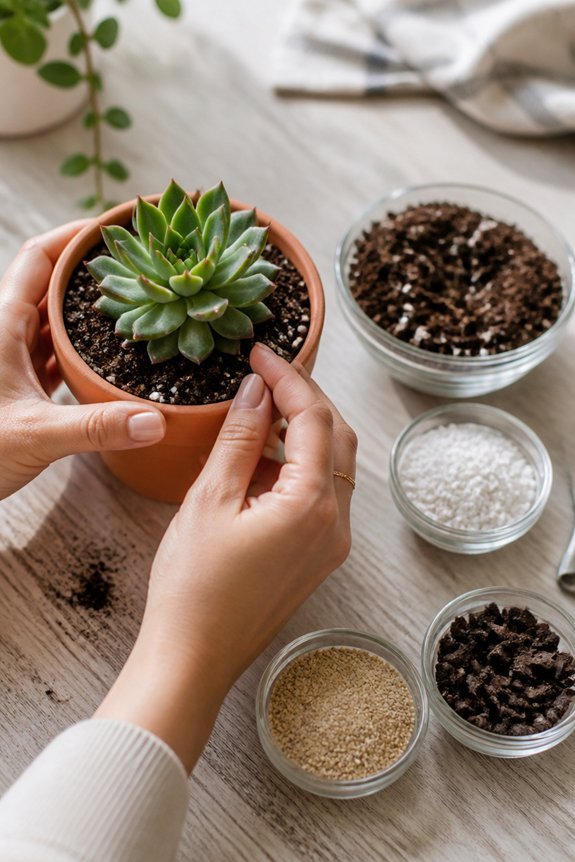
Creating an ideal growing medium requires combining specific materials in proper proportions. The best soil mix for succulents includes coarse sand, perlite, and regular potting soil in a 2:1:1 ratio. This combination provides drainage while retaining minimal moisture.
Pure sand alone lacks nutrients and compacts over time, restricting root development. Adding perlite creates air pockets, essential for oxygen circulation. Potting soil contributes necessary minerals and organic matter that sand cannot provide.
Some growers prefer a 1:1 ratio of sand to perlite with no additional soil, depending on their local humidity levels and watering habits. The goal remains consistent: fast drainage with adequate aeration. Testing different ratios helps determine which mix works best for individual growing conditions and succulent species.
How to Revive Succulents Already Planted in Sand
Many succulents planted in pure sand show signs of decline, including stunted growth, yellowing leaves, and root rot. Repotting into a proper soil mix offers the most effective recovery solution.
Remove the plant carefully, inspect roots for damage, and trim any blackened or mushy sections with clean scissors. Prepare a container with drainage holes and fill it with a cactus or succulent-specific soil mix, which typically contains peat moss, perlite, and coarse sand in balanced proportions.
Place the succulent in the new soil, ensuring the base sits slightly above the surface. Water lightly after repotting, then hold off watering for several days.
Jade plants, echeveria, and aloe respond particularly well to this intervention, often showing improvement within two to three weeks.
Soil Recipes for Different Types of Succulents
Because different succulent species have varying water retention and drainage needs, tailored soil mixtures produce better results than single-ingredient solutions.
Echeveria and jade plants thrive in a blend of one part potting soil, two parts coarse sand, and one part perlite. This combination balances moisture retention with drainage. Aloe and agave require sharper drainage, so a mixture of two parts sand, one part potting soil, and one part pumice works better.
Sempervivum tolerates leaner conditions and benefits from three parts sand, one part potting soil, and minimal organic matter. Lithops, or living stones, need extremely gritty soil: three parts sand, one part perlite, and minimal soil.
Adjust recipes based on local humidity, rainfall, and container type. Clay pots dry faster than plastic containers, requiring slightly richer soil mixtures.
How to Use Sand the Right Way (As Part of a Mix)
Sand functions as a drainage component in succulent soil mixtures, not as a standalone growing medium. Combining sand with other materials creates the proper balance for healthy succulent growth.
A basic mix combines coarse sand, potting soil, and perlite in equal parts. This blend prevents water from sitting around roots, which causes rot in echeveria, jade plants, and aloe species.
Gardeners should use coarse or builder’s sand rather than fine sand. Fine sand compacts too densely, blocking airflow and drainage effectiveness.
The ratio matters considerably. A typical formula includes one part sand, one part potting soil, and one part perlite or pumice. Adjusting proportions depends on the specific succulent type and local humidity levels.
Mixing these components thoroughly guarantees consistent drainage throughout the container, supporting root health and preventing moisture-related problems.
Frequently Asked Questions
Can I Use Beach Sand or Should I Purchase Horticultural Sand for Succulents?
Horticultural sand is preferable to beach sand for succulents. Beach sand contains salt and fine particles that retain moisture and compact easily, creating poor drainage conditions. Horticultural sand offers superior drainage and aeration, promoting healthier succulent growth and preventing root rot.
How Often Should I Water Succulents When Planted in Sand-Based Soil Mixes?
Ironically, despite sand’s excellent drainage properties, one must resist the urge to water frequently. Succulents in sand-based mixes typically require watering only every two to three weeks, allowing the soil to dry completely between waterings.
Will Adding Sand to Regular Potting Soil Improve Drainage for My Succulents?
Yes, adding sand to regular potting soil markedly improves drainage for succulents. The coarse particles create air pockets, allowing water to move through the medium more quickly, reducing the risk of root rot and promoting healthier plant growth overall.
What’s the Ideal Sand-To-Soil Ratio for Different Succulent Species and Sizes?
Most succulents thrive with a 1:1 or 2:1 sand-to-soil ratio. Smaller species and container plants benefit from equal parts, while larger varieties tolerate higher sand concentrations. Growers should adjust ratios based on local humidity and drainage conditions.
Can I Use Sand as a Top Dressing Layer on Succulent Containers?
Yes, sand functions as an effective top dressing for succulent containers. It enhances drainage, reduces moisture retention around the plant base, and improves aesthetic appeal. Coarse sand works best, preventing soil compaction while allowing water to permeate efficiently through the medium.
Conclusion
Growing succulents in pure sand seems logical but fails silently. Roots struggle, oxygen disappears, and plants weaken gradually. The solution remains straightforward: combine coarse sand, perlite, and potting soil in balanced proportions. This mixture drains properly, prevents compaction, and supplies necessary nutrients. Sand serves a purpose, but only as one component among others. Gardeners who ignore this distinction watch their succulents decline. The choice between sand alone and proper soil mix determines success or failure.