
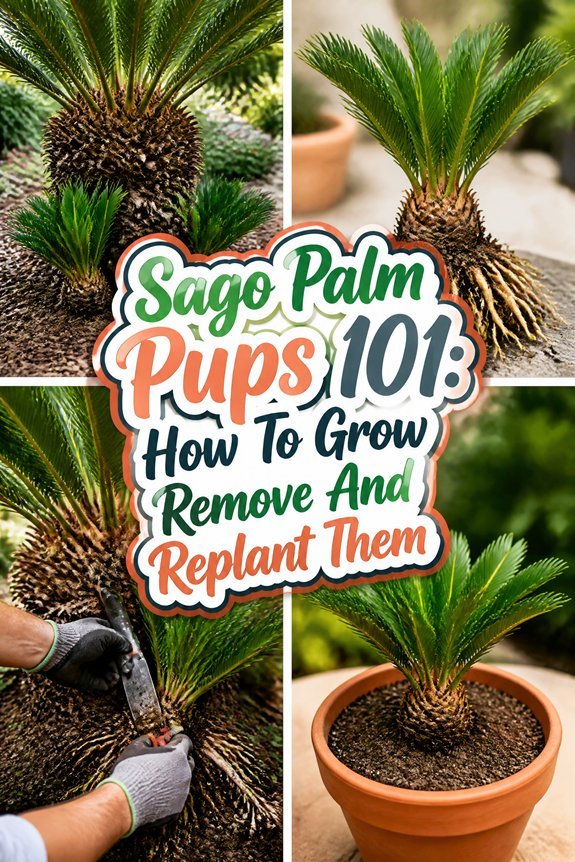
Sago palm pups emerge as tiny offshoots from established plants, presenting an easy way to expand your garden. These compact clones typically develop their own root systems and reach four to six inches tall before they’re ready for separation.
Timing matters significantly here – removing them too early risks damage, while waiting too long complicates extraction.
Before starting, gather sharp pruning shears, a clean knife, and sterilizing solution. Some gardeners also keep rooting hormone handy to encourage faster establishment.
The actual removal requires patience: cut carefully where the pup meets the parent trunk, preserving as many roots as possible. Avoid tearing or twisting motions that could harm both plants.
Once separated, pups need proper attention to thrive. Plant them in well-draining soil and maintain consistent moisture without oversaturating.
Partial shade protects vulnerable new specimens from harsh sun. With attentive care, these small offshoots gradually mature into striking specimens that mirror their parent plant’s architectural beauty.
What Are Sago Palm Pups and When Do They Appear?
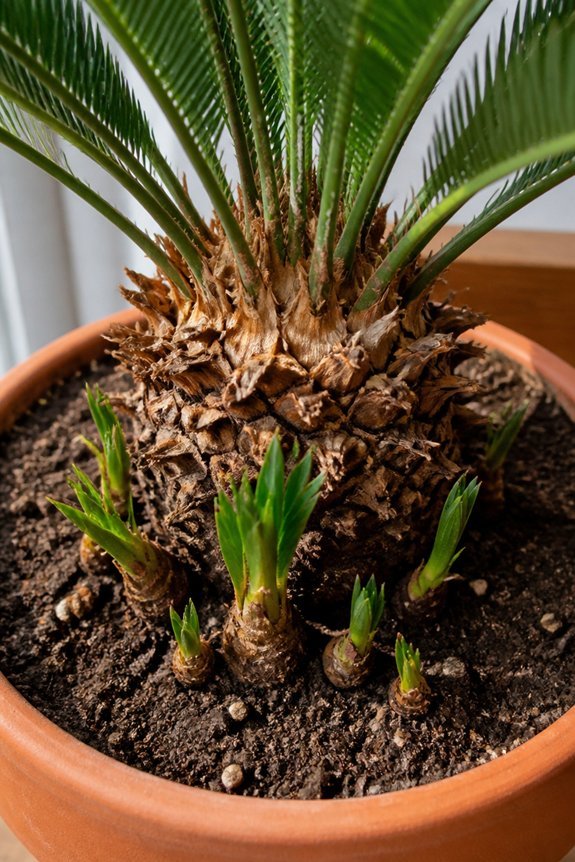
Sago palm pups are small offshoots or baby plants that grow from the base of a mature sago palm tree. These miniature versions develop naturally when the parent plant reaches maturity, typically after several years of growth. Pups emerge from the soil surrounding the trunk, appearing as small leafy shoots with their own root systems.
They usually become visible when the main sago palm is between five and fifteen years old. Environmental conditions, including adequate sunlight and moisture, encourage pup development. Gardeners notice them sprouting during warm growing seasons, particularly in spring and early summer months.
The number of pups varies by plant health and growing conditions. Some mature sago palms produce multiple pups simultaneously, while others generate them sporadically over time. These offshoots indicate a healthy, established parent plant ready for propagation.
Signs Your Pups Are Ready to Remove
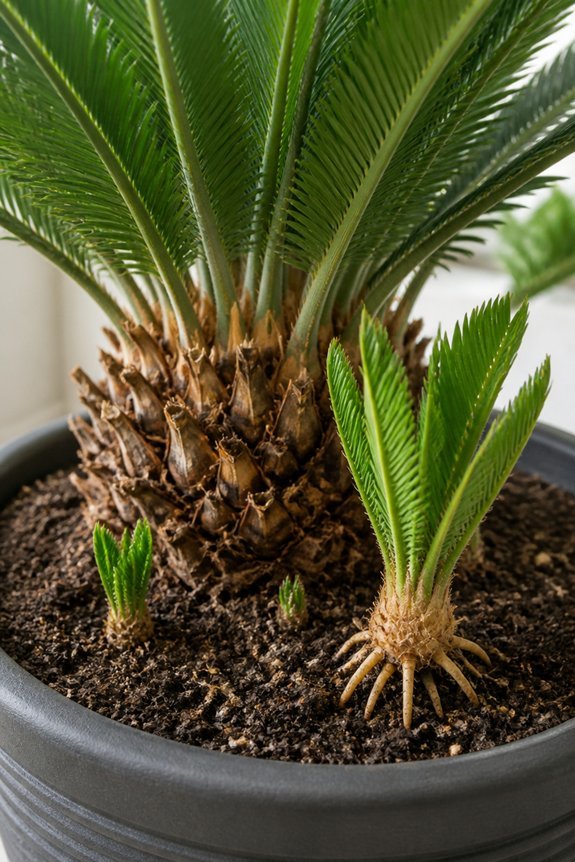
Once pups have emerged from the base of the parent plant, gardeners must identify when they have developed sufficiently for removal.
Pups are typically ready for separation when they reach 4 to 6 inches in height and display their own root system. Observable roots should measure at least 1 inch long, indicating the pup can survive independently. The pup’s fronds should appear healthy and green, not wilted or discolored.
Maturity generally occurs 12 to 18 months after emergence. Gardeners can gently excavate soil around the pup’s base to inspect root development without full removal. A pup with multiple fronds and established roots demonstrates readiness.
Premature removal risks pup failure, while delayed removal wastes growing time. Proper identification guarantees successful transplanting into new locations.
Tools and Materials You’ll Need
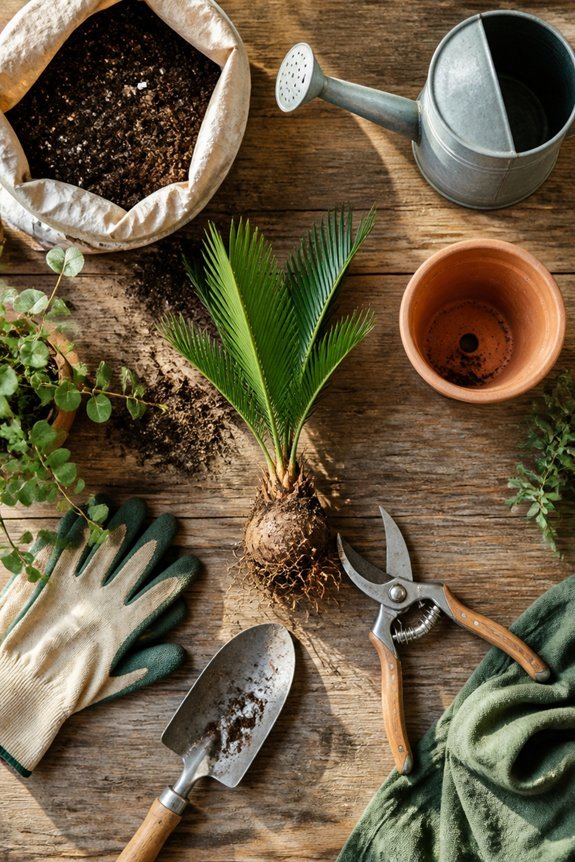
Several essential tools and materials facilitate the safe removal and transplanting of sago palm pups. A sharp pruning saw or knife cuts through the parent plant’s base cleanly. Heavy-duty gloves protect hands from sharp fronds and thorns during handling.
A sterilized spade or digging tool excavates soil around the pup’s base. Sterile potting soil, peat moss, and perlite create suitable growing medium. Rooting hormone powder encourages root development on newly separated pups.
Containers with drainage holes prevent waterlogging. A spray bottle maintains moisture levels during establishment. Newspaper or cloth wrapping protects the pup during transport. Rubbing alcohol disinfects tools between cuts, reducing disease transmission.
Gardeners should gather these materials before beginning removal work.
How to Safely Remove Pups Without Damaging the Mother Plant
Careful technique protects both the developing pup and the parent plant during separation. A sharp, clean knife or pruning saw works best for cutting pups away from the main trunk. The tool should be sterilized with rubbing alcohol before use to prevent disease transmission.
Gardeners should locate the pup’s base, where it connects to the mother plant, and cut downward at a slight angle. Removing soil around the connection point first reveals the exact separation point. The cut should be smooth and clean, not jagged or crushed.
After removal, both the pup and the parent plant’s wound require treatment with fungicide powder. This prevents rot and infection in the exposed tissue. The mother plant continues growing normally once the pup detaches successfully.
Preparing and Stabilizing Removed Pups
After the pup separates from the mother plant, it requires proper preparation before planting in soil. The removed pup needs time to develop calluses on its cut surfaces, which typically takes one to two weeks. During this period, the pup should rest in a warm, dry location away from direct sunlight.
Inspect the pup for damage, disease, or rot. Remove any infected tissue with sterile tools. The base where it connects to the mother plant must fully dry and harden.
Once callused, the pup is ready for stabilization. Place it in well-draining potting medium, such as sandy soil or cactus mix. Water sparingly initially. Position the pup upright in indirect light, maintaining temperatures between 70-80 degrees Fahrenheit. These conditions encourage root development and establishment.
Planting and Growing Your New Sago Palm Pups
Once the pup has developed a solid callus and shows early root formation, it shifts from stabilization to active growth in a permanent container. A well-draining soil mix, containing peat moss, perlite, and coarse sand, supports healthy root development. The container should have drainage holes and measure six to eight inches in diameter for young pups.
Placement in bright, indirect light encourages steady growth without stress. Water moderately when the top inch of soil feels dry. Sago palms grow slowly, typically producing one new frond per year.
Feed with balanced, diluted fertilizer during the growing season. Temperatures between 70 and 85 degrees Fahrenheit remain ideal. Expect the pup to mature into a full-sized plant within five to ten years.
Sago Palm Pup Problems and Solutions
Despite proper care and ideal growing conditions, sago palm pups can still encounter obstacles that slow growth or damage the plant. Common issues include root rot, caused by overwatering or poor drainage, which manifests as soft, blackened roots and yellowing leaves. Pest infestations, particularly scale insects and spider mites, weaken pups by feeding on plant tissue and spreading disease. Nutrient deficiencies, especially nitrogen and magnesium, result in pale or yellowed foliage.
Solutions involve adjusting watering schedules to allow soil drying between waterings, improving drainage with perlite or sand, and inspecting leaves regularly for pest activity. Applying neem oil controls common insects effectively. Fertilizing with balanced, diluted fertilizer addresses nutrient gaps. Removing affected leaves prevents disease spread and encourages healthier new growth.
Frequently Asked Questions
How Long Does It Take for Sago Palm Pups to Mature Into Full-Sized Plants?
Sago palm pups typically require 5-7 years to develop into full-sized, mature plants capable of producing cones. The growth rate depends considerably on environmental conditions, including adequate sunlight, proper soil drainage, and consistent moisture levels throughout their development period.
Can You Propagate Sago Palm Pups in Water Before Transplanting to Soil?
Like seeds seeking fertile ground, sago palm pups can indeed root in water before soil transplanting. However, growers should note that water propagation proves slower and riskier than direct soil planting, as pups prefer well-draining media to prevent rot development.
What Is the Best Time of Year to Remove and Replant Sago Palm Pups?
The ideal time occurs during spring and early summer when the parent plant experiences active growth. This period provides pups perfect conditions for establishing roots and developing into independent plants before winter dormancy arrives.
Do Sago Palm Pups Need Special Humidity or Misting During the Rooting Process?
Sago palm pups benefit from consistent moisture during rooting but do not require excessive humidity or frequent misting. Maintaining evenly moist soil and providing bright, indirect light supports successful root development without creating conditions prone to rot.
How Often Should Newly Planted Sago Palm Pups Be Fertilized for Optimal Growth?
Newly planted sago palm pups should be fertilized sparingly during their first growing season. Once established, they benefit from light fertilization every two to three months during the growing season, using a balanced, slow-release fertilizer formulated for palms.
Conclusion
Growing sago palm pups requires patience, precision, and proper timing. The process—from identifying viable pups to establishing rooted plants—demands clean tools, fungicide treatment, and callusing periods. Success depends on maintaining warm temperatures, indirect light, and well-draining soil during establishment. Understanding pup readiness and removal techniques prevents damage to parent plants, ensuring both original palms and new propagates thrive in appropriate growing conditions.