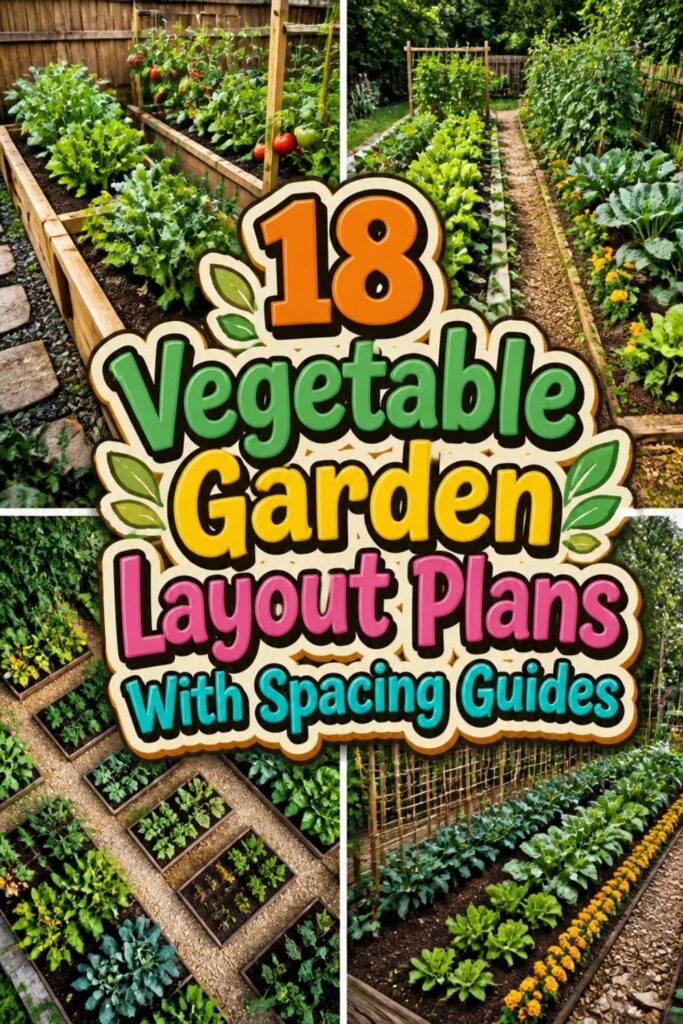
Planning a vegetable garden starts with understanding how layout and spacing work together. The right configuration transforms even modest spaces into productive growing areas, whether you’re working with a sunny windowsill or a sprawling backyard.
Container gardens offer flexibility for patios and balconies, while square foot grids squeeze maximum yield from tight corners. Raised beds improve drainage and reduce back strain, and permaculture designs create self-sustaining ecosystems over time.
These eighteen plans address real constraints: limited square footage, poor soil quality, or the need for continuous harvests throughout the seasons.
Each approach includes specific spacing guidelines to prevent overcrowding and encourage healthy growth.
Selecting among them means matching your available space, time commitment, and harvesting goals to a design that fits your life. The details within each plan show exactly how to make that match.
Match the Layout to Your Time, Not Just Your Space
Some designs on this list demand weekly attention, while others largely run themselves once established. Row gardens and succession plantings reward gardeners who visit daily, whereas no-dig beds, straw bales, and permaculture guilds ask for heavy setup work and little else afterward. Spacing guidelines appear in every entry below, so once you pick a design that fits your schedule, the numbers you need are already there.
Container Vegetable Garden Layout for Patios and Balconies
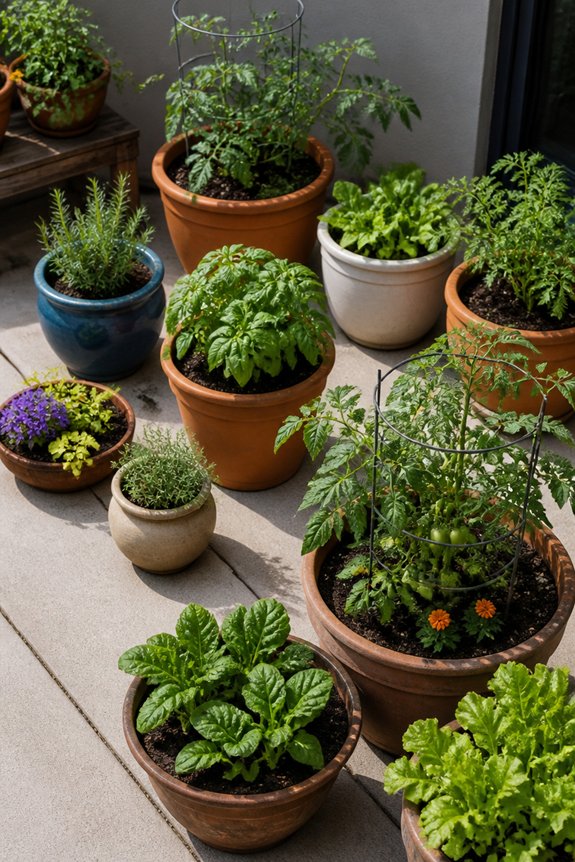
How can gardeners grow vegetables when they only have a patio or balcony instead of a yard? Container gardening offers a practical solution, allowing vegetables to grow in pots, grow bags, or raised planters arranged to maximize limited space.
Larger containers, such as five-gallon buckets, suit tomatoes, peppers, and eggplants, since these plants need deeper root space. Smaller pots work for lettuce, herbs, and radishes, which have shallow roots and grow quickly.
Vertical arrangements, including tiered shelving or hanging planters, help gardeners use wall space efficiently, freeing up floor area for larger pots. Spacing between containers should allow airflow and sunlight access, reducing disease risk. Grouping plants by water needs, placing thirsty vegetables together and drought-tolerant ones separately, simplifies maintenance and prevents overwatering or underwatering issues within a compact layout.
Vertical Vegetable Garden Layout for Tight Spaces
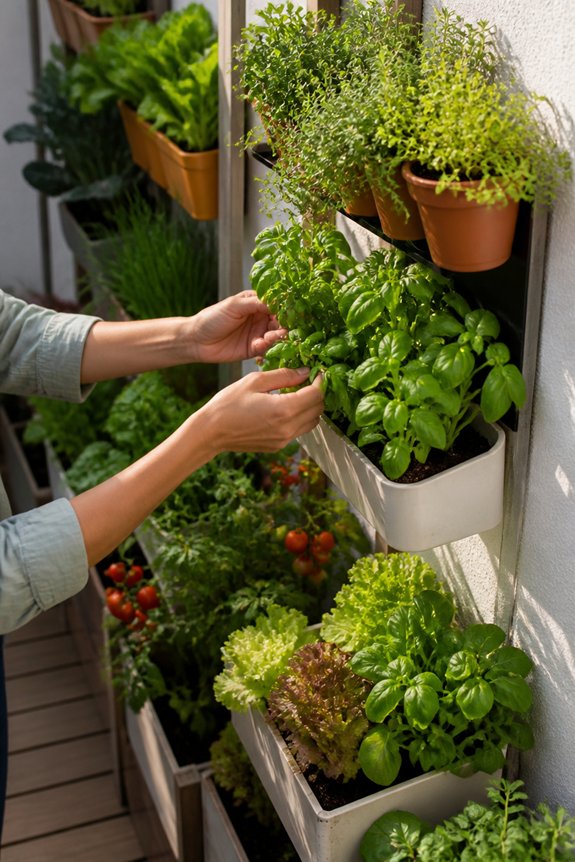
When floor space runs short, growing upward becomes the most efficient option for producing a substantial vegetable harvest. Trellises, stacked planters, and wall-mounted pockets allow vining crops like cucumbers, pole beans, and peas to climb rather than sprawl. A-frame trellises placed along fences support tomatoes and small melons, while tiered plant stands hold lettuce, herbs, and strawberries at different heights.
Spacing guides still apply vertically, with six to twelve inches between plants depending on root size, since crowding reduces airflow and invites disease. Hanging baskets work well for trailing varieties, including cherry tomatoes and nasturtiums. Materials such as cattle panel, bamboo stakes, or repurposed pallets provide sturdy support without requiring much ground area, making vertical layouts practical for balconies, narrow yards, or urban lots with limited soil access.
Square Foot Vegetable Garden Grid Plan
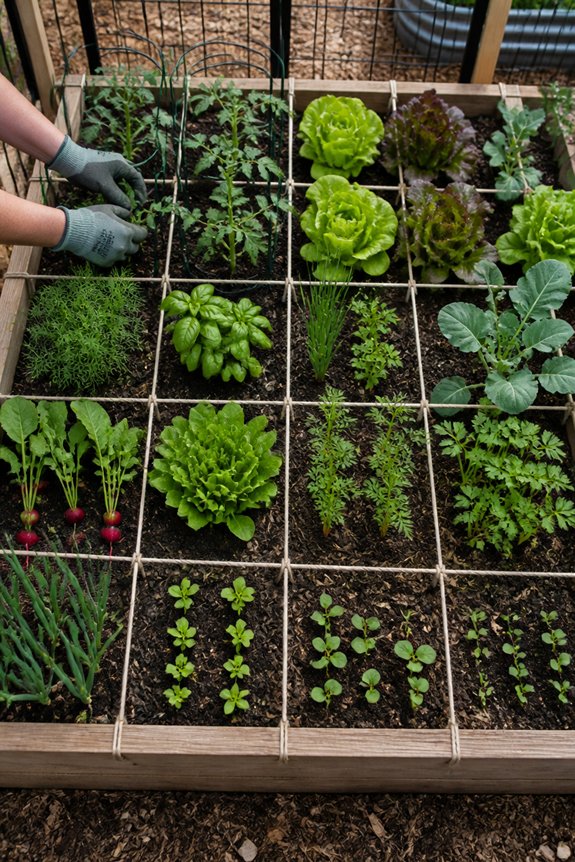
Dividing a raised bed into a grid of one-foot squares simplifies planning and keeps crops organized without wasted space. Each square holds a set number of plants, based on mature size, with one tomato filling a full square, while sixteen carrots or nine bush beans share that same space.
A typical four-by-four bed creates sixteen squares, allowing gardeners to mix lettuce, radishes, spinach, and herbs within a small footprint. Wooden lath or string strips mark the grid lines, making spacing visible at a glance. Taller crops belong on the north side, so shorter plants like onions or beets receive adequate sunlight.
This method suits beginners, since it removes guesswork from row spacing and reduces overplanting, a common issue in traditional garden layouts.
Raised Bed Vegetable Garden Layout for a 4×8 Plot
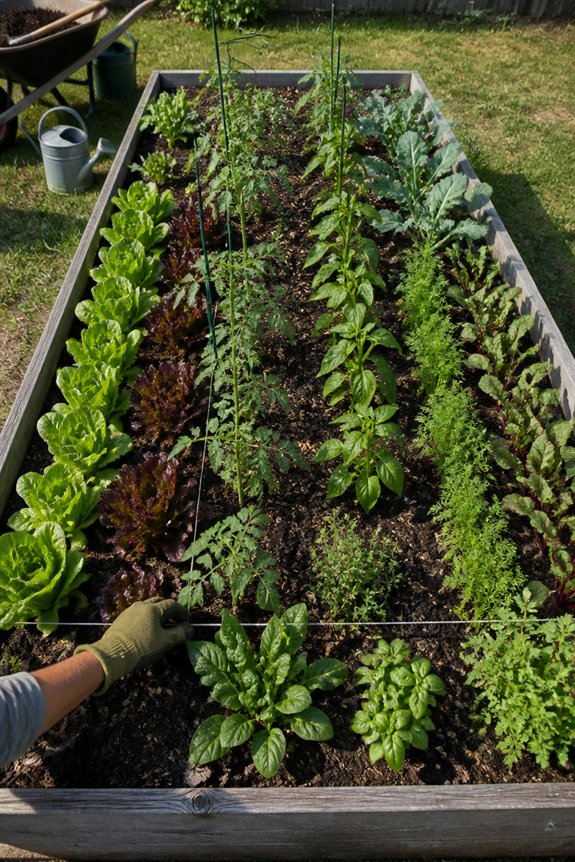
Many home gardeners choose a 4×8 raised bed because it offers ample growing space while still allowing easy access from either side without stepping onto the soil. This size divides naturally into two 4×4 sections, making it practical to separate tall crops from low-growing ones.
Taller plants, such as tomatoes, pole beans, or trellised cucumbers, are typically placed along the north end so they do not shade shorter crops. The south end works well for lettuce, carrots, radishes, and onions, which need consistent sunlight. Pathways along both long sides allow gardeners to reach the center without compacting the soil.
Companion planting, such as pairing basil with tomatoes or marigolds with peppers, is often incorporated to support plant health and manage pests.
Small Backyard Vegetable Garden Layout
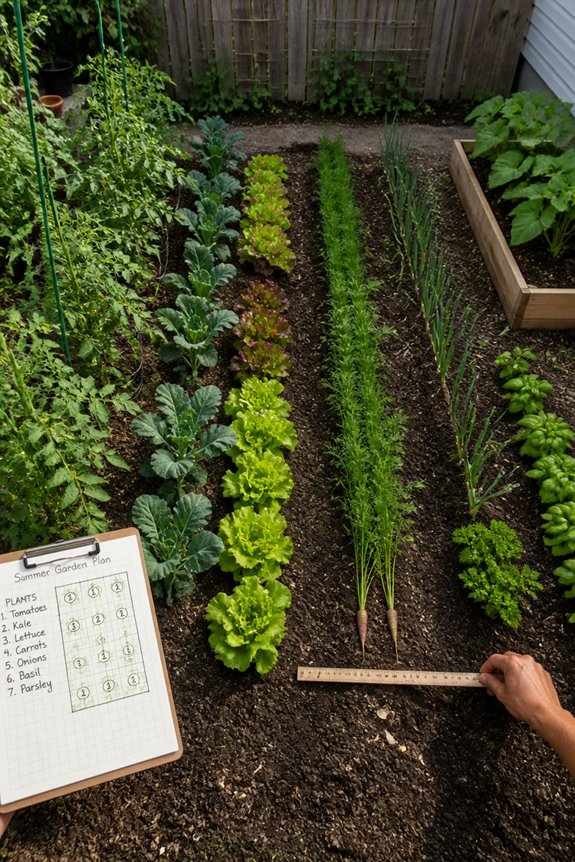
Not every household has room for a raised bed measuring four feet by eight feet, and smaller yards often require more compact solutions. A small backyard vegetable garden layout typically fits within a 6×6 foot or 8×10 foot area, using vertical space and tight spacing to maximize yield.
Compact varieties, such as bush beans, dwarf tomatoes, and patio peppers, work well in limited square footage. Trellises or cages allow vining plants like cucumbers and peas to grow upward instead of spreading outward, saving ground space. Planting in blocks rather than single rows also reduces wasted pathways.
Herbs like basil, chives, and parsley can fill narrow borders or gaps between larger plants. Spacing guides remain important, even in small plots, to prevent overcrowding and competition for nutrients.
L-Shaped Vegetable Garden Layout for Corner Plots
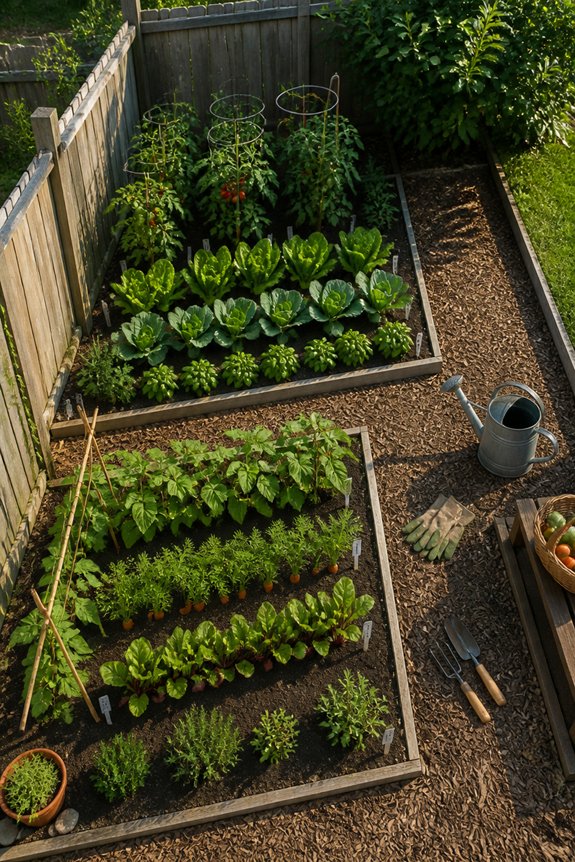
Corner plots present an unusual challenge, since two adjoining fence lines or walls often create an L-shaped space that standard rectangular layouts cannot fill efficiently. Dividing the area into two connected rectangles, one along each fence line, allows growers to treat the corner as a junction point rather than wasted space.
Taller crops, such as pole beans, tomatoes, or trellised cucumbers, work well along the outer corner, where they receive sunlight from multiple directions without shading shorter plants. The inner corner, often shaded part of the day, suits leafy greens like lettuce, spinach, or Swiss chard. Paths of eighteen to twenty-four inches should run along both legs of the L, connecting the two sections and allowing equipment or wheelbarrows to pass through without disturbing beds.
Classic Row Vegetable Garden Layout for Beginners
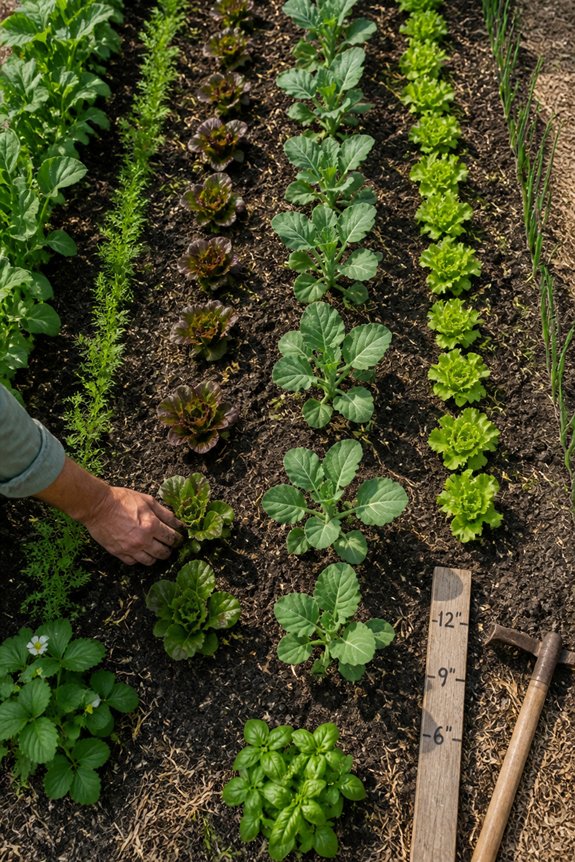
Straight rows remain the most common starting point for new gardeners, since the layout requires little planning beyond a measuring tape and stakes. Rows typically run north to south, allowing even sunlight exposure on both sides throughout the day. Spacing between rows depends on the crop, with tomatoes and peppers needing about 24 to 36 inches, while carrots and lettuce can be spaced 12 to 18 inches apart.
Taller plants, such as corn or pole beans, belong on the north end to avoid shading shorter vegetables. Paths between rows, usually 18 inches wide, allow room for a wheelbarrow or kneeling pad. This layout suits beginners because weeding, watering, and harvesting follow a predictable, linear pattern, reducing confusion during the first growing season.
Keyhole Vegetable Garden Layout for Easy Access
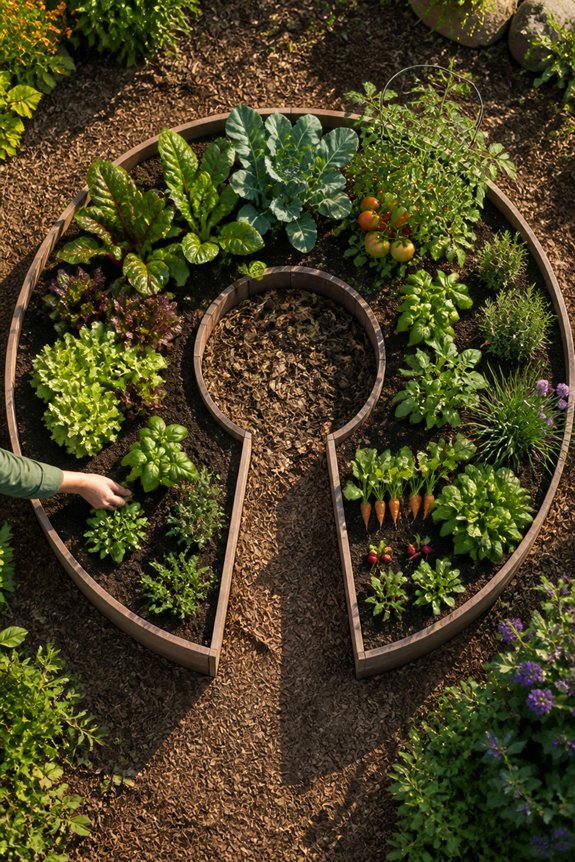
Once a gardener outgrows the linear efficiency of straight rows, the keyhole design offers a way to reduce wasted space and walking distance. This layout forms a circular or horseshoe-shaped bed with a narrow inward path leading to a central point, often anchored by a compost basket that feeds nutrients outward to surrounding soil.
Beds typically measure six to eight feet across, allowing a gardener to reach all plants without stepping on growing areas. Crops such as lettuce, chard, and herbs suit the inner ring, while taller plants like tomatoes or peppers occupy the outer edge. Spacing between plants follows standard guides, usually twelve to eighteen inches, depending on variety.
This design suits small yards, raised beds, or gardens needing efficient water use.
Circular Mandala Vegetable Garden Layout
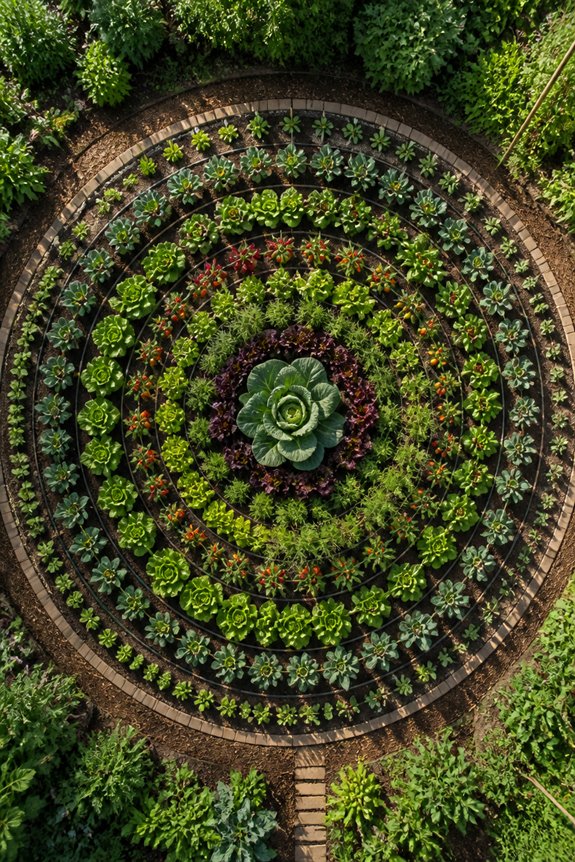
Building on the keyhole concept, the mandala layout arranges beds in radiating segments around a central point, creating a wheel-like pattern divided by narrow paths. A circle roughly 10 to 20 feet across is typically split into six or eight wedge-shaped beds, each accessed from a central hub or surrounding ring path.
Taller crops, such as trellised beans or tomatoes, work well toward the outer edge, while shorter plants like lettuce, onions, and herbs fill inner sections closer to the center. Spacing within each wedge follows standard vegetable requirements, often 6 to 12 inches for greens and 18 to 24 inches for larger plants.
This design suits gardeners wanting visual symmetry alongside functional crop rotation, since each segment can host a different plant family season to season.
Cottage-Style Vegetable Garden Layout
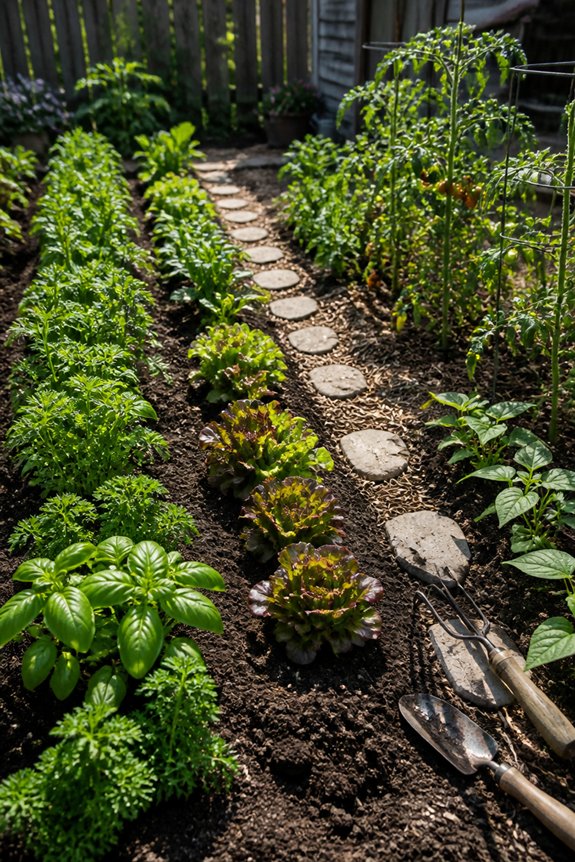
Where geometric precision gives way to informal charm, the cottage-style layout mixes vegetables, herbs, and flowers within curved beds and irregular borders. Tomatoes, pole beans, and squash grow alongside marigolds, nasturtiums, and calendula, blending function with visual appeal.
Spacing guides still apply, though beds often follow curved edges rather than straight rows, requiring growers to measure along the curve rather than in a straight line. Taller plants, such as staked tomatoes or trellised cucumbers, are placed toward the back or center, while lower-growing herbs like thyme and chamomile fill the front edges.
Paths are narrow and winding, often mulched with bark or gravel, connecting beds without imposing rigid symmetry. This layout suits gardeners who prefer a relaxed, informal appearance while maintaining productive growing space.
Three Sisters Companion Vegetable Garden Layout
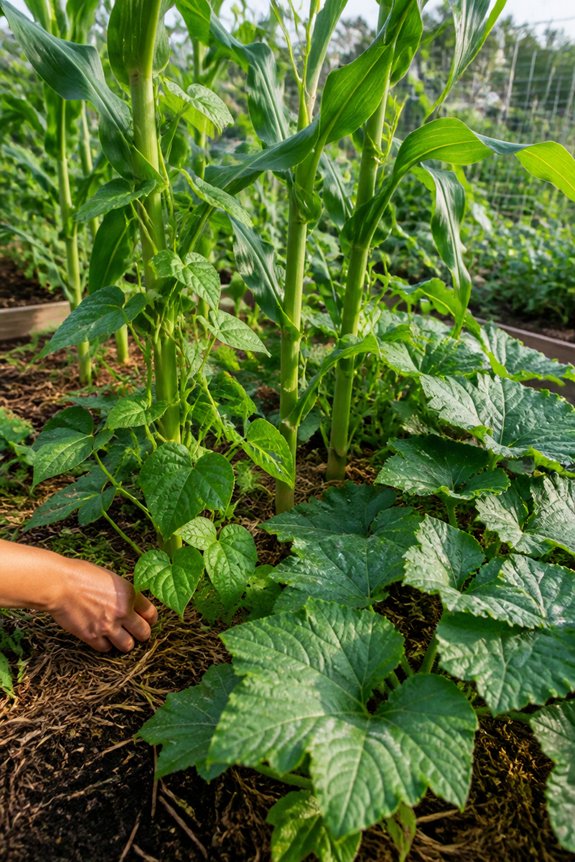
Rooted in centuries-old Indigenous agricultural practices, the Three Sisters layout combines corn, pole beans, and squash in a single mound-based planting system. Mounds typically measure about two feet across and are spaced three to four feet apart, allowing each plant’s role to support the others.
Corn stalks act as a natural pole for beans to climb, while beans fix nitrogen in the soil, feeding the corn and squash. Squash, planted around the base, spreads broad leaves that shade the soil, reducing weeds and retaining moisture. Gardeners often plant corn first, allowing it to reach six inches before adding beans and squash.
This layout suits small spaces, raised beds, or traditional garden rows, offering a self-sustaining system requiring less fertilizer and fewer pesticides.
Herb and Vegetable Combo Garden Layout
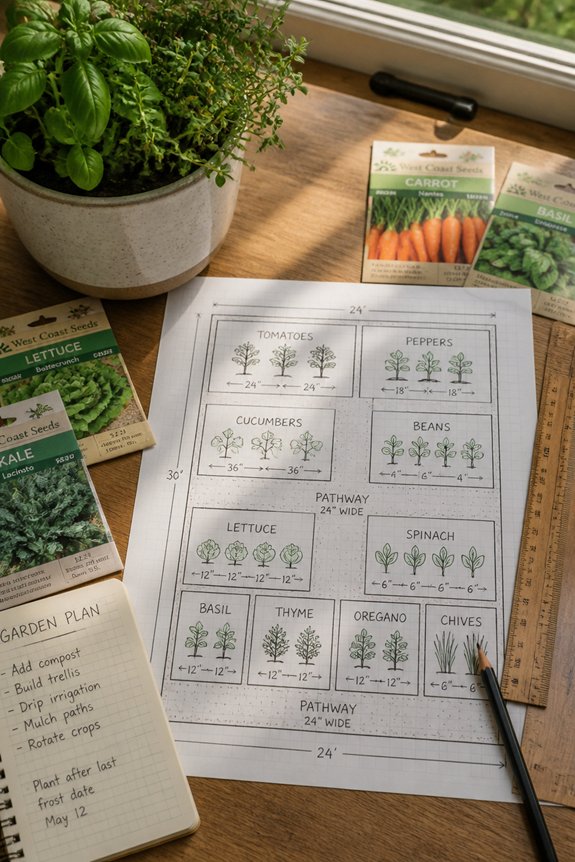
Many gardeners pair herbs and vegetables together to save space, deter pests, and boost flavor in the kitchen. A common layout places basil near tomatoes, since basil is believed to repel pests like aphids and hornworms while improving tomato growth. Rows can alternate between herbs and vegetables, spacing plants twelve to eighteen inches apart depending on mature size.
Chives and parsley often border bed edges, requiring only six to eight inches between plants, while dill and cilantro grow well among peppers and cucumbers. Taller herbs, such as rosemary or fennel, should be placed at the back of the bed to avoid shading shorter vegetables. Raised beds or container groupings work efficiently for this combination, allowing easy harvesting and controlled soil conditions for both herbs and vegetables.
Shade-Tolerant Vegetable Garden Layout
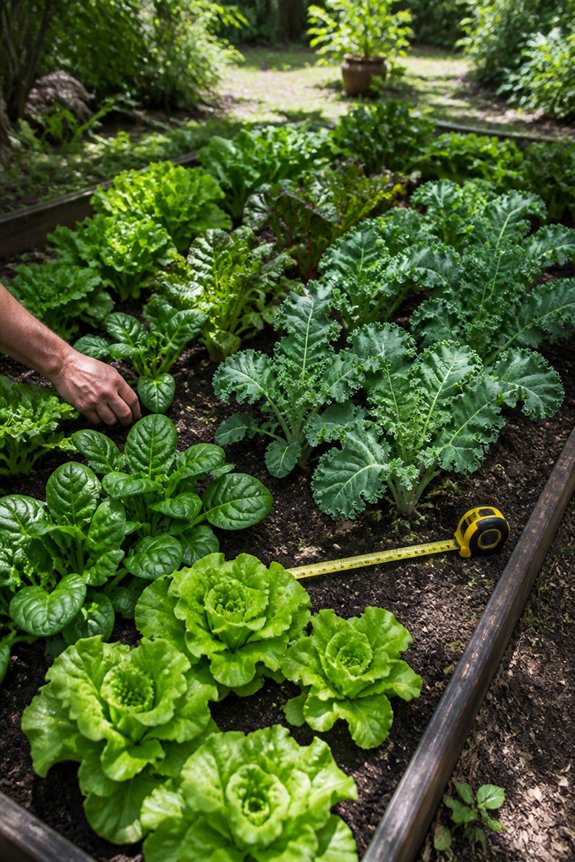
Not every yard offers full sun, and gardeners working with partial or dappled shade need a different approach than the herb and vegetable pairings used in sunnier beds. Leafy greens tolerate reduced light better than fruiting vegetables, making lettuce, spinach, kale, and Swiss chard reliable choices for shaded beds.
Root vegetables like beets, carrots, and radishes also perform reasonably well with four to six hours of indirect light daily. Spacing should remain generous, since air circulation matters more in shaded areas where moisture lingers longer, increasing disease risk.
Placing taller shade-tolerant crops, such as chard, along the northern edge prevents them from blocking light to shorter plants. Raised beds positioned near deciduous trees can benefit from seasonal light changes, receiving more sun before leaves fill in during spring.
Straw Bale Vegetable Garden Layout and Spacing
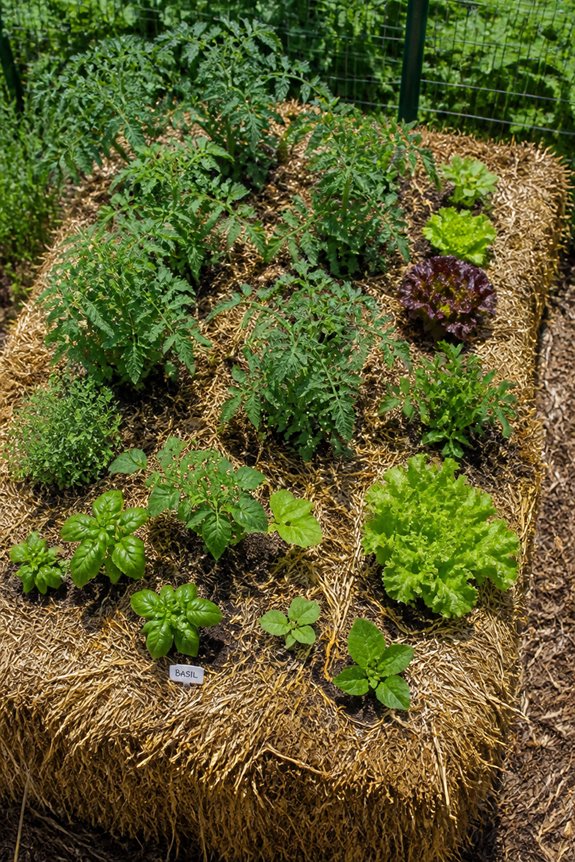
Because straw bales break down over a growing season, gardeners treat them as temporary raised beds rather than permanent fixtures, arranging them in rows with two to three feet of space between bales for walking access. Each bale holds two tomato or pepper plants, three to four squash or cucumber plants, or four to six smaller crops like lettuce and herbs, spaced according to standard root system needs. Bales are typically positioned end to end, cut side up, forming single or double rows depending on available space.
Conditioning the straw with fertilizer before planting encourages internal decomposition, which generates heat and nutrients for roots. Taller crops such as tomatoes benefit from stakes driven directly into the bale, while trailing plants like cucumbers can be trained along adjacent fencing or trellises.
No-Dig Vegetable Garden Bed Layout Plan
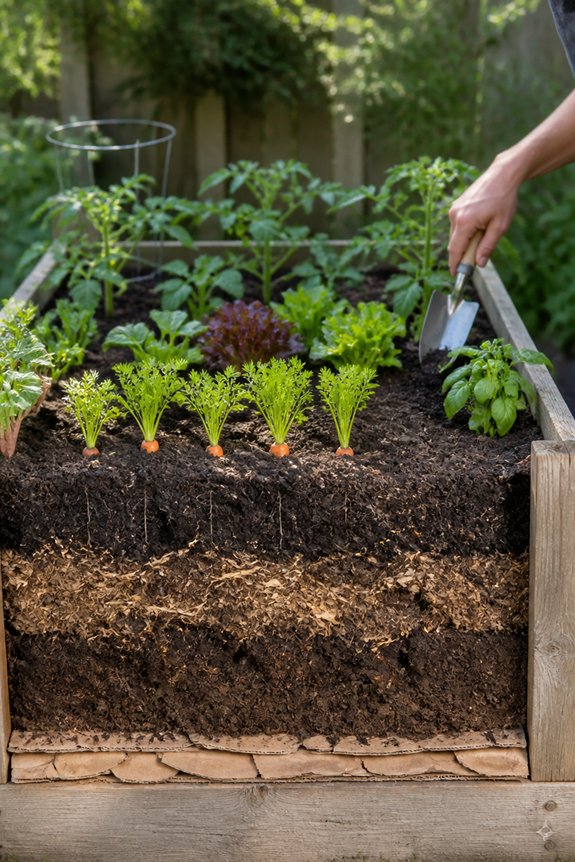
Layering organic materials directly on top of existing soil or grass forms the foundation of a no-dig garden bed, eliminating the need for tilling or digging. A typical layout begins with cardboard or newspaper, followed by compost, straw, and aged manure, building height without disturbing soil structure below.
Beds are commonly arranged in rectangular or square shapes, measuring three to four feet wide, allowing access from both sides without stepping on the soil. Pathways of wood chips or mulch separate beds, keeping foot traffic away from planting areas.
Spacing within the bed follows standard vegetable requirements, with rows or blocks planted according to mature size. Raised edges, made from wood or stone, help contain layers and maintain consistent bed shape over time.
Succession Planting Vegetable Garden Layout
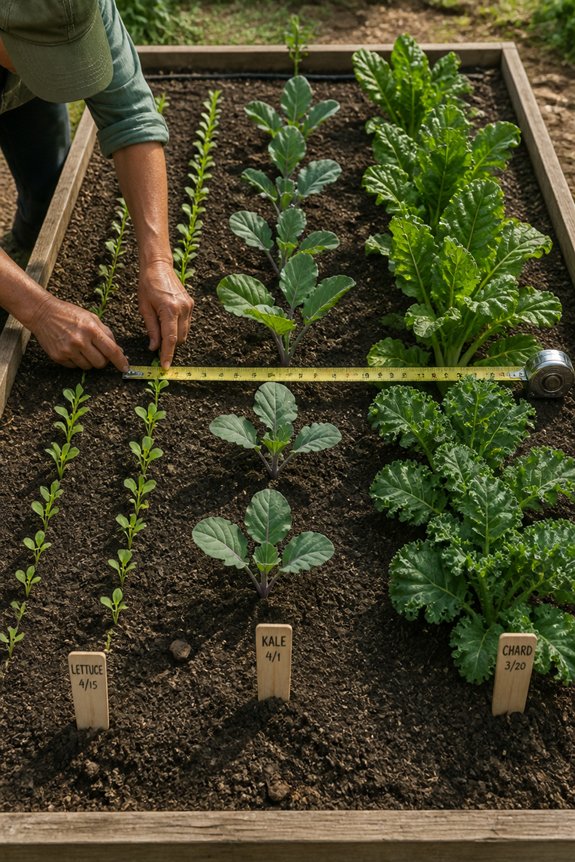
How can a small garden produce continuous harvests from spring through fall? Succession planting layouts divide beds into sections planted at staggered intervals, rather than sowing everything at once. A single row might hold lettuce in early spring, then bush beans by early summer, followed by spinach in fall, each crop replacing the last as it finishes.
Spacing guides remain essential, since fast-maturing crops like radishes need only 2 inches between plants, while tomatoes require 18 to 24 inches. Gardeners often reserve one section for quick crops, such as arugula or green onions, while another holds longer-season vegetables like carrots or beets.
This layout maximizes yield per square foot, keeping soil productive across the entire growing season instead of leaving it idle after early harvests.
Family-Sized Vegetable Garden Layout for Year-Round Harvests
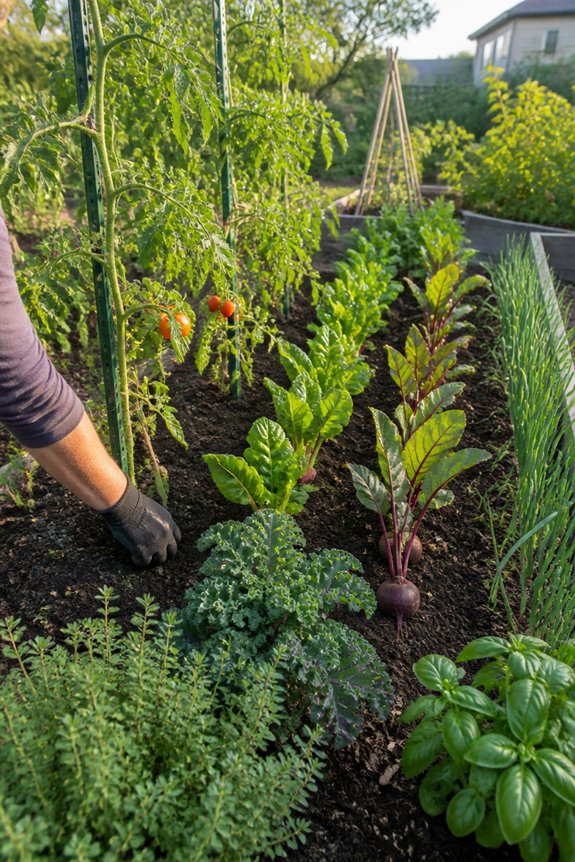
Feeding a household year-round requires more space and planning than a small succession bed can offer, since a family of four typically needs 200 to 400 square feet of growing area to produce a meaningful supply of vegetables.
This layout divides space into permanent beds for perennial crops like asparagus and rhubarb, seasonal rows for tomatoes, peppers, and squash, and dedicated sections for storage crops such as potatoes, onions, and winter squash. Pathways of two to three feet allow wheelbarrow access between beds.
Cool-season crops like broccoli, carrots, and lettuce fill spring and fall slots, while warm-season vegetables occupy summer months. Adding a root cellar or cold frame extends storage and harvest windows, supporting consistent food supply across all four seasons.
Permaculture-Inspired Vegetable Garden Layout
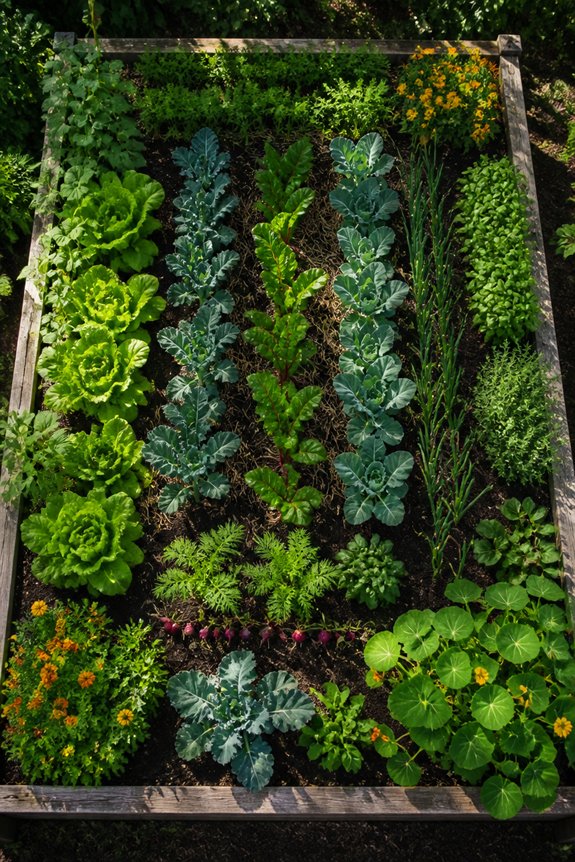
Because permaculture design mimics natural ecosystems, this layout arranges vegetables, herbs, and perennials into interconnected guilds rather than isolated rows. A central fruit tree, such as apple or fig, anchors each guild, surrounded by nitrogen-fixing plants like clover, pest-repelling herbs like yarrow, and companion vegetables like squash or beans.
Spacing follows layered zones: tall trees, mid-height shrubs, low-growing vegetables, and ground covers, each occupying a different vertical niche to maximize sunlight and soil use. Paths curve rather than run straight, following contour lines to slow water runoff and direct it toward root zones.
Raised mounds, called hugelkultur beds, incorporate decomposing wood to retain moisture. Vegetables like kale, chard, and peas rotate seasonally within these guilds, reducing pest buildup and maintaining soil fertility without synthetic fertilizers.
Frequently Asked Questions
How Much Sunlight Does a Vegetable Garden Layout Need Daily?
Most vegetable garden layouts require six to eight hours of direct sunlight daily for ideal growth. Full-sun crops like tomatoes and peppers need this consistently, while leafy greens tolerate partial shade with four to six hours sufficing adequately.
What’s the Ideal Soil pH for Most Vegetable Garden Layouts?
Most vegetables thrive in soil with a pH between 6.0 and 7.0, slightly acidic to neutral. This range allows ideal nutrient absorption. Gardeners should test soil periodically and amend with lime or sulfur to adjust levels accordingly.
How Often Should I Rotate Crops in My Garden Layout?
Every three years, as if by design, the same soil that once fed tomatoes calls for legumes instead. Gardeners rotate crop families on this cycle, coincidentally restoring nutrients while disrupting pest patterns that would otherwise persist unnoticed.
Can I Combine Multiple Layout Styles in One Garden Space?
Yes, combining layout styles is common practice. Gardeners often use raised beds for root vegetables, square-foot sections for herbs, and traditional rows for climbing plants, allowing flexibility while maintaining proper spacing requirements for each individual plant type.
What Tools Are Essential for Planning a Vegetable Garden Layout?
Essential tools include graph paper or garden planning software, a measuring tape, spacing charts, soil testing kits, and a sunlight tracker. These help gardeners map plot dimensions, calculate plant spacing, and guarantee ideal placement for growth conditions.
Conclusion
Choosing the right vegetable garden layout depends on available space, time, and gardening goals. Research shows that square foot gardening can increase yields by up to four times compared to traditional row planting, while using less water and fewer resources. Whether selecting a container setup for a balcony or a permaculture-inspired plot for a larger property, applying proper spacing guides helps plants thrive. Matching layout to lifestyle guarantees a productive, manageable garden throughout the growing season.