
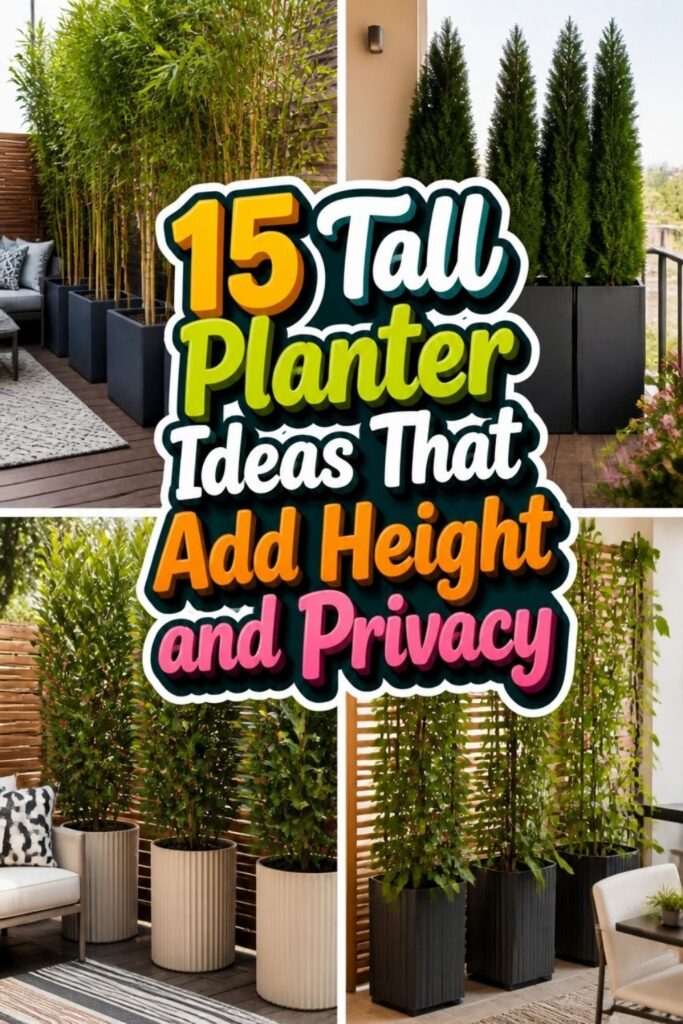
Tall planters transform flat gardens into layered, private retreats without major construction. Fiberglass, wood, and concrete each carry distinct personalities: sleek modernity, warm rusticity, or industrial weight. The plants matter just as much as the containers themselves. Bamboo creates dense screens quickly, while evergreens hold their structure through winter, and ornamental grasses soften edges with movement.
Placement often determines success more than aesthetics alone. A row of tall containers can mark property boundaries without fencing permits. Narrow side yards gain breathing room when vertical elements draw the eye upward. Even cramped balconies feel sheltered when greenery rises above rail height.
The following fifteen ideas explore how height functions differently across settings. Some prioritize complete screening; others filter light and views more gently. Each approach balances practical needs with visual impact, whether the goal is solitude or simply a more defined outdoor room.
Start With What You Want to Block
Privacy needs vary more than most people expect, since blocking a second-story window takes a different setup than screening a trash can or filtering afternoon sun. The ideas below range from complete year-round barriers to loose, airy arrangements that soften a view without closing it off. Identify the exact sightline or object you want covered, then work backward to the planter height and plant density that solves it.
Line Up Tall Planters Along Your Property Line
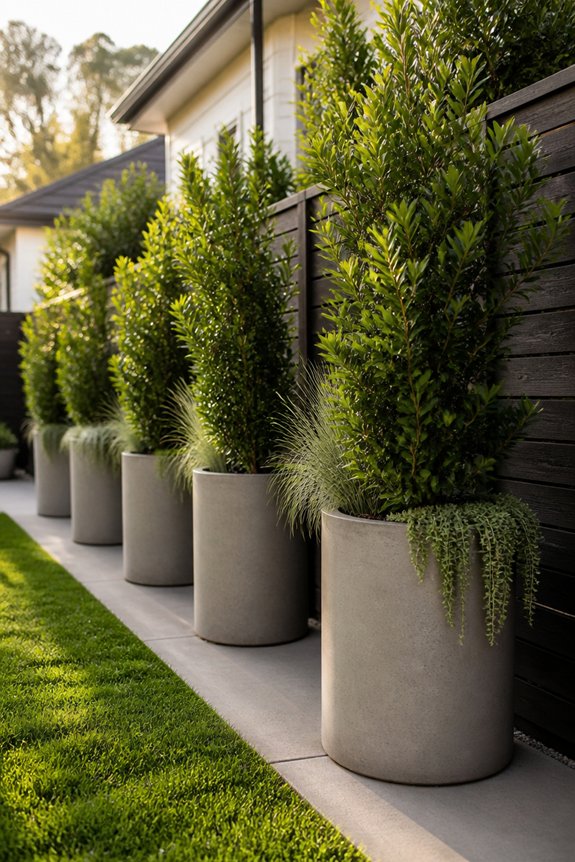
A row of tall planters positioned along a property line can establish a clear visual boundary without the cost or permanence of a fence. Homeowners can space large containers evenly along the edge of a yard, choosing materials such as fiberglass, concrete, or wood to match the home’s exterior. Consistent spacing, often between two and four feet apart, creates a uniform look while allowing airflow between plants.
Tall grasses, arborvitae, or bamboo work well for this purpose, growing upward to block sightlines from neighboring properties or streets. Planters also allow flexibility, since they can be rearranged or relocated if property lines or landscaping needs change. This approach suits renters and homeowners alike, offering privacy without altering permanent structures or requiring approval for construction.
Block a Neighbor’s View With a Row of Tall Planters

When a specific sightline from a neighboring window or deck becomes a concern, tall planters can be positioned strategically to interrupt that exact view. Rather than lining an entire property line, placement can focus on the narrow angle where the sightline exists, using two or three planters instead of a full row.
Evergreen shrubs, bamboo, or arborvitae planted in tall containers provide year-round coverage, while taller grasses offer a lighter, seasonal screen. Planters between four and six feet tall, paired with plants reaching another three to five feet, typically block a standing or seated view from an adjacent structure. Testing the angle from the neighbor’s vantage point, when possible, helps confirm correct placement before finalizing the arrangement.
Build a Bamboo Privacy Screen in Tall Pots
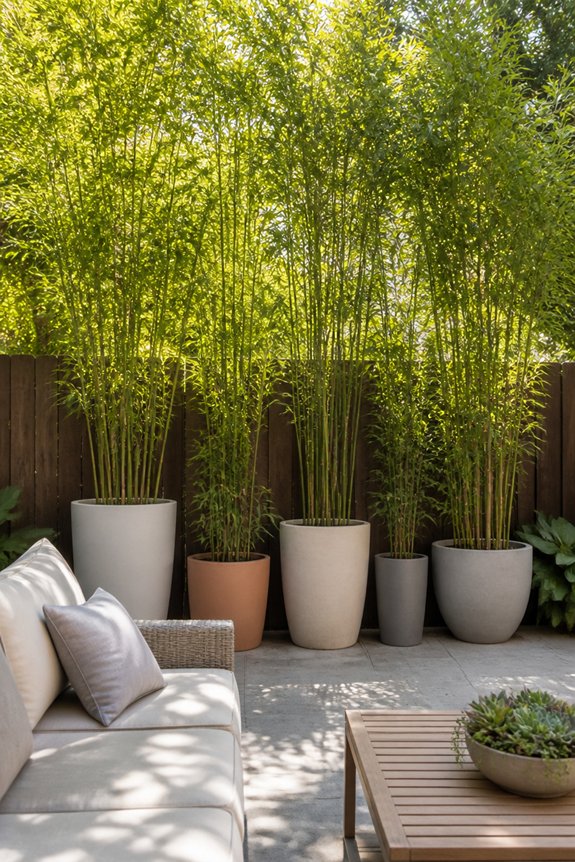
Several clumping bamboo varieties, including Bambusa multiplex or Fargesia species, work well in tall pots without the aggressive spreading habits of running types. These plants can reach six to ten feet in height, forming a dense visual barrier when placed in a row along a fence line or patio edge.
Pots should be at least 15 to 20 gallons in size, with drainage holes to prevent root rot, since bamboo requires consistent moisture but not standing water. Heavy ceramic or resin containers provide stability against wind, given the plant’s tall, top-heavy growth.
Regular watering and monthly fertilization during the growing season support dense foliage. Root pruning every two to three years keeps the bamboo contained within its pot.
Screen Your Balcony Railing With Tall Planters
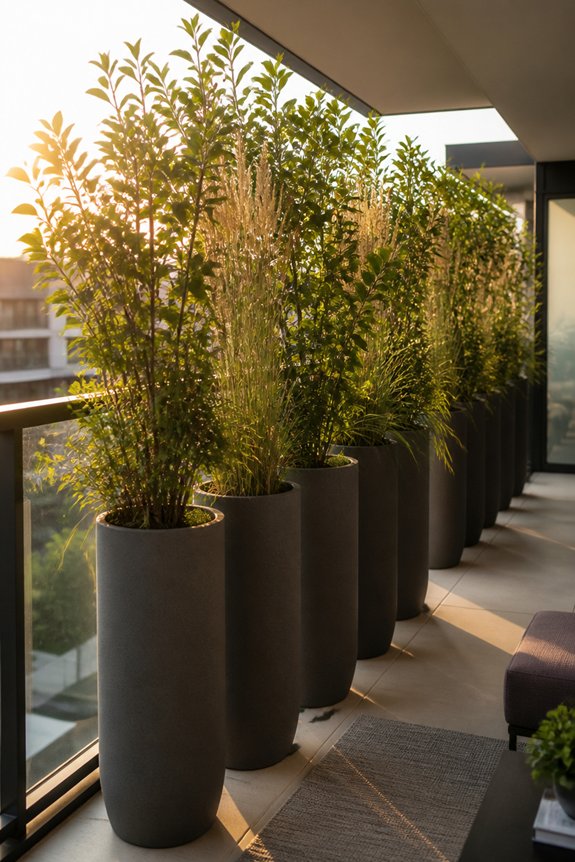
Many balconies lack privacy from neighboring units, making tall planters a practical solution for blocking sightlines without permanent construction. Rectangular planters, placed side by side along the railing, create a continuous visual barrier while supporting narrow root systems common to upright plants. Bamboo, arborvitae, and ornamental grasses work well due to their vertical growth habits and tolerance for container life.
Weight matters on balconies, so lightweight materials like fiberglass or resin planters reduce structural strain compared to concrete or ceramic. Railing-mounted planters save floor space and position greenery at eye level, increasing screening effectiveness.
Drainage trays prevent water damage to flooring below. Choosing plants suited to the balcony’s sun exposure guarantees consistent growth, maintaining the screen’s density and appearance throughout the growing season.
Use Ornamental Grasses in Tall Planters for Soft Privacy
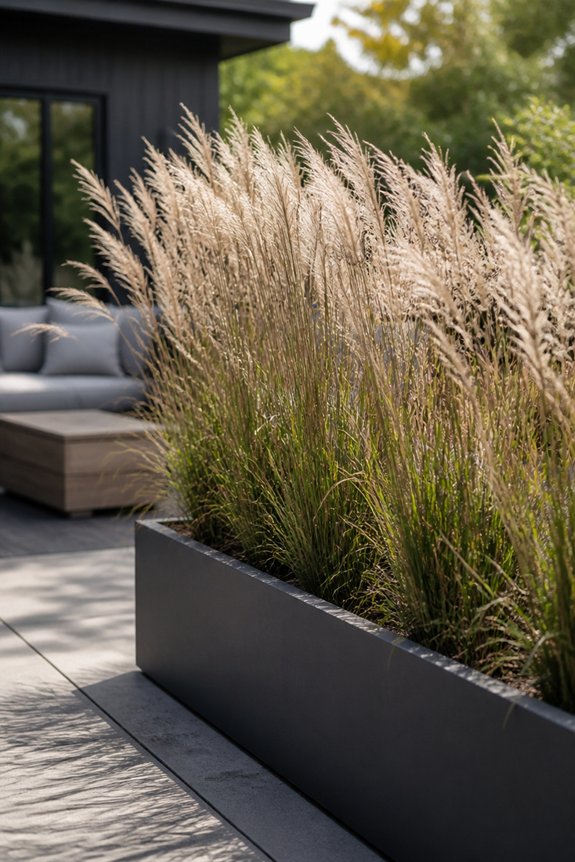
Because their feathery texture softens sightlines rather than blocking them completely, ornamental grasses offer a more relaxed alternative to solid screening plants. Varieties such as feather reed grass, maiden grass, and fountain grass grow tall enough in planters to create gentle visual barriers while still allowing light and air to pass through. Their movement in the wind adds a natural quality that stiffer plants lack, making them useful near patios or windows where a softer look is preferred.
Planters should be wide and deep enough to support root growth, since many grasses spread as they mature. Pairing grasses with taller shrubs can increase privacy without sacrificing the airy effect grasses provide, giving outdoor spaces a layered, textured appearance.
Hide Trash Cans and Utility Boxes With Tall Planters
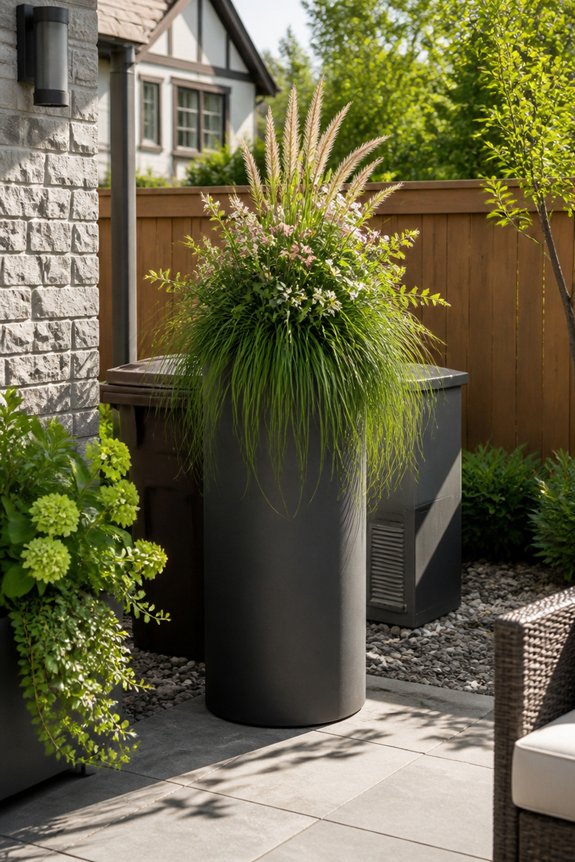
A few well-placed tall planters can turn an eyesore into a design feature, concealing trash cans, recycling bins, and utility boxes without requiring permanent structures. Placing planters in a row or an L-shape around these items creates a visual screen that blocks direct sightlines while allowing airflow and access.
Materials like fiberglass, wood, or metal work well for exterior durability, and heights of three to five feet typically provide adequate coverage. Filling the planters with dense evergreens, tall grasses, or bamboo adds year-round concealment rather than seasonal gaps.
Positioning them on wheels or lightweight bases allows for easy movement during trash pickup or utility maintenance, keeping the arrangement both functional and adaptable to different yard layouts.
Frame Your Patio With Matching Tall Planters
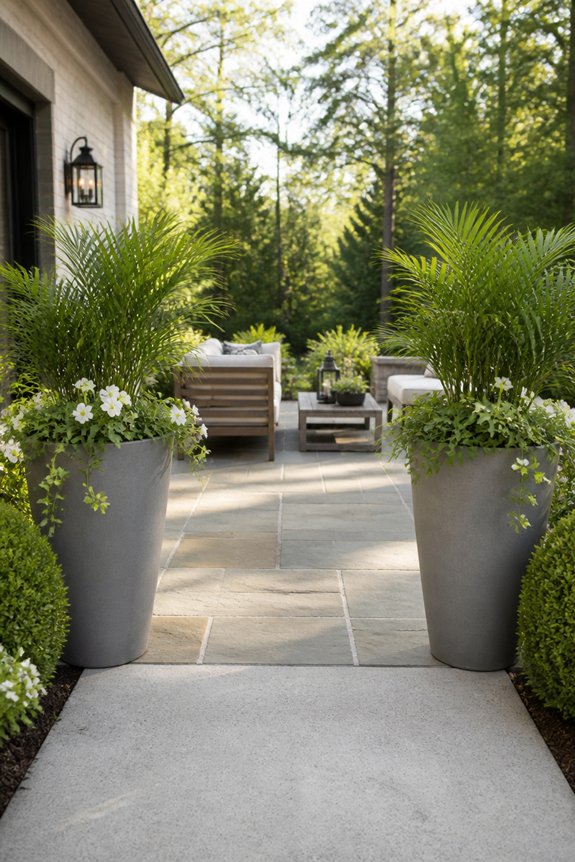
Two identical tall planters, positioned on either side of a patio entrance, create a defined threshold that separates outdoor living space from the rest of the yard. This framing technique gives the patio a sense of structure, similar to columns marking a doorway.
Matching planters in materials like concrete, wood, or fiberglass work well for this purpose, especially when filled with uniform plants such as boxwood, arborvitae, or ornamental grasses. Consistency in size, shape, and plant choice reinforces the visual boundary and makes the space feel intentional rather than random.
Homeowners can extend this idea by placing additional matching planters along a walkway leading to the patio, creating a cohesive path that guides visitors toward the seating area.
Create a Corner Retreat With Grouped Tall Planters
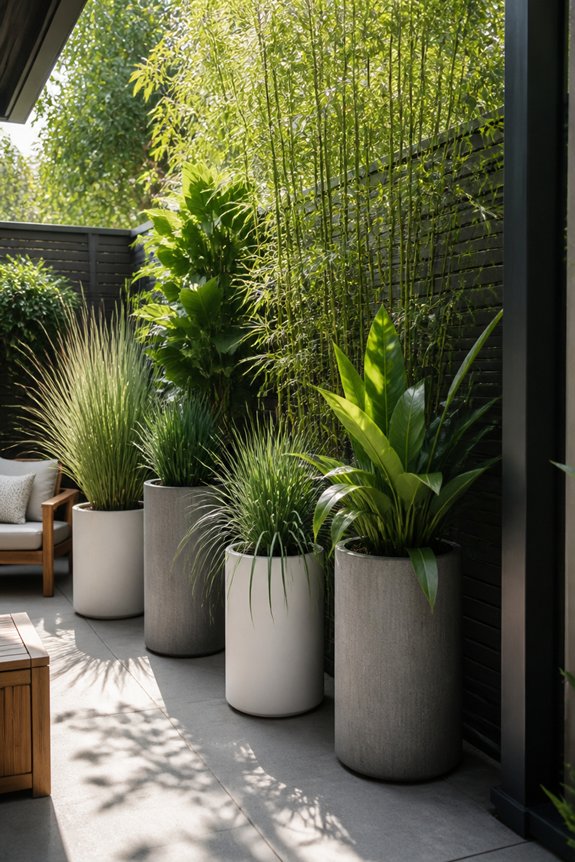
Why leave a corner of the patio empty when it could become a private retreat? Grouping tall planters in an unused corner creates an enclosed, sheltered space without the cost of building walls. Mixing planter heights and plant types, such as tall grasses, small trees, or climbing vines on trellises, adds depth and texture while blocking sightlines from neighboring yards.
Placing three or four planters at varying distances from the corner, rather than in a straight line, gives the arrangement a natural, layered look. Adding a small bench or chair inside the grouping turns the space into a functional seating nook. Choosing planters made from weather-resistant materials, like fiberglass or concrete, guarantees the arrangement holds up through seasonal changes and outdoor exposure.
Divide Your Yard Into Rooms With Tall Planters
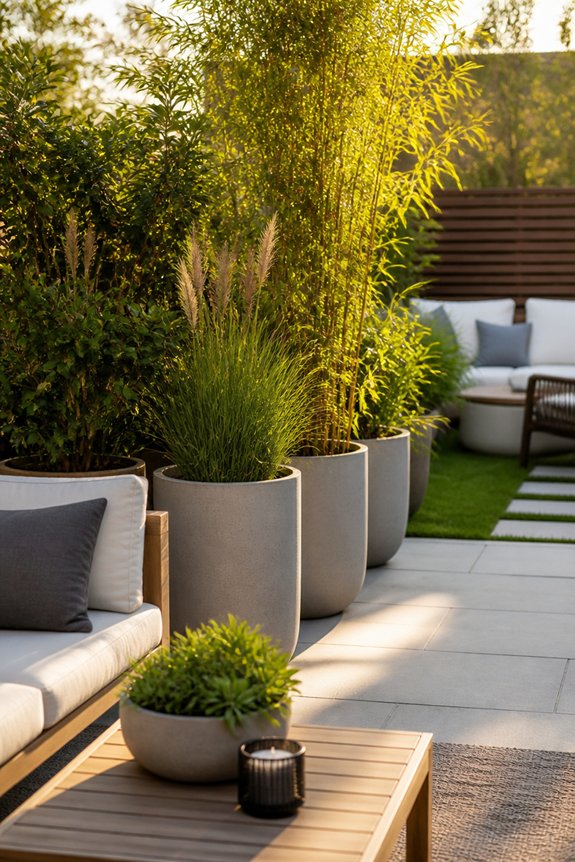
Since open yards often lack defined purpose, using tall planters as room dividers can organize the space into distinct zones for dining, lounging, or gardening. Placing a row of tall planters between a patio and a lawn area creates a visual boundary without requiring a permanent structure like a fence or wall.
Materials such as fiberglass or concrete planters, paired with plants like bamboo, arborvitae, or ornamental grasses, provide height and density for effective separation. Homeowners can arrange planters in a straight line or staggered pattern, depending on how much openness they want between sections.
This method allows flexibility, since planters can be rearranged or replaced as needs change, unlike fixed dividers such as hedges or built-in walls.
Stack Tall Planters Into a Vertical Plant Wall
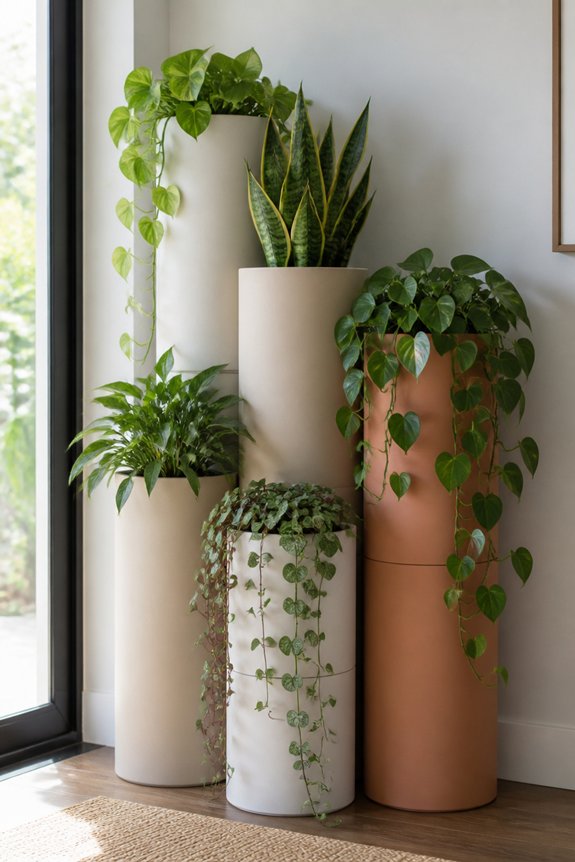
Stacking tall planters at varying heights turns a flat wall or fence line into a layered vertical garden, adding depth without consuming floor space. Placing shorter planters in front and taller ones behind creates a tiered effect, allowing each plant to receive sunlight while forming a solid visual block.
Mixing materials, such as wood crates, metal cylinders, and concrete boxes, adds texture without disrupting the overall structure. Trailing plants like ivy or ferns soften the hard edges of stacked containers, while upright species such as bamboo or ornamental grasses reinforce height.
Attaching planters to a wall bracket system or shelving unit keeps the arrangement stable and prevents tipping. This approach works well in narrow side yards, patios, or balconies where ground space is limited.
Plant Small Trees in Oversized Tall Planters
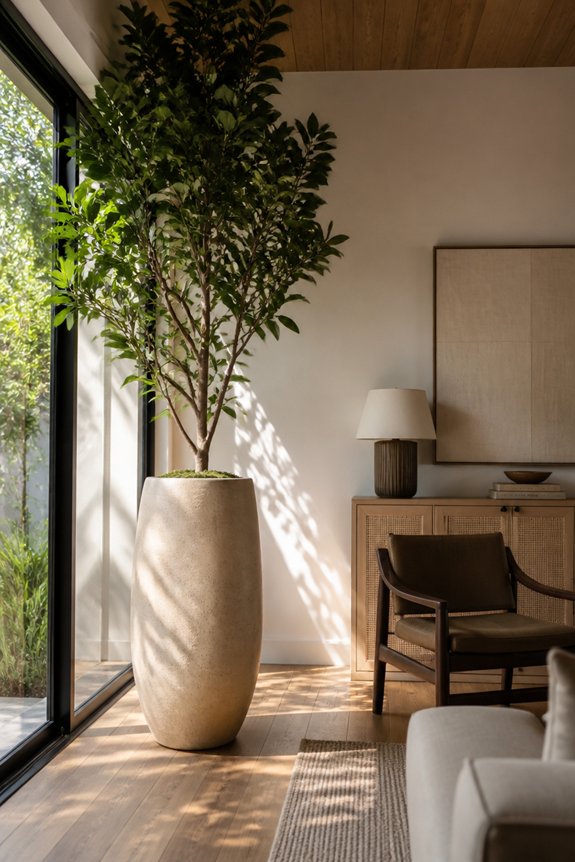
Oversized tall planters give small trees, such as Japanese maples, dwarf citrus, or olive trees, enough root space to grow steadily without being transplanted into the ground. These containers hold soil volume that resists rapid drying, which reduces watering frequency compared to smaller pots.
Placing the tree at the center creates a focal point for patios, entryways, or courtyards, while the height of the planter raises the canopy to eye level, adding privacy along fence lines or property borders. Drainage holes remain necessary, since standing water can damage roots over time.
Choosing dwarf or slow-growing varieties keeps the tree proportional to the container, avoiding root binding for several years. Materials like fiberglass or concrete provide the stability needed to support the combined weight of soil, tree, and root mass.
Add Trailing Vines to Elevated Tall Planter Boxes
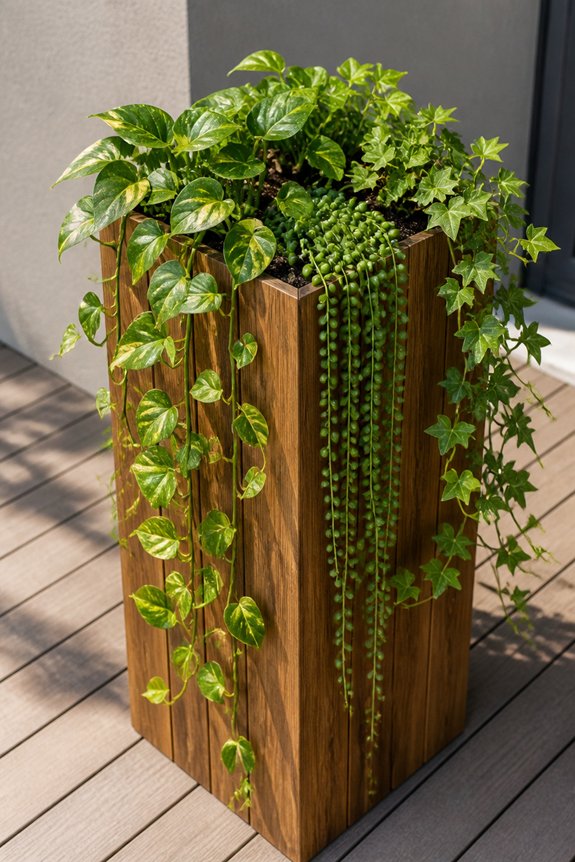
Trailing vines such as English ivy, creeping jenny, or potato vine soften the vertical lines of elevated planter boxes, letting foliage spill downward along the sides. Elevated boxes, often mounted on legs or platforms, benefit from this cascading effect, as the height creates visual drama that ground-level planters cannot achieve.
Vines grow quickly and require minimal maintenance, needing only occasional trimming to control length and shape. Sweet potato vine offers colorful foliage in shades of lime green or deep purple, adding contrast against wooden or metal planter materials.
Placement near patios, decks, or entryways allows the trailing growth to frame architectural features. Regular watering supports consistent growth, while periodic fertilizing during growing seasons encourages fuller, denser foliage along the cascading vines.
Style Narrow Side Yards With Slim Planters
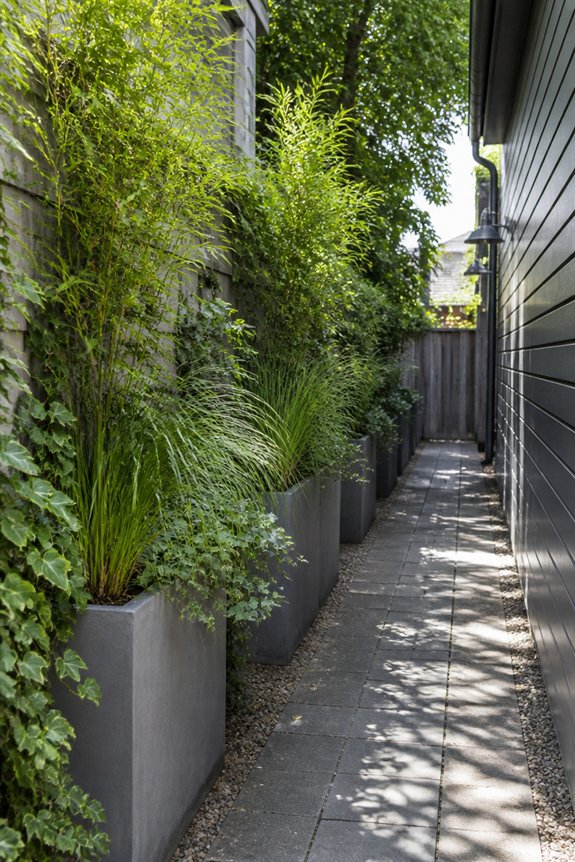
Because narrow side yards often measure just two or three feet wide, slim tall planters make efficient use of limited space without blocking foot traffic. Rectangular or cylindrical planters, typically 10 to 14 inches deep, fit against fences or walls while leaving a clear walking path.
Materials such as galvanized steel, fiberglass, or wood slats suit these tight areas, resisting moisture from nearby structures. Vertical plants, including upright junipers, ornamental grasses, or bamboo, add height without spreading outward.
Placing planters in a straight line along the yard’s length creates a uniform look and directs the eye toward the back of the property. Attaching wheels to planter bases allows easier repositioning during maintenance or seasonal changes. Adding drip irrigation reduces watering frequency in these often shaded, hard-to-reach spaces.
Choose Weatherproof Materials for Tall Planters
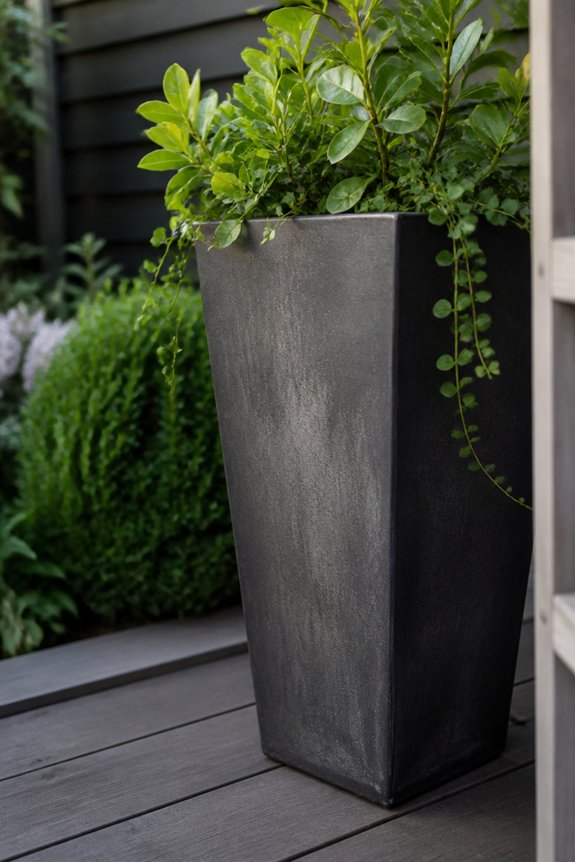
How does a tall planter hold up after months of sun, rain, and freezing temperatures? Material choice determines whether it cracks, fades, or rots over time.
Fiberglass resists moisture and does not warp, making it suitable for coastal or humid climates. Powder-coated steel offers strength but requires sealing at joints to prevent rust. Cedar and teak naturally repel decay, though they benefit from periodic oil treatments to maintain durability.
Concrete withstands wind and heavy plants but can crack in freezing conditions without proper drainage. High-density polyethylene, often used in modern designs, resists UV damage and temperature swings.
Choosing a weatherproof material depends on climate, planter height, and expected exposure, since taller structures face greater wind and moisture stress than smaller containers.
Mix Heights and Textures Between Tall Planters
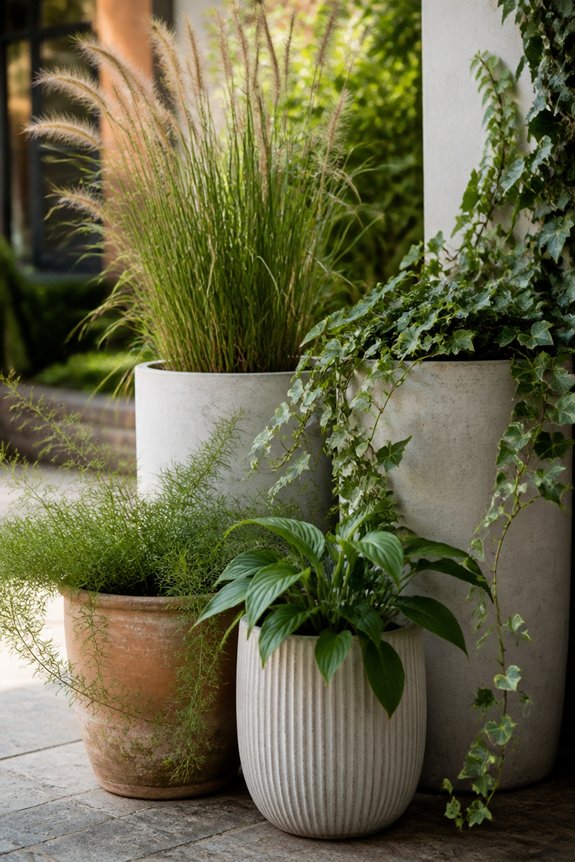
Several tall planters grouped together create more visual interest when their heights and textures vary rather than match. A cluster might combine a 48-inch fiberglass cylinder, a 36-inch tapered concrete planter, and a 30-inch woven resin container, staggering their placement instead of lining them in a row.
Smooth surfaces, like glazed ceramic, contrast well with rougher materials, such as wood or stone-textured composite, adding depth without clutter. Mixing shapes matters too, pairing square or rectangular forms with rounded ones to avoid monotony.
Odd-numbered groupings, three or five planters, tend to look more balanced than even sets. Color should stay consistent or limited to two tones, letting height and texture, not color variation, carry the visual contrast between plantings.
Frequently Asked Questions
How Much Does It Cost to Fill Tall Planters With Soil?
Costs typically range from $20 to $100 per planter, depending on size and soil type. Using fillers like empty containers or gravel at the bottom can reduce the amount of soil needed, lowering overall expense considerably.
What’s the Best Way to Weigh Down Tall Planters Against Wind?
Like an anchor keeping a ship steady, weight placed low is key. Layering sand or gravel at the base, beneath soil, stabilizes tall planters far better than adding weight near the top.
How Do I Prevent Tall Planters From Cracking in Winter?
Frost-resistant materials like fiberglass or high-fired ceramic resist cracking best. Emptying excess soil moisture before freezing temperatures hit, elevating pots on feet for drainage, and covering containers with burlap all reduce winter expansion damage considerably.
What Drainage Solutions Work Best for Tall Outdoor Planters?
Multiple drainage holes paired with a gravel or broken-pottery base prevent water pooling at the bottom. Elevating planters on feet or risers improves airflow and outflow, while landscape fabric keeps soil from clogging drainage layers over time.
How Often Should I Water Plants in Tall Planters?
Thirsty roots deserve gentle attention rather than a strict clock. Tall planters typically need moisture checks every two to three days, adjusting for climate and season, since soil there often dries faster than gardeners expect.
Conclusion
Tall planters offer a practical way to create privacy and structure in outdoor spaces without permanent construction. One homeowner, facing a direct sightline from a neighboring second-story window, placed three oversized fiberglass planters with bamboo along the shared fence line. Within a season, the bamboo grew tall enough to block the view completely. This example shows how thoughtful planter placement and plant selection can solve specific privacy problems while adding lasting visual interest to a yard or patio.