
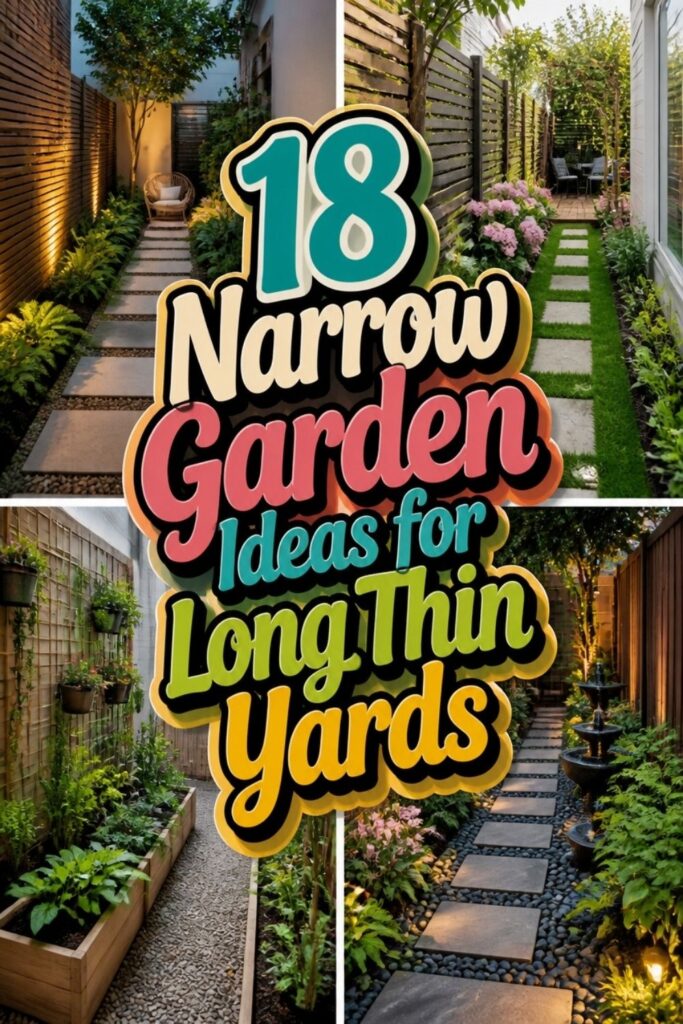
Long, thin yards can feel frustratingly limited, yet they hold surprising potential for creative design. The key lies in manipulating perception rather than fighting the proportions. Diagonal lines draw the eye outward and widen the visual field, while curved pathways introduce rhythm and prevent that endless corridor feeling.
Strategic placement of mirrors doubles the apparent depth and reflects greenery back into view.
Zoning transforms a narrow strip into something far more interesting. Breaking the length into distinct areas, each with its own purpose, gives the mind natural resting points. An arch draped with climbing plants marks a transition beautifully, drawing focus upward rather than along the ground.
A slim water feature adds sound and movement without demanding precious width.
These eighteen ideas range from simple optical tricks to more ambitious structural changes. Some suit renters and small budgets, others reward those ready to excavate and rebuild.
Consider which solutions match your time, skills, and how you actually want to live in the space before committing to any redesign.
Match the Solution to Your Effort Level
Some ideas below take an afternoon and a few pots, while others involve retaining walls, excavation, and a serious weekend commitment. Mirrors, climbers, and lighting deliver visible change fast and suit renters or tight budgets. Level changes, decking, and built-in seating ask for more but reshape the yard permanently. Scan for the tier you are ready to take on rather than reading straight through.
Use Diagonal Lines to Widen a Narrow Yard
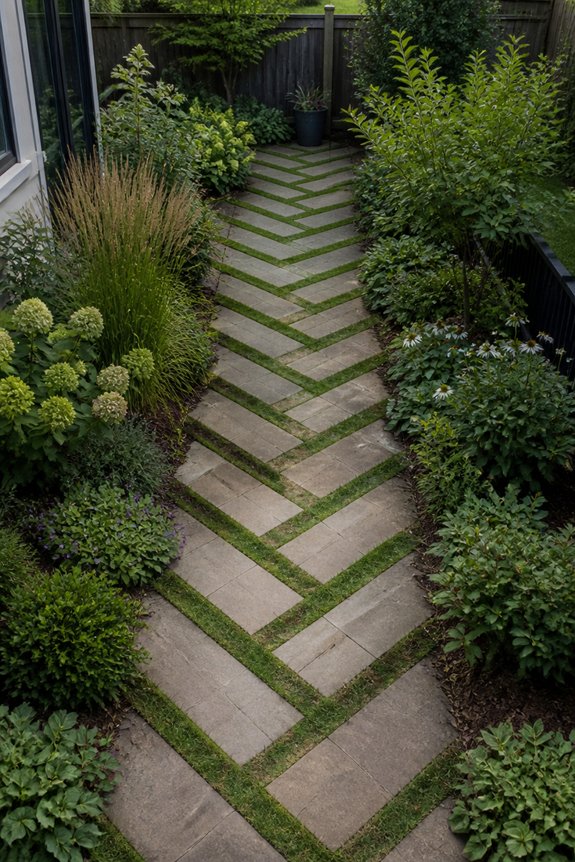
Many narrow yards appear even more confined when paths, beds, and lawn panels run in straight lines parallel to the fences. Angling these elements across the space, rather than along it, forces the eye to travel side to side instead of straight down the length.
A path laid on a 45-degree diagonal, for example, can visually stretch the width while shortening the perceived distance to the far end. Diagonal paving patterns, angled hedges, and beds cut at slants all contribute to this effect. Designers often combine diagonal lines with contrasting materials, such as gravel against brick, to reinforce the movement.
Repeating the angle in smaller features, including planters or lighting placement, keeps the layout consistent and avoids a disjointed appearance.
Curve the Pathway Instead of Going Straight
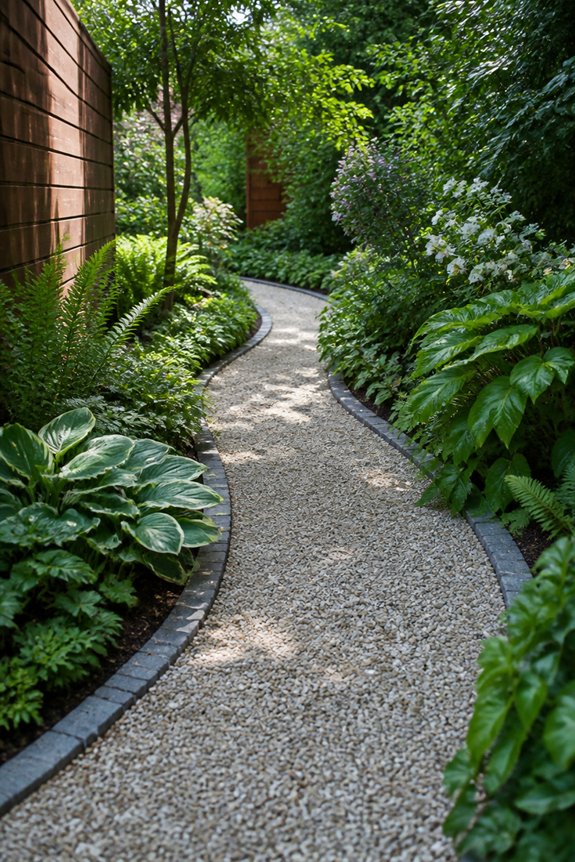
Diagonal lines offer one way to break up a narrow yard, but a curved path provides a softer alternative that achieves a similar effect. A straight walkway from gate to door reveals the entire yard at a glance, making the space feel smaller and more confined.
A curved path, by contrast, hides part of the garden from view, encouraging visitors to move slowly and discover new areas as they walk. This technique works well with plantings that spill slightly over the edges, softening the path’s outline and adding depth.
Materials such as gravel, flagstone, or brick can all be laid in gentle curves rather than straight rows. Even a slight bend, rather than a dramatic S-shape, can make a long, narrow space feel wider and more interesting.
Use Mirrors to Create the Illusion of Depth
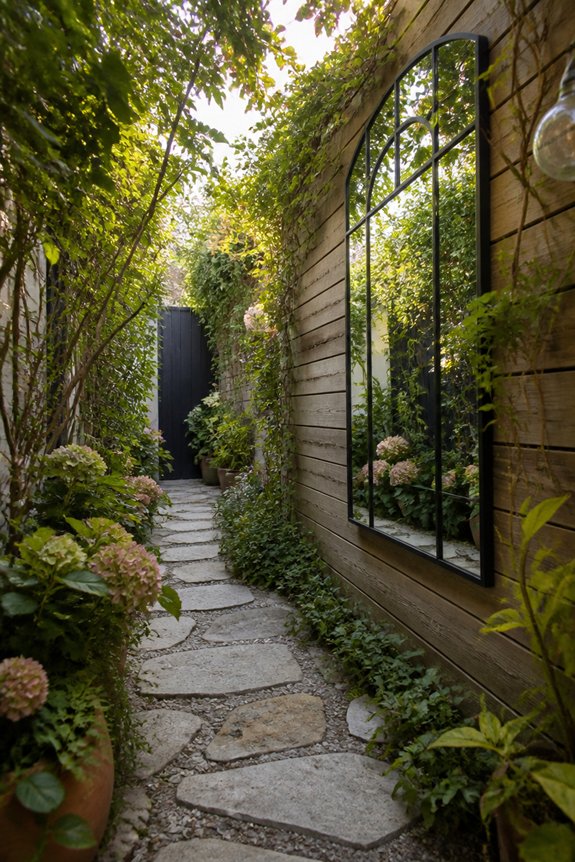
Because a narrow yard often feels boxed in by fencing on both sides, a strategically placed mirror can trick the eye into perceiving additional space beyond the actual boundary. Positioning a large outdoor mirror at the far end of the garden, partially hidden by climbing vines or shrubs, gives the impression of a hidden passage or extended landscape.
Weather-resistant mirrors, framed in metal or reclaimed wood, hold up better against rain and temperature changes than standard glass. Angling the mirror slightly can reflect greenery rather than fencing, reinforcing the illusion of continuous planting. Smaller mirrored panels placed along side walls also widen the visual field without requiring structural changes.
Placement near a light source, such as a lantern or solar fixture, adds brightness while enhancing the reflective effect during evening hours.
Widen the Look With Horizontal Decking Boards
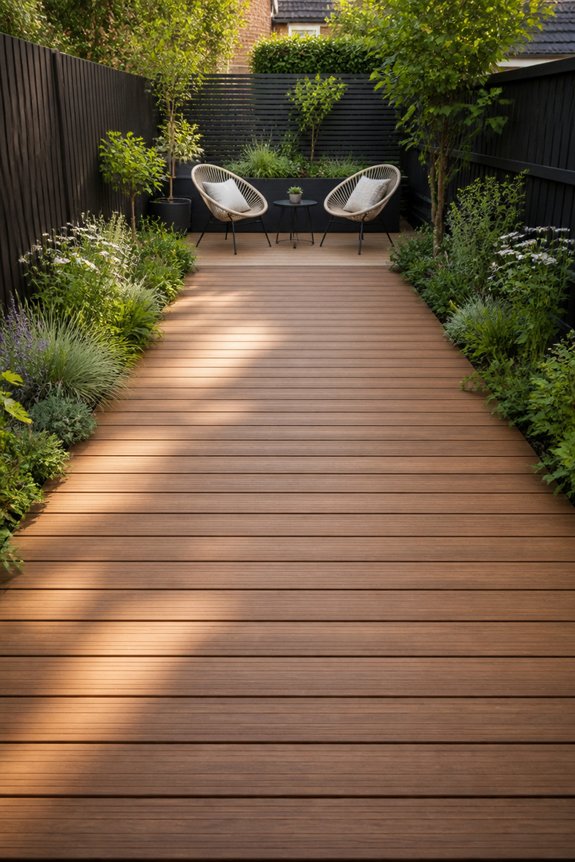
While mirrors work with reflected light to suggest extra space, decking boards shape how the ground itself directs the eye. Laying boards across the width of a narrow garden, rather than along its length, pulls attention side to side instead of forward, making the space feel broader.
Composite or timber decking installed in this pattern works well for patios, seating areas, or paths that cross the yard at intervals. Pairing horizontal boards with contrasting edging, such as a darker border or gravel strip, reinforces the effect further. Mixing board widths can also break up long, uniform lines that emphasize narrowness.
This approach works particularly well near a house extension, where a raised deck can visually anchor the garden while distracting from its overall length.
Zone Your Narrow Yard Into Separate Rooms
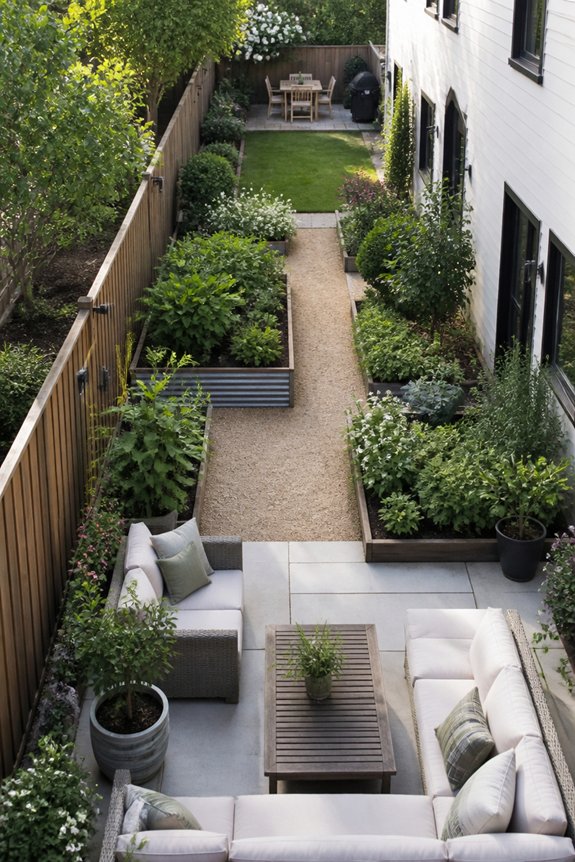
Several distinct zones, each with its own purpose, can make a narrow yard feel larger by breaking a single long strip into a sequence of smaller, more manageable spaces. A dining area near the house, a seating nook in the middle, and a quiet corner at the far end give the space rhythm and function. Changes in flooring material, such as gravel shifting to decking, mark the boundaries between zones without needing walls.
Low hedges, planters, or a simple archway can also separate sections while keeping sightlines open. Lighting each zone differently, with lanterns near seating and spotlights on plants, reinforces the sense of separate rooms after dark. This layered approach turns a long, awkward space into a series of usable outdoor rooms.
Break Up Length With Changes in Level
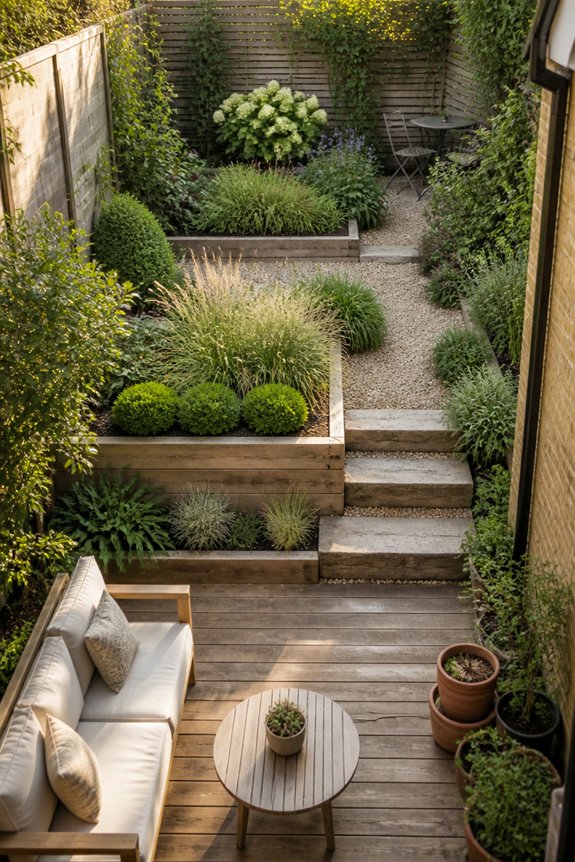
Zoning a narrow yard establishes separate purposes for each section, and changing the level of those sections adds another layer of definition to the space. A single step down from a patio to a lawn area, or a raised deck near the house, breaks the visual line that runs straight to the back fence.
Retaining walls built from timber, brick, or stone can hold soil for raised beds while marking a clear boundary between zones. Sunken seating areas create a destination point rather than a pass-through space.
Even a shallow change, such as two or three steps, forces the eye to pause and register distance differently. Level changes also help with drainage, directing water away from entertaining or planting areas.
Use Raised Beds to Define Narrow Garden Borders
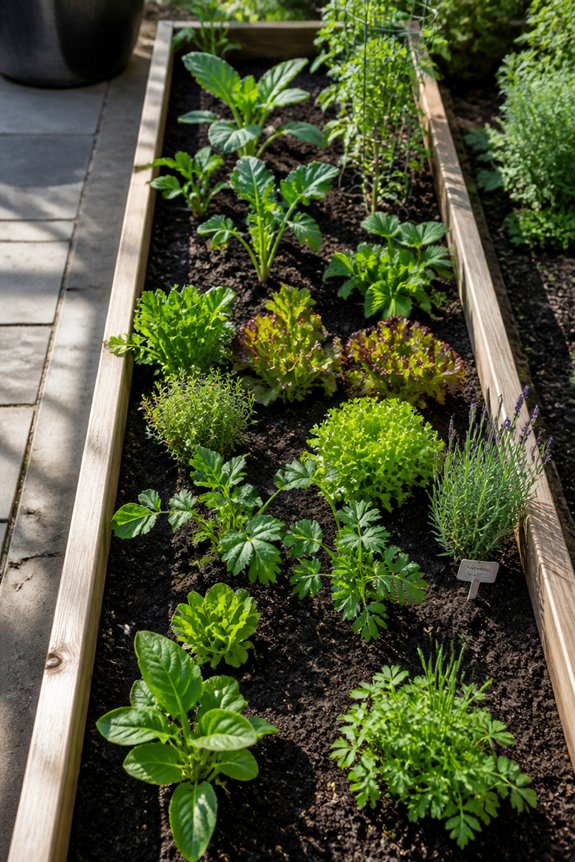
Most narrow yards benefit from raised beds placed along one or both sides, since the structure gives the border a fixed edge that lawn or loose planting cannot provide. Timber, brick, or corten steel edging keeps soil contained and creates a clear line between planting and pathway, which helps a narrow space feel organized rather than cluttered.
A single raised bed running the length of one fence line often works better than two competing borders, since it leaves more open ground for movement. Heights between 12 and 18 inches allow easy access for maintenance without overwhelming the sightline. Mixing bed heights slightly, rather than keeping them uniform, adds subtle variation while still preserving a tidy, structured appearance throughout the yard.
Add a Focal Point at the Far End
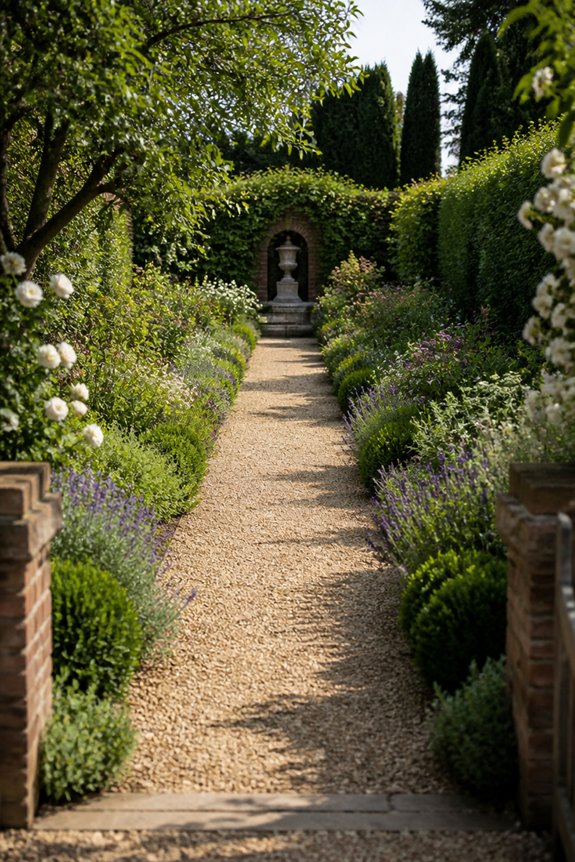
Once the raised beds establish a clear edge along the yard, attention naturally shifts to what draws the eye at the far end. A focal point gives a narrow garden a destination, making the space feel intentional rather than simply long and empty.
Common choices include a small bench, a trellis with climbing vines, a birdbath, or a single ornamental tree planted in a container or bed. Lighting can strengthen the effect after dark, with a lantern or spotlight aimed at the feature.
Placing this element at the far boundary encourages visitors to walk the length of the garden, which makes the yard feel more spacious. Color contrast, height, and material choice all help the focal point stand apart from surrounding plantings.
Draw the Eye Upward With Vertical Planting
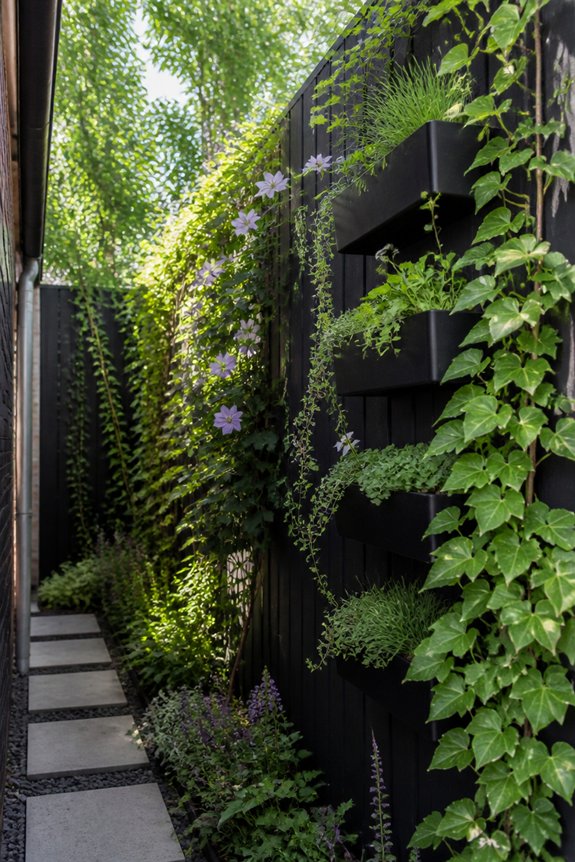
A narrow yard forces gardeners to think beyond ground-level width, using height to create visual interest where floor space runs short. Climbing plants, such as clematis, climbing roses, and jasmine, can be trained up trellises, obelisks, or wall-mounted supports, adding layers without consuming precious ground space.
Tall, narrow shrubs, including columnar hornbeam or Italian cypress, act as green exclamation points, breaking up long sightlines while keeping the path clear. Vertical structures, like arches or pergolas, placed at intervals, can section the yard into smaller rooms, making the space feel less like a corridor.
Hanging baskets and wall planters add color at eye level, drawing attention upward rather than emphasizing the yard’s narrow footprint, and they require minimal maintenance once established.
Install a Living Wall to Save Ground Space
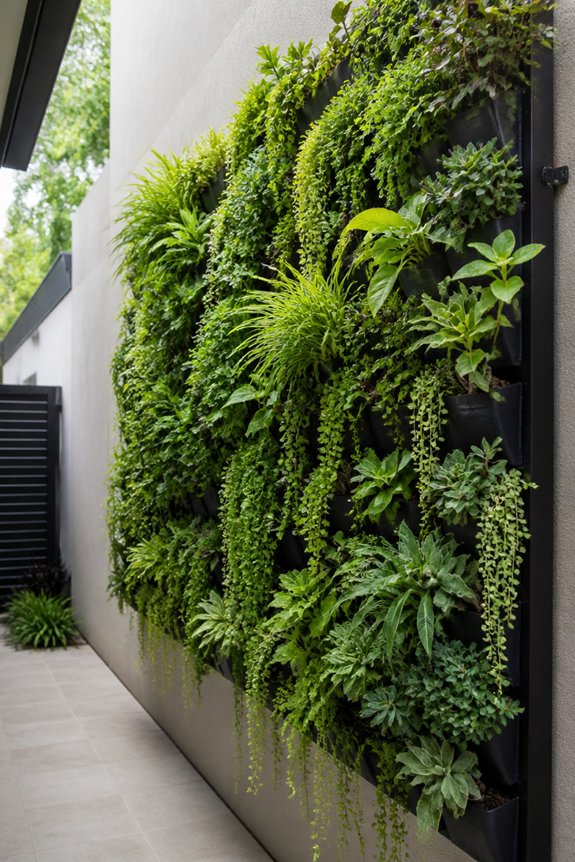
Several narrow yards benefit from a living wall, which turns a vertical surface into growing space without sacrificing width along the ground. A modular panel system, mounted to a fence or exterior wall, holds pockets of soil for herbs, succulents, or small ferns. Felt pocket planters offer a lighter, budget option, suited for annuals like lettuce or petunias.
A structured frame with irrigation tubing works well for larger installations, keeping moisture consistent across dozens of plants. Placement near a patio or entry point allows easy access for watering and trimming. Choosing shallow-rooted species, such as sedum or thyme, reduces weight and maintenance demands. This approach adds greenery, privacy, and texture, while leaving the narrow floor space open for seating or walkways.
Grow Climbers Up Narrow Fences
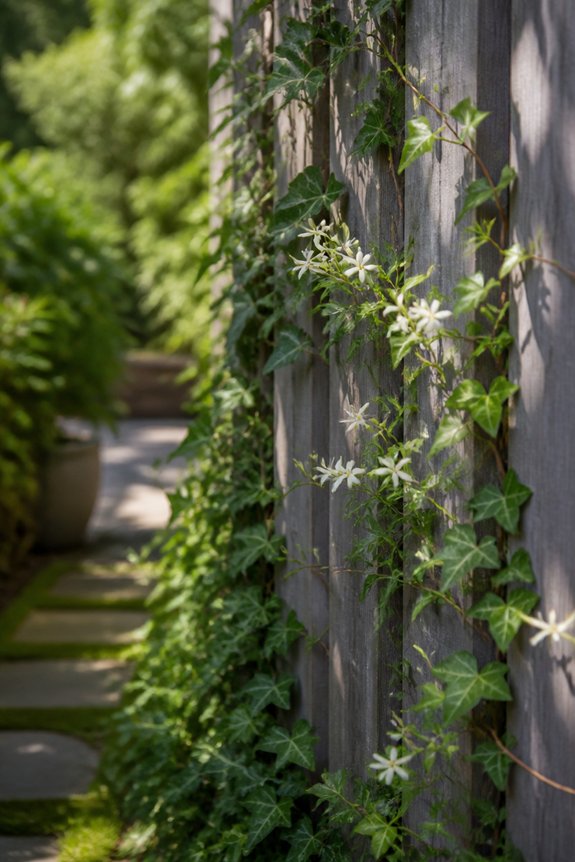
Climbing plants transform a bare fence line into a vertical garden, adding height and color without reducing walkway width. Attaching trellis panels or wire supports to fence posts gives vines a structure to grip, keeping growth controlled and tidy.
Clematis, climbing roses, and honeysuckle offer seasonal flowers, while ivy provides year-round coverage for shaded fences. Jasmine adds fragrance near seating areas or pathways, making the space more inviting without taking up floor room.
Fast growers like morning glory or sweet peas suit gardeners wanting quick results, though they require yearly replanting. Perennial climbers, such as wisteria, take longer to establish but reward patience with dense, lasting coverage. Regular pruning keeps climbers from spreading onto neighboring plants or blocking pathways in narrow yards.
Hide the Boundaries With Layered Planting
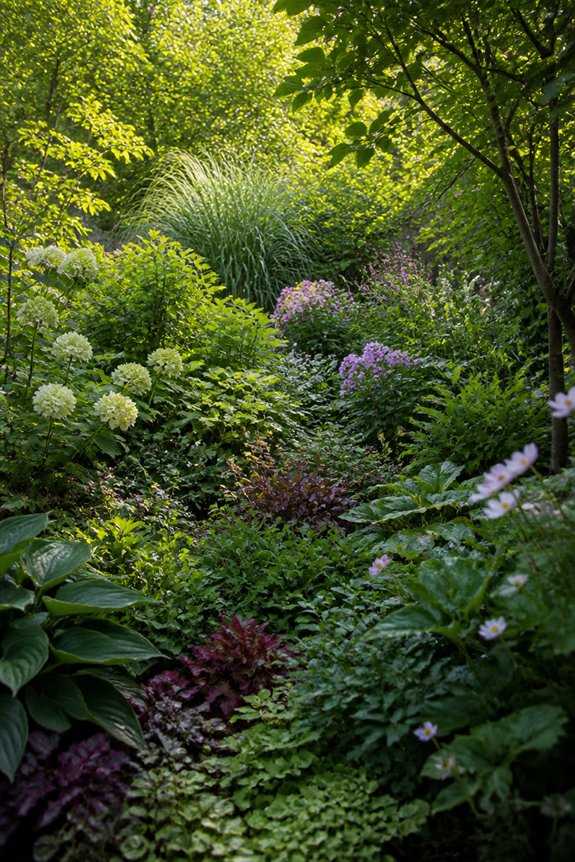
Straight fence lines often make a narrow yard feel more enclosed, but layered planting can soften those edges and blur where the boundary actually sits. Placing tall shrubs or small trees, such as viburnum or amelanchier, at the back creates depth and draws the eye upward rather than sideways. Mid-height planting, including hydrangeas or ornamental grasses, fills the middle layer and hides the distinction between fence and garden.
Low-growing groundcover, such as hardy geraniums or heuchera, finishes the front edge and softens hard lines near paths. Staggering these layers along the fence, rather than planting in a straight row, prevents the yard from reading as a narrow corridor. This approach works especially well when different plant heights overlap slightly, breaking up the fence’s straight edge entirely.
Keep Sightlines Open With Low-Maintenance Planting
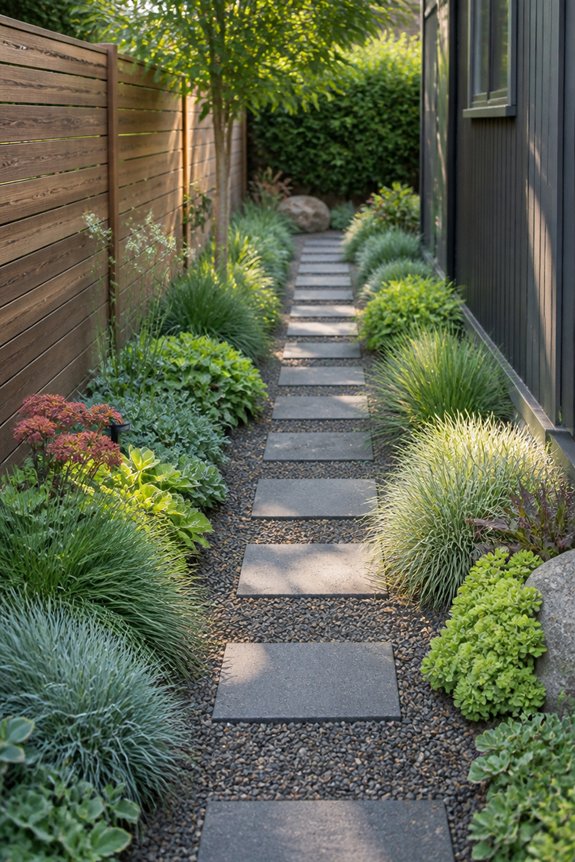
A few well-chosen plants can keep a narrow yard feeling open, especially when height and density are kept in check near the center of the space. Low, mounded perennials such as sedum, catmint, or dwarf ornamental grasses work well along the middle stretch of a long garden, since they add texture without blocking the view down the yard.
Ground covers like creeping thyme or clover reduce mowing needs and fill gaps between stones or pavers. Taller plants are better reserved for the far end or edges, where they can frame the space instead of interrupting it.
Choosing drought-tolerant, slow-growing species also cuts down on upkeep, allowing sightlines to stay clear season after season without constant pruning or replanting.
Choose a Cohesive Color Palette Throughout
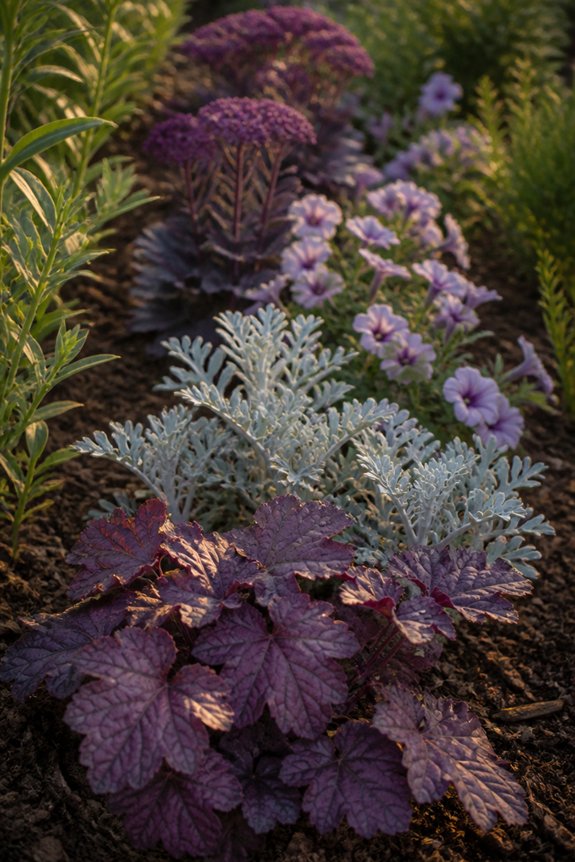
Color consistency helps a narrow yard appear longer and less cluttered, since repeated hues create a sense of visual flow from one end to the other. A limited palette, such as green, white, and silver, gives structure without competing for attention.
Flowering plants like white hydrangeas, silver artemisia, and green hostas can repeat at intervals to guide the eye along the space. Hardscape materials, including pavers, fencing, and pots, should share similar tones to avoid visual breaks.
Bright, contrasting colors can be used sparingly as accents near seating areas or entry points, rather than scattered throughout. Consistent color choices in furniture cushions, planters, and trim also reinforce continuity, making the yard feel more organized and intentional despite its narrow dimensions.
Frame Narrow Views With Arches or Arbors
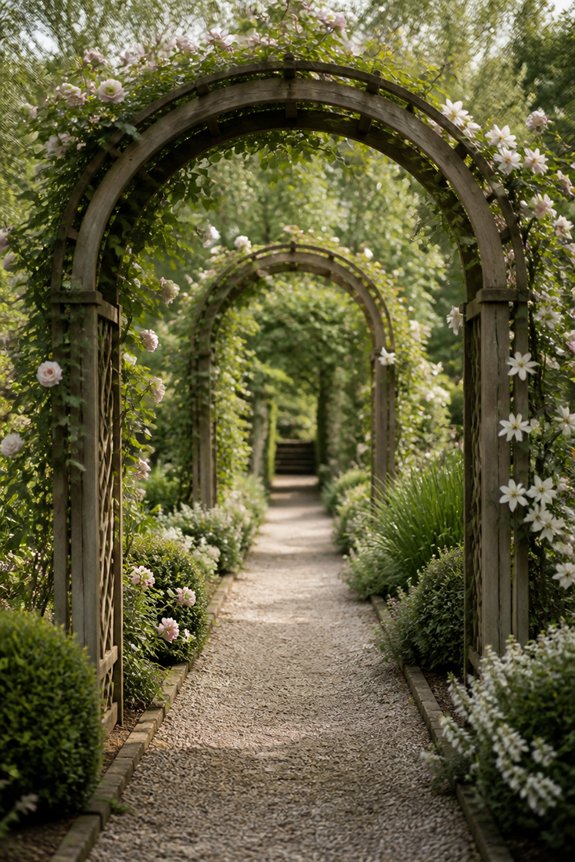
An arbor’s placement across a narrow path can break up the yard’s length while adding a focal point that draws the eye upward instead of straight ahead. Placing two or three arches at intervals divides a long space into smaller sections, each with its own character, making the yard feel like a series of rooms rather than one continuous strip.
A single arbor at the far end can also serve as a destination, encouraging visitors to walk the length of the garden. Climbing plants, such as clematis or climbing roses, soften the structure’s lines and add seasonal color. Materials like weathered wood, metal, or painted trellis panels can match the garden’s existing style, keeping the design consistent from entrance to exit.
Add a Slim Water Feature for Ambient Sound
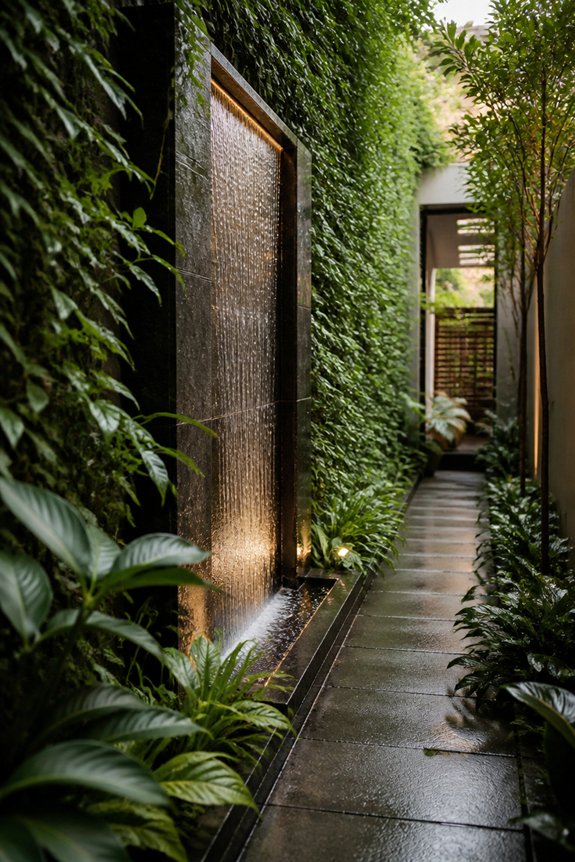
Running along a fence line or tucked beside a pathway, a slim water feature introduces sound without demanding much space. A narrow wall-mounted fountain, a simple bubbling urn, or a slender rill channel can fit into tight side yards where wider ponds would overwhelm the layout.
The trickling sound helps mask street noise and gives the garden a sense of calm, encouraging visitors to slow down as they pass through. Placement near a seating area or at the midpoint of a long path allows the sound to carry through the space.
Materials like stone, copper, or ceramic keep the feature visually consistent with surrounding plantings, while low-voltage pumps make upkeep manageable for narrow, hard-to-access garden sections.
Add Lighting to Extend Use Into the Evening
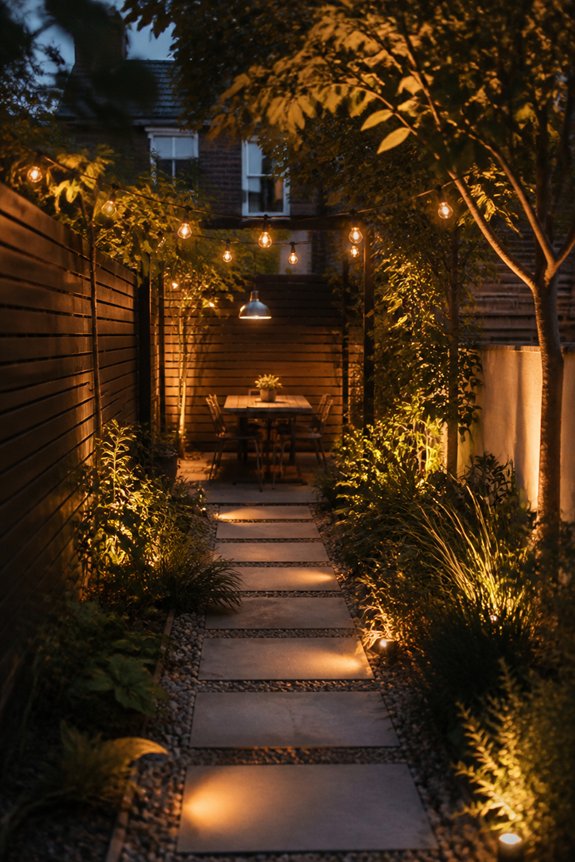
Why should a narrow garden go dark once the sun sets? Lighting extends the usable hours of a slim yard, turning it into an evening retreat rather than a space left unused after dusk.
Low-voltage path lights, spaced evenly along a walkway, guide movement safely while adding a subtle glow to the length of the garden. Uplights placed at the base of trees or tall shrubs create depth, making the narrow space appear wider than it is. String lights hung overhead, between fences or posts, add ambient light without consuming ground space.
Solar-powered fixtures reduce wiring needs, while dimmable LED options allow adjustment for different occasions, from quiet relaxation to evening gatherings with family or guests.
Create a Cozy Seating Nook at One End
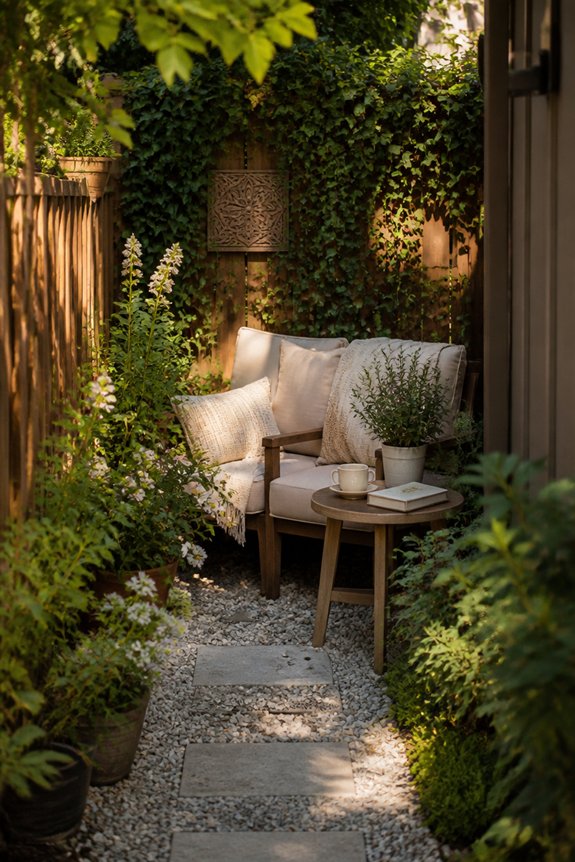
Once lighting extends the hours a narrow yard can be used, the next step is giving people a reason to stay outside longer. A seating nook placed at the far end of the yard turns an empty corner into a destination, encouraging use of the entire space rather than just the area near the house.
Two chairs and a small side table can fit into a tight corner without crowding the path. Built-in benches along a fence line save space while adding structure. Adding a small rug, outdoor cushions, or a potted screen of tall grasses can define the seating area visually.
Positioning the nook near existing lighting or a pergola ties it to earlier design choices while making the far end feel intentional rather than forgotten.
Frequently Asked Questions
What Is the Ideal Width for a Narrow Garden Layout?
There is no single ideal width; narrow gardens typically range from three to ten feet. Designers recommend using vertical planting, defined pathways, and repeated focal points to make slim spaces feel balanced, functional, and visually proportionate throughout the yard.
How Much Does It Cost to Redesign a Narrow Garden?
Costs vary widely: small budgets yield gravel paths and potted plants; moderate budgets bring decking and lighting; larger budgets create built-in seating, water features, and professional landscaping—each choice shaping the garden’s final character and function.
What Plants Grow Best in Shaded, Narrow Yards?
Ferns, hostas, hellebores, and Japanese forest grass thrive in low-light, narrow spaces. Astilbe and heuchera add color, while climbing hydrangea covers fences vertically. These shade-tolerant choices maximize limited width while thriving without direct sunlight exposure.
Can I Install These Ideas Myself Without a Professional?
Like any determined DIYer channeling their inner Capability Brown, most homeowners can absolutely tackle these narrow garden transformations solo—simple planting, basic paving, and shade-loving greenery require patience and effort, not necessarily professional landscapers or specialized expertise.
How Do I Maintain a Narrow Garden Year-Round?
Regular seasonal care keeps a narrow garden thriving: pruning in spring, mulching in summer, clearing leaves in autumn, and protecting plants in winter. Rotating seasonal blooms and maintaining consistent watering guarantees year-round visual appeal despite the space’s confined width.
Conclusion
A narrow yard does not have to feel cramped or limiting. Diagonal lines, curved paths, mirrors, and zoning techniques all work together to create depth, interest, and function. Vertical elements, water features, and lighting extend the usable space and hours. Why settle for a plain strip of grass when these methods can transform it into a layered, purposeful garden? With careful planning, even the thinnest yard can become a space worth spending time in.