
Yellowing leaves, wilting stems, and drooping branches are a plant’s way of crying for help. These distress signals usually point to a handful of common culprits: too much water, cramped pots with poor drainage, dim corners with insufficient light, or tiny pests making themselves at home.
Pinpointing the exact problem takes a bit of detective work, but it’s the only way to chart a path toward recovery.
Once the symptoms are spotted, it’s time to play plant doctor. Check the soil moisture first—is it soggy or bone dry?
Inspect the roots for rot or crowding. Scan the leaves for spider mites, aphids, or other unwelcome visitors. Each diagnosis leads to a different treatment, so rushing in blindly often does more harm than good.
With the problem identified, corrective steps can begin. Repotting, adjusting watering schedules, relocating to brighter spots, or applying gentle pest remedies all come into play.
Recovery rarely happens overnight, but patience and consistent care usually bring houseplants back from the brink. The key is understanding what went wrong before trying to fix it.
Diagnose the Problem: Yellowing, Wilting, or Drooping?
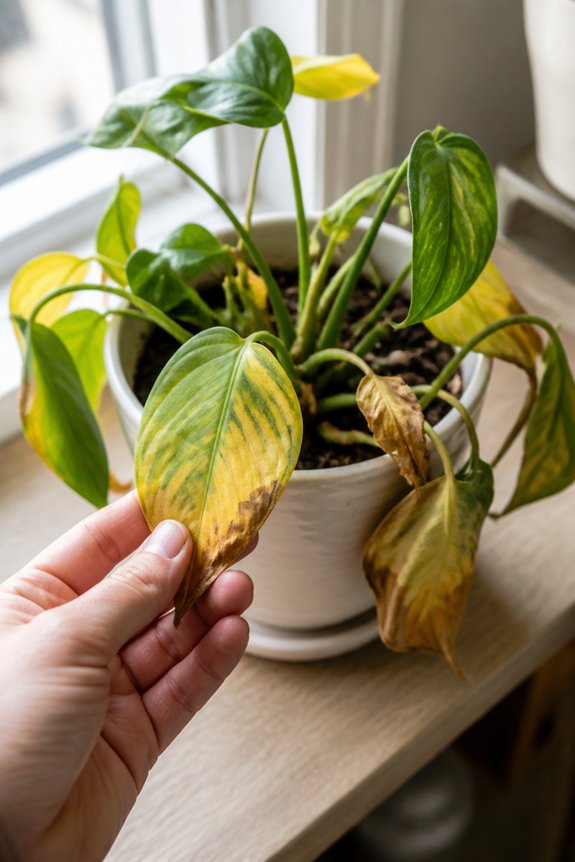
The first step in saving a dying houseplant involves identifying what is wrong with it. Different symptoms point to different problems.
Yellowing leaves often indicate overwatering, nutrient deficiencies, or natural aging. Wilting occurs when plants lack water or experience root damage from soggy soil. Drooping stems suggest underwatering, low light, or pest infestations.
Examine the soil moisture by inserting a finger one to two inches deep. Check leaf undersides for spider mites, mealybugs, or scale insects. Inspect stems and roots for soft, mushy tissue indicating root rot.
Consider recent changes: watering frequency, location shifts, temperature fluctuations, and light exposure. Note whether symptoms appeared suddenly or gradually developed. These observations help narrow down causes and determine appropriate treatment approaches.
Fix Overwatering or Underwatering
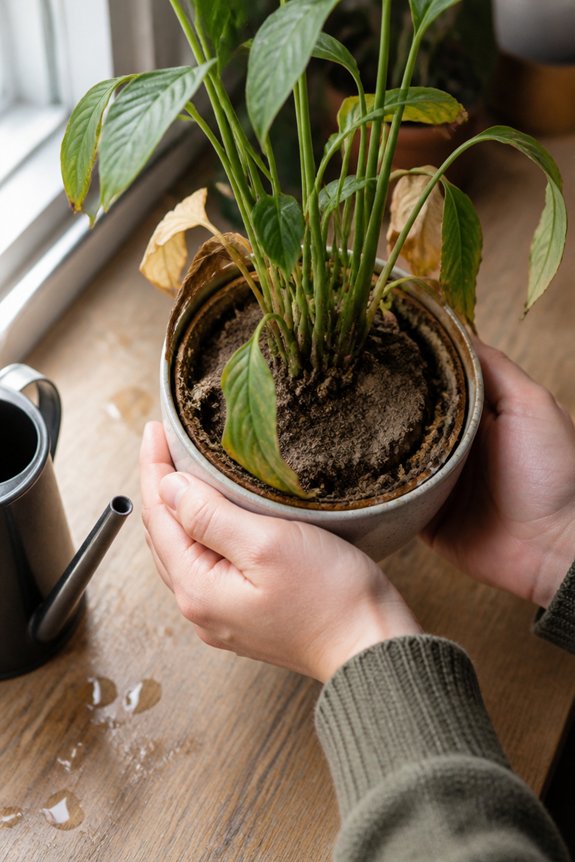
Once a plant’s watering problem is identified, adjusting moisture levels becomes the next critical step. For overwatered plants, reduce watering frequency and guarantee pots have drainage holes. Soil should dry between waterings, particularly for succulents and cacti. Check soil moisture by inserting a finger one inch deep.
For underwatered plants, increase watering frequency while observing the plant’s response. Most houseplants prefer consistently moist, not soggy, soil. Room temperature, humidity, pot size, and soil type all affect watering needs. A plant in bright light requires more frequent watering than one in low light.
Repotting into fresh soil may help if roots show rot or compaction. Monitor the plant over two to three weeks to confirm improvement before resuming normal care routines.
Boost Light for Plant Recovery
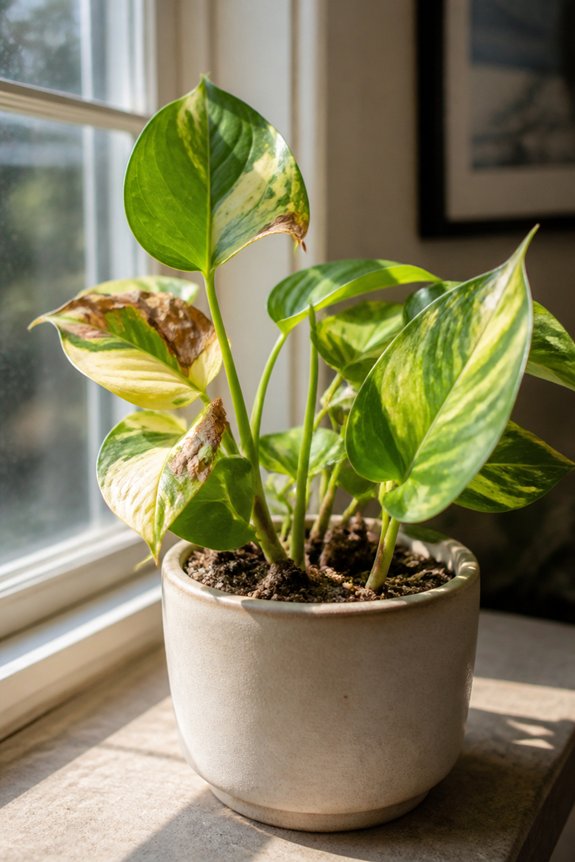
How much light reaches a houseplant directly affects its ability to recover from stress and decline. Most indoor plants require bright, indirect light to photosynthesize effectively and regain strength. Placing a struggling plant near an east-facing or west-facing window provides adequate illumination without harsh direct rays that scorch leaves.
Plants showing signs of light deficiency display leggy growth, pale coloring, and slow development. Relocating the plant closer to a light source addresses these issues.
South-facing windows offer the strongest natural light, though afternoon sun may damage sensitive species. North-facing locations provide minimal light and suit only shade-tolerant varieties.
Supplemental grow lights extend daylight hours when natural light proves insufficient. Positioning lights 6 to 12 inches above foliage for 12 to 16 hours daily stimulates recovery and encourages healthy growth patterns.
Treat Pest Damage and Fungal Issues
Pests and fungal infections commonly attack weakened houseplants, causing leaf spots, yellowing, wilting, and visible insects on stems and foliage. Common pests include spider mites, mealybugs, scale insects, and aphids, which feed on plant sap and weaken the plant further.
Fungal problems like powdery mildew and root rot develop in conditions with poor air circulation or excessive moisture.
Treatment involves several approaches. Remove affected leaves promptly to prevent spread. Spray affected areas with neem oil or insecticidal soap for pest infestations.
For fungal issues, reduce watering frequency, improve ventilation around the plant, and apply fungicide if necessary. Isolate the plant from other houseplants to prevent transmission. Regular inspection of stems and leaf undersides helps catch problems early before serious damage occurs.
Trim Dead Leaves and Refresh the Soil
Removing dead and dying leaves allows the plant to redirect energy toward new growth and improves air circulation around the stem and remaining foliage. Use clean scissors or pruning shears to cut away discolored, wilted, or spotted leaves at their base. This prevents disease spread and reduces pest habitat.
Simultaneously, refresh the soil by replacing the top two inches with fresh potting mix, or repotting entirely if the soil appears compacted and waterlogged. Old soil accumulates salts, depletes nutrients, and may harbor fungal spores. Choose soil appropriate to the plant type: cacti require sandy, well-draining mixes, while ferns prefer moisture-retentive varieties.
Gently loosen the root ball during repotting to encourage new root development. Allow the plant several days to recover before resuming normal watering and feeding schedules.
Frequently Asked Questions
How Long Does It Typically Take for a Houseplant to Recover After Treatment?
Recovery duration varies considerably depending on the plant species and severity of damage. Generally, houseplants show initial improvement within one to two weeks, though full recovery typically requires four to eight weeks of consistent proper care.
Should I Repot My Dying Plant Immediately or Wait for Signs of Improvement?
While one might assume immediate repotting helps, experts recommend waiting for recovery signs first. Repotting a severely stressed plant causes additional trauma. Once new growth appears and the plant stabilizes, repotting becomes safe and beneficial for its continued health.
What Temperature and Humidity Levels Are Ideal for Plant Recovery?
A plant recovers effectively when maintained between 65-75°F with humidity levels around 50-60%. These conditions reduce stress on weakened specimens, encouraging new growth and stabilizing root systems during the recovery phase.
Can I Use Fertilizer to Help Revive a Struggling Houseplant?
Fertilizer can assist recovery, though it should be applied cautiously. One should wait until the plant shows new growth before fertilizing, as stressed plants cannot process nutrients effectively. Overfeeding may cause further damage to weakened root systems.
How Often Should I Monitor My Plant’s Progress During the Recovery Process?
Daily observation reveals wilting patterns, yellowing leaves, and browning stems. Weekly checks assess new growth, soil moisture, and overall health. Consistent monitoring every few days during the first two weeks establishes the recovery trajectory and indicates whether interventions require adjustment.
Conclusion
A dying houseplant, once vibrant, becomes salvageable through systematic action. Where neglect created wilting stems and yellowing leaves, proper diagnosis reveals solutions: adjusted watering schedules reverse root rot, increased light restores vigor, pest treatments eliminate damage, and soil refresh provides nutrients. Dead foliage removed, healthy growth emerges. Success requires observation, adjustment, and persistence. The plant’s recovery mirrors the effort invested in its care, transforming decline into resilience through practical intervention.