
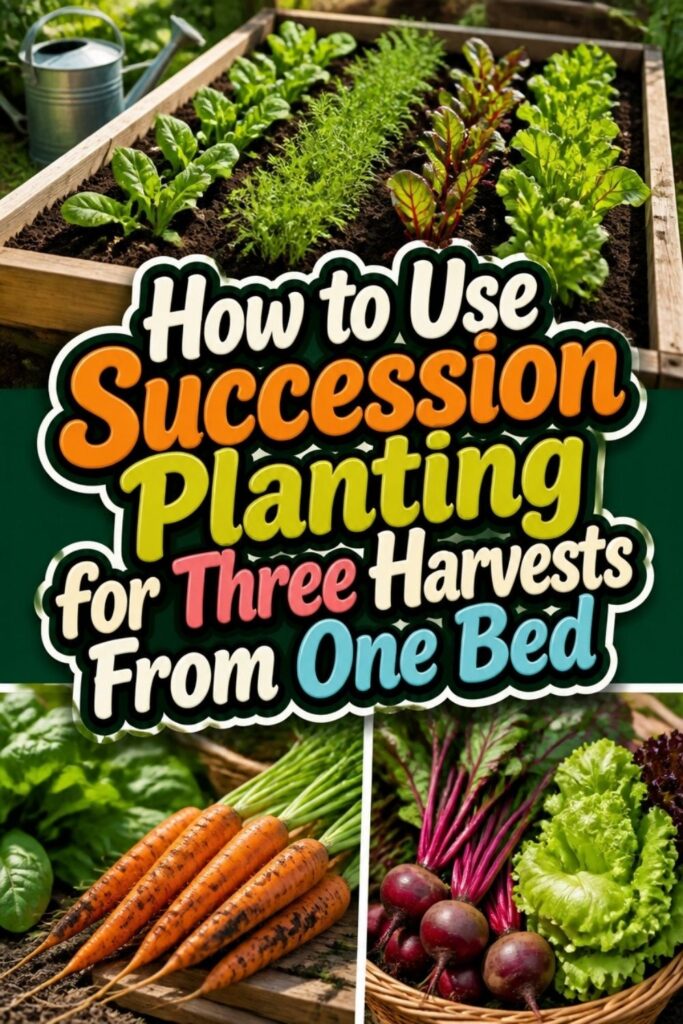
Succession planting turns a single garden bed into a powerhouse of productivity. Instead of settling for one harvest, gardeners can squeeze three separate crops into one growing season. The trick lies in careful timing and selecting vegetables that don’t linger in the soil.
Fast-maturing options make this approach possible. Lettuce, radishes, and bush beans all reach harvest size within 30 to 70 days. Once the first crop comes out, the next one goes right in. No wasted space, no idle soil.
Smart spacing between plantings matters just as much as crop selection. Too much gap and the bed sits empty; too little and plants compete or fail. Each planting date should align with when the previous crop will finish.
Map out the growing season, count backward from first frost, and match crops to the time windows available. Success comes down to mechanics. Calculate total frost-free days, choose varieties with appropriate maturity dates, and keep the planting sequence tight.
Done well, one bed yields three times what it otherwise would.
Why Timing Is Everything for Non-Stop Harvests
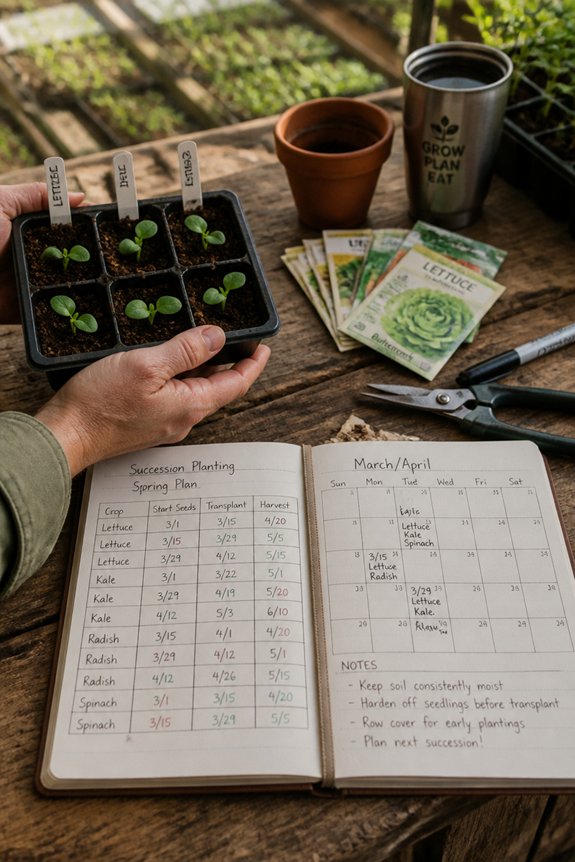
Succession planting requires careful attention to planting dates, spacing intervals, and crop maturity periods to maintain continuous harvests throughout a growing season. Timing determines whether gardeners experience gaps in production or steady yields. Lettuce, for example, reaches maturity in thirty to forty-five days, requiring new seeds planted every two weeks for uninterrupted supplies. Beans mature in fifty to sixty days, necessitating similar planning intervals.
Root vegetables like carrots take longer, demanding earlier planting adjustments. Understanding each crop’s specific timeline prevents feast-or-famine cycles. Gardeners who plant all seeds simultaneously face one large harvest followed by empty beds.
Staggered plantings create overlapping growth periods, ensuring mature plants are ready when previous harvests conclude. This methodical approach maximizes bed productivity and provides consistent access to fresh vegetables throughout the season.
Which Crops to Succession Plant (And When They’re Ready)
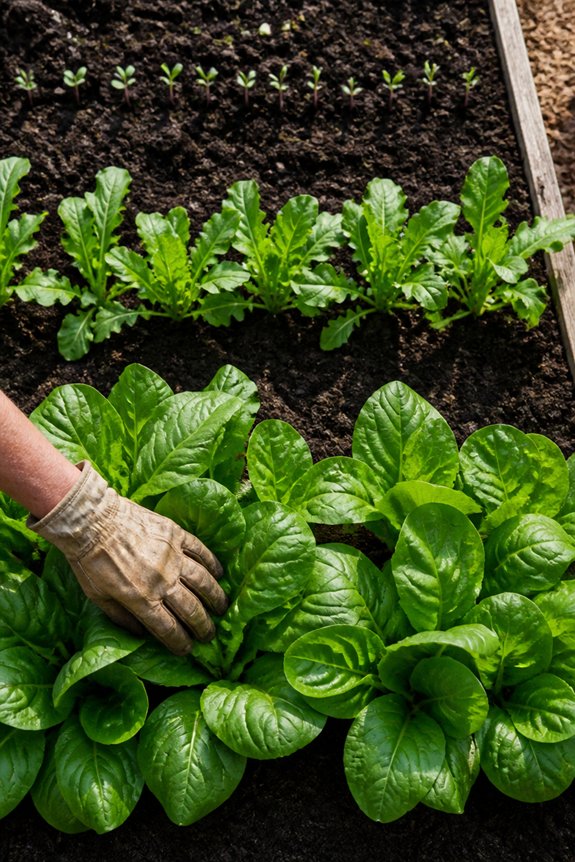
Understanding which vegetables respond well to staggered planting separates successful gardeners from those fighting production gaps. Fast-maturing crops work best for succession planting, including lettuce, spinach, radishes, and beans. These vegetables reach harvest in 30 to 60 days, allowing multiple plantings within a single growing season.
Lettuce and spinach tolerate cool conditions and produce quickly, making them ideal for spring and fall plantings. Radishes mature in approximately 25 days, enabling four or more successive sowings. Bush beans, ready in 50 to 60 days, fit well between slower crops.
Medium-season vegetables like beets and carrots require 60 to 80 days, limiting succession planting to two harvests per season. Slow-maturing crops such as tomatoes and peppers occupy garden space too long for multiple successions and suit single plantings instead.
Calculate Your Planting Schedule: The 3-Harvest Formula
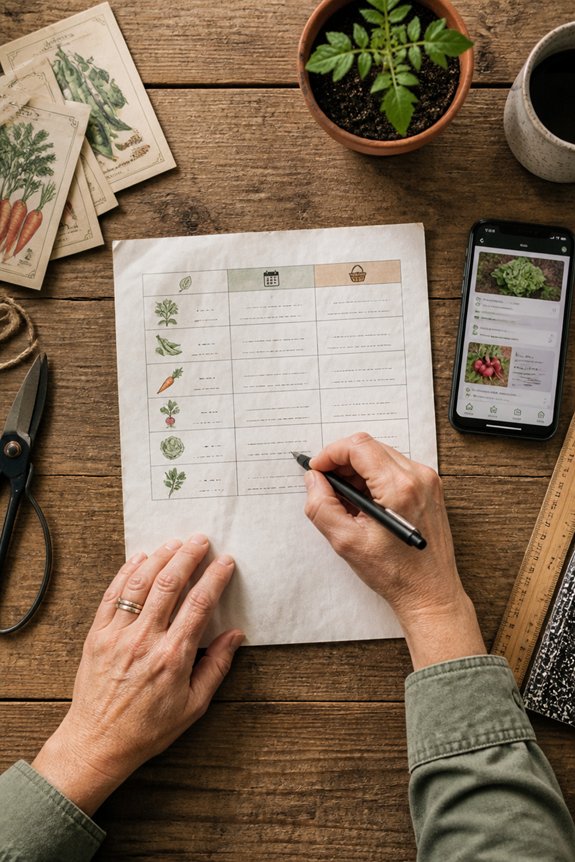
Once a gardener identifies which crops suit succession planting, calculating the timing becomes the next logical step. The 3-harvest formula requires knowing three key numbers: days to maturity, planting interval, and growing season length.
Days to maturity indicates how long a crop needs from seed to harvest. Lettuce requires 45-60 days, while beans need 50-70 days. Planting interval is the gap between successive plantings, typically matching or slightly exceeding the days to maturity.
To execute three harvests, gardeners divide their available growing season into thirds. For a 180-day season, each planting occurs roughly 60 days apart. The first planting matures around day 60, the second around day 120, and the third around day 180.
This mathematical approach guarantees continuous production throughout the growing period.
Avoid These 5 Mistakes Before Your First Planting
Many gardeners frequently overlook critical planning steps that undermine their succession planting efforts before seeds even enter the soil. Common mistakes include planting all crops simultaneously, ignoring frost dates, and neglecting soil preparation between plantings. Gardeners often fail to account for crop maturity times, resulting in harvests arriving at inconvenient intervals.
Selecting incompatible varieties compounds these problems, as some plants require longer growing seasons than others. Additionally, poor record-keeping prevents effective scheduling for subsequent plantings. Gardeners should verify their specific frost dates, check seed packet maturity information, prepare soil amendments beforehand, and maintain detailed planting notes. These foundational steps establish the conditions necessary for successful succession planting across three distinct harvests throughout the growing season.
Clear and Replant Your Bed Every 3-4 Weeks
The foundation of successful succession planting rests on a consistent cycle of clearing spent plants and introducing new crops every three to four weeks. This regular rotation maximizes bed productivity throughout the growing season. Gardeners should remove mature or declining plants, including roots and debris, to prevent disease buildup and pest problems.
Once the bed is cleared, amend the soil with compost or organic matter to replenish nutrients. Fast-growing crops like lettuce, spinach, radishes, and beans work well for successive plantings. Cool-season crops shift to warm-season varieties as temperatures change. Maintaining this three to four-week schedule guarantees continuous harvests, prevents soil depletion, and keeps the bed actively producing rather than sitting dormant.
Keep Soil Rich Across Consecutive Plantings
Successive plantings deplete soil nutrients rapidly, requiring consistent replenishment to maintain bed fertility. Gardeners should add compost, aged manure, or organic fertilizer between each planting cycle to restore nitrogen, phosphorus, and potassium levels. A two-to-three-inch layer of compost worked into the top six inches of soil provides adequate nutrient replacement for most vegetable beds.
Cover crops offer an alternative approach. Planting clover, buckwheat, or winter rye between harvest cycles adds organic matter and fixes nitrogen naturally. These crops grow for two to three weeks, then get turned into the soil before the next planting.
Soil testing every season identifies specific nutrient deficiencies. Based on results, gardeners can apply targeted amendments like bone meal for phosphorus or kelp for trace minerals, ensuring consistent productivity across all three harvests.
Your Season-Long Harvest Timeline in Action
Once soil fertility stabilizes through consistent amendments and cover crops, gardeners can map out a practical harvest schedule across spring, summer, and fall. Spring plantings of lettuce, spinach, and peas mature in 6-8 weeks, yielding the first harvest by late May.
After removing spent plants, gardeners add compost and plant heat-loving crops like beans, peppers, and squash for summer production. These require 8-10 weeks and deliver harvests in July and August.
As temperatures cool, a final planting of kale, broccoli, and carrots begins in late July, reaching maturity by October. This staggered approach maximizes bed productivity, reduces fallow periods, and maintains soil health through sequential crop rotations and amendments.
Frequently Asked Questions
Can I Succession Plant in Containers or Raised Beds With Limited Space?
Yes, succession planting works effectively in containers and raised beds. Gardeners can maximize limited space by planting fast-growing crops in small batches every two weeks, harvesting mature plants while simultaneously seeding new ones in the same location.
How Do I Protect Succession Planted Crops From Pests and Diseases Throughout the Season?
Gardeners protect succession plantings by rotating crop families to prevent soil-borne diseases, implementing row covers for young plants, monitoring regularly for early pest detection, and removing affected foliage promptly to minimize spread between plantings.
What’s the Best Way to Water Multiple Crop Stages Simultaneously in One Bed?
Studies show succession planting increases yields by 300%. One addresses varying water needs by sectioning beds with soaker hoses, adjusting flow rates per zone. Mature plants require deeper watering, while seedlings need frequent, shallow moisture. Drip irrigation systems provide the most precise control.
Should I Use Different Fertilizers for Successive Plantings of the Same Crop?
One should generally use consistent fertilizer formulations for successive plantings of the same crop, as nutrient requirements remain similar. However, gardeners may adjust application rates based on soil test results between plantings to optimize fertility levels.
How Do Weather Changes Affect My Succession Planting Schedule Mid-Season?
Weather fluctuations greatly impact succession planting timelines. Unexpected frosts delay sowings, while heat waves accelerate crop maturation. Gardeners must monitor temperature patterns closely and adjust planting dates accordingly to maintain consistent harvests throughout the growing season.
Conclusion
Succession planting transforms single beds into continuous food sources through strategic timing and crop rotation. Gardeners using this method report harvesting three times within one season, compared to one harvest with traditional planting. By selecting fast-maturing crops, calculating precise planting intervals, and maintaining soil health between plantings, gardeners maximize productivity year-round. Proper planning and consistent maintenance guarantee minimal gaps between harvests and sustained garden output.