
Bringing greenery into an office setting can make the space feel fresh and welcoming. Office Desk Plants add natural color without taking up much room. They can also create a calmer atmosphere during busy workdays.
Pothos, snake plants, ZZ plants, and peace lilies are popular choices. Most are easy to care for and adapt well to indoor conditions.
Pothos prefers moderate light and regular watering. Snake plants can handle lower light and less frequent watering. Choosing a plant that matches your office conditions makes care much easier.
Good drainage is also important. Use pots with drainage holes and a well-draining mix. This helps prevent root rot and other common problems.
The following Office Desk Plants include options for different light levels, desk sizes, and care routines. You can easily find one that suits your workspace.


Start With Your Desk Conditions
Look at your workspace before choosing a plant. A dim cubicle calls for forgiving options such as pothos or snake plants, while a bright desk near a window gives you more freedom to grow succulents and other light-loving varieties.
Pay attention to pot size and drainage as well. Containers should be only slightly larger than the root ball, with drainage holes and soil suited to the plant’s moisture needs. These details help prevent waterlogged soil and root rot.
Also consider how consistently you can provide care. If work gets hectic or you are frequently away from your desk, choose a plant that tolerates missed waterings rather than one that depends on consistently moist soil.
Why Plants Transform Your Workspace
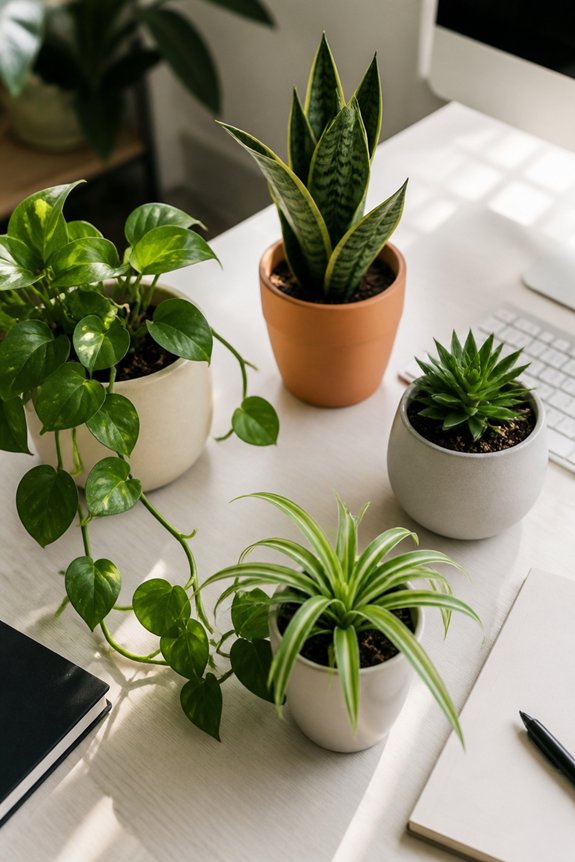
When plants occupy an office desk, they create measurable changes in the immediate work environment. Greenery absorbs carbon dioxide, releases oxygen, and filters airborne toxins.
Employees near plants report reduced stress levels, improved focus, and decreased fatigue. Desk plants like pothos and snake plants require minimal maintenance while providing these benefits consistently throughout the workday.
ZZ Plant: Thrives in Complete Darkness
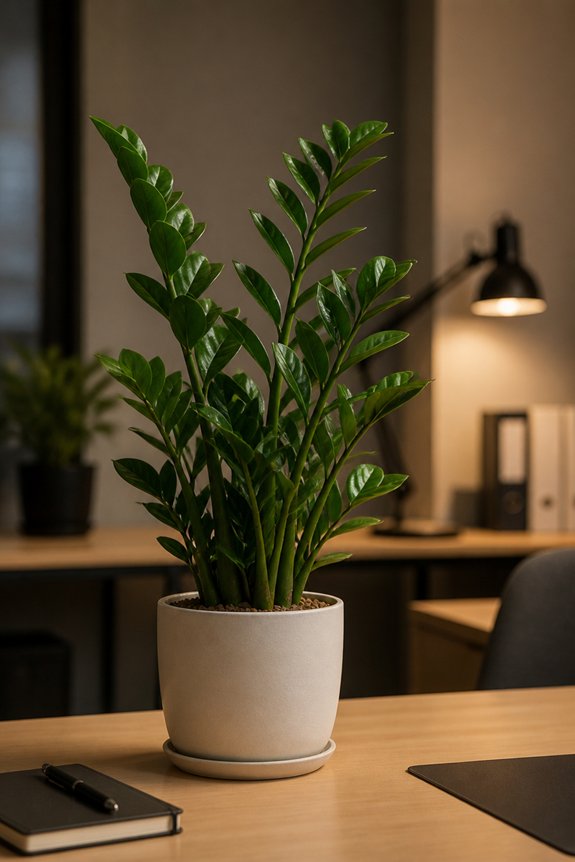
How does a plant survive in an office corner that receives almost no natural light? The ZZ plant handles low-light conditions better than most desk plants. It grows slowly in dim spaces, requiring minimal watering and attention.
This plant stores water in underground rhizomes, making it drought-tolerant. Offices with fluorescent lighting or no windows suit ZZ plants well.
Pothos: Climbs Anywhere, Grows Anywhere
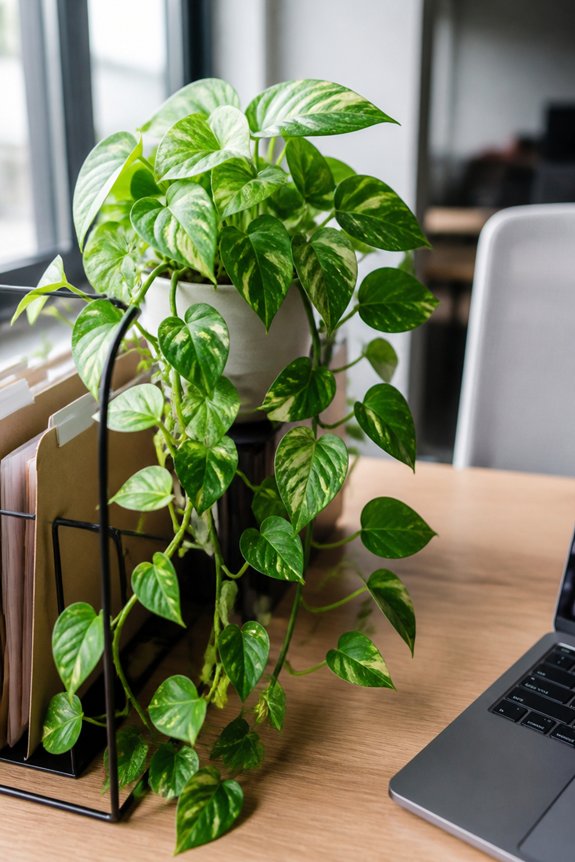
Pothos ranks among the most adaptable office plants, thriving in various light conditions and growing in multiple directions.
The vine grows upward on trellises, horizontally across shelves, or downward from hanging containers. Pothos tolerates low light, fluorescent office lighting, and indirect sunlight equally well. It requires minimal water and maintenance, making it ideal for busy workspaces.
Peace Lily: Elegant Blooms in Dim Corners
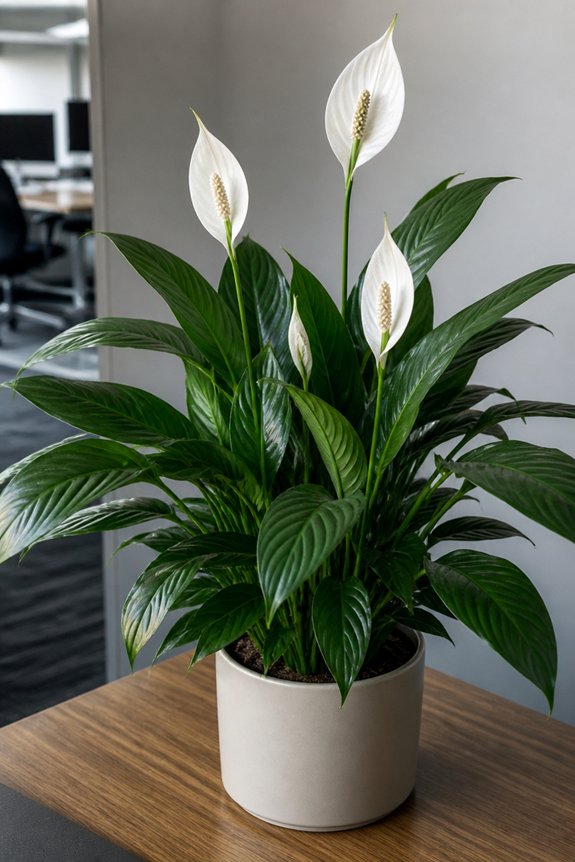
The Peace Lily offers a different approach to office plant selection, particularly for workspaces with limited natural light. This plant produces white flower spathes and tolerates low-light conditions better than most desk plants.
Peace Lilies require moderate watering, occasional misting, and indirect light. They adapt well to standard office pots and soil. Brown leaf tips indicate either low humidity or excess fluoride in water.
Snake Plant: Air-Purifies While You Ignore It
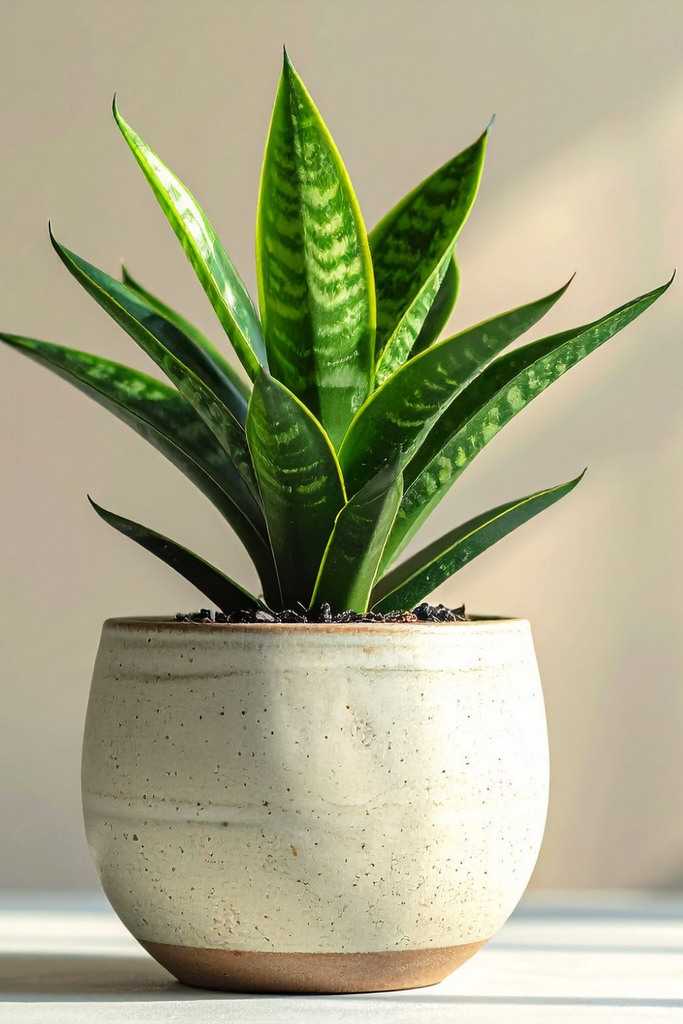
Snake plants offer exceptional durability for office environments where consistent plant care proves difficult or impossible. The plant tolerates low light, irregular watering, and temperature fluctuations common in workplaces.
Snake plants actively remove toxins like formaldehyde and benzene from indoor air. Their upright, striped leaves require minimal attention while providing both air purification and visual interest to desk spaces.
Spider Plant: Fast-Growing and Beginner-Friendly
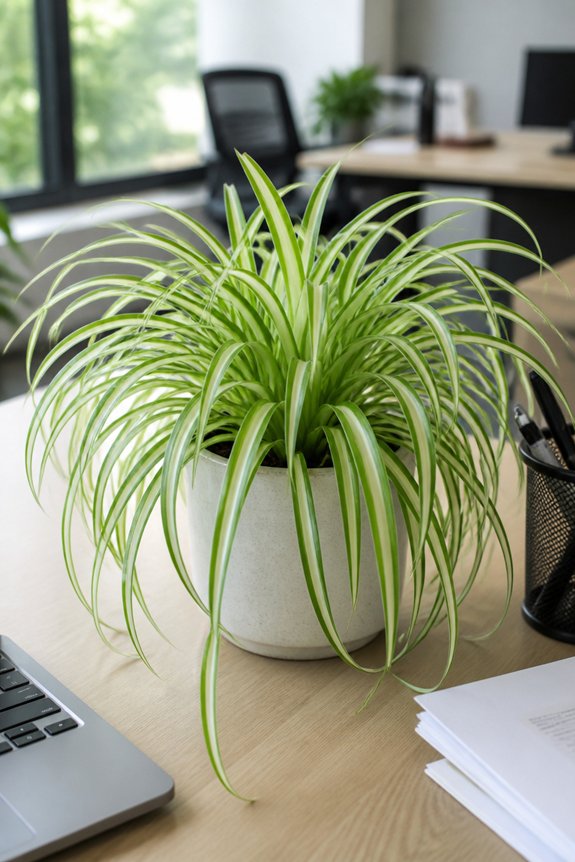
Spider plants demand less expertise than many office varieties, yet remain highly effective for workplace environments. These plants grow quickly, producing long, arching leaves and small plantlets called runners.
Spider plants tolerate inconsistent watering, moderate light, and various temperatures. They require minimal maintenance, making them suitable for busy professionals. Simple pots with drainage holes support healthy growth in most office settings.
Dracaena Marginata: Dramatic Leaves Without Taking Over Your Desk
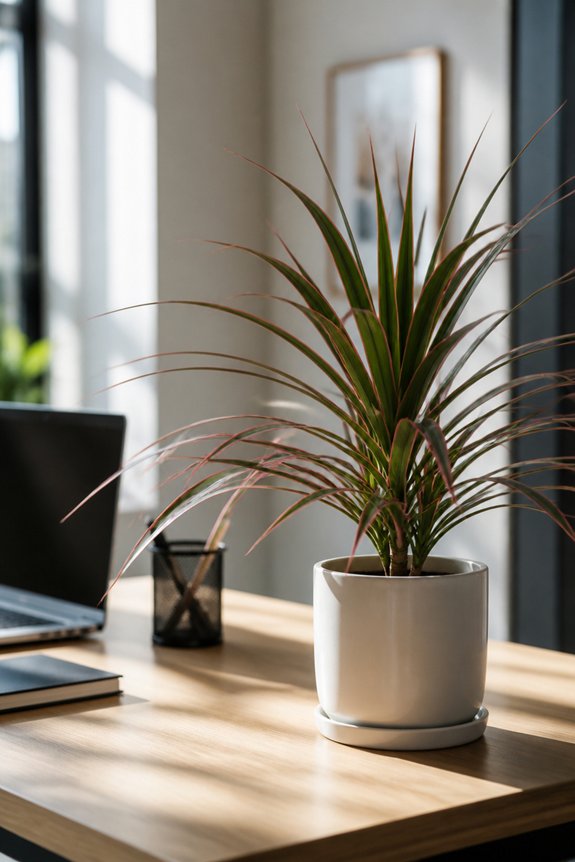
Dracaena marginata plants offer striking visual appeal through their thin, arching leaves with red or burgundy edges, making them popular choices for office spaces with limited room. These plants tolerate low light conditions and irregular watering schedules. They grow slowly, requiring minimal maintenance.
Placement near windows or under fluorescent lights works well. Pot size should match plant dimensions to prevent excessive growth and desktop clutter.
Peperomia: Petite Perfection for Tight Spaces
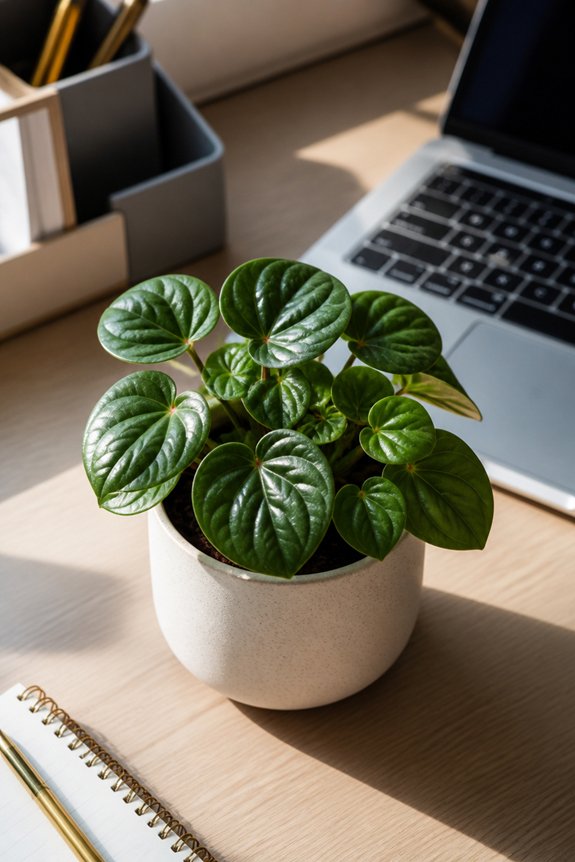
Compact growth and minimal space requirements make peperomia an ideal desk plant for cramped office environments. These plants reach only six to twelve inches tall, fitting easily in small pots on shelves or desks.
Peperomia varieties like Red Lip and Watermelon display distinctive foliage patterns. They tolerate moderate light conditions and require infrequent watering, making them low-maintenance options for busy professionals.
Fittonia: Delicate Patterns, Surprisingly Resilient
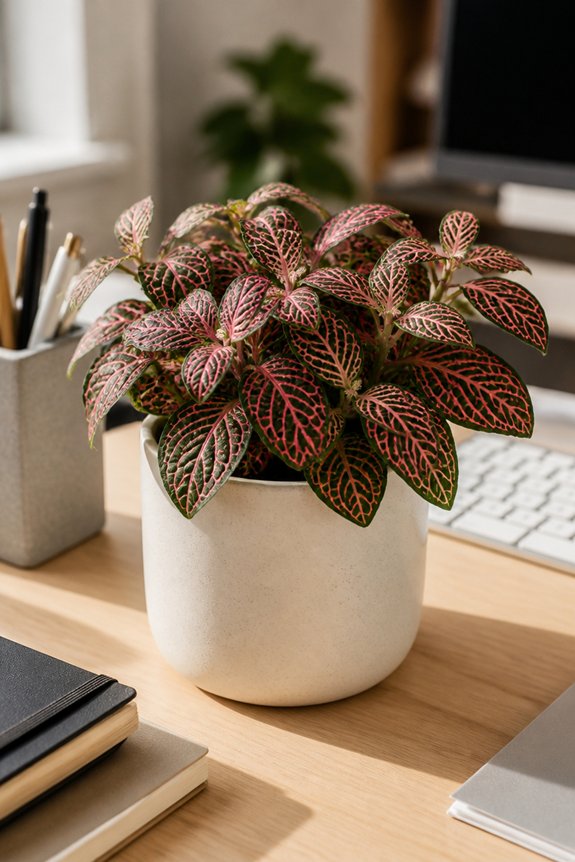
Fittonia plants, characterized by intricate vein patterns in white, pink, or red, bring visual interest to office desks despite their delicate appearance. These compact plants thrive in moderate indirect light and consistently moist soil.
Fittonias recover quickly from wilting when watered, demonstrating unexpected resilience. Their small stature suits tight desk spaces well, requiring minimal room while providing notable aesthetic appeal through distinctive leaf markings.
Jade Plant: Succulent Shrub for Sun-Soaked Spots
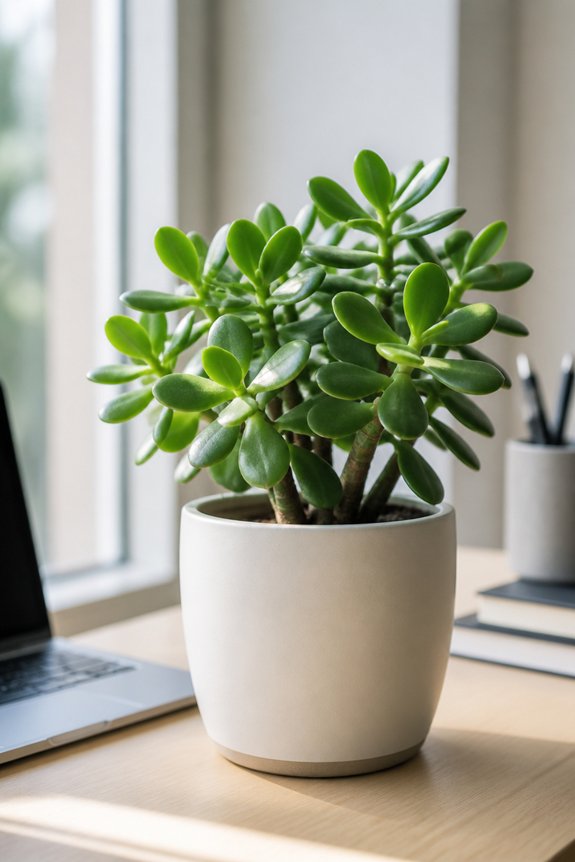
A jade plant’s thick, fleshy leaves store water, making it an excellent choice for office desks that receive bright, direct sunlight. These succulents require minimal watering, needing moisture only when soil dries completely.
Jade plants grow slowly, reaching two to three feet tall. They tolerate neglect well, surviving extended periods without attention, making them reliable for busy office environments.
Aloe Vera: Functional Greenery You’ll Actually Use
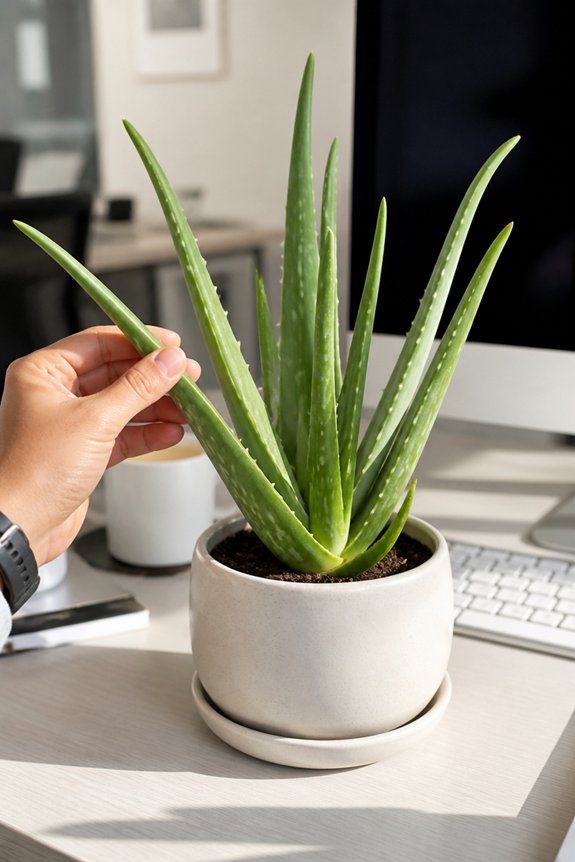
Beyond decorative appeal, aloe vera offers practical benefits that justify its place on an office desk. The gel inside leaves treats minor burns, cuts, and skin irritation effectively. Aloe vera requires minimal watering, thriving in bright, indirect light. It grows slowly, needing repotting only every few years.
A simple pot with drainage holes and well-draining soil supports healthy growth, making this succulent genuinely functional for workspace environments.
Rubber Plant: Bold Leaves on a Budget
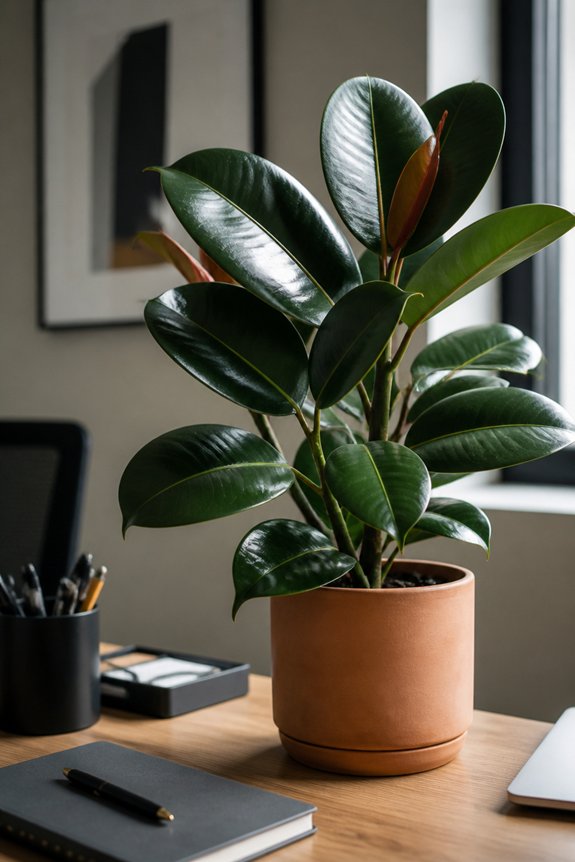
While aloe vera serves practical purposes in tight workspaces, rubber plants deliver visual impact through their large, glossy leaves without demanding premium prices or complex care routines. These plants tolerate low light and irregular watering, making them reliable desk companions.
Their dramatic foliage adds dimension to minimalist office spaces. Rubber plants grow steadily in standard pots, requiring occasional wiping of leaves to maintain their characteristic shine and appearance.
Haworthia: Desert Plant Thriving Under Desk Lamps
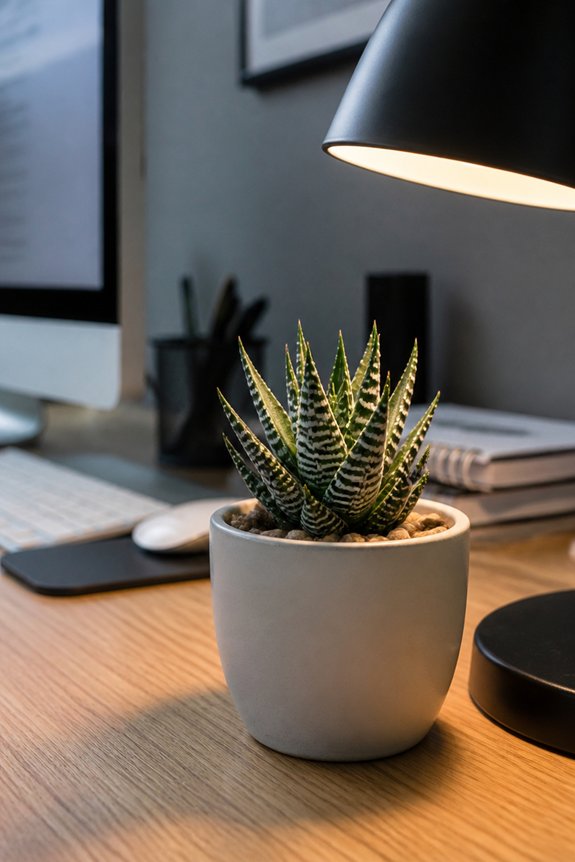
For office environments with abundant artificial lighting, haworthia plants offer a compact succulent option that thrives under desk lamps. These small rosette-shaped plants require minimal water and tolerate low humidity.
Haworthia varieties like H. attenuata feature distinctive white stripes on green leaves. They prefer well-draining soil and indirect light, making them ideal for workspace conditions without direct sunlight exposure.
Philodendron: Trailing Beauty for Any Desk
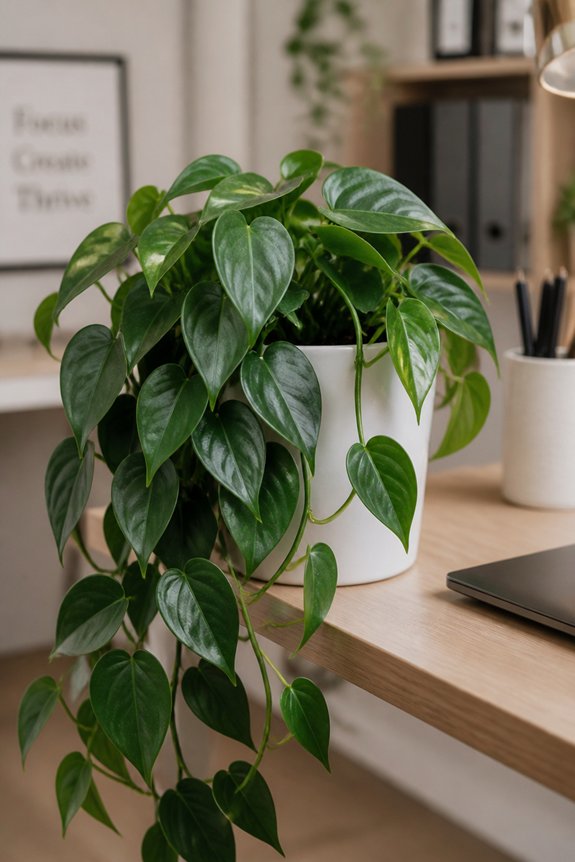
Philodendrons represent a practical choice for office desks, offering trailing vines that adapt to various lighting conditions and workspace constraints. These plants tolerate low light and irregular watering schedules.
Varieties like heartleaf philodendron and Brazil philodendron grow quickly in standard pots. They require minimal maintenance, making them suitable for busy professionals managing multiple workspace responsibilities.
Monstera Deliciosa: Statement Plant for Spacious Desks
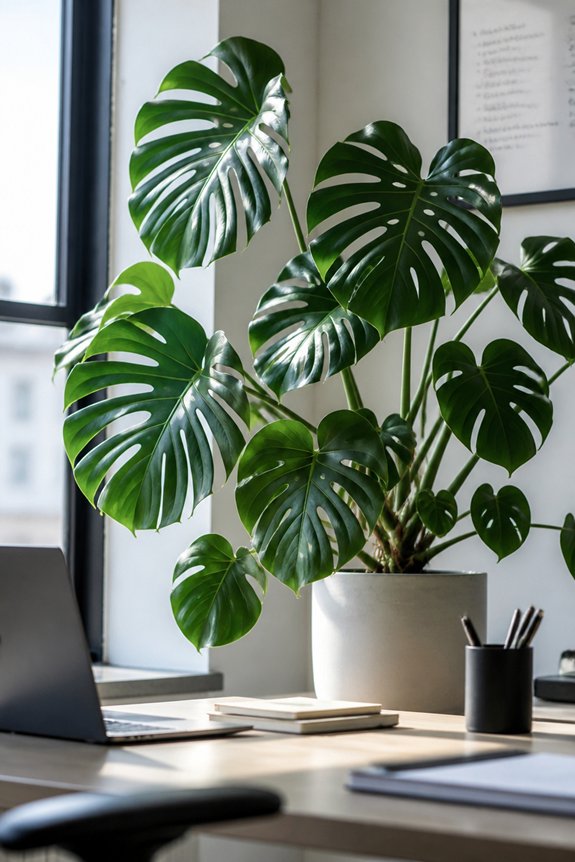
Monstera deliciosa offers a more dramatic presence than trailing philodendrons, requiring larger desk spaces and stronger light conditions. This plant features distinctive split leaves, reaching three to four feet tall.
It needs bright, indirect light, weekly watering, and occasional misting. Monstera deliciosa works best for spacious desks near windows, adding visual impact without demanding intensive care routines.
Calathea: Watch Its Leaves Shift and Open With the Light
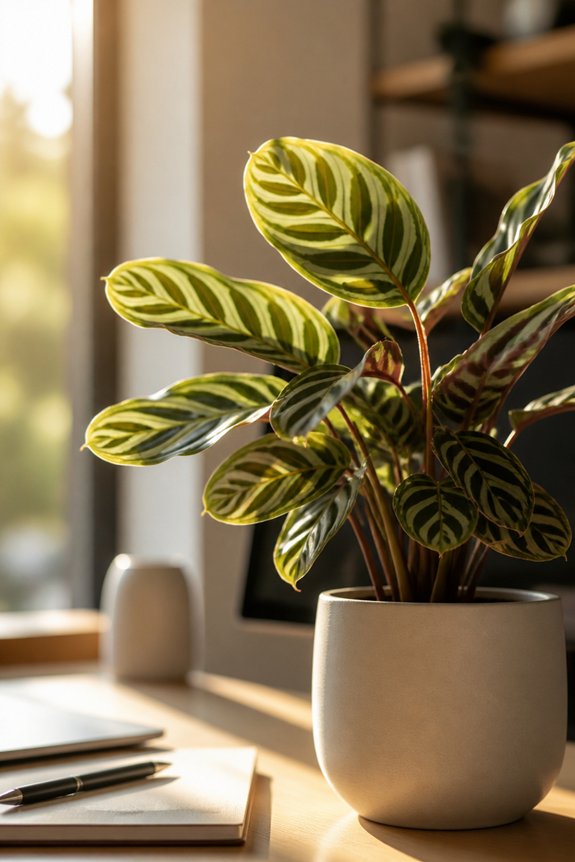
Why do some office plants seem to move throughout the day? Calathea leaves open and close with light changes, a natural process called nyctinasty. This tropical plant features patterned foliage in green, pink, and cream colors.
Calathea thrives in indirect light, moderate humidity, and consistent moisture. It requires regular watering and benefits from occasional misting to maintain leaf movement and vibrant appearance.
Bamboo Palm: Bring Tropical Vibes to Your Cubicle
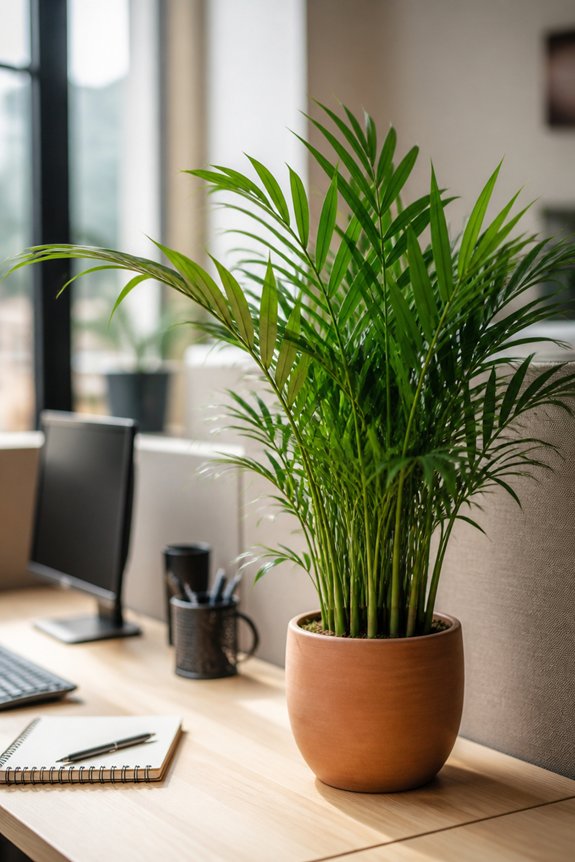
The bamboo palm, also called Chamaedorea seifrizii, brings a tropical appearance to office spaces through its tall, slender stems and feathery green fronds. This plant tolerates low light conditions and irregular watering schedules, making it suitable for cubicles.
It reaches heights of four to twelve feet, requiring occasional pruning. Place it in indirect light near windows or under fluorescent office lighting for ideal growth.
Areca Palm: Air-Purifying Height Without Constant Watering
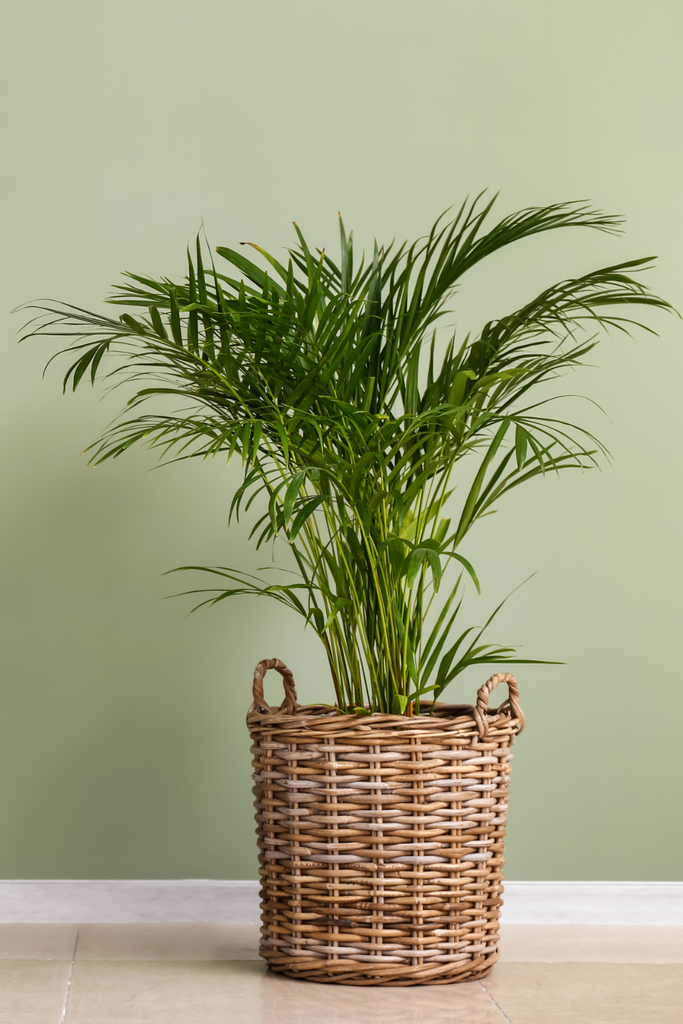
If someone seeks a tall office plant that filters airborne toxins while requiring minimal maintenance, the Areca palm, scientifically known as Dypsis lutescens, offers a practical solution. This plant reaches four to six feet indoors, removing formaldehyde and benzene from air. It tolerates moderate light conditions and needs watering only when soil feels dry.
The Areca palm suits standard office environments without demanding frequent attention or specialized care.
Air Plants: No Soil Required, Maximum Visual Impact
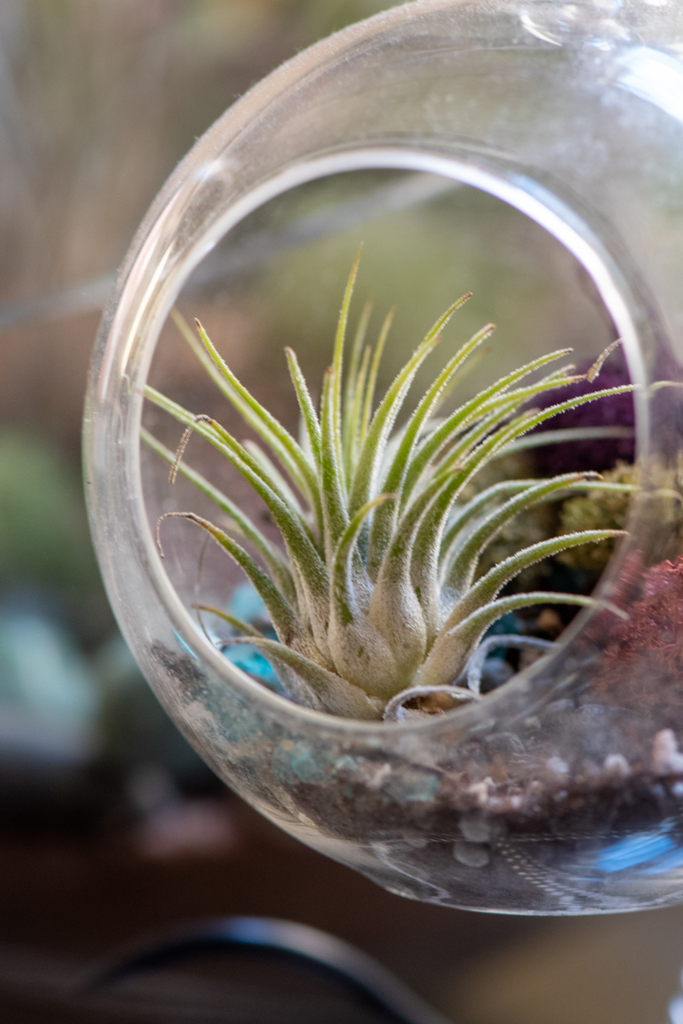
Unlike traditional potted plants that require soil and regular watering schedules, air plants offer a distinctive alternative for office spaces seeking visual variety and minimal maintenance demands. Air plants absorb moisture through their leaves, needing only weekly misting or soaking.
Species like Tillandsia ionantha and Tillandsia xerographica thrive in indirect light, displaying striking forms in glass holders or mounted arrangements without soil requirements.
Parlor Palm: Understated Elegance in Standard Pots
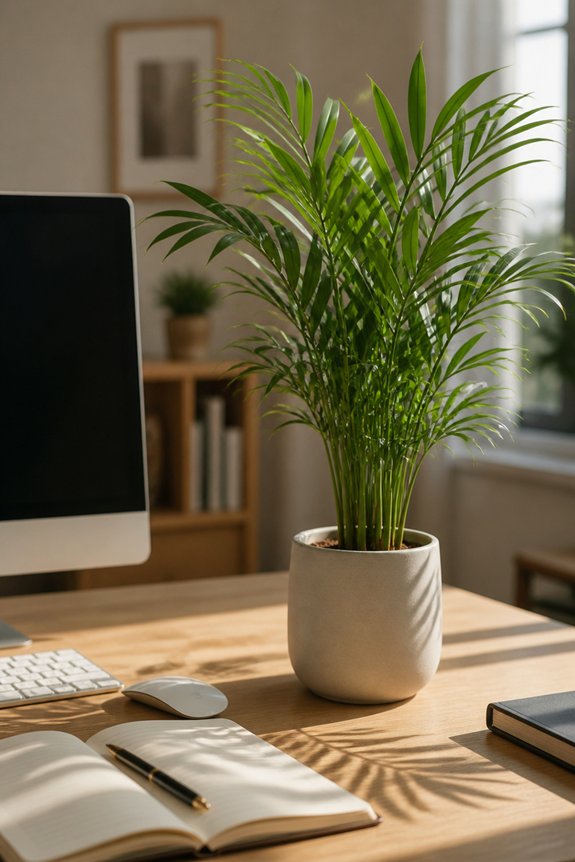
Chamaedorea elegans, commonly known as parlor palm, represents a reliable choice for office environments requiring a traditional plant aesthetic without demanding specialized care or unusual containers.
The plant thrives in standard six-inch pots with regular potting soil, tolerates low to moderate light conditions, and requires watering when soil feels dry. Its slow growth rate and compact size suit typical desk spaces effectively.
Jade Plant: Succulent Shrub for Sunny Windowsills
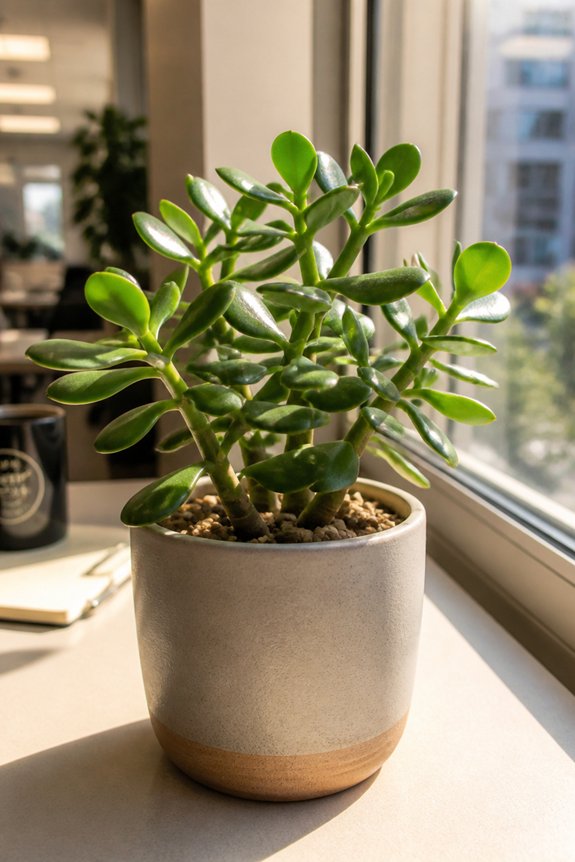
What makes jade plants particularly suited to office environments where light availability varies throughout the day? Jade plants tolerate moderate light conditions and require minimal watering, making them practical desk companions. Their thick, fleshy leaves store water efficiently.
These succulents thrive in standard pots with drainage holes, positioned near sunny windowsills. They grow slowly, demand infrequent care, and remain compact for desk spaces.
Best Pot Sizes for Desk Plants
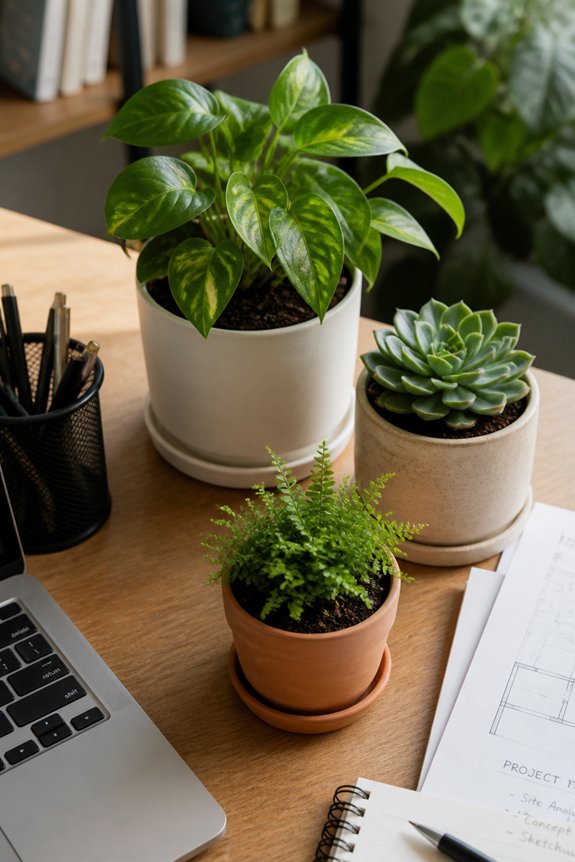
Selecting the right pot size determines whether desk plants like jade establish healthy root systems or suffer from waterlogging and poor drainage. A six-inch pot works well for small succulents, while eight-inch pots suit larger specimens. Confirm drainage holes exist in all containers.
Terracotta pots dry faster than plastic ones, benefiting moisture-sensitive plants. Choose pots slightly larger than the plant’s root ball.
Soil Selection for Desk Plants: Drainage vs. Moisture Retention
Soil composition plays a critical role in desk plant health, as it directly influences how water moves through the pot and reaches plant roots.
Peat moss retains moisture well, benefiting plants like pothos. Perlite and sand improve drainage for succulents. A balanced mix combines these components, typically using equal parts to create suitable conditions for most office plants.
Light Conditions That Work for Office Plants
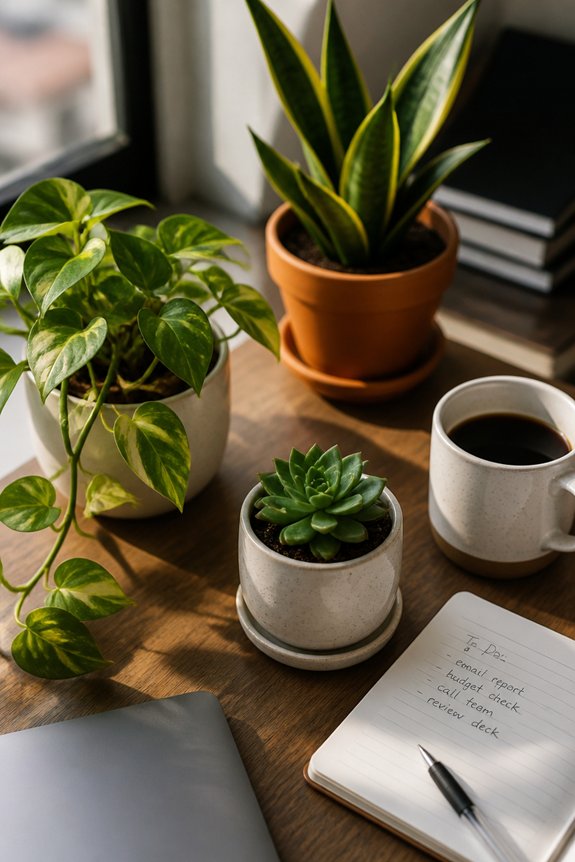
How much light reaches an office desk throughout the day determines which plants can survive in that space. Low-light plants like pothos and snake plants thrive in dim corners. Medium-light plants such as philodendrons do well near windows without direct sun. High-light plants, including succulents, need bright, indirect exposure.
Evaluating available light helps match plants to specific desk locations effectively.
Watering Office Plants: A Seasonal Guide
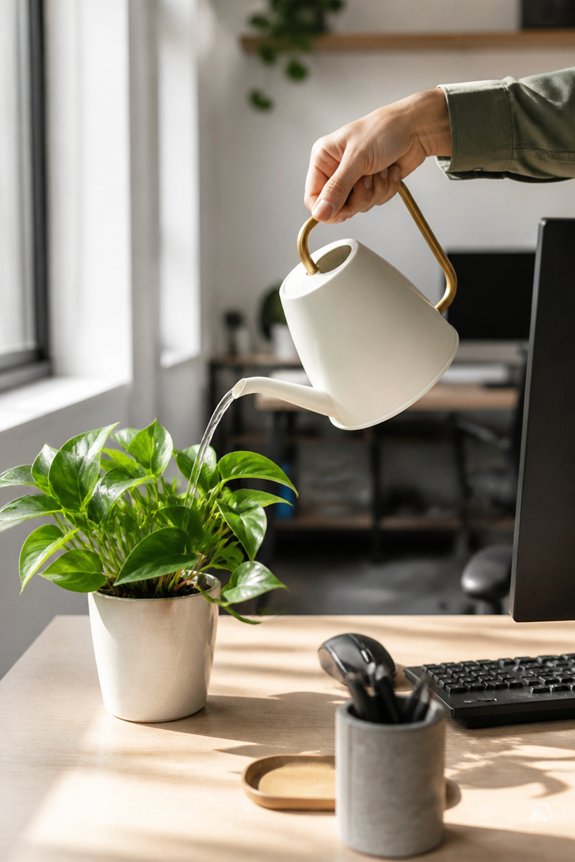
While light availability determines which plants can occupy a desk space, water requirements shift based on seasonal changes throughout the year. Spring and summer demand more frequent watering as plants grow actively. Fall and winter require less water since growth slows considerably.
Check soil moisture before watering; most desk plants prefer slightly dry conditions between waterings. Reduce frequency during colder months to prevent root rot.
Frequently Asked Questions
How Often Should I Fertilize My Office Desk Plants Throughout the Year?
Office desk plants typically require fertilization every two to four weeks during growing seasons, spring through summer. During fall and winter, one should reduce feeding to once monthly or discontinue entirely, as most plants enter dormancy and require fewer nutrients during colder months.
What Temperature Range Is Ideal for Keeping Desk Plants Healthy in an Office?
Most desk plants thrive between 65-75°F during day and 55-65°F at night. They prefer stable temperatures, avoiding drafts, cold windows, and heat vents. Consistency matters more than perfection—plants adapt well to moderate, steady conditions.
Can I Use Regular Tap Water for My Office Plants, or Should I Use Filtered Water?
Most office plants tolerate regular tap water adequately. However, filtered or distilled water proves beneficial since it lacks chlorine and minerals that accumulate in soil. Allowing tap water to sit overnight before watering also reduces potential chemical harm.
How Do I Prevent Common Office Plant Pests Like Spider Mites and Mealybugs?
By chance, healthy plants naturally resist infestations. Regular inspections catch pests early. Misting leaves removes spider mites and mealybugs. Isolating affected plants prevents spread. Neem oil spray or insecticidal soap effectively eliminates existing infestations.
Should I Rotate My Desk Plants Regularly, and if So, How Often?
Yes, rotating desk plants proves beneficial. One should turn plants quarterly to guarantee even light exposure on all sides, promoting balanced growth and preventing plants from leaning toward light sources.
Conclusion
Office plants function as living filters, quietly working alongside desk occupants. Pothos drapes across shelves, snake plants stand sentinel in corners, peace lilies bloom softly in shadows. Strategic pot selection, proper drainage, and seasonal watering create an ecosystem that sustains itself with minimal intervention. These twenty-five species transform sterile workspaces into breathing environments, where greenery becomes infrastructure rather than decoration, supporting both air quality and focus simultaneously.