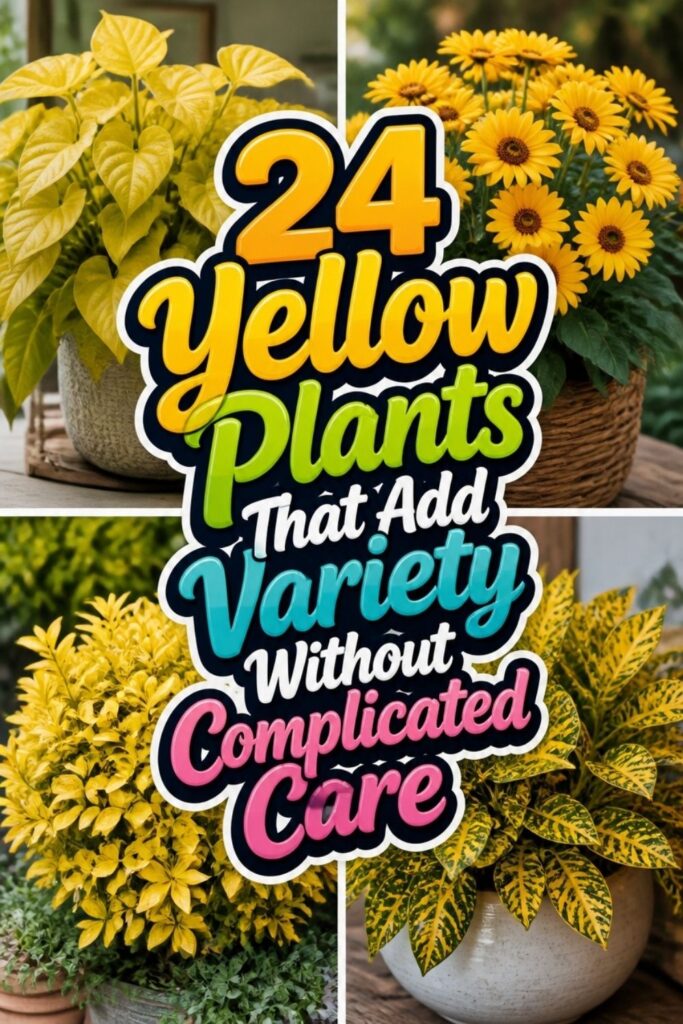
Golden pothos and rubber plants bring warmth to indoor spaces without demanding constant attention. Daffodils and coreopsis do the same for outdoor beds, blooming reliably year after year.
These choices work well for anyone balancing gardening with a busy schedule.
Some yellow varieties go further by extending their appeal across seasons. Yarrow and heliopsis keep their color through summer heat and into fall, needing little more than occasional watering. Their toughness makes them forgiving of beginner mistakes.
Not every yellow plant thrives everywhere, though. Light levels, soil type, and local climate all play a role in how well these varieties perform.
Matching the right plant to the right spot prevents the disappointment of faded leaves or failed blooms.
A quick check of growing conditions before planting saves effort later. Most yellow plants reward this small amount of planning with years of easy, cheerful color.
Choose Color for the Right Spot
Decide first whether you want yellow from flowers, foliage, or both. Golden pothos and variegated houseplants provide lasting indoor color, while daffodils, coreopsis, and other bloomers create stronger seasonal impact outdoors.
Pay close attention to sunlight before planting. Some yellow varieties need full sun to maintain strong color and flowering, while others perform better in partial shade or indirect indoor light.
Consider maintenance at the same time. Drought-tolerant choices such as yarrow and sedum suit gardeners who water irregularly, while plants that prefer consistent moisture are better placed somewhere easy to monitor.
Why Yellow Plants Are Perfect for Busy Plant Parents
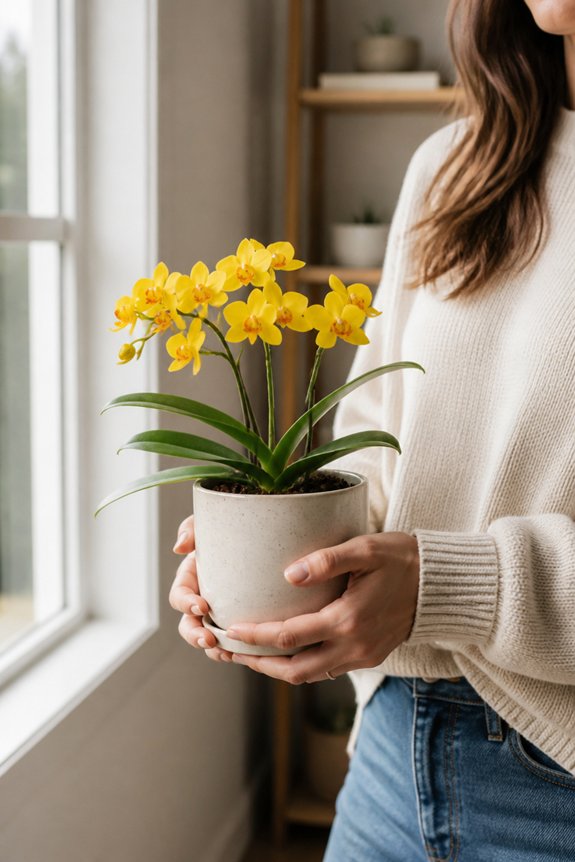
How can a plant owner maintain greenery while managing a demanding schedule? Yellow plants offer a practical solution for busy individuals. Species like golden pothos and yellow philodendrons require minimal watering, infrequent pruning, and tolerate inconsistent light conditions.
These varieties thrive in neglect, making them ideal for people with limited time. Their hardy nature reduces maintenance demands while still providing living decor for any space.
Prevent Yellow Plant Problems: Common Issues and Quick Fixes
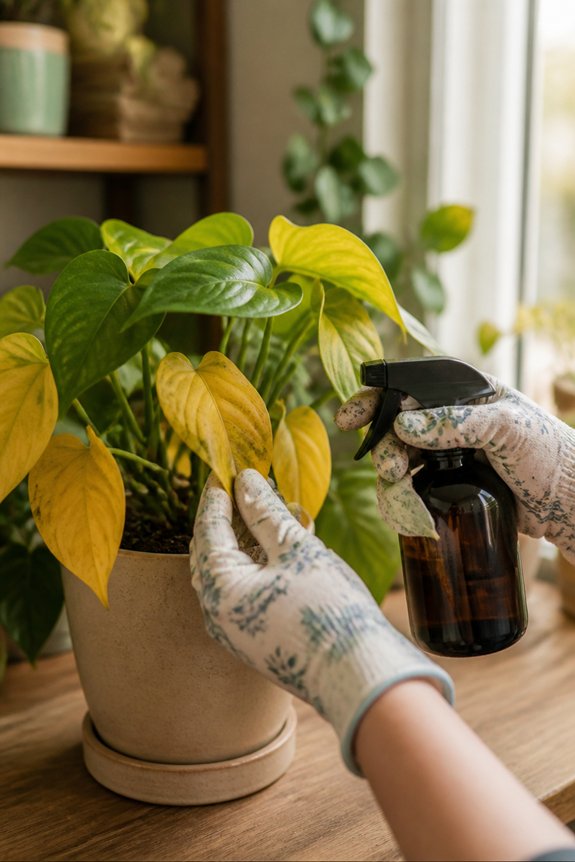
Despite their hardy reputation, yellow plants can still develop problems that compromise their health and appearance. Overwatering causes root rot, while insufficient light reduces vibrancy. Spider mites and mealybugs infest foliage. Nutrient deficiencies create pale leaves.
Solutions include adjusting watering schedules, repositioning plants near windows, spraying affected areas with neem oil, and applying balanced fertilizer monthly for ideal growth.
Golden Pothos: The Low-Maintenance Yellow Vine
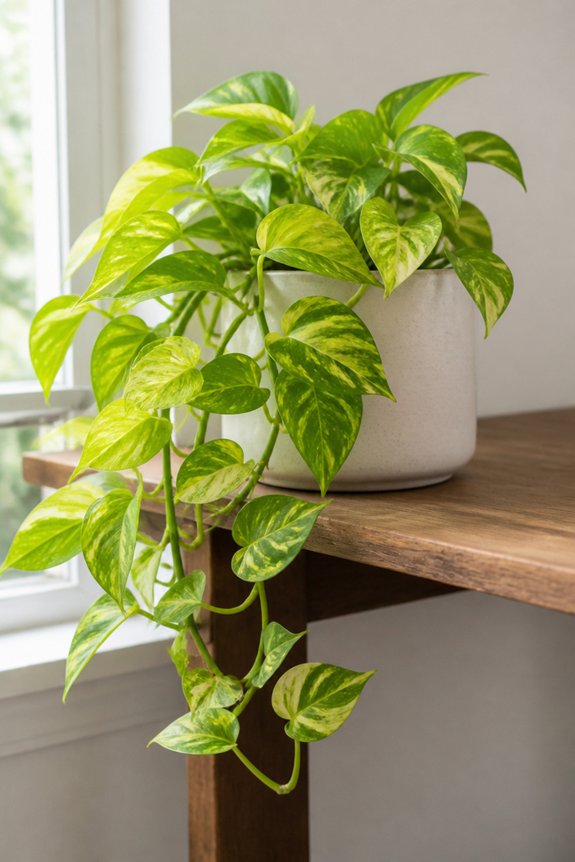
Golden Pothos represents one of the easiest yellow vining plants to cultivate indoors, requiring minimal attention while maintaining its bright, heart-shaped foliage. The plant tolerates low light conditions, irregular watering schedules, and various temperatures between 65-85 degrees Fahrenheit.
It grows quickly on shelves, trellises, or hanging baskets. Water when soil feels dry, fertilize monthly during growing seasons, and prune occasionally to control length and shape.
Philodendron Brasil: Yellow Striped Beauty That Thrives on Neglect
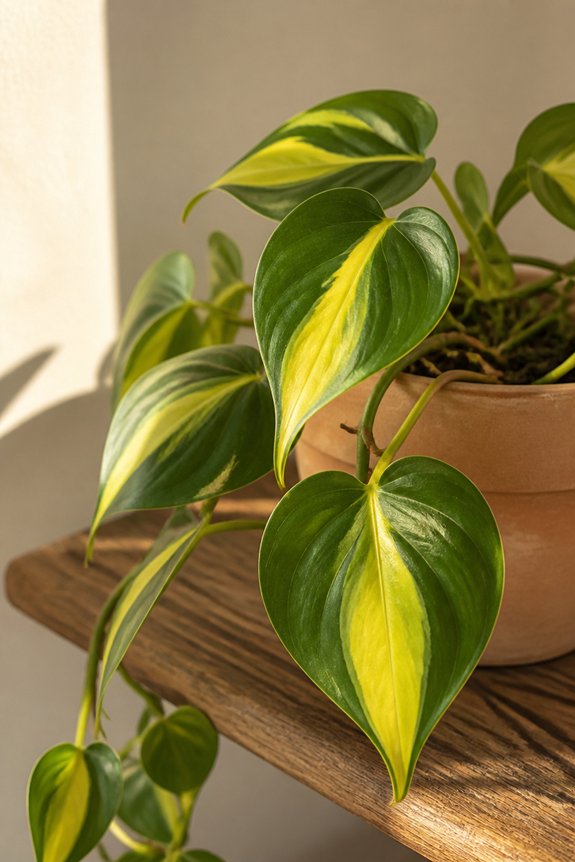
Philodendron Brasil offers another robust option for indoor plant enthusiasts seeking yellow-variegated foliage with minimal care requirements. This climbing vine displays heart-shaped leaves featuring yellow streaks against green backgrounds.
It tolerates low light conditions, irregular watering, and average room temperatures effectively. The plant grows moderately fast, requiring occasional pruning to maintain compact shape and encourage fuller growth patterns.
Yellow Rubber Plant: Bold Yellow Leaves, Zero Drama
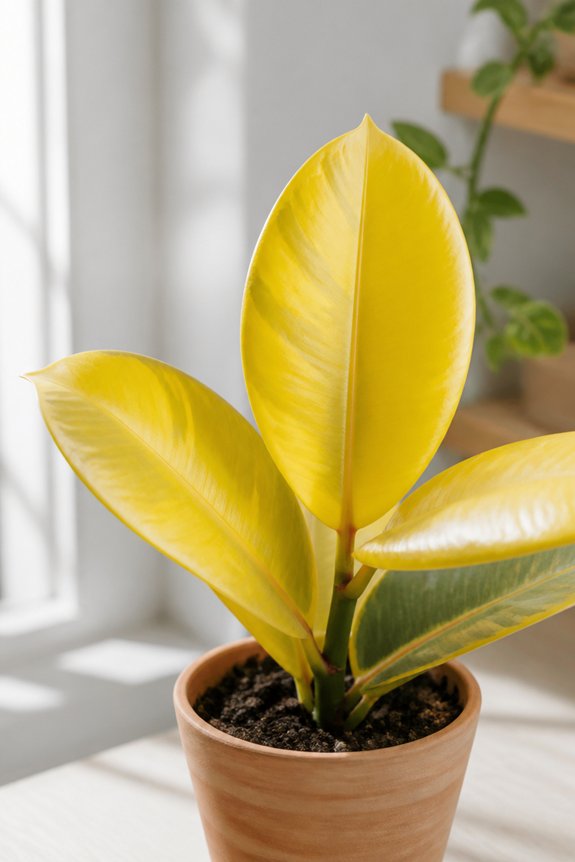
The yellow rubber plant represents a striking choice for growers wanting large, vibrant foliage without demanding care routines. This plant tolerates low light, irregular watering, and neglect.
Its broad, glossy leaves display deep yellow coloring, creating visual impact in any space. The plant grows slowly indoors, requiring minimal pruning or fertilization, making it suitable for busy plant owners.
Crotons: Yellow Foliage Drama for Indoor Spaces
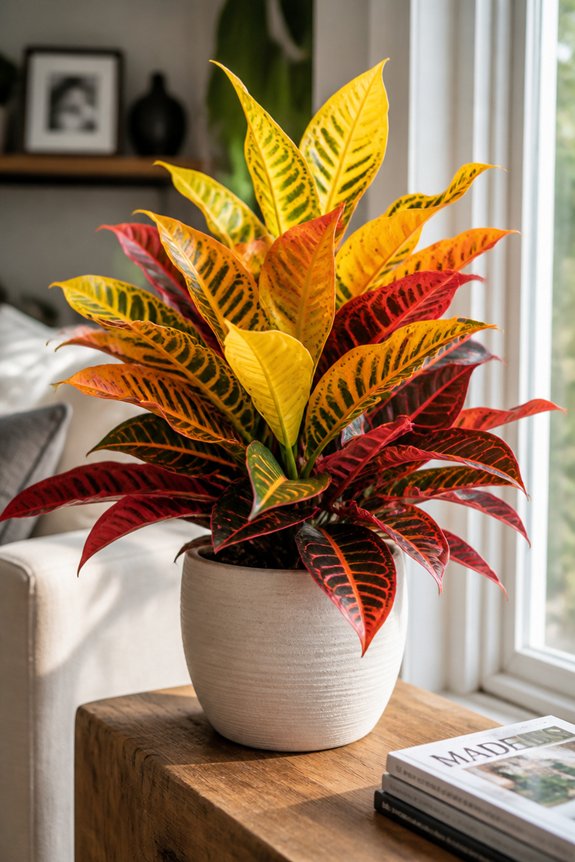
Crotons deliver dramatic yellow foliage in indoor settings, though they demand more attention than the rubber plant discussed previously. These plants require bright, indirect light, consistent watering, and humidity levels around 50-60 percent.
Varieties like ‘Mammy’ and ‘Petra’ display striking yellow markings. Crotons shed leaves when temperatures drop below 60 degrees or during sudden environmental changes.
Snake Plant Varieties: Yellow-Striped Survivors That Need Water Monthly
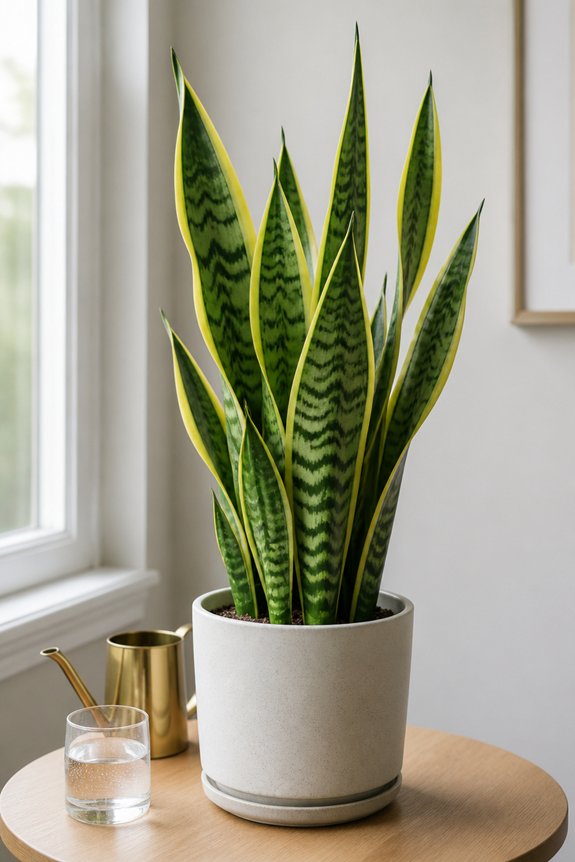
Why should gardeners consider snake plants for low-maintenance indoor gardening? Snake plants, including the Laurentii variety with yellow edges, tolerate neglect effectively. They require watering approximately once monthly, adapting to various light conditions from low to bright indirect sunlight.
Their drought tolerance stems from succulent leaves storing water. Snake plants clean indoor air while remaining visually interesting with striped foliage patterns.
Begonias: Golden Varieties for Shady Containers
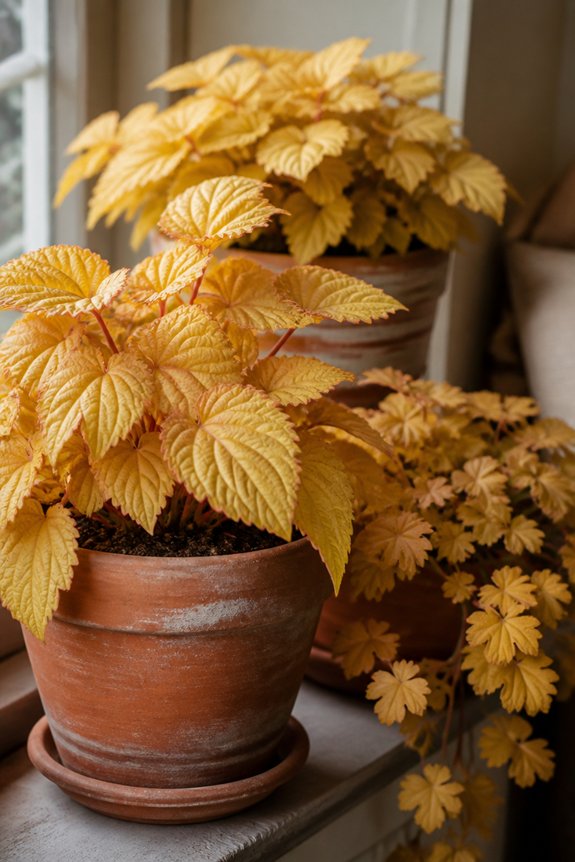
While snake plants excel in neglect and drought tolerance, begonias offer a different approach to indoor gardening, particularly for gardeners managing shaded spaces. Golden begonias, such as Rex begonias with yellow-patterned leaves, thrive in containers positioned away from direct sunlight. These plants require consistent moisture and humidity levels. Filtered light near windows works well.
Their colorful foliage provides visual interest without demanding extensive maintenance routines.
Daffodils: Yellow Spring Bulbs That Naturalize Year After Year
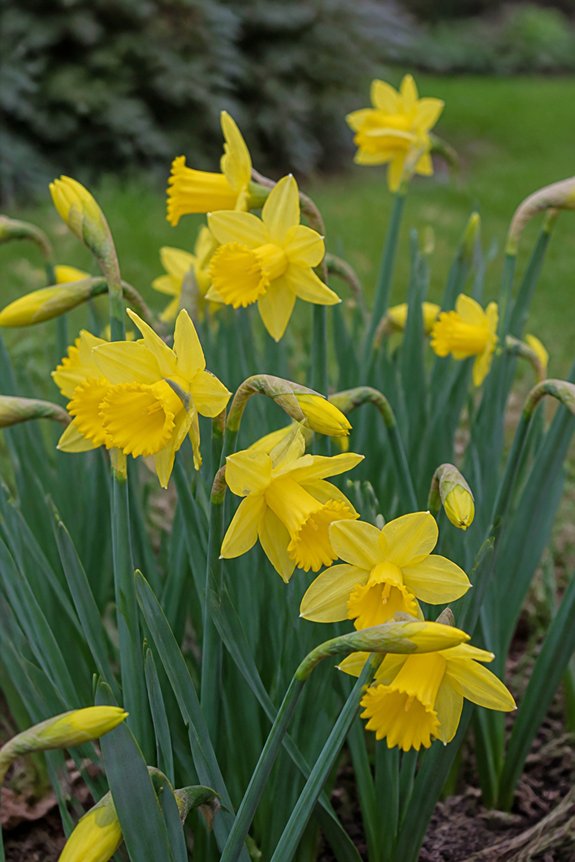
As spring arrives, daffodils emerge as reliable yellow flowers that return annually with minimal intervention. These bulbs naturalize well in lawns, garden beds, and borders, multiplying over time without replanting.
Common varieties include King Alfred, Ice Follies, and Tête-à-Tête. Plant bulbs in fall, choosing locations with full sun and well-draining soil for best results.
Tulips: Yellow Spring Flowers That Return Without Replanting
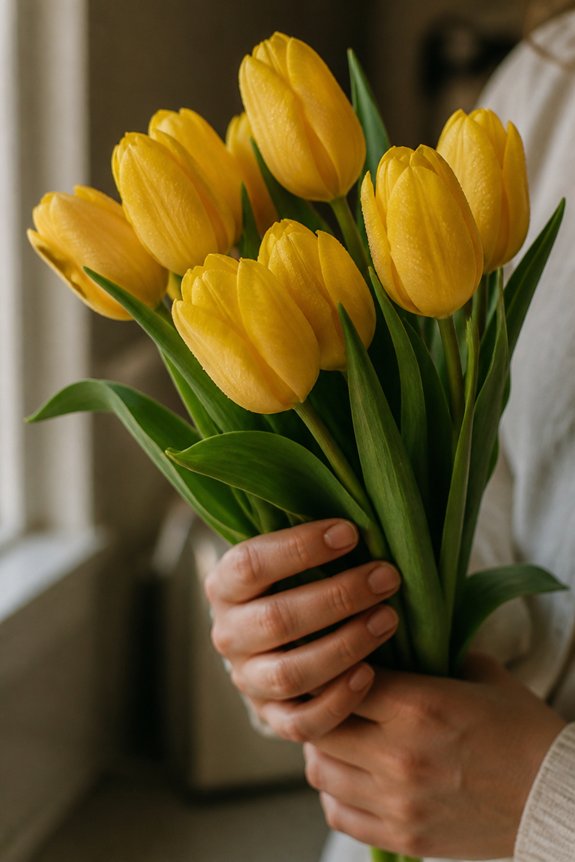
Yellow tulips offer reliable spring color in gardens, much like daffodils, though they require slightly different care to return year after year. Plant bulbs in fall, choosing well-draining soil and sunny locations. Varieties like Golden Apeldoorn and Candela naturalize reliably.
Remove spent flowers but leave foliage until it yellows, allowing energy return to bulbs for next season’s blooms.
Coreopsis: Yellow Wildflowers That Bloom All Summer
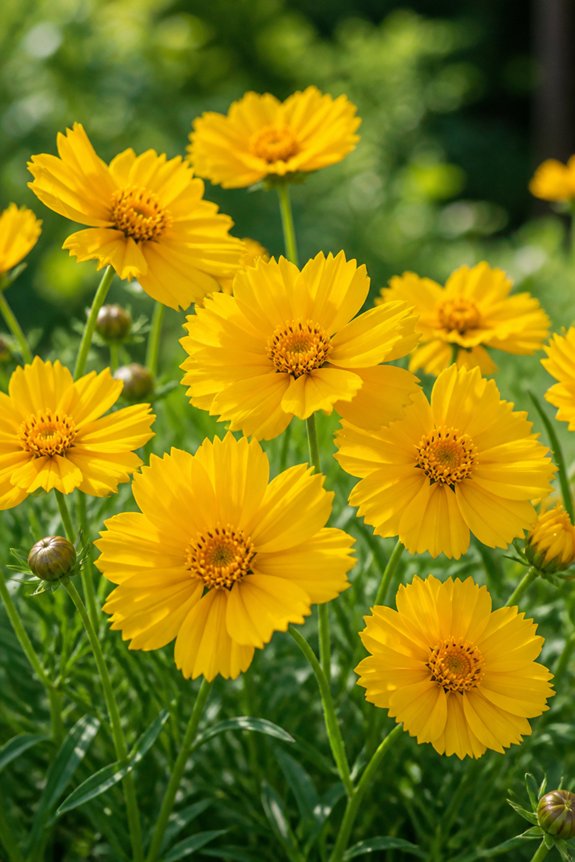
Unlike tulips that offer brief spring color, coreopsis plants deliver yellow blooms from early summer through fall with minimal maintenance. These wildflowers thrive in sunny locations with well-draining soil.
Varieties like Coreopsis tinctoria and Coreopsis verticillata require little watering once established. Deadheading spent flowers encourages continued blooming throughout the season. Plants typically spread moderately, filling garden spaces without aggressive growth patterns.
Yarrow: Drought-Hardy Yellow Blooms for Sun-Baked Spots
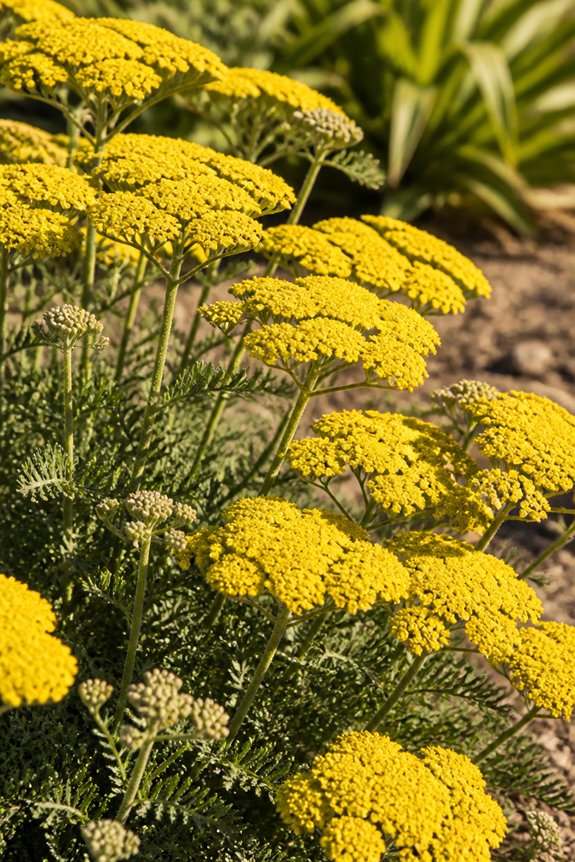
Yarrow plants excel in hot, dry conditions where many garden flowers struggle to survive. These hardy perennials produce flat-topped yellow flower clusters and tolerate poor soil, heat, and drought effectively.
Yarrow requires full sun, well-draining soil, and minimal watering once established. The plants reach two to three feet tall, making them suitable for borders and landscape beds.
Goldenrod: Late-Season Yellow Color That Spreads Itself
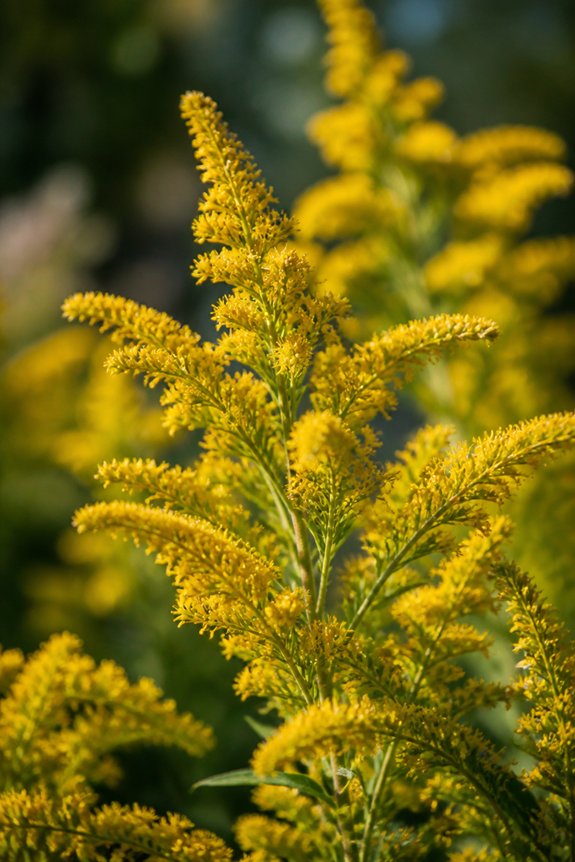
Many gardeners appreciate goldenrod for its reliable late-season blooms, which appear when other garden flowers fade in fall. This plant spreads vigorously through rhizomes, requiring minimal maintenance once established. Goldenrod thrives in full sun and tolerates poor soil conditions.
It attracts pollinators and provides late-season color. Gardeners should monitor its spread to prevent overcrowding nearby plants.
Heliopsis: The Hardier, Neglect-Proof Yellow Sunflower
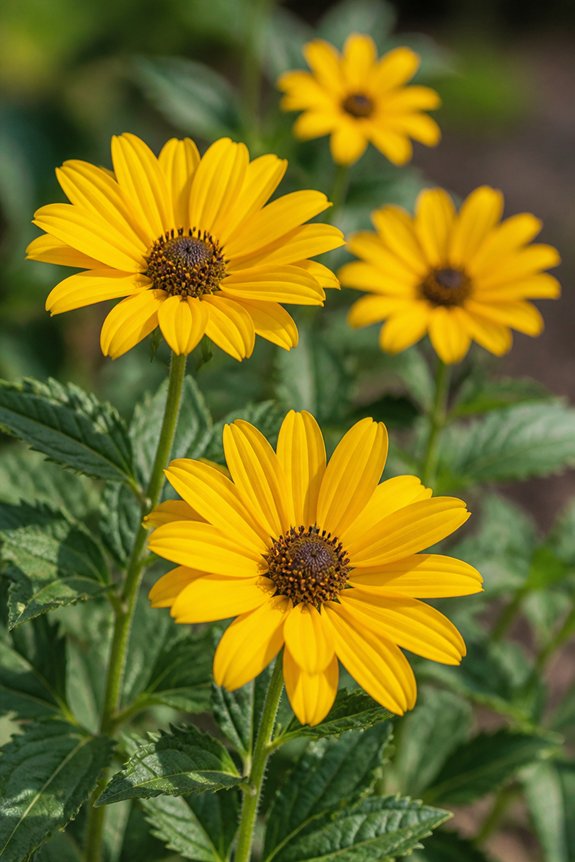
Heliopsis delivers bright yellow blooms throughout summer and fall, offering gardeners a dependable alternative to traditional sunflowers. This plant tolerates poor soil, drought, and neglect with minimal intervention required.
Heliopsis grows three to five feet tall, attracting pollinators while requiring only occasional watering and pruning. It thrives in full sun conditions and spreads gradually through the garden.
Canna Lilies: Bold Yellow Tropical Vibes That Actually Spread
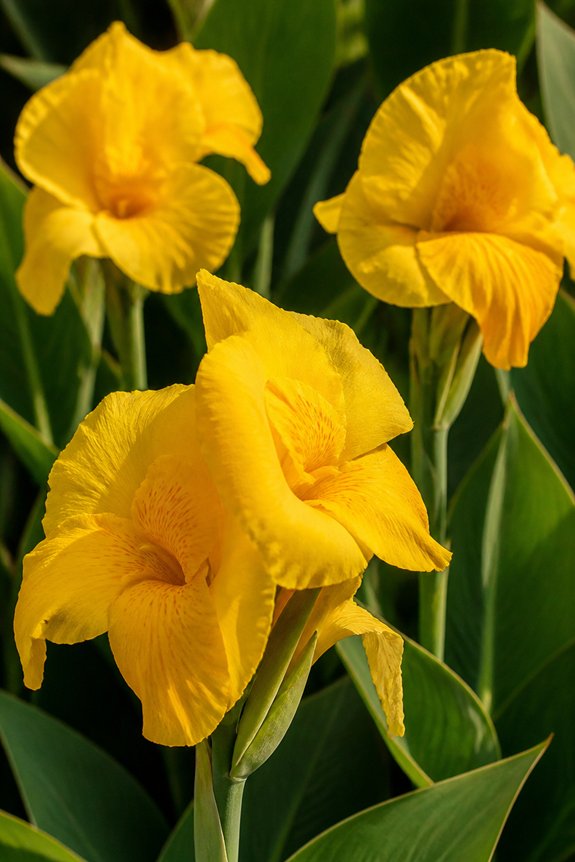
For gardeners seeking dramatic foliage and bright blooms, canna lilies deliver large yellow flowers, tall green or bronze leaves, and reliable spreading behavior. These tropical plants thrive in warm climates, moist soil, and full sun conditions.
Cannas multiply through underground rhizomes, requiring minimal intervention beyond occasional division. They tolerate neglect well, making them practical choices for low-maintenance gardens.
Lantana: Heat-Loving Yellow Bloomer That Rewards Neglect
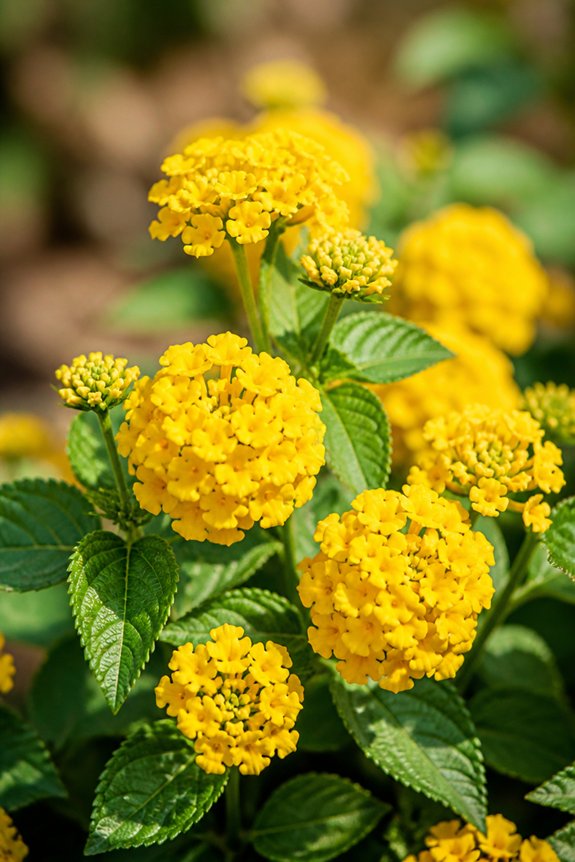
Lantana stands out as a shrubby perennial that produces clustered yellow flowers, tolerates extreme heat, and requires minimal watering once established. This plant thrives in full sun, well-draining soil, and hot conditions where other plants struggle.
Lantana attracts butterflies, resists pests effectively, and needs occasional pruning to maintain shape and encourage denser blooming throughout summer months.
Forsythia: Early Spring Yellow Statement With Zero Fuss
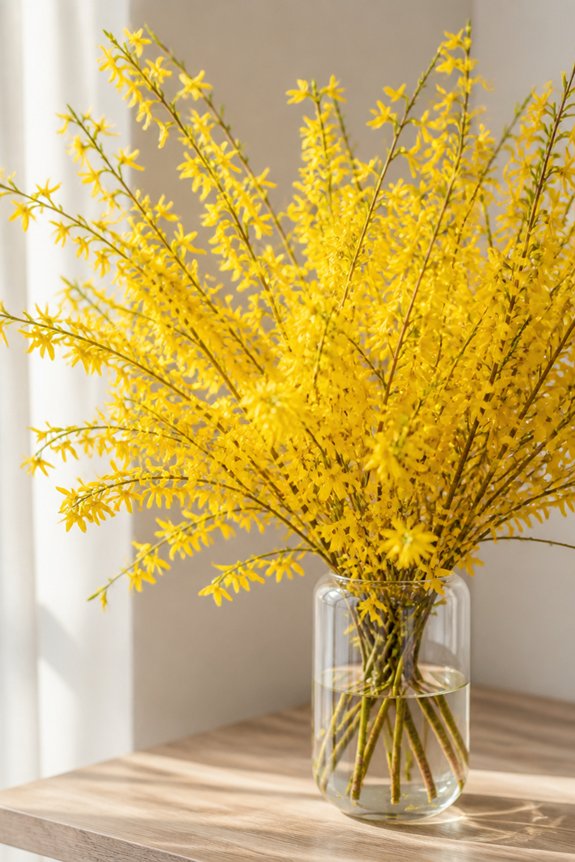
When early spring arrives, forsythia shrubs produce bright yellow flowers on bare branches, signaling the season’s shift before most plants have leafed out. Forsythia requires minimal maintenance, tolerating poor soil and drought once established.
Pruning after blooming maintains shape. The shrub grows in full sun to partial shade, reaching six to ten feet tall. It provides reliable early-season color with negligible care demands.
Yellow Hibiscus: Tropical Yellow Flowers Without High-Maintenance Demands
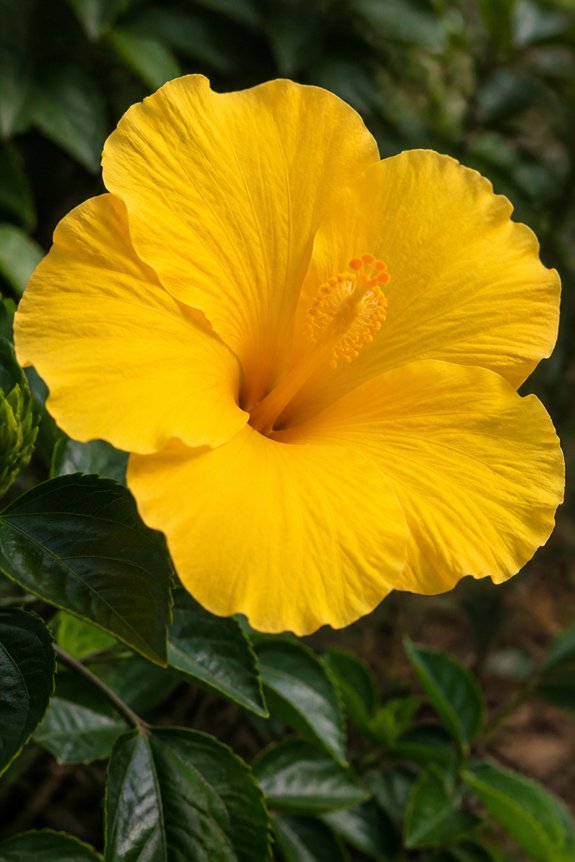
Yellow hibiscus plants deliver bright, showy blooms throughout warm months, making them suitable for gardeners seeking tropical appeal without complex care routines. These shrubs thrive in full sunlight and well-draining soil, requiring regular watering during growing seasons.
Varieties like Sunny and Gold produce consistent yellow flowers. Pruning encourages bushier growth and more blooms. Light fertilizing supports flowering performance.
Marigolds: Pest-Fighting Yellow Flowers That Need Nothing
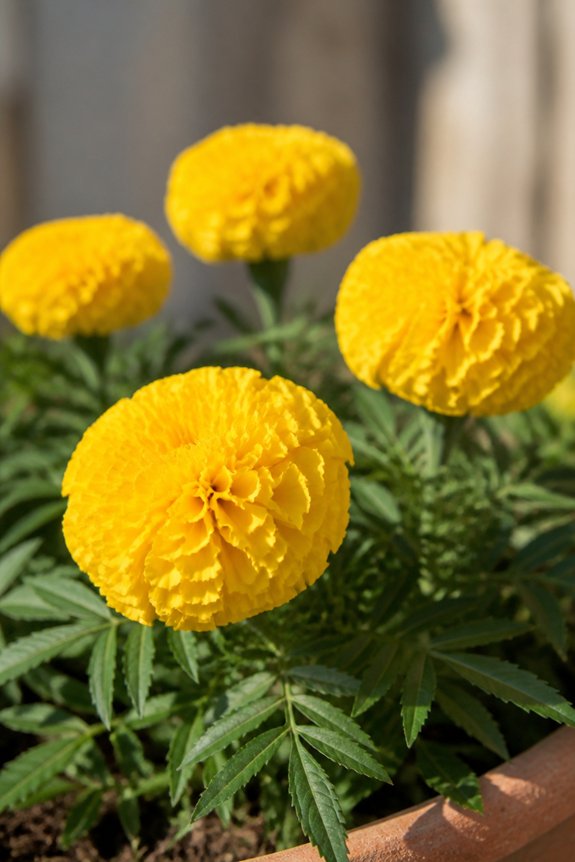
Because marigolds require minimal care while repelling common garden pests, they stand as an excellent choice for practical gardeners. These flowers thrive in sunlight and average soil, needing only occasional watering.
Marigolds naturally deter insects like mosquitoes, aphids, and beetles through their strong scent. Yellow varieties bloom consistently throughout warm months, providing reliable color without fertilizer or pruning requirements.
Sunflowers: Easy Annual Yellow Color for Any Garden
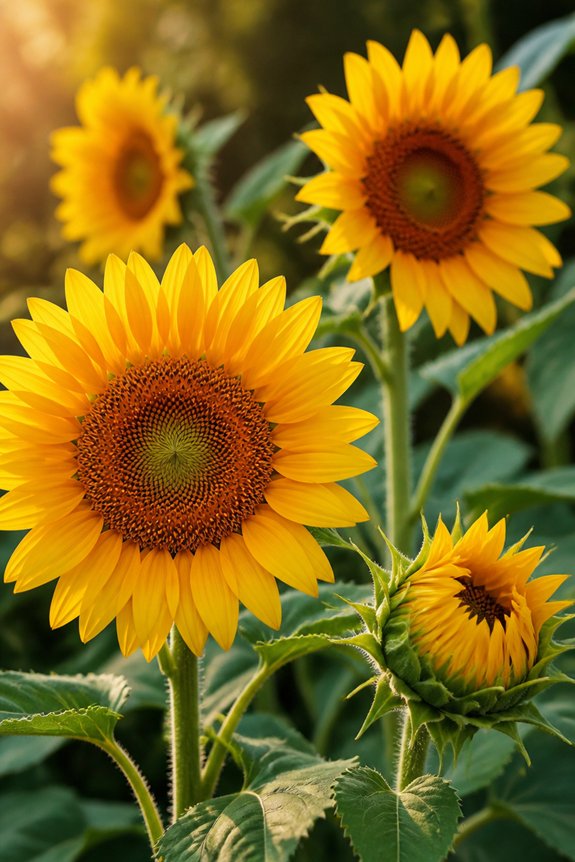
Sunflowers offer gardeners another reliable option for yellow blooms, standing apart from marigolds through their dramatic height and larger flower heads. These annuals grow quickly, reaching heights from two to twelve feet depending on variety.
Sunflowers tolerate poor soil and require minimal maintenance once established. They attract pollinators and produce seeds for wildlife or harvest, making them practical additions to any garden space.
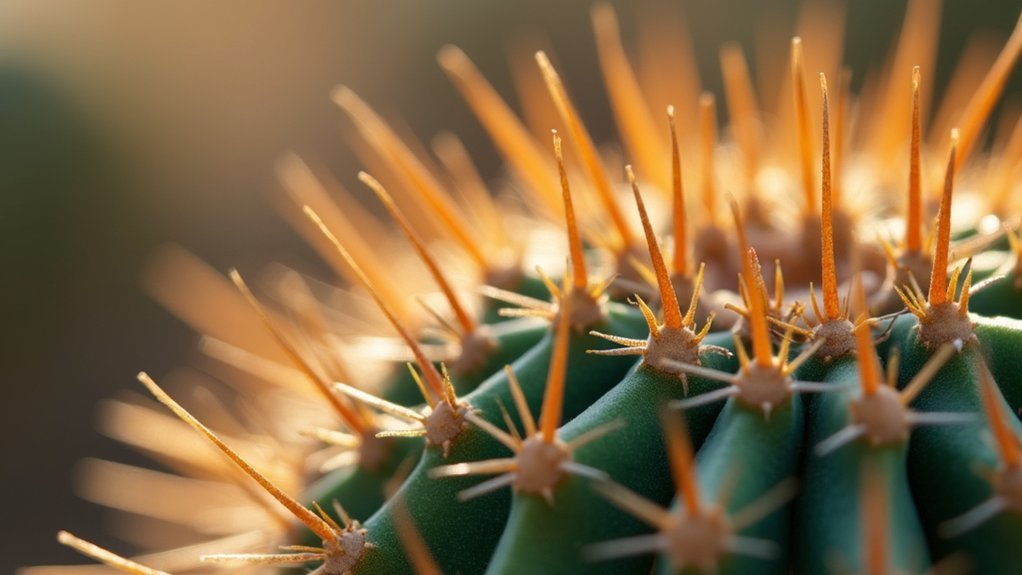
Golden Barrel Cactus: Yellow Desert Succulent That Shrugs Off Neglect
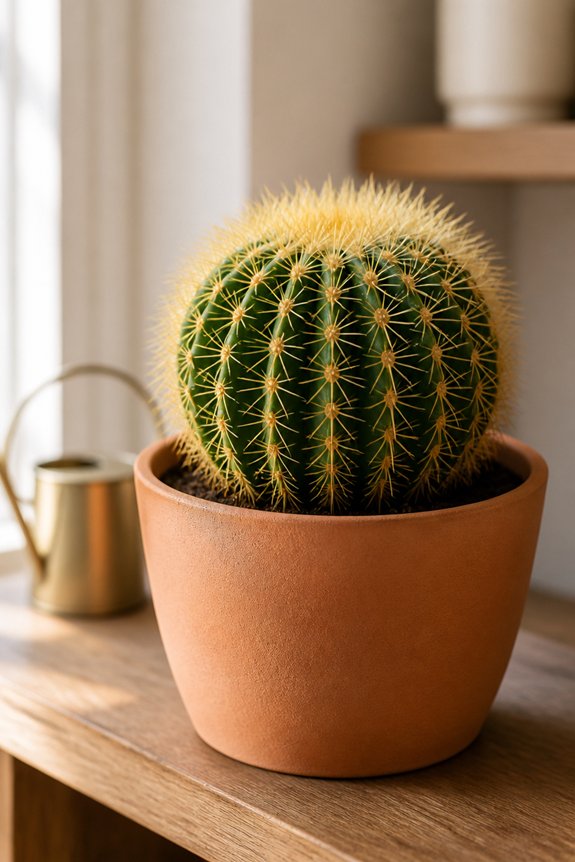
For gardeners seeking low-maintenance yellow plants, the golden barrel cactus presents a distinctive option that requires minimal water, attention, or ideal soil conditions. This spherical succulent produces bright yellow flowers and tolerates drought, poor soil, and neglect.
Golden barrel cacti thrive in full sun, well-draining soil, and warm temperatures. They need water only during growing season, making them ideal for arid landscapes and container gardens.
Sedum: Yellow Succulent Stars That Thrive in Poor Soil
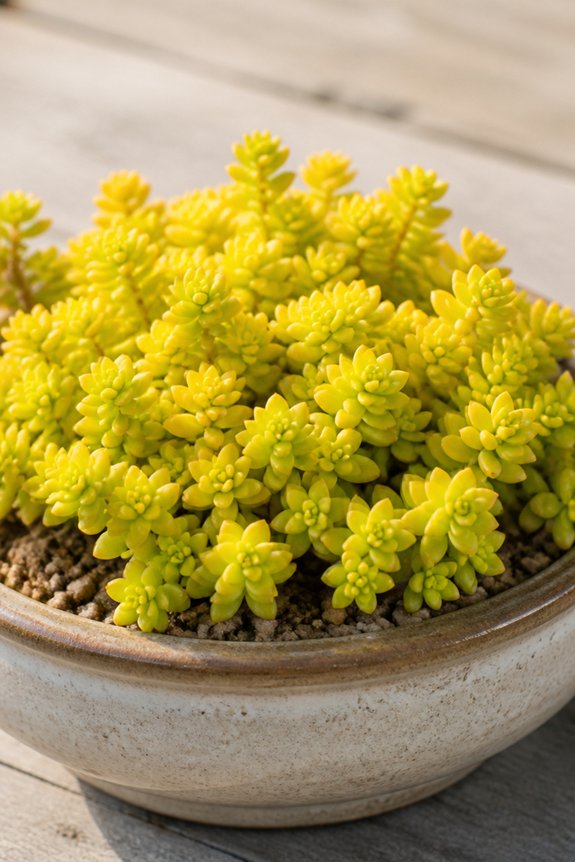
Sedums stand out among low-maintenance plants because they tolerate neglect, poor soil conditions, and irregular watering schedules. Yellow varieties like Sedum adolphi and Sedum nussbaumerianum require minimal fertilizer and adapt to rocky, sandy soil.
These succulents store water in their leaves, making them ideal for dry areas. They need bright light and well-draining soil to prevent root rot.
Hostas: Golden Shade Plants That Spread on Their Own
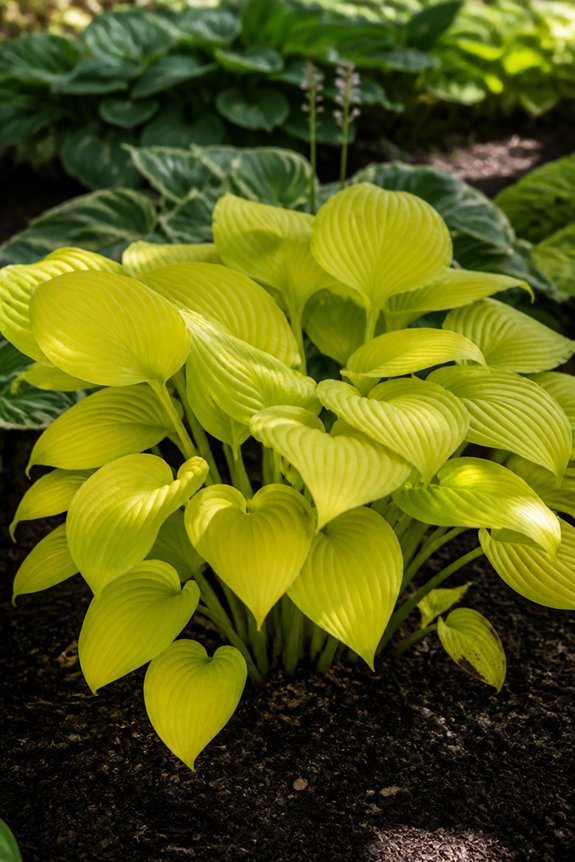
While most yellow plants require full sun exposure, golden hostas thrive in shaded areas where few other plants flourish. These perennials spread independently through rhizomes, requiring minimal intervention.
Varieties like Sum and Substance and Patriot display vibrant yellow foliage. Hostas tolerate poor soil conditions, need occasional watering, and rarely suffer from pests or diseases, making them reliable choices for low-maintenance gardens.
Fennel: Yellow Flowers Plus Edible Foliage for Low-Effort Growing
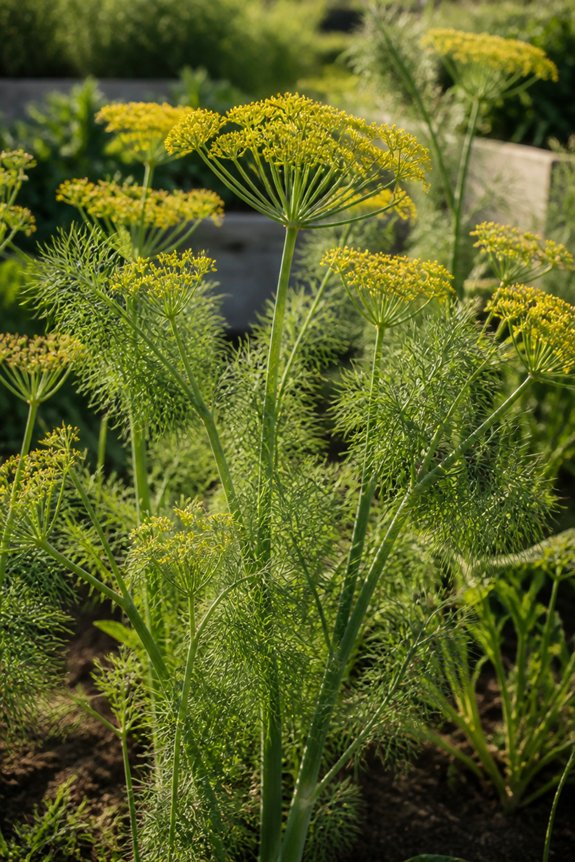
Fennel offers gardeners yellow flowers and edible foliage, combining ornamental appeal with practical harvest potential. The plant grows tall with feathery leaves, thriving in full sun and well-drained soil. Fennel requires minimal watering once established and tolerates poor conditions.
Both seeds and bulbs are harvestable, making it dual-purpose for landscaping and cooking applications.
Frequently Asked Questions
Can I Grow Yellow Plants Indoors and Outdoors, or Are They Limited to One Environment?
Yellow plants can thrive in both indoor and outdoor environments. Most species adapt well to either setting, though specific requirements vary. Indoor varieties need adequate light, while outdoor plants benefit from natural sunlight. Selecting appropriate cultivars guarantees successful growth in either location.
How Do I Propagate Yellow Plants to Expand My Collection Without Buying New Ones?
Some gardeners believe propagation requires specialized equipment, though this theory lacks merit. Yellow plants propagate through stem cuttings, leaf cuttings, or division. One places cuttings in water or moist soil until roots develop, then transplants them into individual containers for collection expansion.
What’s the Best Time of Year to Plant Yellow Bulbs and Perennials for Optimal Growth?
Spring and fall represent ideal planting seasons for yellow bulbs and perennials. Spring suits tender varieties requiring warmth, while fall works best for hardy bulbs needing cold dormancy periods. Gardeners should consult local frost dates for precise timing.
Are Yellow Plants Toxic to Pets, and Which Varieties Are Safe for Homes With Animals?
Ironically, vibrant yellow flowers often signal danger to curious pets. Many yellow varieties—daffodils, lilies, and saffron crocus—prove highly toxic. However, safe alternatives include sunflowers, marigolds, and yellow roses, which allow pet owners to enjoy color worry-free.
How Can I Combine Yellow Plants With Other Colors to Create a Cohesive Garden Design?
Yellow plants create vibrant focal points when paired with complementary colors. Designers often combine them with deep purples, blues, or whites to enhance contrast. Soft pastels like pale pinks or creams provide harmony, while silver foliage bridges multiple hues effectively.
Conclusion
Ironically, plants requiring the least attention often thrive best when gardeners stop worrying about them. Yellow varieties like golden pothos, rubber plants, and sedums demonstrate this paradox, flourishing through neglect while demanding plants wilt under excessive care. Busy gardeners benefit most by selecting resilient species, installing them in suitable locations, then resisting the urge to intervene constantly. Success comes from doing less, not more.