A dog will show you exactly how your backyard should be designed. The muddy rut along the fence, the crater under the shrubs and the yellow spots in the lawn add up to a floor plan, drawn with paws. Dog friendly backyard landscaping takes those habits seriously and gives each one a proper place.
These 15 ideas cover what every dog needs: shade, fresh water, a potty corner and a secure fence. They also include the extras that make a yard fun, like a digging pit and a sniff garden. You’ll find answers to the problems most guides skip, too: urine spots on the lawn, hot pavers in summer, ticks at the edge of the woods, small yards and tight budgets. For more backyard ideas worth copying, keep that list handy. Then start with the spot your dog has already claimed.
🐕 What does your dog do most in the yard?
Spend a Week Watching Your Dog First
The best plan for a dog friendly yard is already out there, in the paths and holes your dog has made. Before you buy a single plant, spend a week paying attention.
Map the habits. Note where your dog runs laps, where they dig, where they pee and where they flop down on hot afternoons. Each of those spots becomes a zone in the ideas below.
Know your dog. Some breeds patrol, some dig and some would rather nap. Plenty of dogs want nothing to do with water. Plan for the dog you have, not the one in the photos.
Check before you plant. Look up every plant in the yard, and every plant you plan to buy, on the ASPCA’s toxic and non-toxic plant list. Read fertilizer and pest product labels for pet warnings too.
Do that homework once, and every idea below gets easier to place.
1. A Decomposed Granite Zoomie Loop Around the Lawn
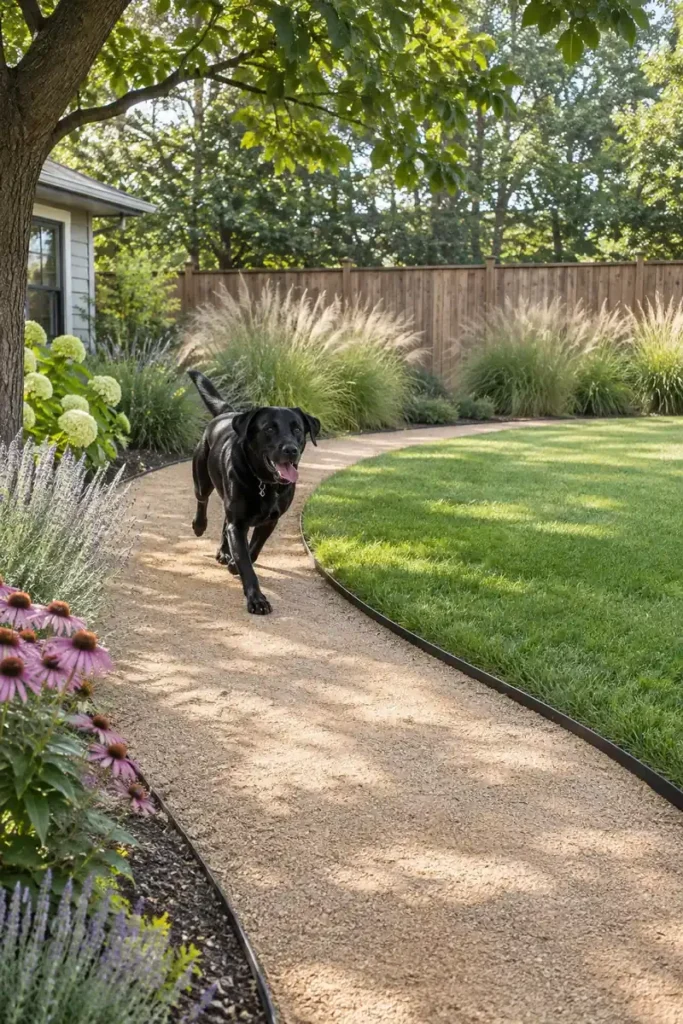
Every dog wears in a racetrack eventually, usually a muddy rut that cuts the same corner every lap. Instead of reseeding it for the fifth time, make it official. Lay a wide loop of decomposed granite, a fine crushed stone that packs down firm, along the route your dog already runs. Edge it with black steel so it stays crisp.
Keep the lawn inside the loop. Outside it, set clumps of ornamental grasses a few feet back from the fence, since soft, bendy grasses shrug off a collision better than brittle shrubs. The loop gives the zoomies somewhere to go, which is the easiest way to keep paws off everything else. Sweep it now and then, and rake it level once a season.
2. A Shady Dog Lounge Under a Cedar Pergola
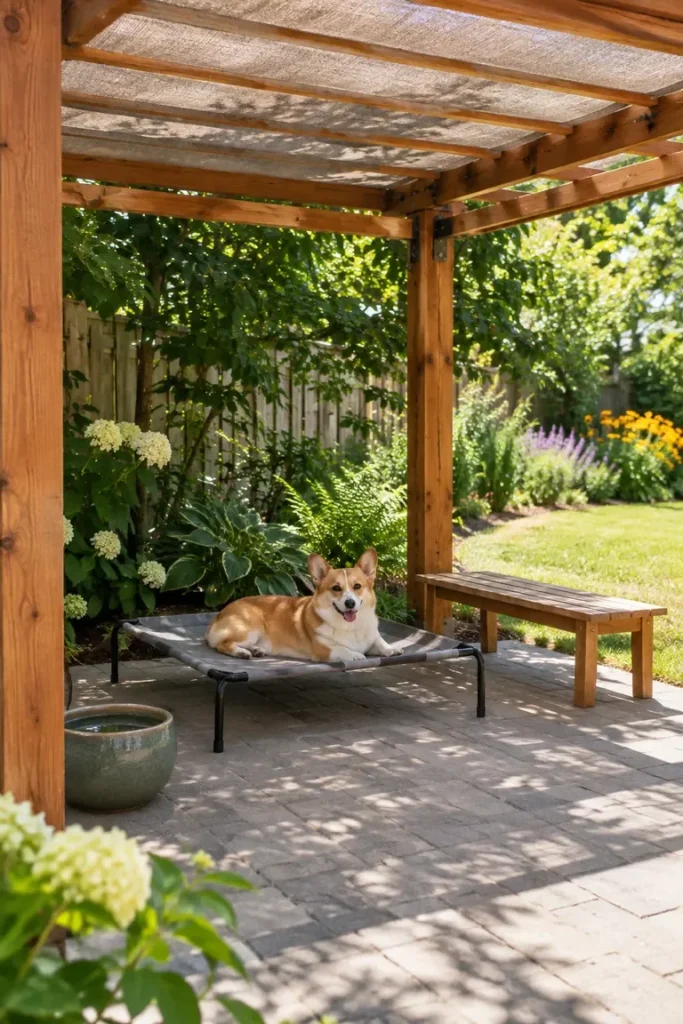
Dogs run hot, and the coolest spot in most yards is the strip under the eaves where nobody can see them. Build them a better one. A cedar pergola with a slatted roof and breathable shade cloth on top casts steady shade over a patch of light gray pavers. A raised mesh dog cot keeps your pup off the warm stone and lets air flow underneath. Light-colored pavers stay cooler than dark ones, which matters on a summer afternoon. A heavy ceramic water bowl in the corner stays put no matter how excited anyone gets.
Styling note: Put a low wood bench for yourself next to the cot, so the shady spot works for both of you. Have a pro anchor the pergola. These backyard patio ideas show layouts that fit around one.
🐾 The back-of-hand test for hot paws
Before your dog crosses pavers, decking, gravel, or artificial turf on a sunny day, press the back of your hand flat on the surface. If you can’t comfortably hold it there for several seconds, it is too hot for bare paws. Shade, lighter colors, and a quick hose rinse all help, and grass or mulch usually stays coolest.
3. A Cedar Sandbox Digging Pit With Buried Treasure
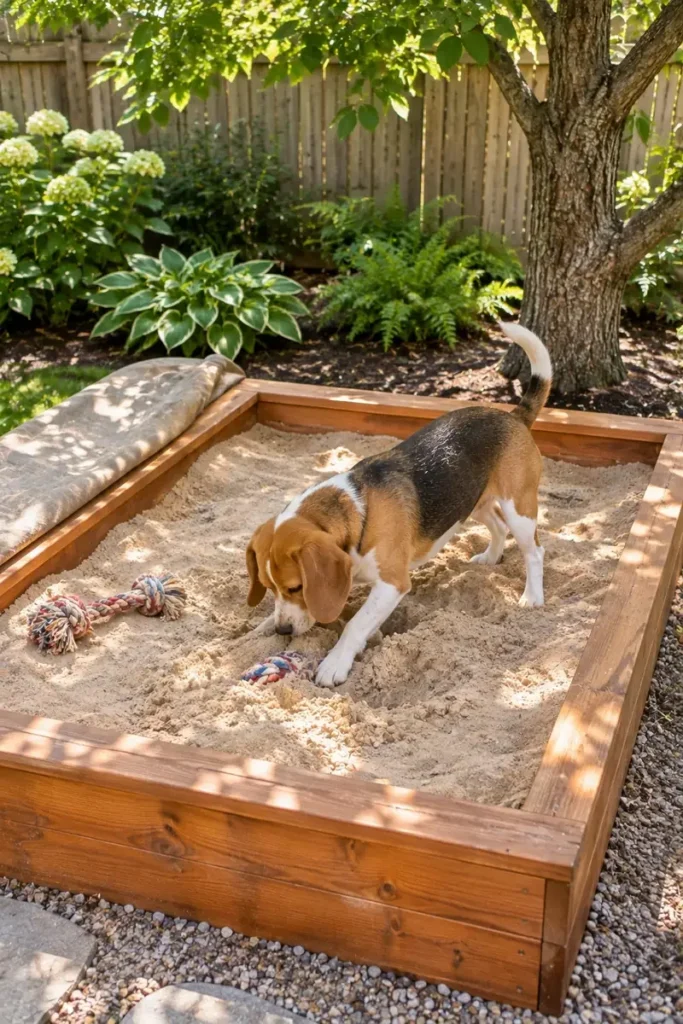
Some dogs dig because it feels great, and no amount of scolding changes that. A digging pit gives the habit a legal address. Frame a low square of cedar boards in a shady corner and fill it with clean play sand loosened with a little garden soil. Bury a couple of rope chew toys a few inches down so the first dig pays off. Praise every visit, and gently lead your dog from the flower beds to the pit. Many dogs catch on with patience. Shade keeps the sand from baking, and a breathable cover keeps neighborhood cats from using it as a litter box.
Get the look: a low cedar sandbox frame, clean play sand, two rope chew toys, a shade tree overhead, a breathable fabric cover folded at one side.
4. Tall Fescue and Clover Play Lawn That Bounces Back
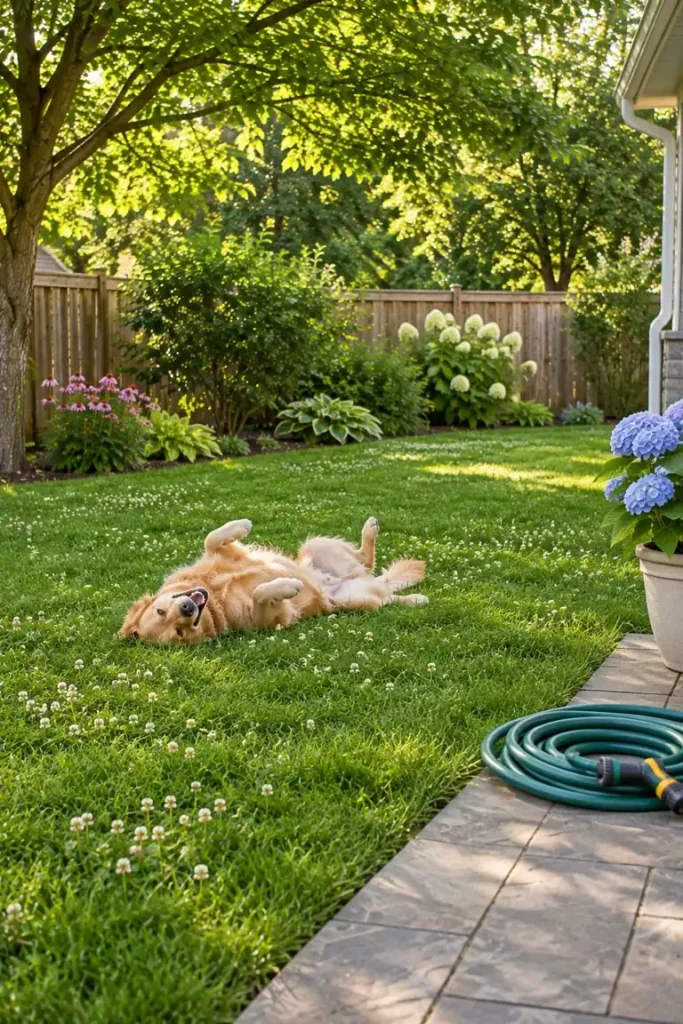
Plain grass is still the softest, coolest surface for a dog to roll on, and the hardest one to keep looking good. The trick is the mix. Turf-type tall fescue is one of the toughest lawn grasses for dog traffic. Overseeded with white clover, it makes a dog friendly ground cover that hides wear better than grass alone, as a rule of thumb.
Ignore urine spots and they turn into bald patches. Hose them down right after your dog goes and the urine gets diluted before it burns. Overseed thin areas every fall, because even the toughest turf needs patching when a dog lives on it. In hot southern yards, swap in Bermudagrass, which is the usual tough choice there.
5. A Sniff Garden of Rosemary, Thyme, and Fountain Grass
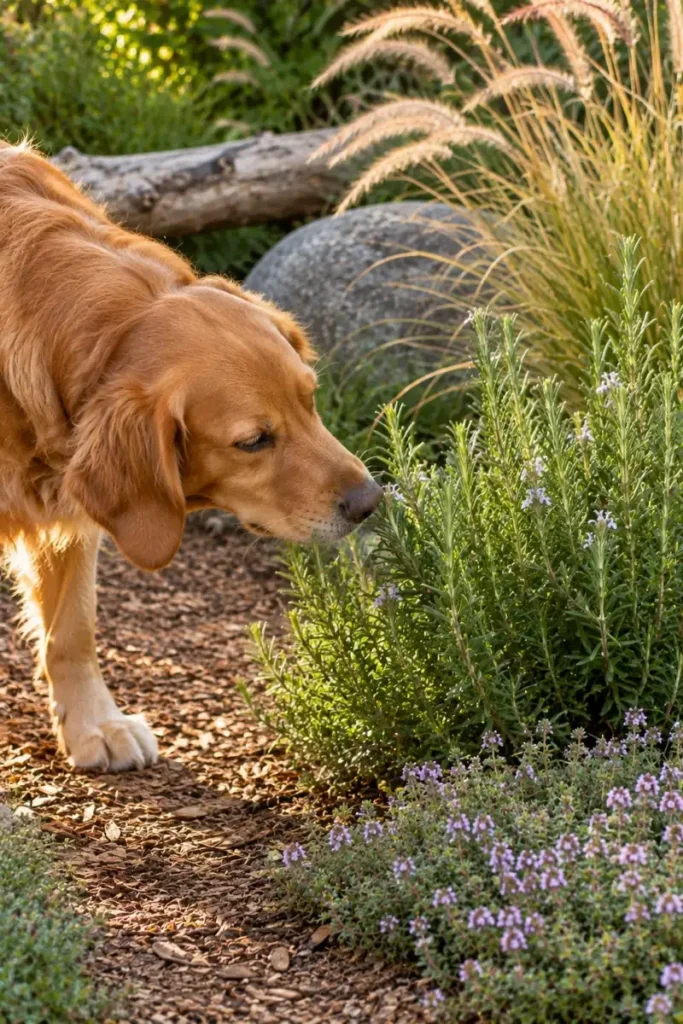
Rosemary gives off its scent the moment a nose brushes past, which is why it belongs in a sniff garden. Dogs read the world by smell, and a winding bed of fragrant, sturdy plants gives them a puzzle to work through on every trip outside. Plant upright rosemary, low mats of creeping thyme and clumps of fountain grass along a narrow bark path. Tuck a weathered log and a smooth boulder in the middle for extra things to investigate. Many trainers say a slow sniff tires a dog out more than a sprint does, which is good news for the rest of the yard. Check each plant against the ASPCA plant list before you buy, and browse these backyard garden ideas for more plant pairings.
6. Pea Gravel Potty Corner With a Marking Post
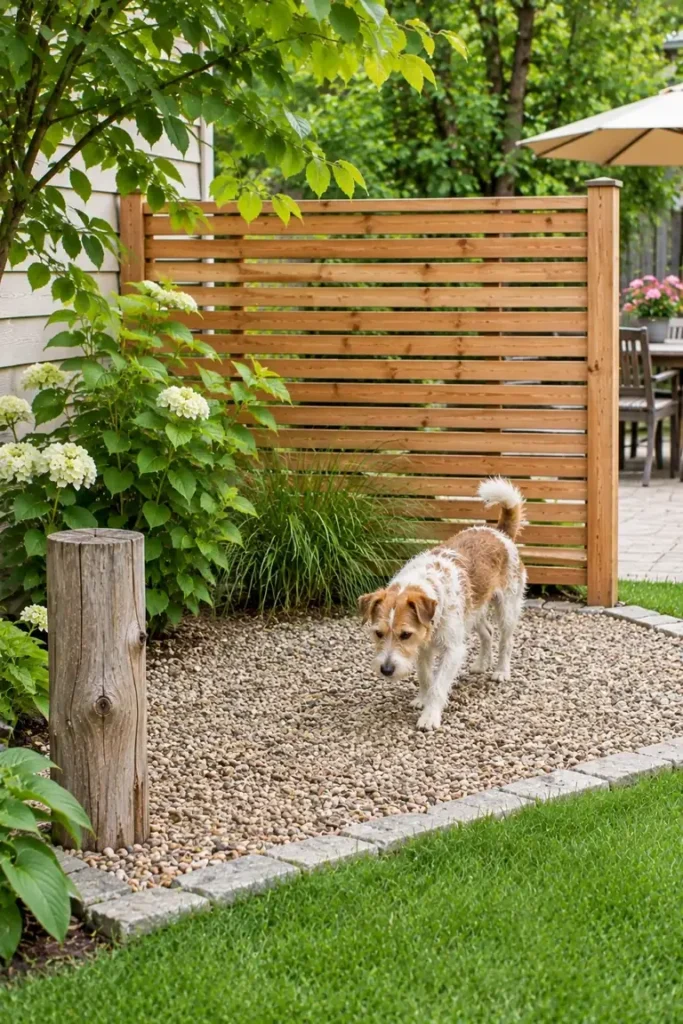
A dedicated potty corner saves the lawn better than any grass seed. Pick a spot away from where you sit and eat, but close enough to reach in the rain. Fill it with a few inches of smooth pea gravel and edge it with stone so it stays tidy. A weathered log post gives male dogs something to aim for, and a low cedar slat screen hides the corner from the patio.
Lead your dog there on a leash every trip for the first few weeks, and praise them the moment they go. Rinse the gravel with the hose once a week, and replace the top layer when it starts to smell. Pea gravel drains fast and hoses clean, but some dogs nibble pebbles, so watch yours for the first few days.
7. A Splash Zone With a Hard Plastic Kiddie Pool
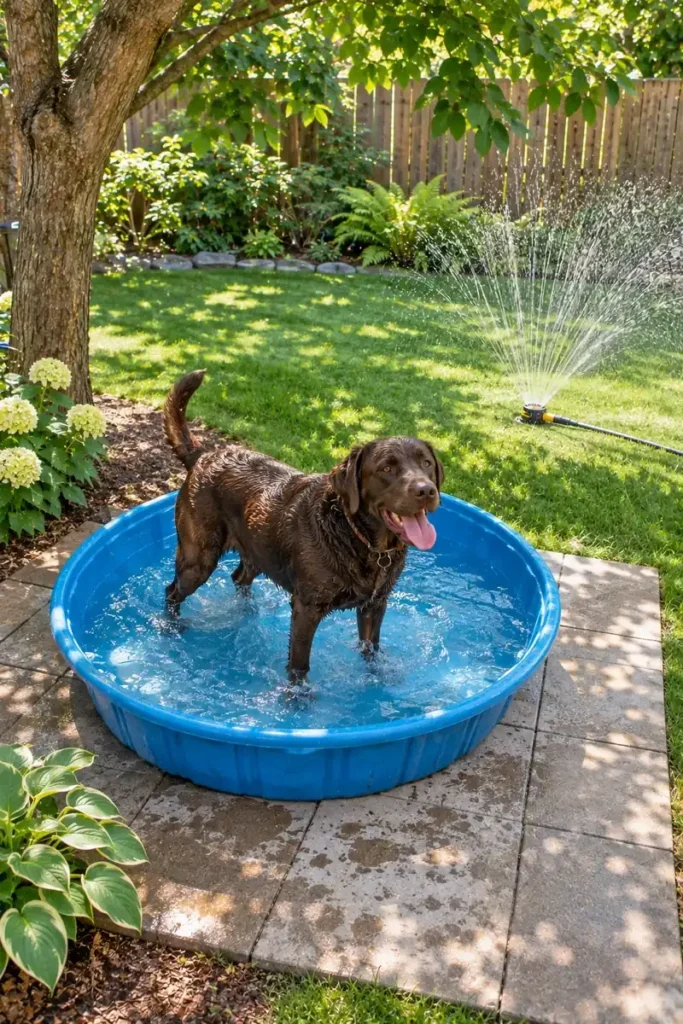
A hot afternoon can turn a playful dog into a panting heap on the kitchen tiles. A splash zone fixes that for very little money. Set a hard plastic kiddie pool on a pad of concrete pavers in the shade, since inflatable pools rarely survive claws. Run a low sprinkler nearby for dogs who would rather chase water than sit in it. The paver pad keeps the grass around the pool from turning to mud, so wet paws come out onto stone instead of dirt. Dump and refill the pool after every use so it never grows algae or mosquitoes, and stay nearby whenever your dog is in the water.
Not every dog loves water, so test the idea with a cheap pool before you build anything bigger.
8. A Dig-Proof Fence Base and a Self-Closing Gate
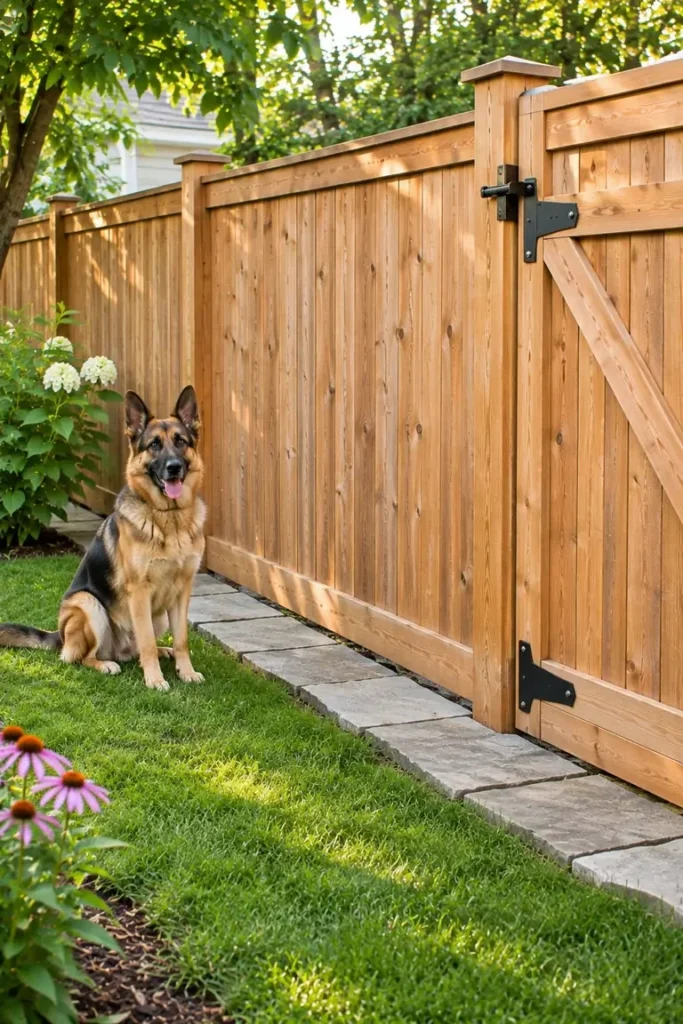
Plenty of escapes start at the bottom of the fence or at a gate left open, not over the top. Close both gaps. Along the inside of the fence base, bury a strip of galvanized welded wire bent into an L shape, with the foot pointing into the yard. Hide it under a row of flat flagstone pavers so it reads as a tidy edge instead of a repair. A dog who digs at the fence line hits stone and wire and gives up. The gate gets a self-closing hinge and a latch set high enough that noses can’t flip it open.
Fence note: Walk the whole fence line once a season, inside and out, looking for loose boards and gaps. Skip invisible electric fences, because a real fence keeps your dog in and other animals out.
9. Small-Yard Dog Patio With a Turf Corner and Wall Planters
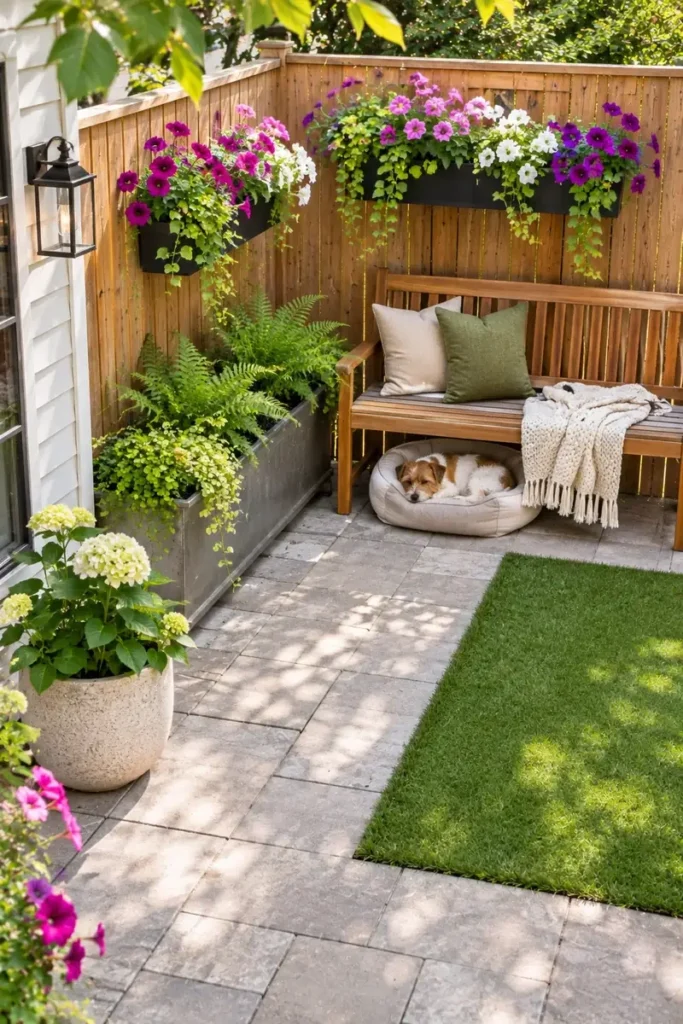
A small backyard has to work twice as hard when a dog shares it, so every surface needs a job. Lay light concrete pavers across most of the space so paws stay clean. Set a corner of artificial turf over a drainage base as the potty and lounging patch. Hose it down weekly, and keep it out of full afternoon sun, since turf gets hot. Move the plants up and out of reach in wall planters and a slim raised trough along the fence, filled with trailing petunias and ferns. A dog bed tucked under a wood bench uses the same space twice. These small backyard ideas have more layouts for tight spaces.
Get the look: light concrete pavers, an artificial turf corner, wall planters with trailing petunias, a slim raised trough with ferns, a wood bench with a dog bed beneath.
10. Raised Cedar Beds Behind a Low Picket Fence
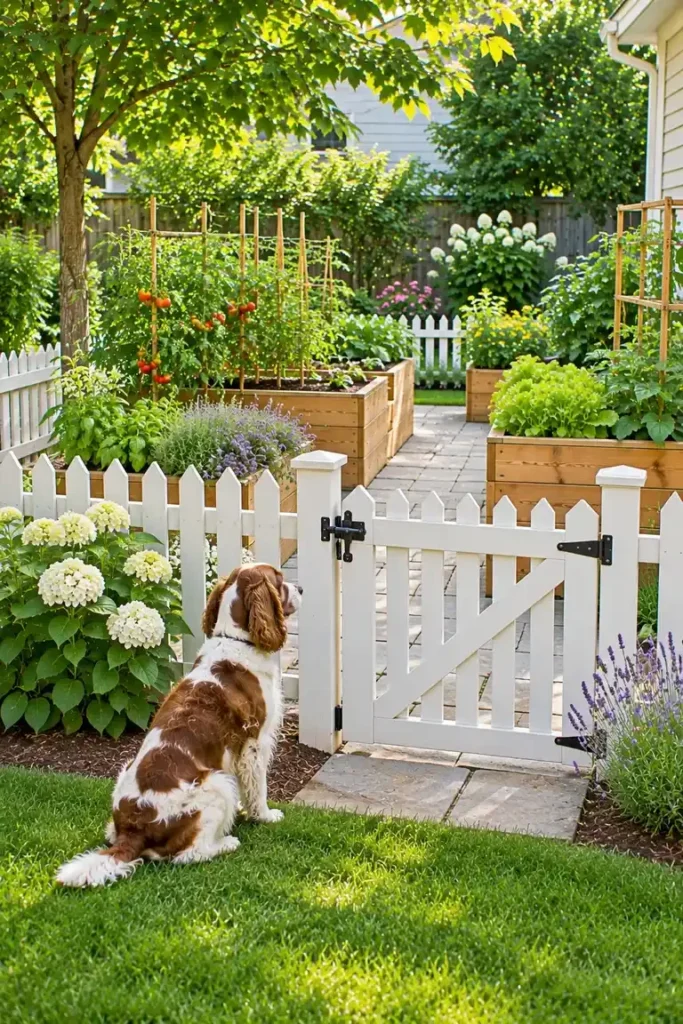
Tomatoes hanging at nose height are an open invitation. A kitchen garden survives a dog when it’s raised and fenced. Waist-high cedar raised beds lift vegetables and herbs above sniffing and leg-lifting range. A low white picket fence with a latched gate around the whole garden keeps diggers out of the soil. Wide paver paths between the beds give you room to work and give the dog nothing tempting underfoot.
Read every fertilizer and pest control label for pet warnings, and skip slug bait, since many types carry serious pet warnings. Keep garden products in a closed shed or on a high shelf.
11. A Backyard Agility Corner on Soft Wood Chips
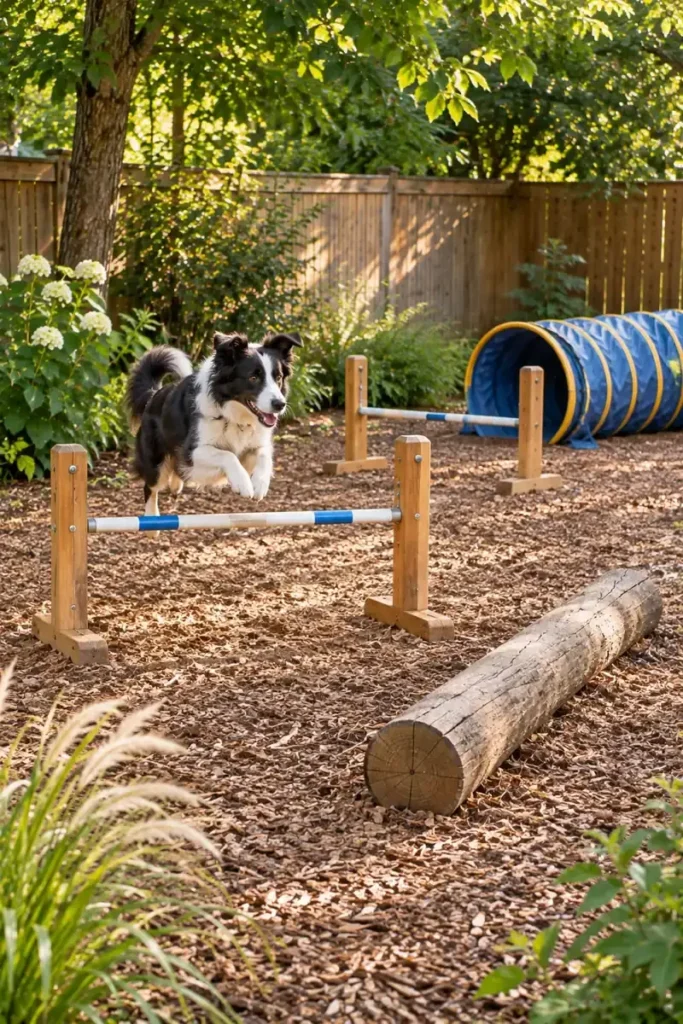
A bored dog redesigns your garden. A busy one naps. A small agility corner keeps an active dog in the second group. Two low jumps made from wooden posts and a crossbar, a smooth log laid flat as a balance beam, and a fabric play tunnel staked to the ground make a course you can run together. Set it all on a thick layer of soft wood chips so landings stay cushioned and the grass around it survives. Keep the jumps low, especially for puppies and older dogs, and check with your vet if your dog has joint trouble.
12. A Self-Filling Water Bowl by the Back Door
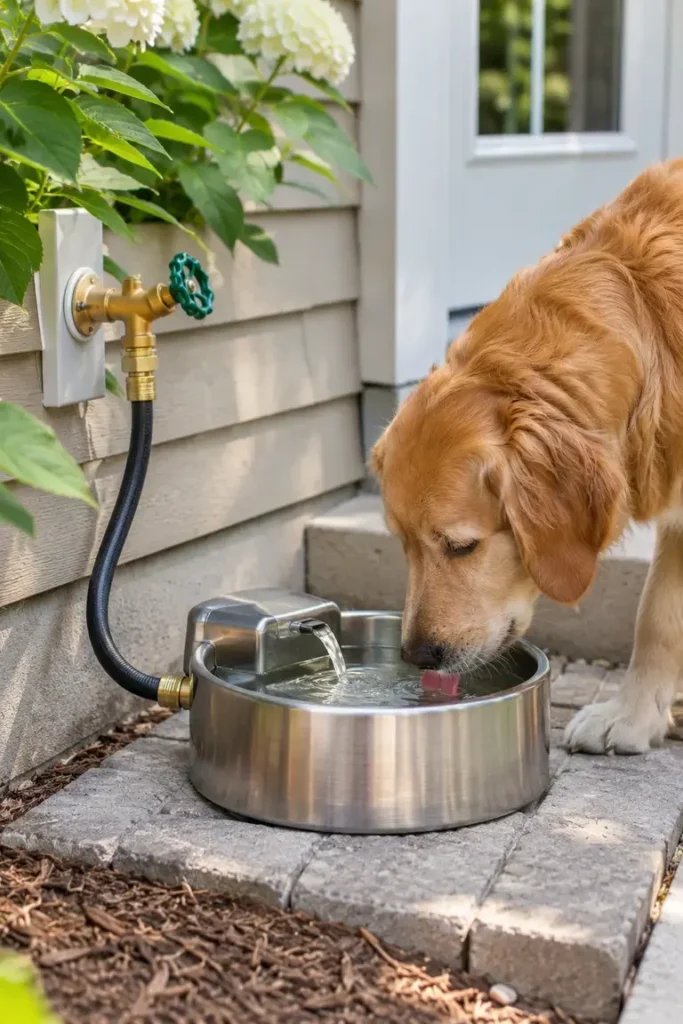
Water bowls tip over, run dry and go warm by noon. A self-filling water bowl hooked to the outdoor spigot tops itself up as your dog drinks, so there’s always fresh water without anyone remembering to check. Set it on a small square of pavers in the shade of the house, near the back door, where spills drain away instead of making mud.
Scrub the bowl every few days so it doesn’t turn slimy. In freezing weather, disconnect it, drain the hose and switch to a bowl you bring inside at night. If you’d rather use a heated bowl, have an electrician add a covered outdoor outlet.
13. Stump and Log Play Yard on Free Wood Chips
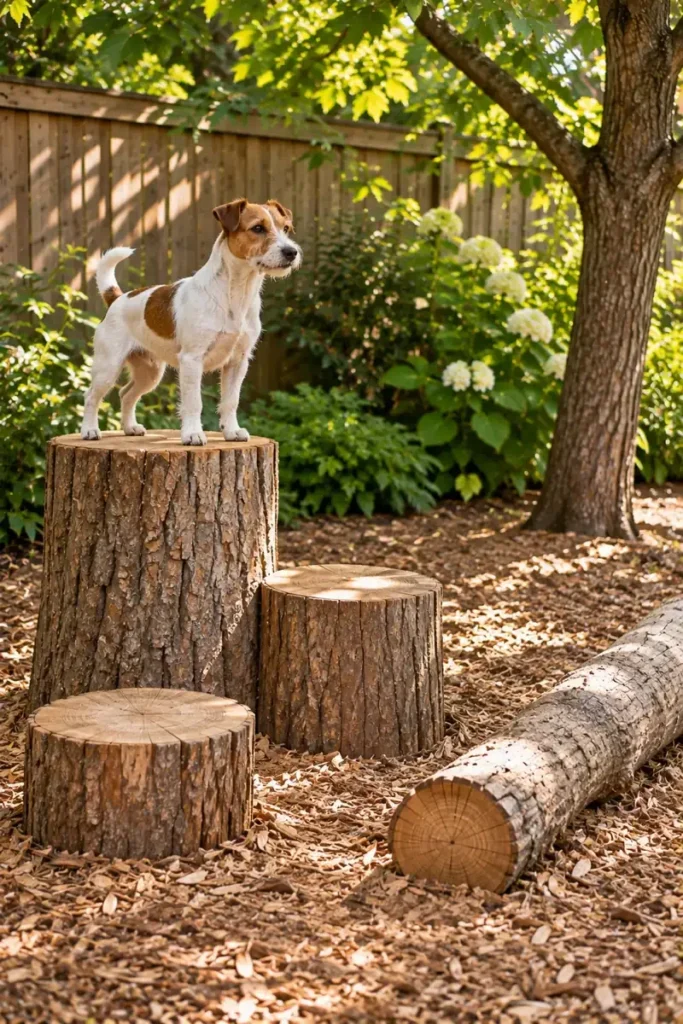
Dog play gear adds up fast, and the best version is often free. Many tree services will drop off a load of arborist wood chips at no charge to save on disposal, and those chips make a soft, springy floor. While the crew is there, ask for a few sawn stumps and a long log. Set the stumps at different heights for hopping and perching, and lay the log down for walking along and sniffing. Your dog gets a lookout to survey the yard from, and you get a corner that looks like a woodland clearing instead of a pile of plastic toys. That makes it one of the easiest ways to build a dog friendly backyard on a budget. Ask which trees the chips came from and check them against a pet safety list, then top up the layer each year as it breaks down.
14. A Wood Chip Border Between the Lawn and the Woods
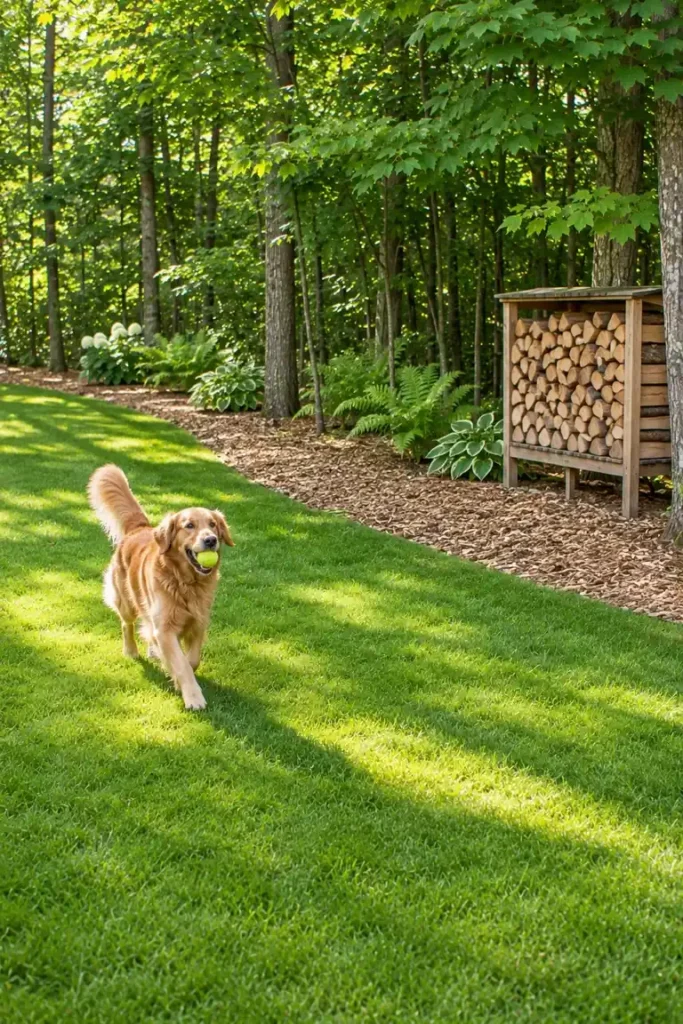
Ticks gather in the shady, leafy edge where a lawn meets woods or tall brush, and that edge is exactly where curious dogs like to nose around. Lay a wide border of wood chips or gravel along that line, a dry, open strip that helps keep ticks from moving into the lawn. Keep the grass beside it mowed short. Move the digging pit, play gear and lounge spots toward the sunny middle of the yard. Stack firewood neatly, off the ground and away from where your dog hangs out, since woodpiles shelter the mice that carry ticks.
Tick note: Ask your vet about tick prevention, and run your hands over your dog’s coat after time near the woods. The border helps, but it doesn’t replace either one.
15. A Dog Wash Station by the Back Gate
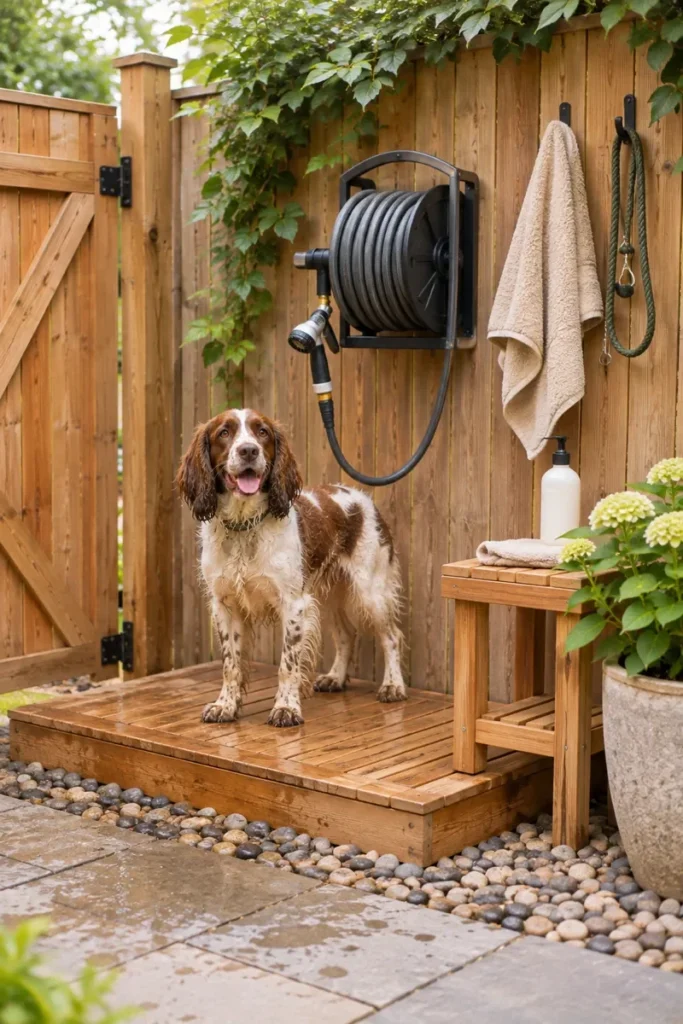
Muddy paws should stop at the back gate, not on the living room rug. A simple dog wash station makes that possible. Mount a hose reel with a gentle spray nozzle on the fence beside the gate. Below it, set a slatted cedar platform over a bed of river rock so the water drains straight through. Hang hooks for a towel and leash, and add a small cedar bench for shampoo and treats. Rinse, towel off, and then it’s inside. In summer, let the hose run a moment first, because water sitting in a sunny hose can come out scalding. A warm water hookup is a job for a plumber.
Get the look: a hose reel with a spray nozzle, a slatted cedar platform, river rock, towel and leash hooks, a small cedar bench.
How to Zone a Dog Friendly Backyard
The yards above share a simple layout. Give your dog a loop to run, a corner to dig, a corner to potty and a shady place to rest, all near fresh water. Then protect everything else with raised beds, a secure fence and plants you’ve checked against the ASPCA list. Keep the dog zones in the sunny middle of the yard and away from the woods’ edge. Put tough surfaces like pavers, gravel or wood chips wherever paws travel most. Once every habit has its own spot, the rest of the garden mostly gets left alone.
A once-a-season yard walk for dog owners
Dog Friendly Backyard Questions, Answered
What is the best ground cover for a dog friendly backyard?
For play, a tough lawn of turf-type tall fescue mixed with white clover is hard to beat. For paths and potty areas, decomposed granite, pea gravel or wood chips hold up better. No plant fully stands up to heavy paws and urine, so use a mix. See ideas 1, 4 and 6.
How do I stop my dog from digging in the garden?
Give the digging somewhere to go. A sandbox with buried toys, plus praise every time it’s used, redirects many dogs. Wire under flagstone stops digging at the fence, and raised beds keep paws out of the vegetables. Ideas 3, 8 and 10 work together.
How do I keep dog urine from killing the grass?
Train your dog to use a potty corner, and hose down any spots on the lawn right after they happen to dilute the urine. Mixing clover into the lawn helps hide wear, and overseeding each fall fills thin patches. Ideas 4 and 6 cover both sides.
What mulch is safe for dogs?
Many dog owners use plain cedar, pine bark, pine straw or arborist wood chips. Pet safety groups warn against cocoa hull mulch. Choose undyed mulch, and check any product you’re unsure of with your vet or a pet safety list. Ideas 11 and 13 use wood chips.
How can I make a dog friendly backyard on a budget?
Start with the cheap wins: free arborist wood chips, a hard plastic kiddie pool, a homemade sandbox and a few logs from a tree crew. Save the bigger projects, like pergolas and fencing upgrades, for later. Ideas 3, 7 and 13 cost very little.
Conclusion
A yard that works for your dog doesn’t have to look like a dog park. Good dog friendly backyard landscaping starts with the habits your pup already has, like running, digging, sniffing and sprawling in the shade, and gives each one a home that looks planned. Start with the spot that bugs you most, whether it’s the muddy fence line or the yellow lawn, and fix that first. Add a water bowl, a little shade and a digging pit, and the rest of the garden finally gets left in peace. Save this for the next weekend your dog drags in half the yard.