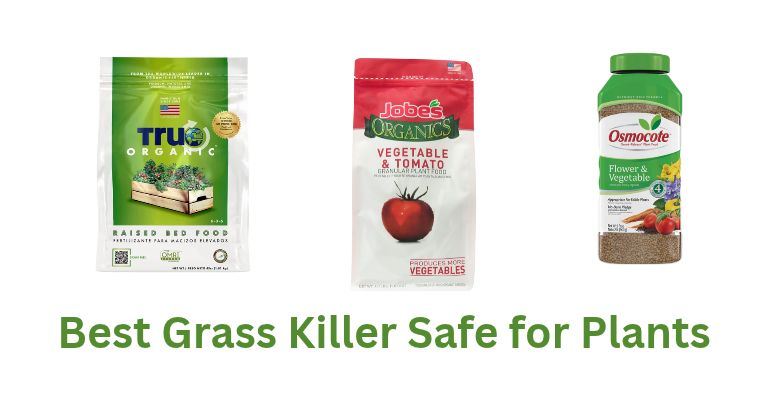
Raised beds drain faster than ground soil, and that drainage carries plant food away with every watering. That is why the best fertilizer for raised bed garden setups has to feed steadily without burning young roots.
This guide compares 10 options across five types: organic granular feeds, a slow-release synthetic, a liquid concentrate, worm castings and manure compost. We look at NPK ratio, how long each feed lasts and how much bed area a bag covers.
It helps new raised bed owners and anyone whose second-year beds are not producing like they did the first year.
Gardenbine earns a commission from qualifying Amazon purchases made through links on this page, at no extra cost to you. Product details come from the manufacturers’ listings.
Our Top Picks
- Best liquid feed FoxFarm Grow Big Liquid Check on Amazon
- Best soil builder Back to the Roots Castings Check on Amazon
- Best for moisture retention R&M Organics Manure Compost Check on Amazon
On this page
- Compare Raised Bed Fertilizers by Type, NPK, Feeding Interval and Bag Size
- Detailed Reviews: Best Fertilizer for Raised Bed Garden
- Feed Raised Beds More Often Than In-Ground Gardens
- Measure Your Raised Bed Before You Buy Fertilizer
- How to Choose Fertilizer for a Raised Bed Garden
- Which Fertilizer for Your Raised Bed Garden Should You Choose?
- Frequently Asked Questions
- Final Verdict
Compare Raised Bed Fertilizers by Type, NPK, Feeding Interval and Bag Size
| # | Product | Type | NPK | Feeding Interval | Bag Size | Buy |
|---|---|---|---|---|---|---|
| 1 |  True Organic Raised Bed Food Best overall for raised beds |
Organic granular | Not listed | Every 2 months | 4 lb | View on Amazon |
| 2 |  Miracle-Gro Raised Bed Food Best for 4 by 4 beds |
Granular | Not listed | Up to 3 months | 2 lb | View on Amazon |
| 3 |  Dr. Earth Vegetable Food Best for soil microbes |
Organic granular | Not listed | Several months | Not listed | View on Amazon |
| 4 |  Osmocote Flower & Vegetable Best slow-release synthetic |
Coated granules | 14-14-14 | Slow release | 2 lb | View on Amazon |
| 5 |  Down to Earth Vegetable 4-4-4 Best balanced organic |
Organic granular | 4-4-4 | Slow release | 5 lb | View on Amazon |
| 6 |  Burpee Organic Tomato Food Best fast-start organic |
Organic granular | Not listed | Up to 3 months | 4 lb | View on Amazon |
| 7 |  Jobe's Organics Garden Food Best for fruiting crops |
Organic granular | 2-5-3 | Every 4 to 6 weeks | 4 lb | View on Amazon |
| 8 |  FoxFarm Grow Big Liquid Best liquid feed |
Liquid concentrate | 6-4-4 | Brand schedule | 1 quart | View on Amazon |
| 9 |  Back to the Roots Castings Best soil builder |
Worm castings | Not listed | Not listed | 5 lb | View on Amazon |
| 10 |  R&M Organics Manure Compost Best for moisture retention |
Manure compost | Not listed | Not listed | 10 lb | View on Amazon |
Ranked by fit for raised beds, organic content and how clearly the listing states coverage and feed length.
Detailed Reviews: Best Fertilizer for Raised Bed Garden
1. True Organic Raised Bed Food Organic Fertilizer, 4 lb Bag (Best overall for raised beds)

True Organic Raised Bed Food Organic Fertilizer, 4 lb Bag
Made for raised beds, 4 lb covers 30 sq ft
View on Amazon- 4 lbbag
- Up to 30 sq ftcoverage
- Every 2 monthsfeeding
- Seabird guanokey ingredient
Best for: Gardeners with one or two small to medium raised beds of herbs, vegetables and flowers
Why it ranks #1: It is the only organic pick built for raised beds with a clear coverage figure, which puts it ahead of the Miracle-Gro Raised Bed Food for organic growers.
True Organic made this blend for raised beds and large containers, the setups where nutrients wash out fastest. The ingredient list includes seabird guano plus shrimp and crab shell meal, which feed plants and add organic matter to the soil as they break down.
A 4 lb bag covers up to 30 square feet, close to two 4 by 4 foot beds per application. You apply it every two months during the growing season. The listing does not give an NPK ratio, so check the bag label if you need exact numbers for a soil report.
Pros
- Made for raised beds and large containers
- 4 lb bag covers up to 30 sq ft
- Only needs feeding every two months
- Seabird guano and shellfish meal ingredients
Cons
- NPK ratio is not listed
- Shellfish ingredients may not suit gardeners who avoid animal products
Skip it if you want to feed less often; the Miracle-Gro Raised Bed Food lasts up to 3 months per application.
2. Miracle-Gro Raised Bed Plant Food, 2 lbs (Best for 4 by 4 beds)

Miracle-Gro Raised Bed Plant Food, 2 lbs
Feeds two 4 x 4 ft beds for up to 3 months
View on Amazon- 2 lbbag
- Two 4 x 4 ftbeds per bag
- Up to 3 monthsfeeding
- Added calciumnutrients
Best for: Owners of one or two square raised beds who want to feed once a season
Why it ranks #2: It feeds longer per application than the True Organic Raised Bed Food, but the True Organic bag covers similar space with organic ingredients.
Miracle-Gro sized this 2 lb bag around a common raised bed: it holds enough to feed two 4 by 4 foot beds for up to 3 months. That makes the math easy if you built standard square beds.
The listing says it contains natural ingredients with added calcium and micronutrients. Calcium matters for tomatoes and peppers in raised beds, where soil can dry out fast between waterings. The brand pairs it with its own raised bed soil, though you can use it in any bed mix. No NPK ratio is listed.
Pros
- Feeds up to 3 months per application
- Sized for two 4 x 4 ft beds
- Added calcium and micronutrients
Cons
- Small 2 lb bag runs out fast in larger gardens
- Not labeled organic, and the NPK is not listed
Skip it if you garden organically; the True Organic Raised Bed Food or Burpee Organic Tomato Food fit organic beds.
3. Dr. Earth Organic 5 Tomato, Vegetable and Herb Fertilizer (Best for soil microbes)

Dr. Earth Organic 5 Tomato, Vegetable and Herb Fertilizer
Seven microbe strains plus mycorrhizae
View on Amazon- 7microbe strains
- Ecto and endomycorrhizae
- 100%organic and natural
- Several monthsfeeding
Best for: New raised beds filled with fresh bagged soil that needs biology as well as food
Why it ranks #3: It adds more soil life than the True Organic Raised Bed Food, but its listing gives less detail on coverage.
Dr. Earth’s tomato, vegetable and herb food goes beyond nutrients. The listing says it contains seven strains of beneficial soil microbes plus ecto and endo mycorrhizae, the fungi that partner with roots. That suits new raised beds filled with bagged mix, which often start with little soil life.
It is made with 100% organic and natural ingredients and contains no GMOs, chicken manure or sewage sludge. Dr. Earth says it feeds for several months. The listing does not state the bag weight or NPK ratio, so check the label on the size you order.
Pros
- Seven strains of beneficial microbes
- Ecto and endo mycorrhizae included
- No chicken manure or sewage sludge
- Feeds for several months
Cons
- Bag size and NPK are not given in the listing
Skip it if you need a clear coverage rate per bag; the Osmocote Flower & Vegetable lists 1 lb per 40 sq ft.
4. Osmocote Smart-Release Plant Food Flower and Vegetable 14-14-14, 2 lbs (Best slow-release synthetic)
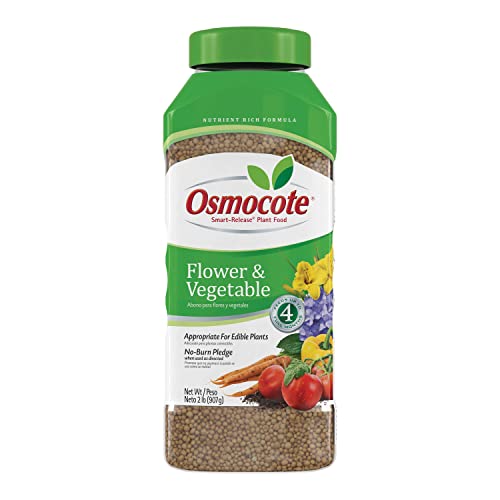
Osmocote Smart-Release Plant Food Flower and Vegetable 14-14-14, 2 lbs
14-14-14 with release tied to soil temperature
View on Amazon- 14-14-14NPK
- 1 lb per 40 sq ftcoverage
- 1 to 3 inmixing depth
- 2 lbbag
Best for: Gardeners who want a balanced, low-effort feed for mixed vegetables and flowers
Why it ranks #4: It has the highest nutrient numbers here, but it ranks below the organic picks because it adds nothing to soil life.
Osmocote uses coated granules whose release follows soil temperature. As beds warm in spring, plants grow faster and the granules release more. This 2 lb bag carries a 14-14-14 NPK, which Osmocote calls its highest total nutrient formula.
Directions call for 1 lb per 40 square feet, mixed into the top 1 to 3 inches of soil, and an applicator comes in the bag. The listing says it will not burn plants even at up to 3 times the recommended rate, but stick to the label rate for food crops. It is not an organic product.
Pros
- 14-14-14 NPK, the highest on this list
- 1 lb covers 40 sq ft
- Release follows soil temperature
- Applicator included
Cons
- Synthetic, so not for organic gardens
- How many months it feeds is not listed
Skip it if you grow organically; the Down to Earth Vegetable 4-4-4 is a balanced 4-4-4 organic option.
5. Down to Earth Organic Vegetable Garden Fertilizer 4-4-4, 5 lb (Best balanced organic)

Down to Earth Organic Vegetable Garden Fertilizer 4-4-4, 5 lb
Even 4-4-4 slow-release organic feed
View on Amazon- 4-4-4NPK
- 5 lbbox
- Slowrelease
- Organicmaterials
Best for: Organic growers who want one balanced feed for mixed vegetable beds
Why it ranks #5: It is better balanced than the Jobe's Organics Garden Food for leafy crops, though the Osmocote Flower & Vegetable packs more nutrients per pound.
Down to Earth’s vegetable garden blend has an even 4-4-4 NPK, so it feeds leaves, roots and fruit in equal parts. It comes in a 5 lb box and is made from organic materials that release nutrients slowly.
Slow release means less food is lost to leaching, which matters in raised beds that drain fast. You can scatter it on the surface or mix it into the bed at planting time. The brand says it is safe for pollinators and pets; follow the label and keep the box sealed between uses.
Pros
- Balanced 4-4-4 NPK
- 5 lb box
- Slow release limits leaching
- Mix in at planting or top dress
Cons
- Feeding interval is not listed
- Lower nutrient numbers than synthetic feeds
Skip it if you mainly grow tomatoes and want extra phosphorus; the Jobe's Organics Garden Food is 2-5-3.
6. Burpee Organic Tomato and Vegetable Granular Plant Food, 4 lb (Best fast-start organic)

Burpee Organic Tomato and Vegetable Granular Plant Food, 4 lb
Releases right away, then feeds up to 3 months
View on Amazon- 4 lbbag
- Up to 3 monthsfeeding
- OMRIlisted
- Immediatefirst release
Best for: Organic gardeners setting out transplants who want one feeding to carry them through summer
Why it ranks #6: It matches the Miracle-Gro Raised Bed Food on feed length while staying organic, but it gives less detail than the Down to Earth Vegetable 4-4-4.
Burpee’s organic granules release some nutrients right away and then keep feeding for up to 3 months. That two-stage release helps transplants settle in while still covering most of a summer season.
It is OMRI listed for organic use and comes in a 4 lb bag. One listing bullet calls it an all purpose food while the title says tomato and vegetable, so expect a general garden formula. No NPK ratio is listed.
Pros
- Starts feeding right away
- Lasts up to 3 months
- OMRI listed for organic use
- 4 lb bag
Cons
- NPK is not listed
- Listing mixes tomato and all purpose wording
Skip it if you want a known NPK ratio; the Down to Earth Vegetable 4-4-4 lists 4-4-4.
7. Jobe's Organics Granular Garden Fertilizer 2-5-3, 4 lbs (Best for fruiting crops)

Jobe's Organics Granular Garden Fertilizer 2-5-3, 4 lbs
2-5-3 with extra phosphorus
View on Amazon- 2-5-3NPK
- 4 lbbag
- 4 to 6 weeksfeeding
- OMRIlisted
Best for: Raised beds full of tomatoes, peppers and squash
Why it ranks #7: It is the best fit for fruiting crops, but it needs feeding more often than the Burpee Organic Tomato Food.
Jobe’s granular garden food has a 2-5-3 NPK, with more phosphorus than nitrogen. That tilt suits tomatoes, peppers and other fruiting crops more than leafy greens. It comes in a 4 lb bag and is OMRI listed for organic gardening.
You feed every 4 to 6 weeks during the growing season, which is more often than most picks here. Jobe’s says the granules are easy to measure, which helps you avoid overfeeding a small bed. It contains no synthetic chemicals.
Pros
- 2-5-3 NPK favors flowers and fruit
- OMRI listed
- Easy to measure granules
- 4 lb bag
Cons
- Needs feeding every 4 to 6 weeks
- Low nitrogen for leafy crops
Skip it if you grow mostly lettuce and greens; the FoxFarm Grow Big Liquid is 6-4-4 with more nitrogen.
8. FoxFarm Grow Big Liquid Plant Food 6-4-4, Quart Concentrate (Best liquid feed)

FoxFarm Grow Big Liquid Plant Food 6-4-4, Quart Concentrate
6-4-4 concentrate for fast uptake
View on Amazon- 6-4-4NPK
- 1 quartconcentrate
- Water or foliarapplication
- Low pHformula
Best for: Leafy greens and young plants that need a quick nitrogen boost
Why it ranks #8: It works faster than any granular pick, but it needs more frequent feeding than the Jobe's Organics Garden Food.
FoxFarm Grow Big is a quart of liquid concentrate with a 6-4-4 NPK. The higher nitrogen pushes leafy growth, which helps greens, herbs and young vegetable plants size up early in the season.
You mix it into your watering can or spray it on leaves, following the brand’s feeding schedule. FoxFarm says its low pH keeps micronutrients available in storage. Liquids act fast but do not last, so plan on repeat feedings or pair it with a granular base like the True Organic Raised Bed Food.
Pros
- 6-4-4 NPK for leafy growth
- Feeds through water or foliar spray
- Quart concentrate
- Fast nutrient uptake
Cons
- Needs regular repeat feeding
- Not labeled organic
Skip it if you want to feed once and walk away; the Miracle-Gro Raised Bed Food lasts up to 3 months.
9. Back to the Roots Organic Worm Castings, 5 lb (Best soil builder)

Back to the Roots Organic Worm Castings, 5 lb
5 lb of USA made worm castings
View on Amazon- 5 lbbag
- 100%vermicompost
- No burnor odor
- USAmade
Best for: Topping up tired raised bed soil between seasons or mixing into seed starting mix
Why it ranks #9: It builds soil better than the liquid FoxFarm Grow Big Liquid, but it feeds less than any fertilizer above it.
Back to the Roots sells pure vermicompost made in the USA. The brand says there is no burn or odor, so you can mix the castings into beds, pots or seed starting mix without worry about scorching tender roots.
The castings carry beneficial microbes that the listing says help protect seedlings from harmful pathogens. Castings improve soil but are mild on nutrients, so treat them as a soil builder and pair them with a feed like the Down to Earth Vegetable 4-4-4. The bag holds 5 lb and comes with a satisfaction guarantee.
Pros
- Pure vermicompost with no burn
- No odor indoors or out
- Beneficial microbes
- Satisfaction guarantee
Cons
- Not a complete fertilizer on its own
- 5 lb goes quickly in large beds
Skip it if your plants need a real feed now; get the Osmocote Flower & Vegetable or True Organic Raised Bed Food.
10. R&M Organics Compost Soil Amendment, 10 lb Manure Based (Best for moisture retention)

R&M Organics Compost Soil Amendment, 10 lb Manure Based
10 lb dairy manure compost
View on Amazon- 10 lbbag
- Dairy cowmanure base
- 1/4 intop dressing
- Lowodor
Best for: Refreshing raised bed soil each spring before you plant
Why it ranks #10: It helps soil hold more water than the Back to the Roots Castings, but both work best with a fertilizer on top.
R&M Organics makes this compost from dairy cow manure and composts it fully with steady aeration to cut odor. It helps replace the nutrients that crops pull from raised bed soil each season.
The listing says it helps soil hold moisture longer, which suits raised beds that dry out fast. Spread a layer about 1/4 inch thick around plants or mix it in when you build a bed. The 10 lb bag is the largest here, but compost is an amendment, not a full fertilizer.
Pros
- 10 lb bag, the largest here
- Helps soil hold moisture
- Low odor
- Thin 1/4 inch top dressing
Cons
- Not a complete fertilizer
- NPK is not listed
Skip it if you need a fertilizer, not an amendment; the True Organic Raised Bed Food covers that job.
Feed Raised Beds More Often Than In-Ground Gardens
Raised beds drain faster than garden soil, and water carries nutrients down and out. Many bagged bed mixes also start with only a small nutrient charge. If you feed on the same plan as an in-ground bed, plants can run short by midsummer.
Match the feeding plan to the product. The Jobe's Organics Garden Food asks for a feeding every 4 to 6 weeks. The True Organic Raised Bed Food runs every two months. The Miracle-Gro Raised Bed Food and Burpee Organic Tomato Food last up to 3 months per application. A liquid like the FoxFarm Grow Big Liquid needs repeat feedings through the season.
Rule of thumb: set a calendar reminder on the label interval, and add a light top dressing of compost such as the R&M Organics Manure Compost each spring.
Measure Your Raised Bed Before You Buy Fertilizer
Overfeeding a small bed wastes product and can burn roots, and underfeeding a large one leaves plants hungry. Measure length times width to get square feet first. A 4 by 8 foot bed is 32 square feet.
Then compare with the label. The True Organic Raised Bed Food covers up to 30 square feet per 4 lb bag. The Miracle-Gro Raised Bed Food feeds two 4 by 4 foot beds, about 32 square feet. The Osmocote Flower & Vegetable uses 1 lb per 40 square feet.
Wear gloves when you handle fertilizer, keep bags sealed and away from pets and children, and follow the label rate.
How to Choose Fertilizer for a Raised Bed Garden
Organic or Synthetic Fertilizer?
Organic feeds like the True Organic Raised Bed Food, Down to Earth Vegetable 4-4-4 and Jobe's Organics Garden Food release nutrients as soil life breaks them down. Synthetic feeds like the Osmocote Flower & Vegetable deliver exact NPK numbers. Choose organic to build soil over several years; choose synthetic for predictable feeding with less product.
Which NPK Ratio Do Your Crops Need?
NPK stands for nitrogen, phosphorus and potassium. Leafy crops like more nitrogen, such as the 6-4-4 in the FoxFarm Grow Big Liquid. Fruiting crops like more phosphorus, such as the 2-5-3 in the Jobe's Organics Garden Food. Mixed beds do well with a balanced ratio like the 4-4-4 in the Down to Earth Vegetable 4-4-4.
How Often Do You Want to Feed?
Feeding intervals on this list run from every 4 to 6 weeks to up to 3 months. The Miracle-Gro Raised Bed Food and Burpee Organic Tomato Food last the longest per application. Liquids need the most attention.
Do You Need Fertilizer or Soil Amendment?
Worm castings like the Back to the Roots Castings and compost like the R&M Organics Manure Compost improve soil texture, moisture and microbes, but they are not complete feeds. Use them with a fertilizer, not instead of one. Our guide to organic nutrients for soil compares more castings and composts.
Are You Starting a New Bed?
Fresh bagged mix often has little soil life. A microbe blend like the Dr. Earth Vegetable Food adds beneficial microbes and mycorrhizae at planting time.
Which Fertilizer for Your Raised Bed Garden Should You Choose?
Start with what you grow and how often you want to feed, then match the type below.
- If you want an organic feed made for raised beds, choose the True Organic Raised Bed Food, because a 4 lb bag covers up to 30 sq ft.
- If you have square 4 by 4 beds, choose the Miracle-Gro Raised Bed Food, because one bag feeds two of them for up to 3 months.
- If you are filling a new bed with bagged mix, choose the Dr. Earth Vegetable Food, because it adds seven microbe strains plus mycorrhizae.
- If you want a strong synthetic feed, choose the Osmocote Flower & Vegetable, because it is 14-14-14 and covers 40 sq ft per pound.
- If you grow a mix of crops organically, choose the Down to Earth Vegetable 4-4-4, because its 4-4-4 ratio is balanced.
- If you are setting out transplants, choose the Burpee Organic Tomato Food, because it starts feeding right away and lasts up to 3 months.
- If your beds are full of tomatoes and peppers, choose the Jobe's Organics Garden Food, because its 2-5-3 ratio favors fruit.
- If greens need a quick boost, choose the FoxFarm Grow Big Liquid, because its 6-4-4 liquid feeds through the watering can.
- If your soil feels tired, choose the Back to the Roots Castings, because castings add microbes with no burn.
- If your beds dry out fast, choose the R&M Organics Manure Compost, because the manure compost helps soil hold moisture.
Frequently Asked Questions
What is the best fertilizer for raised bed vegetable gardens?
A slow-release organic granular feed is a good default, because it feeds for weeks and builds soil. The True Organic Raised Bed Food is made for raised beds and covers up to 30 square feet per 4 lb bag. If you want a balanced NPK, the Down to Earth Vegetable 4-4-4 lists 4-4-4.
How often should you fertilize a raised bed garden?
Follow the label on your product. On this list, intervals range from every 4 to 6 weeks for the Jobe's Organics Garden Food to up to 3 months for the Miracle-Gro Raised Bed Food and Burpee Organic Tomato Food. Raised beds drain fast, so feed at the start of the season and again on the label schedule.
Organic vs synthetic fertilizer for raised beds: which is better?
Organic fertilizer is better if you want to build soil life over several seasons, since microbes break it down slowly. Synthetic fertilizer like the Osmocote Flower & Vegetable gives higher, exact NPK numbers with less product. Many gardeners use an organic base and add a quick liquid feed when plants need it.
How to add fertilizer to an existing raised bed?
Scatter granules around plants at the label rate, scratch them into the top 1 to 3 inches of soil and water well. Osmocote gives this depth for the Osmocote Flower & Vegetable. Keep granules off leaves and stems, and wear gloves while you work.
Are worm castings enough to fertilize a raised bed?
No, worm castings work best as a soil builder rather than a full fertilizer. They add microbes and organic matter with no burn risk, as the Back to the Roots Castings listing notes. Pair them with a granular feed for the nutrients plants need through the season.
Is organic fertilizer safe around pets?
Follow the label and keep pets off freshly fed beds. Some organic feeds contain animal meals that can attract dogs, so scratch granules into the soil and store bags sealed. Call your vet if a pet eats fertilizer from the bag.
Final Verdict
The True Organic Raised Bed Food is the best fertilizer for raised bed garden use on this list, because it is made for raised beds and a 4 lb bag covers up to 30 square feet. If you want to feed once and wait 3 months, the Miracle-Gro Raised Bed Food feeds two 4 by 4 foot beds. Before you buy, measure your beds so you know how many bags you need.
True Organic Raised Bed Food Organic Fertilizer, 4 lb Bag
Made for raised beds with clear coverage and organic ingredients
View on AmazonSee the True Organic Raised Bed Food on Amazon
Growing in pots as well? See our comparison of self-watering containers and raised beds.