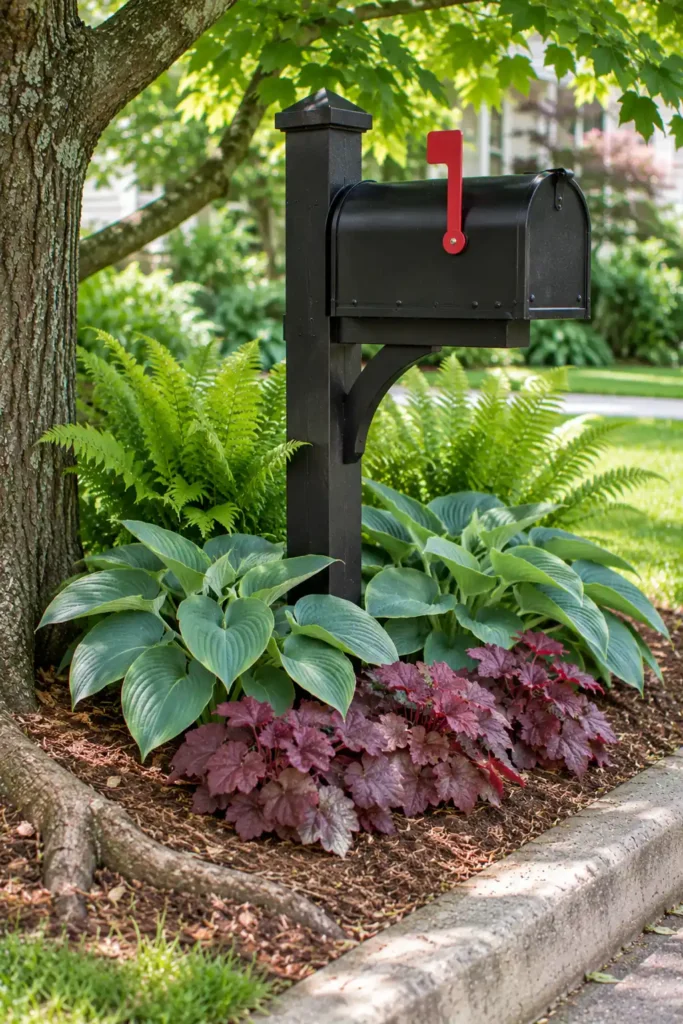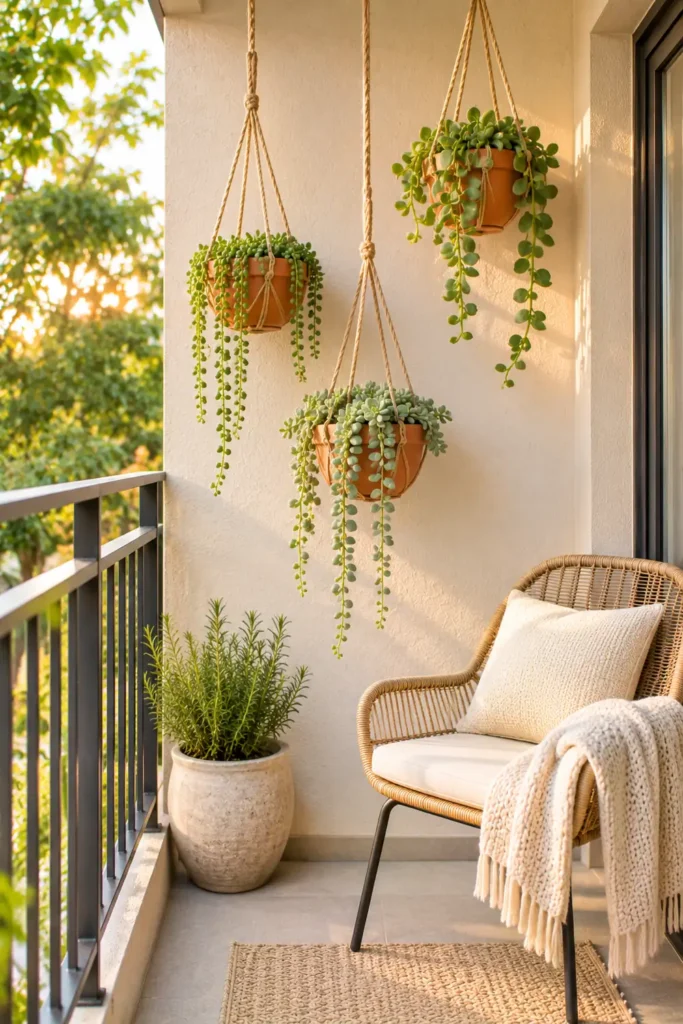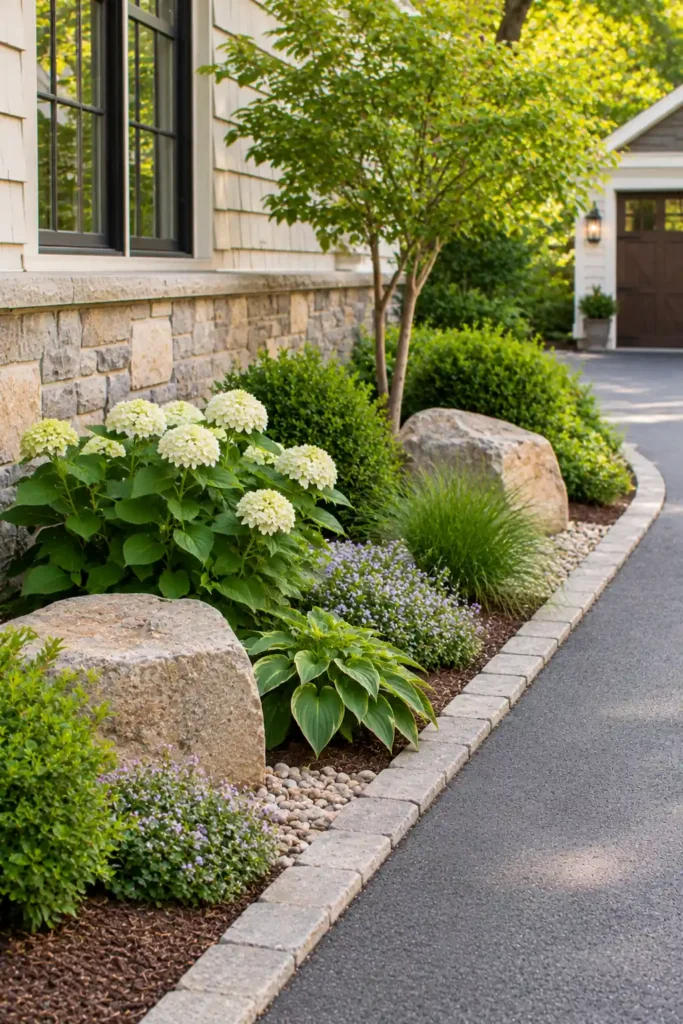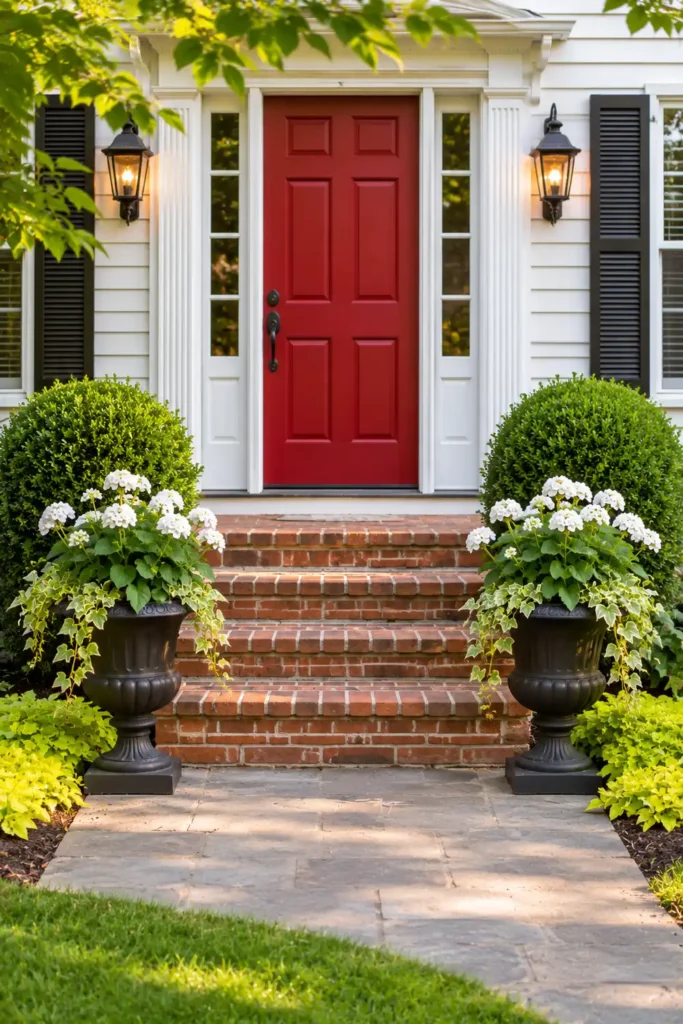
A small courtyard does not need arches on every wall or rows of decorative pots to feel Mediterranean. The strongest small Mediterranean courtyard ideas usually rely on a much simpler mix: warm terracotta, pale stucco, natural stone, silvery foliage, fragrant herbs, and one or two details that give the space a clear focal point.
That restraint matters even more when the footprint is tight. One potted olive tree can do the work of several smaller plants. A wrought-iron bistro set provides seating without hiding the floor. Gravel or terracotta tile establishes the mood before you add any accessories.
Shade and water can play a role too. A vine-covered pergola, compact wall fountain, or low stone water bowl can make a courtyard feel settled without swallowing valuable space.
These 19 ideas focus on creating Mediterranean character while keeping circulation open, planting manageable, and the overall palette calm.
Build the Look With Materials Before Decor
Start with the surfaces that take up the most visual space. Cream stucco, terracotta tile, pale gravel, or natural stone can establish the courtyard before planters and furniture arrive. Then repeat only a few materials through pots, seating, and planting. In a compact courtyard, consistency usually gives you more character than adding another ornament, tile pattern, or plant variety.
1. Center the Courtyard Around a Potted Olive Tree
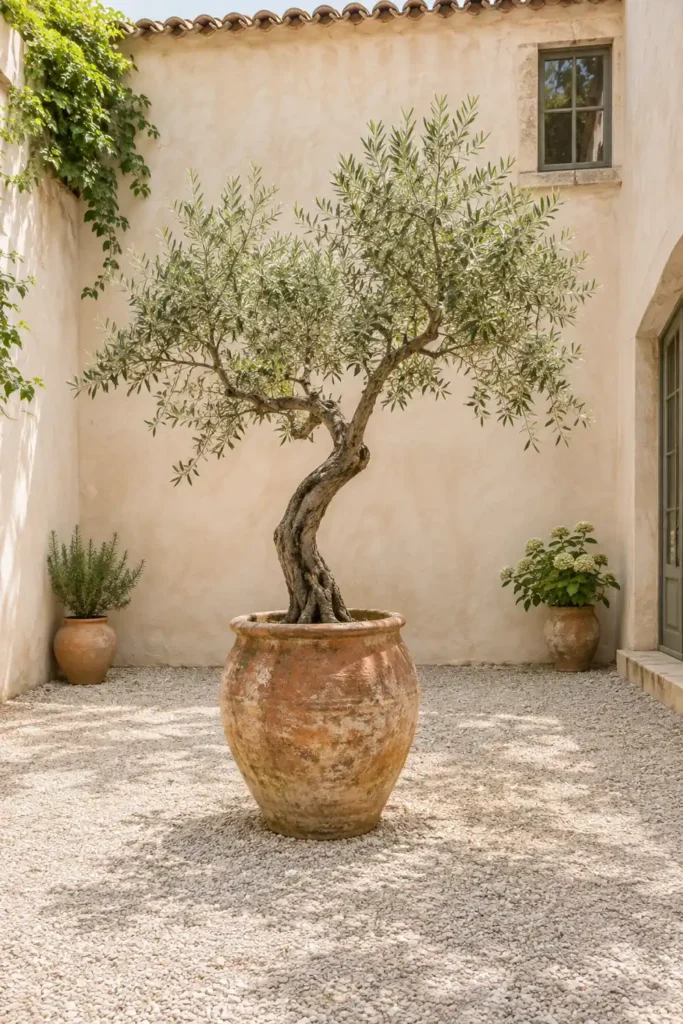
One well-placed olive tree can give a small courtyard more presence than a dozen scattered pots. Set a compact olive tree in a large terracotta container, then give it open space around the base so the trunk and silvery foliage can read clearly.
That single vertical element draws the eye upward and keeps the courtyard from feeling crowded at ground level. Pale gravel or simple stone paving works especially well beneath it because the quiet surface lets the tree become the focal point.
If winters are too cold for an olive tree outdoors, use a movable container and overwinter it appropriately, or choose another small tree with a similarly airy canopy.
2. Lay Warm Terracotta Tile Underfoot
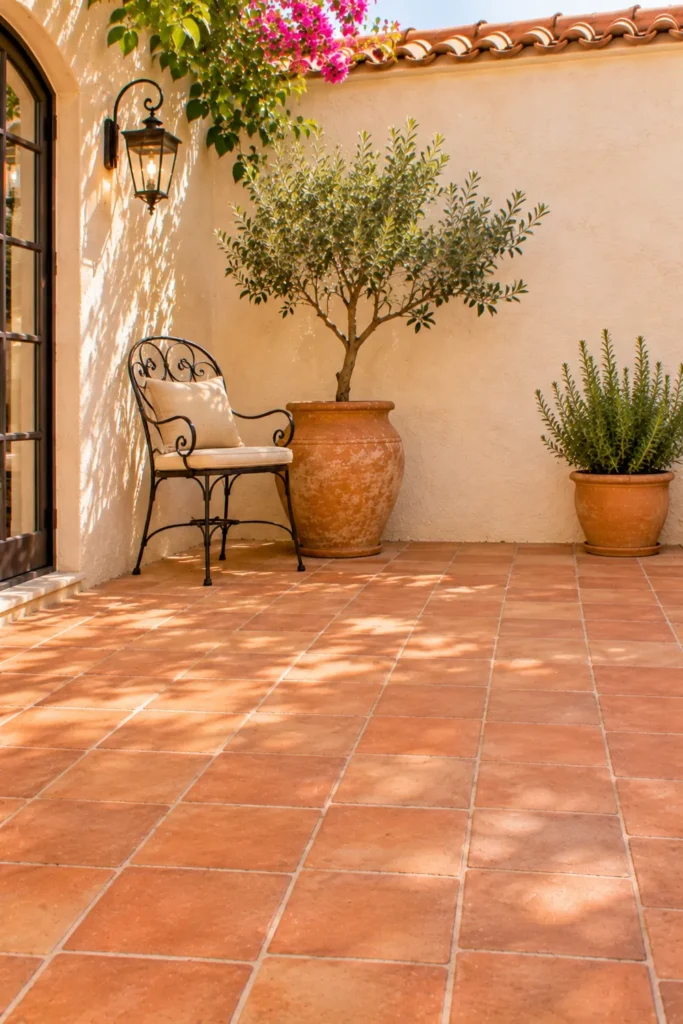
Terracotta tile can establish the Mediterranean character of a courtyard before you add a single chair or planter. Its warm clay color brings softness to pale stucco walls and gives even a compact outdoor room a more settled, architectural feel.
Keep the tile pattern simple so the floor does not compete with the planting. Square or rectangular tiles laid consistently are enough. A few ceramic pots and muted green plants can then repeat the same earthy palette without making the space feel themed.
In a small courtyard, the floor is one of the largest visible surfaces. Letting one material carry that much of the look means you can keep the rest of the decor restrained.
3. Use a Wrought-Iron Bistro Set for Two
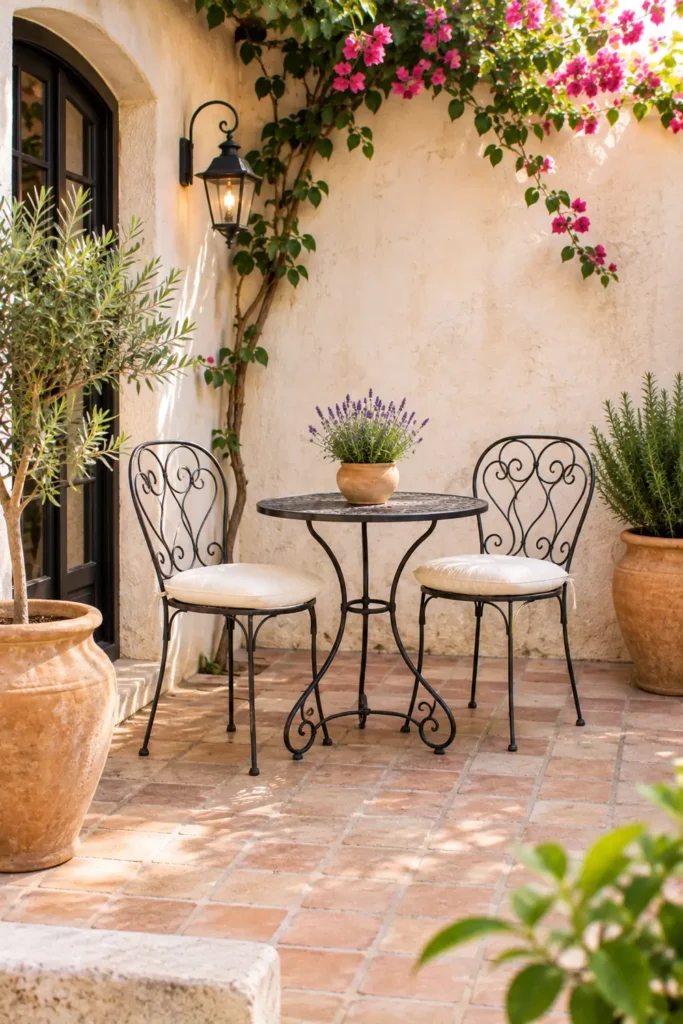
A small round wrought-iron table with two slim chairs gives a Mediterranean courtyard a clear purpose without using much floor space. Place the set slightly off-center so there is still an easy path through the courtyard and enough breathing room around nearby planters.
The dark metal gives crisp contrast against cream stucco, terracotta tile, or pale gravel. Because the furniture has open legs and narrow frames, more of the floor remains visible, which helps the courtyard feel larger.
Add one simple seat cushion if you want more comfort, but skip bulky outdoor upholstery here. The lighter silhouette is what makes the arrangement work in a tight space.
4. Train Bougainvillea Across a Pale Stucco Wall
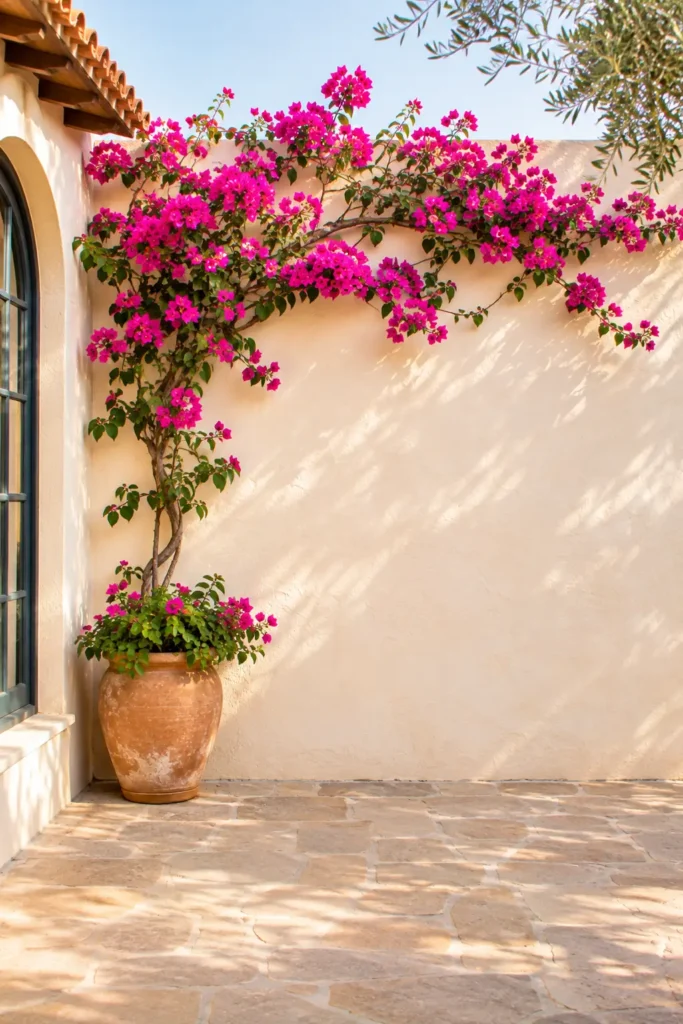
A pale wall can carry plenty of Mediterranean character when one flowering climber does the decorating. Train bougainvillea along a secure trellis against cream or white stucco, keeping the main growth vertical before allowing branches to spread across the upper wall.
The bright flowers become the strongest color in the courtyard, while the neutral wall keeps the effect from feeling busy. That means fewer pots and accessories are needed at floor level.
Bougainvillea suits warm conditions best, so treat it as a climate-dependent choice rather than a universal one. Where winters are cold, use a movable container or choose a climber better suited to local conditions.
5. Build Shade With a Vine-Covered Pergola
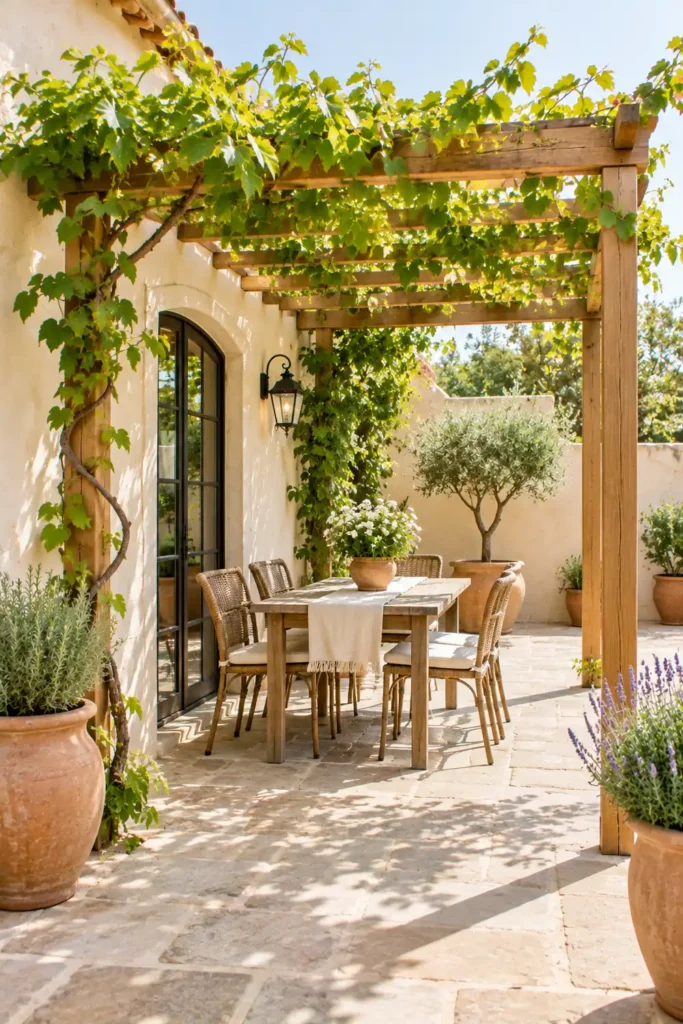
A small pergola works best when it covers only the seating area instead of stretching across the entire courtyard. Use a simple wood or painted structure above a compact table or bench, then train grapevine or jasmine over the top so the greenery filters the sun without closing in the whole space.
The overhead planting softens hard walls and gives the courtyard a cooler, more sheltered feeling, while the open areas around it keep the space bright. In a compact layout, that balance matters.
Keep the structure visually light and let the vine do most of the work. Any permanent pergola or structural attachment should be designed and installed by a qualified professional.
6. Group Terracotta Pots in One Corner
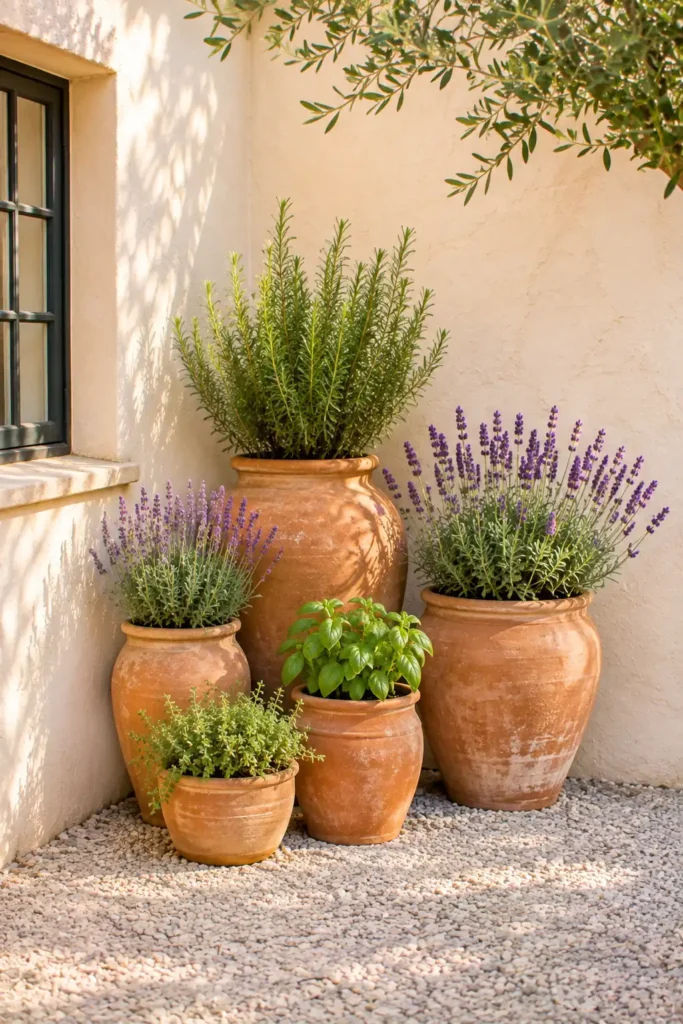
Terracotta pots look far more intentional when they are gathered into one strong cluster instead of scattered around every wall. Use three or five containers in different sizes, then plant them with rosemary, lavender, and one compact herb or leafy plant.
The repeated clay color ties the group together, while the height changes give the corner depth. Keeping the pots concentrated also leaves more of the courtyard floor open, which helps a small space feel easier to move through.
Let one pot be clearly taller than the others and keep the smaller containers close around it. The group should read as one composition, not a collection of leftovers.
7. Add a Small Stone Wall Fountain
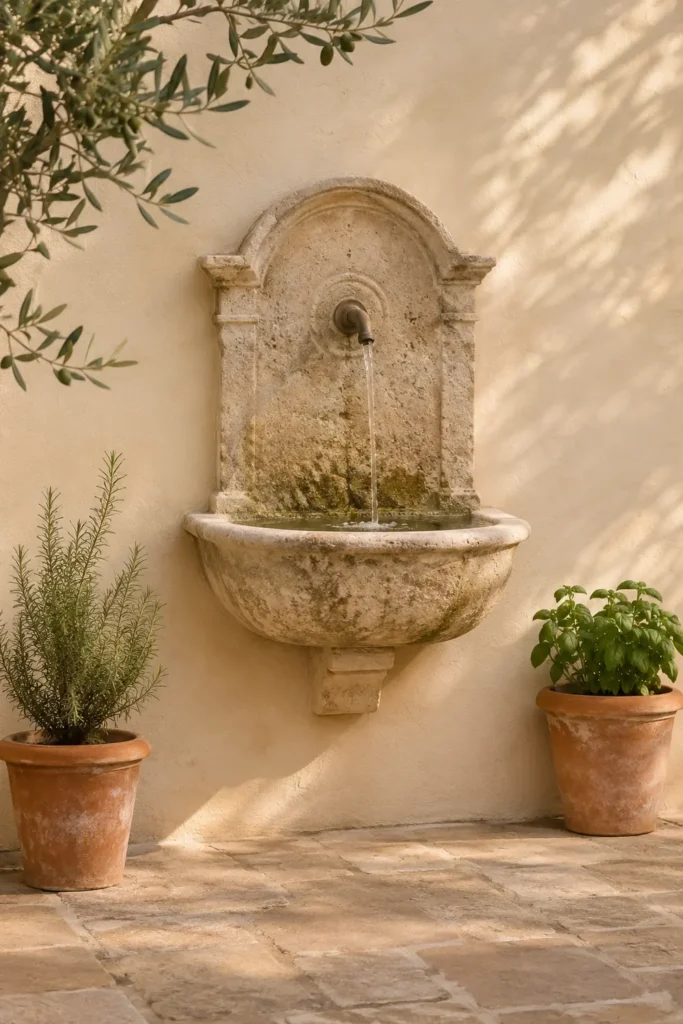
A wall-mounted fountain can bring water into a small Mediterranean courtyard without taking up the center of the floor. Choose a compact stone or stone-look basin fixed against a stucco wall, with a simple spout and a shallow catch basin below.
The moving water gives the courtyard sound and texture, while the wall placement keeps the footprint tight. A few terracotta pots or low herbs nearby are enough to connect the fountain to the planting without crowding it.
Keep the scale modest. In a small courtyard, a fountain should feel like part of the architecture rather than a monument.
8. Keep the Floor Open With Gravel
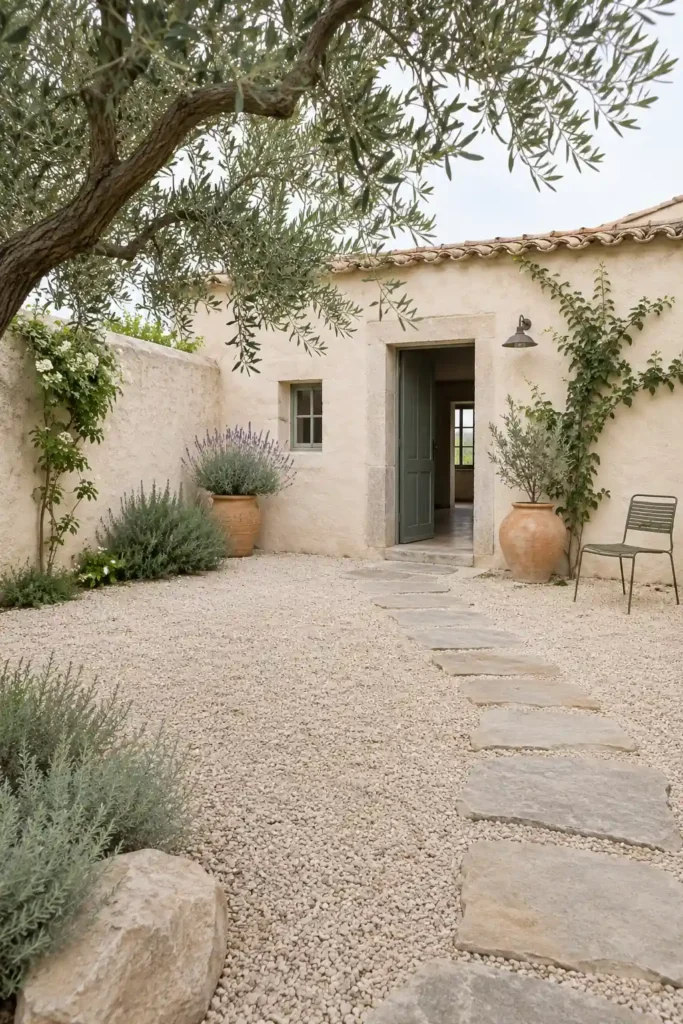
Pale gravel can make a compact courtyard feel lighter because it creates one continuous surface instead of breaking the floor into several small zones. Use gravel across most of the ground, then push pots and planting toward the perimeter so the center stays visually open.
The soft stone color works naturally with cream stucco, terracotta, and olive-green foliage. A simple stone edge around beds or door thresholds keeps the gravel looking controlled rather than temporary.
Choose a surface that suits the way the courtyard is used. Dining chairs, wheels, and frequent foot traffic may need firmer paths or paving where movement happens most.
9. Build a Low Stucco Bench Along One Wall
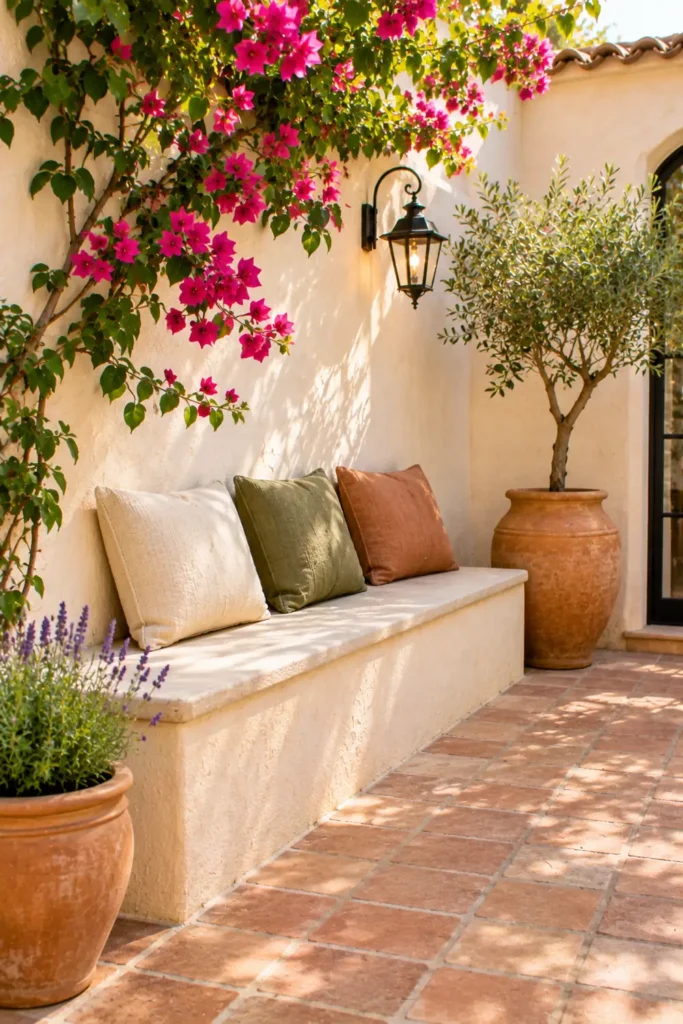
A built-in bench can give a small courtyard more seating without filling the floor with extra chairs. Run a low stucco bench along one wall, then add a few slim linen cushions in cream, olive, or muted clay tones.
Because the bench sits tight to the wall, it leaves the center open and makes the courtyard feel more architectural. It also creates a clean horizontal line that balances taller elements such as an olive tree, climbing vine, or lantern.
Keep the cushions simple and limited in number. The bench itself should do most of the visual work. Any permanent masonry seating needs proper construction and drainage, so structural work should be handled by a qualified professional.
10. Add Pattern With One Tiled Wall Niche
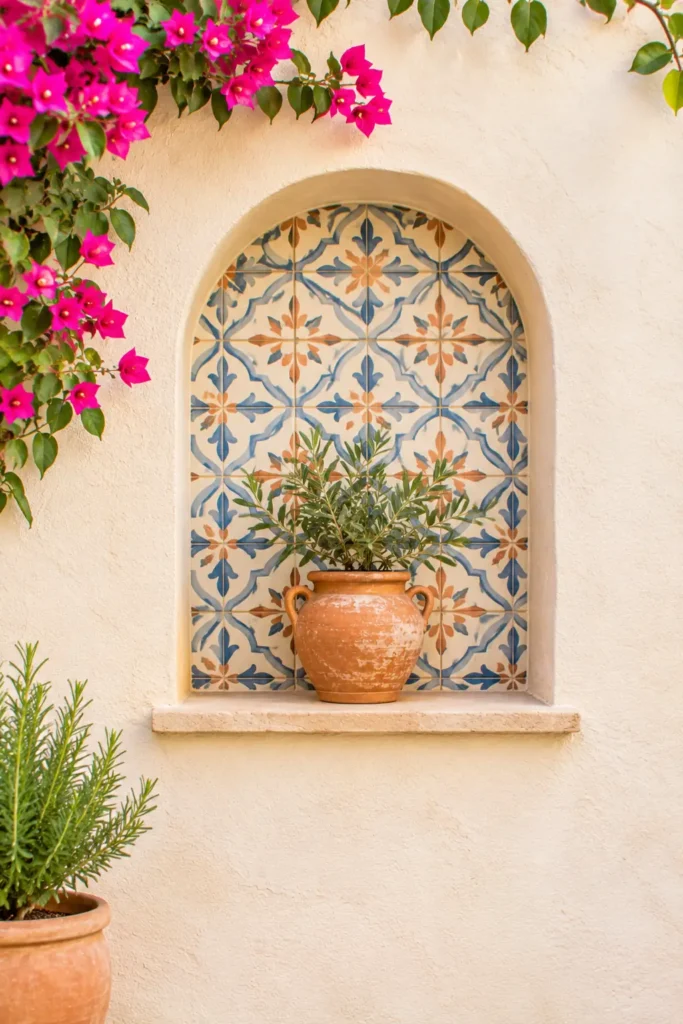
A small tiled niche can bring in Mediterranean pattern without covering the entire courtyard in decorative surfaces. Use an arched recess or shallow wall niche lined with patterned ceramic tile, then place one simple clay pot or small lantern inside.
The concentrated pattern gives the eye somewhere to land, while the surrounding stucco stays quiet. That contrast is what makes the detail feel special instead of busy.
Choose one tile pattern and let it stand alone. Repeating several different motifs across the floor, walls, and furniture can make a compact courtyard feel much smaller than it is.
11. Plant Rosemary and Thyme Along the Edge
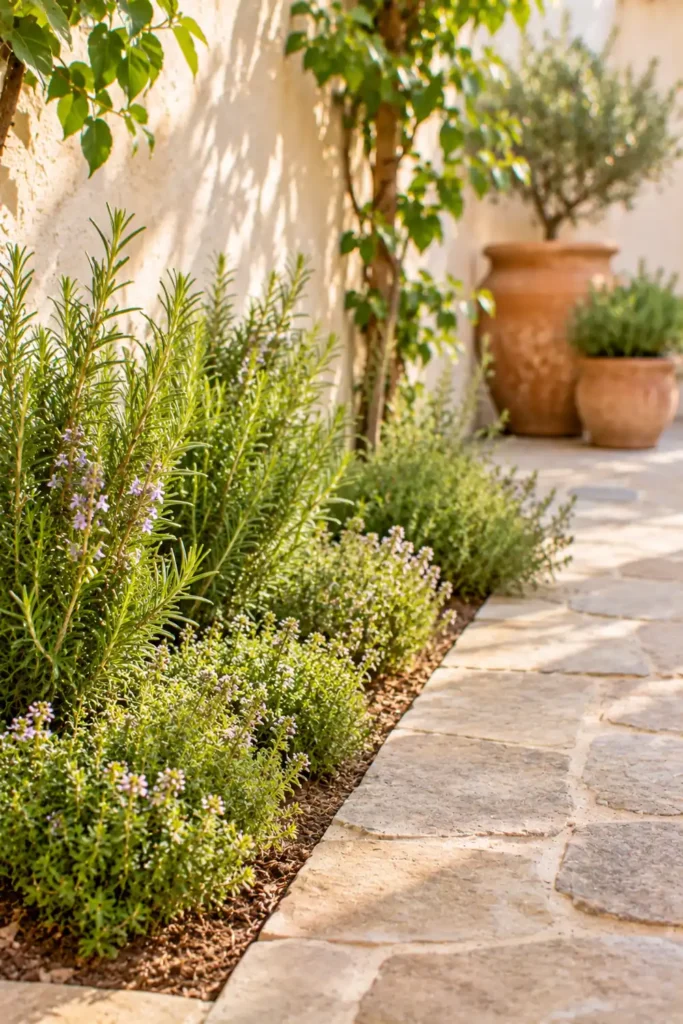
Rosemary and thyme can soften the edge of stone paving while staying lower and more practical than large shrubs. Plant them in a narrow bed along one side of the courtyard, leaving enough room for the herbs to spread without leaning into the main walking path.
Their fine foliage adds texture against hard surfaces, and the restrained planting keeps the border from looking crowded. Repeating the same herbs in a few terracotta pots can tie the perimeter planting back to the rest of the courtyard.
Planting Tip: Keep herbs where you can reach them easily. A courtyard planting that is useful as well as decorative earns its space twice.
12. Use One Oversized Clay Urn as Sculpture
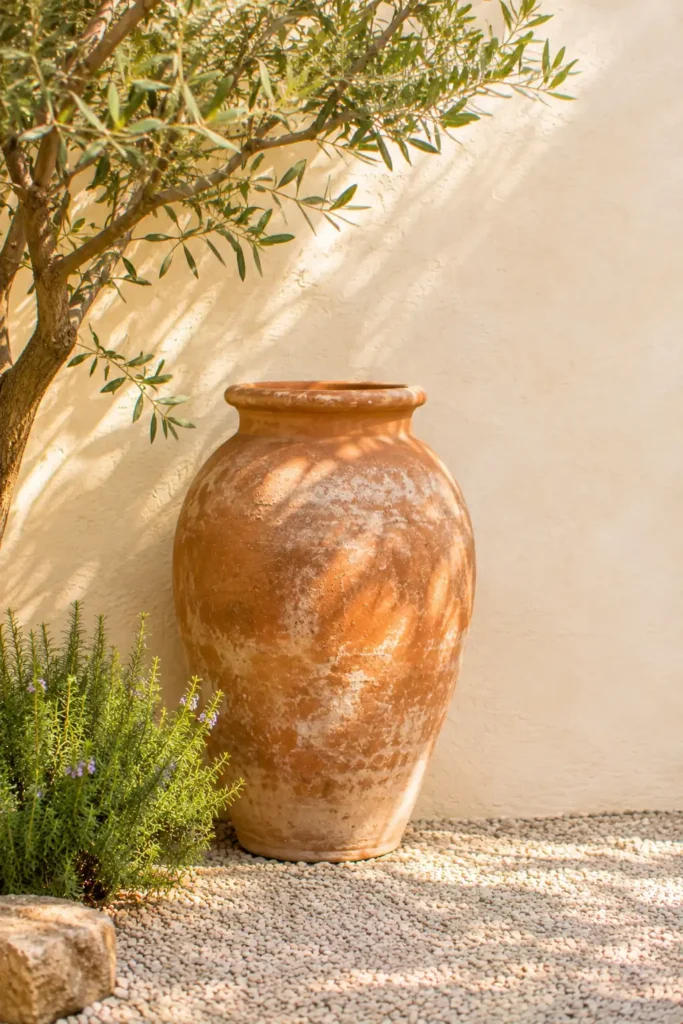
A large aged clay urn can give a small Mediterranean courtyard a strong focal point without adding more furniture or another group of pots. Set it against a pale stucco wall or at the end of a short sightline where its shape can be seen clearly.
The warm terracotta surface brings in color and texture, while the generous scale gives the courtyard more confidence than several small decorative pieces would. You can leave the urn empty, use it with a restrained planting, or place it near low herbs and gravel.
Give it space. The whole point is to let one object carry the visual weight instead of surrounding it with more decor.
13. Let Jasmine Climb a Narrow Trellis
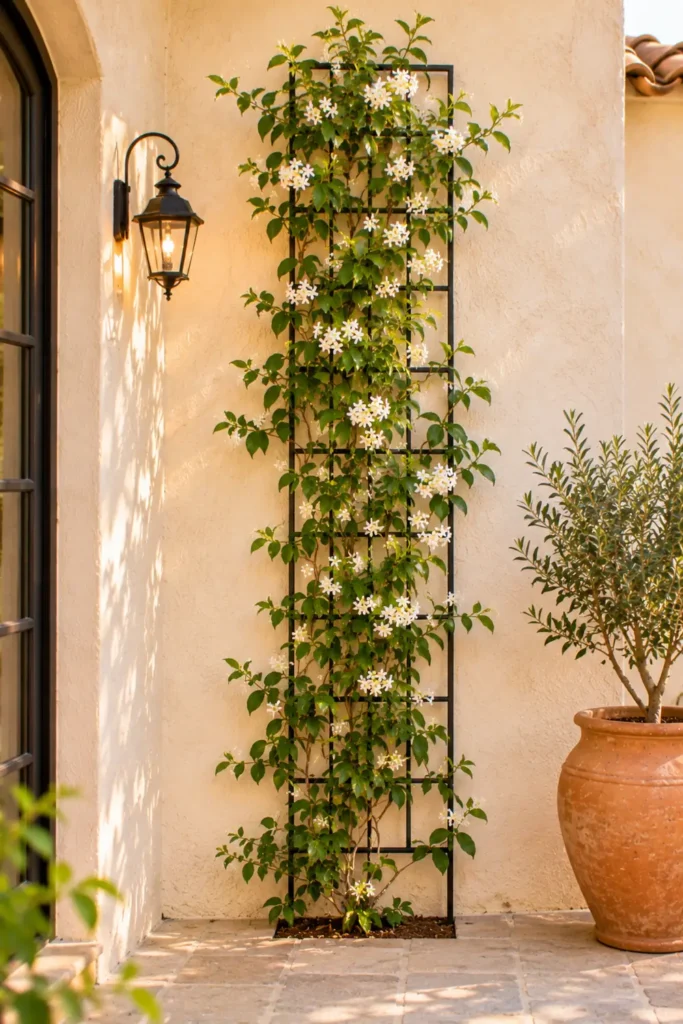
A slim trellis can bring greenery and fragrance to a small courtyard without taking up much floor space. Fix it against a pale stucco wall and train jasmine upward so the planting grows vertically instead of spreading into the seating area.
The narrow profile keeps the wall useful while softening the hard surface with foliage and small flowers. It also gives the eye more height, which can make a compact courtyard feel less boxed in.
Keep the trellis simple and give the vine room to develop without covering windows, doors, or wall lights. If the support needs structural fixing, have the mounting handled properly rather than relying on a temporary attachment.
14. Add a Pebble Mosaic as a Small Focal Patch
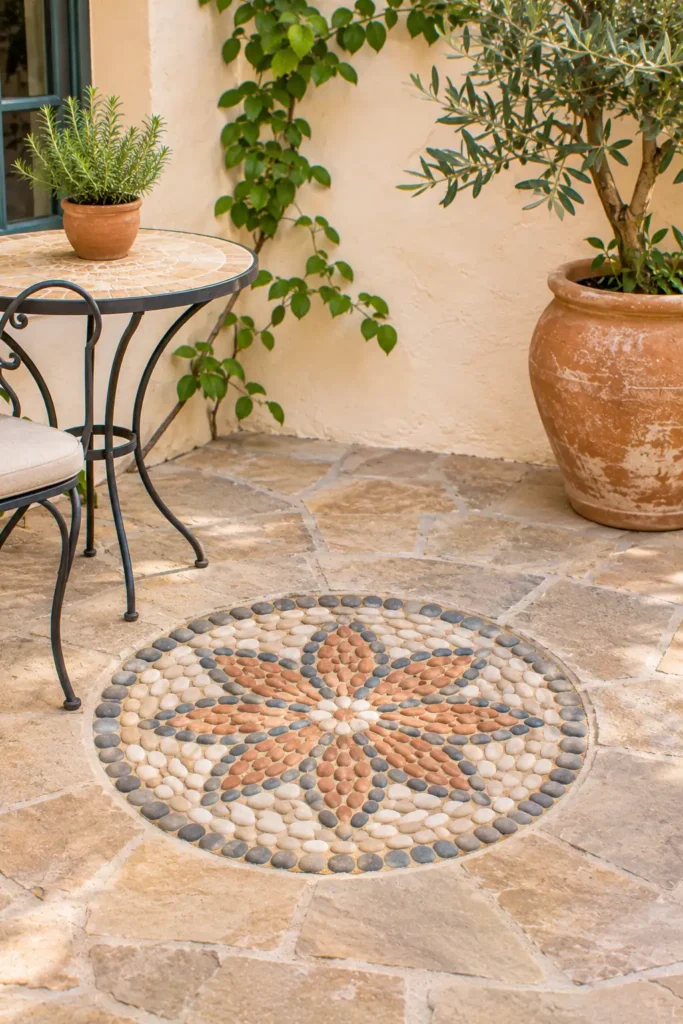
A small pebble mosaic can bring craftsmanship into the courtyard without turning the entire floor into a pattern. Use it as a compact inset near a doorway, beneath a small table, or at the center of a simple stone-paved area.
The mosaic works because it interrupts the larger plain surface just once. Smooth natural pebbles add texture and movement, while the surrounding stone or terracotta keeps the rest of the courtyard calm.
Choose a restrained pattern and repeat the same stone tones already used elsewhere. In a small space, one detailed patch feels intentional. Several competing motifs start to look busy very quickly.
15. Create a Shaded Corner With a Small Citrus Tree
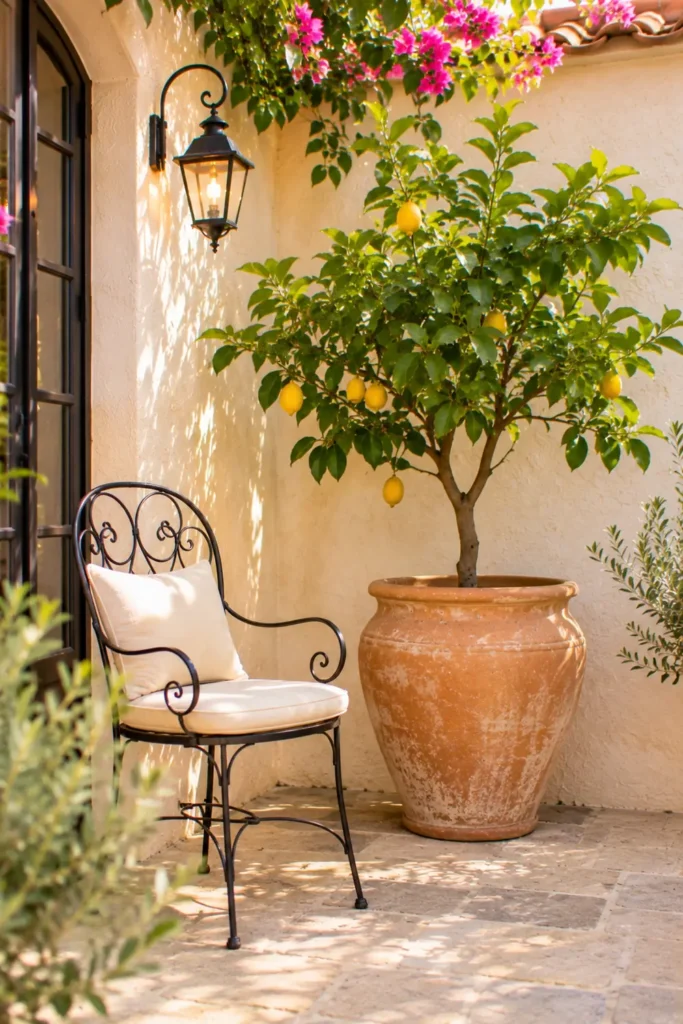
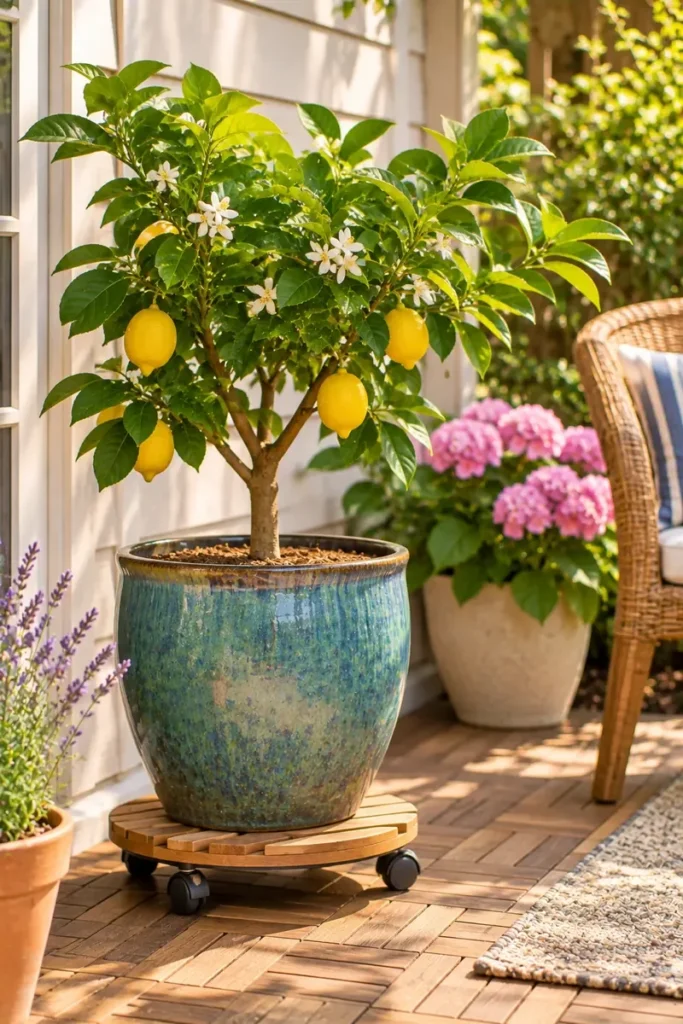
A compact citrus tree in a large terracotta pot can give a small courtyard glossy foliage and a strong Mediterranean feel while staying movable. Place it in a bright corner beside a slim chair or small stool, leaving enough space around the canopy so the plant does not crowd the wall.
The tree gives the corner height, while the clay pot connects it to other warm materials in the courtyard. Keeping it in a container also makes the layout more flexible for renters or climates where the plant may need seasonal protection.
If citrus is not suited to local conditions, use another compact container tree that fits the climate rather than forcing the look.
16. Use Wall Lanterns Instead of Floor Lighting
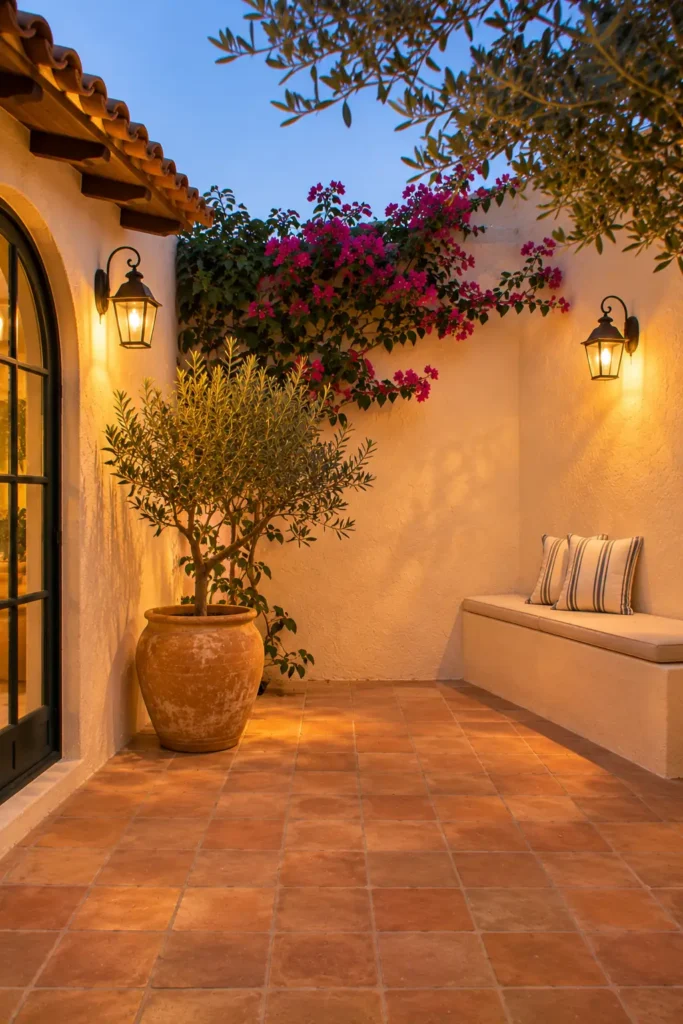
Wall-mounted lanterns can give a small courtyard warm evening light without using any of the limited floor space. Place one or two simple fixtures on stucco walls near seating or the entrance, keeping the light soft and directed rather than overly bright.
The vertical placement leaves gravel, paving, and walkways clear, while the warm glow brings out the texture of terracotta, stone, and foliage after sunset. That makes the courtyard feel more layered without adding another object at ground level.
Keep electrical work out of DIY territory. Outdoor wiring and permanent fixtures should be installed by a qualified professional.
17. Frame the Entrance With a Simple Arch
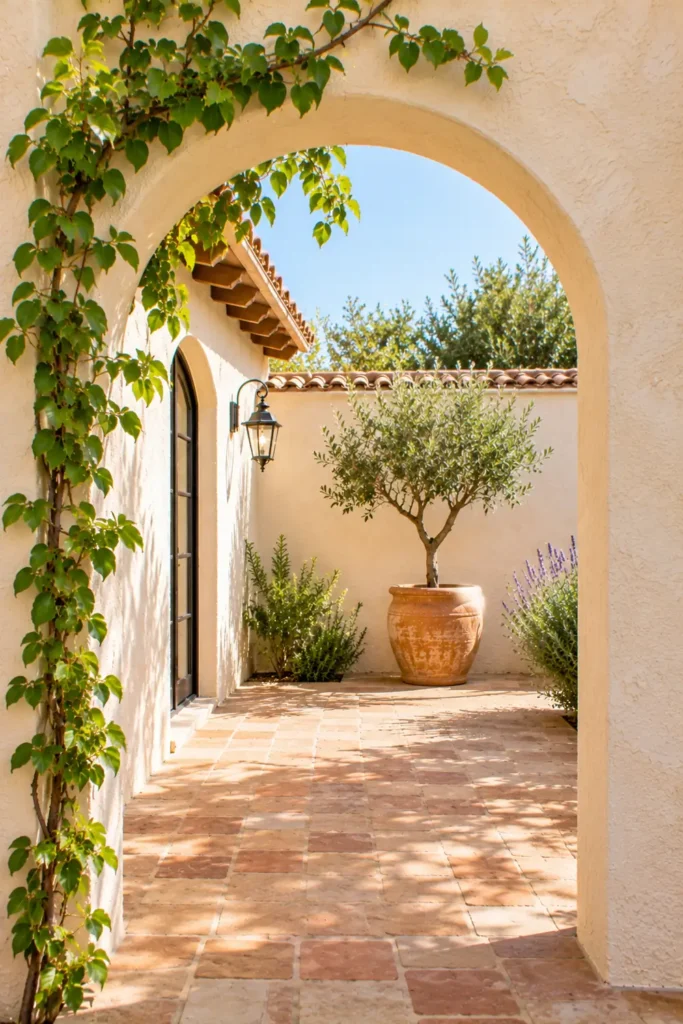
A softly curved arch can make the entrance to a small courtyard feel far more intentional without adding another piece of furniture or decor. Use a simple stucco opening in a warm cream or chalky white tone, then keep the surrounding wall quiet so the curve becomes the main architectural detail.
The arch gives the eye a clear threshold between the house and courtyard, which helps the outdoor room feel separate even when the footprint is small. A restrained climbing plant can soften one side, but there is no need to cover the whole opening.
If the arch involves changing a structural wall or doorway, leave that work to a qualified professional.
18. Keep the Palette to Cream, Clay, and Olive Green
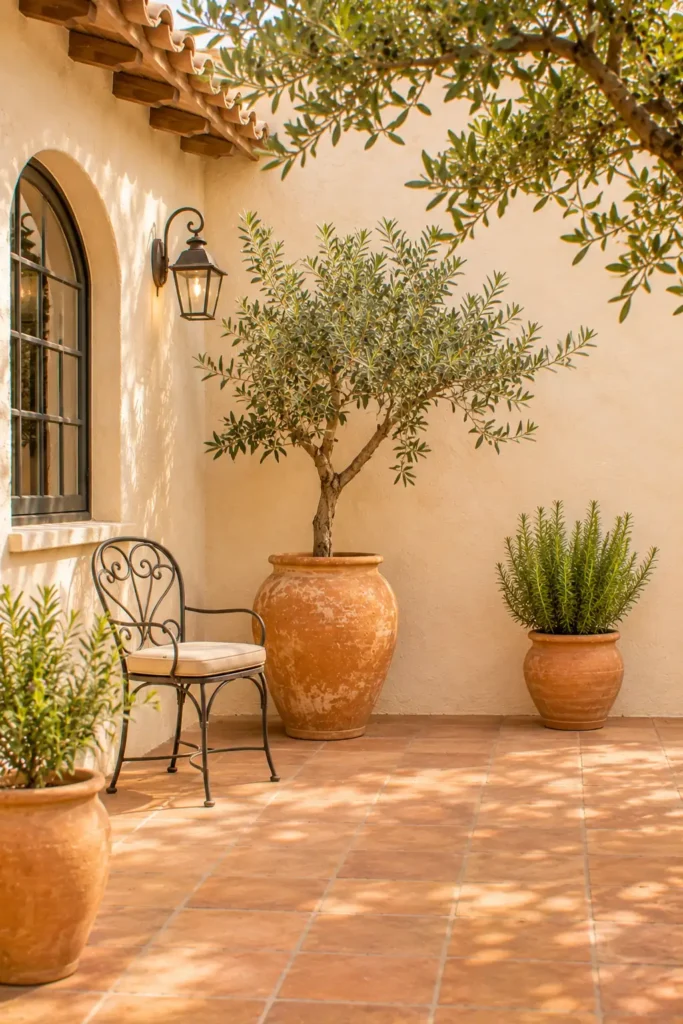
A small Mediterranean courtyard often looks stronger when the color palette stays narrow. Let cream stucco form the background, repeat warm clay through terracotta pots or tile, and use olive green through foliage and herbs.
Those three tones work together because each one has a clear job. Cream reflects light, clay adds warmth, and green brings softness against the harder surfaces. Keeping the colors consistent also makes mismatched pots and furniture feel more connected.
You can still add a stronger accent through flowers or patterned tile, but use it once rather than repeating bright color around every wall.
19. Build the Courtyard Around One Water Bowl
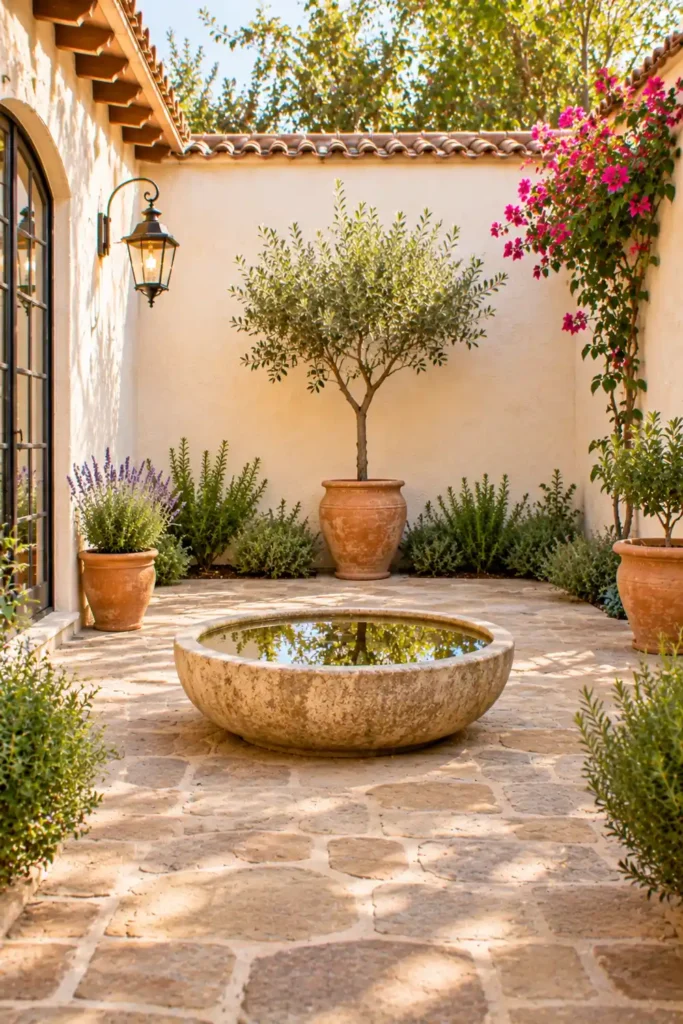
A low stone water bowl can create the same sense of calm as a fountain without taking over a small courtyard. Place one simple round bowl at the center of a stone or terracotta-paved area, then keep nearby planting low so the view across the courtyard stays open.
The water surface catches light and gives the center a clear purpose, while the low profile preserves the feeling of space. A few terracotta pots around the perimeter are enough to support the composition without competing with the bowl.
Keep the feature proportionate to the courtyard. In a tight space, a quiet reflective surface often works better than a tall fountain with a large basin.
A Simple Mediterranean Courtyard Formula
The easy courtyard formula
The courtyard does not need every Mediterranean feature at once. A limited combination of clay, greenery, pale walls, and one strong detail usually feels more convincing than filling every surface.
Small Mediterranean Courtyard FAQ
What makes a courtyard look Mediterranean?
Warm natural materials and restrained planting do most of the work. Terracotta, gravel, natural stone, pale stucco, olive-green foliage, herbs, wrought iron, and climbing plants all fit naturally. The key is repeating a few of them rather than treating the courtyard like a collection of themed accessories.
What plants work well in a Mediterranean courtyard?
Olive trees, rosemary, thyme, lavender, jasmine, bougainvillea, grapevines, and container citrus all suit the visual style, but the actual plant choice should match your local climate and light. Ideas 1, 4, 11, 13, and 15 show several different planting approaches.
How can I make a tiny courtyard feel larger?
Keep the center relatively open, use walls for climbing plants and lighting, and choose slim furniture rather than bulky seating. A continuous gravel or tile floor also helps reduce visual breaks. Ideas 3, 8, 9, and 16 are especially useful in tight spaces.
Can I create a Mediterranean courtyard without a pergola?
Yes. A pergola is only one way to create shade and vertical structure. A small tree, narrow trellis, wall-mounted lanterns, umbrellas, or strategically placed shade can serve similar practical roles without adding a permanent overhead structure.
What colors work best in a Mediterranean courtyard?
Cream, warm white, terracotta, sandy stone, and olive green create a strong base. Blue, patterned tile, or flowering plants can then appear as smaller accents. Idea 18 shows why keeping the main palette limited is particularly helpful in a compact courtyard.
Conclusion
The most successful small Mediterranean courtyard ideas do not depend on having a large garden or elaborate architecture. A terracotta floor, one sculptural tree, a compact bistro set, fragrant herbs, and a little shade can already give a courtyard a strong sense of place.
Work from the largest surfaces inward. Set the floor and wall palette first, protect the walking space, then choose one plant or feature to carry the eye. That approach keeps the courtyard layered without making it crowded.
Save these ideas before you start choosing pots, paving, or plants for your own courtyard.