The mailbox is the one part of the yard you touch nearly every day, and on most streets it is a bare post in a patch of scalped grass. These front yard mailbox landscaping ideas fix that with beds small enough to finish in a weekend. A few plants, a clean edge, and a layer of mulch are usually all it takes.
The curb is a hard place to garden, though. It bakes in summer, sits far from the hose, and in cold places it gets buried in salty snow. So this list is honest about conditions. You will find clematis for a post with no room around it, daylilies and ornamental grass for people who forget to water, river rock for dry streets, and hostas for a box under a tree.
Each of the 17 ideas names the plants and materials, explains why they work together, and keeps the door clear for whoever delivers your mail. If the mailbox is step one of a bigger project, these front yard curb appeal upgrades cover the rest of the yard.
What to Plant Around a Mailbox, and What to Check First
Spend five minutes at the curb before you shop. Count the hours of direct sun, see whether the hose reaches, and open the mailbox door to see how far it swings. Then look down. The strip by the street is often packed, gravelly soil, and it may fall inside a public right of way, so check local or HOA rules and have buried lines marked before you dig. Tough, low plants that forgive a missed watering are the safe default.
QUICK CURB CHECK
What is your curb like?
1. The Paver Edged Mailbox Flower Bed, Done Right
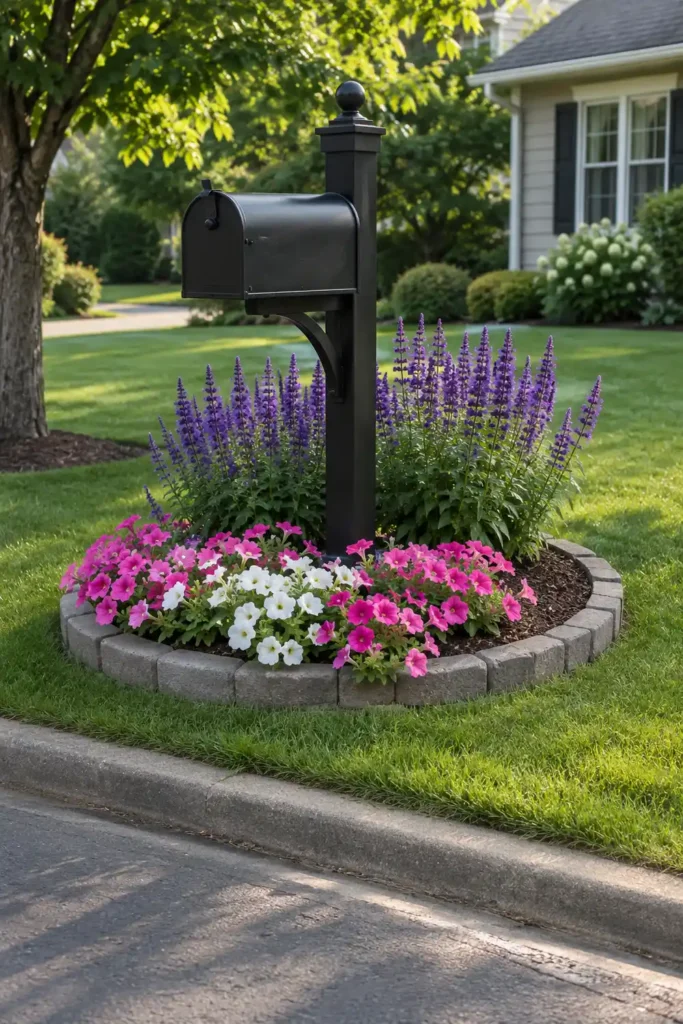
A ring of curved concrete pavers around a black mailbox post is the bed most people have in mind when they start this project. Inside it, purple salvia stands tall behind the post while pink and white petunias fill the front and lean toward the curb.
The pavers do the quiet work. They hold the dark mulch in, give the mower wheel a hard edge to run along, and make a small bed look planned instead of leftover.
Planting tip: Keep the tall plants behind the post and the low ones on the street side, so the mailbox door stays clear. As a rule of thumb, a bed you can reach across from the lawn is big enough. Anything wider turns weeding into a balancing act at the edge of the road.
2. Purple Clematis Climbing the Mailbox Post
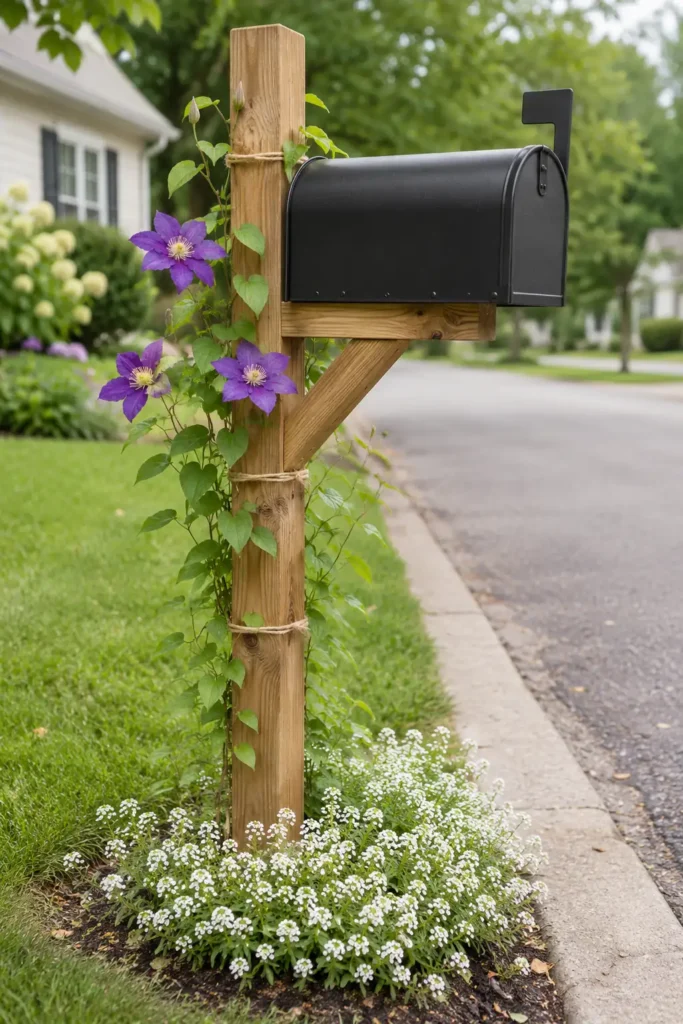
No room for a bed? Go up. A purple clematis vine trained up a plain wooden mailbox post puts flowers at eye level from a patch of soil about the size of a doormat.
Gardeners like to say clematis wants its head in the sun and its feet in the shade. A skirt of white sweet alyssum at the base does that job, because it shades the soil and hides the bare lower stems at the same time.
Tie new growth to the post with soft garden twine every week or two in early summer, and snip anything heading for the door or the flag. A vine that swallows the house numbers has stopped being charming.
On a tight budget, morning glory grown from a packet of seed gives a similar climb for one season.
3. Lavender and Catmint for a Cottage Style Curb
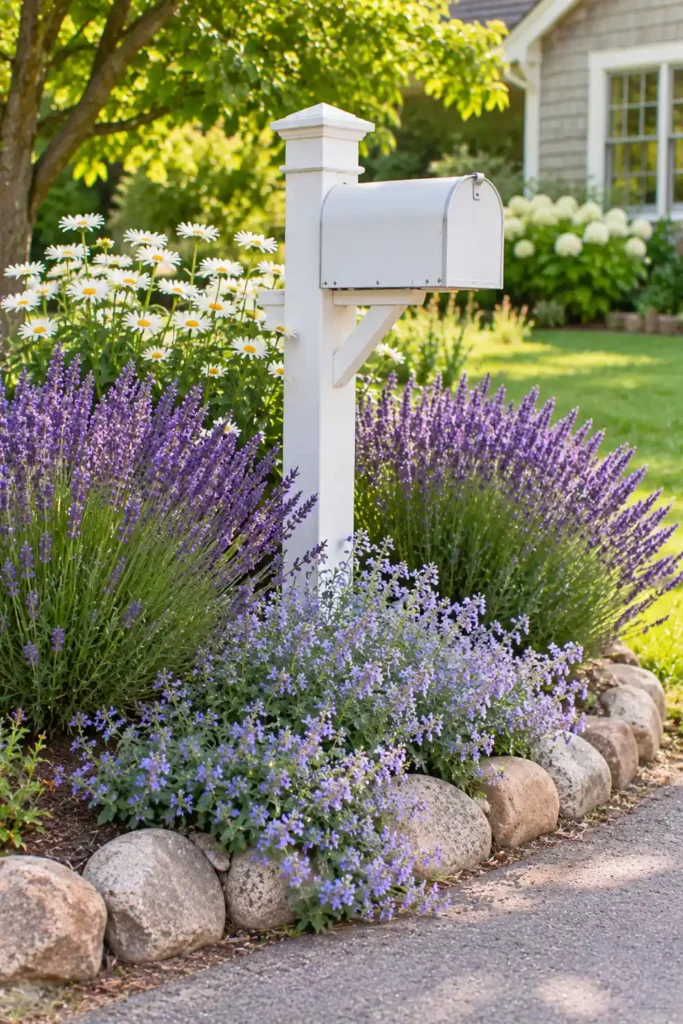
Plant roses at the curb and sooner or later someone gets scratched reaching for the mail. Plant lavender and catmint and the worst that happens is a sleeve that smells good.
That is the whole case for this cottage mix. Mounds of purple lavender sit on either side of a white post and white mailbox, soft blue catmint spills over a loose fieldstone edge, and a clump of white Shasta daisies behind the post gives the eye somewhere to land. The white box picks up the daisies, which keeps a loose planting from looking messy.
All three want full sun and soil that drains fast, so they suit the dry strip by the street. Skip rich compost here. A quick read on English lavender care will save you from the usual mistake, which is too much water.
4. River Rock and Blue Fescue for a Modern Mailbox
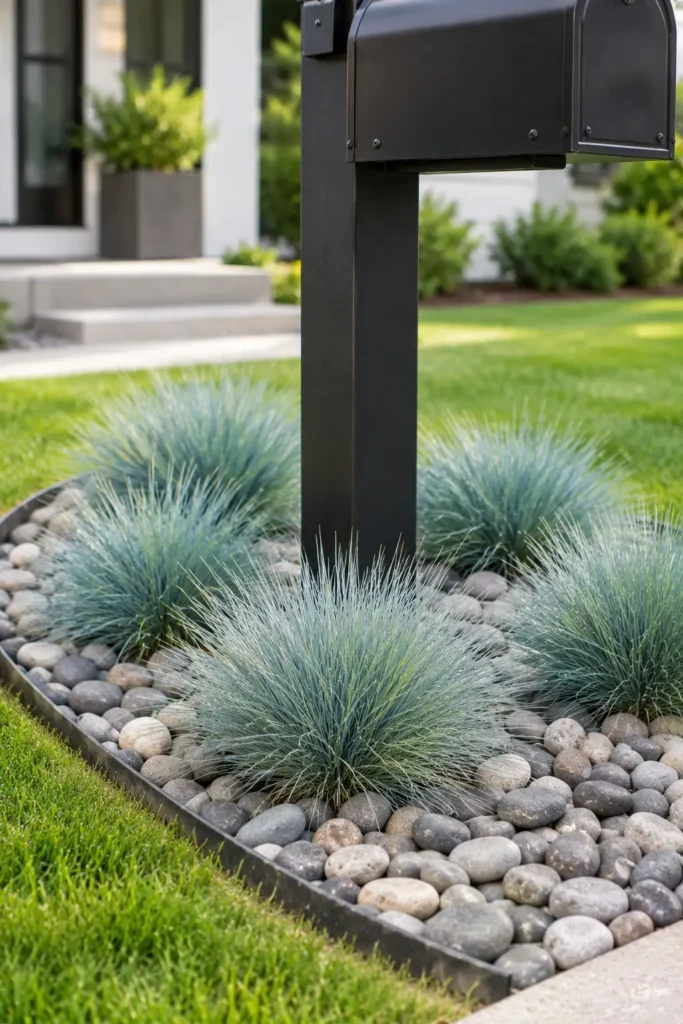
Blue fescue is the plant that makes rock look like a choice. Each tuft is a neat, silvery blue dome, and five of them set in an uneven arc around a matte black post read as design, not as giving up on flowers.
Smooth gray river rock fills the rest of the bed, held in by a thin strip of steel edging that keeps stones out of the lawn and off the mower blade. One plant repeated calms the whole curb, which suits a modern house with clean lines.
Rock or mulch? Rock stays put and does not need topping up each spring, but it holds heat, so save it for tough grasses and succulents. Thirsty flowers do better in mulch.
Get the look: gray river rock, five blue fescue, steel landscape edging, a matte black mailbox and post.
5. A Dark Mulch Ring With Three Daylilies
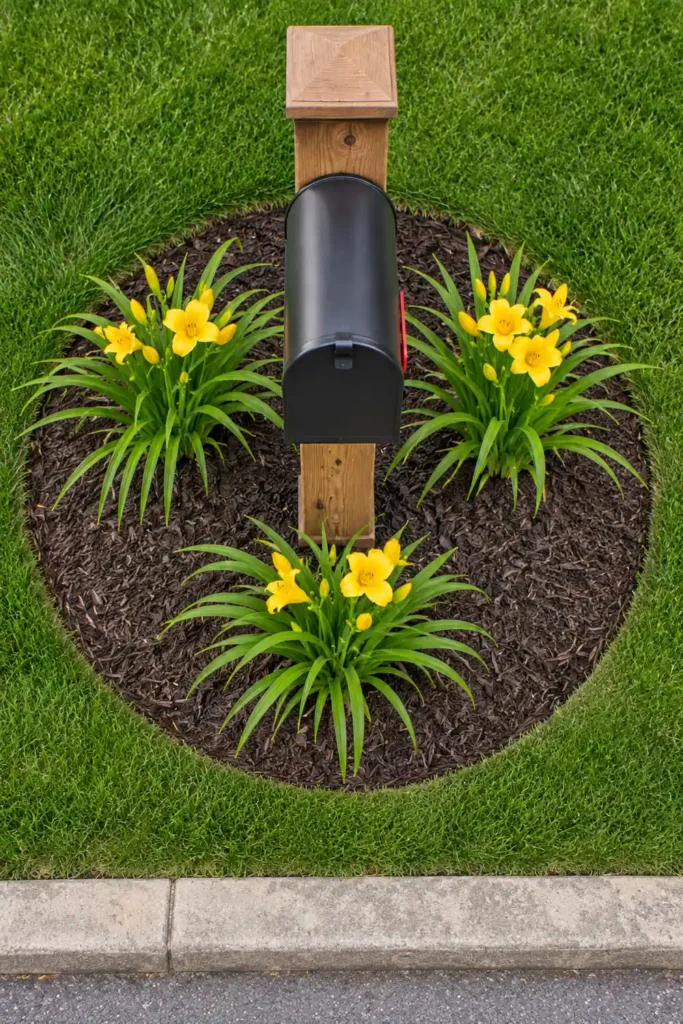
Look at the bottom of almost any wooden mailbox post and you will find the scars. That is the string trimmer, taking a bite every other week.
A simple ring of dark brown shredded mulch ends that. Cut a clean edge into the turf with a flat spade, spread the mulch a couple of inches deep, and set three yellow daylilies in a loose triangle behind and beside the post. Three plants look like a group, and their arching leaves hide the base of the post all summer.
Daylilies are about as forgiving as curbside perennials get, so this is a fair first project for one afternoon. Pull the mulch back a little from the wood so the post does not sit damp.
One thing before the spade goes in: have buried utility lines marked. In the US, a call to 811 handles it.
6. Boxwood Globes That Look Good in January
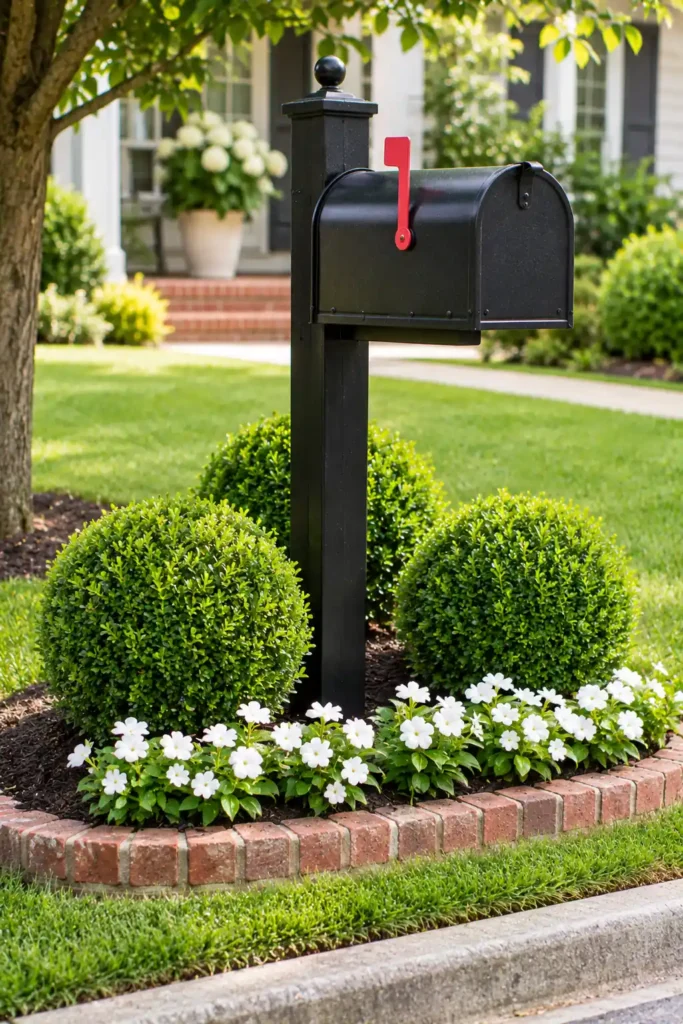
July flatters every flower bed. January is the real test, and most mailbox plantings fail it by turning into a patch of brown stems.
Three clipped boxwood globes fix the off season. Set one behind a black mailbox post and one on each side, then run a row of white vinca along the front, inside a low border of red brick laid end to end. The round evergreens give the bed its shape all year, so the annuals only have to add color for a few months.
Boxwood grows slowly, which is the point. One light trim a year keeps the globes below the mailbox and out of the way of the door.
Where boxwood struggles, a dwarf globe arborvitae gives you the same round shape.
7. The Salt Tough Bed for a Snowy Street
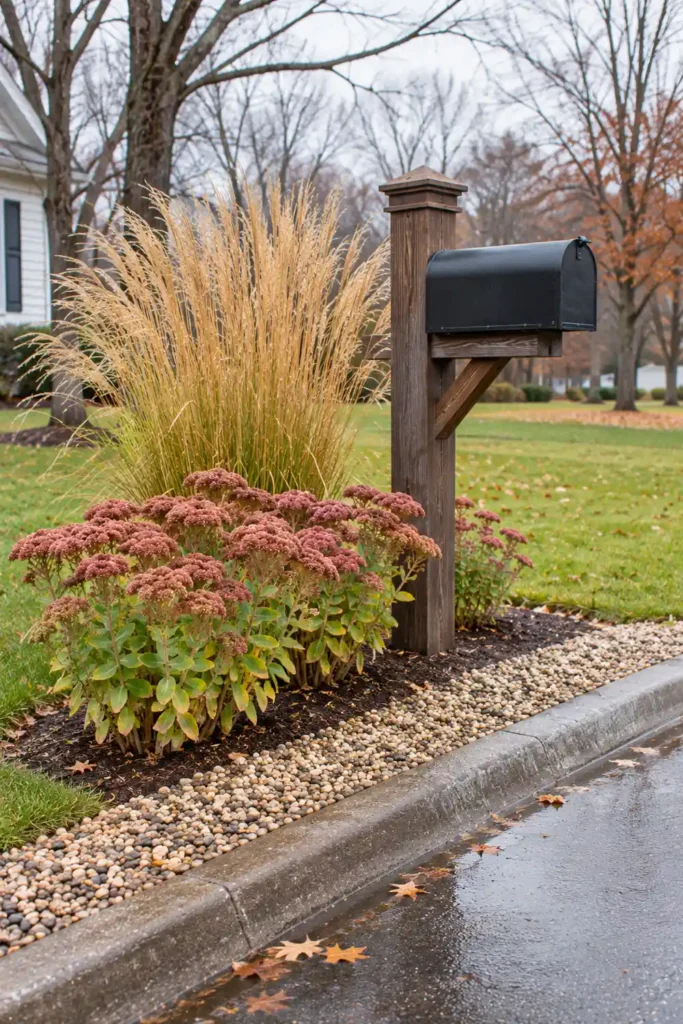
Snow plows do not care what you planted. On a street that gets salted, the mailbox bed takes slush, grit, and a wall of thrown snow for months, so the planting has to be built for it.
Start with a band of pea gravel along the road edge as a buffer. Behind it, plant upright sedum and a clump of switchgrass near the post, both commonly listed as tolerant of road salt. They die back to the ground in winter, which means a plow pile lands on sleeping roots instead of snapping branches. Skip shrubs here for that reason.
Care tip: Leave the dried grass standing until late winter so you can see where the bed is, then cut it down. Once the ground thaws, water the bed deeply a few times to rinse the salt through. Daylilies are another tough choice if you want more bloom.
8. A Mailbox Planter Box on the Post, No Digging Needed
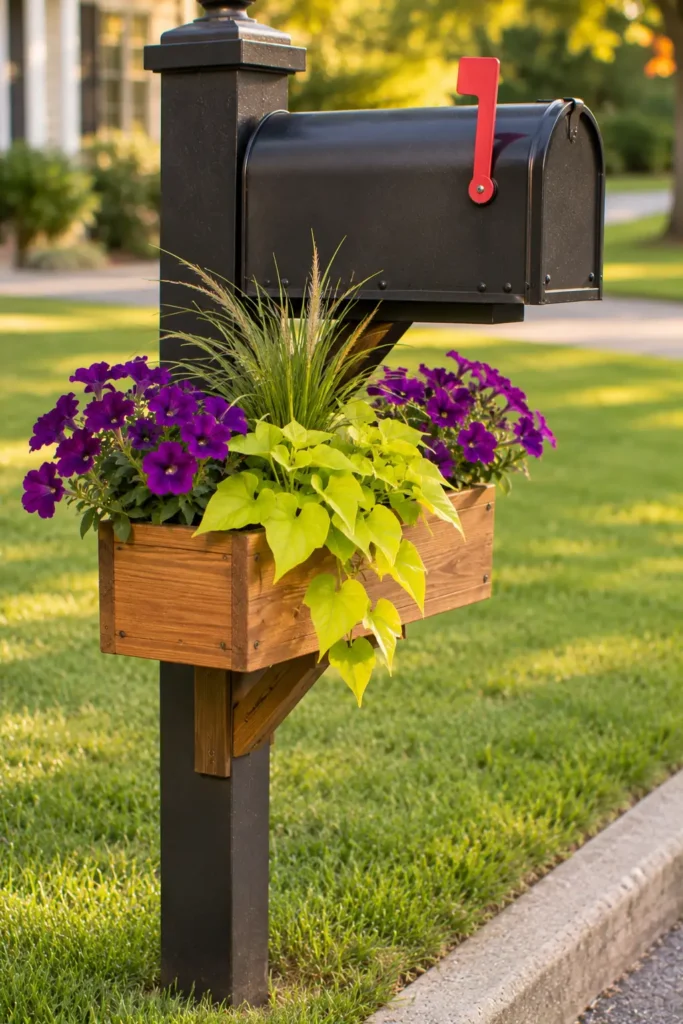
Digging at the curb is not always yours to decide. Renters, HOA streets, and yards with tree roots or packed gravel at the road edge all need another way in.
A cedar planter box fixed to the back of the mailbox post is that way. Fill it the way you would any container: purple petunias as the filler, chartreuse sweet potato vine trailing over the edge, and one small upright grass in the center for height. The lime green vine against a dark post does most of the work from the street. Other spiller plants for containers will do the same job if you want a different color.
A small box in full sun dries out fast, so plan on watering most days in summer. Mount it below the mailbox, clear of the door and the flag.
You will need: a cedar planter box with drainage holes, exterior screws, potting mix, petunias, sweet potato vine, one small ornamental grass.
9. Coneflower and Yarrow Set Back From the Mailbox Door
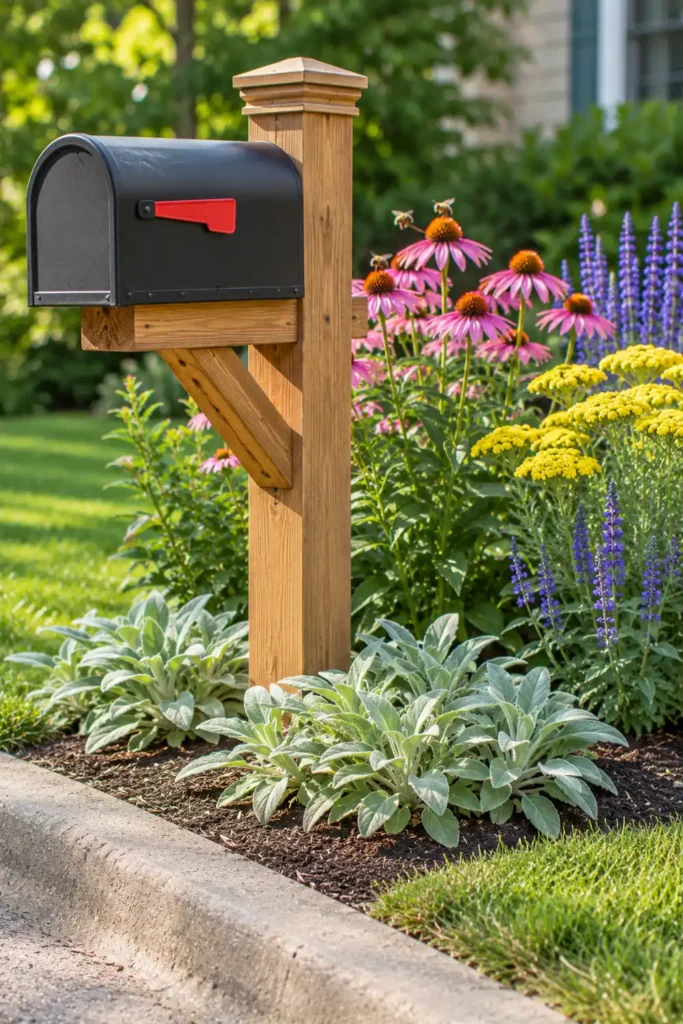
A pollinator patch at the curb is a good idea with one catch: nobody wants to reach through a cloud of bees for the electric bill. The fix is placement, not giving up the flowers.
Put the busy bloomers behind the post and off to the far side. Purple coneflower, yellow yarrow, and blue salvia make a strong trio there, tall enough to show from the street and far enough from the door to keep the traffic away from hands. On the street side, plant a low band of silver lamb’s ear, grown for its soft leaves, so the front of the bed stays quiet.
Garden tip: Lamb’s ear sends up flower spikes in summer. Snip them off as they appear and the bees will stay with the coneflowers at the back, where you want them.
10. Tulips and Daffodils That Hand Off to Perennials
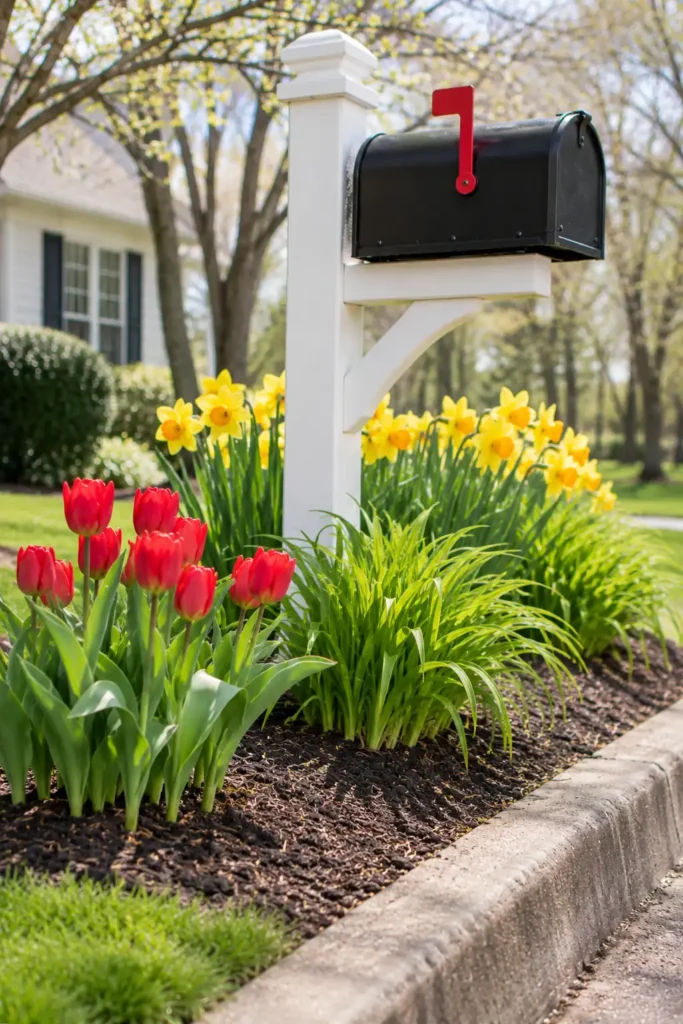
Yellow daffodils are often the first color on the whole street, which makes the mailbox a smart place to spend a bag of bulbs. Plant them in a cluster behind a white post with red tulips in front, and the curb looks awake weeks before the lawn does.
The trouble with bulbs is the month after. The flowers fade, the leaves flop and yellow, and you have to leave them alone so the bulb can recharge. So tuck the bulbs between clumps of daylilies. Fresh daylily leaves come up just as the tulip leaves give out, and they cover the mess without any help from you.
Bulbs go in the ground in fall. If deer visit your street, lean on daffodils, since tulips tend to get eaten and daffodils are usually left alone.
11. Sedum and Gravel for a Hot, Dry Curb
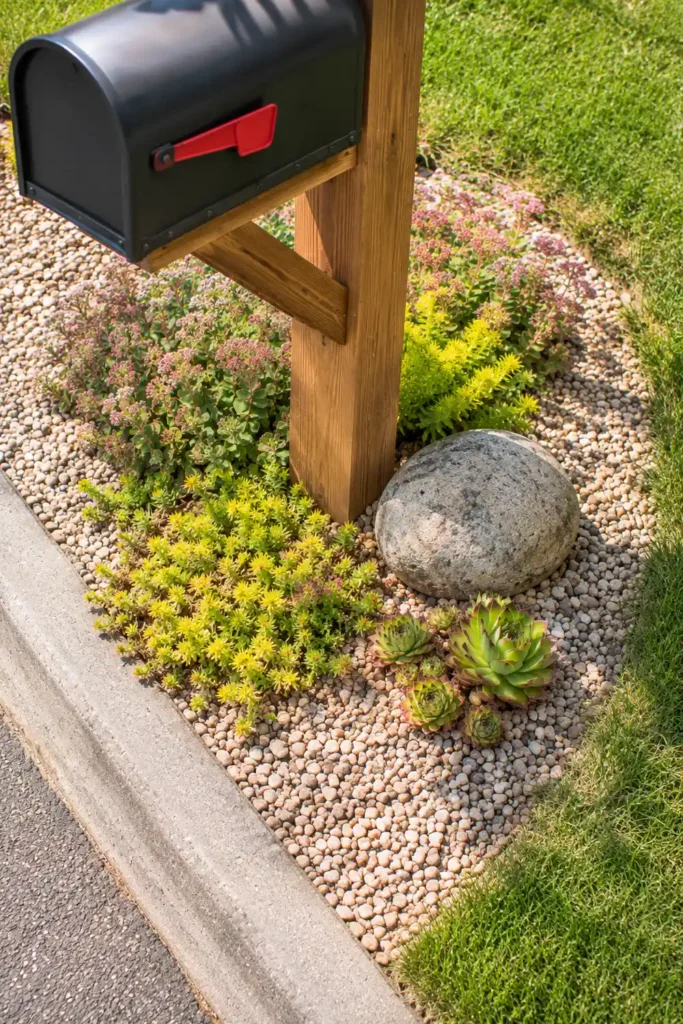
The mailbox is usually the farthest point from the spigot. If the hose does not reach and summer is long, stop fighting it and plant things that carry their own water.
Low creeping sedum and rosettes of hens and chicks store moisture in their thick leaves, so they sit through dry weeks that would finish a petunia. Set them in a bed topped with tan pea gravel, with one rounded boulder beside the post to give the small plants something to gather around. The gravel keeps the leaves dry and clean, which matters more to succulents than rain does.
What they cannot take is soggy soil, so skip this one for a low spot where water collects.
Get the look: creeping sedum, hens and chicks, tan pea gravel, one rounded boulder about the size of a basketball.
12. Hostas and Ferns for a Mailbox Under a Tree
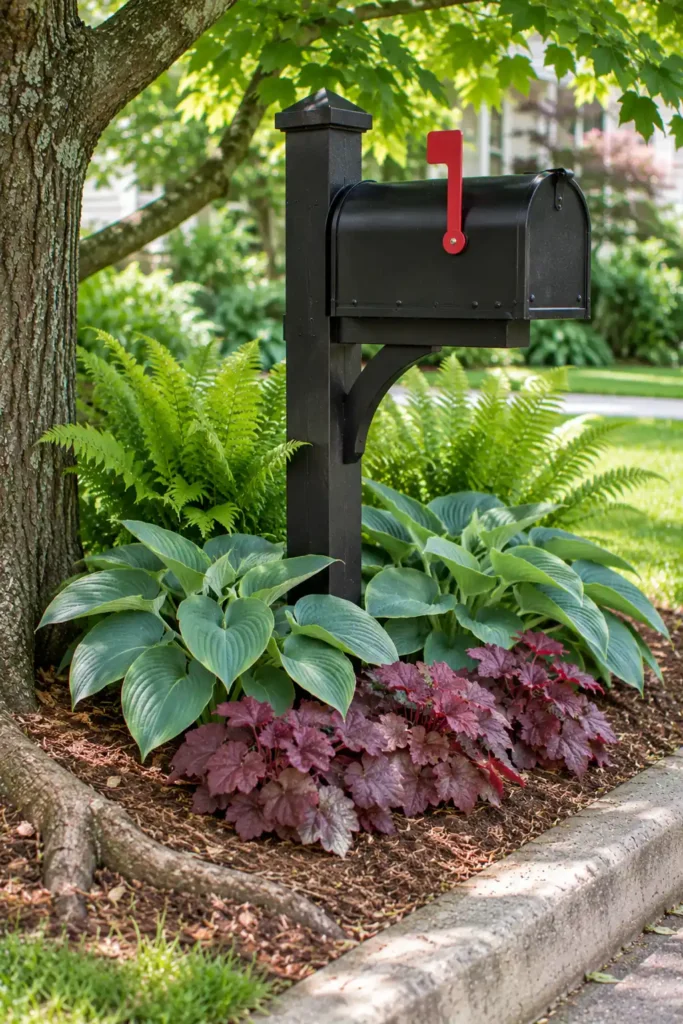
Plant petunias under a street tree and you get three thin flowers and a lot of regret. Plant hostas there and the same shade becomes the reason the bed works.
Blue green hostas give you big, calm leaves at the base of the post. Feathery green ferns behind them add height, and burgundy coral bells along the front bring the color that flowers cannot manage without sun. A layer of shredded bark mulch pulls it together and looks right under a tree.
Tree roots drink first, so water this bed through its first summer even if the lawn seems fine. Dig small holes between the roots instead of piling new soil on top of them. This guide on how to plant hostas covers spacing and depth.
13. A Stacked Stone Ring for a Sloped Curb
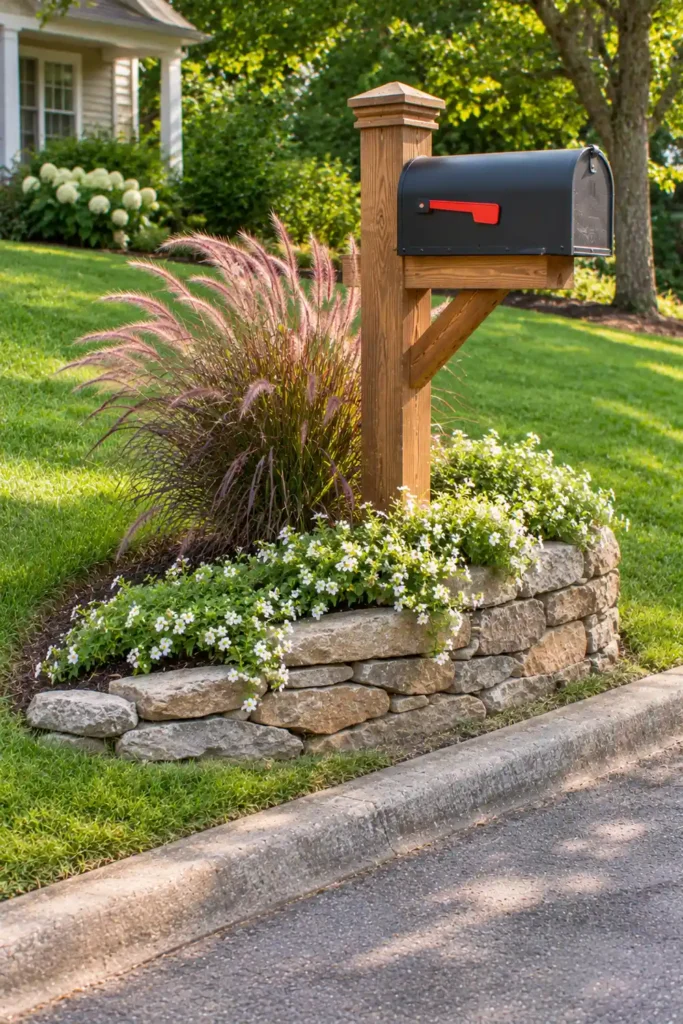
On a sloped front yard, a flat mailbox bed lasts until the first hard rain. Then the mulch slides downhill and ends up in the gutter.
A low ring of dry stacked fieldstone holds everything in place. Build it two or three stones high on the downhill side and let it taper to almost nothing on the uphill side, so the soil inside sits level. Purple fountain grass beside the post gives height, and trailing white bacopa softens the top of the stones as it spills over. The pale flowers against rough gray rock are what people notice from the car.
Keep the ring low and loose. A wall that holds back real weight is structural work, and that belongs to a professional. Raised soil also drains and dries faster, so check it more often in July.
14. Flagstone Steps and Creeping Thyme for a Clear Reach
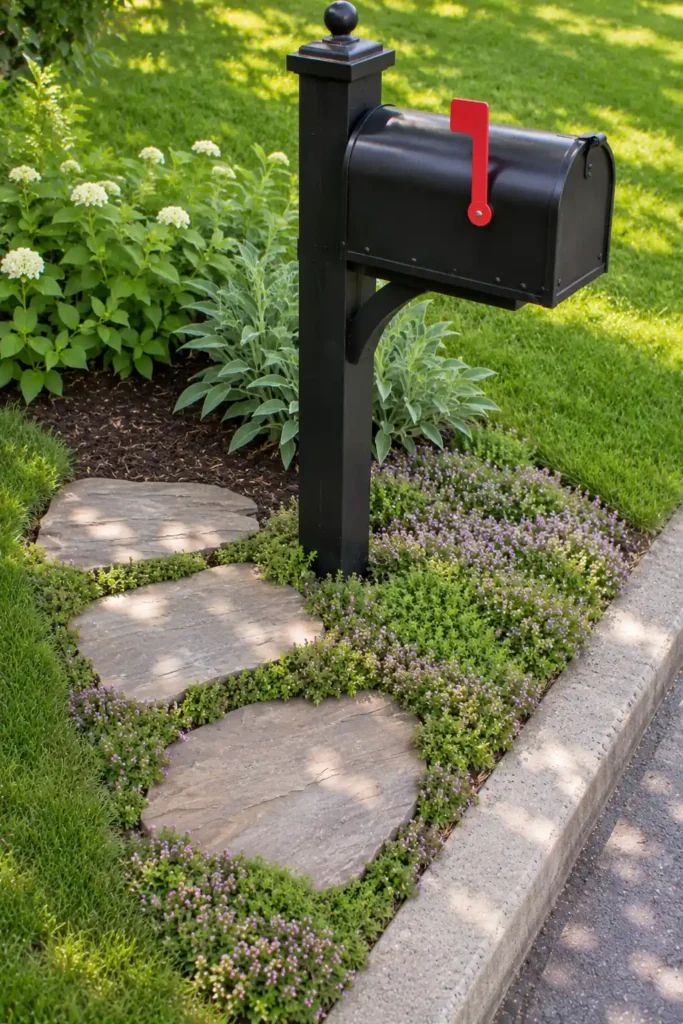
The best looking mailbox bed on the street is useless if the mail carrier has to lean over a shrub to use it. Design the reach first, then plant around it.
Lay two or three flat flagstone stepping stones from the lawn to the front of the post, so there is a dry, firm place to stand. Plant creeping thyme in the gaps and along the street side. It stays ankle high, takes the odd footstep, and never grows into the door. Anything taller goes behind the post, where it frames the box instead of blocking it.
Planting tip: Before you buy a single plant, stand at the curb and open the mailbox door all the way. Everything inside that swing, and between the box and the road, stays low, soft, and free of thorns.
15. Garden Mums and White Pumpkins for a Fall Swap
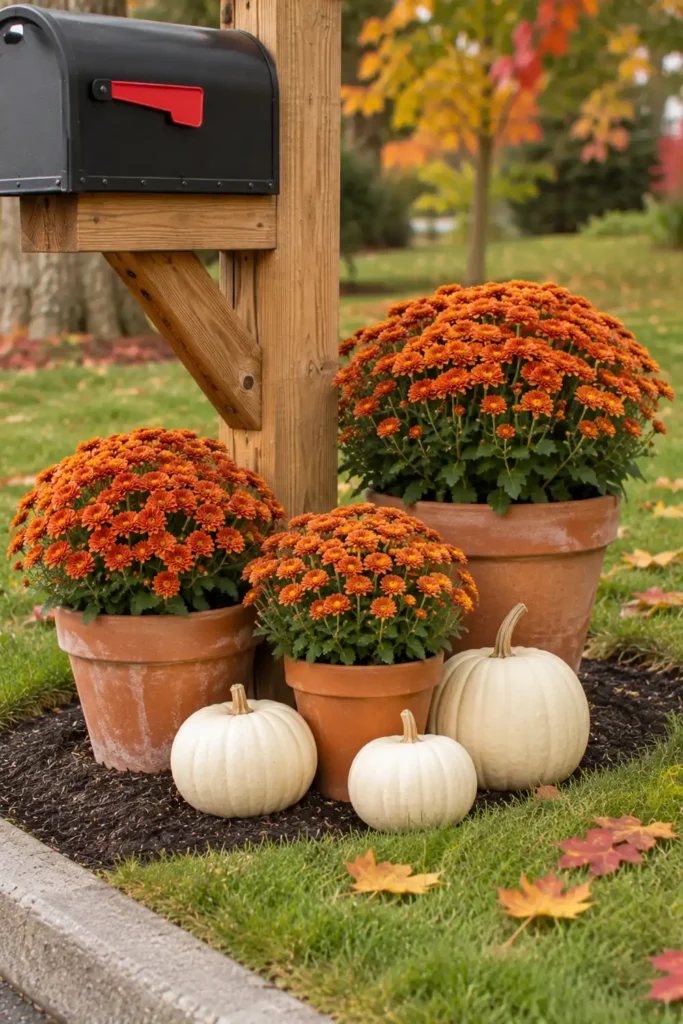
Three terracotta pots can stand in for a whole bed, and you can change them faster than you can weed one. Group them in odd sizes on a mulch ring behind the post, and the mailbox gets a new look every season for the price of a few plants.
For fall, fill them with rust orange garden mums and tuck two or three white pumpkins at their feet. The warm clay, the deep orange, and the pale pumpkins share one palette, which is why the group looks pulled together. These fall planter recipes give you more combinations to rotate in.
Buy mums while the buds are still mostly closed and the show lasts weeks longer. Terracotta dries out quickly, so water often. Keep the pumpkins on the lawn side, out of reach of passing cars and bored teenagers.
16. Solar Path Lights and House Numbers at Dusk
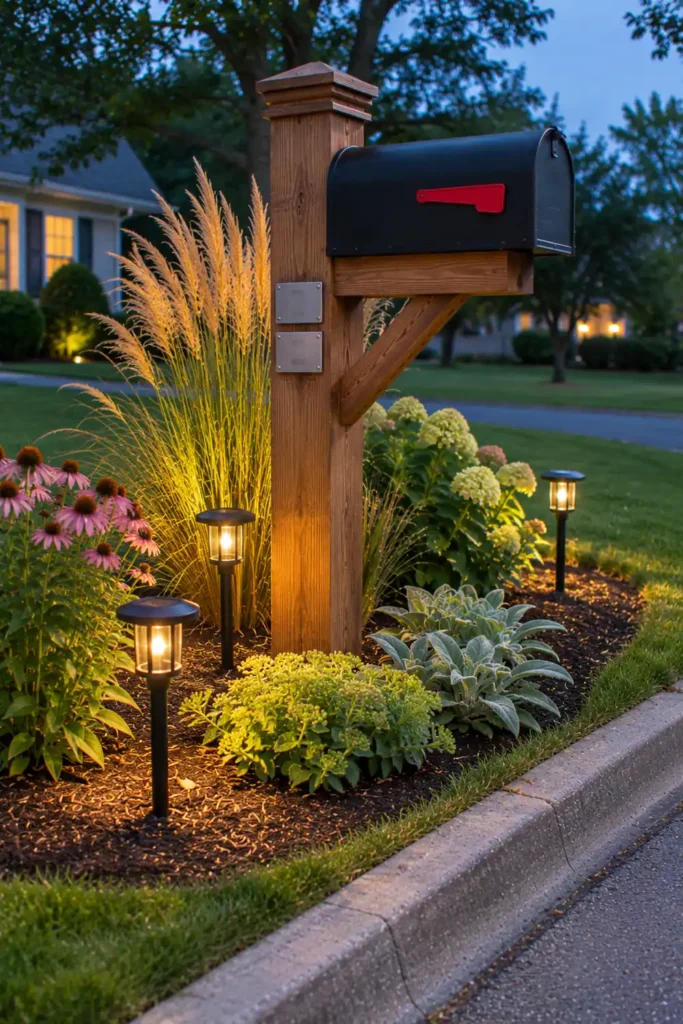
Most mailbox landscaping disappears at sunset, right when guests and delivery drivers are hunting for your address. A few solar path lights and a set of clear house numbers solve both problems without a single wire.
Stagger three black solar path lights through the bed instead of lining them up like a runway. Set one near a clump of feather reed grass so the light catches the upright blades, and fix brushed metal house numbers to both sides of the post so they read from either direction. The glow on the grass gives the bed a shape after dark. For the rest of the yard, these front yard lighting ideas pick up where the mailbox leaves off.
Solar lights need direct sun on the panel to charge, so expect a weaker glow in winter and under trees.
Get the look: three black solar path lights, feather reed grass, brushed metal house numbers, dark mulch.
17. A Hydrangea Drift That Ties the Mailbox to the Yard
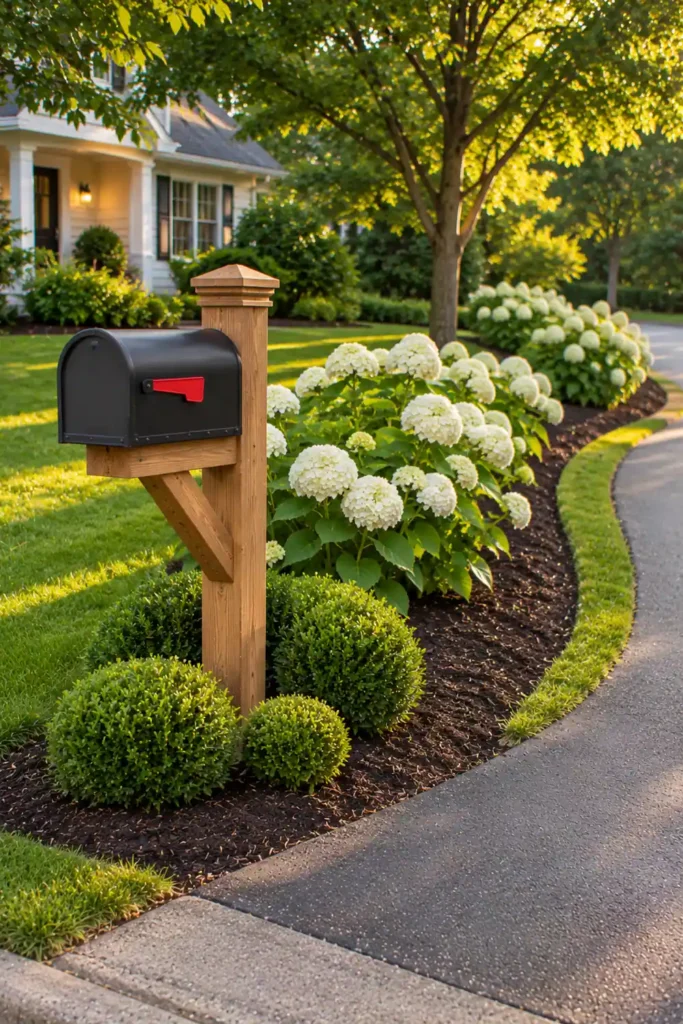
A mailbox bed on its own can look like an island, a little circle of effort floating at the edge of the lawn. Stretch it into a long curve and it becomes part of the landscape.
Start the bed at the post and sweep it back along the driveway edge toward the house. Plant a drift of white hydrangeas through the middle, set a few low boxwood mounds at the mailbox end, and cover the whole run with one dark mulch. Repeating plants you already have by the front door is the move here, because the eye follows the same shapes from the curb to the porch and reads the yard as one design.
Hydrangeas get big and like regular water, so keep them several steps back from the post. At the driveway corner, hold everything low enough to see oncoming traffic when you back out. Curb appeal should never cost you a clear view of the street.
Mailbox Landscaping Questions, Answered
How big should a mailbox flower bed be?
Small. A bed you can reach across from the lawn side is big enough, and it keeps you off the road while you weed. Leave the street side low and open so the door swings freely. Ideas 1 and 14 both show the layout.
What is the lowest maintenance mailbox landscaping?
A mulch ring or rock bed with a few tough perennials or grasses needs the least care. Daylilies, sedum, and blue fescue come back every year and forgive missed watering. Ideas 4, 5, and 11 are the easiest here, and these low maintenance front yard ideas carry the same approach across the lawn.
Can I do the landscaping around a mailbox without digging?
Yes. A planter box fixed to the post or a group of pots at its base gives you color with no bed at all. Both suit renters, HOA streets, and curbs full of roots or gravel. Ideas 8 and 15 cover each version.
What should you not plant around a mailbox?
Skip anything thorny, spiky, or fast spreading, and anything that will grow taller than the box on the street side. Large shrubs also block the view of traffic near a driveway. If pets or small children use the yard, check a reliable plant safety list before you buy.
Conclusion
A mailbox bed is the smallest landscaping job in the yard and one of the most visible. Pick the idea that matches your curb, not the prettiest photo. Sun, shade, salt, and the reach of your hose decide what will still look good in August. Start with a clean edge and three tough plants, and add more once you see what thrives.
When the post is handled, the same thinking works on the bigger front yard garden beds near the house. Save these front yard mailbox landscaping ideas to your curb appeal board, and pull them up the next time you are standing in the garden center with an empty cart.