
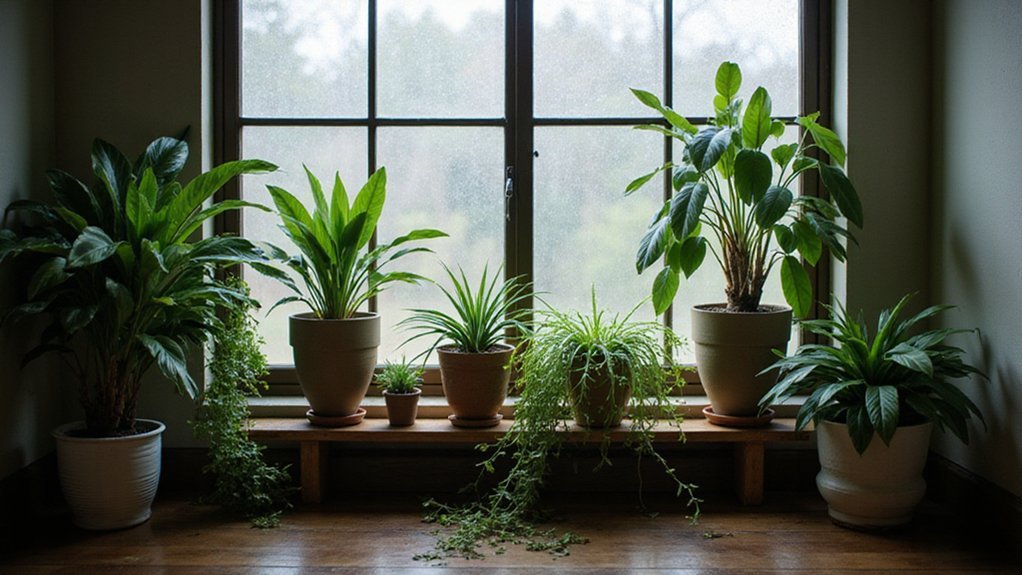
If you’ve struggled to keep plants alive in your dim office or bathroom, you’re not alone. Many people assume low-light spaces mean giving up on indoor greenery entirely, but several hardy plants actually prefer shadowy conditions and require minimal attention. You can transform neglected corners into vibrant green spaces with the right selections. Here’s how to choose the perfect low-light plant for your environment.
Pothos: The Easiest Low-Light Vine You Can’t Kill
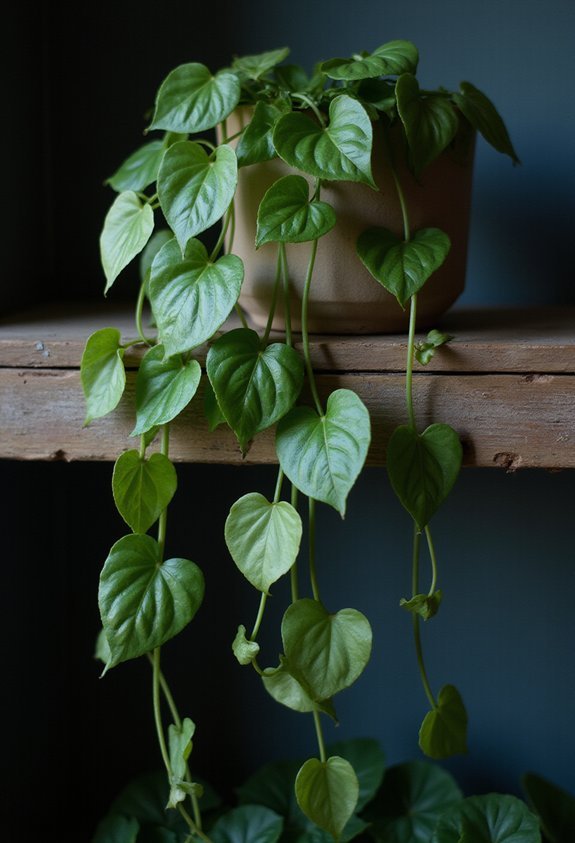
Because pothos plants thrive in conditions where many other houseplants struggle, they’ve become one of the most popular choices for indoor gardeners who’re working with limited natural light. You’ll find that pothos tolerates dim corners, offices, and bathrooms where sunlight barely reaches, making it extraordinarily adaptable to indoor environments. The plant features heart-shaped leaves that cascade elegantly from hanging baskets or climb support structures, adding visual interest while requiring minimal care. You should water pothos when the soil feels dry to the touch, typically every one to two weeks depending on humidity levels. The plant forgives occasional neglect and won’t suffer from irregular watering schedules. Additionally, pothos purifies indoor air by removing toxins, providing both aesthetic and functional benefits to your living space without demanding attention.
Also read: 3 Pro Tips for Protecting Plants From Frost
Snake Plant: Architectural Flair That Tolerates Darkness
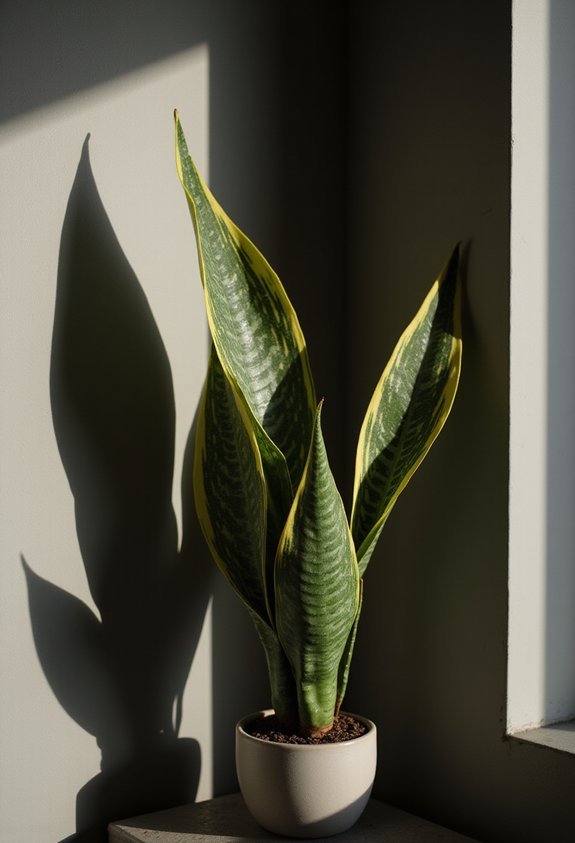
While pothos vines gracefully cascade from shelves and corners, snake plants offer a striking architectural alternative that’ll thrive in even darker conditions than their trailing counterparts. Snake plants feature tall, sword-like leaves with distinctive patterns, instantly elevating your space’s visual appeal without demanding bright light. You’ll appreciate their exceptional drought tolerance, as they store water in their leaves and require minimal watering—typically just monthly. These plants filter toxins from the air, improving your indoor environment simultaneously. Snake plants adapt to various room temperatures and humidity levels, making them remarkably forgiving for beginners. Position yours in corners, low-light bathrooms, or offices where sunlight rarely reaches. Their slow growth rate means you won’t struggle with frequent pruning or repotting, allowing you to enjoy their elegant presence with virtually no maintenance.
ZZ Plant: Glossy, Low-Maintenance Shade Champion
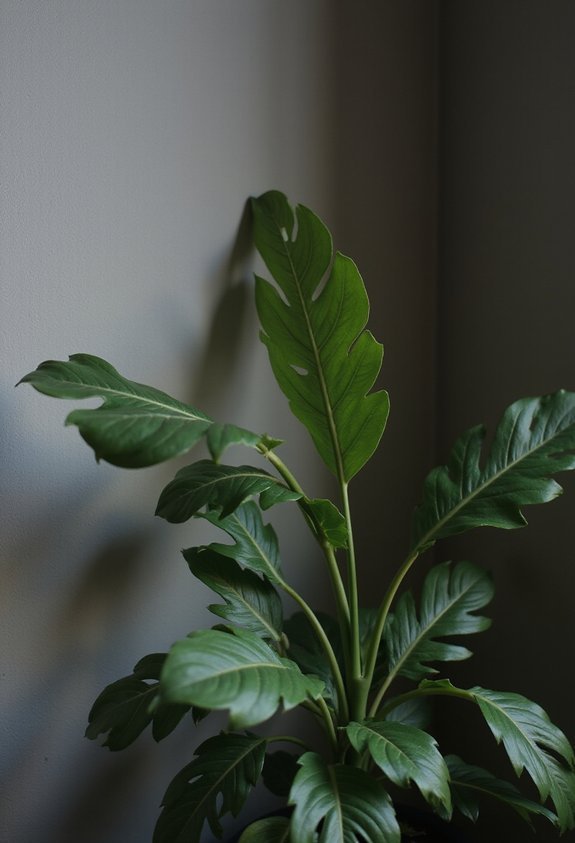
If you’re searching for a plant that combines striking visual appeal with minimal care requirements, the ZZ plant stands as an exceptional choice for low-light environments. This plant features glossy, compound leaflets arranged along sturdy stems, creating an elegant appearance that enhances any room’s aesthetic. You’ll appreciate that ZZ plants thrive in dim conditions where other plants struggle, making them ideal for offices, bathrooms, and corners lacking natural light. They require infrequent watering since their rhizomes store moisture efficiently, reducing the risk of overwatering. Additionally, ZZ plants adapt well to various indoor temperatures and humidity levels, demonstrating remarkable resilience. Their slow growth rate means you won’t need frequent repotting, further minimizing maintenance demands. If you want a visually striking, genuinely low-maintenance plant for shadowy spaces, the ZZ plant delivers reliable performance.
Philodendron: Vining Foliage for Dark, Neglected Corners
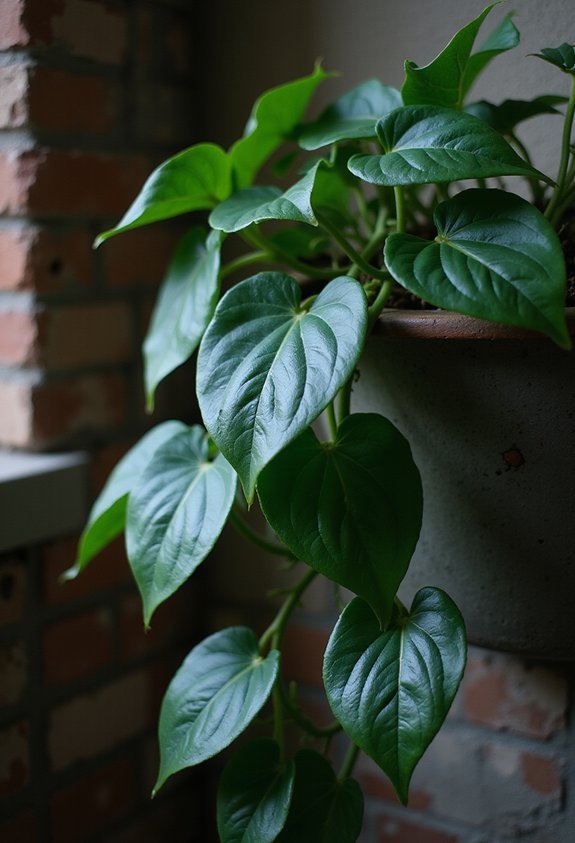
Philodendrons offer you another excellent option when you’re looking to fill shadowy spaces with living greenery, particularly when you need a plant that’ll spread and climb rather than grow upright like the ZZ plant. These vining plants feature heart-shaped leaves that’ll cascade from shelves or climb up moss poles, making them perfect for dark corners where you want vertical coverage. Philodendrons thrive in low light conditions and adapt well to neglected spaces, requiring minimal watering and care. You’ll find they’re forgiving plants that tolerate inconsistent light and moisture levels. Water them only when the soil feels dry, and they’ll continue growing steadily. Their trailing growth pattern allows you to train them along walls or let them hang naturally, providing flexible decorating options for any shadowy area in your home.
Cast Iron Plant: Nearly Indestructible in Deep Shade
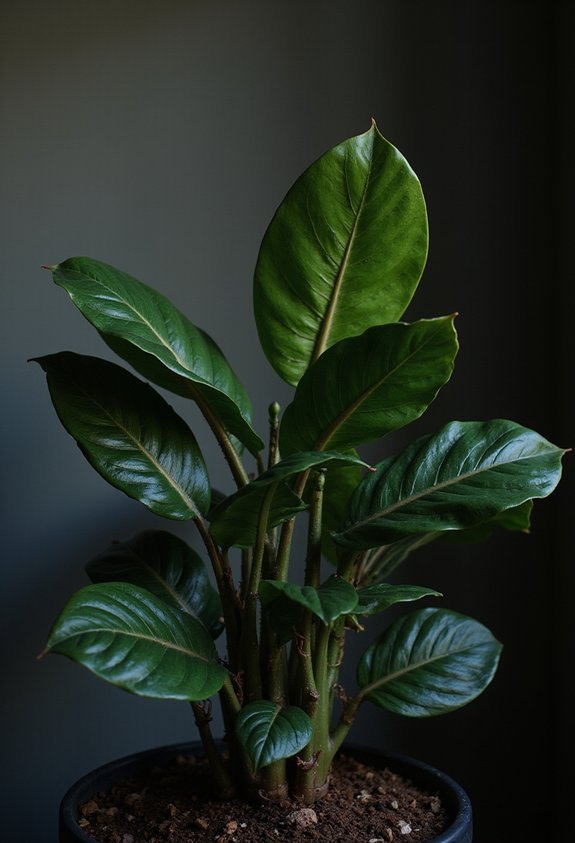
Because you’re searching for a plant that’ll survive in the darkest corners of your home, the Cast Iron Plant deserves serious consideration as one of the most resilient options available for indoor gardeners. This plant tolerates neglect exceptionally well, requiring minimal light, water, and maintenance to flourish. You’ll notice its glossy, dark green leaves adapt beautifully to dim environments where other plants struggle. The Cast Iron Plant grows slowly in low light, which means you won’t need frequent repotting or pruning. When you do water, allow the soil to dry between waterings to prevent root rot. Feed it sparingly during growing seasons with diluted fertilizer. Its durability makes it ideal for offices, bathrooms, and basements where natural light remains scarce throughout the day.
Peace Lily: The Only Low-Light Plant That Blooms
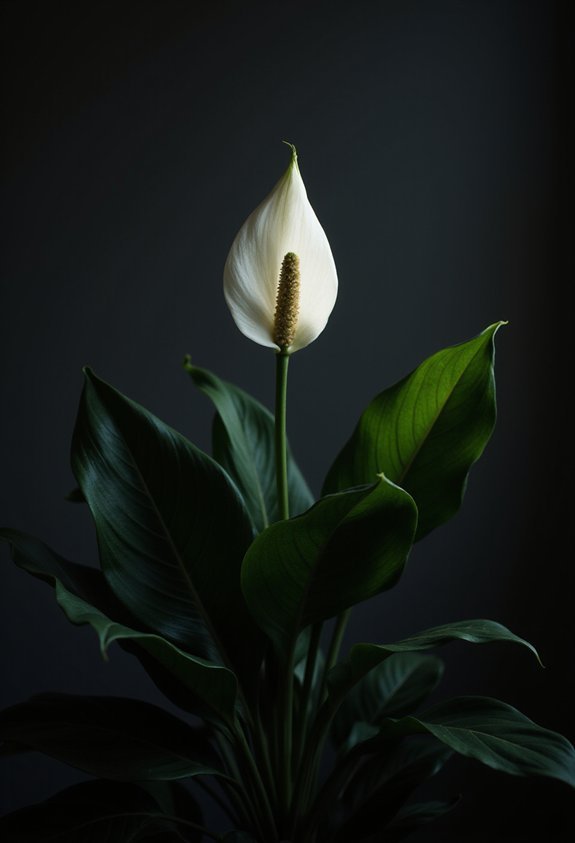
While the Cast Iron Plant excels in dark corners with its sturdy, unchanging foliage, you’ll find that the Peace Lily offers something distinctly different—it’s the rare low-light plant that actually produces flowers indoors. You can grow this plant in moderate, indirect light, and it’ll reward you with elegant white blooms that emerge periodically throughout the year. The Peace Lily communicates its needs clearly: when it droops, you’ll know it’s thirsty, making watering straightforward. You should keep the soil consistently moist but not waterlogged, and provide humidity by misting its leaves regularly. The plant prefers temperatures between sixty-five and eighty degrees Fahrenheit. With minimal effort, you’ll enjoy both attractive foliage and genuine flowering success in low-light spaces.
Dracaena: Tall, Dramatic Greenery for Dim Spaces
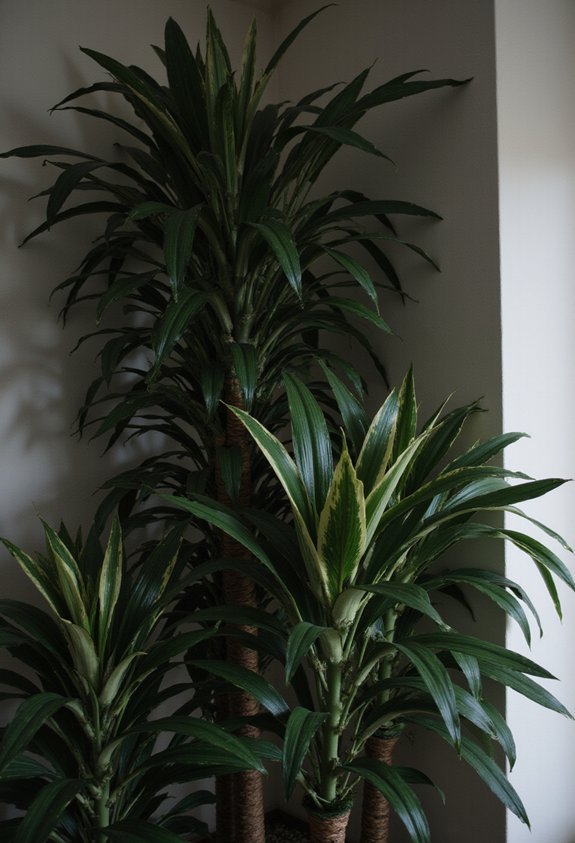
If you’re looking for a plant that’ll grow tall and create visual impact in your dim indoor spaces, dracaenas are an excellent choice because they’re naturally adapted to low-light environments and they’ll develop into striking architectural specimens with minimal fuss. These plants feature long, slender leaves that range from solid green to variegated patterns, adding dramatic vertical interest to corners and shadowy areas. You’ll want to water your dracaena when the top inch of soil feels dry, ensuring you don’t overwater since these plants prefer drier conditions. Dracaenas tolerate inconsistent care well, making them ideal for beginners or busy plant owners. Position your dracaena away from direct sunlight, which can scorch its leaves, and maintain moderate indoor temperatures between 65 and 75 degrees Fahrenheit for perfect growth.
Conclusion
You’ve learned that low-light plants aren’t difficult; they’re actually forgiving and resilient. While some spaces lack natural sunlight, these seven varieties don’t lack beauty or air-purifying benefits. You’ll discover that Pothos cascades gracefully where Dracaena stands tall, that Snake Plants tolerate neglect while Peace Lilies reward you with blooms. You can transform dim corners into thriving green spaces by choosing the right plant for your specific environment, making your home healthier and more inviting.