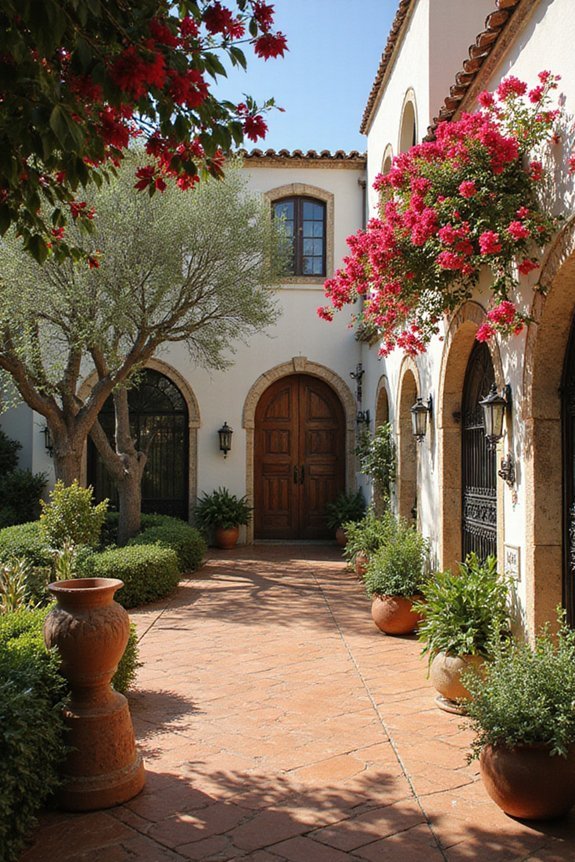
When you’re designing a Spanish-style front yard, you’re fundamentally creating an outdoor space that reflects centuries of Mediterranean tradition. The key elements—stucco walls, terracotta tiles, wrought-iron gates, and native plantings—work together to establish authentic Old World charm. Understanding how to properly combine these components will transform your home’s entrance into a stunning display. Let’s examine the specific techniques and materials you’ll need.
Stucco Walls: The Foundation of Authentic Spanish Curb Appeal
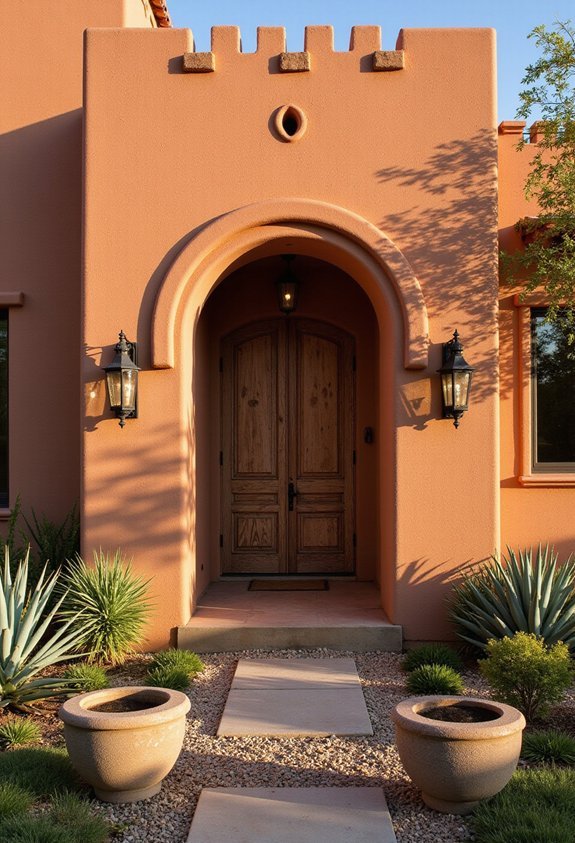
When you’re planning to create an authentic Spanish-style front yard, stucco walls should be your starting point because they’re essential to achieving that distinctive Mediterranean look that defines this architectural style. Stucco, a durable plaster mixture applied to exterior walls, provides the characteristic textured finish that’s iconic in Spanish design. You’ll want to choose warm earth tones like terracotta, cream, or soft ochre to capture that authentic Mediterranean feel. The textured surface of stucco not only enhances visual appeal but also offers practical benefits, including weather resistance and thermal insulation. When you apply stucco correctly, you’re creating a solid foundation for additional decorative elements like arched doorways, decorative tiles, and climbing vines. This foundational choice sets the tone for your entire front yard’s Spanish aesthetic.
Also read: 21 HARDSCAPE FRONT YARD Layouts With Clean Lines!
Warm Ochres, Deep Terracottas, and Whites: Choosing Your Spanish Color Scheme
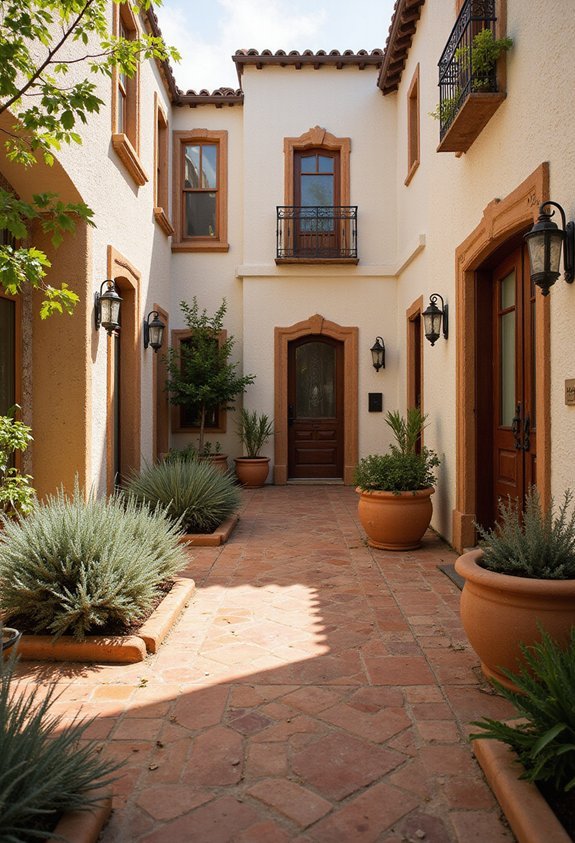
Because you’ve established your stucco foundation, you’re now ready to select the specific color palette that’ll bring your Spanish-style front yard to life. Warm ochres, which range from golden yellows to brownish tones, create a sun-baked Mediterranean appearance that’s authentically Spanish. Deep terracottas offer rich, earthy reds that evoke traditional clay tiles and aged adobe structures. Whites provide essential contrast and brightness, preventing your color scheme from becoming too dark or heavy. You’ll want to apply ochres and terracottas to your stucco walls while using white for trim, architectural details, and accent areas. This combination mirrors the natural materials and climate-appropriate choices that Spanish colonists originally used throughout their settlements. Your front yard’s overall warmth and visual appeal depend entirely on how you balance these three foundational colors together.
Wrought-Iron Gates: The Spanish Front Yard’s First Impression
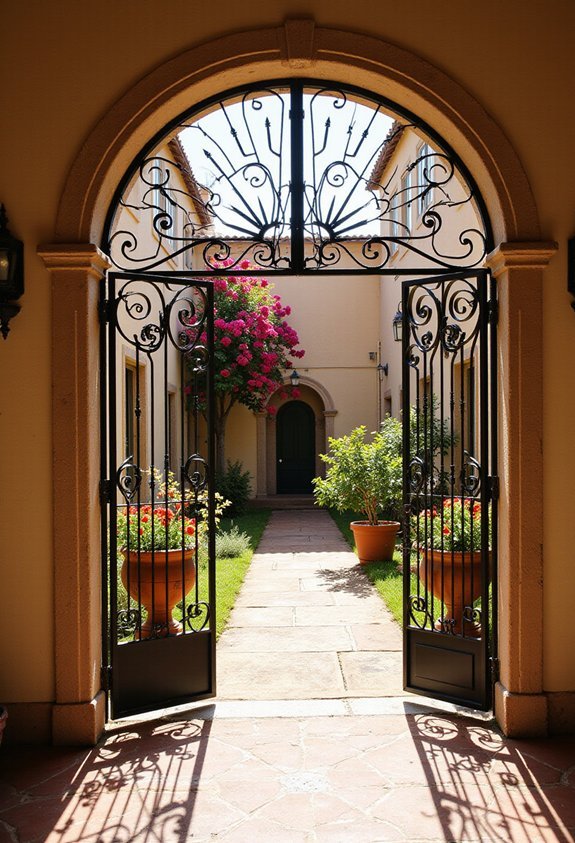
Your wrought-iron gate‘s design and placement will serve as the critical focal point that greets visitors before they ever step foot in your front yard, making it one of the most important elements you’ll choose for your Spanish-style home. You’ll want to select gates featuring ornate scrollwork, geometric patterns, or religious motifs that reflect authentic Spanish craftsmanship. Consider the gate’s height in relation to your property’s overall proportions, ensuring it complements rather than overwhelms your entrance. Install your gate between sturdy stone or stucco pillars to anchor the design effectively. The wrought iron should be professionally maintained with regular rust prevention treatments, preserving its longevity and visual appeal. Choose finishes in black, bronze, or natural iron tones that harmonize with your home’s color palette, creating a cohesive and inviting entrance.
Terracotta Tile Pathways and Borders
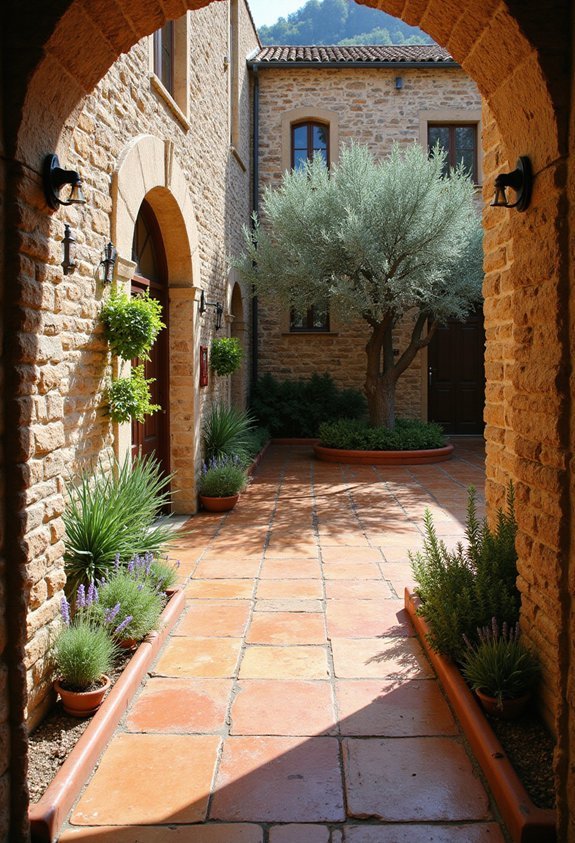
As you move from your wrought-iron gate into the front yard itself, terracotta tile pathways and borders become the next essential design element that’ll guide visitors through your Spanish-style landscape while establishing the home’s authentic character. These warm, earthy tiles offer both functional and aesthetic benefits, creating defined walkways that prevent foot traffic from damaging your landscaping. You’ll want to select tiles in traditional burnt-orange and russet tones, which complement native plants and natural stone features. Install pathways at least three feet wide for comfortable passage, and arrange border tiles along garden beds to guarantee clean edges. The slightly uneven surface of hand-crafted terracotta adds genuine Old World charm, while its durability secures your investment withstands weather and frequent use for decades.
Building Stone Walls That Enclose and Define Your Space
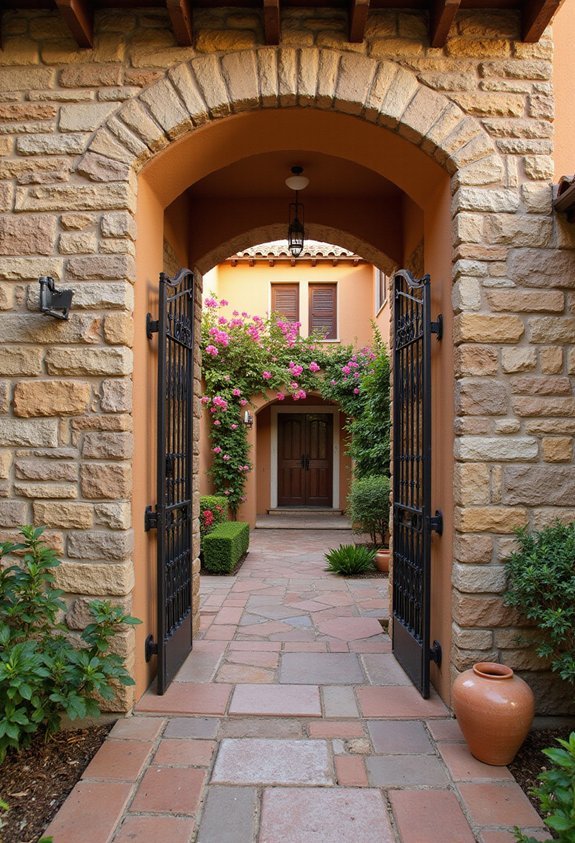
Stone walls form the structural backbone of Spanish-style front yards, creating natural boundaries that separate your property from the street while establishing distinct zones within your landscape. You can construct these walls using locally sourced stone, stacked carefully to achieve both durability and authentic aesthetic appeal. When building, you’ll want to guarantee proper drainage behind the wall to prevent water damage and structural failure over time. Consider varying the wall height between three and five feet, depending on your privacy needs and local regulations. You should also plan for curved sections rather than strictly linear designs, which adds visual interest and softens the overall appearance. Strategic placement of climbing vines like ivy or jasmine enhances the rustic character while maintaining the wall’s structural integrity.
Bougainvillea for Spanish Front Yards: Color Year-Round
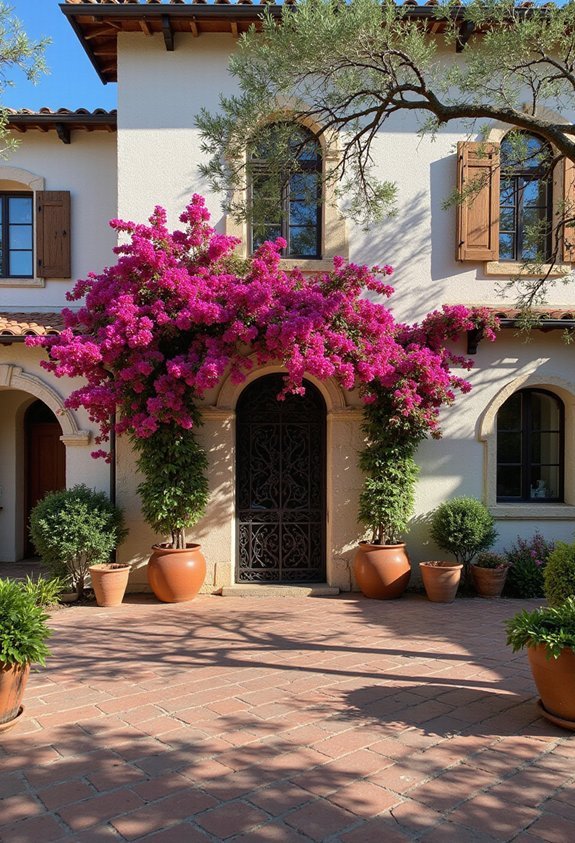
Bougainvillea plants’ll transform your Spanish-style front yard into a vibrant display of color that persists through multiple seasons, making them an essential choice for homeowners seeking authentic Mediterranean aesthetics. These flowering vines thrive in full sunlight and well-draining soil, producing brilliant blooms in shades of pink, purple, red, and orange. You’ll need to plant them in locations receiving at least six hours of direct sunlight daily to guarantee flourishing performance. Water regularly during establishment, then reduce frequency once mature, as bougainvilleas tolerate drought conditions well. Prune strategically after blooming to maintain shape and encourage denser growth patterns. Their hardy nature and minimal maintenance requirements make them ideal for creating eye-catching focal points along entryways, fences, and pergolas throughout your front landscape design.
Cascading Vines and Climbing Plants for Vertical Interest
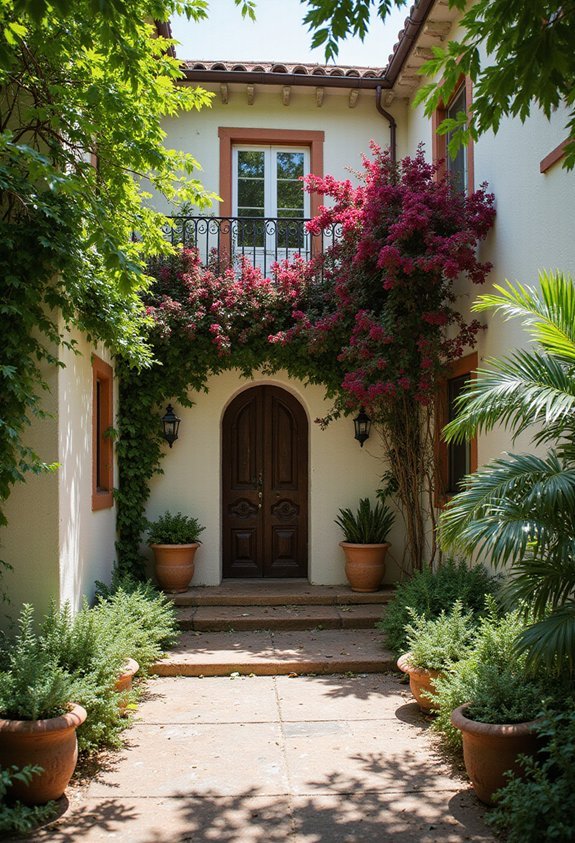
While bougainvilleas provide stunning horizontal color across your front yard, adding vertical dimension through cascading vines and climbing plants‘ll create a more dynamic and sophisticated landscape design that draws the eye upward. You can train ivy, jasmine, or clematis along arbors, trellises, and walls to establish architectural framework that enhances your home’s Spanish aesthetic. Climbing roses deliver romantic elegance, while passion vine introduces exotic flair with distinctive blooms and foliage. These vertical elements soften hard architectural lines, create natural shade structures, and frame entryways effectively. Position climbing plants strategically near gates, doorways, or fence lines where they’ll receive appropriate sunlight and support structures. Regular pruning maintains shape and prevents overgrowth, ensuring your vertical plantings remain balanced within your overall landscape composition while contributing depth and visual interest throughout seasons.
Hand-Painted Tiles: Where Spanish Tradition Meets Curb Appeal
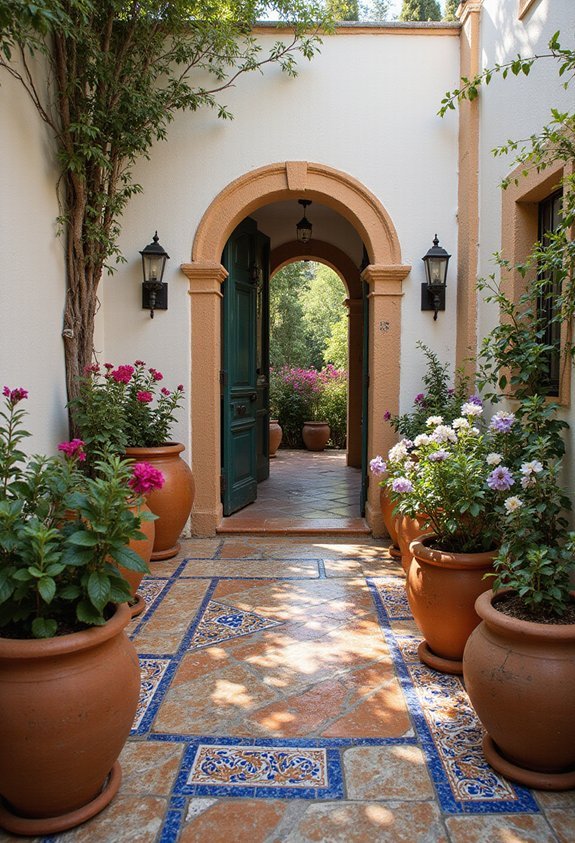
To truly capture the authentic spirit of Spanish design in your front yard, you’ll want to incorporate hand-painted tiles that serve as both functional elements and artistic focal points throughout your landscape. These tiles, traditionally crafted with vibrant blues, yellows, and earth tones, add distinctive character to your entryway, pathways, and garden borders. You can install them along walkways, embed them in planters, or use them as decorative accents on steps and walls. Hand-painted tiles offer durability against weather conditions while maintaining their rich colors for years. When selecting tiles, choose designs that reflect traditional Spanish patterns, such as geometric shapes or floral motifs. This approach transforms your front yard into an authentic Spanish retreat that showcases genuine craftsmanship and cultural heritage.
Central Courtyard Fountains
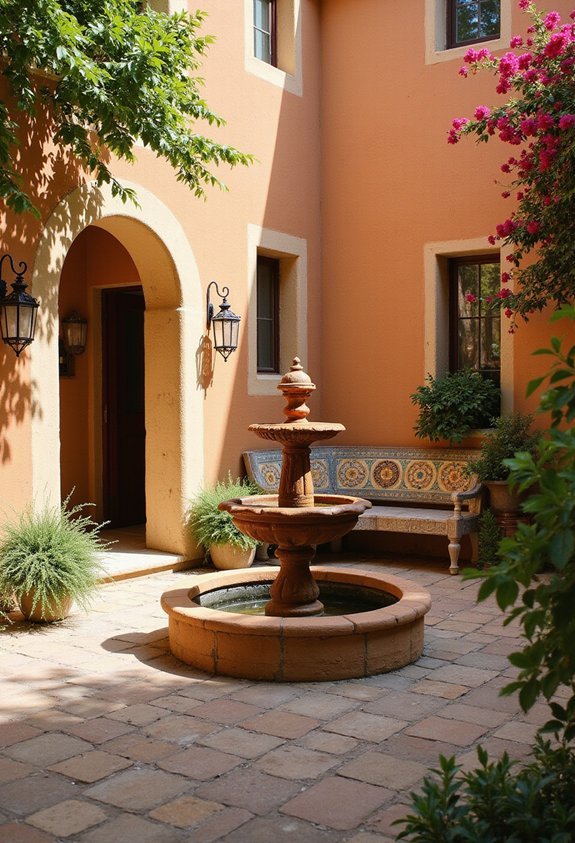
Water features serve as the heart of traditional Spanish courtyards, and you can create this authentic focal point in your front yard by installing a central fountain that’ll become both a visual centerpiece and a functional element for your landscape. When you select a fountain, you’ll want to choose designs featuring hand-painted tiles, ornate stonework, or terracotta materials that reflect Spanish architectural traditions. You should position your fountain in a symmetrical layout, surrounded by decorative pavers or gravel pathways, which’ll direct visitors’ eyes toward the water feature naturally. Consider adding plants like fragrant jasmine, roses, or Mediterranean herbs around the fountain’s perimeter, creating layers of visual interest. You’ll also appreciate how the gentle sound of flowing water adds sensory dimension to your outdoor space while improving air moisture and creating a cooling effect during warm months.
How to Layer Clay Pots for Visual Drama
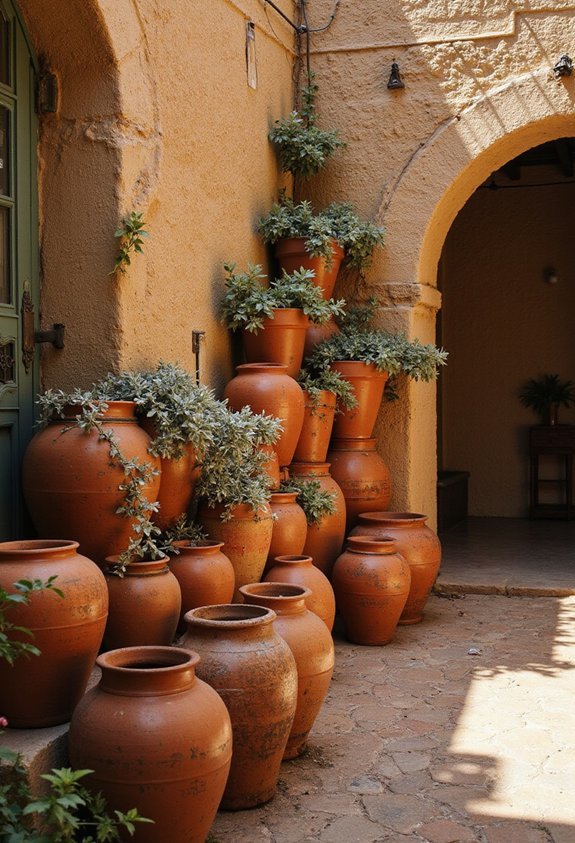
Because clay pots come in various sizes, shapes, and terracotta tones, you can arrange them strategically throughout your Spanish-style front yard to create depth and visual interest that’ll draw attention to different areas of your landscape. Start by grouping pots in odd numbers—three, five, or seven—which creates a more balanced, natural appearance than even groupings. Position larger pots in the back and smaller ones in front to establish layers and prevent blocking sightlines. Vary the heights by placing some pots on plant stands or garden benches, which adds dimension to your display. Fill each pot with complementary plants like succulents, flowering perennials, or ornamental grasses that thrive in your climate zone. This layering technique transforms your entryway into an inviting focal point reflecting authentic Spanish design principles.
Arched Alcoves and Niches
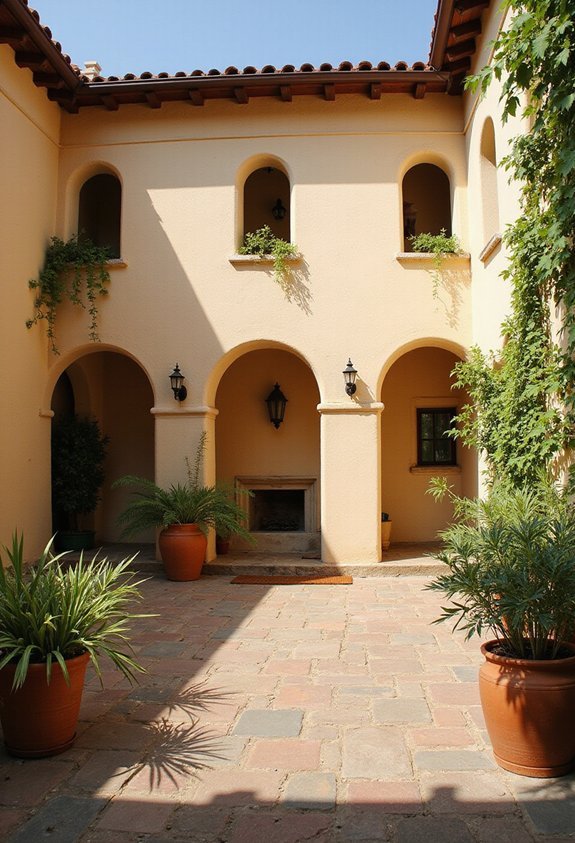
When you’re designing a Spanish-style front yard, arched alcoves and niches become architectural focal points that’ll elevate your home’s authentic character while providing practical display opportunities. You can create these recessed spaces within your exterior walls or fence structures, positioning them at varying heights to establish visual interest and depth. Install these alcoves by building curved archways using brick, stucco, or stone materials that match your home’s existing palette. Inside each niche, you’ll display decorative elements like terracotta statues, potted plants, or ornamental tiles that reflect traditional Spanish aesthetics. The arched design itself frames your displays naturally, drawing the eye while protecting items from harsh weather exposure. These architectural features also create shadowed areas that enhance your yard’s dimensional quality, contributing considerably to authentic Old World charm throughout your landscape design.
Rustic Wooden Doors and Shutters
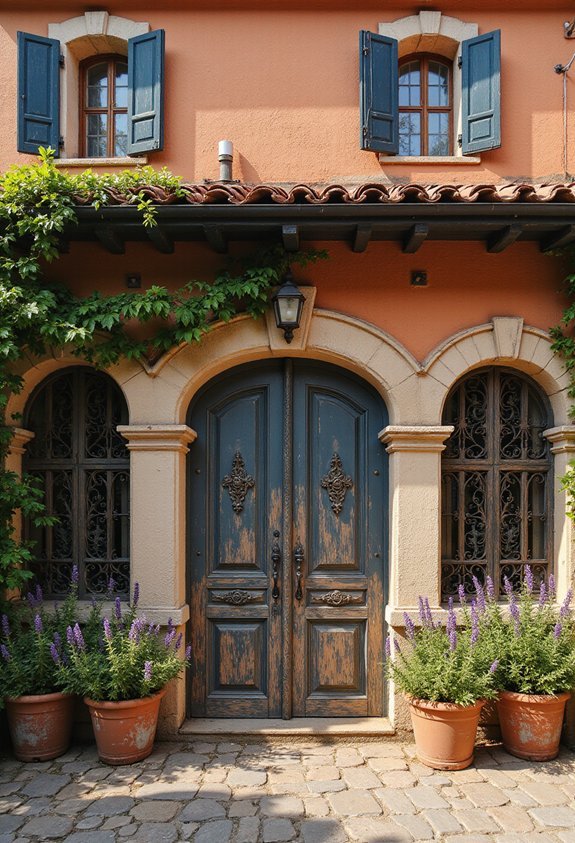
To authentically capture Spanish-style design, you’ll want to incorporate rustic wooden doors and shutters that serve both aesthetic and functional purposes in your front yard. Heavy wooden doors with iron hardware create an inviting entryway while establishing the home’s Old World character. You can select doors featuring arched tops or decorative carvings that reflect traditional Spanish craftsmanship. Matching wooden shutters on side windows add visual balance and provide practical light control. Choose weathered finishes that display natural aging, as this patina enhances authenticity rather than detracting from it. Install substantial hinges and hardware made from wrought iron or bronze, which complement the rustic aesthetic perfectly. These elements work together to establish a cohesive, historically accurate entrance that immediately communicates your home’s Spanish heritage and timeless appeal.
Native Drought-Tolerant Plantings
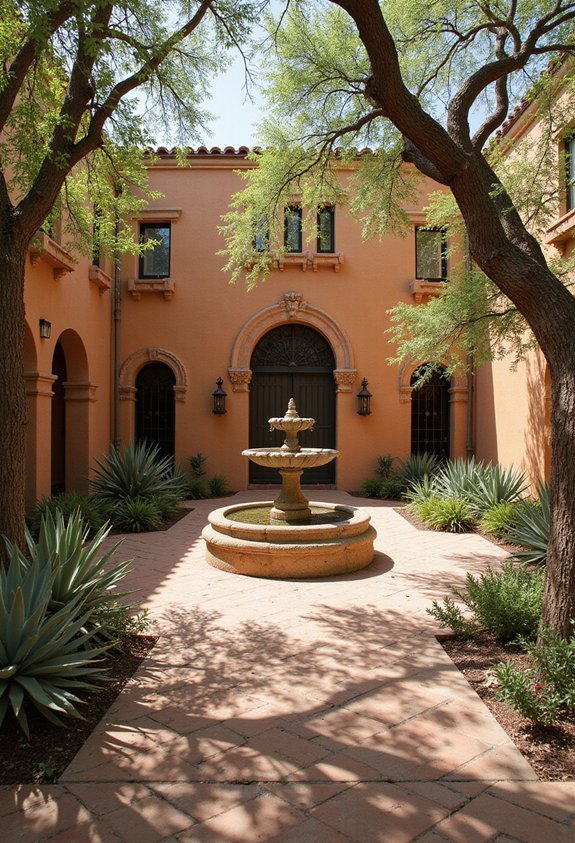
Since Spanish-style homes typically thrive in warm, dry climates, you’ll want to select native drought-tolerant plants that don’t require constant watering and naturally complement your home’s architectural character. Consider incorporating desert-adapted species like lantana, salvia, and agave, which flourish in arid conditions while adding visual interest to your front yard. These plants develop deep root systems that access moisture far below the soil surface, reducing your watering needs substantially. You can also plant native grasses and shrubs that’ve evolved to withstand intense heat and minimal rainfall in your region. By choosing plants suited to your local climate, you’re establishing a sustainable landscape that requires less maintenance, conserves water, and creates an authentic Mediterranean aesthetic that harmonizes beautifully with your Spanish-style home’s design.
Shaded Pergolas and Arbors
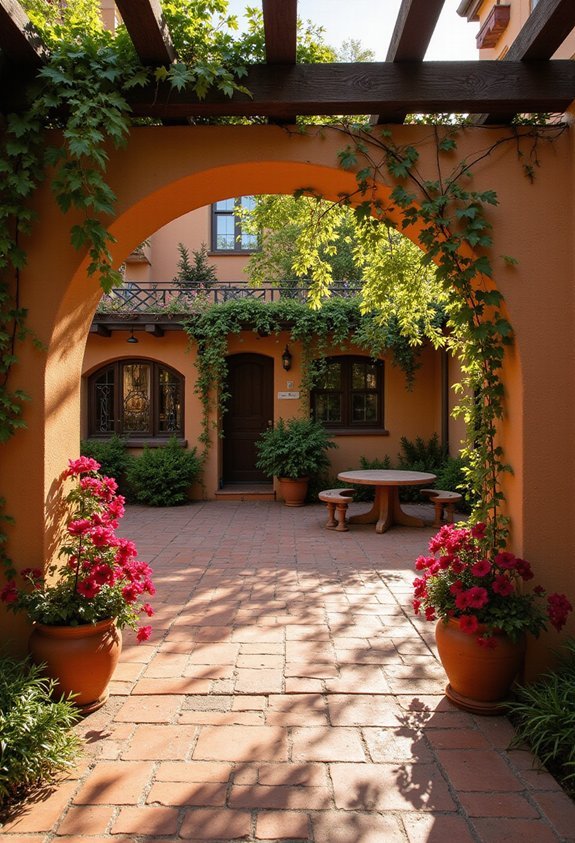
While native plantings establish the foundation of your Spanish-style front yard’s sustainability, adding structural elements like pergolas and arbors provides both practical shade and architectural interest that complements your home’s Mediterranean character. You can construct these frameworks using wood or metal materials that’ll withstand your climate while creating defined outdoor spaces. Position pergolas near entryways or along walkways where they’ll filter intense sunlight and reduce heat reflection on your home’s exterior walls. Train climbing vines like clematis or honeysuckle across the latticed structures, which’ll enhance the shade while adding natural texture. Arbors work similarly when placed at garden entrances, framing views and establishing visual boundaries. These elements don’t just improve aesthetics; they’re functional additions that’ll increase your property’s usable outdoor living areas while maintaining authentic Spanish design principles.
Gravel and Crushed Stone Landscaping
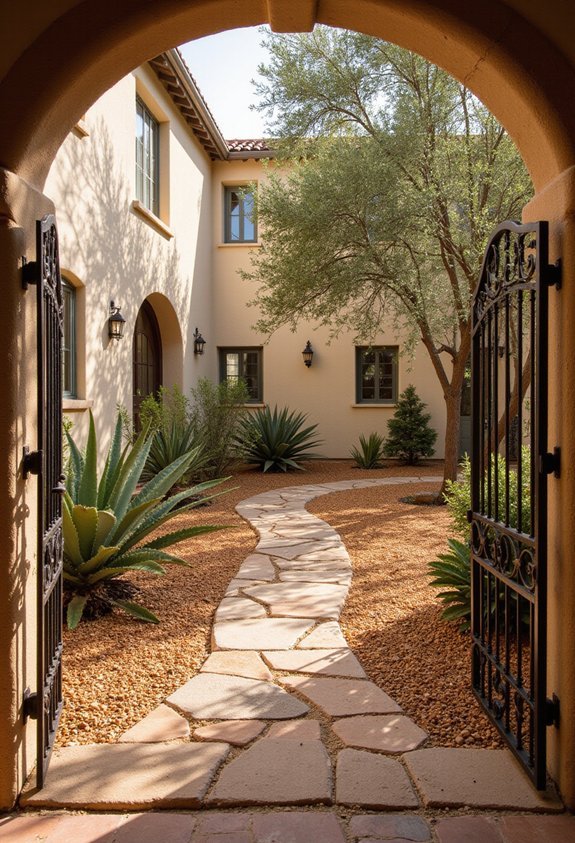
Gravel and crushed stone materials work brilliantly in Spanish-style front yards because they’re practical, affordable, and authentic to Mediterranean landscaping traditions. You can spread these materials across garden beds, pathways, and open spaces to create that rustic, earthy aesthetic characteristic of old-world designs. When you select gravel, you’ll find options like river rock, pea gravel, and crushed limestone, each offering distinct textures and colors that complement your home’s architecture. You’ll want to lay landscape fabric beneath your gravel to prevent weeds from emerging and maintain cleaner appearance over time. These materials require minimal maintenance compared to grass, reduce water consumption notably, and provide excellent drainage for your Spanish-style landscaping. You can also arrange larger stones decoratively to enhance visual interest while preserving that authentic Mediterranean character throughout your front yard.
Citrus Trees and Fruit Gardens: Functional Spanish Elements
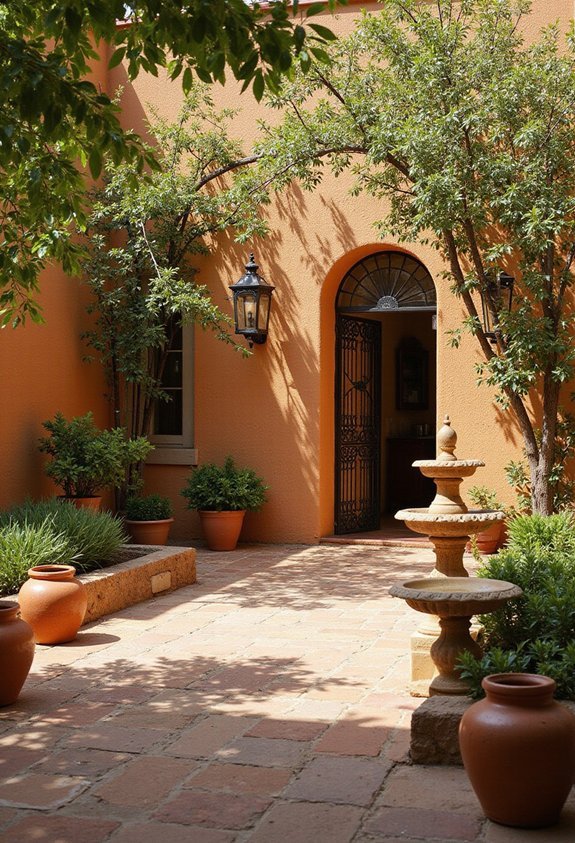
When you’re designing a Spanish-style front yard, incorporating citrus trees and fruit gardens connects your landscape to centuries-old Mediterranean agricultural traditions that blend beauty with practical food production. You’ll find that lemon, orange, and lime trees thrive in warm climates while providing fragrant blossoms and fresh fruit. Position these trees strategically along property lines or near entryways where they create natural focal points. You can intersperse fruit-bearing plants like pomegranate and fig trees throughout your design, establishing authentic Spanish character. Arrange trees in clusters rather than single specimens, mimicking traditional Mediterranean orchards. This approach transforms your front yard into a functional landscape that produces food while maintaining visual appeal, authenticity, and connection to Spanish heritage.
Olive Trees: The Timeless Spanish Front Yard Statement
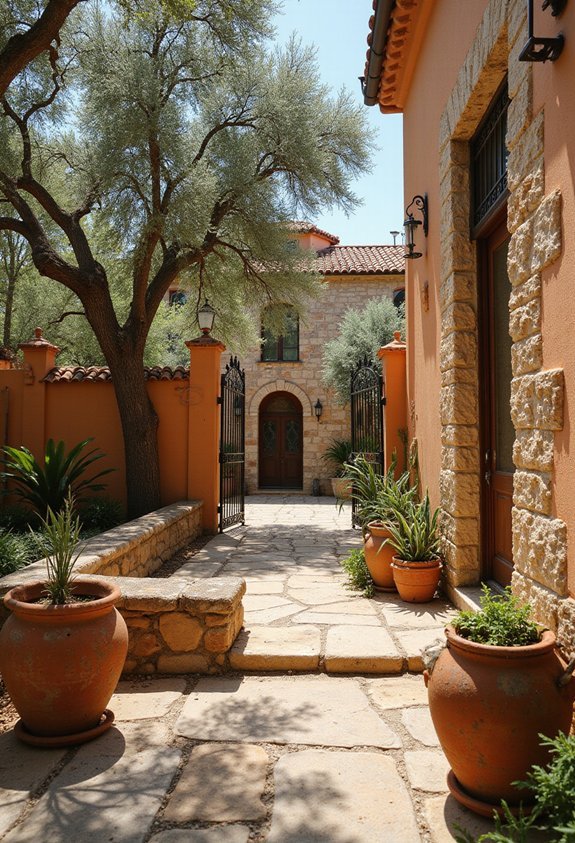
No other tree captures the essence of Spanish landscape design quite like the olive tree, which has served as a symbol of Mediterranean culture for thousands of years and brings an unmistakable Old World character to your front yard. You’ll appreciate how olive trees thrive in dry climates with minimal water requirements, making them ideal for sustainable landscaping. Their silvery-green foliage creates striking visual contrast against stucco walls and terracotta accents. You can plant olive trees as focal points or arrange them in clusters to frame your entryway. These ancient trees mature slowly, developing gnarled trunks that enhance authenticity. You should space them appropriately for air circulation and select varieties suited to your climate zone. Olive trees require occasional pruning and well-draining soil, rewarding you with both aesthetic appeal and potential fruit production.
Weathered Wood Benches and Seating
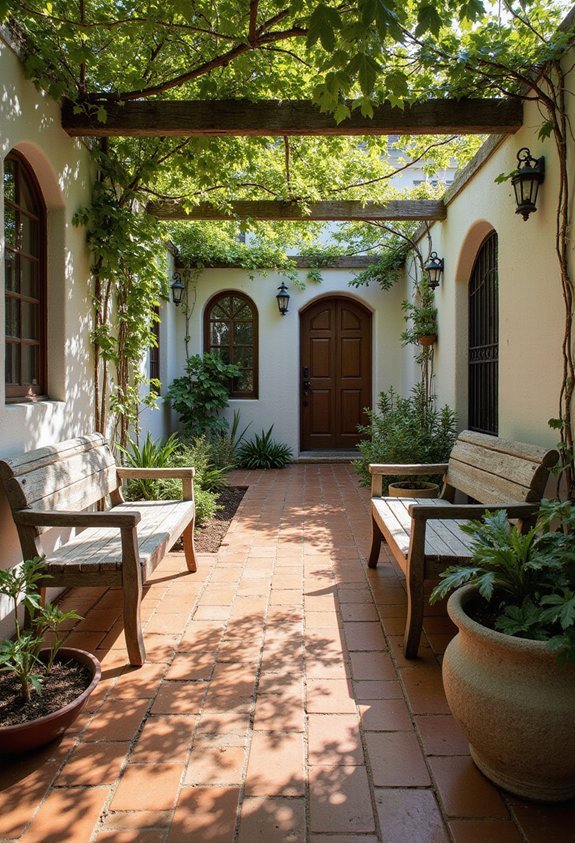
Wooden benches and seating areas frequently serve as both functional and decorative elements in Spanish-style front yards, offering you practical places to rest while enhancing the rustic, inviting character that defines this architectural tradition. You’ll find that weathered wood develops a beautiful patina over time, creating authentic visual interest that complements terracotta tiles and stucco walls. When selecting benches, you should choose designs featuring curved backs and sturdy legs, which reflect traditional Spanish craftsmanship. You can position seating near olive trees or along garden pathways to encourage relaxation and conversation. Applying natural oils occasionally helps preserve the wood while maintaining its aged appearance. You’ll notice that these functional pieces create gathering spaces that invite guests to experience your home’s outdoor charm while maintaining the Old World aesthetic that makes Spanish-style architecture distinctive.
Creating Ambiance With Wrought-Iron Lanterns and Path Lighting
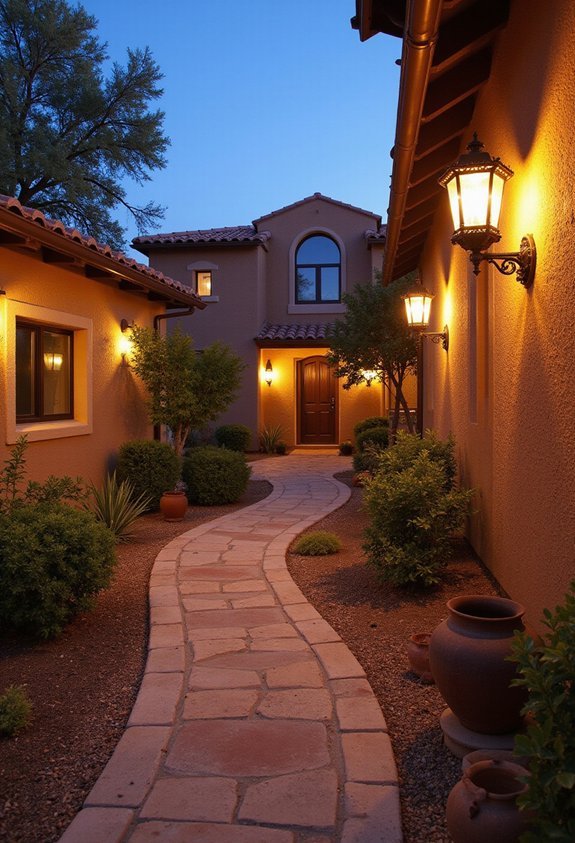
As evening approaches your Spanish-style home, wrought-iron lanterns and strategically positioned path lighting transform your front yard into an enchanting outdoor space that’s both functional and visually striking. You’ll want to install wall-mounted lanterns on either side of your entryway, which creates a welcoming focal point while casting warm, ambient light across your entrance. Along walkways, place solar-powered lanterns at regular intervals to guide visitors safely while maintaining authentic Spanish aesthetics. Consider positioning larger ornamental lanterns near seating areas or garden features to highlight architectural details and landscape elements. The intricate metalwork of wrought-iron fixtures complements Spanish design principles perfectly, adding character and depth to your nighttime outdoor environment. This lighting approach combines practical safety features with decorative appeal.
Conclusion
You’ll transform your front yard by layering stucco walls with wrought-iron gates, combining terracotta tiles with stone borders, and positioning citrus and olive trees throughout your space. You’ll enhance ambiance through weathered benches, decorative fountains, and wrought-iron lanterns, creating an authentic Spanish atmosphere. You’ll achieve Old World charm by selecting warm ochres and deep terracottas, using native plantings strategically, and arranging clay pots deliberately, resulting in a Mediterranean-inspired entrance that captures timeless elegance.