
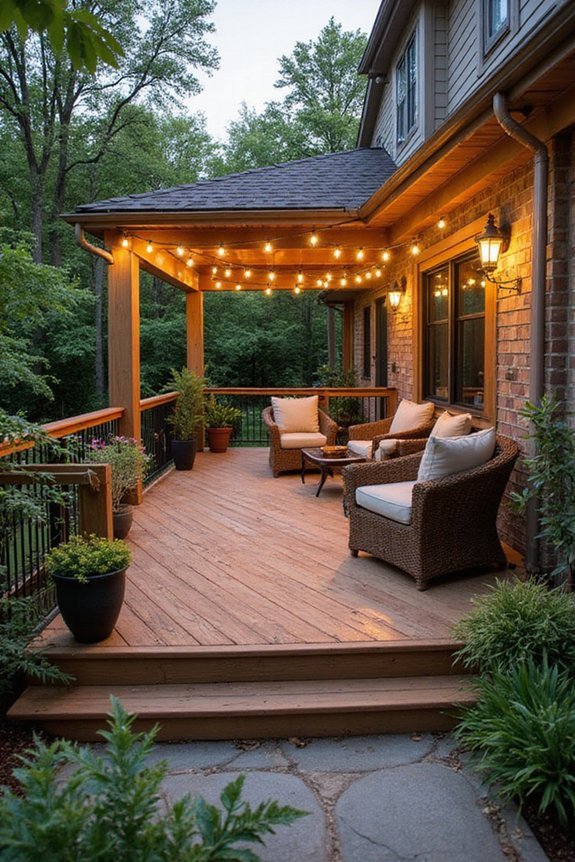
Can a front yard deck truly replicate the charm of a traditional porch? You’ll discover that thoughtful design choices—such as wraparound layouts, elevated structures, and strategic shading—transform your outdoor space into an inviting extension of your home. By matching proportions to your yard’s dimensions and selecting complementary materials, you can create that coveted porch atmosphere. But which specific strategies work best for your particular situation?
Match Your Deck to Your Front Yard’s Size
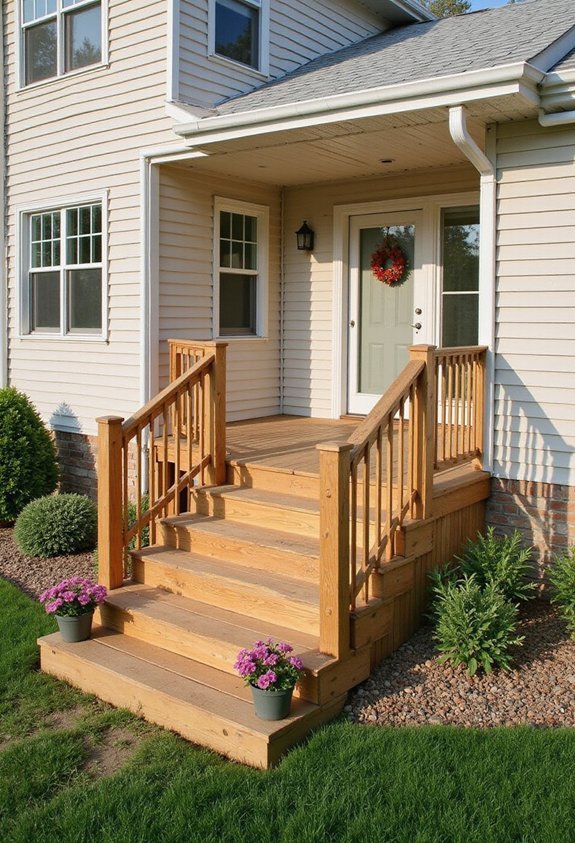
Many homeowners don’t realize that a deck’s size must work with their yard’s dimensions, not against them, because choosing the wrong proportions can make your outdoor space feel cramped, awkward, or even unsafe. You’ll want to measure your front yard carefully, noting the width and depth of available space. A good rule is that your deck shouldn’t occupy more than one-third of your yard’s total area, which maintains proper proportions and preserves usable lawn space. You should also consider your home’s size; larger homes support bigger decks, while smaller homes benefit from modest designs. Additionally, you’ll need to account for necessary clearances from property lines, sidewalks, and utility areas, ensuring your deck doesn’t create obstacles or safety hazards for visitors and family members.
Also read: 23 FRONT YARD PRIVACY Ideas Without Looking Closed In!
Go Wraparound for Classic Porch Charm
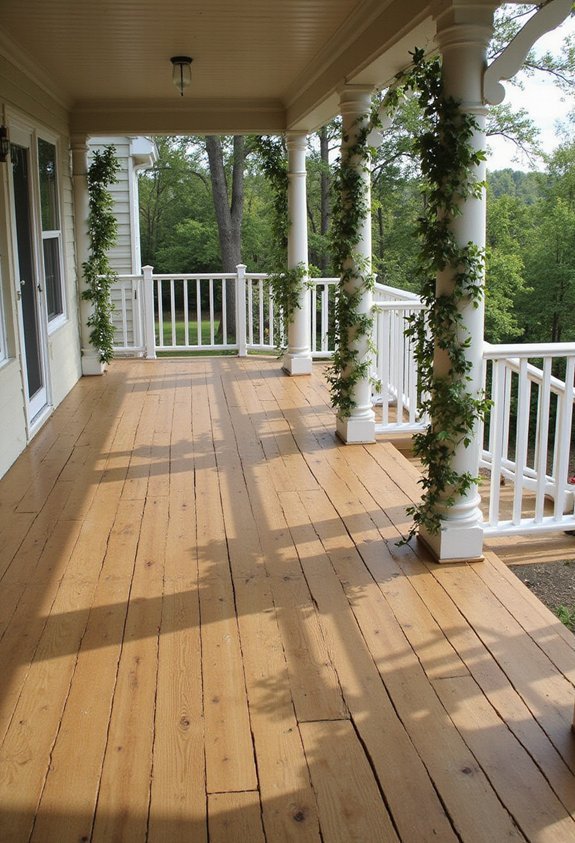
If you’re looking to add timeless elegance to your front yard, a wraparound deck extends from your home’s front facade around to one or both sides, creating a unified outdoor living space that blends functionality with traditional design appeal. This configuration offers multiple advantages for homeowners seeking classic porch charm. You’ll gain extra seating areas, improved traffic flow, and enhanced visual interest from various angles. Wraparound decks work particularly well with colonial, farmhouse, and cottage-style homes, complementing their architectural character. When planning yours, consider the deck’s width, railing styles, and material choices that match your home’s existing exterior. You might incorporate built-in benches, planters, or steps to maximize usability and aesthetic appeal, transforming your front entrance into an inviting gathering space.
Create Shade With a Pergola Top
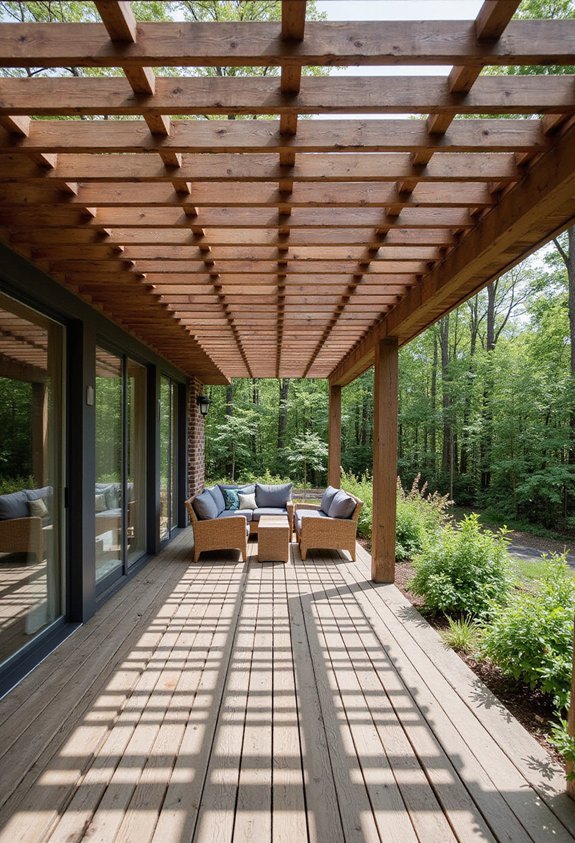
A pergola top—a framework of beams and lattice that you can attach directly to your deck—provides practical shade while maintaining the open, airy feel that makes front yard decks appealing. You’ll appreciate how pergolas filter sunlight without completely blocking it, creating dappled shadows that keep your space comfortable during hot afternoons. The lattice design allows air circulation, preventing your deck from becoming stuffy or overly warm. You can customize your pergola by adding climbing vines like clematis or jasmine, which’ll enhance both shade and aesthetic appeal. Installation involves securing the pergola structure to your deck’s framing with appropriate hardware and fasteners. You’re fundamentally creating a functional outdoor ceiling that protects you from UV rays while preserving the welcoming, open character that defines an inviting front yard deck space.
Raise It Up: Elevated Decks That Impress
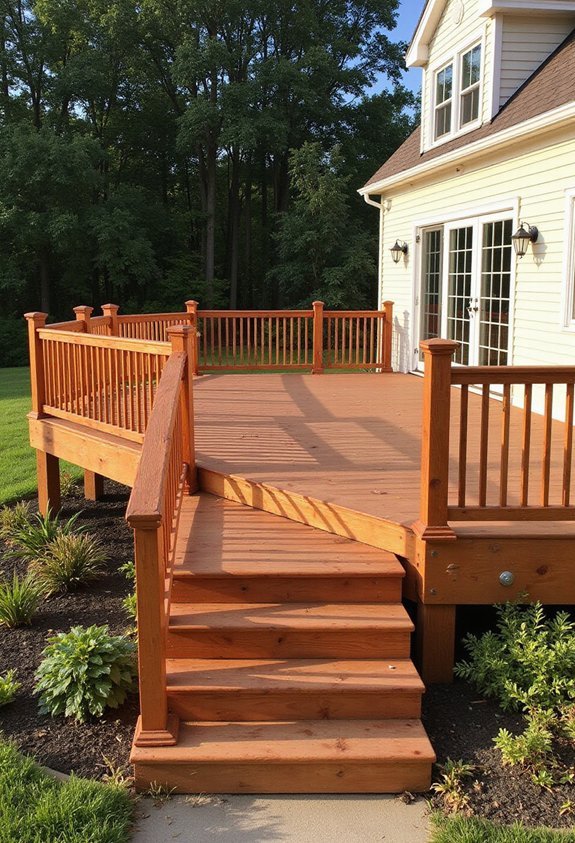
Because standard ground-level decks don’t always suit every property, elevated decks offer you a practical solution that transforms your front yard while resolving common landscape challenges. When you raise your deck, you’re creating usable space above sloped terrain, wet areas, or uneven ground that would otherwise remain problematic. Elevated decks require sturdy posts anchored deep into the ground and properly sized beams that support the entire structure’s weight. You’ll need to install adequate railings for safety and guarantee your design complies with local building codes regarding height and spacing. The additional elevation provides excellent clearance for drainage underneath, protecting the deck’s longevity. Consider how stairs and landings connect your elevated deck to ground level, creating safe, functional shifts that enhance both accessibility and visual appeal throughout your front yard space.
Screen It In to Feel Like a Sunroom
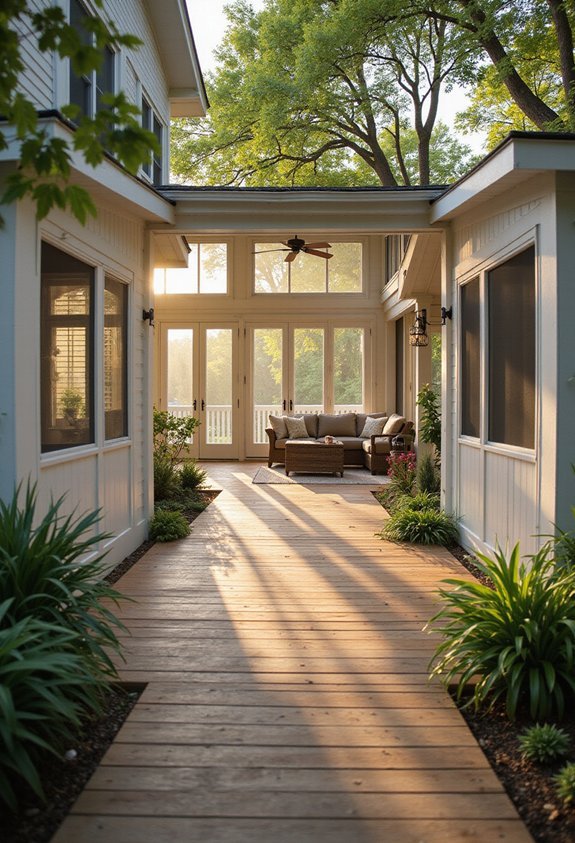
When you add screening to your front yard deck, you’re practically creating an outdoor room that protects you from insects, debris, and harsh weather while still allowing natural light and fresh air to flow through. You’ll want to choose between aluminum frames, which resist rust and require minimal maintenance, or wood frames, which offer a traditional aesthetic but need regular upkeep. Install screens on all sides to maximize protection, and consider adding a hinged door panel for easy access. Proper ventilation remains essential, so guarantee your screening design includes gaps or vents that prevent heat buildup during warm months. This transformation converts your deck into a functional sunroom where you can relax comfortably year-round without dealing with bothersome insects or environmental elements.
Build an L-Shaped Deck for Two Seating Areas
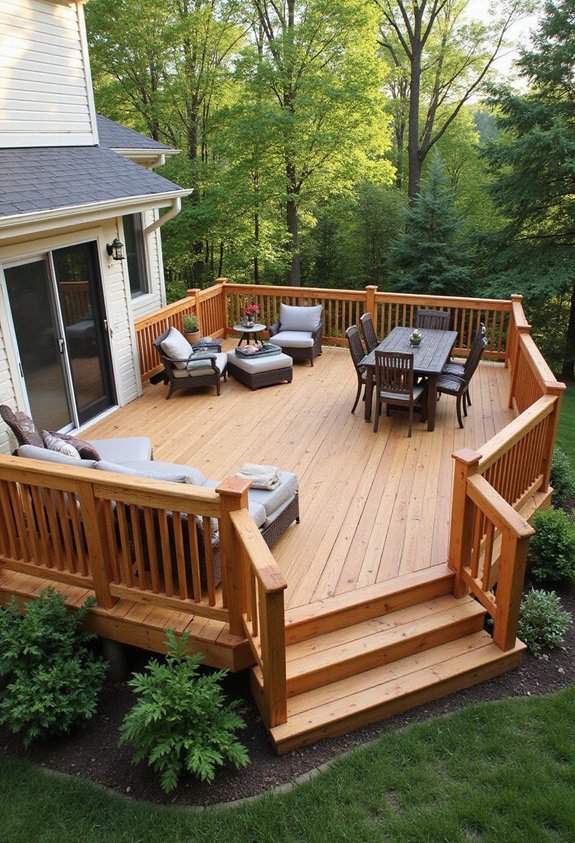
If you’ve created a screened sunroom on your front deck and you’re looking to expand your outdoor living space, an L-shaped deck design offers you the flexibility to establish two distinct seating areas that serve different purposes and accommodate various activities. You can dedicate one section to dining, complete with a table and chairs, while reserving the other area for lounging with comfortable seating and side tables. This configuration maximizes your deck’s functionality without requiring extensive square footage. The corner naturally creates a juncture point between spaces, allowing you to define each zone through different furniture arrangements or subtle elevation changes. You’ll appreciate how the L-shape provides wind protection and creates cozy, intimate spaces that encourage relaxation and social gatherings throughout your front yard.
Add Built-In Seating and Storage
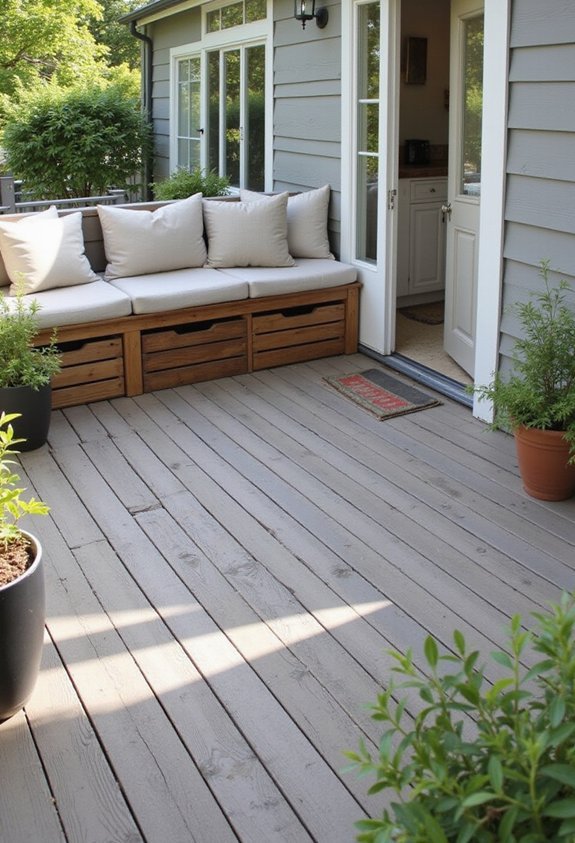
To maximize both comfort and functionality on your front deck, you’ll want to incorporate built-in seating and storage solutions that serve double duty while saving valuable space. Consider installing benches along the deck’s perimeter with hinged tops that open to reveal storage compartments beneath, perfect for storing cushions, gardening tools, or seasonal decorations. You can also build custom storage boxes at the base of deck stairs to keep items organized and accessible. Built-in seating along railings or corners provides comfortable spots for guests while eliminating the need for separate furniture. These integrated solutions create a cohesive, polished appearance while reducing clutter on your deck surface, making your front yard space feel intentionally designed and professionally finished.
Keep It Low-Profile Like a Concrete Porch
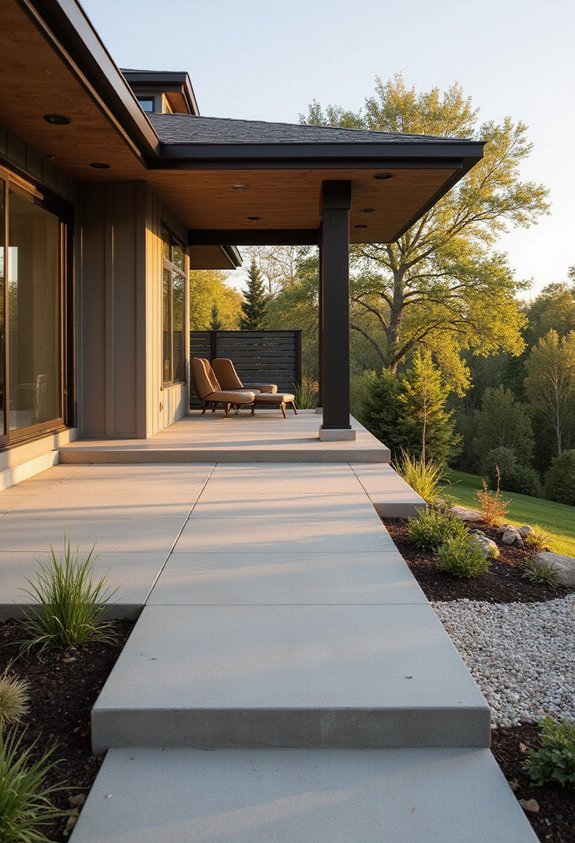
Another approach that’ll give your front yard a sleek, finished look is building your deck at ground level, similar to a concrete porch, which eliminates the need for stairs and creates a seamless connection between your home’s entrance and yard. This low-profile design works especially well if you have limited space or prefer a minimalist aesthetic. You’ll want to guarantee proper drainage beneath your deck to prevent water accumulation and potential damage. Install a moisture barrier and consider adding gravel or a French drain system underneath. Keep the deck surface flush with your foundation or just slightly elevated, and use materials that complement your home’s exterior. This approach provides practical functionality while maintaining clean, contemporary lines that enhance your property’s overall appearance.
Use Lattice and Climbing Vines for Warmth
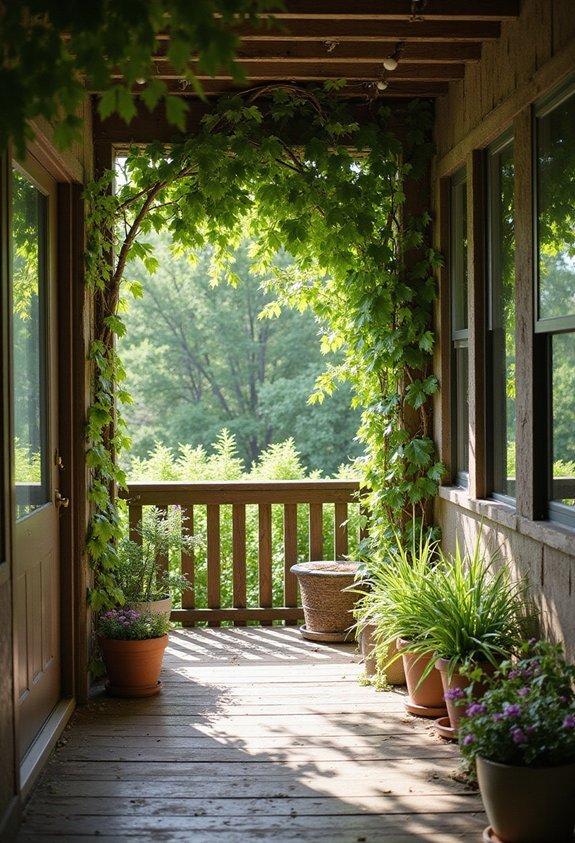
Because a front yard deck can feel stark and exposed without natural elements, you’ll want to ponder, mull over, or contemplate adding lattice panels and climbing vines to create visual interest and a more inviting atmosphere. Lattice structures serve as frameworks that support climbing plants like clematis, ivy, or jasmine, which’ll soften hard edges and provide natural screening from the street. You can install lattice panels along deck railings, overhead trellises, or freestanding sections to define your space while allowing light penetration. As vines mature and spread across the lattice, they’ll generate dappled shade, reduce wind exposure, and enhance privacy. This combination transforms your front yard deck into a cozy, sheltered retreat that mimics traditional porch characteristics while maintaining modern design appeal.
Step It Up: Multi-Level Designs
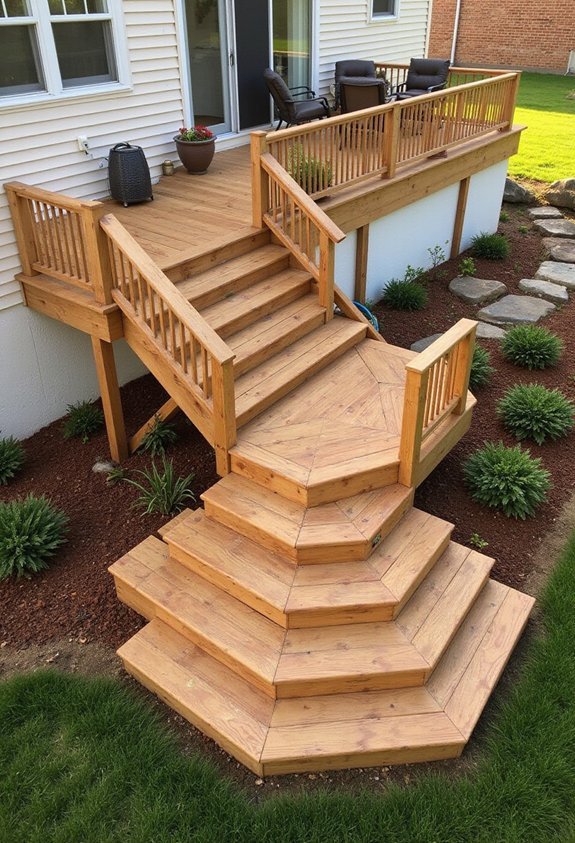
When you’re designing a front yard deck, incorporating multiple levels creates visual depth and functional separation that a single flat surface can’t achieve. You can establish different zones by stepping up or down, which helps organize seating areas, plantings, and pathways. A raised platform works well for your main gathering space, while a lower level might accommodate a fire pit or garden feature. You’ll want to guarantee each level has adequate railings and handrails for safety, especially on steeper changes. The varying heights also improve drainage and prevent water pooling. When you build multiple levels, you’re creating natural sight lines that make your front yard feel more intentional and professionally designed, enhancing both functionality and curb appeal.
Light It Right With Overhead Fixtures
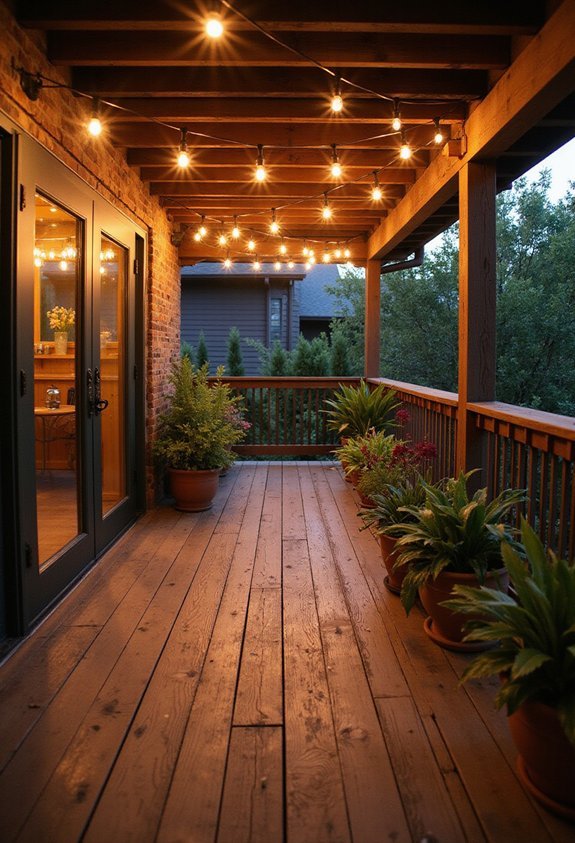
Proper lighting transforms your front yard deck from a daytime retreat into a functional and inviting space you can enjoy after sunset, and overhead fixtures serve as the backbone of an effective lighting design. You’ll want to install recessed lights or pendant fixtures that distribute illumination evenly across your deck’s surface, eliminating dark shadows where people might trip. Consider mounting fixtures along the deck’s perimeter or above high-traffic areas to maximize safety and visibility. LED options provide energy efficiency and longevity, reducing your maintenance responsibilities considerably. You should position lights strategically to highlight architectural features while creating ambient warmth that welcomes guests. Dimmer switches allow you to adjust brightness levels depending on the time of day and your specific needs, giving you complete control over your deck’s nighttime atmosphere.
Go Composite for Zero Maintenance
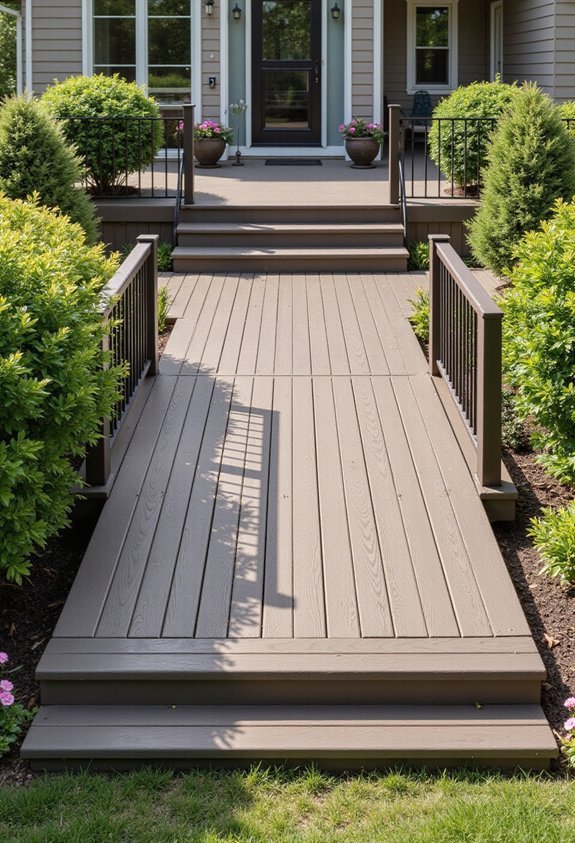
If you’re tired of spending weekends staining, sealing, and repairing wooden decks, composite decking offers a practical alternative that’ll save you considerable time and money over the years. Composite materials, which combine wood fibers with plastic polymers, resist rotting, splintering, and insect damage, eliminating the need for regular maintenance. You won’t have to worry about weather damage or seasonal upkeep, since composite boards don’t absorb moisture like natural wood does. Cleaning requires only soap, water, and occasional brushing to remove debris. While composite decking costs more initially than traditional wood, the long-term savings on maintenance, repairs, and replacement make it economical. Your front yard deck’ll maintain its appearance and structural integrity for decades with minimal effort.
Trim With Stone or Brick for Elegance
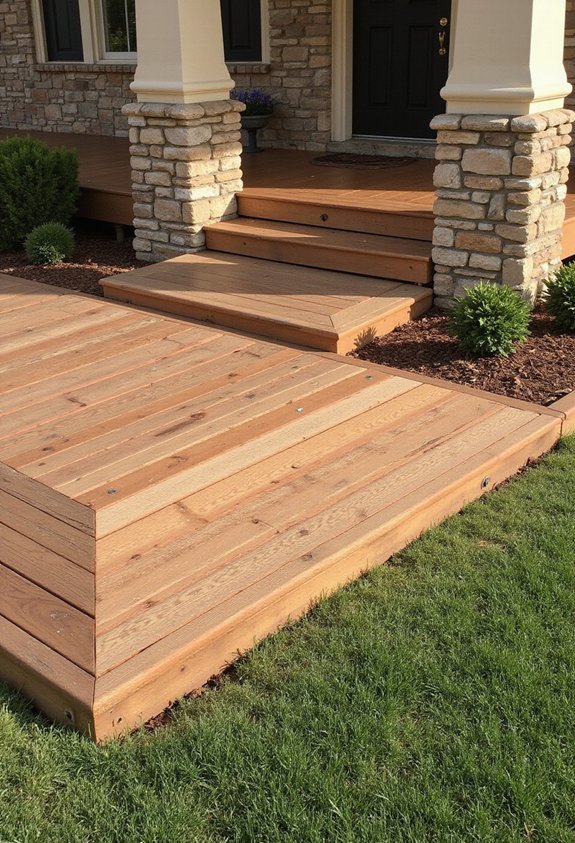
Stone and brick edging dramatically elevates your front yard deck’s visual appeal by creating a polished, finished look that complements both the deck surface and your home’s exterior. You’ll want to select materials that match your home’s architectural style, whether that’s natural stone for modern aesthetics or traditional brick for classic charm. Install edging along the deck’s perimeter to define boundaries and prevent soil erosion, which protects your deck’s structural integrity over time. Stone and brick also serve practical purposes by creating smooth connections between your deck and landscaping areas. You can arrange materials in various patterns, such as herringbone or stacked designs, to add visual interest. This investment in quality edging enhances curb appeal while providing durable, long-lasting borders that require minimal maintenance throughout the years.
Fit a Narrow Galley Deck in Tight Spaces
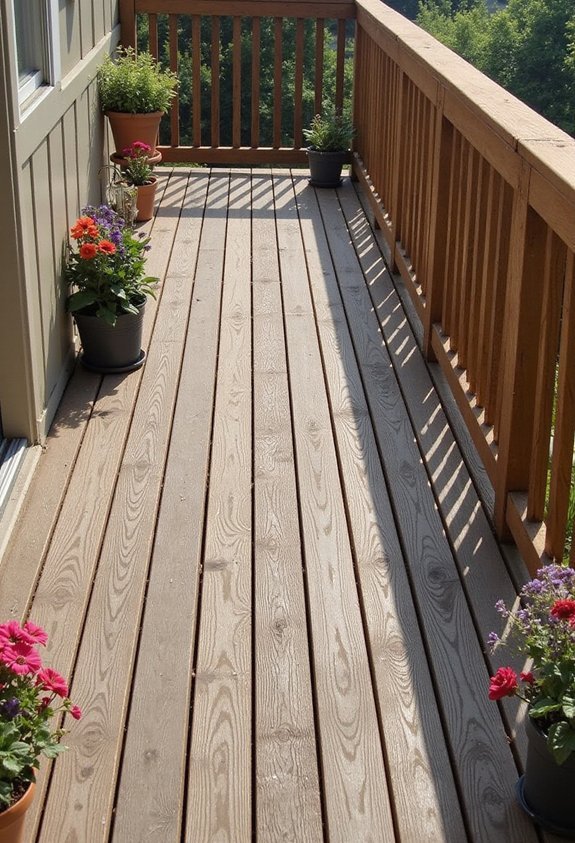
When you’re working with limited space between your home and property line, a narrow galley deck offers an efficient solution that maximizes your front yard’s potential without requiring extensive square footage. You’ll want to keep the deck’s width between four and six feet, creating a functional walkway that doesn’t overwhelm your landscape. Orient the deck parallel to your home’s entrance, directing foot traffic naturally from the street or driveway. Install built-in benches along one or both sides to provide seating without consuming additional space. Choose a single-file design that accommodates one or two people comfortably, making it ideal for conversation or quiet moments. This configuration works particularly well for narrow lots where traditional deck designs simply won’t fit appropriately.
Landscape Around Your Deck With Planters
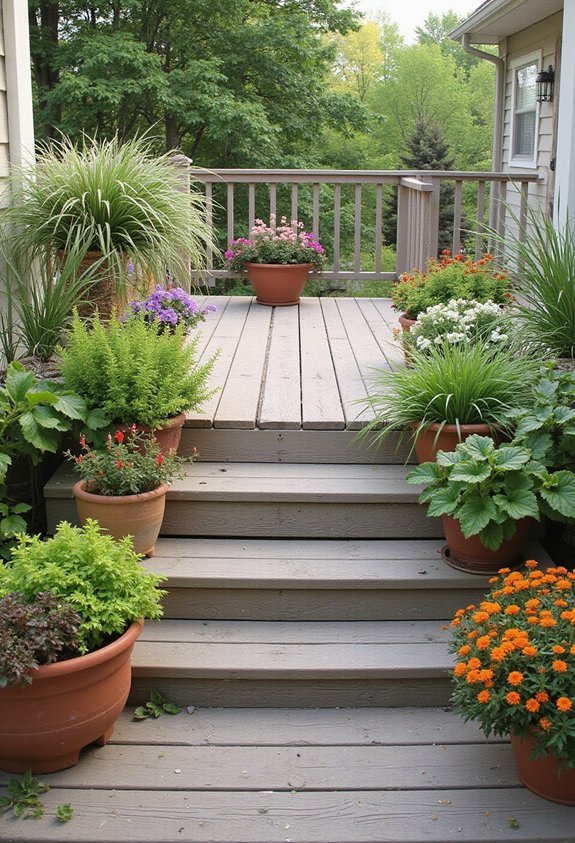
Planters positioned strategically around your deck’s perimeter create natural borders that define the space while softening the progression between your deck and the surrounding yard. You’ll want to select planters in varying heights and sizes to establish visual interest and draw the eye through different zones of your front yard. Consider placing tall planters at the deck’s corners to frame the structure, medium-sized containers along the edges, and smaller planters near the stairs for a graduated effect. Choose plants that complement your deck’s color and material, ensuring they thrive in your region’s climate conditions. This layered approach transforms your deck from an isolated platform into an integrated outdoor living area that flows naturally with your landscaping, enhancing both functionality and curb appeal.
Go Semi-Covered With a Retractable Awning
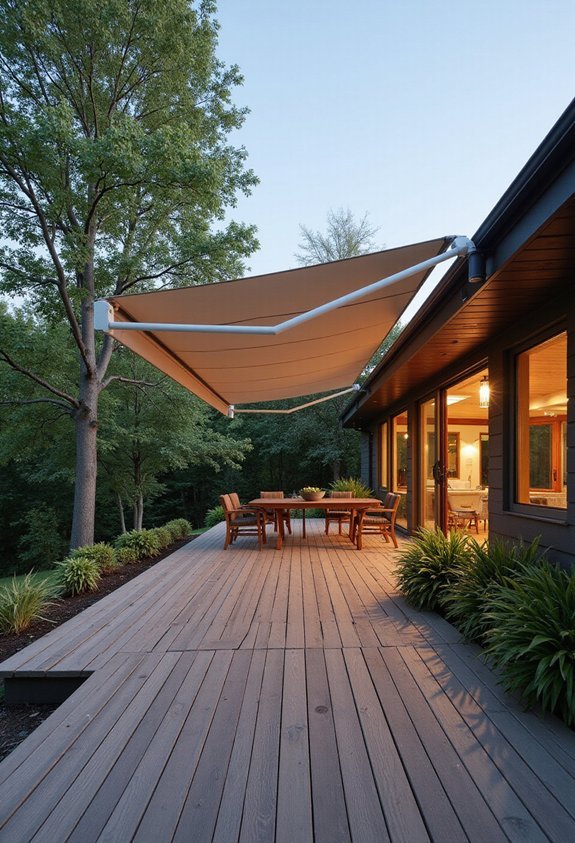
If you’re looking to extend your deck’s usability throughout the year, a retractable awning offers you the flexibility to control sunlight and weather exposure without permanently enclosing your outdoor space. You can easily extend the awning during hot summer days or unexpected rain, then retract it when you want natural light and open air. These awnings come in various sizes and colors, allowing you to match your home’s aesthetic while providing practical shade. Installation typically requires professional help to guarantee proper mounting and function. Modern retractable awnings feature motorized options with remote controls, making operation convenient. They’re durable, low-maintenance, and cost-effective compared to permanent structures, making them an ideal solution for homeowners seeking flexible outdoor coverage options.
Hang a Porch Swing and Chairs
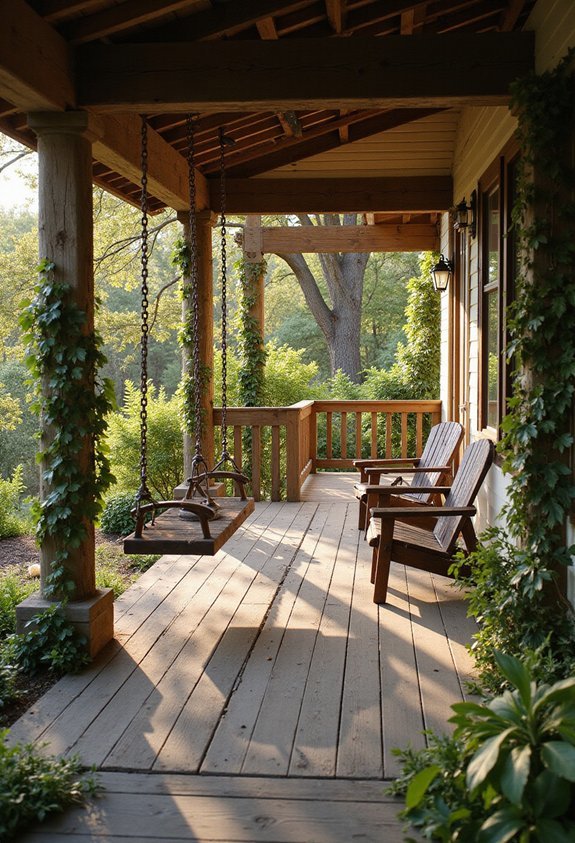
Adding seating furniture like porch swings and chairs to your front yard deck transforms the space into a comfortable gathering area where you and your guests can relax while enjoying outdoor views. When selecting pieces, consider durable materials that withstand weather conditions, such as treated wood, metal, or synthetic wicker. Position your porch swing in a shaded area to maximize comfort during hot days. Arrange chairs in conversational groupings that encourage interaction, spacing them approximately three to four feet apart for comfortable dialogue. Verify your deck’s weight capacity supports the furniture you’re installing, particularly for swings which require sturdy ceiling beams or posts. Add cushions in weather-resistant fabrics for enhanced comfort, and incorporate side tables for beverages and books, creating an inviting retreat.
Build It Affordably Without Sacrificing Style
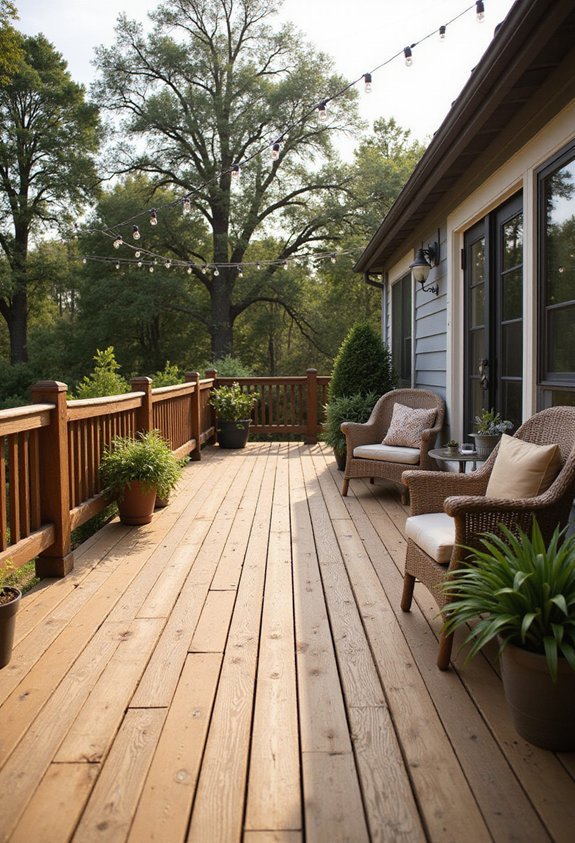
You don’t need to spend a fortune to create a stylish front yard deck that looks professionally designed and well-maintained. Consider using composite decking materials, which offer durability and aesthetic appeal at reasonable prices compared to premium wood options. You’ll want to shop around for sales on materials, as timing your purchase strategically can reduce costs substantially. Installing your deck during off-season months, like fall or winter, often means lower labor rates from contractors. You can further minimize expenses by choosing a simpler design with straight lines rather than complex angles or curves. Selecting neutral colors like gray or tan provides versatility and timeless appeal, allowing you to accessorize affordably with seasonal decorations and furnishings that match your evolving style preferences.
Conclusion
You might worry that a front yard deck won’t match your home’s style, but these eighteen ideas show you’ll find options that complement any architecture. Whether you choose wraparound designs, pergola tops, or elevated structures, you can customize materials and colors to blend seamlessly with your existing home. By following these practical approaches, you’re creating an inviting outdoor space that functions like a traditional porch while staying within your budget and preferences.