
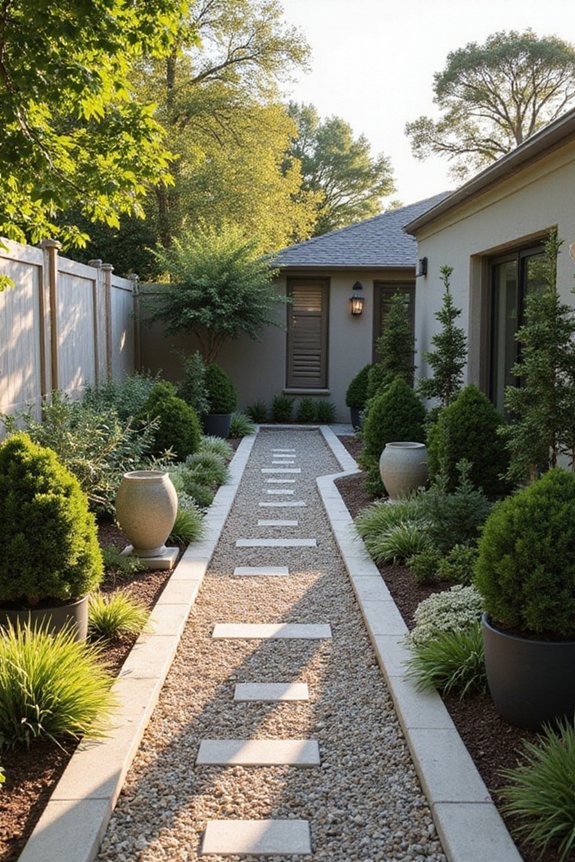
Your front yard introduces your home, reflects your style, and sets the tone for what visitors experience. You can transform this space into a thoughtfully designed area by implementing strategic choices—from selecting a bold front door color to layering plantings with intention. But what specific techniques actually create that curated, polished aesthetic you’re seeking?
Start With a Statement Entryway
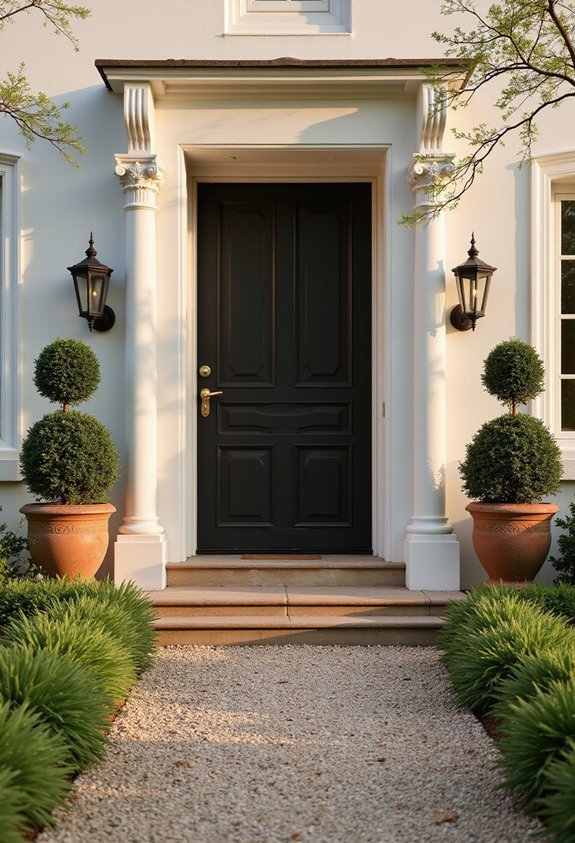
Because your front entryway‘s the first thing visitors notice about your home, it’s worth investing time and effort into making it visually impressive and welcoming. You’ll want to focus on several key elements that work together to create impact. Start by choosing a bold front door color that complements your home’s exterior, whether that’s a deep jewel tone, classic black, or vibrant red. Next, you’ll add functional and decorative pieces like planters with seasonal flowers, a welcoming doormat, and appropriate lighting fixtures that frame your entrance. Consider the architectural style of your home when selecting these elements, ensuring they match your overall aesthetic. Finally, you’ll maintain this space regularly by keeping plants healthy, cleaning surfaces, and rejuvenating seasonal décor to keep your entryway looking intentional and curated.
Also read: 22 FRONT YARD LIGHTING Ideas That Make Nights Pretty!
Choose a Cohesive Color Palette
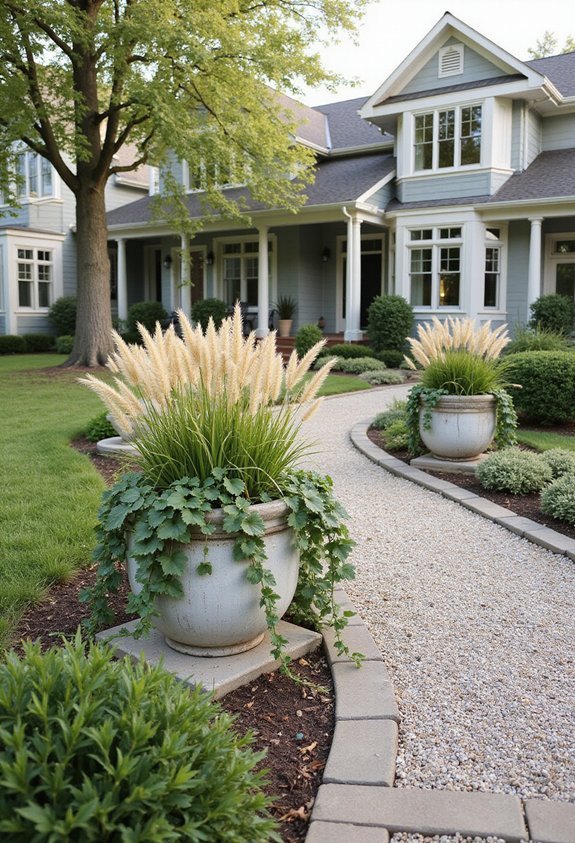
While your bold front door and welcoming entryway elements draw immediate attention, you’ll want to establish a unified color scheme that ties your entire front yard together into a polished, intentional design. Start by selecting two or three primary colors that complement your home’s exterior, then use these colors consistently across landscaping, hardscaping, and decorative elements. Consider how natural lighting affects your chosen palette throughout different times of day. Paint shutters, trim, or planters in coordinating shades, and select plants with foliage and flowers that harmonize with your scheme. This cohesive approach creates visual continuity, making your front yard feel deliberately designed rather than randomly assembled. Your color selections should reflect your home’s architectural style while establishing the aesthetic foundation for all other design choices.
Layer Your Plantings for Depth and Texture
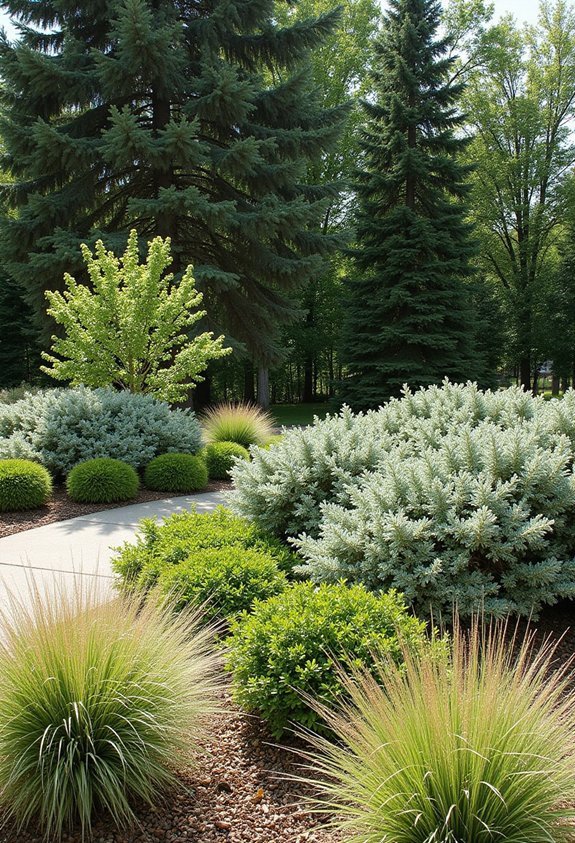
Creating visual interest in your front yard requires you to arrange plants at different heights and textures, a technique called layering that’ll transform a flat landscape into a dynamic, multidimensional space. Start by positioning tall plants, like shrubs or ornamental grasses, toward the back or corners to create a framework, then place medium-height plants in the middle section, and finally add low-growing groundcover or flowering plants in the foreground. Combining various leaf textures, such as fine, feathery foliage alongside broad, bold leaves, enhances visual depth considerably. Incorporate plants with different bloom times and colors throughout seasons to maintain interest year-round. This strategic arrangement guides viewers’ eyes across your yard while preventing a monotonous appearance, ultimately creating a sophisticated, professionally designed aesthetic that feels intentional and well-planned.
Create a Focal Point With a Statement Plant
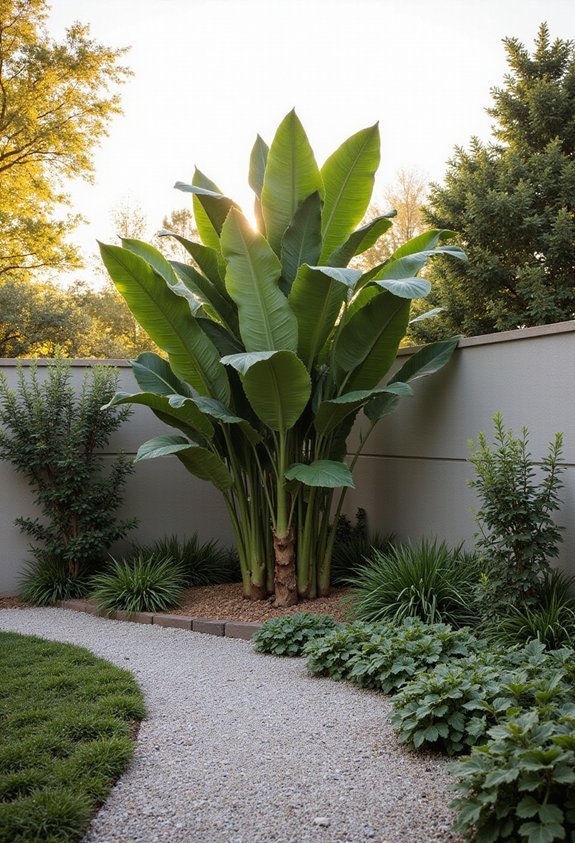
Beyond arranging plants in layers, you’ll want to select one standout specimen that immediately captures attention and becomes the visual anchor of your front yard. This statement plant should be distinctive through size, color, or shape, drawing the eye naturally when someone approaches your home. Consider ornamental trees, sculptural shrubs, or vibrant flowering plants that contrast with surrounding vegetation. Position your focal point near your entrance or in a prominent location where it’s clearly visible from the street. Guarantee it receives appropriate sunlight and soil conditions for healthy growth. A well-chosen statement plant elevates your entire front yard aesthetic, providing structure and creating a curated appearance that feels intentional and professionally designed.
Balance Open Space With Purposeful Planting
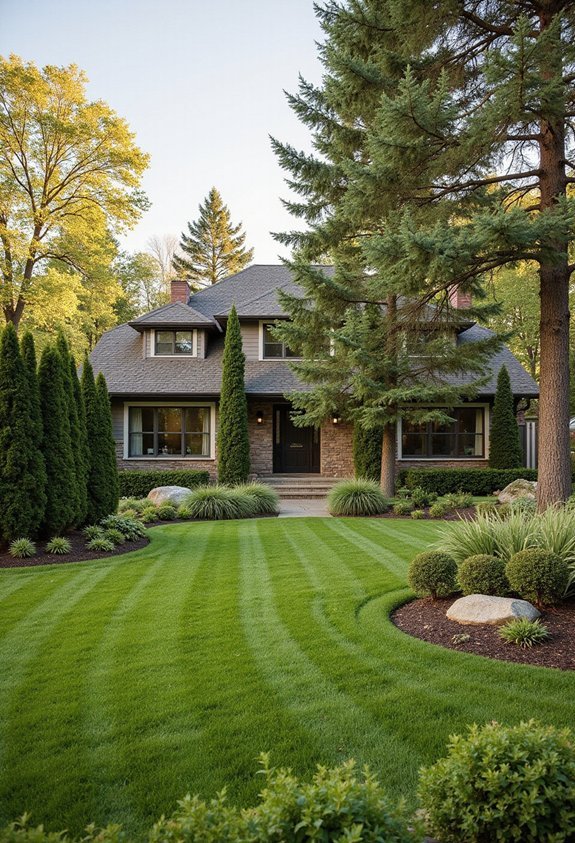
While a striking statement plant serves as your yard’s visual anchor, you’ll also need to thoughtfully manage the spaces around it to create balance and avoid overcrowding. Strategic spacing prevents your front yard from feeling cluttered or chaotic, allowing each element to breathe and stand out individually. You’ll want to distribute smaller plants, ground covers, and decorative elements across your landscape rather than clustering them together. Consider the mature size of plants when positioning them, ensuring they won’t eventually overwhelm nearby features. Leave adequate open lawn or hardscape areas that provide visual rest and highlight your focal point effectively. This purposeful approach to planting creates a curated appearance that feels intentional and well-designed, transforming your front yard into a harmonious, aesthetically pleasing space.
Use Repetition to Create Visual Rhythm
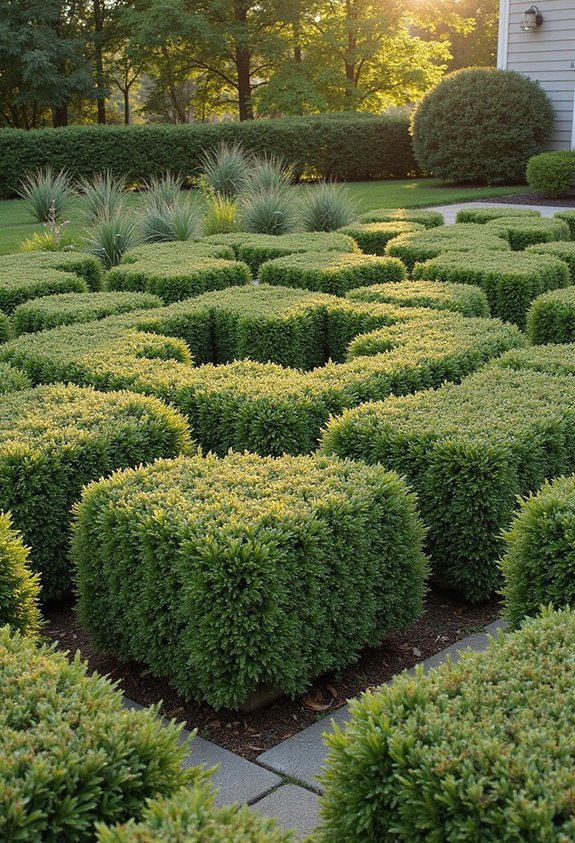
Once you’ve established balance through strategic spacing, you can strengthen your front yard’s design by repeating specific elements throughout the landscape to create a sense of visual rhythm and cohesion. When you plant the same shrub or flower variety in multiple locations across your yard, you’re guiding viewers’ eyes naturally through the space, which produces a unified, intentional appearance. You might repeat a particular plant every few feet along a pathway or mirror plantings on both sides of your entrance. Similarly, repeating hardscape materials like pavers, gravel, or stone edging reinforces this visual pattern. The key’s selecting elements you genuinely like since you’ll see them frequently. This repetitive approach transforms random plantings into a carefully orchestrated design that feels professionally curated and deliberately planned.
Incorporate Pathways That Guide the Eye
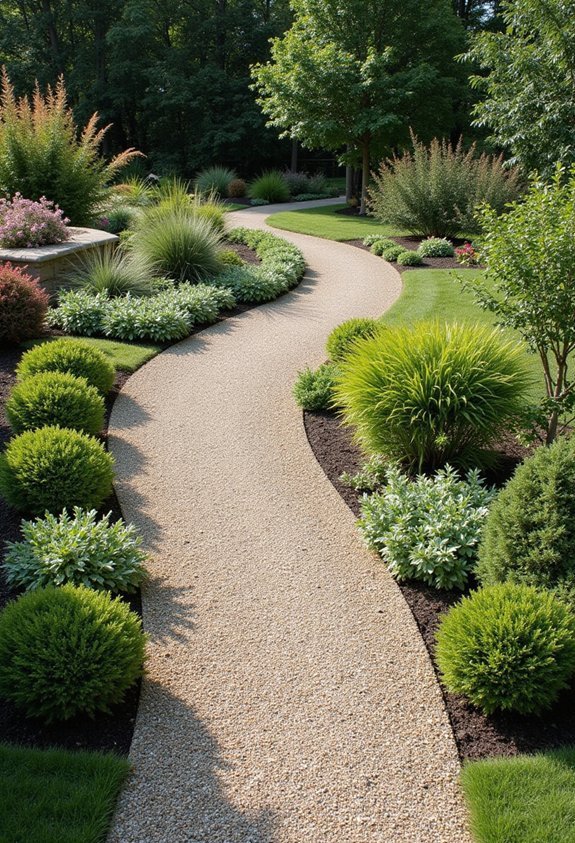
Pathways in your front yard serve a practical purpose while also functioning as a powerful design tool that directs viewers’ attention and creates movement through your landscape. You can use curved pathways to draw the eye gradually across your property, making smaller yards feel larger and more dynamic. Straight pathways, conversely, create formal structure and guide visitors efficiently toward your entrance. You’ll want to choose materials that complement your home’s style—gravel, stone, pavers, or mulch all offer distinct aesthetic qualities. Consider lighting your pathways with solar stakes or subtle ground lights to enhance visibility and add nighttime appeal. Strategic pathway placement encourages people to explore your entire front yard rather than walking directly to your door, maximizing the visual impact of your landscaping investments and creating intentional focal points throughout your space.
Frame Your Front Door With Intentional Landscaping
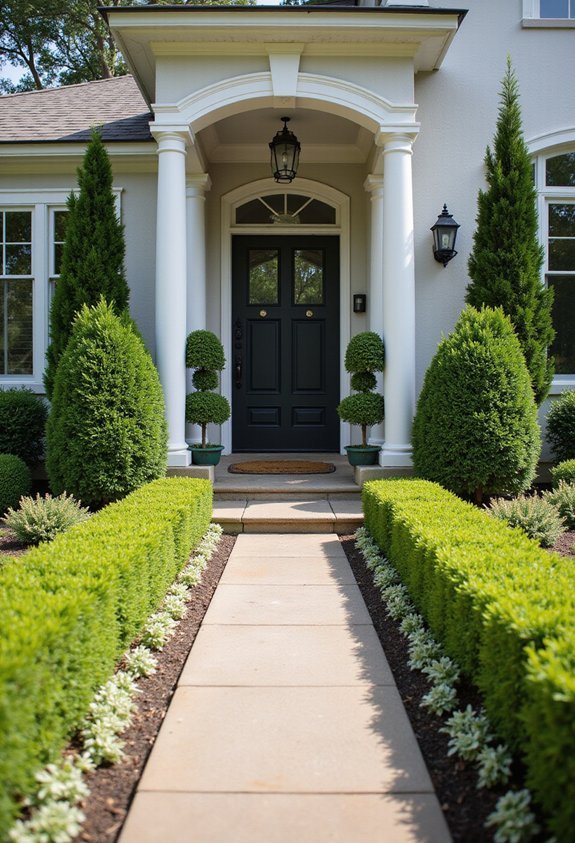
Your front door is the primary focal point of your home’s exterior, so framing it with intentional landscaping transforms it from a simple entrance into a welcoming architectural feature that anchors your entire front yard design. You’ll want to plant symmetrical shrubs on either side of your doorway to create balance and draw visitors’ eyes directly toward the entrance. Consider adding flowering plants, such as hydrangeas or boxwoods, that complement your door’s color and your home’s architectural style. Install uplighting near these plantings to highlight them during evening hours, enhancing visibility and safety. You can also use potted plants and planters to add layers of greenery without permanent installations. This strategic framing establishes a clear visual hierarchy that makes your entryway feel intentional and thoughtfully designed.
Use Fencing, Gates, and Trellises for Architectural Interest
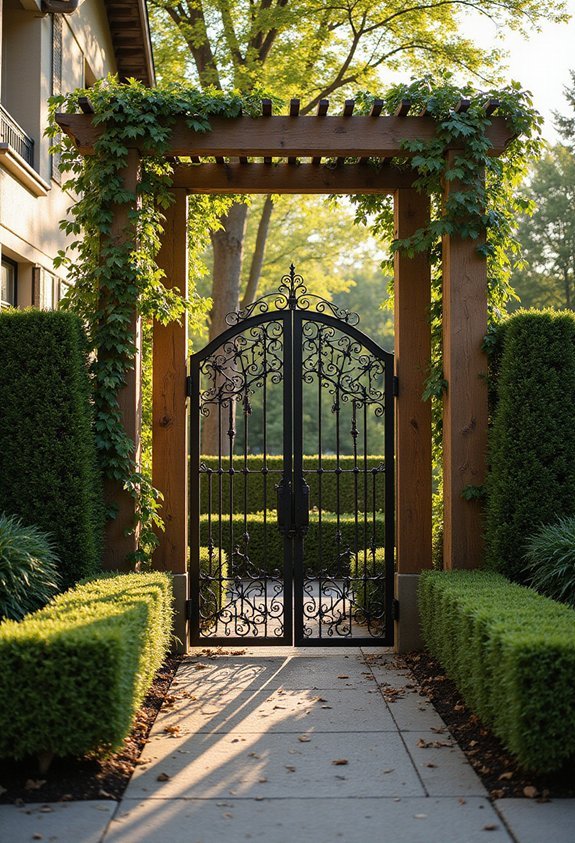
Three structural elements—fencing, gates, and trellises—work together to create visual depth and establish defined spaces within your front yard while adding layers of architectural interest that complement your home’s design. You can choose materials like wood, metal, or vinyl that match your home’s exterior style, ensuring cohesive aesthetics throughout your property. Fencing defines boundaries and provides privacy, while decorative gates serve as focal points that draw attention and control entry flow. Trellises, whether standalone or attached to fencing, offer vertical surfaces for climbing plants like ivy or clematis, creating natural texture and dimension. Together, these elements frame your yard intentionally, guide visitors’ eyes strategically, and transform your front space into an organized, visually interesting landscape that enhances your home’s overall curb appeal.
Add Dimension With Mixed Materials and Textures
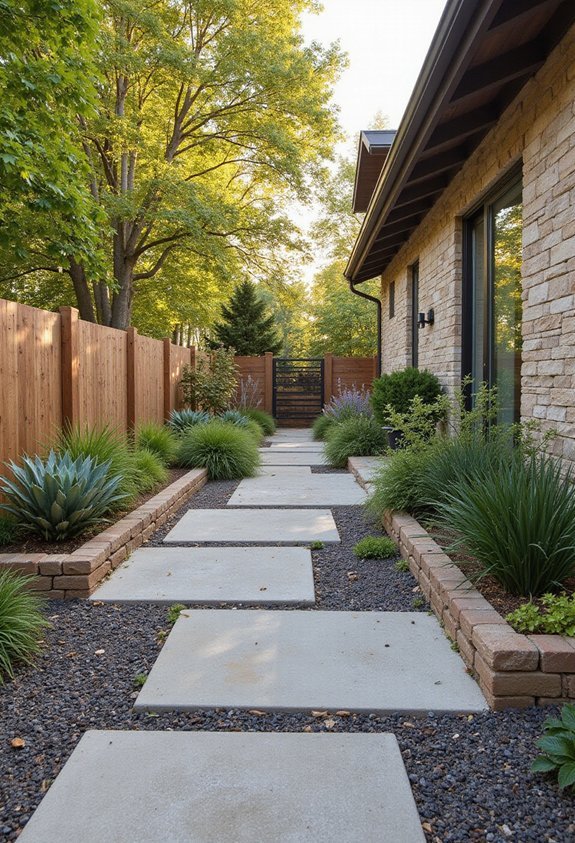
Combining different materials and textures throughout your front yard creates visual interest and prevents your landscape from looking flat or one-dimensional. You can mix stone pathways with mulch beds, incorporate wooden accents alongside metal railings, and blend pavers with gravel areas to establish depth and complexity. Consider varying plant textures by pairing soft ornamental grasses with spiky shrubs and broad-leafed plants, which creates striking contrasts. Adding hardscape elements like brick, slate, or concrete in different finishes provides additional dimension and sophistication. You might also introduce water features, decorative rocks, or wooden benches that break up monotonous spaces. These layered materials work together to guide visitors’ eyes throughout your landscape, making your front yard feel intentionally designed and visually engaging.
Select Low-Maintenance Groundcover for Clean Beds
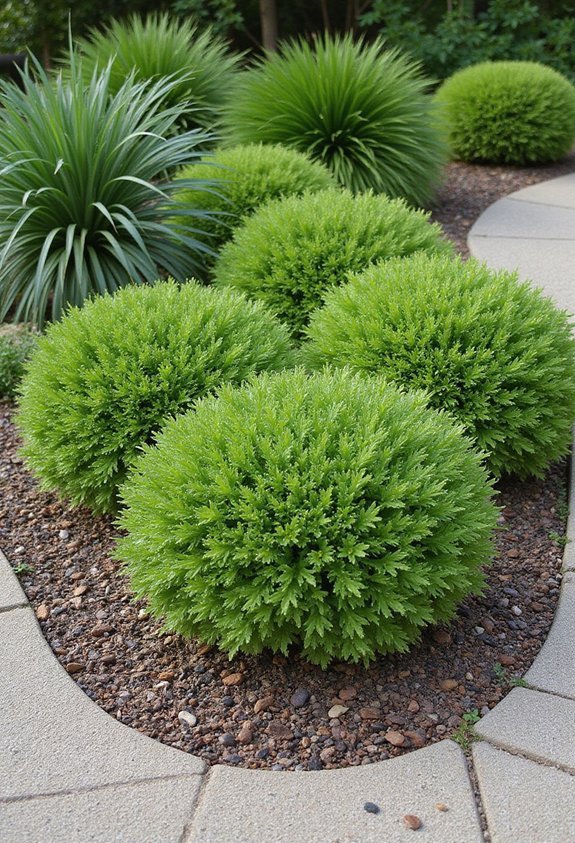
Once you’ve established the layered materials and textures throughout your front yard, selecting the right groundcover plants‘ll help you maintain those clean, polished beds without requiring constant upkeep. You’ll want to choose groundcovers that spread naturally, suppress weeds, and tolerate your local climate conditions. Creeping sedums, ajuga, and ornamental grasses work well in most regions and don’t demand frequent trimming or fertilizing. When you plant groundcover, space plants appropriately so they’ll fill in gaps within one to two seasons. You’ll reduce the need for mulch replacement and minimize weeding tasks considerably. Selecting hardy, drought-tolerant varieties means you’ll spend less time watering during dry periods. Your front beds’ll maintain that intentional, curated appearance while demanding minimal maintenance throughout the year.
Use Container Gardens for Flexible, Seasonal Design
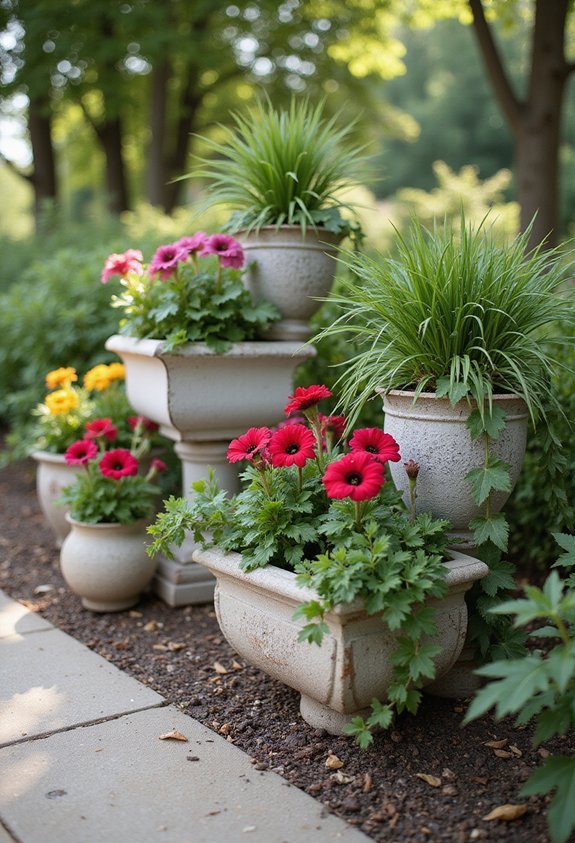
While groundcover plants provide a stable foundation for your front beds, container gardens offer you a different kind of design flexibility that’ll let you refresh your yard’s appearance throughout the year without permanently altering your landscape. You can easily swap plants seasonally, placing vibrant flowers in spring and summer, then shifting to ornamental grasses and evergreens for fall and winter interest. Containers also let you experiment with color combinations and plant varieties before committing to permanent landscape changes. Position them strategically along pathways, near your entrance, or clustered on your porch to create focal points that draw attention to specific areas. This approach gives you complete control over your front yard’s aesthetic while requiring minimal maintenance and allowing you to adjust your design whenever you’d like.
Establish Consistent Edge Lines and Clean Borders
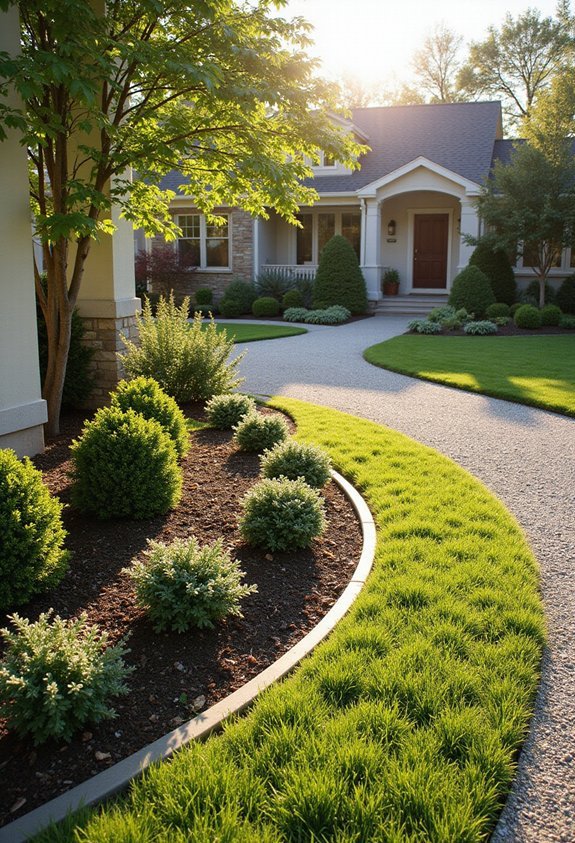
One of the most impactful ways you can elevate your front yard’s appearance is by creating sharp, well-defined borders between your planting beds and lawn areas, which instantly makes your entire landscape look more polished and intentional. You’ll achieve this by using edging materials like metal strips, stone, or composite borders that create distinct lines separating different landscape zones. Clean borders prevent grass from creeping into flower beds and soil from spilling onto walkways, which reduces maintenance while maintaining visual organization. Regular edging maintenance—trimming overgrown plants and removing debris from border lines—keeps your landscape looking intentional and manicured. Consistent edge lines throughout your yard create visual continuity, guiding the eye smoothly across your property and establishing a cohesive, professionally designed appearance that enhances your home’s overall curb appeal.
Install Strategic Uplighting for Evening Impact
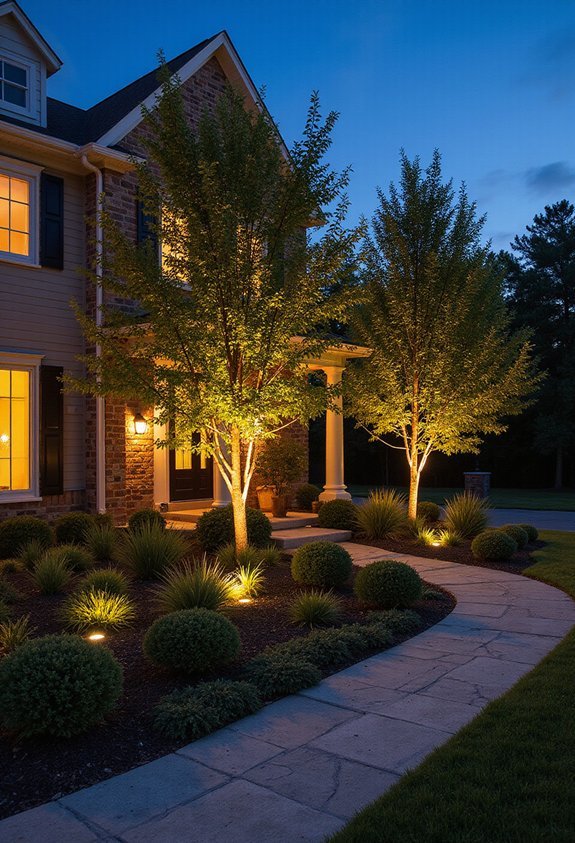
Strategic uplighting transforms your front yard’s visual impact after sunset, extending your home’s curb appeal into the evening hours and creating dramatic architectural interest that wasn’t visible during daylight. You’ll position lights at ground level, angling them upward toward trees, architectural features, or focal points you want to emphasize. This technique highlights texture, depth, and dimension while establishing a welcoming nighttime presence. When selecting uplights, choose weather-resistant LED fixtures that’ll withstand outdoor conditions year-round. Install them strategically around entry pathways, near significant landscape elements, or along your home’s foundation to guide visitors safely while creating visual intrigue. Consider spacing them approximately three to five feet apart for even illumination, and use warm-toned bulbs to maintain cohesive aesthetic appeal throughout your curated front yard design.
Choose Lighting That Enhances, Not Overwhelms
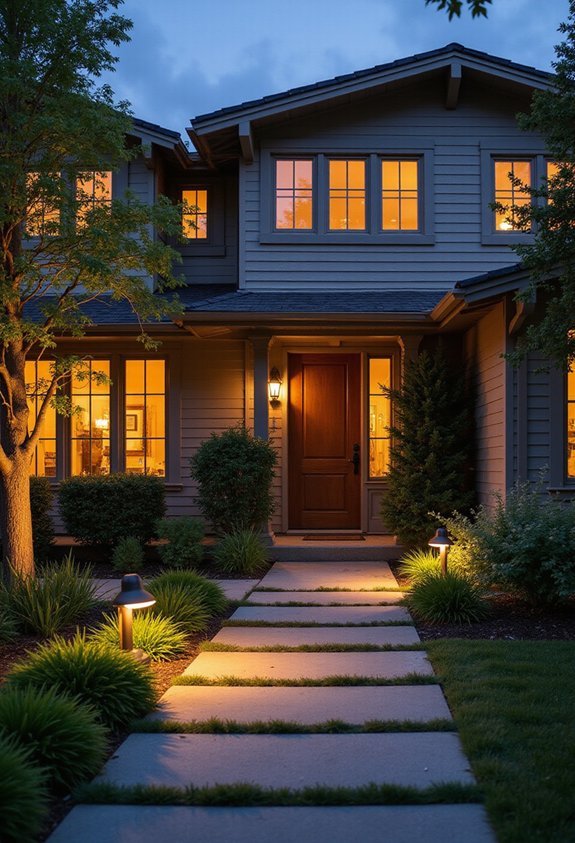
As you’re planning your front yard’s nighttime lighting scheme, you’ll want to strike a careful balance between visibility and restraint, since excessive lights can create glare, wash out your landscape’s natural features, and make your home feel more like a commercial space than a welcoming residence. Instead, focus on layering your lighting strategically, using lower-wattage bulbs that illuminate pathways and highlight architectural details without overwhelming the space. Consider warm color temperatures, which feel more inviting than harsh white light, and position fixtures to cast shadows that add depth and dimension to your plantings. Use dimmers when possible, allowing you to adjust brightness according to the season and time of evening. This measured approach creates an elegant nighttime environment that feels intentional and sophisticated.
Mix Native Plants With Curated Specimens
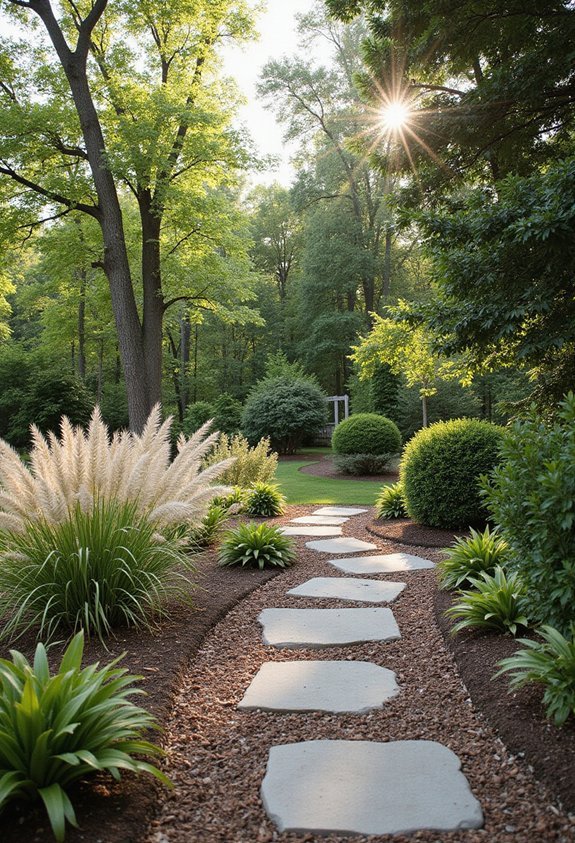
Your lighting design’s success depends partly on what it illuminates, which brings you to one of the most impactful decisions you’ll make for your front yard: selecting the right plants. You’ll want to combine native plants, which thrive in your local climate and require less maintenance, with carefully chosen specimen plants that add visual interest and personality. Native plants establish a sustainable foundation, reducing watering needs and supporting local wildlife. Curated specimens—whether flowering shrubs, ornamental grasses, or unique trees—create focal points and layers throughout your landscape. This balanced approach means you’re not fighting against your environment while still achieving that polished, intentional look. You’ll achieve better results by grouping plants strategically, ensuring they complement each other in height, color, and texture, creating a cohesive design that feels both natural and expertly planned.
Pick the Right Ground Material for Your Beds
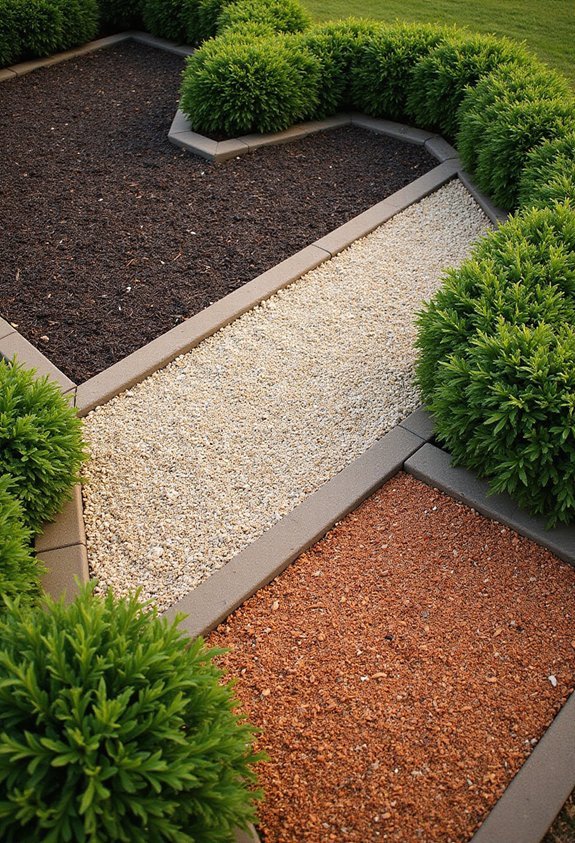
Once you’ve arranged your native plants and specimen pieces, the ground material you choose will tie everything together while serving practical purposes that directly impact your landscape’s health and appearance. You’ll want to ponder mulch, which retains soil moisture, regulates temperature, and prevents weeds from taking over your beds. Alternatively, decorative stone or gravel offers durability and a polished look, though it requires periodic raking and weeding maintenance. Bark chips provide excellent drainage and aesthetic appeal while breaking down gradually to enrich your soil. Your choice depends on your climate, maintenance preferences, and overall design vision. Each material influences water retention, plant growth, and visual cohesion, so evaluate how each option complements your curated plant selection before making your final decision.
Maintain Your Design Through Seasonal Care
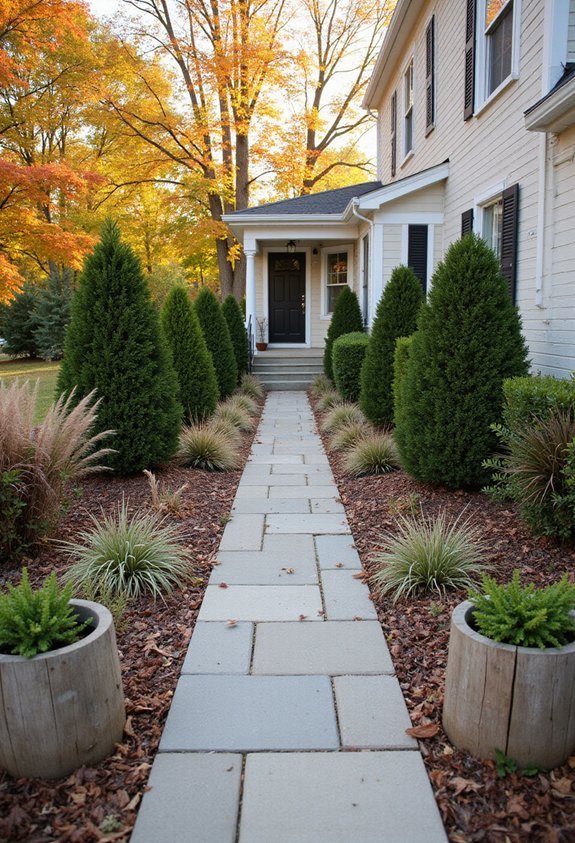
The ground materials you’ve selected will only stay beautiful and functional if you commit to regular upkeep throughout the year, since seasonal changes bring different challenges to your front yard landscape. In spring, you’ll need to remove debris and refresh mulch that’s broken down over winter months. During summer, you’ll water beds more frequently and pull weeds that thrive in warm weather. Fall requires you to clear fallen leaves and prepare beds for dormancy by adding fresh organic matter. Winter demands that you protect delicate plants and manage drainage around your beds to prevent water damage. By addressing each season’s specific needs, you’ll preserve your curated design and keep your ground materials performing their best year-round.
Conclusion
You’ve now discovered that transforming your front yard isn’t actually magic—it’s just following nine straightforward steps that somehow everyone forgot existed. By selecting bold colors, layering plants strategically, and maintaining seasonal updates, you’ll create a space that looks intentionally designed rather than accidentally landscaped. Your neighbors will certainly wonder how you’ve mastered what’s fundamentally organized plant placement and consistent upkeep, when really you’re just applying basic design principles with genuine effort.