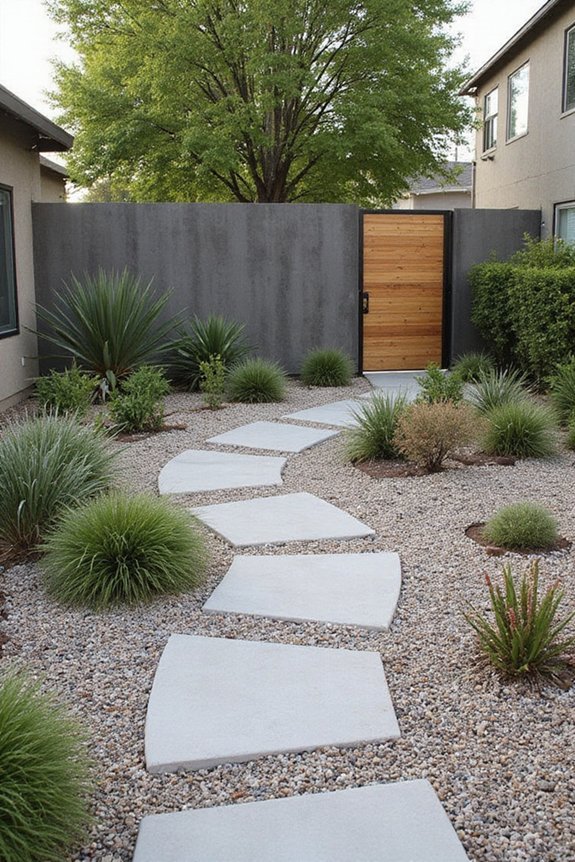
You can transform your front yard into a neat, attractive space without spending hours on upkeep. By combining smart hardscaping choices, selecting the right plants, and implementing practical maintenance strategies, you’ll create lasting curb appeal that stays polished year-round. However, knowing where to begin and which techniques work best together is where many homeowners struggle—and that’s exactly what you need to discover.
Start With Hardscaping to Reduce Plant Maintenance
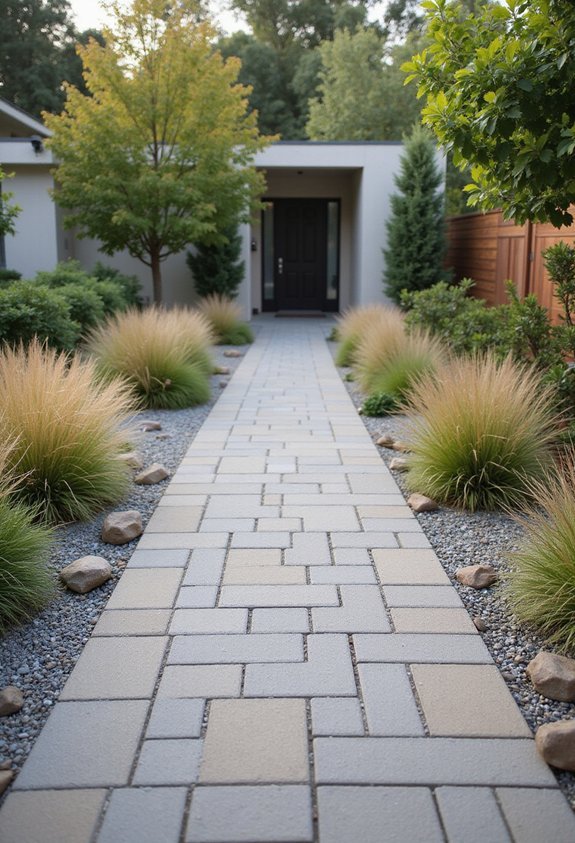
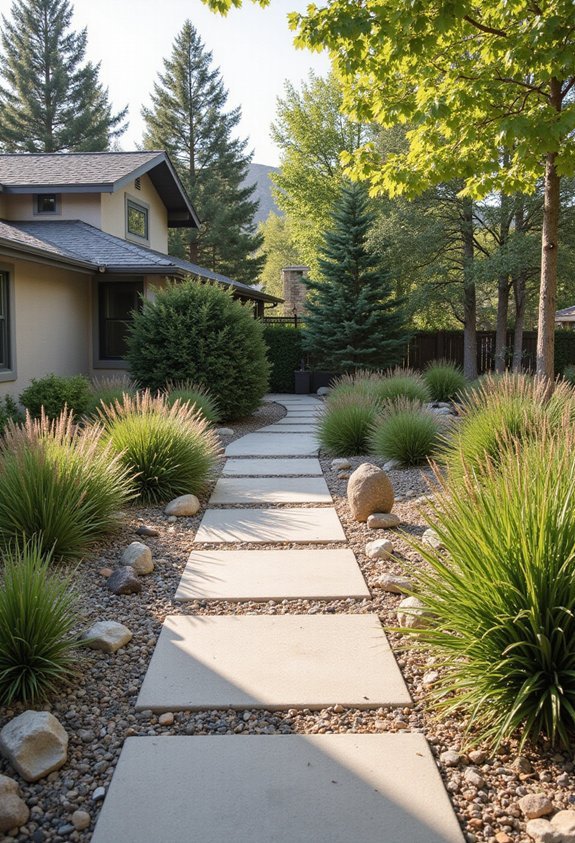
If you’re looking to create a front yard that doesn’t demand constant attention, hardscaping—which includes patios, walkways, retaining walls, and gravel beds—should be your foundation because these permanent structures require far less upkeep than traditional plant-filled gardens. By incorporating hardscape elements, you’ll reduce the total area you need to maintain, which means less weeding, watering, and trimming. Concrete, stone, and gravel create defined spaces that naturally suppress weed growth while providing functional areas for walking and gathering. You can strategically place hardscaping to frame your entryway, create visual interest, and establish clean lines throughout your yard. This approach doesn’t eliminate plants entirely; instead, it minimizes their quantity, allowing you to focus your maintenance efforts on select landscaping features that genuinely enhance your home’s curb appeal.
Also read: 21 HARDSCAPE FRONT YARD Layouts With Clean Lines!
Choose Drought-Resistant Plants and Natives
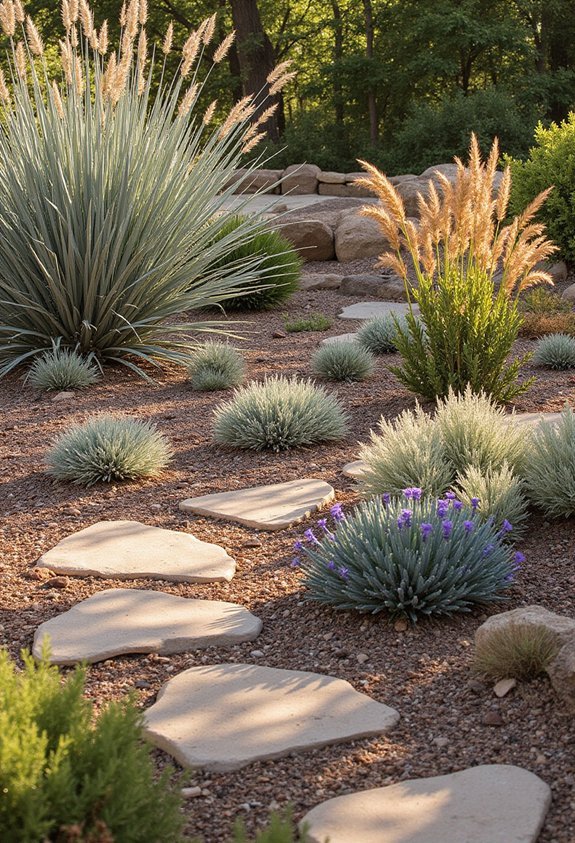
Once you’ve established your hardscape foundation, you’ll want to select plants that’ll thrive in your climate without demanding excessive watering, fertilizing, or pruning. Native plants are excellent choices because they’re naturally adapted to your region’s rainfall, temperature, and soil conditions, meaning they’ll require greatly reduced intervention from you. Drought-resistant varieties like ornamental grasses, sedums, and xeriscaping plants conserve water efficiently, reducing both your maintenance workload and utility bills. When selecting plants, research which species flourish in your specific hardiness zone and soil type. Grouping plants with similar water needs together guarantees you’ll water efficiently without overwatering some areas while underwatering others. This strategic plant selection transforms your front yard into a self-sustaining landscape that stays attractive year-round with minimal effort.
Install Mulch for Weed Control and Moisture Retention
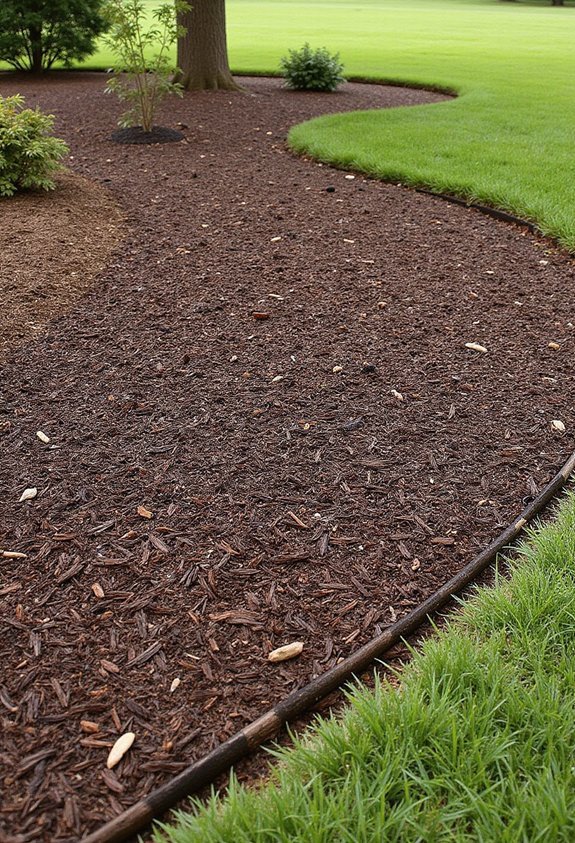
As your plants become established in your newly designed landscape, applying mulch around them’ll provide multiple benefits that’ll reduce your maintenance needs substantially. Mulch acts as a protective barrier between your soil and the sun, which prevents weed seeds from germinating and spreading throughout your yard. This barrier also helps retain soil moisture, meaning you’ll water less frequently during dry periods, saving you time and resources. When selecting mulch, choose organic materials like wood chips or bark that break down gradually and improve soil quality over time. Apply mulch two to three inches thick around plants, keeping it a few inches away from plant stems to prevent rot and pest problems. Replenishing your mulch layer annually‘ll maintain its effectiveness and keep your front yard looking neat.
Install Edging to Define Planting Areas
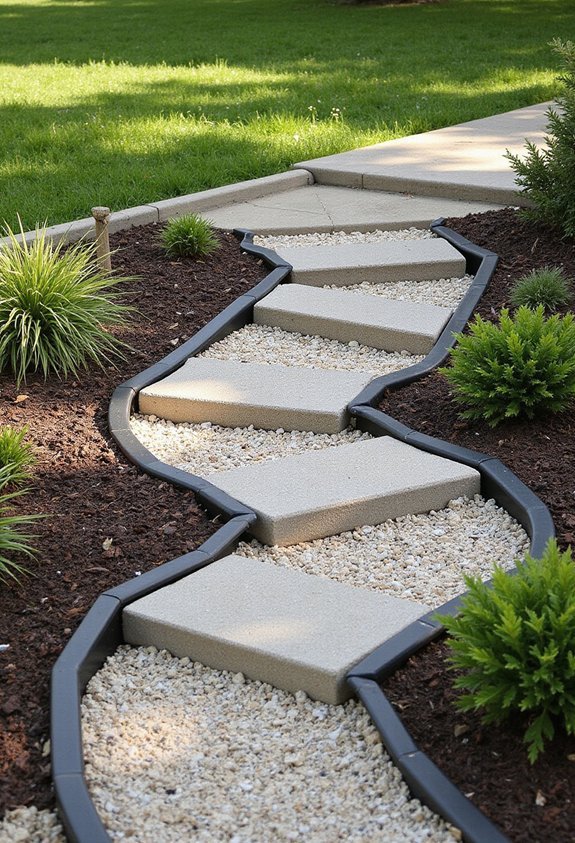
Well-defined borders between your planting areas and hardscaping elements like driveways, walkways, and patios’ll create a polished appearance while preventing ground covers and mulch from spreading into spaces where you don’t want them. You can choose from various edging materials, including metal strips, plastic borders, stone, or brick, each offering different aesthetic and functional benefits. Metal edging provides a clean, modern look and durability, while stone or brick options complement traditional landscapes. Install your chosen edging at least two to three inches deep to effectively contain mulch and prevent plant creep. Proper edging also reduces the need for frequent trimming and maintenance along borders, making your yard easier to manage and maintaining crisp lines that enhance your landscape’s overall appearance.
Opt for Gravel or Rock Landscaping
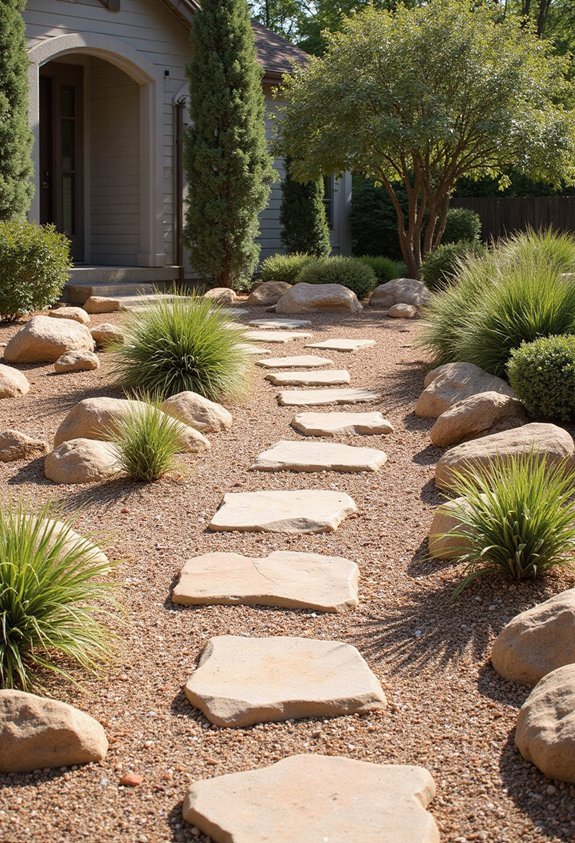
If you’re looking for a low-maintenance alternative to traditional grass or mulch, gravel and rock landscaping offer excellent solutions that require minimal upkeep while providing visual interest and practical benefits to your front yard. You’ll find that gravel and rocks suppress weeds effectively, reduce watering needs, and prevent soil erosion around your plants. These materials come in various colors and sizes, allowing you to create attractive patterns and textures that complement your home’s exterior. When installing gravel or rock landscaping, you should first lay down landscape fabric beneath the material to further inhibit weed growth. You can arrange rocks strategically around plants and along pathways for both aesthetic appeal and functional definition. Occasionally rake the gravel to maintain an even appearance and remove debris that accumulates over time.
Plant Evergreens That Need Minimal Pruning
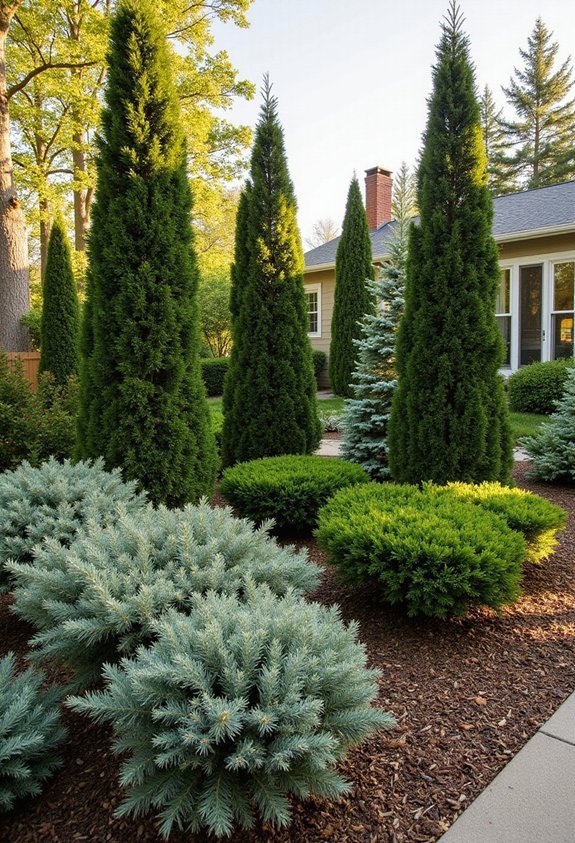
Many homeowners don’t realize that certain evergreen plants can thrive in a front yard with little to no pruning required, making them an ideal choice for anyone seeking a genuinely low-maintenance landscape. You’ll find that columnar junipers, boxwoods, and dwarf Alberta spruces naturally maintain compact, attractive shapes without extensive trimming, saving you time and effort throughout the year. These plants grow slowly and predictably, which means you won’t struggle with overgrowth or constant shaping demands. When you do prune, you’re simply removing dead branches or maintaining your desired shape rather than fighting against aggressive growth patterns. By selecting evergreens with naturally tidy growth habits, you’re establishing a landscape that looks polished and intentional while requiring minimal intervention and upkeep from you.
Install an Automated Irrigation System
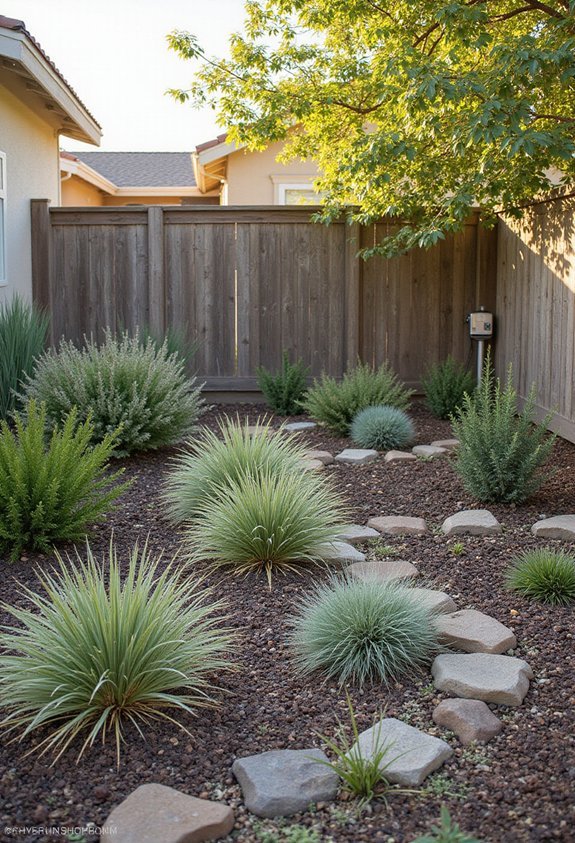
An automated irrigation system‘ll transform how you water your front yard by delivering consistent moisture to your plants on a predetermined schedule, which means you won’t have to remember when to water or spend time dragging hoses across your landscape. You can install drip irrigation lines or sprinkler heads that distribute water directly to plant roots, reducing waste and promoting healthier growth. These systems use timers that you program based on your climate, soil type, and plant needs, adjusting for seasonal rainfall patterns. Most automated systems include moisture sensors that prevent overwatering during rainy periods, saving you money on water bills while protecting your plants from root rot and fungal diseases. Installing an irrigation system requires minimal ongoing maintenance beyond occasional filter cleaning and seasonal adjustments.
Design With Raised Beds for Easy Management
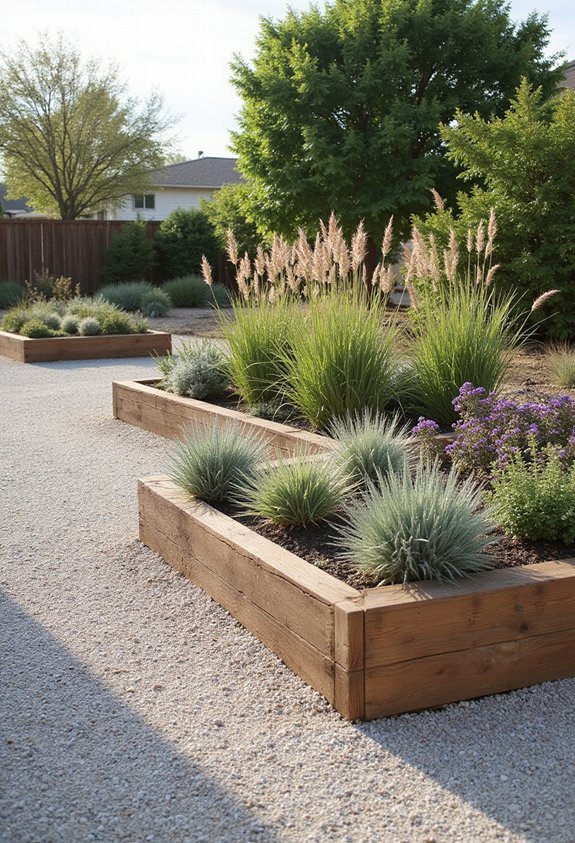
Raised beds offer you a practical way to organize your front yard planting while reducing the physical strain that comes with bending down to ground level, and they’ll complement your automated irrigation system by creating defined growing areas that you can water more efficiently. You can construct raised beds from wood, composite materials, or metal, choosing dimensions that fit your space and aesthetic preferences. Filling them with quality soil guarantees better drainage and root development than compacted ground soil. Raised beds also create natural barriers against weeds and pests, drastically reducing maintenance demands. You’ll find that accessing plants for weeding, deadheading, and harvesting becomes considerably easier when everything’s elevated. Additionally, you can customize soil composition for specific plants, promoting healthier growth and reducing the need for constant adjustments and interventions throughout the growing season.
Eliminate Turf in Shaded Areas
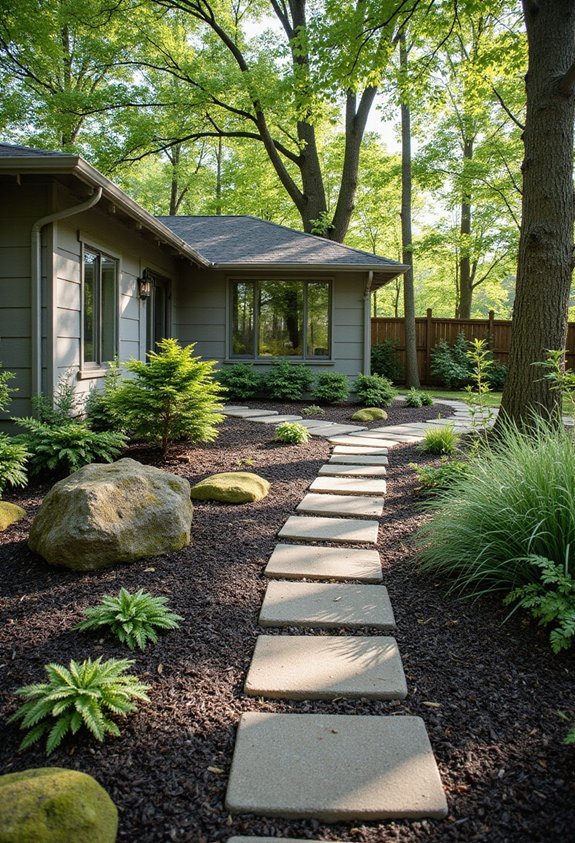
Since grass requires substantial sunlight to thrive, you’ll discover that shaded areas in your front yard often become problematic spots where turf grows thin, weak, and susceptible to disease, making them ideal candidates for replacement with low-maintenance alternatives. Instead of struggling to maintain dying grass, you can plant shade-tolerant ground covers like hostas, liriope, or creeping ivy, which flourish in low-light conditions and require minimal care. These alternatives spread gradually, suppressing weeds naturally while creating visual interest through varied textures and foliage colors. You might also consider installing mulch beds with shade-loving shrubs or ferns that thrive without constant watering or mowing. By eliminating turf from shaded regions, you’ll reduce maintenance demands considerably while establishing a healthier, more resilient front yard ecosystem that adapts naturally to your property’s existing light conditions.
Cluster Plants by Water Requirements
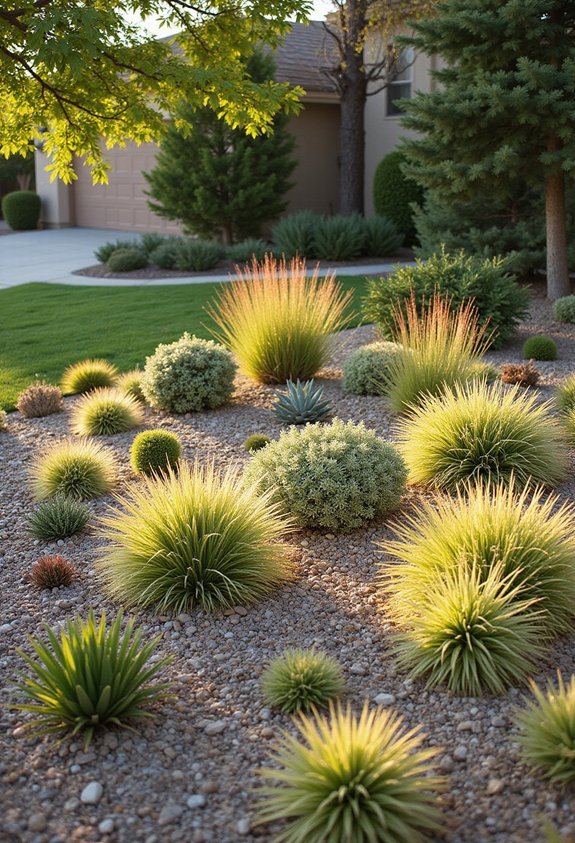
Grouping your plants based on their water needs works alongside eliminating problematic turf because it lets you water more efficiently and reduces the overall effort required to keep your front yard looking healthy. You’ll want to create separate zones for plants that need frequent watering, moderate watering, and drought-tolerant varieties. By organizing plants this way, you avoid overwatering drought-resistant plants or underwatering thirsty ones. Place plants with similar requirements near each other so you can water each zone appropriately without wasting water on plants that don’t need it. This strategic arrangement saves you time during maintenance while keeping your plants healthy. You’ll also notice lower water bills and reduced environmental impact from this thoughtful planning approach.
Add Ornamental Grasses for Texture Without Fuss
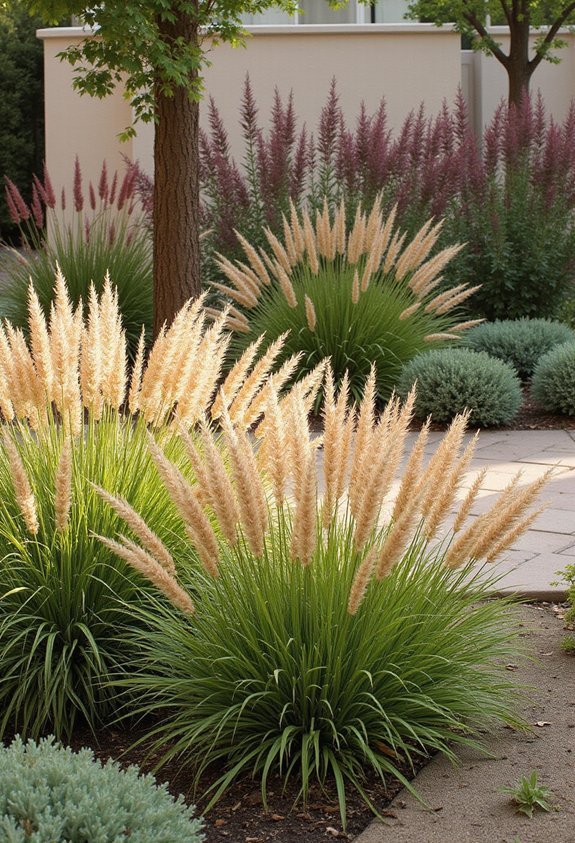
When you’re looking to add visual interest to your front yard while keeping maintenance demands low, ornamental grasses offer an excellent solution that requires minimal effort once established. These plants thrive in various soil conditions and tolerate drought well, meaning you’ll water them less frequently than traditional landscaping options. Ornamental grasses create movement and texture through their flowing foliage, which shifts beautifully with wind and seasons. You can choose from numerous varieties, including fountain grass, blue fescue, and feather reed grass, each offering distinct heights and colors to suit your design preferences. Most ornamental grasses need cutting back only once annually in early spring, and they rarely require fertilizing or pest management, making them genuinely low-maintenance additions to your front yard landscape.
Use Landscape Fabric to Block Weeds
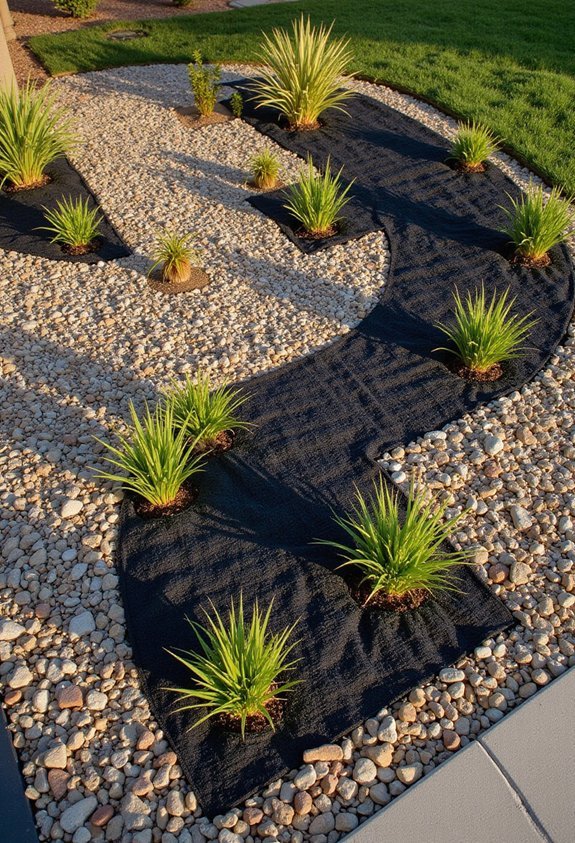
One of the most effective ways to reduce the time you spend pulling weeds is to install landscape fabric in your front yard beds, which acts as a physical barrier that prevents weed seeds from reaching the soil where they’d otherwise sprout and grow. You’ll want to lay the fabric directly over prepared soil, securing it with landscape pins or staples to keep it in place. Once installed, you can add mulch or decorative rocks on top, which anchors the fabric while creating an attractive appearance. Make sure you cut small openings where you plant flowers or shrubs, allowing them room to establish roots. This method dramatically decreases weeding frequency, saving you considerable maintenance time throughout the growing season while keeping your front yard looking organized and intentional.
Incorporate Decorative Pavers and Pathways
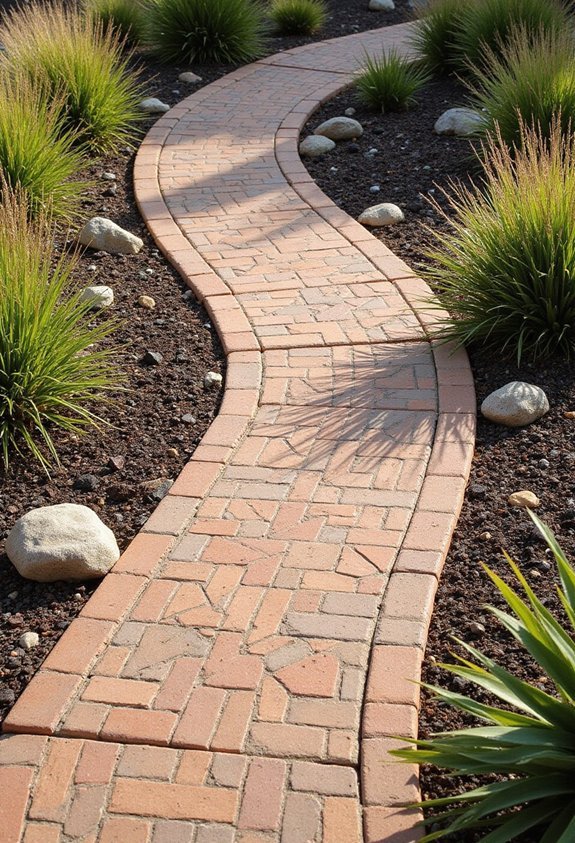
How can you add structure and visual interest to your front yard while simultaneously reducing maintenance? Decorative pavers and pathways create defined walkways that guide visitors through your landscape while minimizing the lawn area you’ll need to mow and maintain. You can arrange pavers in various patterns, such as herringbone or geometric designs, to establish focal points and enhance curb appeal. Pavers come in multiple materials including stone, concrete, and brick, allowing you to match your home’s exterior aesthetic. When you install pathways, you’re also creating natural borders that prevent grass from encroaching into garden beds. This strategic placement reduces edging work and keeps your landscaping looking intentional and organized. Additionally, pavers suppress weed growth beneath them, further decreasing your maintenance responsibilities while creating attractive functional spaces.
Choose Shrubs That Require Minimal Pruning
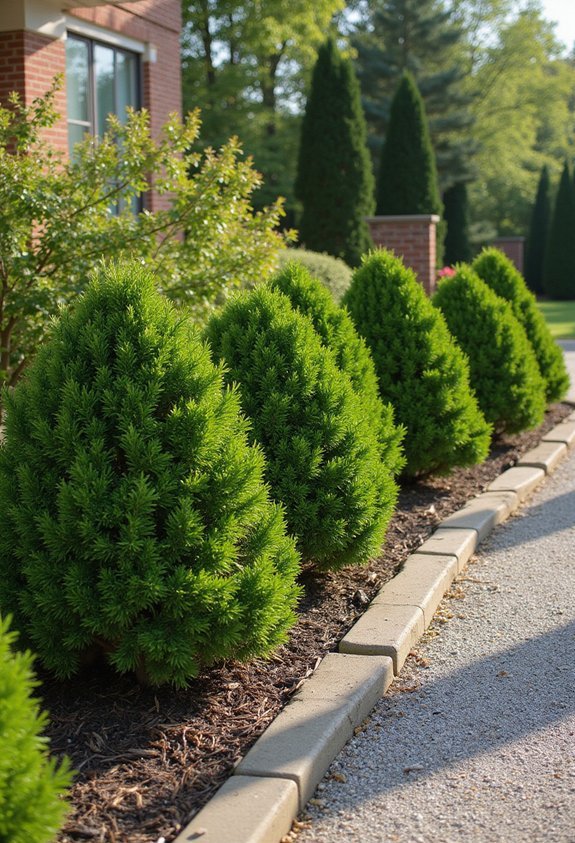
After you’ve established your hardscape with pavers and pathways, selecting the right shrubs can dramatically reduce your yard work since many varieties naturally maintain their desired shape without frequent trimming. Boxwoods, dwarf Alberta spruces, and Japanese hollies grow slowly and stay compact, requiring minimal intervention. Spireas and weigelas offer attractive forms that need only occasional light pruning to maintain their appearance. When you choose these low-maintenance species, you’re working with plants’ natural growth patterns rather than against them. Position shrubs with adequate spacing so they won’t crowd each other as they mature, allowing air circulation and reducing disease risk. This strategic selection combined with proper placement means you’ll spend considerably less time pruning while maintaining an attractive, well-organized front yard appearance throughout the year.
Add Low-Voltage Lighting for Evening Ambiance
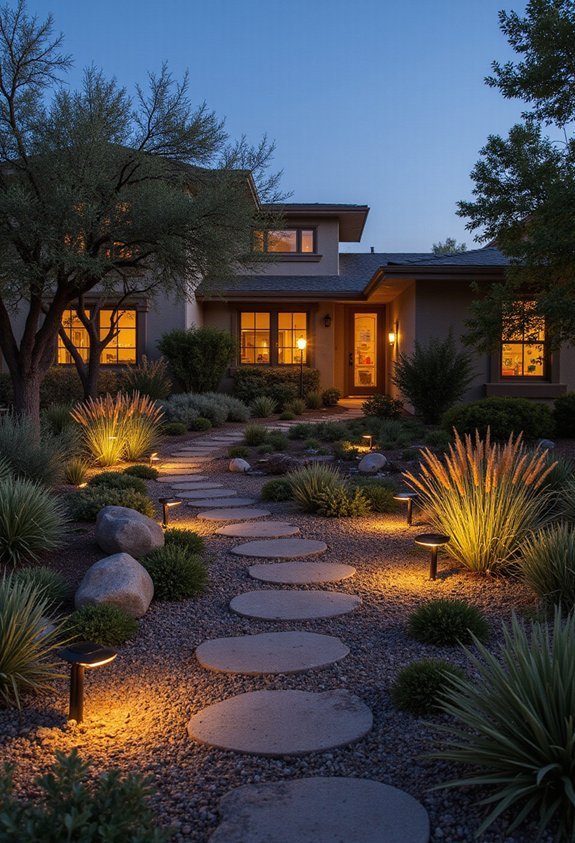
Low-voltage lighting systems offer a practical way to extend your front yard’s usability into the evening hours while complementing the natural forms of your carefully chosen shrubs and hardscape features. You’ll find that these systems use transformers to reduce standard household voltage, making them safe for outdoor installation without requiring expensive electrical work. Solar-powered pathway lights, spotlights, and uplighting options are available, allowing you to highlight your landscaping’s best features strategically. You can position lights along walkways for safety, direct them toward focal points like specimen plants or architectural elements, and adjust intensity based on your preferences. Most systems are easy to install yourself, operate efficiently with minimal energy consumption, and require little maintenance beyond occasional cleaning of light fixtures and seasonal adjustments for ideal performance.
Install a Low-Maintenance Water Feature
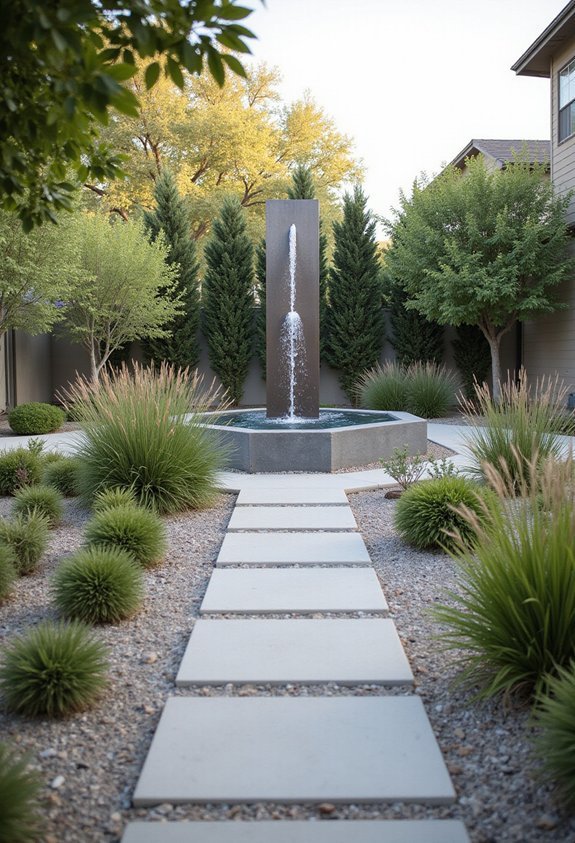
While water features might seem complicated to maintain, you can actually incorporate one into your front yard without spending hours on upkeep or complicated installations. Consider installing a simple fountain or birdbath, which requires minimal equipment and doesn’t demand constant attention. These features work well because they recirculate water using a basic pump, meaning you’ll only need to refill them occasionally and clean the pump filter monthly. For an even easier option, you can choose a solar-powered water feature that operates independently without electricity costs. Position your water feature near a power source if using electric pumps, and place it where you can monitor water levels easily. Adding rocks around the base helps contain splashing and reduces evaporation, making your low-maintenance water feature both functional and visually appealing.
Build a Patio That Drains Naturally
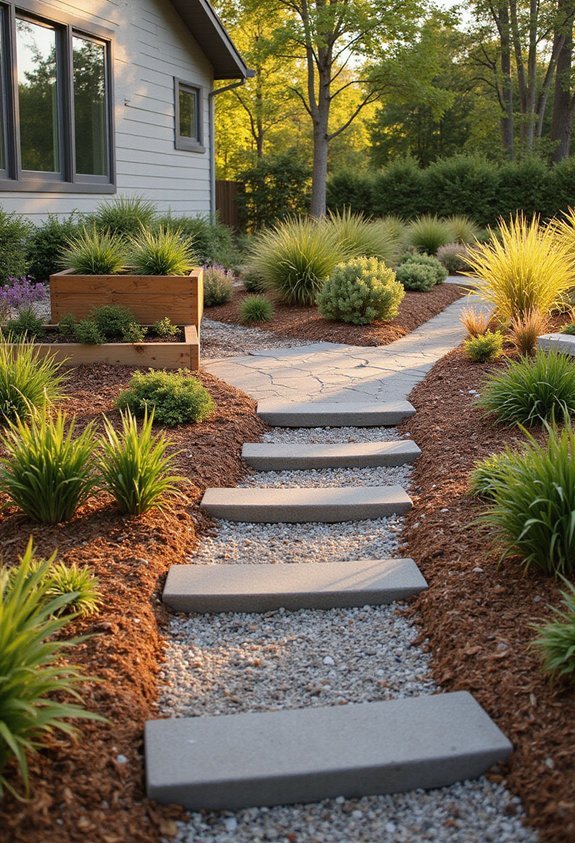
A patio with proper drainage won’t collect standing water, which means you’ll spend less time maintaining it and your outdoor space’ll stay safer and more usable throughout the year. To build a naturally draining patio, you’ll want to slope the surface slightly away from your home at about one-eighth inch per foot, allowing water to flow naturally toward your yard. Choose permeable materials like gravel, porous pavers, or recycled asphalt that allow water to pass through rather than pooling on top. If you’re using solid materials such as concrete or stone, install a drainage system underneath by laying a gravel base layer, which absorbs and redirects water effectively. These methods prevent puddles, reduce maintenance demands, and extend your patio’s lifespan considerably.
Use Container Gardens for Flexible Design
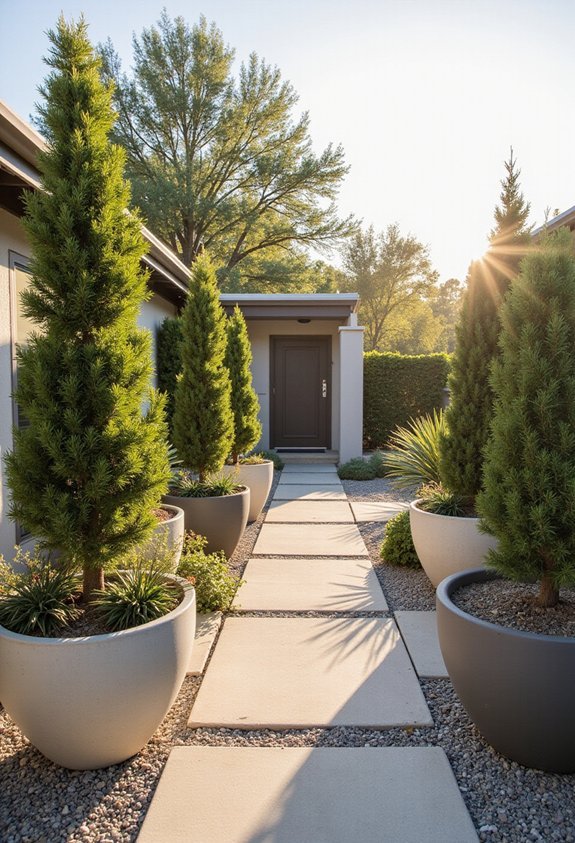
Container gardens offer you the flexibility to redesign your front yard whenever you’d like, without the commitment of permanently planting flowers or shrubs directly in the ground. You can easily move containers around to test different arrangements, finding what works best for your space and aesthetic preferences. This approach allows you to adapt your landscaping seasonally, swapping out plants as weather changes or your tastes evolve. Choose containers with drainage holes to prevent water from pooling, which protects plant roots and reduces maintenance issues. Select drought-tolerant plants for containers, which require less frequent watering and care. Grouping containers of varying heights creates visual interest and depth, making your front yard appear more dynamic and thoughtfully designed while keeping upkeep minimal.
Plant Sedums and Succulents in Drought Zones
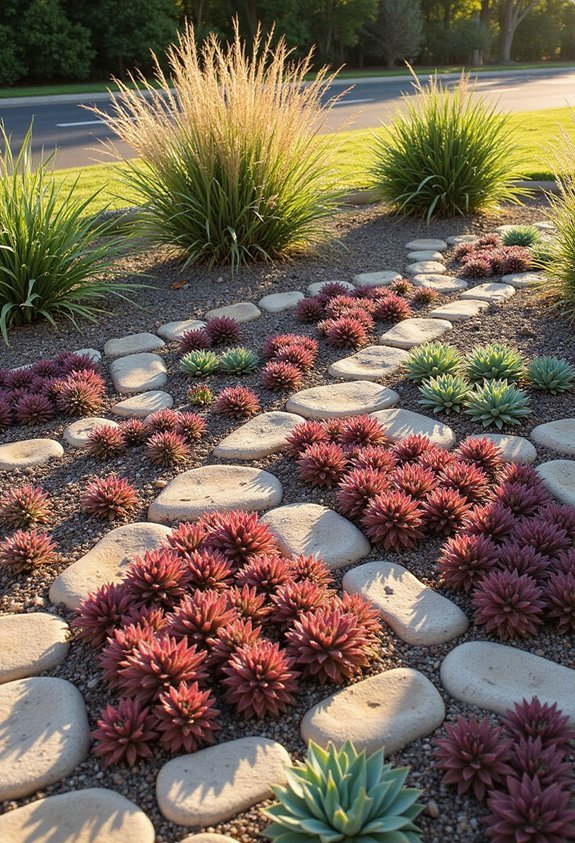
Sedums and succulents stand out as some of the lowest-maintenance plants you can choose for your front yard, especially if you live in an area that doesn’t get much rain or experiences hot, dry summers. These plants store water in their leaves, so they’ll thrive with minimal watering once established. You’ll find countless varieties available, from creeping sedums that spread across ground to upright species that add height and texture to your landscape. Plant them in well-draining soil to prevent root rot, and they’ll flourish in full sun or partial shade. Their fleshy foliage comes in striking colors—purples, reds, and greens—creating visual interest without demanding regular maintenance or fertilizer applications throughout the year.
Avoid Flower Beds in High-Traffic Areas
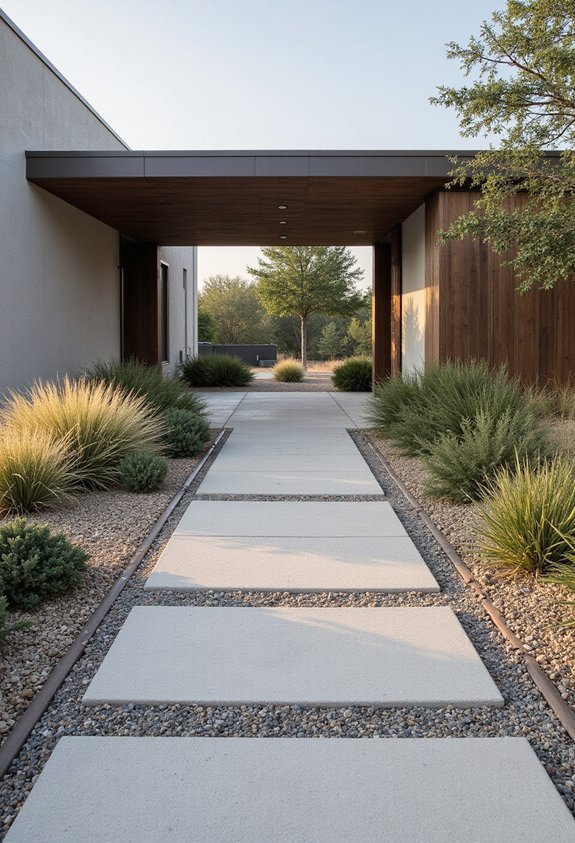
If you’re planning your front yard layout, you’ll want to keep flower beds away from pathways where people walk regularly, since constant foot traffic can compact soil, damage delicate plants, and create unsightly worn patches that’ll be difficult to restore. Instead, position your flower beds along the sides of your yard or in corners where foot traffic naturally doesn’t occur. This strategic placement protects your plants from damage while reducing maintenance needs drastically. You’ll spend less time replanting, watering stressed plants, or fixing trampled areas. By positioning beds away from walkways, you’re also preventing soil compaction, which allows roots to access nutrients and water more efficiently. This simple planning decision creates a more durable, attractive front yard that requires minimal upkeep.
Use Edging to Protect Plantings
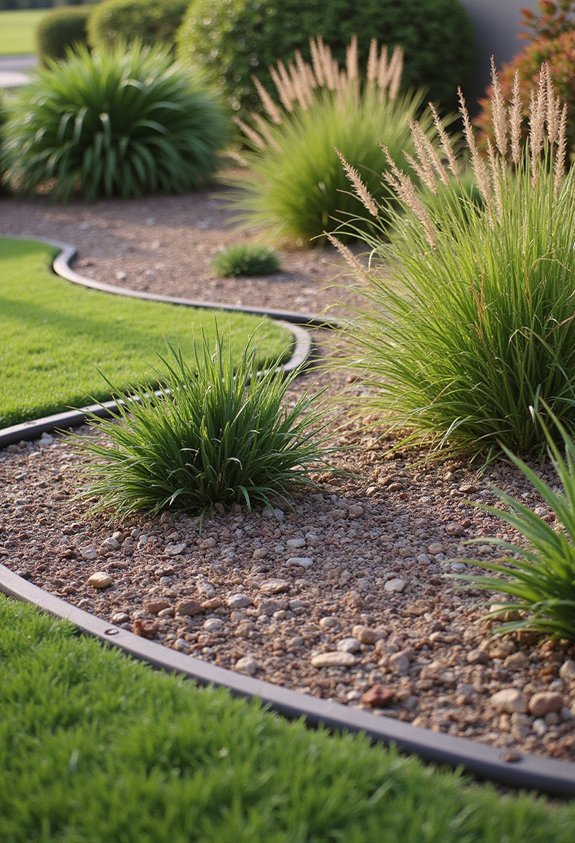
Beyond positioning your flower beds strategically, you’ll also want to install edging around your plantings to create a physical barrier that keeps grass, soil, and foot traffic contained within defined areas. Edging serves multiple practical purposes: it prevents grass roots from creeping into your garden beds, reduces the need for frequent weeding along borders, and creates clean, attractive lines that make your yard appear more organized and well-maintained. You can choose from various materials like plastic, metal, stone, or wood, depending on your budget and aesthetic preferences. Installing edging properly involves digging a shallow trench along the bed perimeter and securing the material firmly into place. This simple investment considerably reduces maintenance time while protecting your plantings from unwanted intrusion and damage.
Stick to One Color Palette for a Polished Look
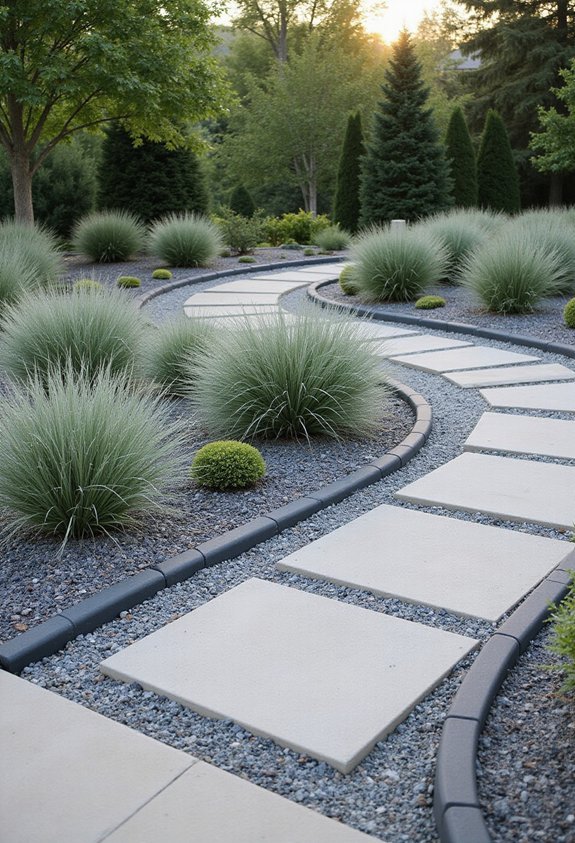
How can you make your front yard look more intentional and sophisticated without adding extra work? Selecting one color palette for your landscaping creates visual harmony and makes your space appear carefully planned. Choose two or three complementary colors—such as greens, grays, and whites—then consistently apply them throughout your plantings, mulch, and hardscaping elements. This unified approach eliminates the cluttered appearance that results from mixing too many contrasting hues. When your colors work together cohesively, your yard automatically looks more polished and organized. You’ll find that maintaining this aesthetic requires no additional effort, since you’re simply being strategic about plant and material selections during initial planning. This disciplined approach guarantees your front yard maintains its refined appearance year-round while keeping maintenance demands minimal.
Maintain Your Low-Maintenance Yard With a Simple Schedule
Even though you’ve created a low-maintenance front yard with thoughtful plant selections and a unified color scheme, you’ll still need to establish a simple maintenance schedule to safeguard everything looking its best throughout the year. Schedule weeding sessions monthly during growing seasons, removing unwanted plants before they spread. Water your landscape deeply but infrequently, allowing soil to dry between waterings, which encourages deeper root growth. Trim dead branches and spent flowers quarterly to promote healthy growth and maintain your yard’s appearance. Apply fresh mulch annually in spring, which suppresses weeds and retains soil moisture. Inspect irrigation systems seasonally to guarantee they’re functioning properly. By following this straightforward schedule consistently, you’ll minimize unexpected problems and keep your front yard attractive with minimal effort throughout all seasons.
Conclusion
By combining hardscaping, native plants, and strategic mulch placement, you’ll create a front yard that requires minimal upkeep while maintaining visual appeal. Your landscape becomes a low-stress outdoor space where weeds stay suppressed, soil retains moisture, and plants thrive naturally. With a simple maintenance schedule, you’ll spend less time weeding and watering, allowing you to enjoy your neat, polished yard year-round without constant effort or expense.