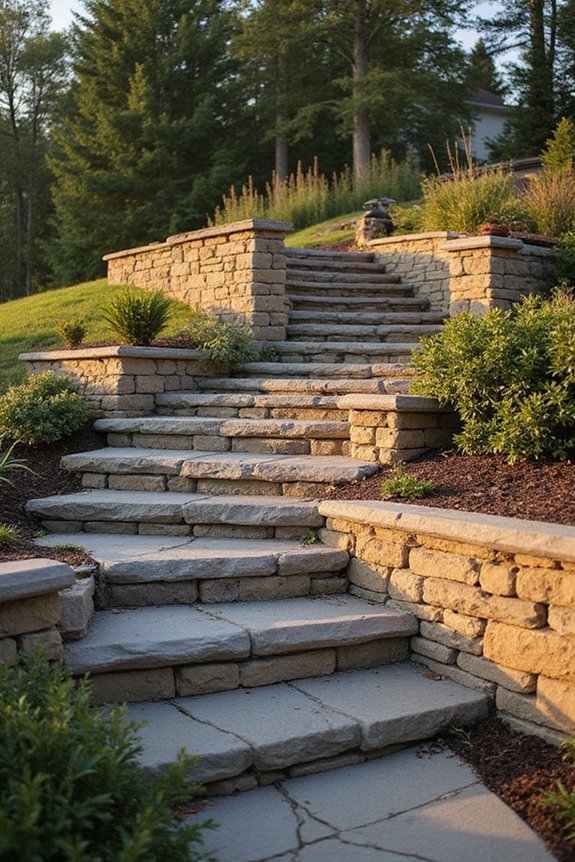
Your front yard needs structure, your landscape needs definition, and your slopes need stabilization—and retaining walls deliver all three. You can build them yourself using segmental blocks, pour concrete for clean lines, or select from stone, brick, and steel options that match your budget and style. Whether you’re managing steep terrain or simply enhancing curb appeal, you’ll discover which wall type works best for your specific situation.
Segmental Blocks: The Easiest Retaining Walls to DIY
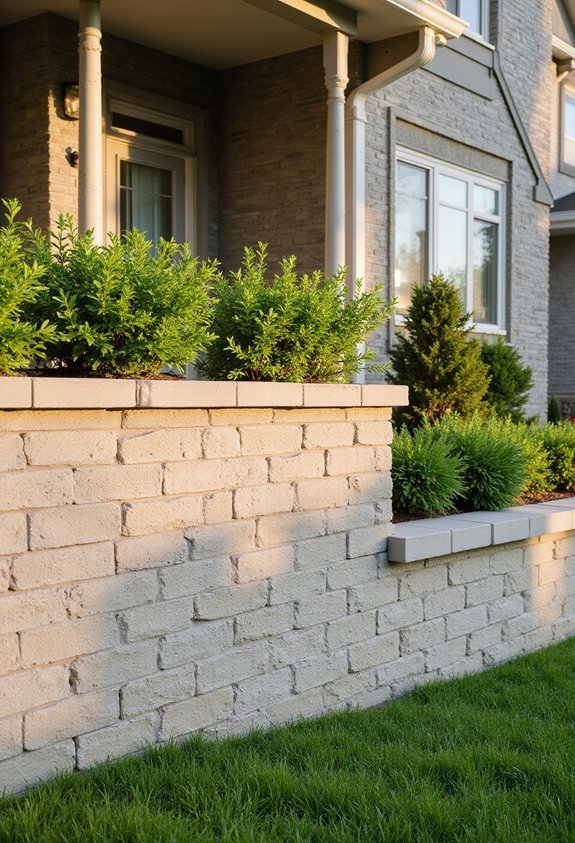
If you’re looking for a retaining wall project that you can tackle without professional help, segmental blocks are your best option because they’re designed to fit together like puzzle pieces without requiring mortar or special expertise. You’ll stack these interlocking concrete units in horizontal rows, and they naturally grip each other through their unique shapes and weight. The blocks come in various sizes, colors, and textures, allowing you to customize your wall’s appearance while maintaining structural integrity. Installation requires minimal tools—a level, shovel, and compacting equipment are typically sufficient. You’ll need to prepare a solid foundation by leveling the ground and adding a gravel base layer, which prevents settling and drainage problems. This straightforward method makes segmental blocks ideal for DIY enthusiasts tackling modest landscape changes.
Also read: 19 FRONT YARD AESTHETIC Ideas That Feel Curated!
Poured Concrete: Clean Lines and Endless Customization
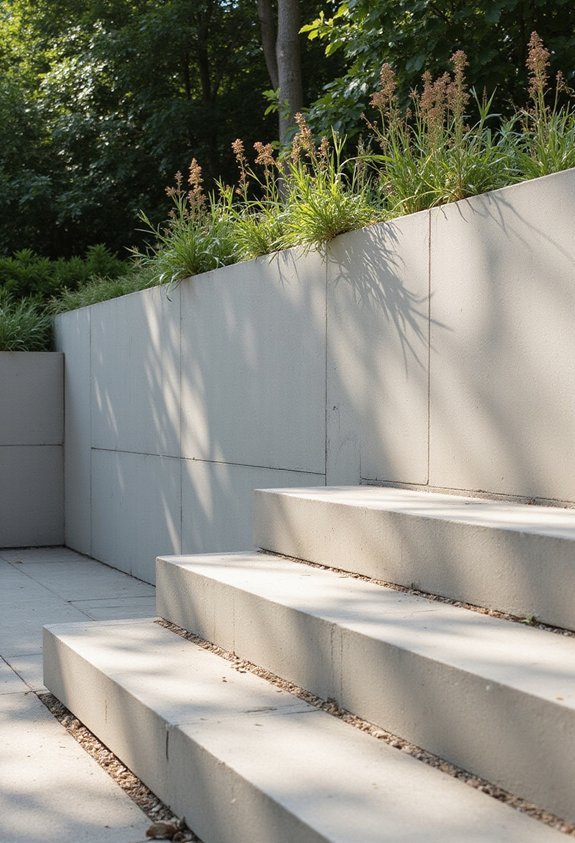
While segmental blocks offer simplicity and quick installation, poured concrete retaining walls provide a more permanent solution that delivers sleek, modern aesthetics and virtually unlimited design possibilities. You’ll appreciate how poured concrete creates smooth, uniform surfaces that won’t shift or settle over time, ensuring your wall maintains its integrity for decades. You can customize the finish by selecting different textures, colors, and patterns before the concrete sets, allowing you to match your home’s architectural style perfectly. The construction process requires professional expertise, as you’ll need proper reinforcement, drainage systems, and foundation preparation to prevent cracking and water damage. Although poured concrete walls demand higher initial investment and longer installation timelines than segmental alternatives, they’re worth considering if you want a durable, visually refined retaining wall that requires minimal maintenance.
Classic Stone Retaining Walls for Timeless Appeal
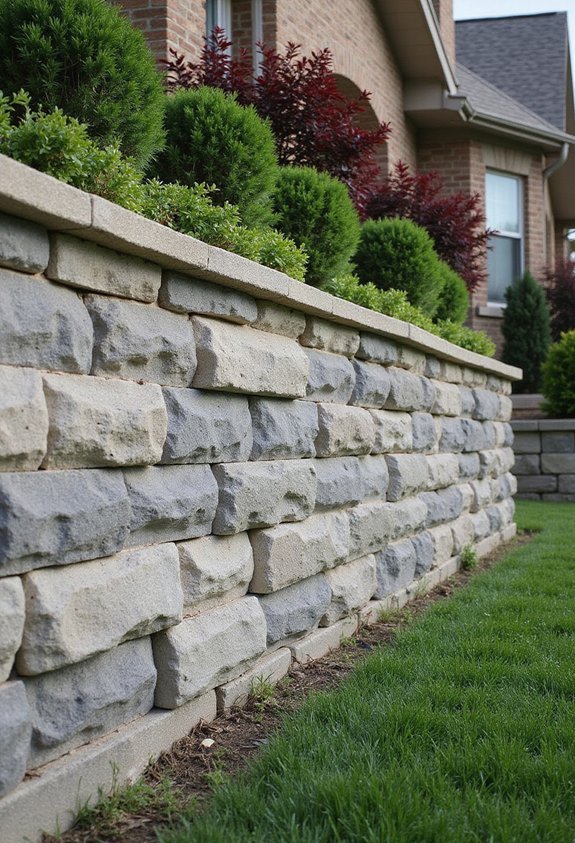
How can you create a front yard retaining wall that’ll look beautiful for generations? Choose classic stone, which offers timeless appeal and durability. Natural stone like granite, limestone, or slate provides authentic texture and color variation that enhances your landscape’s character. You’ll stack these stones using mortar or a dry-stacking method, depending on your preference and skill level. Stone walls develop character over time, with weathering that adds visual depth rather than detracting from appearance. The material requires minimal maintenance compared to alternatives, needing only occasional cleaning and inspection for structural integrity. Stone retaining walls complement various architectural styles, from modern to traditional homes. This investment in quality materials guarantees your front yard maintains its visual appeal and structural stability for decades, making stone an excellent choice for long-term landscape solutions.
Stacked Stone for Rustic, Natural Character
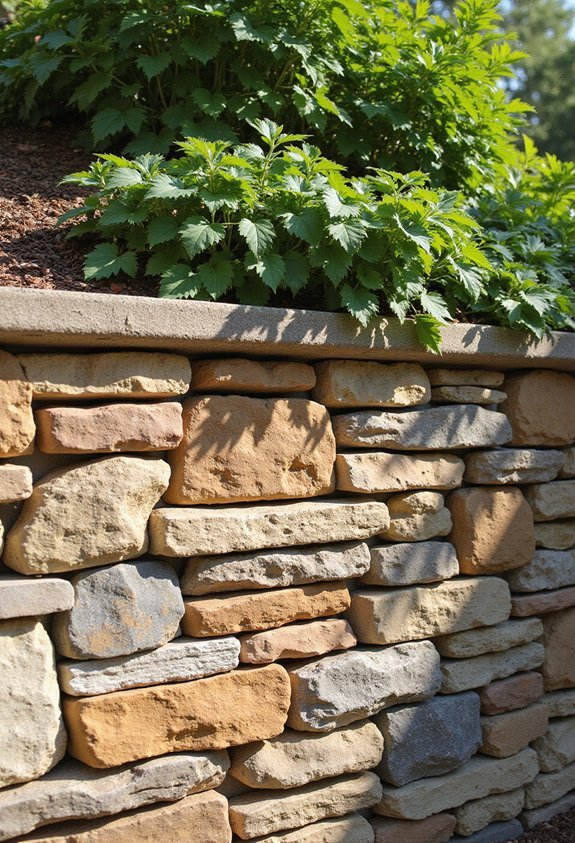
Building your retaining wall with stacked stone takes the timeless appeal of classic masonry one step further by emphasizing the raw, organic look that comes from carefully arranging stones without mortar or with minimal mortar application. You’ll select stones of varying sizes and shapes, then stack them strategically to create a sturdy, interlocking structure that relies on gravity and proper placement for stability. This method works particularly well on slopes where you need drainage, since gaps between stones naturally allow water to pass through. You can choose local stone varieties to match your region’s natural landscape, which enhances your property’s visual harmony. The irregular, earthy appearance creates authentic character that manufactured materials simply can’t replicate, making stacked stone an excellent choice for homeowners seeking genuine, weathered aesthetics.
Brick Retaining Walls With Traditional Charm
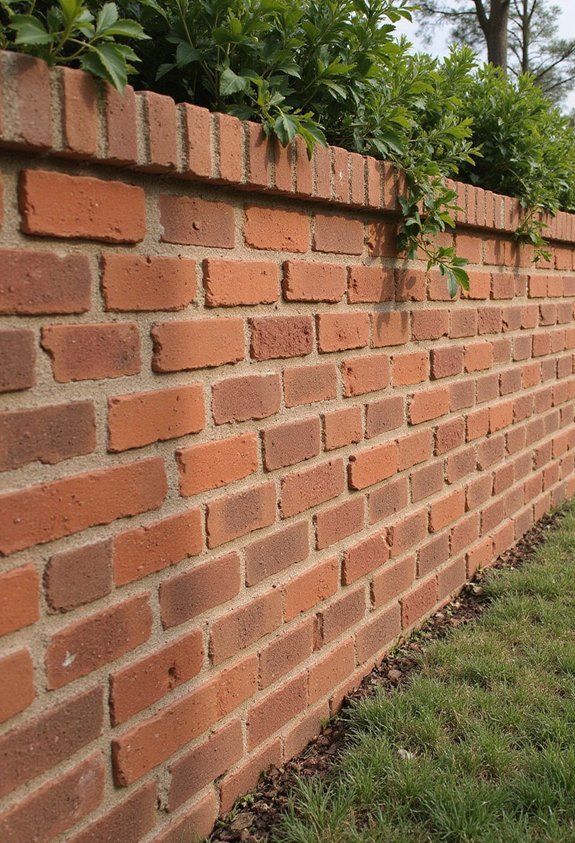
Many homeowners appreciate brick retaining walls because they’ve been used successfully for hundreds of years and they offer a timeless, classic appearance that complements both historic and contemporary home styles. You’ll find that brick walls provide excellent structural support while creating visual warmth through their varied color tones and textures. When you’re installing a brick retaining wall, you’ll need proper drainage behind the structure to prevent water buildup and soil erosion. The interlocking pattern you choose—whether running bond, Flemish bond, or stack bond—affects both the wall’s strength and aesthetic appeal. You should plan for a foundation that extends below the frost line, ensuring your wall remains stable through freeze-thaw cycles. Brick’s durability means your retaining wall will maintain its character for decades with minimal maintenance required.
Timber Retaining Walls for Warmth and Beauty
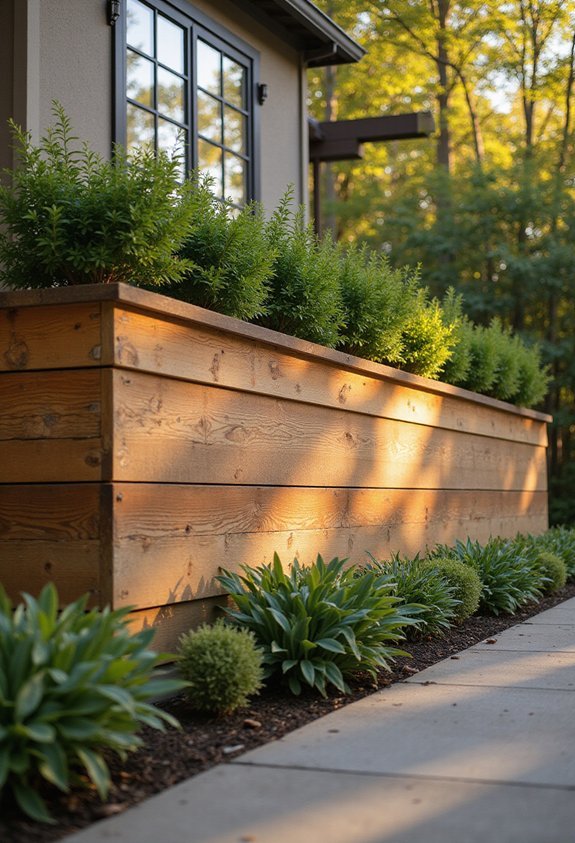
Because timber offers a natural aesthetic that blends seamlessly with landscaping and outdoor environments, it’s become a popular choice for homeowners seeking retaining walls that combine functionality with visual appeal. You’ll find that wooden retaining walls create warmth in your front yard while providing essential soil support on sloped terrain. When you choose timber, you’re selecting a material that’s relatively easy to install and customize to your specific dimensions. You should consider pressure-treated wood, which resists rot and insect damage, extending your wall’s lifespan considerably. Proper drainage behind your timber wall prevents water buildup that could compromise structural integrity. You can enhance the rustic charm by selecting different wood types and finishes that complement your home’s exterior. Regular maintenance, including staining and sealing, keeps your timber wall looking attractive for years.
Natural Log Walls for Cabin-Style Aesthetics
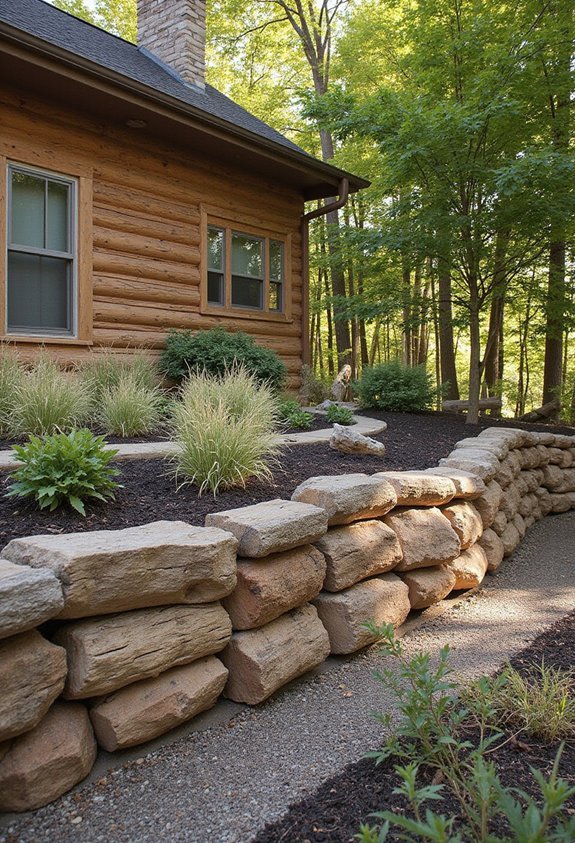
If you’re drawn to a more rustic, traditional appearance than standard timber walls offer, natural log walls might be the perfect choice for your front yard retaining structure. These walls utilize whole logs stacked horizontally, creating an authentic cabin aesthetic that complements natural landscapes beautifully. The logs’ irregular shapes and natural bark provide visual texture and character that manufactured materials can’t replicate.
When you’re constructing natural log walls, you’ll need to take into account log diameter, wood species, and proper drainage behind the structure. Cedar and pine are popular choices because they’re naturally rot-resistant and readily available. You should make certain logs are properly sealed to extend their lifespan and protect against weathering, insects, and decay. Regular maintenance, including periodic staining or sealing applications, keeps your natural log walls looking vibrant and structurally sound for years.
Gabion Walls for Industrial-Modern Edge
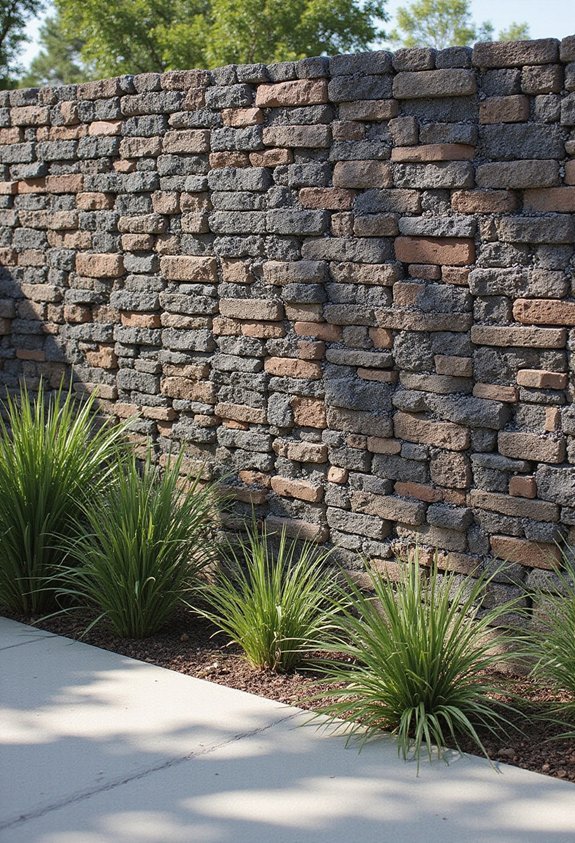
For a contemporary retaining wall that combines durability with striking visual appeal, gabion walls offer an excellent alternative to traditional materials. You’re fundamentally creating a structure by filling wire baskets with rocks, stones, or recycled materials, which you then stack to form your wall. This method provides several advantages: the gaps between stones allow water drainage, preventing soil erosion behind your wall, while the industrial aesthetic complements modern landscaping designs. You can customize your gabion walls by selecting different stone colors and sizes, creating unique patterns that reflect your personal style. Installation requires proper planning, including measuring your slope, preparing a solid foundation, and ensuring baskets are securely connected. The result is a low-maintenance retaining wall that’s both functional and visually distinctive for your front yard.
Corten Steel for Contemporary Homes
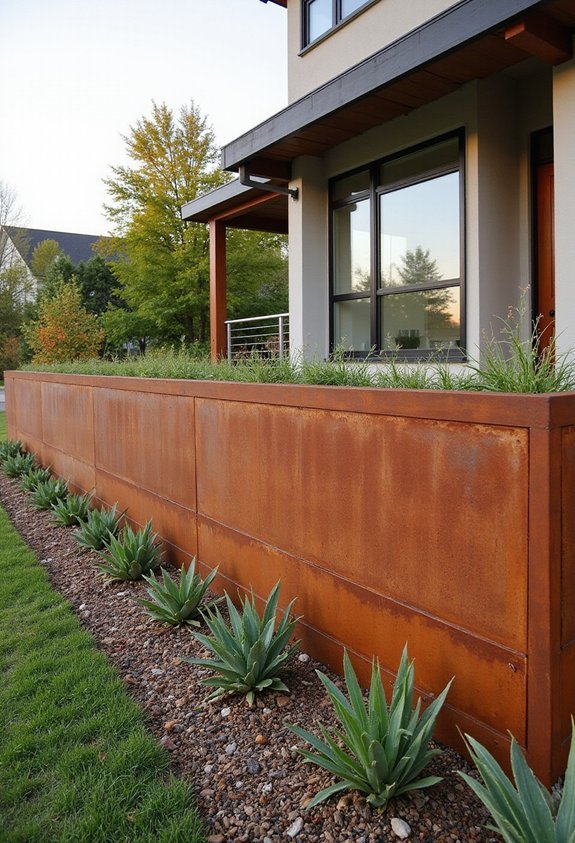
While gabion walls offer an industrial aesthetic through natural materials, Corten steel retaining walls take contemporary design to another level by using a specially engineered metal that actually improves with age. You’ll appreciate how Corten steel develops a protective rust-like patina that prevents further corrosion, eliminating the need for paint or regular maintenance. This weathering steel creates a distinctive reddish-brown appearance that complements modern architecture beautifully, blending industrial and elegant design elements seamlessly. You can install Corten steel walls in various heights and configurations to suit your landscape’s specific drainage and structural needs. The material’s strength allows you to create clean lines and minimalist designs that define contemporary properties, while its durability guarantees your retaining wall remains functional and visually striking for decades.
Composite Materials: Set It and Forget It
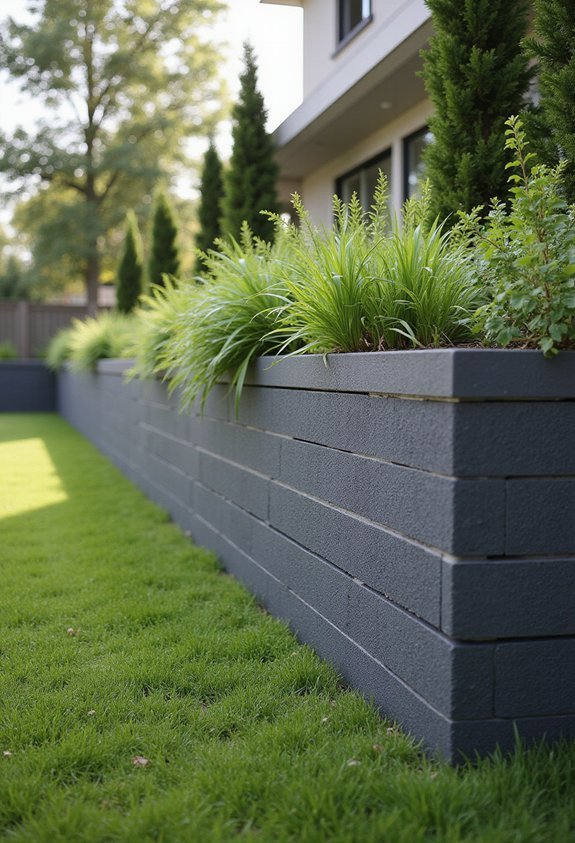
As you’re seeking a retaining wall solution that requires minimal upkeep after installation, composite materials offer a practical alternative that combines durability with low maintenance demands. These engineered products, made from wood fibers and plastic polymers, resist rotting, splintering, and insect damage that traditionally plague wooden structures. You’ll appreciate that composite walls don’t require staining, sealing, or regular painting to maintain their appearance. They withstand harsh weather conditions, including freeze-thaw cycles and intense UV exposure, without deteriorating drastically. Installation involves straightforward stacking or bolting methods, making the construction process efficient. Once positioned, your composite retaining wall demands only occasional cleaning with mild soap and water. This durability means you won’t face costly repairs or replacements for decades, making composite materials an economical choice for homeowners prioritizing long-term reliability and reduced maintenance responsibilities.
Flagstone Retaining Walls for Upscale Finishes
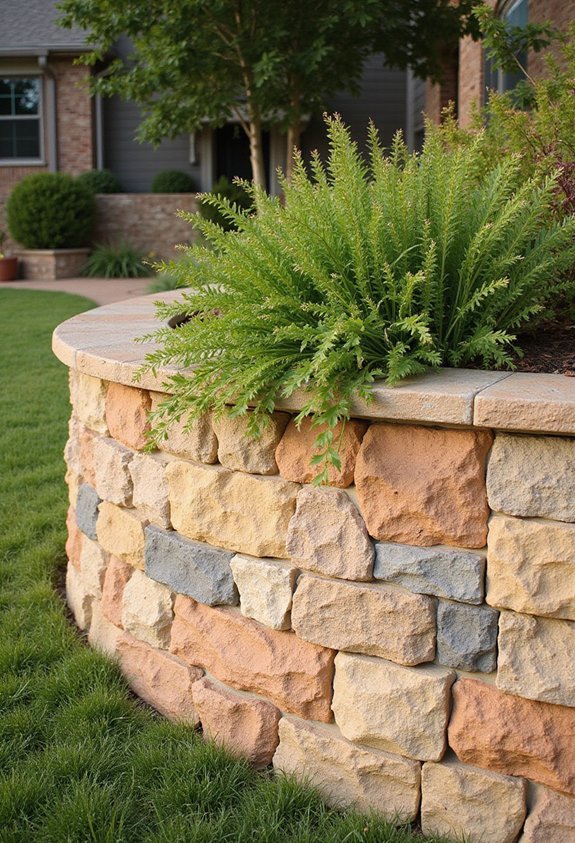
If you’re looking to elevate your front yard’s aesthetic beyond practical maintenance solutions, flagstone retaining walls deliver a sophisticated appearance that composite materials simply can’t match. Flagstone offers natural beauty with varied colors and textures that complement any architectural style. You’ll appreciate how each stone’s unique character creates visual interest while maintaining structural integrity. Installation requires careful planning, as you’ll need to select stones of consistent thickness and arrange them in stable patterns. The stacked design distributes weight evenly, preventing shifting or collapse over time. Maintenance involves occasional cleaning and checking for loose stones, which you can easily reset. Though flagstone costs more upfront than alternatives, its durability and timeless elegance provide long-term value, making it an excellent investment for homeowners seeking refined landscaping features.
Tiered Retaining Walls to Maximize Sloped Yards
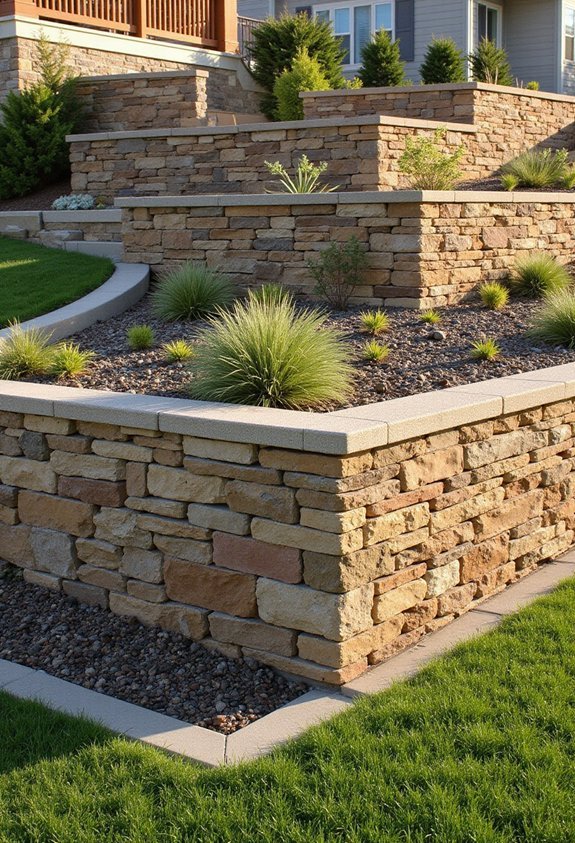
Multiple retaining walls stacked at different elevations can transform a steep slope into functional, attractive outdoor spaces that you’ll actually want to use. You’ll create level terraces that work perfectly for planting gardens, installing patios, or building seating areas on what was once unusable terrain. Each tier should step back slightly, allowing water drainage between levels and preventing erosion damage. You can vary the materials between tiers—combining natural stone with timber, for example—to add visual interest while maintaining structural integrity. Proper spacing between walls guarantees stability and allows roots to establish firmly in the soil behind each barrier. This tiered approach maximizes your sloped yard’s potential, turning a landscaping challenge into multiple distinct zones that enhance both functionality and curb appeal.
Terraced Designs for Multiple-Level Properties
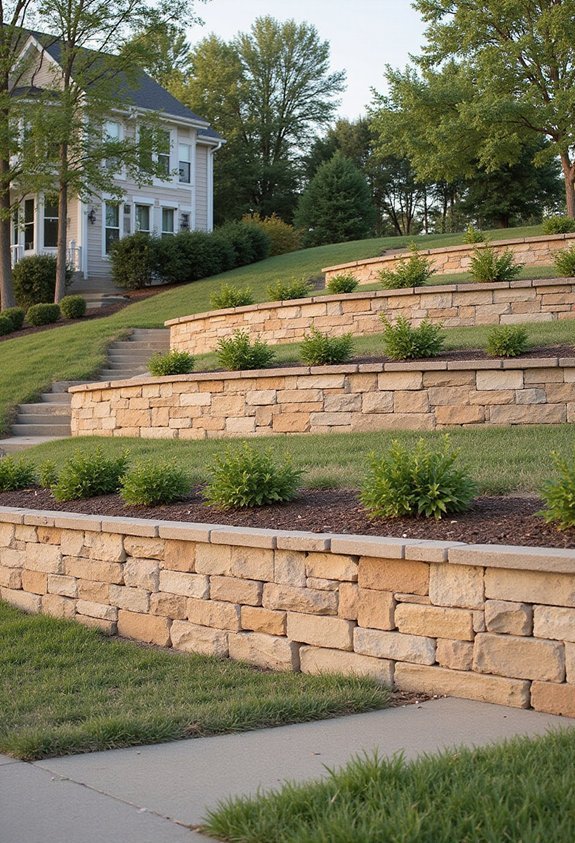
Creating terraces on properties with significant elevation changes involves building a series of level platforms that follow the natural slope of your land, and you’ll find that this strategic approach transforms challenging terrain into usable outdoor spaces. You’ll construct multiple retaining walls at different heights, each one supporting a flat section above it, which creates distinct levels throughout your yard. This design allows you to develop gardens, seating areas, or pathways on each terrace. You should space the walls appropriately to prevent soil erosion and safeguard proper drainage between levels. By implementing terraced designs, you’re maximizing your property’s potential while simultaneously reducing maintenance issues associated with steep slopes and improving overall landscape stability.
Curved Retaining Walls for Dynamic Visual Flow
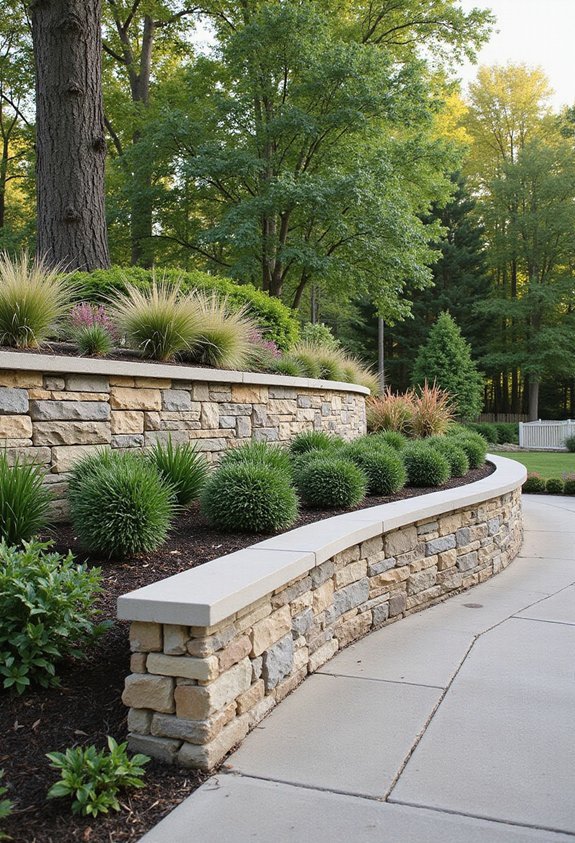
Rather than constructing straight retaining walls that can appear rigid and monotonous, you can build curved walls that add visual interest and create a more natural aesthetic throughout your front yard. Curved designs follow the natural contours of your landscape, guiding water drainage more effectively while reducing erosion problems. You’ll want to use flexible materials like segmental blocks or treated wood that bend smoothly without cracking. The curves soften your property’s edges, making passages between different elevation levels appear more organic and intentional. When planning curved walls, consider how they’ll complement your home’s architecture and surrounding plantings. Gentle S-curves or subtle bends create movement that draws the eye through your yard, establishing better visual flow and enhancing your property’s overall appeal.
Raised Garden Bed Walls: Beauty and Function Combined
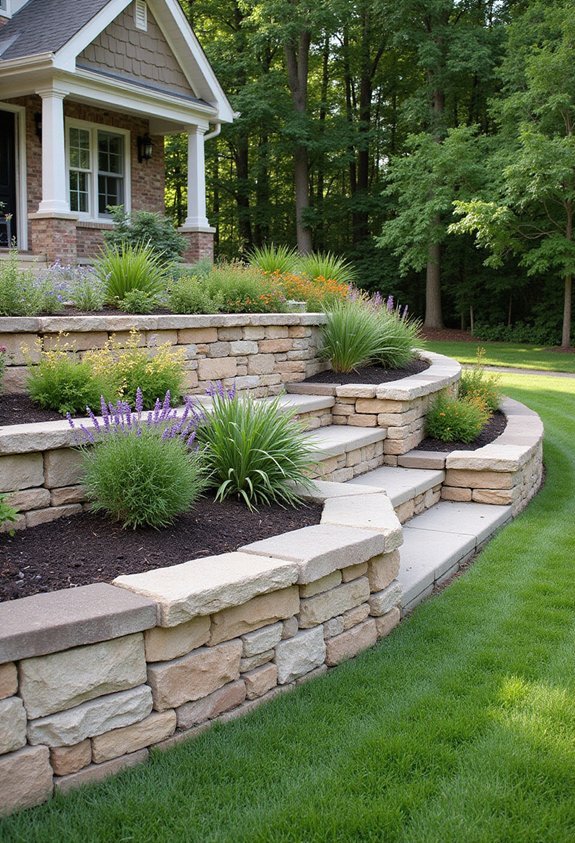
If you’re looking to combine practical gardening space with attractive front yard landscaping, raised garden bed walls offer an excellent solution that serves multiple purposes simultaneously. You’ll create defined planting areas while establishing clear landscape boundaries, and these structures add visual interest and depth to your outdoor space. When you build raised garden beds, you control soil quality, drainage, and plant health more effectively than traditional ground-level gardens. You can construct these walls using wood, stone, composite materials, or brick, each offering distinct aesthetic qualities that complement your home’s architectural style. The elevated design reduces bending and kneeling during maintenance, making gardening more accessible and comfortable. Additionally, raised beds warm up faster in spring, extending your growing season and allowing you to cultivate a wider variety of plants throughout the year.
Vegetated Retaining Walls for Eco-Friendly Erosion Control
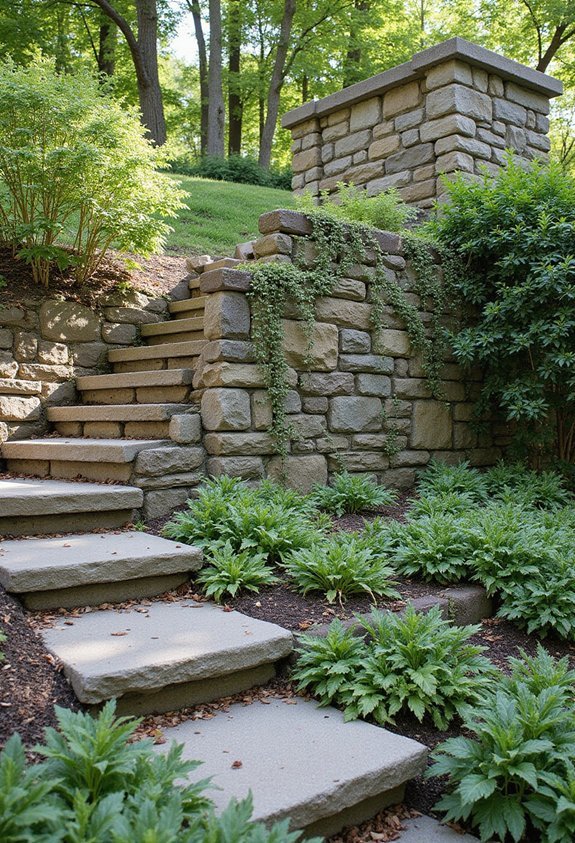
As slopes and hillsides naturally erode over time from rainfall and water runoff, vegetated retaining walls provide an environmentally conscious alternative to traditional concrete or stone barriers that can dominate your landscape. You can integrate living plants, grasses, and groundcovers directly into your wall structure, which stabilizes soil while creating visual appeal. These walls work by allowing plant roots to bind soil particles together, reducing erosion considerably more effectively than non-vegetated options. You’ll also benefit from improved drainage, as vegetation helps absorb excess moisture that might otherwise weaken your wall’s foundation. Additionally, vegetated walls support local wildlife by providing habitat for insects and small animals, contributing positively to your yard’s ecosystem while maintaining structural integrity and preventing costly soil loss.
High Retaining Walls That Handle Steep Slopes
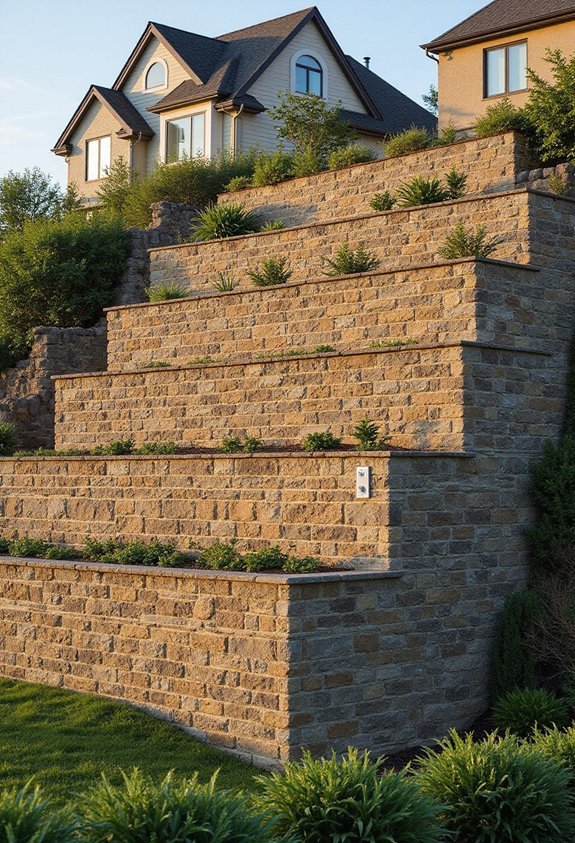
While vegetated walls work well for moderate slopes, steeper hillsides often require taller, more robust retaining structures that can withstand greater pressure from soil and water buildup. You’ll need walls constructed from reinforced concrete, treated timber, or stacked stone to handle these demanding conditions. These taller structures typically range from six to twelve feet high, providing substantial support against soil movement. You should incorporate proper drainage systems, including perforated pipes and gravel backfill, to prevent water accumulation that weakens wall integrity. Consider installing tie-back anchors or geotextile reinforcement for additional stability on particularly steep grades. Professional engineering assessment becomes essential when you’re dealing with significant elevation changes, ensuring your retaining wall meets local building codes and safely manages the considerable forces at work.
Hybrid Designs: Mixing Multiple Materials
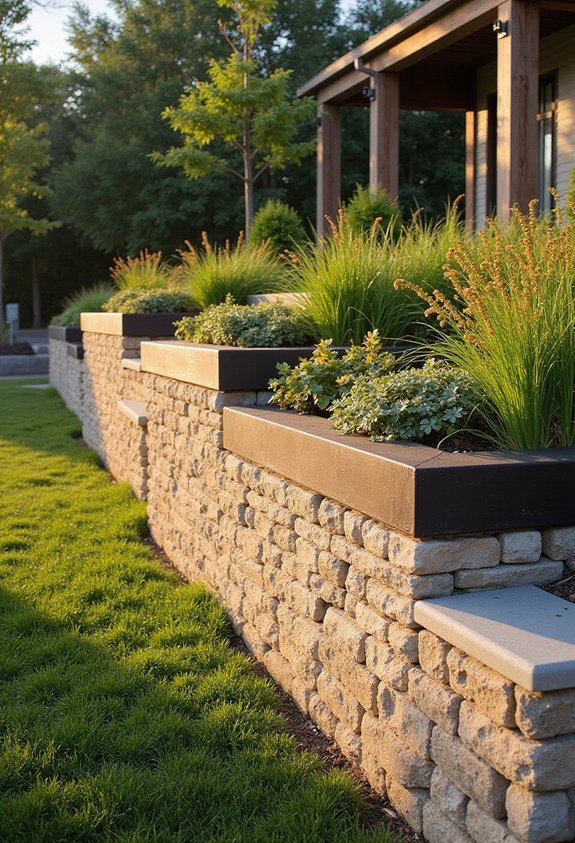
Many homeowners and landscapers find that combining two or more materials in a single retaining wall creates both practical advantages and visual appeal that neither material could achieve alone. You might pair natural stone with timber to blend rustic aesthetics with structural durability, or combine concrete blocks with brick veneer to enhance visual interest while maintaining strength. When you mix materials strategically, you’re able to address specific site challenges—using permeable materials in drainage-prone areas and solid materials where stability matters most. You’ll also discover that hybrid designs offer cost-effective solutions, allowing you to use premium materials selectively rather than throughout the entire structure. Consider your slope’s drainage needs, soil composition, and aesthetic goals when you’re selecting complementary materials that’ll work together harmoniously.
Retaining Walls by Budget: Finding Your Perfect Fit
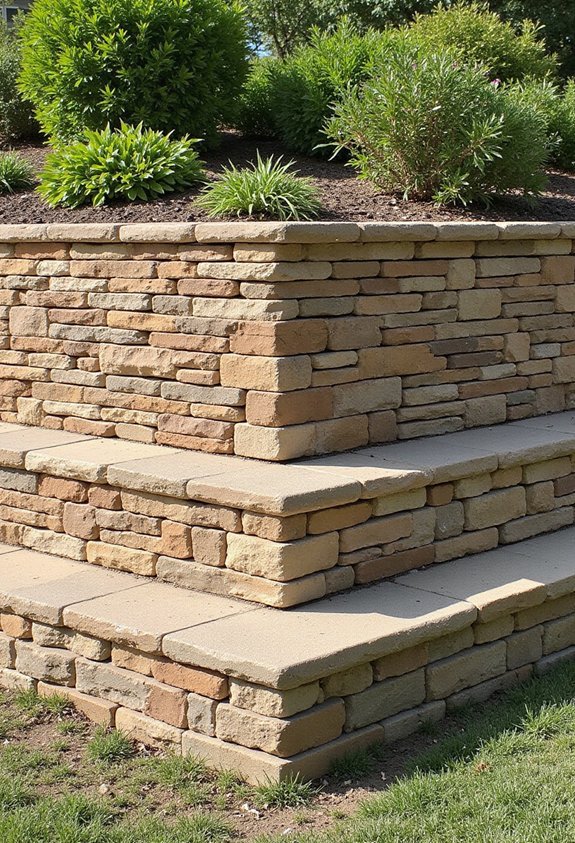
Because retaining walls vary dramatically in cost depending on materials, height, and complexity, you’ll want to establish a realistic budget before you start planning your project. Budget-friendly options include recycled plastic lumber and stacked stone, which require minimal installation costs. Mid-range choices like concrete blocks and treated wood offer better durability without excessive expense. Premium materials such as natural stone, brick, and steel provide lasting aesthetics but demand higher investment. Consider labor costs alongside materials, as professional installation considerably impacts your total expense. DIY projects reduce labor expenses substantially, though they require time and skill. Calculate costs per linear foot to compare options accurately, then prioritize features matching your financial capacity, ensuring your retaining wall delivers both functionality and visual appeal within your established budget constraints.
Conclusion
You’ve now explored nineteen distinct retaining wall options, each offering unique advantages for your front yard’s transformation. Whether you’re selecting budget-friendly segmental blocks, elegant stacked stone, or innovative hybrid designs, you’ll find solutions that address steep slopes, prevent erosion, and create visual depth. By matching materials to your site’s specific challenges and financial constraints, you’re positioning your landscape for both structural stability and lasting aesthetic appeal.