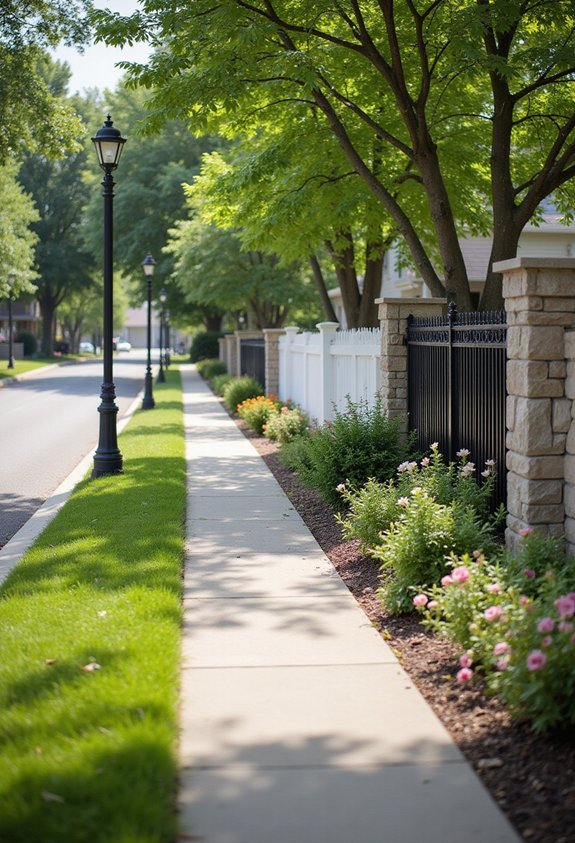
You’ll discover that selecting the right front yard fence involves balancing multiple factors, including your budget constraints, desired privacy levels, and neighborhood aesthetics. Chain link options provide cost-effective solutions, while vinyl picket designs offer low-maintenance alternatives to traditional wood. Composite materials deliver enhanced durability, and mixed-material approaches combine functionality with visual appeal. Stone and metal combinations create striking focal points, but understanding which option best suits your specific property requirements demands careful consideration of each material’s unique characteristics and limitations.
Budget-Friendly Front Yard Fence Options
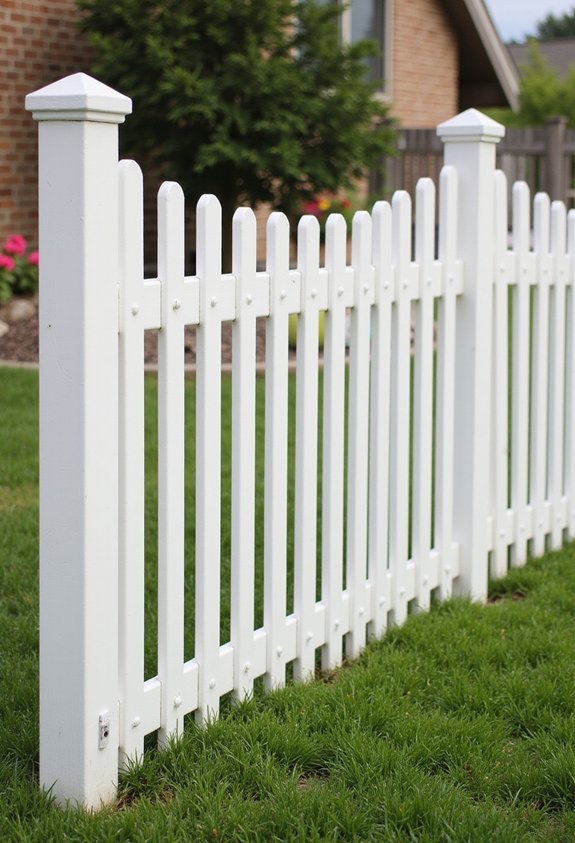
Smart homeowners understand that creating an attractive front yard fence doesn’t require breaking your budget, and you’ll find numerous cost-effective options that deliver both functionality and curb appeal without compromising on quality. Chain link fencing offers the most economical choice, providing security and boundary definition at approximately $8-12 per linear foot installed. Wood picket fences constructed from pressure-treated pine present another affordable alternative, typically costing $15-25 per linear foot while offering classic aesthetic appeal. You can further reduce expenses by purchasing materials during off-season sales, choosing standard heights rather than custom dimensions, and handling installation yourself with basic tools.
Also read: 22+ FRONT YARD MAKEOVER Ideas With Big Results!
Chain Link Front Yard Fence With Privacy Slats
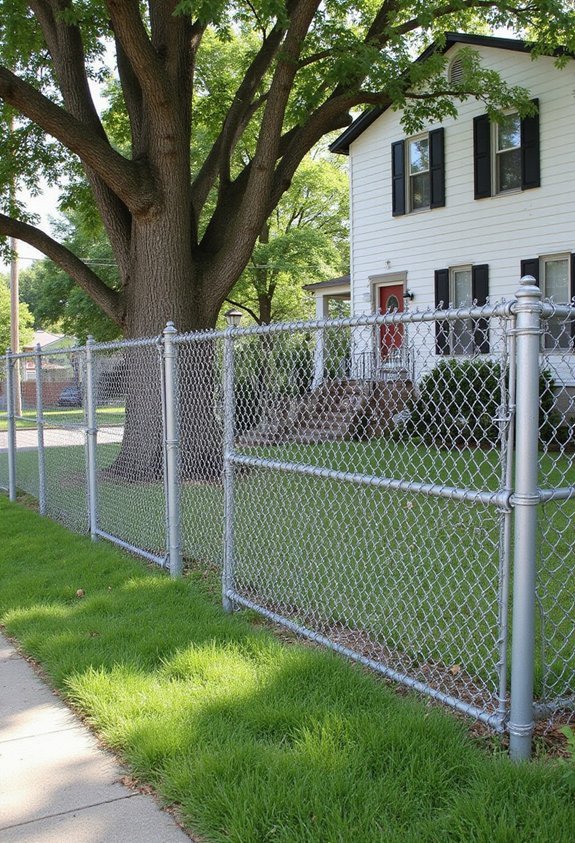
When you’re seeking maximum privacy without sacrificing the affordability of chain link fencing, adding privacy slats transforms your basic barrier into an effective visual screen that blocks unwanted views while maintaining structural integrity. Privacy slats slide vertically through chain link mesh openings, creating complete coverage that prevents neighbors from seeing into your yard. You can choose from vinyl, aluminum, or wood slats in various colors to match your home’s exterior. Installation requires no special tools, and you’ll simply weave each slat through the fence openings, securing them at top and bottom for wind resistance and long-term durability.
Vinyl Picket Front Yard Fence Benefits
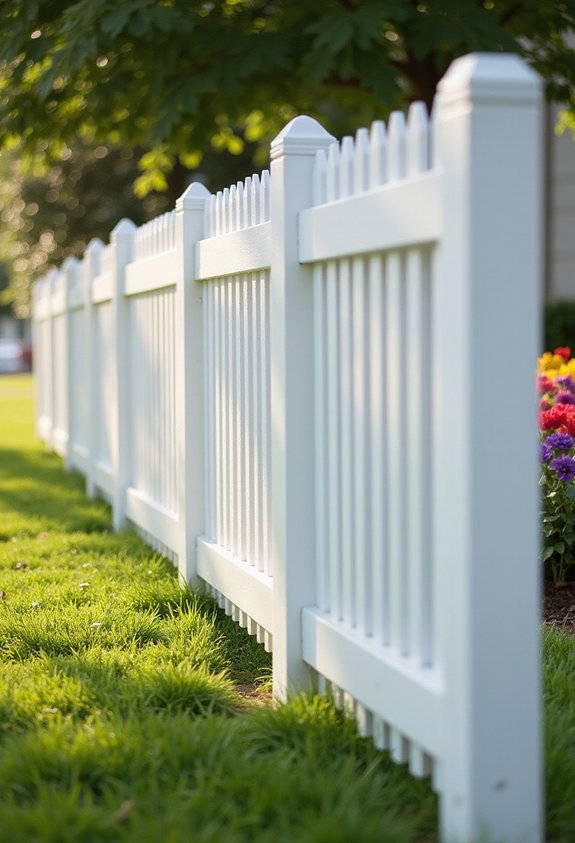
Vinyl picket fencing stands out as one of the most practical choices for front yard boundaries because it combines the classic appearance of traditional wood pickets with modern durability that requires virtually no maintenance over its lifespan. You’ll never need to paint, stain, or seal vinyl pickets, and they won’t rot, warp, or attract insects like wooden alternatives. The material resists harsh weather conditions, including heavy rain, snow, and intense sunlight, maintaining its color and structural integrity for decades. You can easily clean vinyl pickets with soap and water, making them ideal for busy homeowners seeking attractive, low-maintenance fencing solutions.
Composite Front Yard Fence Materials
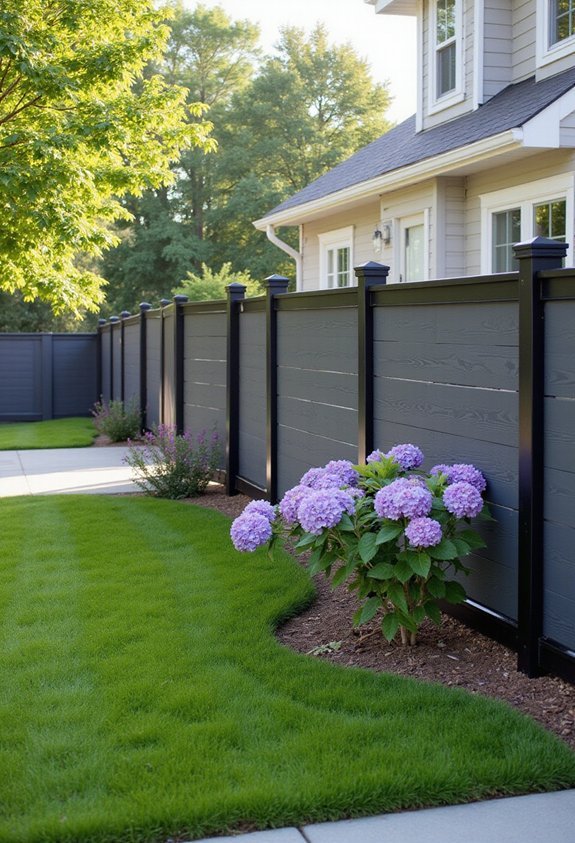
Although composite materials represent a newer category in residential fencing, they’ve quickly gained popularity among homeowners who want the natural appearance of wood without its inherent maintenance challenges and structural limitations. You’ll find composite fencing combines recycled wood fibers with plastic polymers, creating boards that resist warping, splitting, and insect damage. These materials won’t require annual staining or sealing like traditional wood fences, and they maintain their color consistently over time. You can choose from various wood-grain textures and earth-tone colors that complement your home’s exterior while providing decades of reliable performance.
Wood Front Yard Fence Designs
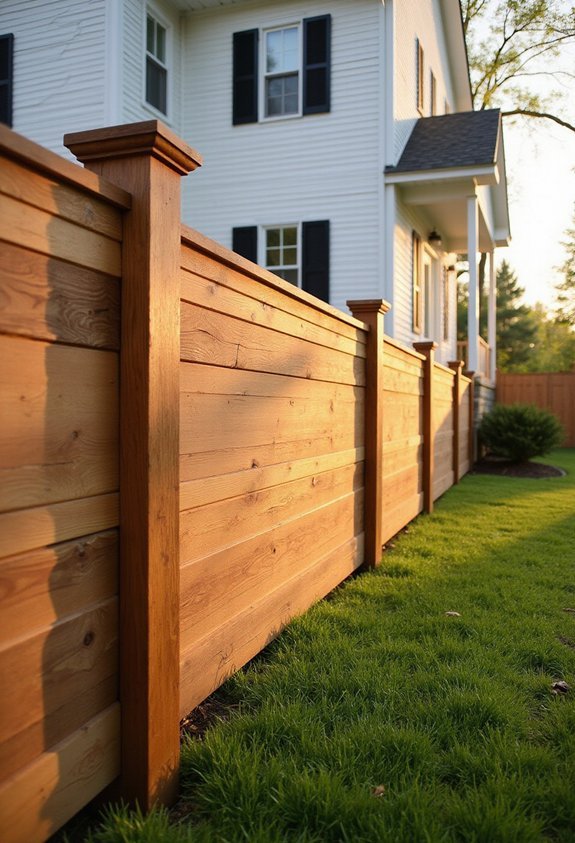
Wood remains the most versatile and widely chosen material for front yard fencing because it offers unlimited design possibilities that can match any architectural style or personal preference. You can select from classic picket fence designs with pointed or flat tops, horizontal slat configurations for modern homes, or board-on-board patterns for enhanced privacy. Cedar and redwood provide natural weather resistance, while pressure-treated pine offers budget-friendly durability. You’ll find that staining or painting wood allows complete color customization, and you can incorporate decorative elements like lattice tops, post caps, or carved details to create distinctive focal points.
Classic White Picket Front Yard Fence
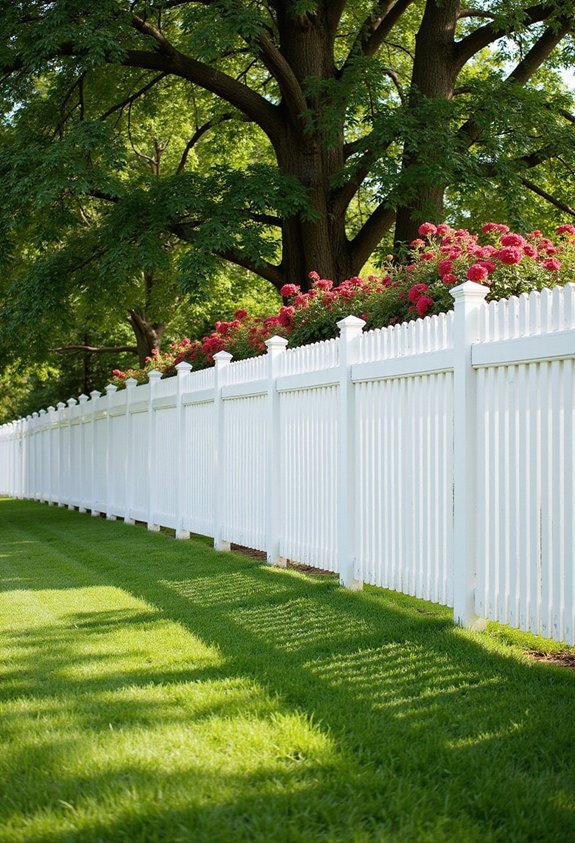
Among all wooden fence options, the classic white picket fence stands as America’s most recognizable and enduring front yard boundary, symbolizing traditional home values while providing practical functionality that complements virtually every residential architectural style. You’ll find this timeless design features vertical slats with pointed or rounded tops, typically standing three to four feet tall. The bright white finish requires regular maintenance through annual cleaning and repainting every three to five years. You can customize picket spacing, gate designs, and decorative post caps to match your home’s character while maintaining the fence’s quintessential charm.
Cedar Privacy Front Yard Fence
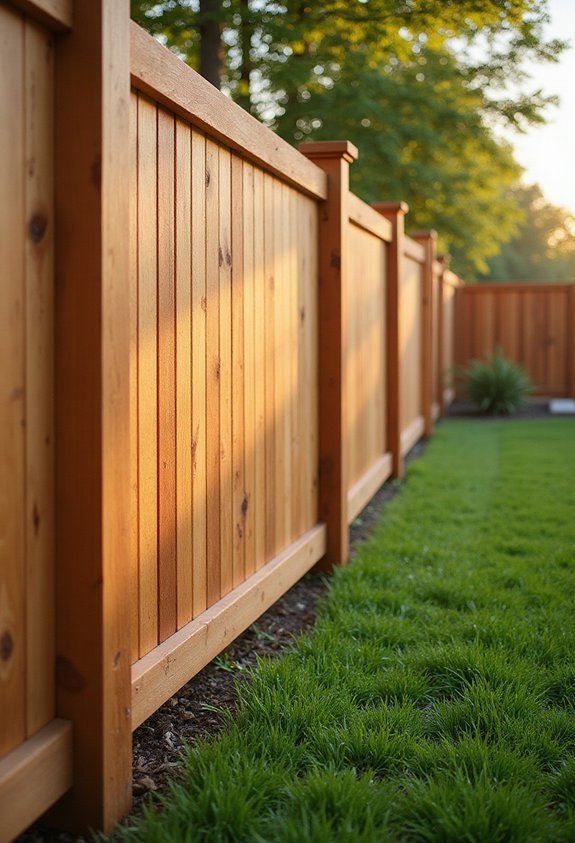
When you’re seeking maximum privacy without sacrificing natural beauty, cedar privacy fencing delivers the perfect combination of functional screening and organic appeal that transforms your front yard into a secluded retreat. Cedar’s natural resistance to insects, rot, and weather damage makes it an excellent long-term investment that requires minimal maintenance while providing complete visual barrier. You’ll appreciate how the wood’s warm, reddish-brown tones complement various architectural styles, from contemporary to traditional homes. The solid panel construction blocks noise effectively, creating a peaceful environment while the natural grain patterns add texture and visual interest that enhances your property’s overall aesthetic appeal.
Split Rail Front Yard Fence Style
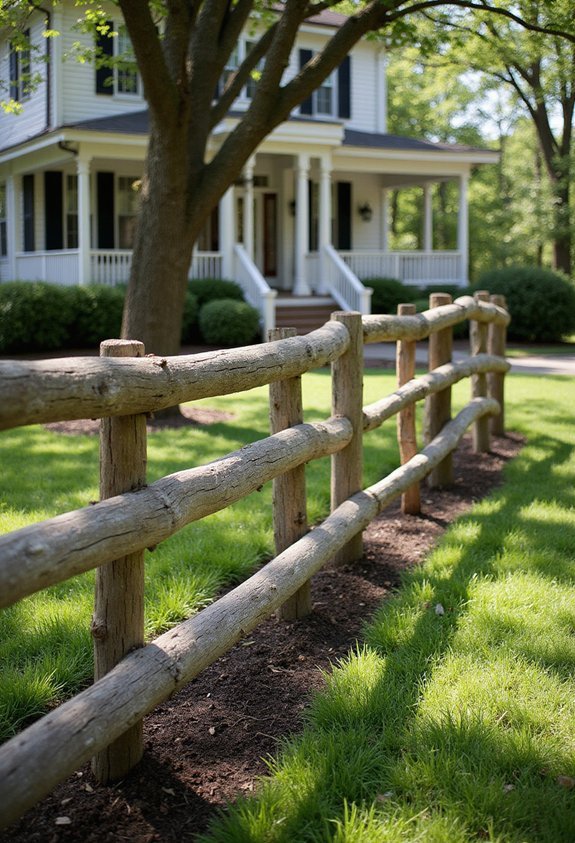
Split rail fencing offers a completely different approach from solid cedar panels, creating an open, rustic boundary that defines your property without blocking views or creating a fortress-like appearance around your home. You’ll typically find split rail fences constructed with two or three horizontal rails positioned between vertical posts, creating distinctive rectangular openings that maintain neighborhood visibility while establishing clear property boundaries. This traditional American fencing style works exceptionally well for rural, suburban, or colonial-style homes where you want to achieve a welcoming, pastoral aesthetic that complements natural landscaping without overwhelming your front yard’s visual appeal or architectural features.
Reclaimed Wood Rustic Front Yard Fence
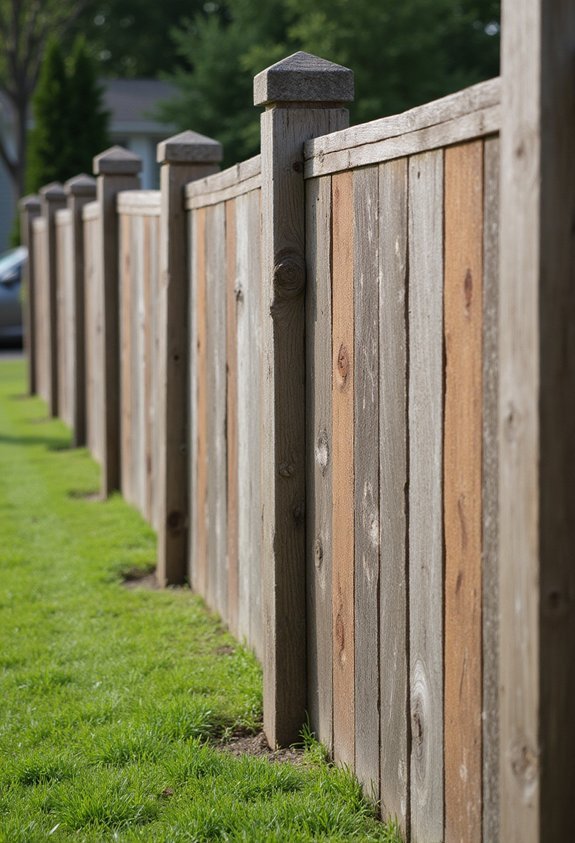
While split rail fencing provides an open rustic appeal, reclaimed wood fencing takes the rustic aesthetic to an entirely different level by incorporating weathered materials with genuine history and character that you simply can’t replicate with new lumber. You’ll find reclaimed wood offers natural patina, varied textures, and unique imperfections that create visual interest across your fence line. This material typically comes from old barns, warehouses, or demolished structures, giving each board distinctive grain patterns and weathering marks. You can arrange these boards horizontally between posts or create vertical picket designs, allowing the wood’s natural character to define your property’s boundary.
Board And Batten Farmhouse Front Yard Fence
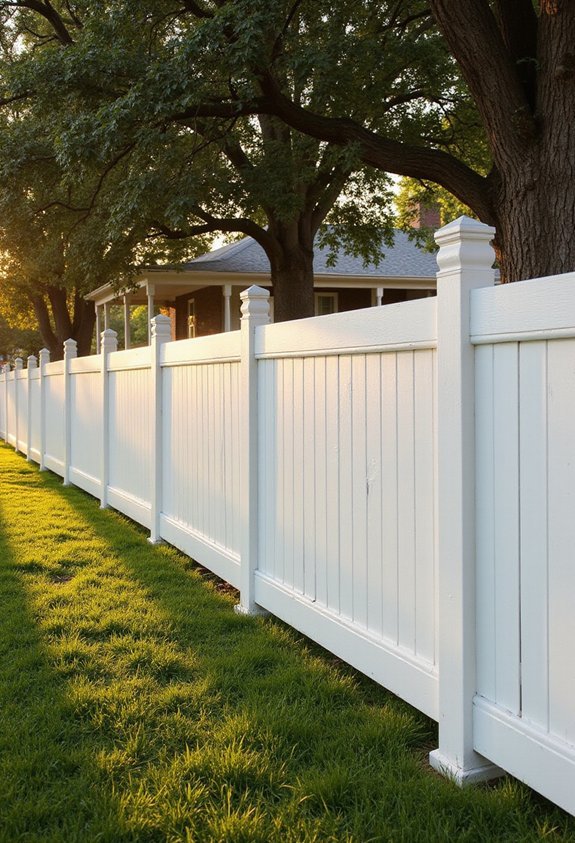
If you’re seeking a fence design that captures the essence of traditional farmhouse architecture, board and batten construction delivers the perfect combination of privacy, durability, and timeless appeal that complements both historic and modern home styles. This classic technique features wide vertical boards with narrow battens covering the seams, creating distinctive shadow lines and visual texture. You’ll install pressure-treated lumber posts at eight-foot intervals, attach horizontal rails, then mount the boards vertically with consistent spacing. The battens cover gaps between boards, providing weather protection while maintaining the fence’s signature appearance that enhances your property’s rustic charm.
Scalloped Picket Front Yard Fence
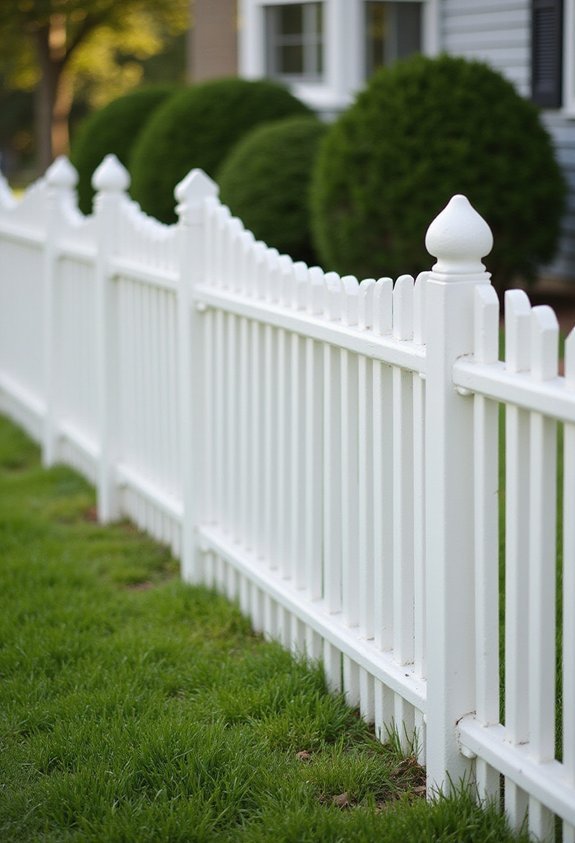
When you choose a scalloped picket fence design, you’re selecting a decorative fencing style that transforms the traditional straight-line picket fence into an elegant wave pattern that adds visual movement and sophisticated charm to your front yard landscape. This design features pickets cut in graduated heights that create smooth, curved shifts between sections, producing a gentle undulating effect. You’ll find that scalloped picket fences work exceptionally well with cottage-style homes, Victorian architecture, and gardens with curved pathways. The wave pattern softens harsh property lines while maintaining the classic appeal of traditional picket fencing with enhanced artistic flair.
Metal Front Yard Fence Styles
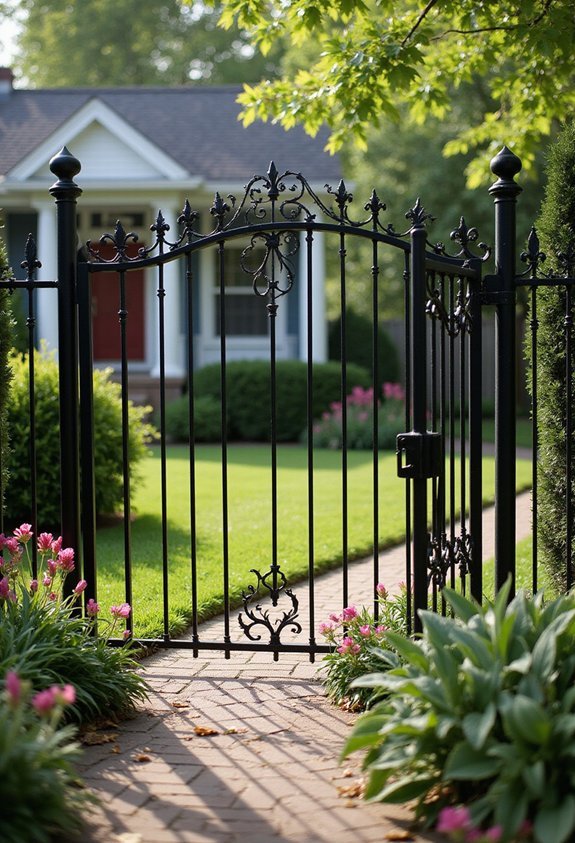
Metal front yard fences offer three primary style categories that provide homeowners with durable, low-maintenance options that can complement virtually any architectural design while delivering superior security and longevity compared to traditional wood alternatives. You’ll find ornamental iron fencing creates elegant, decorative appearances with intricate scrollwork and vertical pickets that suit traditional and Victorian homes. Aluminum fencing provides lightweight, rust-resistant solutions that mimic wrought iron’s appearance without the weight or maintenance requirements. Steel panel fencing delivers maximum security through solid construction and contemporary designs that work well with modern architectural styles, offering customizable heights and powder-coated finishes.
Wrought Iron Decorative Front Yard Fence
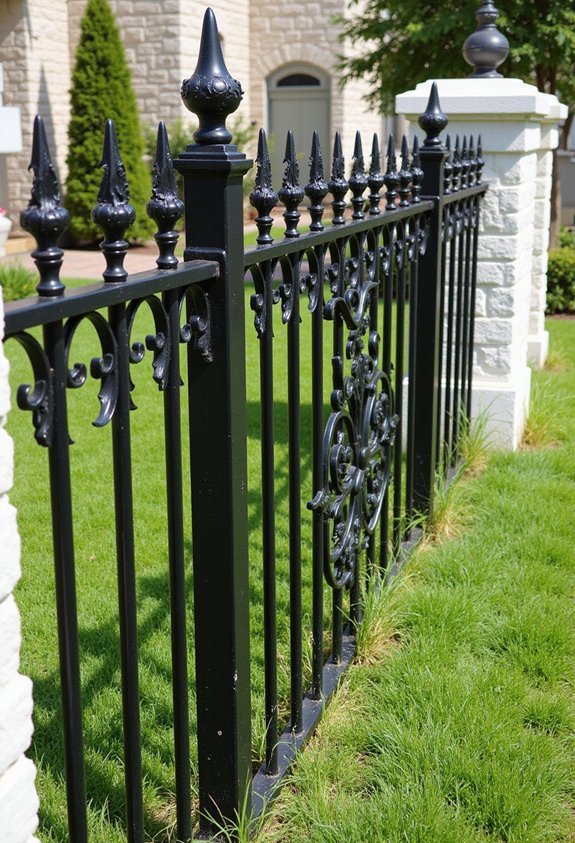
Wrought iron decorative fencing stands as the most prestigious and visually striking option among ornamental metal fence styles, combining centuries-old craftsmanship techniques with modern manufacturing processes to create stunning front yard barriers that enhance property values while providing excellent security. You’ll find these fences feature intricate scrollwork, floral motifs, and geometric patterns that complement traditional architectural styles, particularly Victorian, Colonial, and Mediterranean homes. The material’s malleability allows craftsmen to forge elaborate designs including spear-topped pickets, ornate gate hardware, and custom emblems. While requiring periodic maintenance to prevent rust, properly treated wrought iron fencing can last decades with minimal upkeep.
Black Aluminum Front Yard Fence
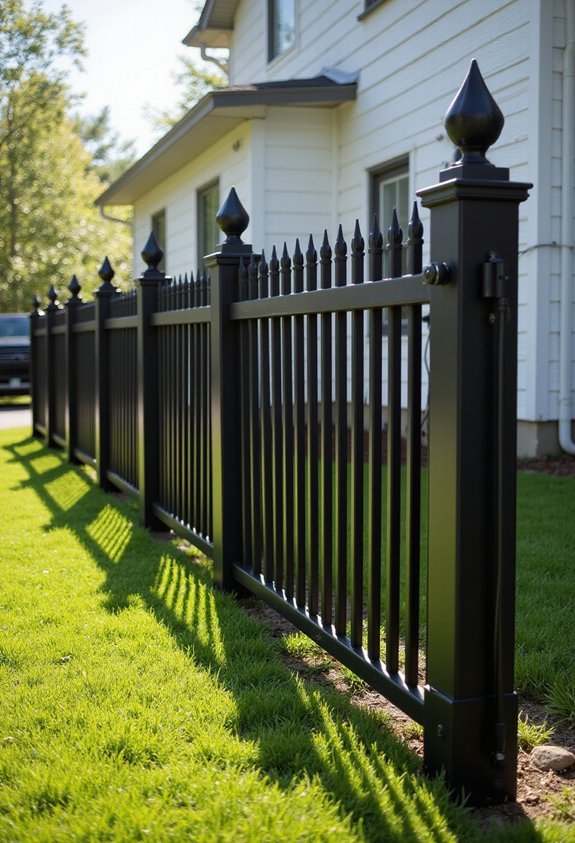
Although wrought iron offers unmatched elegance, black aluminum fencing provides you with a modern alternative that delivers the same sophisticated appearance without the demanding maintenance requirements or hefty price tag. You’ll find that aluminum won’t rust, chip, or require regular repainting like traditional iron materials. This lightweight metal installs quickly and withstands harsh weather conditions, including salt air and extreme temperatures. You can choose from various styles, including ornate designs with decorative scrollwork or clean, minimalist panels. The powder-coated black finish maintains its rich color for decades, giving your property a timeless, upscale appearance that enhances curb appeal effectively.
Ornate Victorian Iron Front Yard Fence
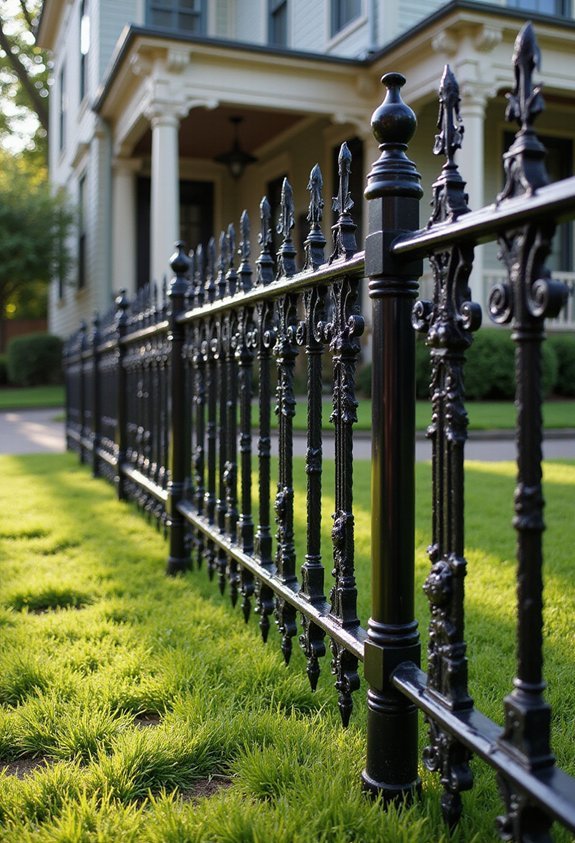
For homeowners seeking authentic period charm, ornate Victorian iron fencing transforms your front yard into a showcase of elaborate craftsmanship that captures the grandeur of the 1800s. These fences feature intricate scrollwork, decorative finials, and detailed picket designs that create stunning visual appeal. You’ll find vertical bars twisted into elegant spirals, ornamental flowers cast in iron, and elaborate gate hardware that serves as functional art. The dark finish enhances architectural details while providing excellent durability against weather conditions. Installation requires professional expertise due to the fence’s weight and complexity, but the investment delivers timeless elegance that increases your property’s historical character.
Cable Rail Minimalist Front Yard Fence
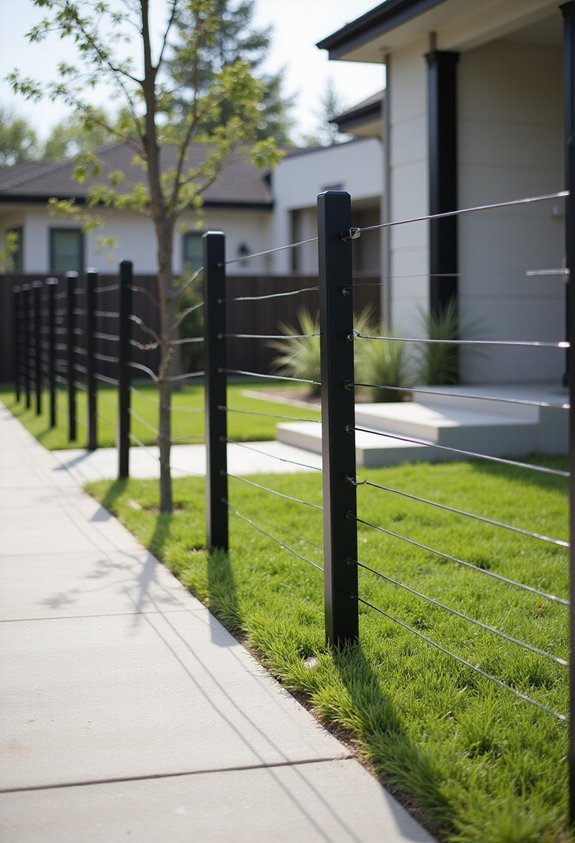
When you want to create clean lines and unobstructed views while maintaining property boundaries, cable rail minimalist front yard fencing offers the perfect solution with its sleek, contemporary design. This system uses horizontal stainless steel cables stretched between sturdy posts, typically made from aluminum, steel, or wood. You’ll appreciate how the thin cables virtually disappear from view, preserving your landscape’s visual appeal while providing security. Installation requires precise tensioning to guarantee against sagging, and the corrosion-resistant materials safeguard long-term durability. Cable rail fencing works exceptionally well with modern architecture and complements minimalist landscaping designs perfectly.
Low Profile Decorative Metal Front Yard Fence
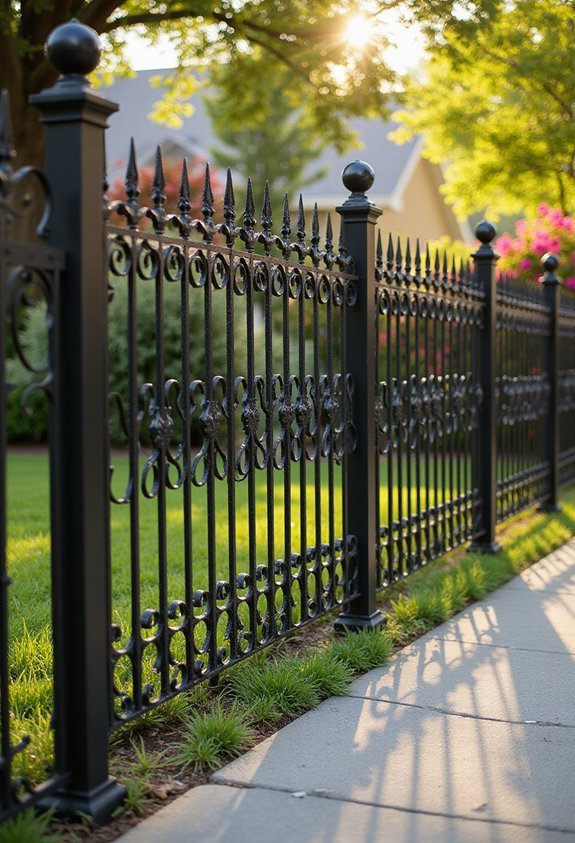
Low profile decorative metal front yard fencing combines functionality with artistic appeal, standing typically between 24 to 42 inches tall to define your property boundaries without blocking sight lines or overwhelming your landscape design. You’ll find wrought iron, aluminum, and steel options featuring ornate scrollwork, geometric patterns, or simple linear designs that complement various architectural styles. These fences require minimal maintenance, resist weather damage, and provide subtle security while enhancing curb appeal. Installation involves setting posts in concrete footings spaced 6 to 8 feet apart, then attaching pre-fabricated panels or individual pickets according to manufacturer specifications and local building codes.
Modern Front Yard Fence Ideas
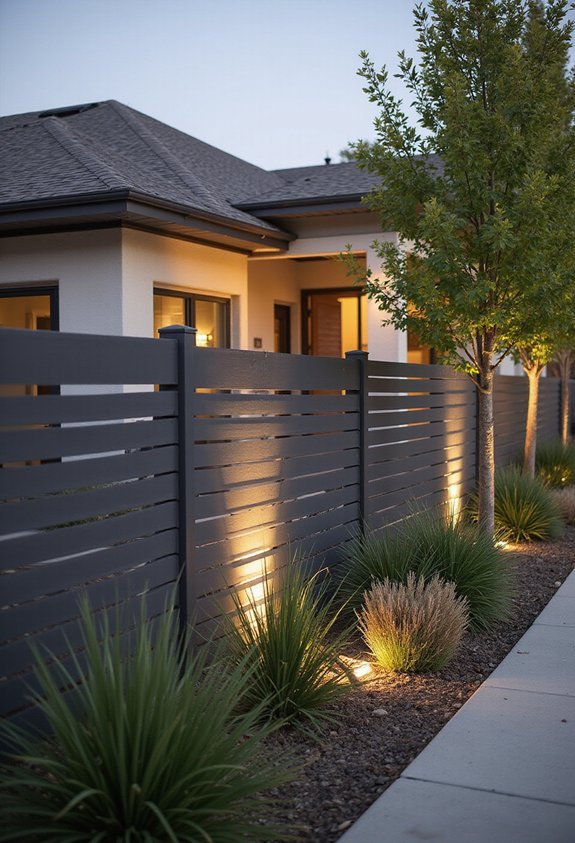
Modern front yard fences embrace clean lines, minimalist aesthetics, and contemporary materials to create striking architectural statements that complement today’s home designs. You’ll find sleek steel panels, composite boards with geometric patterns, and glass inserts that maintain privacy while maximizing light. Consider horizontal slat designs that emphasize width, or mix materials like concrete posts with metal screening for visual interest. Cable railings offer an industrial look, while perforated metal panels provide partial screening with artistic flair. Choose neutral colors like charcoal gray, black, or white to maintain the sophisticated appearance that defines modern fencing styles.
Horizontal Slat Front Yard Fence
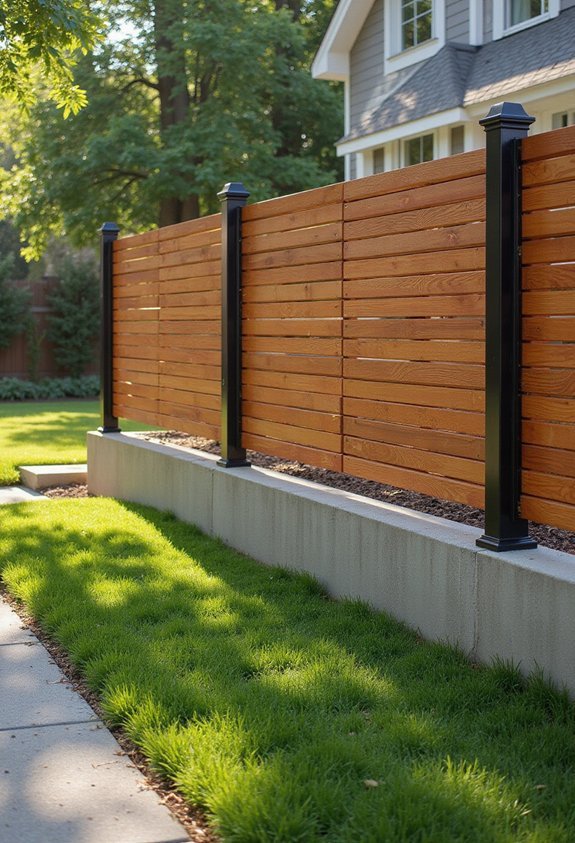
Horizontal slat fencing transforms your front yard’s appearance by creating clean, contemporary lines that draw the eye across your property’s width rather than emphasizing its height. You’ll find this design works exceptionally well with modern architectural styles, as the parallel boards complement straight building lines and geometric landscaping features. When you install horizontal slats, you can choose from various materials including cedar, composite, or metal, with spacing options that provide privacy while maintaining airflow. You’ll want to guarantee proper support posts since horizontal boards require stronger structural elements than traditional vertical installations to prevent sagging over time.
Glass Panel Modern Front Yard Fence
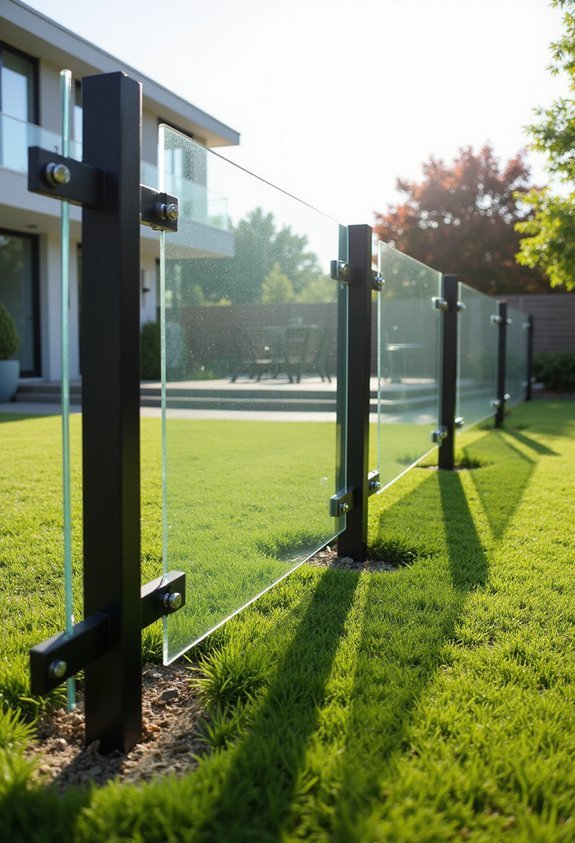
Glass panels create an ultra-modern aesthetic that takes contemporary fencing beyond traditional wood or metal options, offering complete transparency while maintaining clear property boundaries. You’ll achieve maximum visual impact by combining tempered safety glass with sleek aluminum or steel frames that resist weather damage. The transparent design maintains sight lines while creating sophisticated architectural definition around your property perimeter. Installation requires professional expertise due to weight considerations and precise measurements, but you’ll benefit from minimal maintenance needs since glass panels resist staining, warping, and pest damage that affects traditional materials.
Industrial Corrugated Metal Front Yard Fence
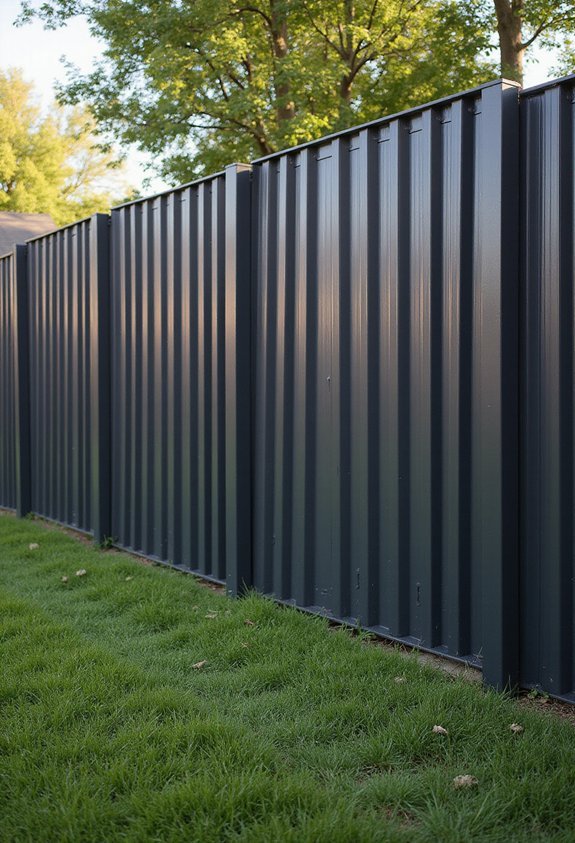
Corrugated metal transforms your front yard with bold industrial character that combines durability with striking visual texture, creating a fence that stands out from conventional residential options. You’ll find corrugated panels resist weather damage, require minimal maintenance, and offer excellent privacy screening. Installation involves securing metal sheets to sturdy posts using specialized fasteners that accommodate thermal expansion. The material’s ridged surface creates interesting shadow patterns throughout the day while deflecting wind effectively. You can choose from galvanized steel, aluminum, or weathering steel options, each providing different aesthetic qualities and corrosion resistance levels for long-term performance.
Mixed Material Front Yard Fences
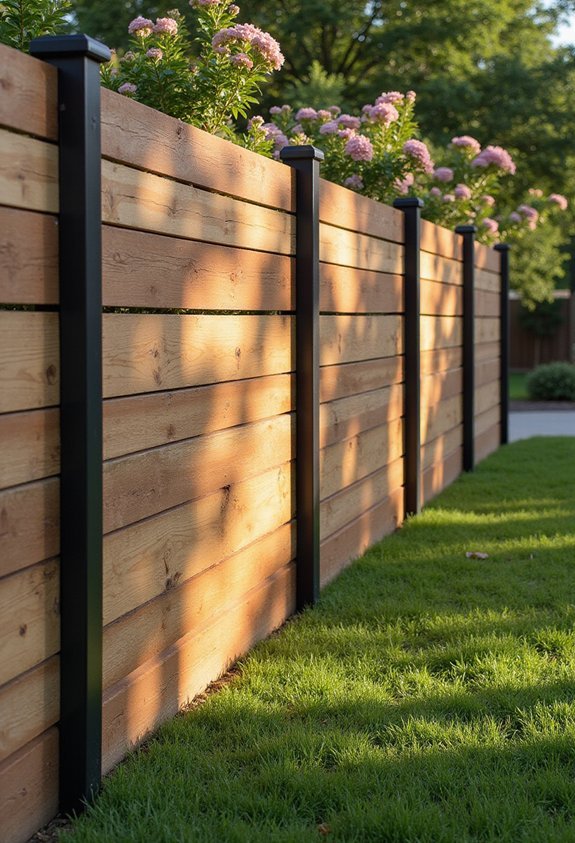
When you combine different materials in a single fence design, you’ll create visual interest and functionality that surpasses what any single material can achieve on its own. Popular combinations include wood with metal posts, stone columns supporting wooden panels, and vinyl sections alternating with decorative iron inserts. These mixed approaches allow you to balance durability, cost, and aesthetics effectively. For instance, you can use concrete or stone for structural support while incorporating wood for warmth and privacy. Consider pairing horizontal metal slats with vertical wood boards to achieve contemporary appeal while maintaining neighborhood compatibility and long-term performance.
Stone And Metal Combination Front Yard Fence
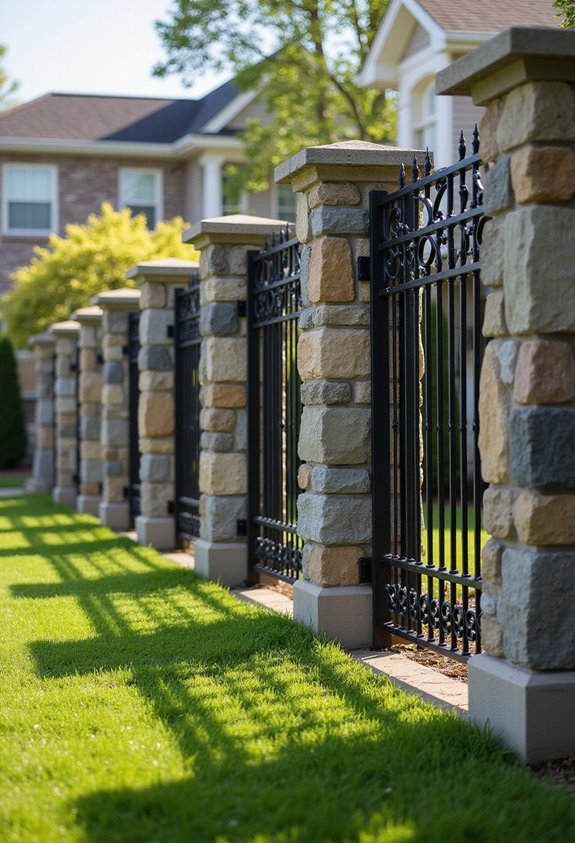
Since stone provides unmatched durability and metal offers sleek modern lines, combining these materials creates one of the most striking and long-lasting front yard fence options available to homeowners. You’ll typically see stone pillars or bases paired with metal panels, creating visual weight at the bottom while maintaining an open, airy feeling above. This combination works exceptionally well with contemporary and transitional home styles, as the stone adds natural texture while the metal introduces clean, geometric elements. You can choose from various metal options including aluminum, steel, or wrought iron, depending on your maintenance preferences and budget requirements.
Brick Pillar Panel Front Yard Fence
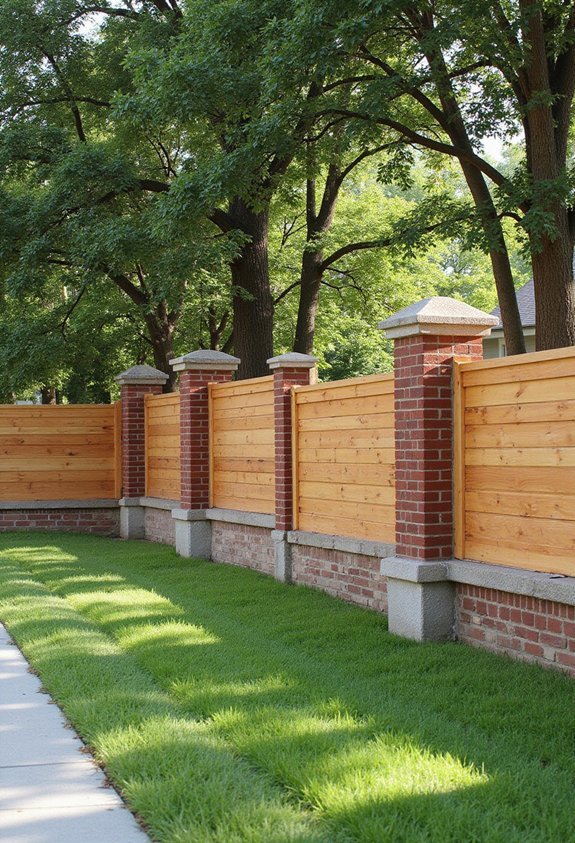
Brick pillar panel fences offer homeowners another compelling approach to combining sturdy masonry with complementary materials, creating front yard boundaries that emphasize traditional craftsmanship and architectural permanence. You’ll construct thick brick columns at regular intervals, typically six to eight feet apart, then fill the spaces between these pillars with panels made from wood, metal, or composite materials. This design creates visual rhythm while providing structural stability through the masonry elements. You can customize panel materials to match your home’s style, whether you prefer horizontal wood slats, decorative metal screens, or modern composite boards that require minimal maintenance over time.
Concrete Block Decorative Front Yard Fence
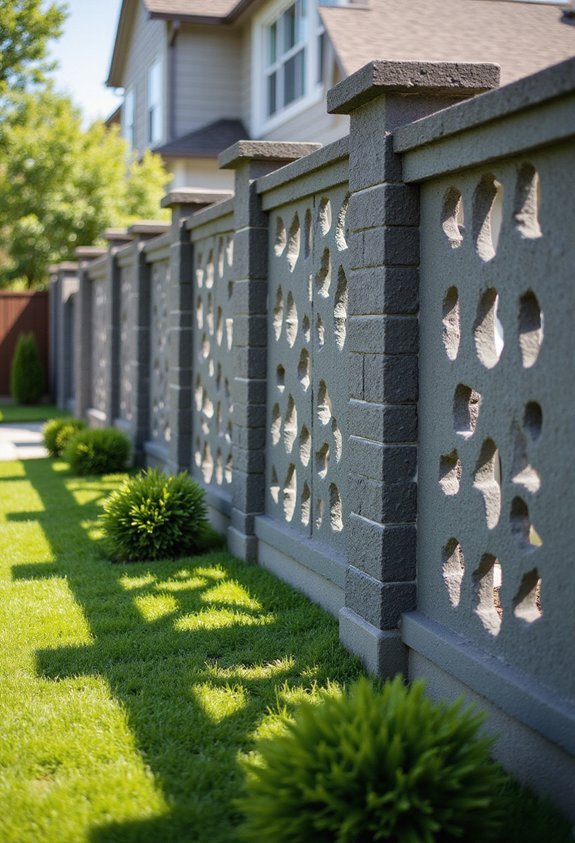
Although concrete blocks might seem industrial at first glance, you can transform these versatile building materials into attractive decorative fences that deliver exceptional durability while offering numerous design possibilities for your front yard. You’ll find concrete blocks available in various textures, colors, and patterns, including split-face, ribbed, and smooth finishes that create visual interest. These blocks stack easily with mortar, allowing you to build sturdy walls that withstand harsh weather conditions for decades. You can incorporate decorative caps, integrate planters between sections, or add stucco coatings to customize the appearance and complement your home’s architectural style effectively.
Conclusion
You’ve explored numerous front yard fence options, from budget-friendly chain link with privacy slats to elegant mixed material combinations featuring stone and metal. Whether you choose durable vinyl pickets, classic wood designs, or modern composite materials, you’ll enhance your home’s curb appeal dramatically. Consider your specific needs, local regulations, and long-term maintenance requirements when selecting your fence style. The right choice will provide security, define your property boundaries, and create lasting visual appeal.