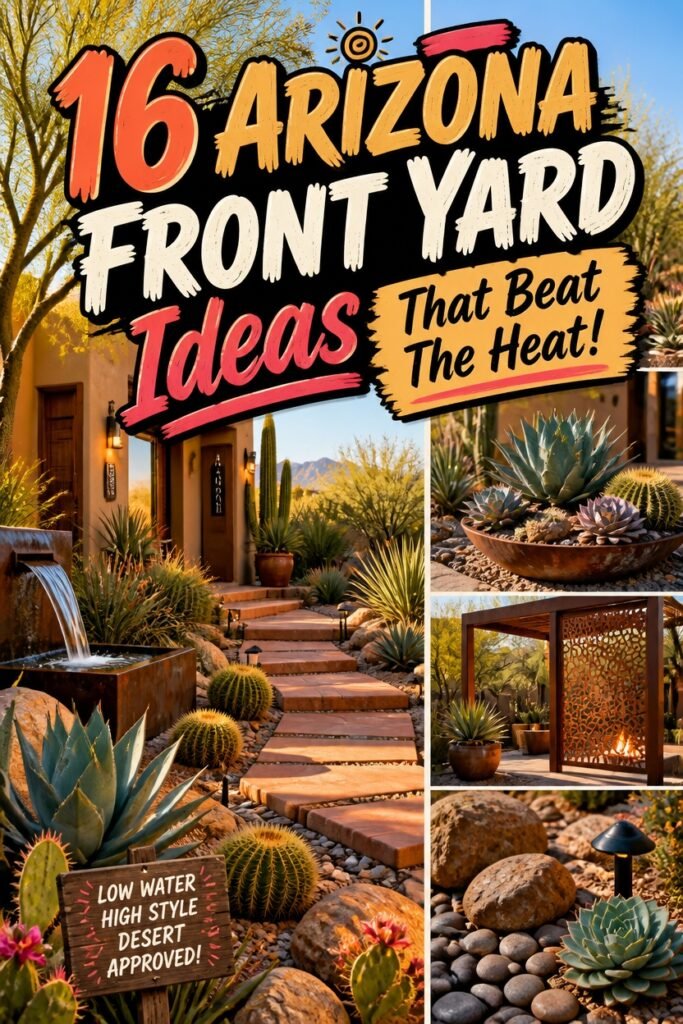
The afternoon sun bakes the lawn until it crunches underfoot. Brown patches spread like spilled coffee. That water bill arrives, and suddenly that grassy dream feels like a mistake.
Here’s something to consider. Your Arizona front yard doesn’t need to fight the desert. It can actually work with it. Native plants have spent centuries figuring out how to thrive here. Why not let them do the heavy lifting?
A little shade goes a long way too. A well-placed ramada or a cluster of desert trees drops the temperature fast. Suddenly your porch becomes livable again. The AC gets a break. You might even want to linger outside with a cold drink.
Hardscaping ties it all together. Flagstone paths. Gravel beds. River rock accents. These elements handle the heat without complaint. They look sharp year-round.
And they free you from constant watering and mowing.
The real secret? Stop apologizing to your yard. Start designing for where you actually live.
Native Desert Plants That Thrive in Arizona Heat
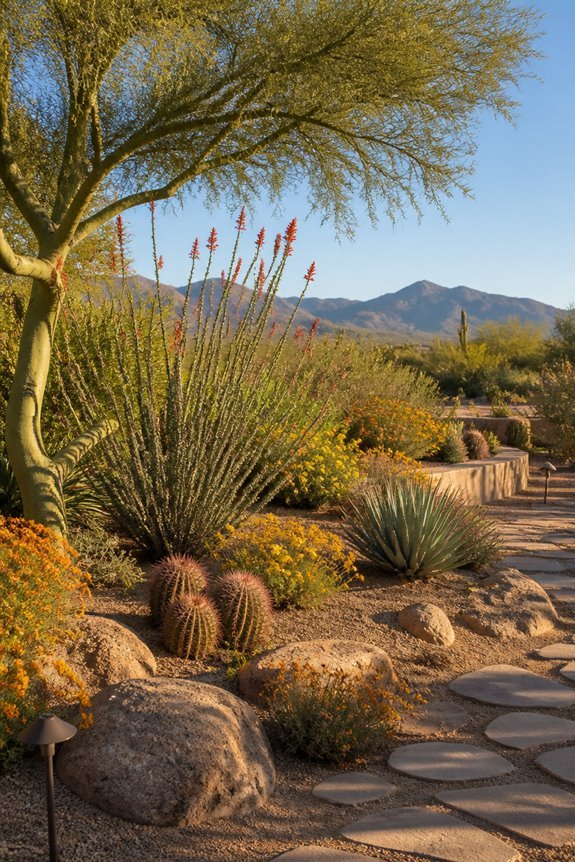
Need something that won’t wilt when the pavement hits 120 degrees? Native plants have you covered.
Palo verde trees flash bright green bark and delicate yellow blooms. They don’t flinch at triple-digit heat. Barrel cacti store water like tiny tanks, standing short and stubborn through summer. Desert marigold carpets the ground in gold without asking for much. Brittlebush brightens your yard with cheerful flowers and zero drama. These plants evolved for Arizona summers. They need little water, zero fuss, and won’t punish you with brown leaves if you forget them for a week. You get color, shade, and texture without a heartbreaking water bill.
Also read: 18+ FRONT YARD ENTRANCE Ideas That Feel Welcoming!
Xeriscaping Principles for Arizona’s Climate
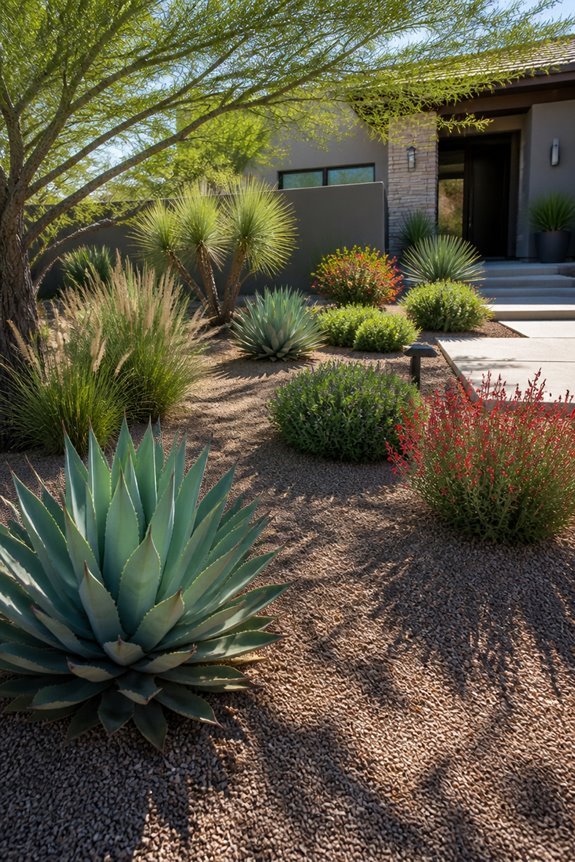
Tired of watching your water bill climb every summer? You’re not alone. Arizona homeowners face a real challenge: keeping outdoor spaces beautiful without draining the bank account or the Colorado River.
Xeriscaping gives you a practical path forward. Start by grouping your plants strategically. Put your thirsty roses together and keep your cacti separate. This lets you water exactly where needed, nothing more. Spread 3 to 4 inches of mulch around your plants. You’ll lock in moisture and cut down on weeding too. Replace that water-guzzling lawn with gravel paths, decorative rock, or native groundcover like desert marigold. Choose plants with shallow root systems. They grab surface water quickly and don’t demand constant attention. Water deeply but less often. This trains roots to grow downward and builds stronger plants. Your yard stays lush. Your wallet stays fuller. The desert stays healthier.
Ground Covers: Beyond Grass and Into Rock, Gravel, and Mulch
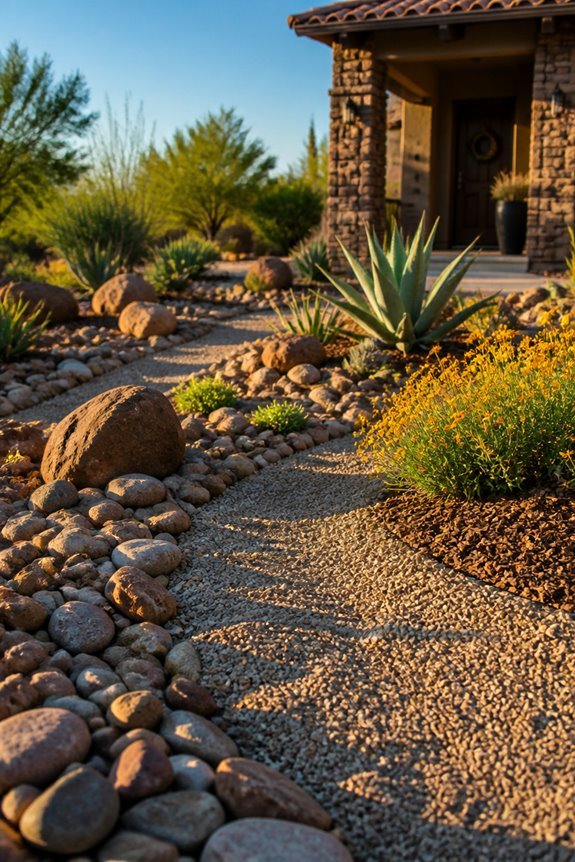
Tired of dragging out the lawnmower? Here’s the truth about grass in Arizona. It’s basically a sign that says “waste water here.” Rock, gravel, and mulch work harder for you. They stay put. They never need mowing. And they make your yard look planned, not forgotten.
River rock in warm grays and tans gives you that clean, modern look. It bounces heat away too. Decomposed granite is your budget friend. It looks natural and slowly becomes actual soil over time. Mulch keeps roots cool and happy, though you’ll refresh it more often than rock.
Want the real payoff? These ground covers show off desert plants. Picture a creosote bush against pale gravel. Now picture struggling grass. No contest. Plus you skip the 115-degree mowing sessions.
Choosing Between Hardscape Materials: Pavers, Stone, and Gravel Compared
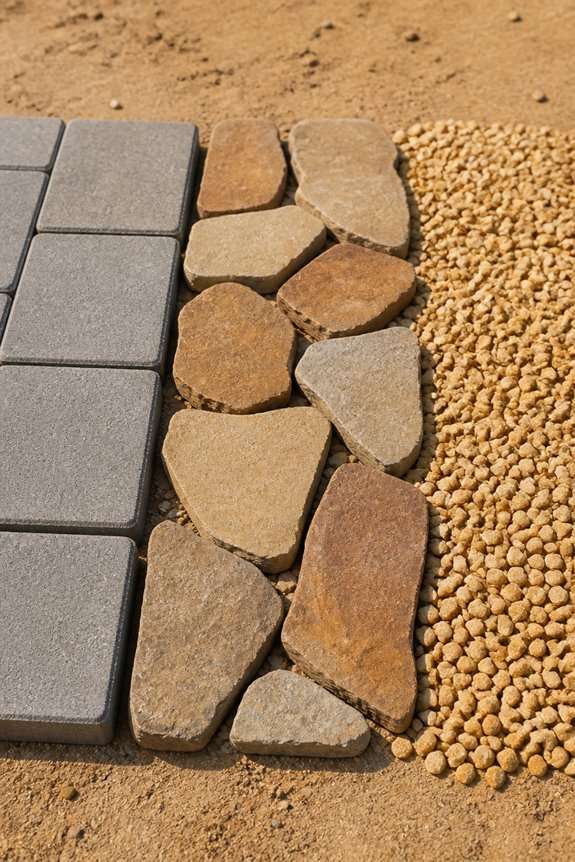
You’re staring at your yard. The plants are picked. Now what ties it all together?
Three materials fight for your attention. Each brings something different to the table.
Pavers give you control. You get crisp lines and surfaces that laugh at 115 degrees. They cost more at first. But twenty years later, they still sit flat and pretty. No cracks. No regrets.
Natural stone trades polish for personality. It stays put when the summer storms hit. Every piece looks slightly different. That variation becomes the charm.
Gravel keeps your wallet happy. You can spread it in a weekend. Water drains through it instantly. The catch? It travels. You’ll find pebbles in places you never expected. Budget ten minutes of raking into every month.
Shade Trees vs. Structures: Which Works Best for Your Yard?
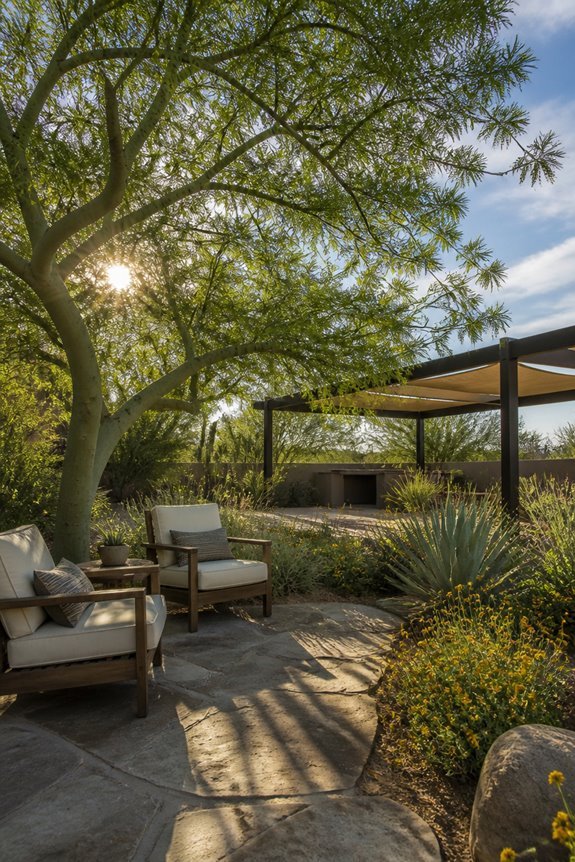
When summer hits Arizona at full force, shade becomes more valuable than a working air conditioner. You need it now, not later. But what’s your best move?
Trees and structures both fight the heat, yet they’re completely different warriors. Shade trees grow naturally, drop leaves, and cost less upfront. The catch? They take years to mature. You might be gray before your oak delivers.
Structures like pergolas, shade sails, and awnings work immediately. They never need watering. A 10-foot pergola blocks serious rays without waiting decades. Trees cool through evapotranspiration. That’s fancy science for “they make it less sweaty.” Structures don’t.
Smart yards use both. Plant fast-growing palo verdes for future shade. Add a shade sail for instant relief. Your forehead thanks you now. Your trees thank you in five years. Win-win.
Low-Water Perennials for Year-Round Color in the Desert
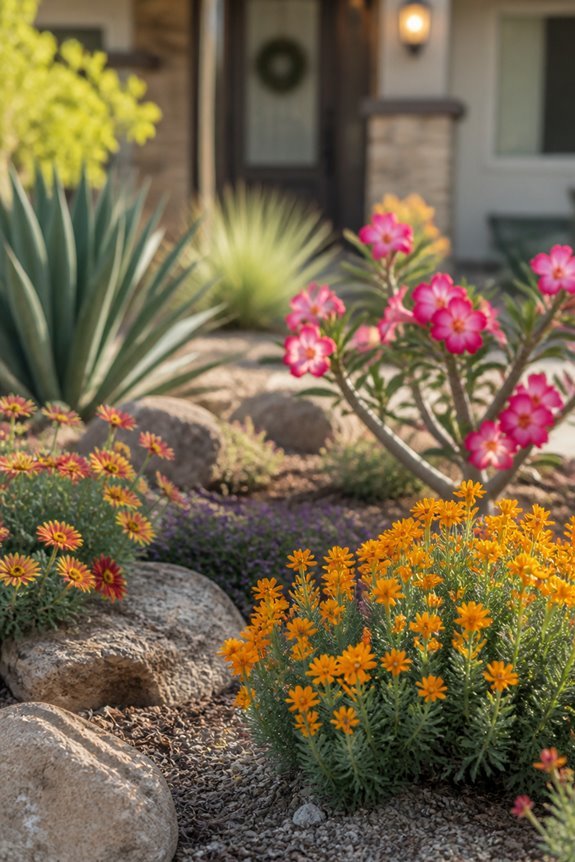
So you’ve got your shade sorted. Now what about flowers that won’t torpedo your water bill?
Low-water perennials are the workhorses of desert gardening. They return every year and barely need a drink.
Try desert marigolds for cheerful yellow blooms that shrug off 120-degree heat. Blanket flowers splash red and orange across your yard without fussing through droughts. Autumn sage offers tubular flowers that send hummingbirds into a frenzy.
These plants don’t need coddling. They sink deep roots and thrive on neglect. Plant in fall or spring, water lightly until established, then step back. Your yard becomes a money-saving showpiece that mostly manages itself.
Shrubs and Groundcovers That Thrive on Neglect
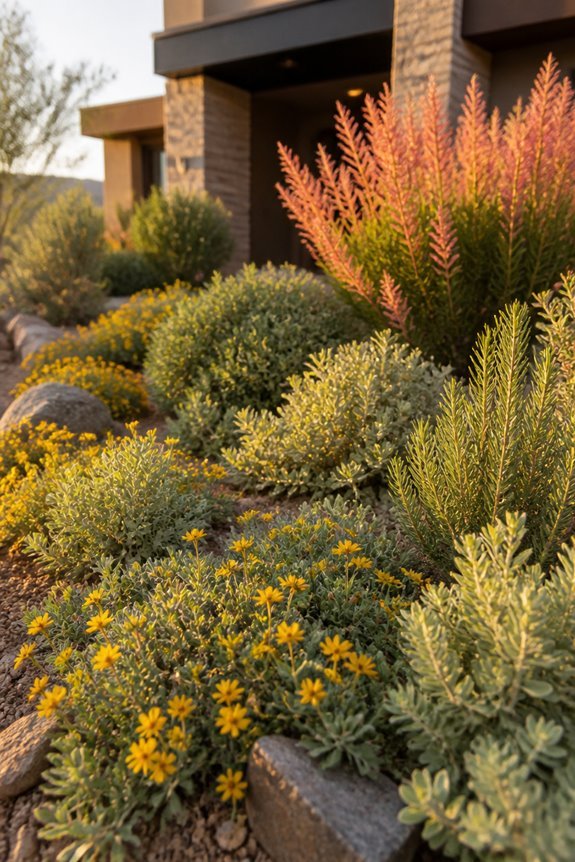
Want privacy without babysitting plants all weekend? Shrubs and groundcovers have you covered.
Desert marigold spreads low and golden. It basically laughs at your neglect. Creosote bushes grow tall and leggy, reaching three to eight feet without a single complaint. Texas privet builds dense green walls. Perfect for hiding that broken sprinkler you’ve been meaning to fix since March.
Silver beachweed sprawls across bare soil and smothers weeds while asking for almost nothing. Esperanza shrubs explode with butter-yellow blooms. They honestly don’t care if you forget they exist for weeks.
These plants love hot sun, sandy soil, and your complete indifference. They’re the friends who show up anyway. No apologies needed.
Desert-Adapted Succulents and Cacti: Focal Points and Fillers
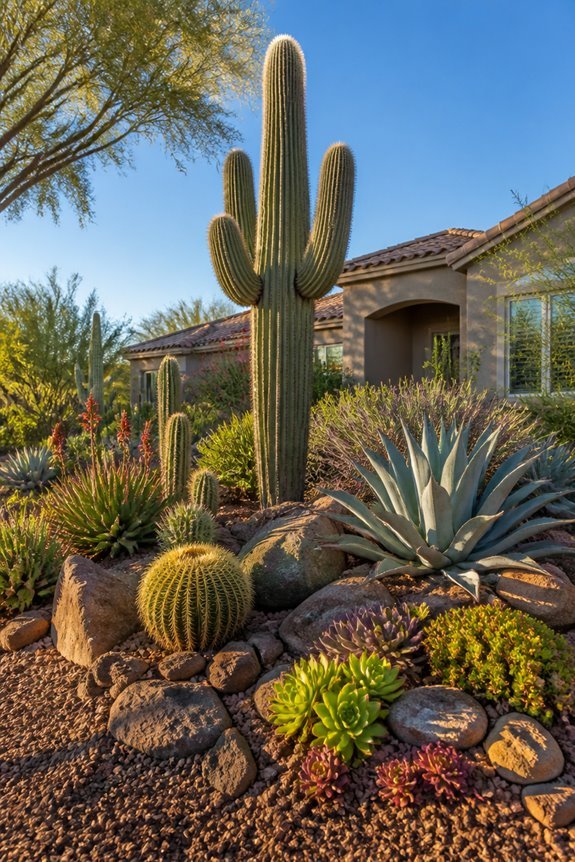
If neglect-loving shrubs are your reliable friends, succulents and cacti are the dramatic show-offs. They demand attention. And yes, you should give it to them.
You have options here. Tall columnar cacti like saguaros or organ pipes reach 20 feet without fuss. They anchor your yard vertically. Agave plants sprawl like sculptures. Their geometric rosettes catch the eye from the street. For smaller spaces, tuck echeveria and jade plants into gaps. Their purple and blue leaves read like jewels from a distance.
Here is how you place them. Space plants apart to highlight their weird, wonderful shapes. This also prevents root competition. Group in threes or fives for impact. Singles get lost. These desert natives thrive on rock and gravel. They need honest sun and bone-dry soil. That is it. No coddling required.
How Boulders and Stone Features Cool Your Yard (Plus Budget Expectations)
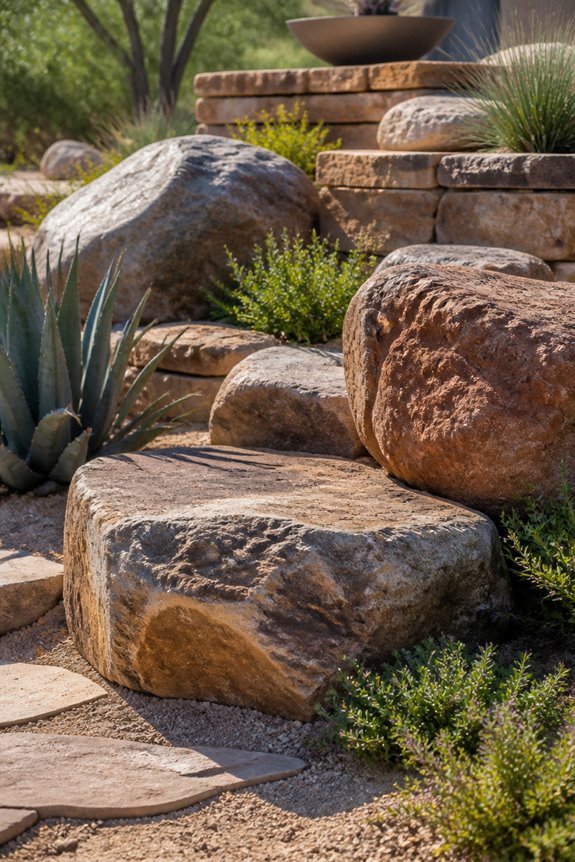
Want your succulents and cacti to really stand out? Give them the backdrop they deserve. Boulders and stone features do the heavy lifting while your plants take the spotlight.
Large rocks soak up heat during the afternoon. Then they release it slowly after sunset. This keeps your yard cooler than mulch ever could. Position your boulders to cast afternoon shade where your plants need a break from intense sun. A three-foot boulder runs $150 to $400, delivery included. Flagstone paths and rock borders cost $10 to $20 per square foot. Unlike wood, they never rot. Think of stone features as your yard’s air conditioning. They just happen to look gorgeous too.
Permeable Paving: Reduce Heat Reflection and Drainage Problems
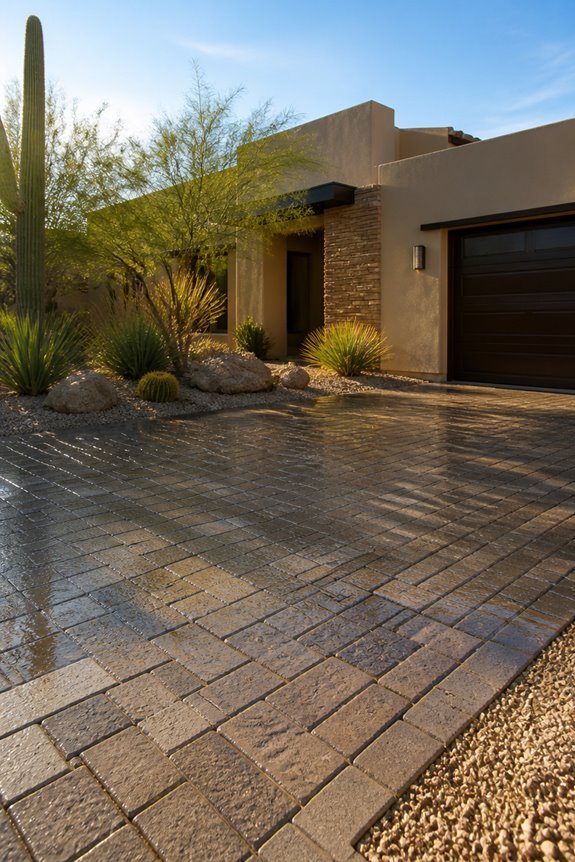
Tired of your driveway feeling like a frying pan by noon? Permeable paving could be your answer.
This smart swap lets water pass right through instead of pooling on top. Your feet will notice the difference immediately. No more sizzling walks to the car in July.
Arizona monsoons hit hard. Traditional asphalt turns your yard into a temporary lake. Porous pavers or permeable asphalt send that water straight down into the ground. No skating rink moments. No frantic sweeping during storms.
The surface stays cooler too. Dark pavement bakes everything around it. Permeable materials reflect less heat, so your entire yard feels more manageable on scorching afternoons.
Yes, you’ll pay 20-40% more upfront. Think of it as skipping the drainage system you’ll never need to install. Your foundation stays dry. Your headaches stay few.
Permanent Shade Structures: Pergolas and Ramadas That Last
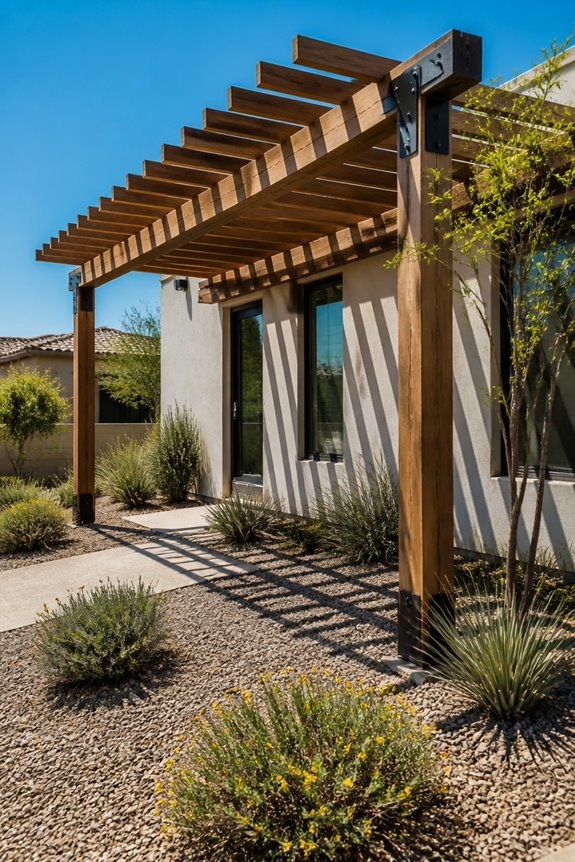
Cool pavement helps, but have you stepped outside in July? Your yard still feels like an oven. That’s where pergolas and ramadas come in. They do the heavy lifting when it comes to real shade.
A pergola gives you that perfect dappled light. Sun filters through the slats while you stay cool underneath. Ramadas go a step further. Think of them as pergolas with solid roofs, built for serious heat blocking.
Both stand up to Arizona’s brutal UV without breaking down. Wood or metal frames last decades with basic upkeep. Position one over your patio or front entry, and suddenly you’ve got usable space again.
Your guests will linger outside instead of rushing indoors. No more melting into the concrete like forgotten popsicles.
Water-Efficient Irrigation Systems for Arizona’s Intense Heat
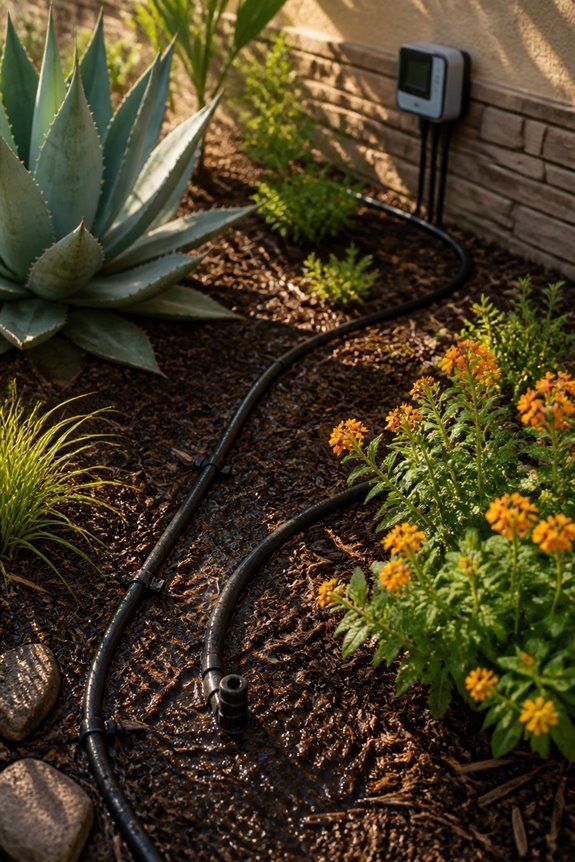
You already know shade keeps you cool. But your plants? They need water to survive Arizona’s brutal summers.
Drip irrigation is your best friend here. Small tubes deliver water straight to the roots. No waste. No drama. Just efficient hydration where plants actually need it. You’ll use about half the water compared to old-school sprinklers. Add a smart controller with soil moisture sensors, and you’ve got a system that knows when your plants are actually thirsty.
Don’t forget the mulch. Spread 3 to 4 inches of wood chips around your plants. It locks in moisture and laughs back at the desert heat. Soaker hoses work well for beds too. In Arizona, efficient irrigation isn’t a nice-to-have. It’s how you keep your landscape alive and your water bill sane.
Vertical Gardens and Living Walls for Extra Shade and Space
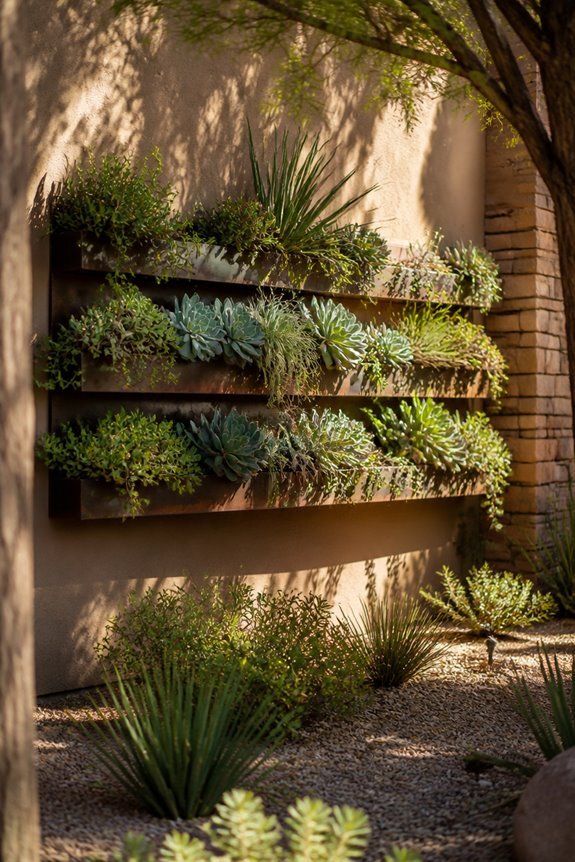
Feeling squeezed by your Arizona front yard? You can steal back space by building up instead of out. Hanging planters and wall gardens turn empty walls into something alive. They shade your home and drop the temperature naturally. No electricity needed. No weird hum from a compressor.
Succulents are your easy win here. They sip water and still look incredible stacked in vertical rows. Your neighbors will want to know how you did it. Add a wall trellis for climbing vines. By summer, you’ll have a leafy screen. Place it on your west wall to block that brutal afternoon sun.
A 4-by-8-foot living wall can cut surface temps by 15 degrees. You also free up ground space for a chair or a path. You get your garden plus your square footage back.
Temporary and Budget-Friendly Shade Solutions: Awnings and Cloth
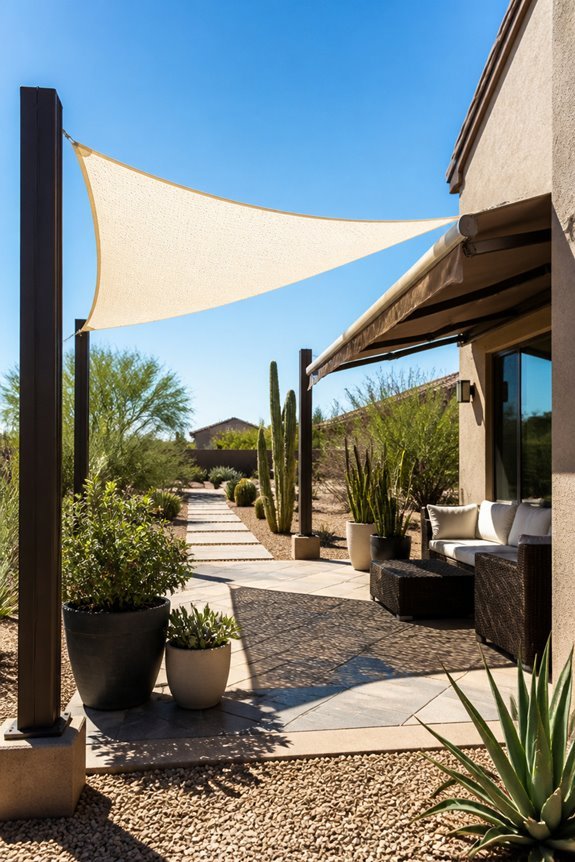
You’ve felt that Arizona sun blasting your porch at 3 p.m., right? You don’t need a construction crew to fix it. A simple retractable awning or cloth shade panel does the job without emptying your wallet.
Picture this: a 10-by-12-foot awning costs a fraction of a pergola build. When those wild monsoon winds roll in, you roll it up. Done. Tan or cream cloth panels clip right onto what you already have. They’re light. They’re easy. They turn your patio into an actual usable space.
Here’s the real win. These come down whenever you want. Tired of the setup? Take it down. No sunk costs. No permanent mistakes. Just shade when you need it, gone when you don’t.
Edging and Borders That Define Beds Without Constant Watering
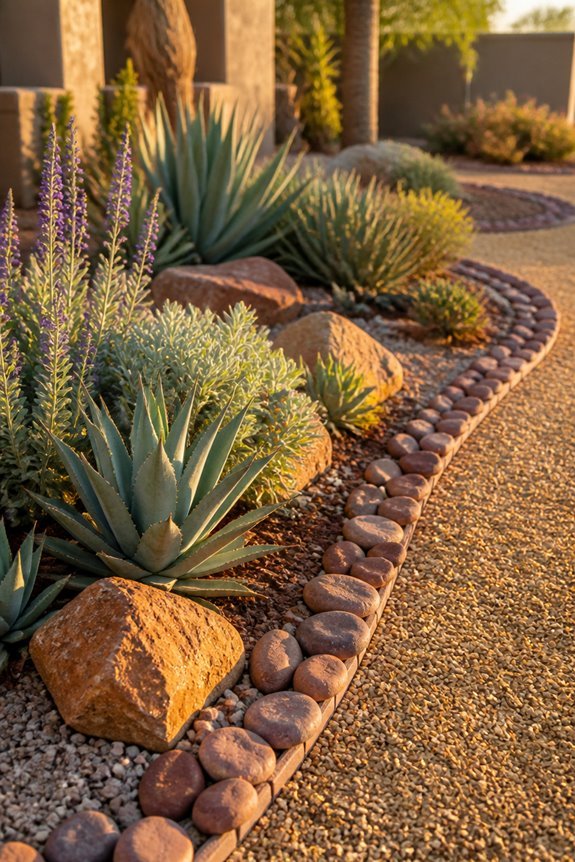
You know that moment when you spot grass invading your flower bed? It happens to every Arizona gardener. Edging stops that takeover before it starts.
River rocks make this easy. Grab stones about 2-3 inches wide and line them along your bed edges. They never need water. They never wilt. They just sit there doing their job year after year. Metal or plastic borders work too if you prefer a cleaner look. Dark colors make your plants stand out and keep everything looking sharp.
Here’s the bonus you might not expect. That clear boundary actually saves water. Your irrigation stays where you put it instead of feeding thirsty grass roots. Your plants get what they need. You spend less time on maintenance and more time outside enjoying those desert sunsets.
What You’ll Actually Do Each Month: Seasonal Maintenance for Arizona Yards
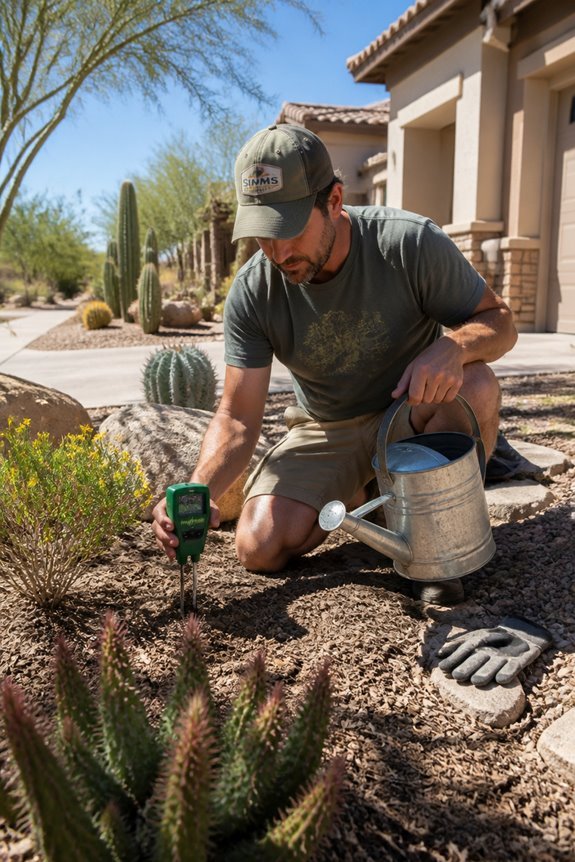
You’ve got your edging borders locked in. Now what? Arizona yards need you every month, but not in a backbreaking way. Think quick check-ins, not marathon weekends.
Spring asks for light weeding and deep, occasional watering. Summer turns you into a sprinkler detective. Scout for scorched leaves and adjust your timer before sunrise. Fall is your reward season. Breezy days, minimal chores, maybe even something blooming. Winter lets you off the hook entirely. No guilt, no FOMO.
Here’s the real secret: thirty minutes each week beats five-hour panic sessions. Deadhead spent blooms. Stick your finger in the soil. Water early and deep, not shallow and often. Stay steady, stay sane. Your desert garden will quietly thrive while the lawn crowd sweats and curses their mowers.
Frequently Asked Questions
How Do I Transition My Current Lawn to a Desert-Friendly Landscape Without Breaking the Budget?
One can gradually replace turf with drought-resistant plants like desert marigold and palo verde trees. Mulching existing beds reduces water needs. Phasing changes over seasons spreads costs while allowing soil adjustment to xeriscaping methods.
What’s the Best Time of Year to Plant in Arizona, and How Does Heat Affect Planting Schedules?
Fall and spring offer ideal planting conditions in Arizona. Autumn proves perfect for most plants, allowing root establishment before summer heat. Winter suits cool-season varieties. Extreme summer temperatures stress new plants, making late spring through early fall unsuitable for planting.
Can I Use Artificial Turf or Synthetic Grass in My Arizona Front Yard Instead?
Yes, artificial turf is a viable option for Arizona front yards. It eliminates watering needs, reduces maintenance, and withstands intense heat well. However, it requires higher initial investment and may retain heat, making barefoot use uncomfortable during peak summer months.
How Much Money Should I Realistically Budget for a Complete Front Yard Desert Redesign?
A complete Arizona front yard desert redesign typically costs between $5,000 and $15,000, depending on size, materials selected, and labor requirements. Simple xeriscaping projects may start lower, while elaborate designs with hardscaping and irrigation systems demand higher budgets.
What Are Common Mistakes Arizona Homeowners Make When Designing Their First Desert Landscape?
Arizona homeowners frequently over-water newly planted desert species, select non-native plants requiring excessive maintenance, ignore soil preparation, underestimate mature plant sizes, and fail to incorporate adequate hardscaping for shade and heat reflection in their landscapes.
Conclusion
By pure coincidence, the moment you commit to these 16 ideas, your Arizona front yard stops fighting the heat and starts winning. Native plants, smart mulch, and shade structures transform that scorching wasteland into an actual oasis. Your water bill drops. Your neighbors get jealous. And suddenly, you’re not cursing summer—you’re actually hanging outside in it. That’s the magic right there. Your yard finally gets it.