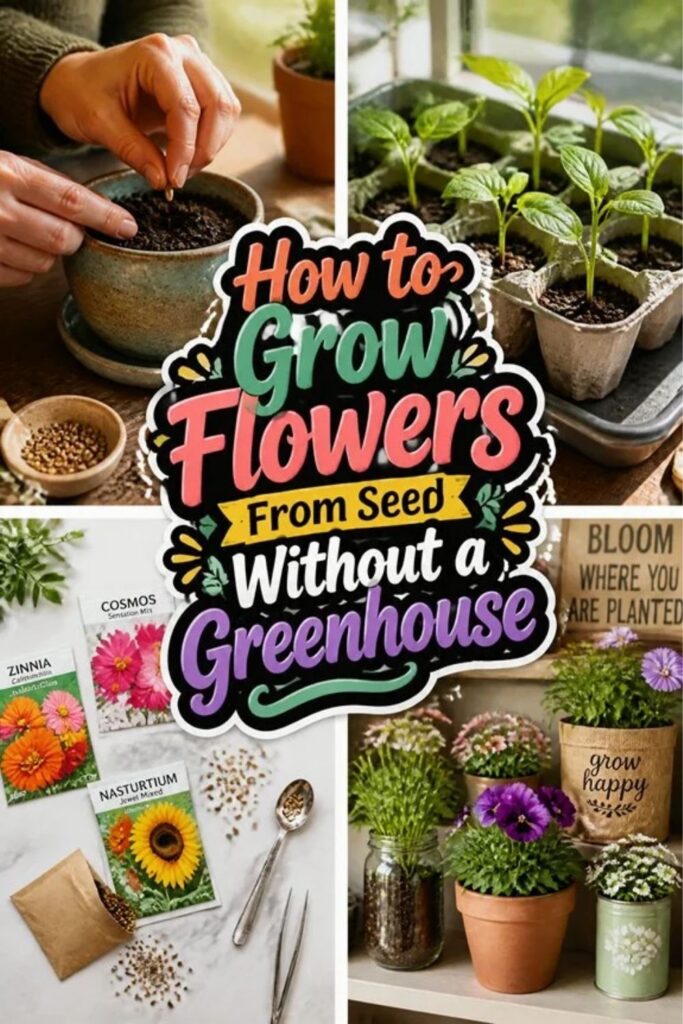
Starting flowers from seed indoors without a greenhouse is more straightforward than many gardeners assume. The essentials are simple: containers with proper drainage, sterile seed-starting mix, and a dependable light source. These three elements create the foundation for healthy germination.
Some varieties make the process especially rewarding. Marigolds and zinnias are excellent choices for beginners, typically sprouting within five to ten days. Keeping soil temperatures steady between 65 and 75 degrees Fahrenheit, paired with consistent moisture, gives these seeds the environment they need to thrive.
Once seedlings break through the surface, new challenges appear. Light becomes critical, as weak sources cause leggy, fragile growth.
Watering requires a careful balance too much leads to damping off disease, while too little stunts development. Attention to these details separates successful indoor growing from disappointment.
Choose Flowers That Germinate Indoors Fast
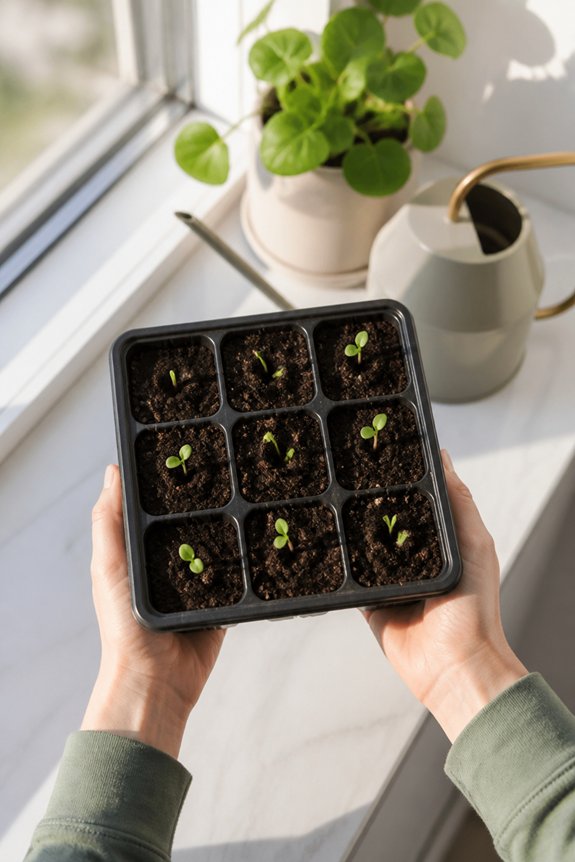
Selecting the right flowers makes indoor seed starting simpler and more reliable. Fast-germinating seeds reduce waiting time and increase success rates for beginners.
Marigolds, zinnias, and sunflowers sprout within 5 to 10 days under proper conditions. Impatiens and begonias germinate quickly indoors, requiring consistent moisture and warmth. Nasturtiums and cosmos are hardy options that tolerate variable indoor environments.
These flowers share common traits: they prefer soil temperatures between 65 and 75 degrees Fahrenheit, need consistent moisture without waterlogging, and germinate reliably under standard grow lights or windowsill conditions.
Starting with fast-germinating varieties builds confidence and provides visible results within two weeks. Gardeners can then progress to slower-germinating flowers like petunias or snapdragons once they develop necessary skills.
Gather Your Budget-Friendly Seed-Starting Supplies
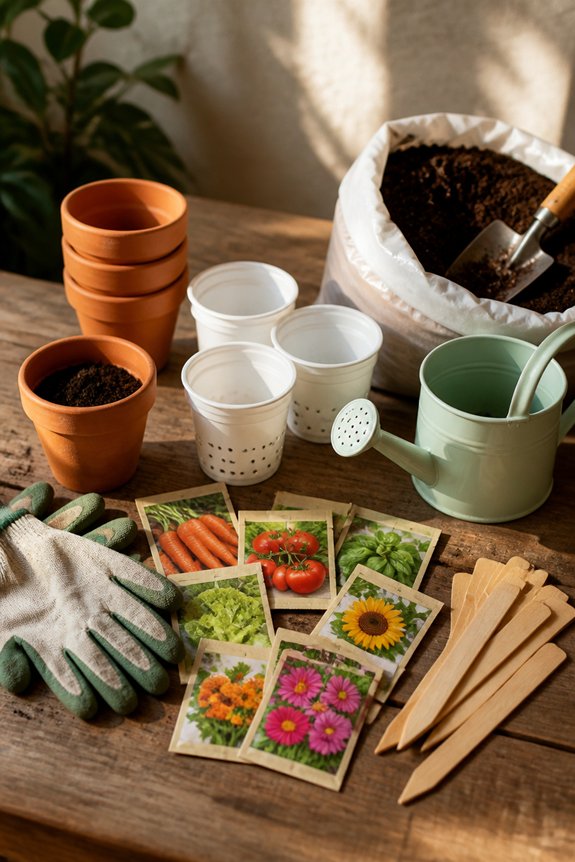
Most seed-starting operations require only basic materials: containers with drainage holes, sterile seed-starting mix, grow lights or sunny windowsills, and watering equipment. Gardeners can repurpose household items such as yogurt cups, egg cartons, or plastic takeout containers, punching drainage holes in the bottom.
Sterile seed-starting mix, available at garden centers, provides better results than regular potting soil. For lighting, inexpensive LED grow lights work effectively, or growers can use south-facing windows that receive at least six hours of direct sunlight daily.
Basic watering needs involve a spray bottle or small watering can for gentle moisture application. Thermometers help monitor soil temperature, which influences germination rates. These materials cost relatively little, making seed starting an economical way to grow large quantities of flowers.
Set Up Warmth, Humidity, and Air Flow
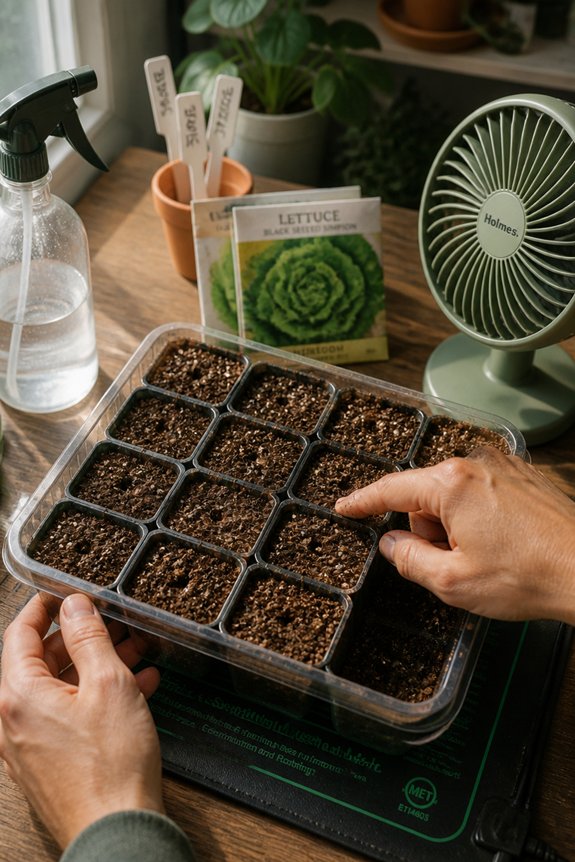
Three environmental factors, warmth, humidity, and air circulation, directly affect seed germination and seedling growth. Most seeds germinate best in soil temperatures between 65 and 75 degrees Fahrenheit, though specific requirements vary by species. A heat mat placed under seed trays provides consistent warmth without relying on greenhouse equipment.
Humidity levels should remain between 60 and 70 percent during germination. Covering trays with plastic domes or plastic wrap maintains moisture while seeds sprout. Once seedlings emerge, reduce humidity gradually to prevent fungal diseases.
Air flow prevents damping off, a fungal condition that kills young plants. A small fan positioned several feet away, running a few hours daily, strengthens seedling stems and circulates air around foliage. Adequate ventilation requires removing covers once sprouting begins.
Water and Mist Without Overwatering
Proper watering balances moisture needs with the risk of root rot, fungal disease, and seedling collapse. Seedlings require consistently moist soil, not soggy conditions.
A spray bottle provides better control than pouring water, preventing soil displacement and overwatering. Misting the foliage reduces fungal problems while maintaining humidity levels.
Check soil moisture daily by touching the top layer with a finger. Water when it feels dry to the touch but before the seedlings wilt noticeably.
Drainage holes in containers are essential for excess water removal. Allow air circulation between watering sessions to prevent moisture buildup.
Reduce watering frequency as seedlings develop true leaves and establish stronger root systems. Morning watering works better than evening, as it allows foliage to dry before nighttime fungal infections occur.
Give Seedlings Enough Light (DIY Options Included)
Seedlings need 14 to 16 hours of bright light daily to grow sturdy and prevent the weak, pale condition known as leggy growth. A south-facing windowsill works adequately for seedlings receiving consistent sunlight.
For indoor growers without sufficient natural light, fluorescent grow lights positioned 2 to 3 inches above seedlings provide effective alternatives. LED grow lights consume less energy than fluorescent options while delivering comparable results.
Seedlings require light rotation every few days to guarantee even growth on all sides. Adjusting light height as seedlings grow prevents burning and maintains appropriate intensity. Timers set for 14 to 16 hours daily eliminate guesswork from light schedules. Shop lights mounted on adjustable stands offer budget-friendly solutions for multiple seedling trays simultaneously.
Harden Off Your Seedlings Before Transplanting
Indoor seedlings require a adjustment period before moving outdoors, a process called hardening off that gradually exposes them to wind, temperature fluctuations, and direct sunlight. Seedlings started indoors lack these environmental stressors, making them vulnerable to shock when transplanted directly outside.
Hardening off typically takes 7-10 days. Gardeners should place seedlings outdoors in a sheltered location for 1-2 hours on the first day, gradually increasing exposure time each day. By day seven or eight, seedlings can remain outside overnight if temperatures stay above 50°F.
Wind presents a particular challenge, as it dries out tender stems and leaves. A cold frame or row cover provides protection during this adjustment period.
Once seedlings withstand full sun, wind, and outdoor temperatures without wilting, they are ready for transplanting into garden beds or larger containers.
Move Your Seedlings Into the Garden
After hardening off is complete, seedlings are ready for their final move to the garden or larger containers. Growers should choose a location that matches each plant’s light requirements, whether full sun for marigolds and zinnias, or partial shade for impatiens and begonias.
Dig holes slightly larger than the root ball, spacing plants according to their mature size. Gently remove seedlings from their containers, being careful not to damage roots. Place each seedling in its hole, firm soil around the base, and water thoroughly.
If transplanting into larger containers instead, use potting mix and pots with drainage holes. Water seedlings after planting to reduce transplant shock. Monitor moisture levels for several days as plants establish themselves in their new location.
Frequently Asked Questions
When Is the Best Time of Year to Start Seeds Indoors Without a Greenhouse?
The ideal time to begin indoor seed starting is typically six to eight weeks before the last expected frost date in one’s region. This timing guarantees seedlings develop sufficient strength and size for successful outdoor transplanting once temperatures warm appropriately.
Can I Reuse Soil From Last Year’s Garden for Seed Starting?
While reused soil appears economical, fresh seed-starting mix proves superior. Old garden soil contains pathogens and compacts easily, whereas sterile commercial medium guarantees healthy germination and robust seedling development for indoor growing success.
What Temperature Should Seedlings Maintain for Optimal Growth Rates?
Seedlings thrive best when maintained between 65-75 degrees Fahrenheit during the day and slightly cooler at night. Most flower seedlings prefer consistent warmth without excessive heat, which promotes sturdy, healthy growth and prevents leggy development.
How Long Do Seedlings Typically Need Under Grow Lights Daily?
Seedlings typically require 12 to 16 hours of grow light exposure daily for ideal growth. Most growers find 14 hours provides the best balance, promoting sturdy development without causing stress or excessive stretching of delicate stems.
What Pests Commonly Affect Indoor Seedlings and How Do I Prevent Them?
Common indoor seedling pests include fungus gnats, spider mites, and aphids. Prevention involves maintaining proper air circulation, avoiding overwatering, regularly inspecting plants, and isolating infected seedlings immediately to prevent spread.
Conclusion
Growing flowers from seed indoors without a greenhouse is like building a miniature ecosystem in containers. Success depends on selecting fast-germinating varieties such as marigolds, maintaining proper moisture and temperature, and providing adequate light through LED fixtures or windows. Hardening off seedlings gradually acclimates them to outdoor conditions. With these fundamentals in place, gardeners can move healthy seedlings into the garden, establishing vibrant flower displays from start to finish.