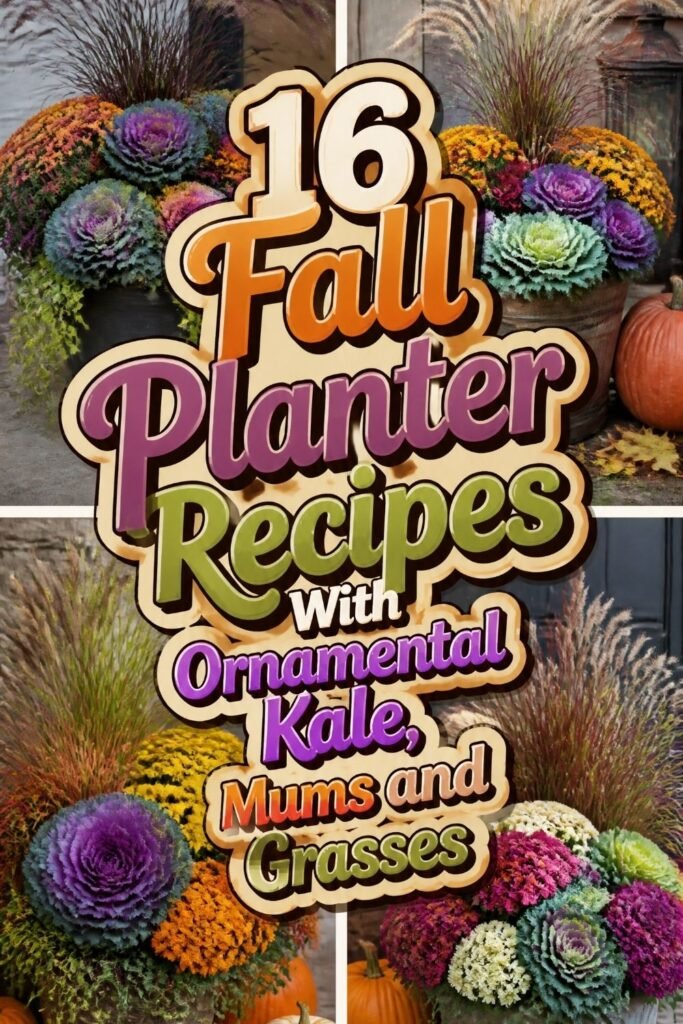
Fall planters thrive when you think beyond single-statement plants. Ornamental kale, mums, and ornamental grasses work beautifully together, each bringing something essential to the arrangement. Kale contributes those unexpected jewel tones and sculptural rosettes that only improve after frost. Mums provide the saturated color bursts everyone expects in autumn displays.
Meanwhile, grasses introduce vertical interest and gentle motion that keeps containers alive even on still days.
Consider how these three plants interact across different growing conditions. Hardiness zones, sun exposure, and container size all influence which specific varieties will perform best. Some gardeners prioritize longevity into early winter, while others want maximum impact for a six-week display. The sixteen recipes ahead accommodate both approaches, with substitutions noted for every budget level.
Color coordination matters more than you might assume with fall plantings. Jewel-toned kales read differently against burgundy versus golden mums. Grasses with silver-blue foliage create cooling contrast, while tawny varieties amplify warmth.
Each combination that follows includes specific variety names and placement strategies that take the guesswork out of seasonal container design.
Rich Jewel Tones for Fall Planters
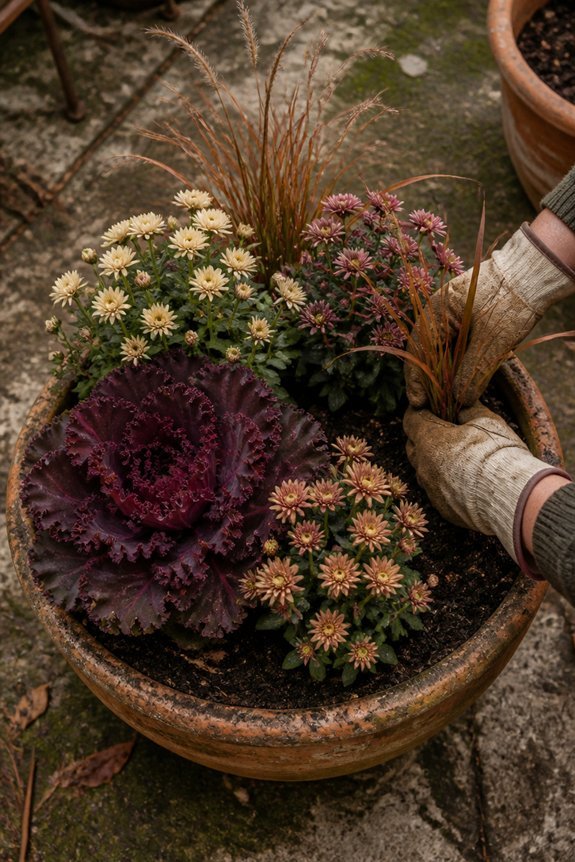
Rich jewel tones, deep purples, burgundies, emeralds, and sapphire blues, work well for fall container gardens. These colors complement ornamental kale, mums, and ornamental grasses effectively.
Burgundy kale pairs with purple petunias and blue-leafed hostas. Deep purple mums coordinate with emerald-toned foliage plants. Sapphire blue containers enhance jewel-toned plant combinations. This color scheme creates visual depth and autumn appeal.
Warm Gold and Cream Combinations
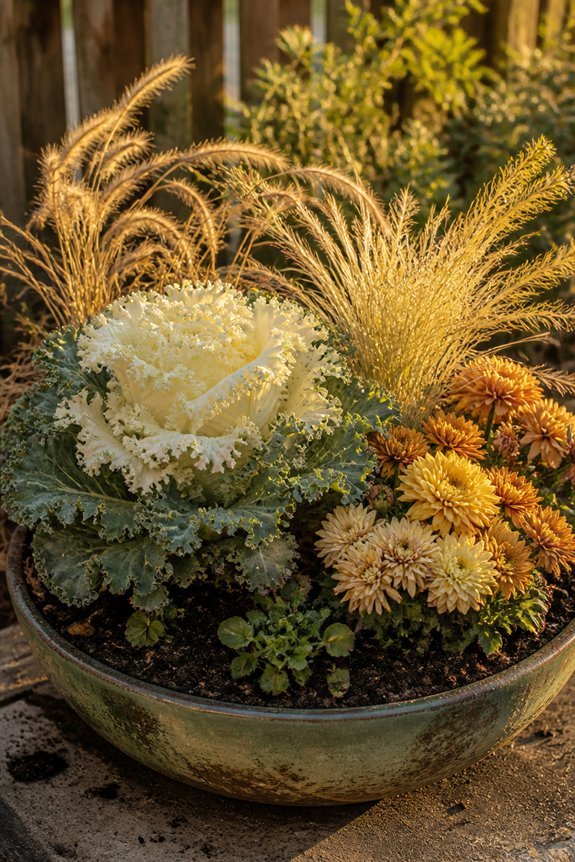
While jewel tones create dramatic autumn displays, warm gold and cream combinations offer a softer alternative for fall planters. Golden mums paired with cream-colored ornamental kale produce gentle, cohesive arrangements. Tan-toned ornamental grasses, such as feather reed grass, complement these lighter palettes effectively.
This combination creates sophisticated, understated containers suitable for various outdoor spaces and garden styles.
Building Depth With Grasses as Your Anchor
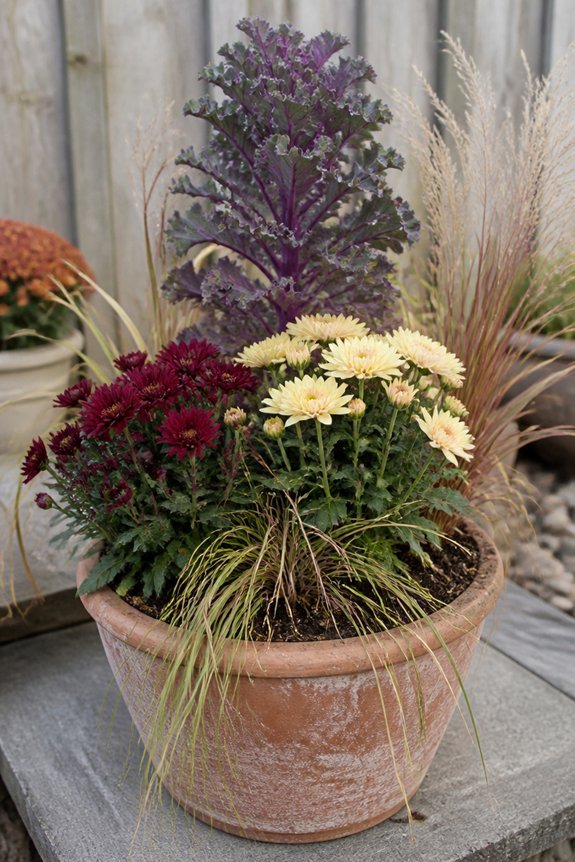
Ornamental grasses serve as structural foundations in fall planters, anchoring arrangements with their height, texture, and visual weight. Varieties like feather reed grass and fountain grass create vertical interest, reaching 18-36 inches tall. Their fine, wispy foliage contrasts effectively with dense mums and kale.
Grasses provide movement, catching light and air while stabilizing bolder companion plants throughout the season.
Classic Autumn Blend
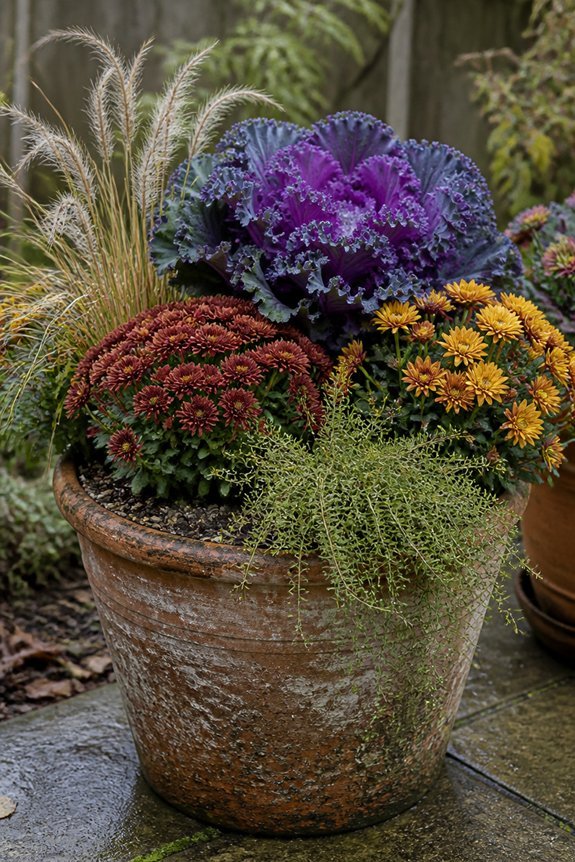
Once the structural framework of grasses establishes the planter’s foundation, selecting complementary plants creates a cohesive fall display. Ornamental kale and mums provide reliable color and texture in autumn containers.
Kale varieties like ‘Lacinato’ offer deep purple or green foliage, while mums deliver blooms in burgundy, gold, and bronze tones. This combination delivers visual interest through seasonal color changes and contrasting plant forms.
Cascading Drama With Trailing Varieties
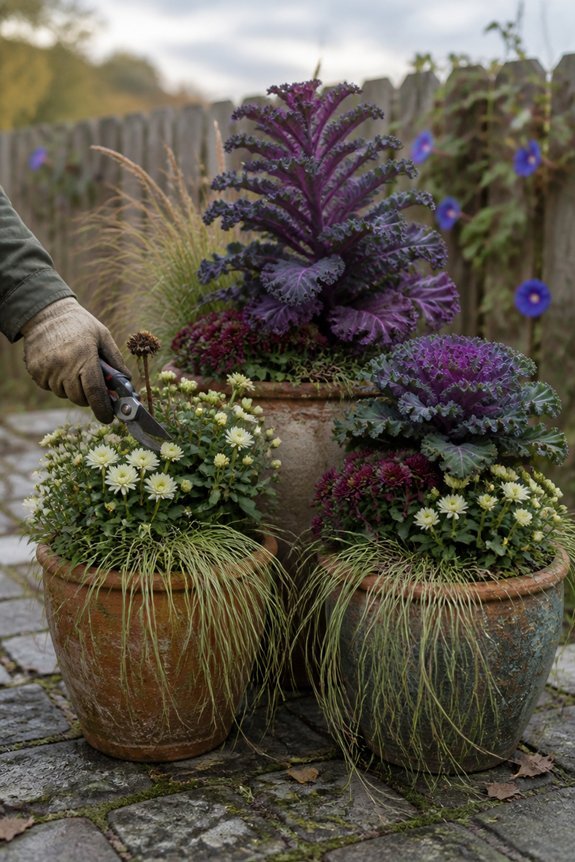
Trailing plants soften planter edges and add visual depth to fall containers. Ivy, creeping jenny, and sweet potato vine cascade over pot sides, creating layered arrangements.
Combining trailing varieties with upright ornamental kale and mums produces balanced, dimensional displays. These drooping plants fill empty spaces, making planters appear fuller and more sophisticated throughout the season.
Going All-In With White
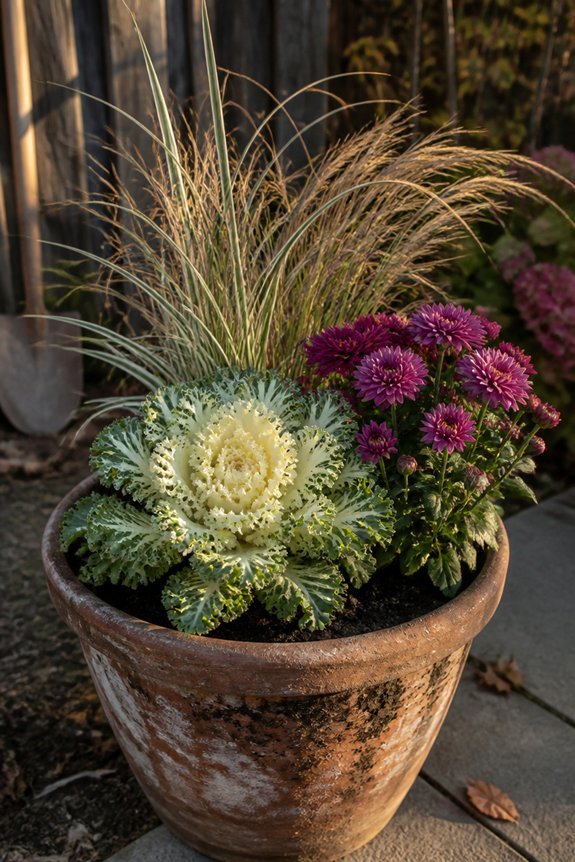
While white-themed fall planters may seem unconventional, they create a clean, unified aesthetic that contrasts sharply with typical autumn colors. White ornamental kale, dusty miller, and ivory mums provide structure and visual interest.
Incorporate white-variegated grasses and silver-leafed plants to enhance the monochromatic effect. This approach offers a sophisticated alternative to traditional fall arrangements, suitable for modern garden designs.
Using Height to Make Your Planter Stand Out
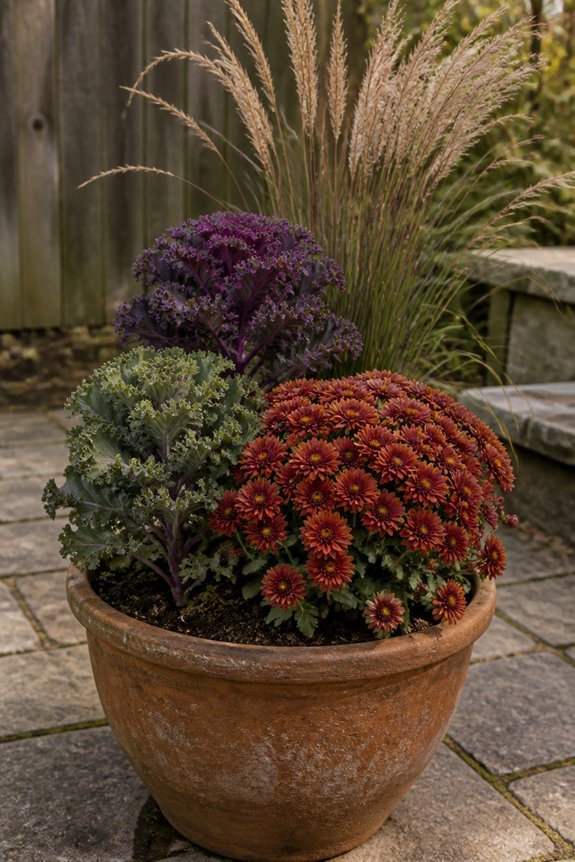
Vertical dimension transforms a planter from flat and ordinary into visually commanding and dynamic. Tall ornamental grasses, reaching twenty-four to thirty-six inches, create natural height at the back. Mums positioned at mid-level add substance, while trailing ivy cascades over edges.
This layered arrangement draws the eye upward, making the planter feel substantial and intentional rather than cramped or monotonous.
Bold Contrast: Deep Kale Against Bright Yellow Mums
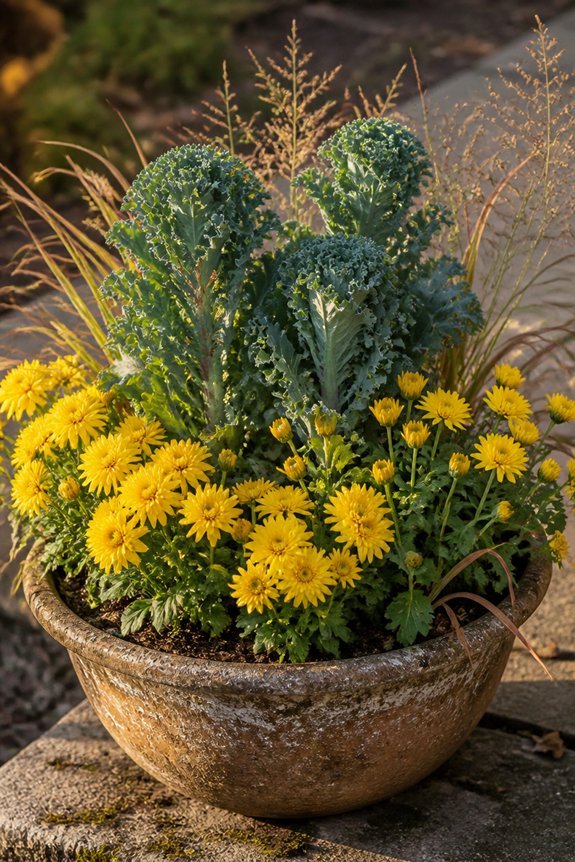
Because color contrast creates visual interest in fall planters, pairing deep kale with bright yellow mums produces an effective design. The dark burgundy or purple foliage of ornamental kale provides a strong backdrop, allowing the cheerful yellow mum blooms to stand out prominently.
This combination creates visual depth and dimension, making the planter appear more dynamic and engaging throughout the season.
Cream, Blush, and Feathery Textures
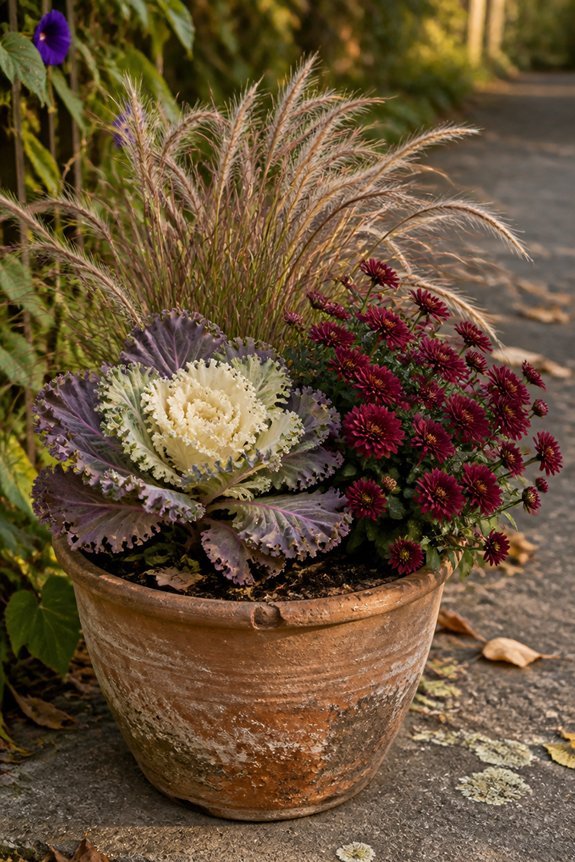
Soft, muted tones offer an alternative approach to fall planter design, creating a refined and cohesive look. Cream-colored ornamental kale, blush mums, and feathery grasses like miscanthus combine to produce an understated arrangement.
These pale hues work together, providing visual interest through texture rather than bold color contrast. The delicate grass fronds soften the composition’s overall appearance.
Plants That Last Into Winter
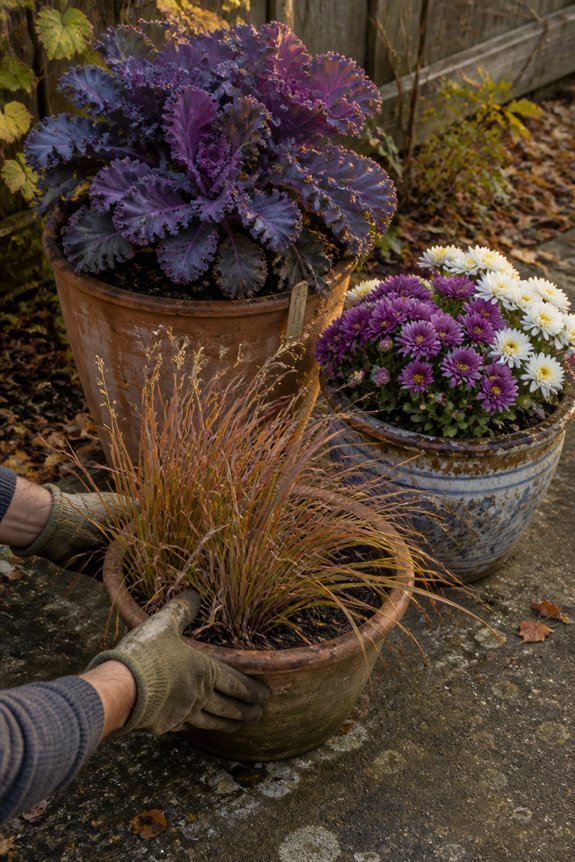
As temperatures drop and frost arrives, certain plants remain visually appealing in fall planters well into the winter months. Ornamental kale, mums, and ornamental grasses withstand freezing conditions while maintaining their structural form and color.
Evergreen shrubs like boxwood and dwarf conifers provide year-round interest. Winter-blooming pansies and hellebores add seasonal color. These hardy selections guarantee planters stay attractive throughout the colder season without requiring replacement.
Contrasting Plant Textures for Visual Interest
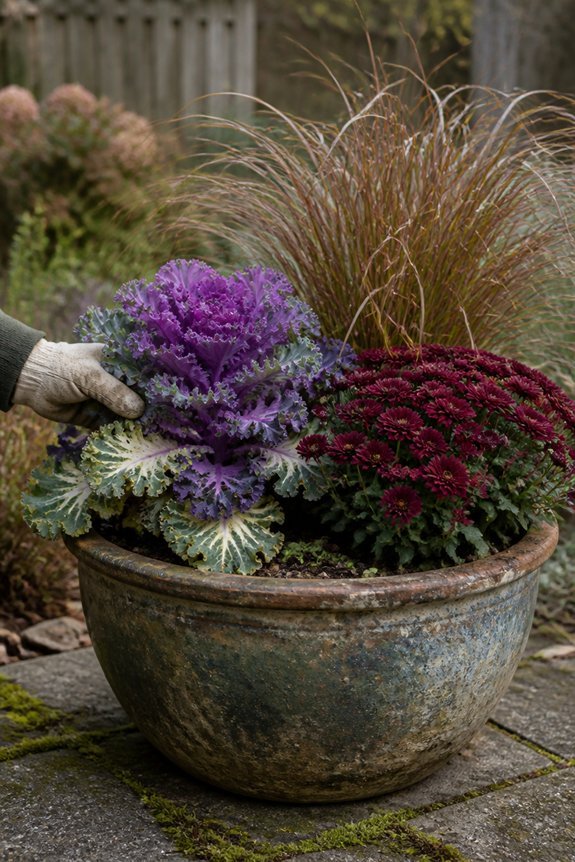
While hardy plants guarantee year-round container appeal, combining different leaf and plant textures elevates a fall planter’s visual impact. Ornamental kale offers ruffled, layered foliage, while ornamental grasses provide fine, wispy strands. Mums deliver dense, rounded flower clusters.
Pairing these contrasting forms, feathery against frilly, delicate against compact, creates dynamic visual depth and prevents monotonous appearance in container gardens.
Smaller Combinations for Balconies and Patios
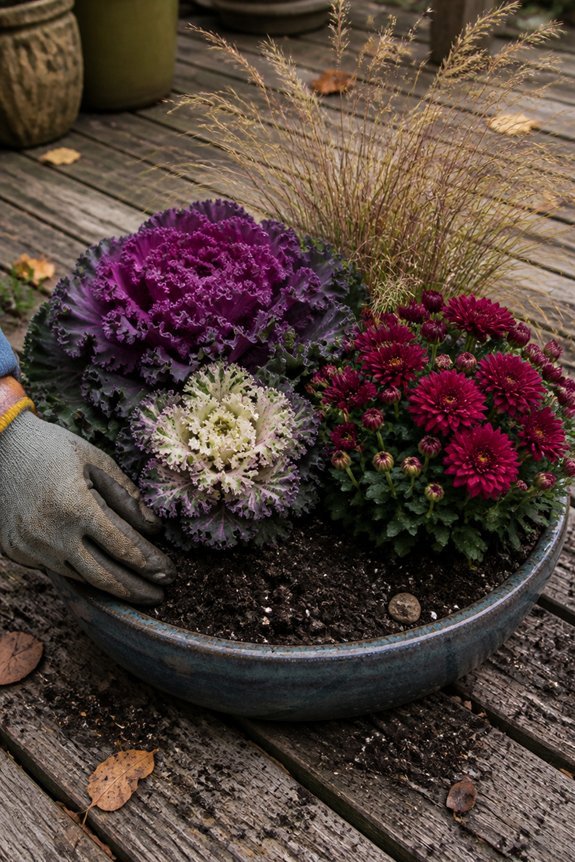
Container gardeners working with limited space can create compelling fall displays by selecting plants suited to smaller pots and compact growing areas. Dwarf mums, ornamental kale varieties, and compact ornamental grasses work well in twelve-inch containers.
Combining one mum with trailing ivy and a grass accent creates balanced, proportional arrangements for balconies and patios without overwhelming the space.
Large-Scale Arrangements for Garden Beds
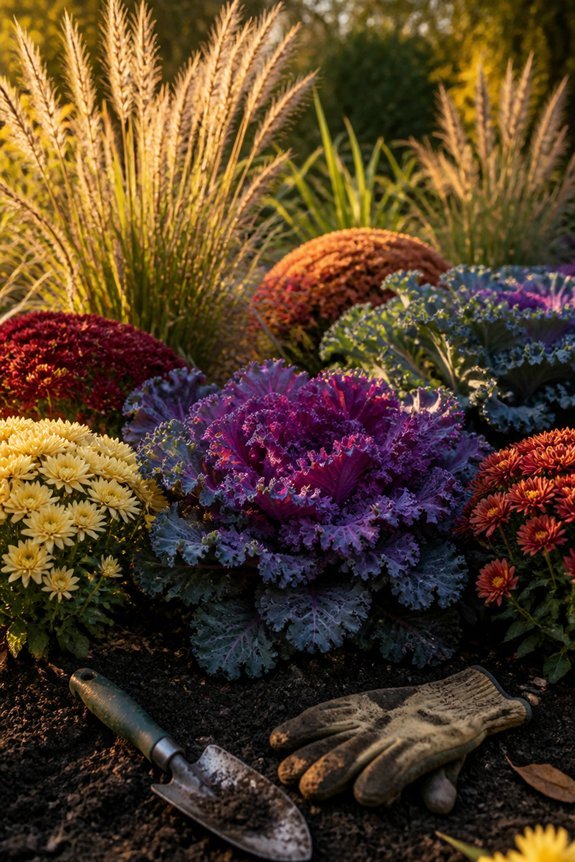
Garden beds offer considerably more space than balcony containers, allowing gardeners to create expansive fall displays with multiple plant varieties. Large arrangements benefit from layered heights, combining tall ornamental grasses in back, mums in middle sections, and trailing kale varieties forward. This tiered approach creates visual depth.
Grouping plants in odd numbers, such as three or five clusters, produces balanced compositions across the bed.
Matching Colors That Complement Each Other
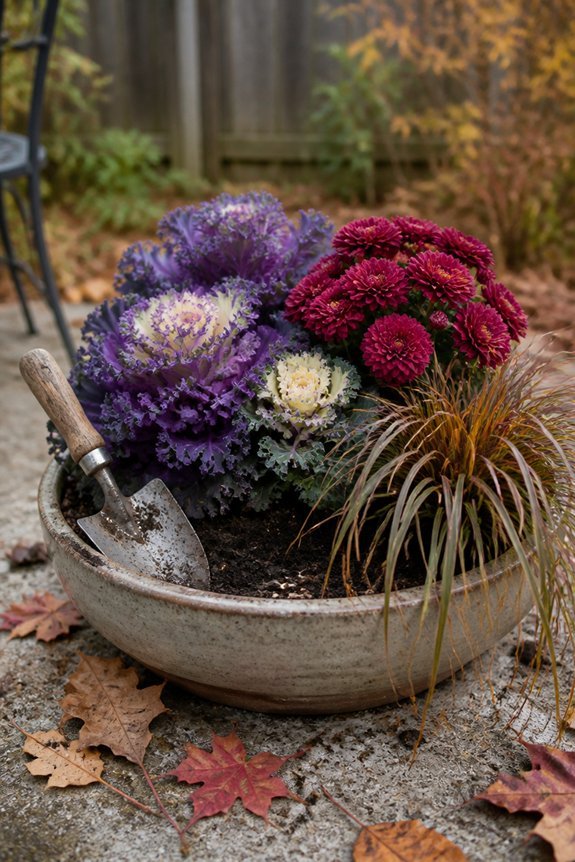
Color harmony forms the foundation of visually successful fall arrangements, determining how plants interact within garden beds.
Burgundy kale pairs effectively with golden mums and ornamental grasses. Deep purple foliage contrasts well with cream-colored blooms. Orange and rust tones complement bronze grasses.
Monochromatic schemes using varying shades of one color create cohesive, sophisticated displays without jarring shifts.
Fuller Planters on a Budget
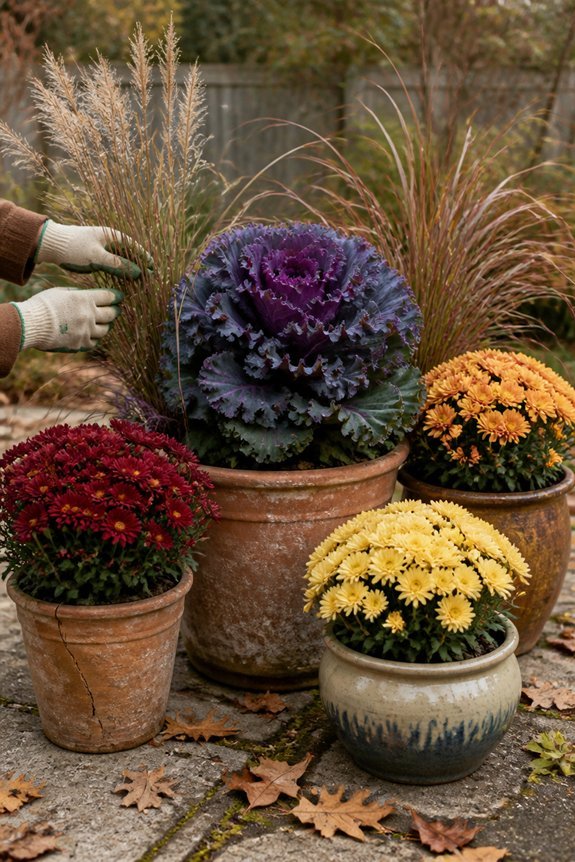
Many gardeners achieve abundant fall displays without spending excessive amounts of money by using practical strategies and readily available materials. Purchasing smaller plants, propagating cuttings from existing specimens, and combining ornamental kale, mums, and grasses creates full arrangements economically.
Shopping end-of-season sales yields discounted plants. Using recycled containers, adding filler materials like moss, and spacing plants strategically maximizes visual impact while minimizing costs.
Cold-Hardy Varieties That Thrive From October Through January
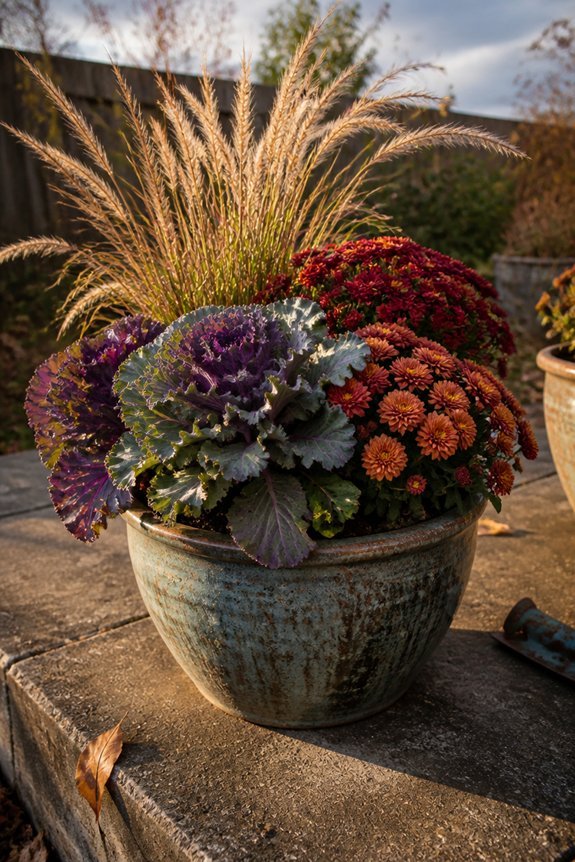
Since temperatures drop considerably during fall and winter months, selecting appropriate plant varieties becomes essential for maintaining planter displays. Ornamental kale, chrysanthemums, and ornamental grasses withstand freezing conditions effectively.
Sedums, heuchera, and evergreen shrubs provide structural interest throughout the season. Selecting cold-hardy perennials guarantees consistent visual appeal without replacement until spring arrives.
Frequently Asked Questions
How Often Should I Water Fall Planters With Ornamental Kale and Mums?
Fall planters containing ornamental kale and mums require watering when the top inch of soil feels dry to the touch. Generally, this means watering every two to three days, though frequency depends on weather conditions, drainage, and container size. Always check soil moisture before watering.
What Soil Type Works Best for These Fall Planter Combinations?
Like a well-orchestrated symphony, soil composition must harmonize its elements. One recommends well-draining potting mix enriched with organic matter, combining peat moss or coconut coir with perlite. This foundation guarantees ornamental kale, mums, and grasses thrive through autumn’s changing season.
Can I Reuse These Planters for Spring Arrangements Next Year?
Yes, planters can be reused for spring arrangements. One should empty old soil, clean the containers thoroughly, and refresh with new potting mix before replanting. This practice extends planter lifespan and reduces waste while maintaining ideal growing conditions for new spring plantings.
How Do I Prevent Pests and Diseases in Fall Containers?
One should use a smartphone to monitor containers daily for pest infestations and diseased foliage. Guarantee proper drainage, maintain adequate spacing between plants, and apply organic fungicides preventatively. Remove affected leaves immediately to stop disease spread.
When Should I Fertilize Ornamental Kale, Mums, and Decorative Grasses?
Ornamental kale, mums, and decorative grasses should be fertilized every two to three weeks during the growing season. One should apply a balanced, slow-release fertilizer at planting and reduce feeding as temperatures drop in late fall.
Conclusion
Fall planters succeed through strategic layering: ornamental kale provides deep base colors, mums deliver bold focal points, and grasses add height and movement. While jewel tones create richness, warm golds soften arrangements. Trailing varieties cascade downward, softening edges and filling gaps between upright elements. These combinations offer budget-friendly options, cold-hardy resilience, and visual interest from October through January. Proper plant selection guarantees longevity and layered texture throughout the season.