

Paths do more than link one area to another; they shape how we experience every corner of the yard. The right choice can turn a simple walk into a journey that feels intentional and inviting.
Stepping stones, gravel, brick, and flagstone each bring their own character. Mulch offers a softer, organic route, while boardwalks elevate the path above wet ground. Mixed materials and circular pads break up long stretches and add visual interest where the terrain demands it.
Cost and durability matter just as much as looks when selecting a surface that will hold up to weather and foot traffic. Some gardens call for permeable solutions that drain well, while others need solid, defined edges to keep the design crisp.
With eighteen distinct approaches to consider, there is a path style suited to nearly every yard size and purpose.
Whether the goal is a casual woodland stroll or a formal procession to a patio, the connection between zones begins underfoot.
16 Garden Path Ideas To Explore
The list opens with the most common surfaces, including stepping stones, gravel, brick, mulch, and flagstone, then moves into pattern and color variations like herringbone, mosaic tile, and concrete pavers. From there it covers budget and eco-minded options built from pallet wood, salvaged materials, and bark chips. The final entries handle specific site problems, from soggy ground and drainage to nighttime visibility and paths that shift materials as they cross the yard.
Classic Stepping Stone Garden Paths for a Natural Look
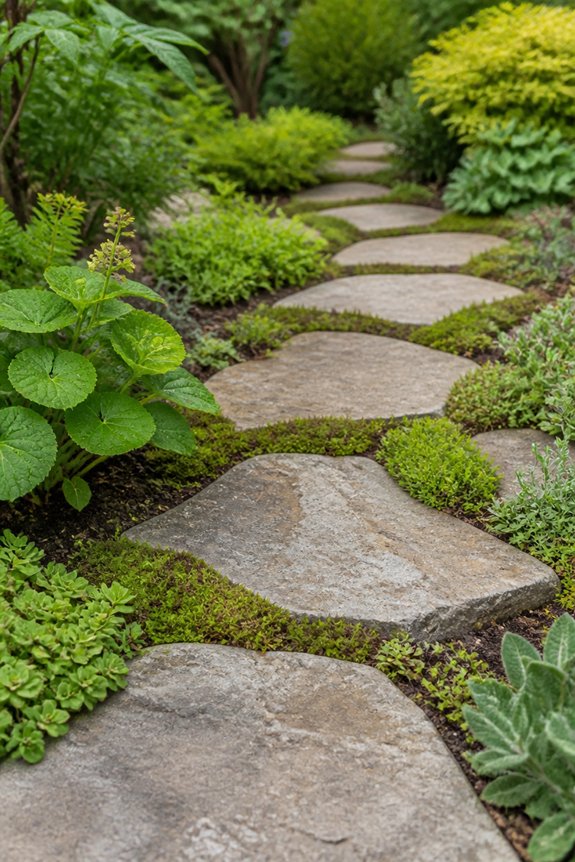
Because natural materials tend to blend easily into existing landscapes, stepping stone paths remain one of the most popular choices for garden walkways. Flagstone, slate, and granite are common options, each offering distinct texture, color, and durability suited to different climates and design goals. Homeowners often space stones according to natural stride length, allowing for a comfortable, unhurried walking pace through the yard.
Gaps between stones can be filled with gravel, mulch, or low-growing groundcovers, such as creeping thyme or moss, which soften the overall appearance. This style works well in informal gardens, woodland settings, or areas with existing trees and uneven terrain, since individual stones can follow the land’s natural contours rather than requiring a perfectly level surface.
Gravel Garden Paths for Budget-Friendly Backyards
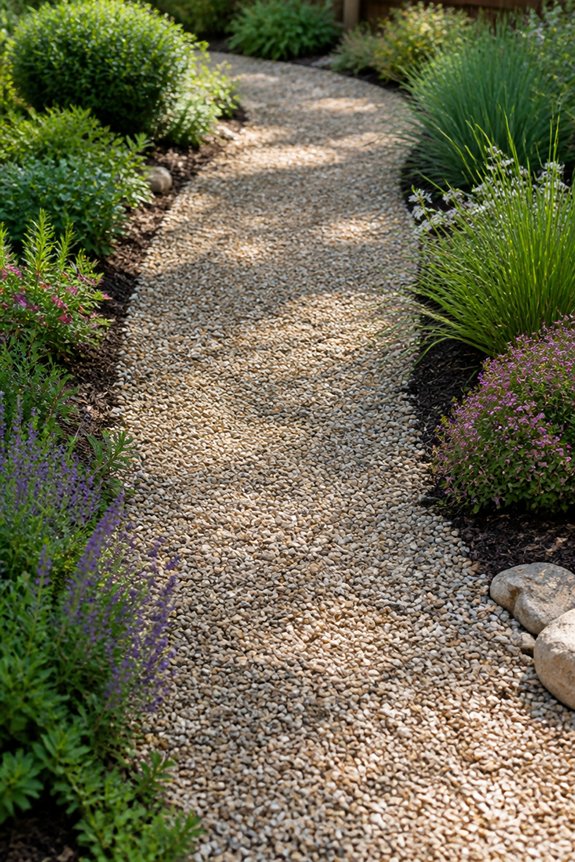
Cost remains a major factor for homeowners planning garden paths, and gravel offers one of the most affordable options available. Materials such as pea gravel, crushed granite, or decomposed granite provide a range of colors and textures at low prices per square foot.
Installation requires minimal labor, since gravel paths need only a cleared trench, edging material, and a layer of landscape fabric to prevent weeds. Homeowners can complete the work over a weekend without hiring contractors, reducing overall project costs further.
Maintenance involves occasional raking to keep the surface even and periodic replenishment as gravel scatters or settles. Edging with brick, timber, or metal strips helps contain the material and keeps borders defined. This approach suits informal gardens, side yards, or connecting areas linking patios to lawns.
Brick Garden Paths for Timeless Curb Appeal
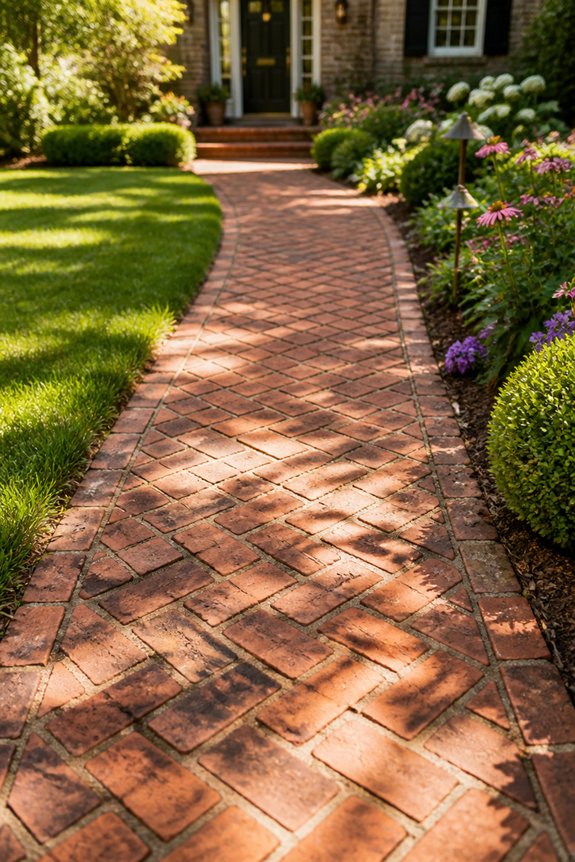
Brick, a classic building material, brings a sense of structure and permanence to garden paths that gravel cannot match. Its uniform shape allows for clean lines, tight curves, and repeating patterns, including herringbone, basketweave, and running bond layouts. Reclaimed bricks add a weathered, historic look, while new bricks offer consistent color and sharper edges for a more polished appearance.
Installation typically involves a compacted base, sand bedding, and edging to keep bricks from shifting over time. Homeowners often pair brick paths with traditional or cottage-style gardens, matching the material to existing brick features on the house or walls.
Maintenance includes occasional weeding between joints and resetting bricks that settle unevenly, keeping the surface stable and visually consistent for years.
Mulch Garden Paths for Soft Woodland Vibes
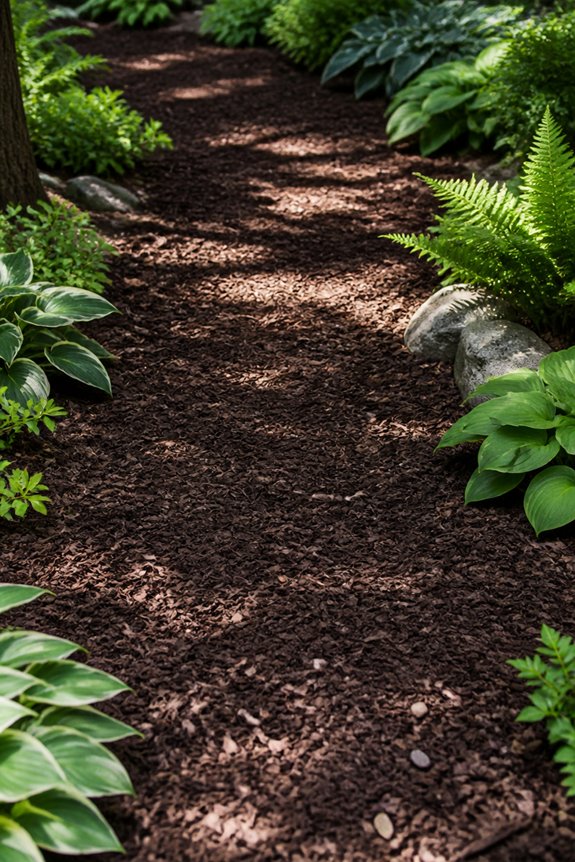
Mulch transforms a garden path into a soft, natural surface that blends easily with surrounding plants and trees. Wood chips, shredded bark, and pine straw create a quiet, cushioned walkway suited to woodland gardens, shaded yards, or informal landscapes. Edging materials, such as steel strips, wood planks, or natural stone, help contain the mulch and prevent it from spreading into flower beds or lawns.
Mulch paths require occasional maintenance, since material breaks down over time and needs periodic replenishing to maintain depth and appearance. This type of path works well connecting garden beds, compost areas, or wooded sections of a property. Mulch also suppresses weed growth along the path edges, reducing upkeep.
Cost remains low compared to brick, stone, or gravel alternatives, making it practical for larger yards.
Flagstone Garden Paths for a Polished, Upscale Feel
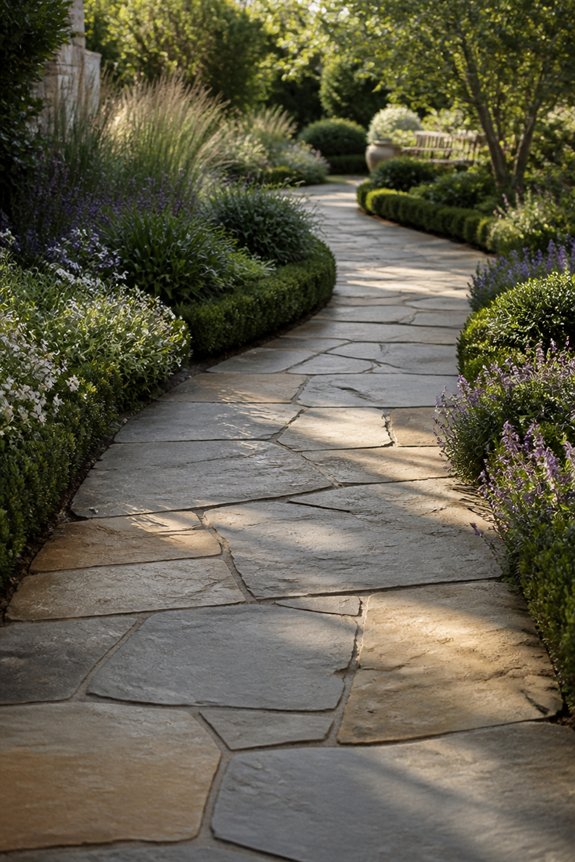
For homeowners seeking a more refined appearance than mulch or gravel can offer, flagstone provides a durable, upscale alternative. Made from natural stone such as bluestone, limestone, or sandstone, flagstone offers a polished look while remaining sturdy enough for high-traffic areas. Its irregular shapes and varied color tones create visual interest, complementing both traditional and contemporary landscapes.
Flagstone can be installed with tight joints for a formal, seamless surface or spaced apart with gravel or groundcover filling the gaps for a softer transition. Common layout options include straight, symmetrical paths for structured gardens, curved arrangements for a more organic flow, and mixed materials, pairing flagstone with brick or gravel borders.
Though installation costs run higher than mulch, flagstone requires minimal maintenance and withstands weather changes effectively.
Pea Gravel Paths for Curved, Organic Routes
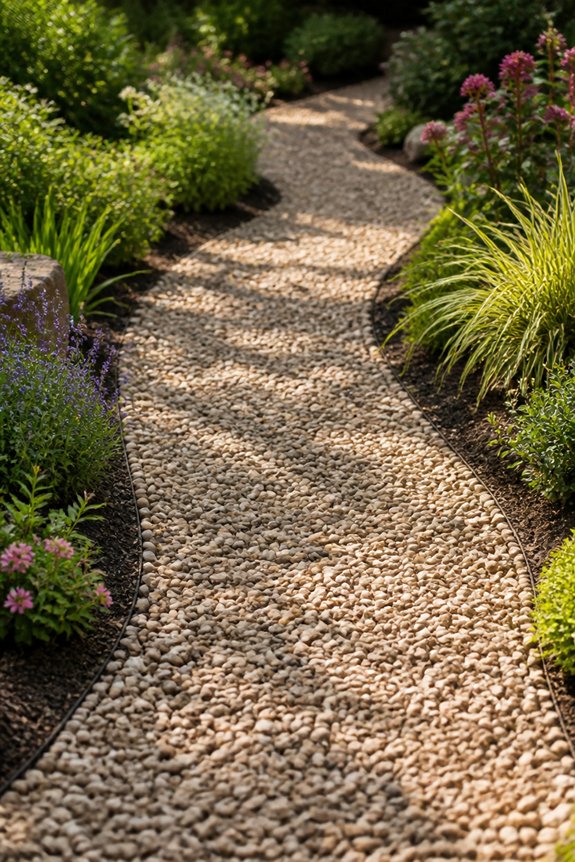
Many homeowners choose pea gravel for its ability to follow curved, organic routes without the rigidity of poured or cut materials. The small, rounded stones shift easily along bends and irregular shapes, making them suitable for winding paths through gardens, around trees, or between planting beds.
Installation typically involves a compacted base, a layer of landscape fabric to limit weed growth, and edging made from metal, wood, or stone to keep gravel contained. Pea gravel drains well, reducing standing water after rain, and it costs less than materials like flagstone or pavers.
Maintenance includes occasional raking to redistribute stones and replenishing gravel that scatters over time. Homeowners often pair it with steel edging for a clean, defined border along curved sections.
Herringbone Brick Paths for Eye-Catching Detail
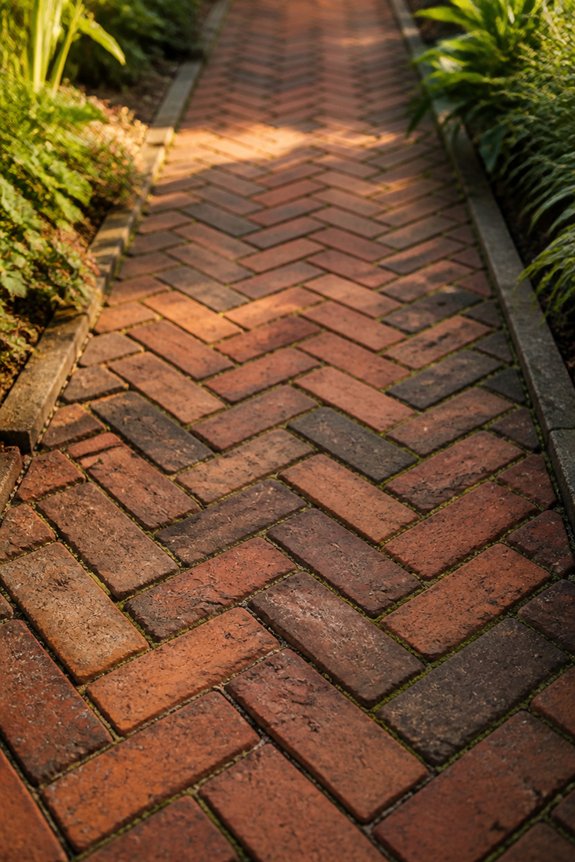
A number of homeowners select herringbone brick patterns to add texture and visual interest to a straight or gently curved path. Bricks are laid at a 45- or 90-degree angle, forming a zigzag design that catches light and draws the eye along the route. This layout works well in formal gardens, entryways, and connections between patios, where a defined structure suits the surrounding landscape.
Clay bricks in red, tan, or charcoal tones are common choices, though reclaimed pavers can lend an older, weathered look. A stable base of compacted gravel and sand keeps bricks level and prevents shifting over time. Edging materials, such as steel or stone borders, help hold the pattern in place along the path’s length.
Mosaic Tile Garden Paths for a Pop of Color
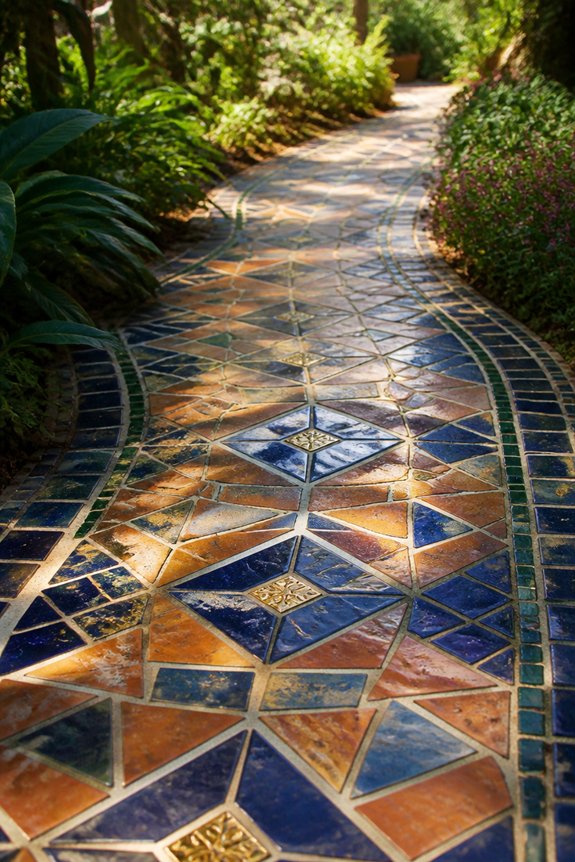
Homeowners looking for bold color often turn to mosaic tile paths, made from broken ceramic, glass, or ceramic tile pieces set into mortar. This method allows for custom patterns, ranging from simple geometric designs to detailed images, such as flowers or spirals. Many homeowners choose recycled tile or leftover pieces from kitchen and bathroom projects, reducing waste while adding personality to the yard.
Mosaic paths work best in smaller sections, such as stepping stones, entryways, or accent borders, since covering large areas can become costly and labor intensive. Grout lines need regular sealing to prevent cracking or water damage, especially in colder climates.
Homeowners often pair mosaic tiles with concrete or gravel borders, creating contrast between the colorful design and neutral surrounding materials.
Concrete Paver Paths for Clean, Modern Lines
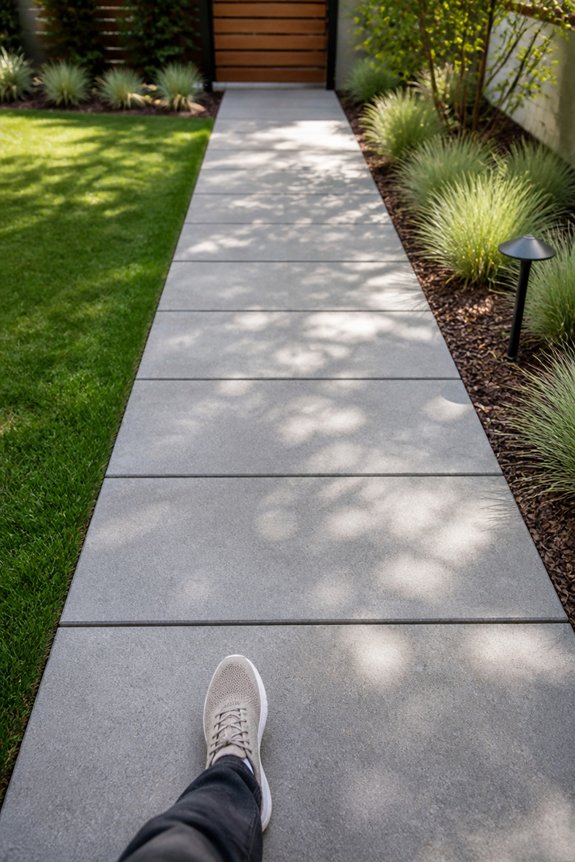
For yards that call for a more streamlined look, concrete pavers offer a straightforward alternative to the intricate designs of mosaic tile. These pavers come in uniform shapes, such as squares or rectangles, and can be arranged in grid patterns for a clean, orderly appearance. Neutral tones, including gray, charcoal, and beige, complement modern landscaping styles and blend easily with minimalist architecture.
Concrete pavers are durable and resistant to weather changes, making them practical for high-traffic areas. Spacing between pavers can be filled with gravel, mulch, or low-growing groundcover to soften the overall effect while maintaining structure.
Homeowners often pair concrete paths with simple plantings, such as ornamental grasses or boxwood hedges, to reinforce the modern aesthetic without adding visual clutter.
Pallet Wood Garden Paths for a DIY Rustic Touch
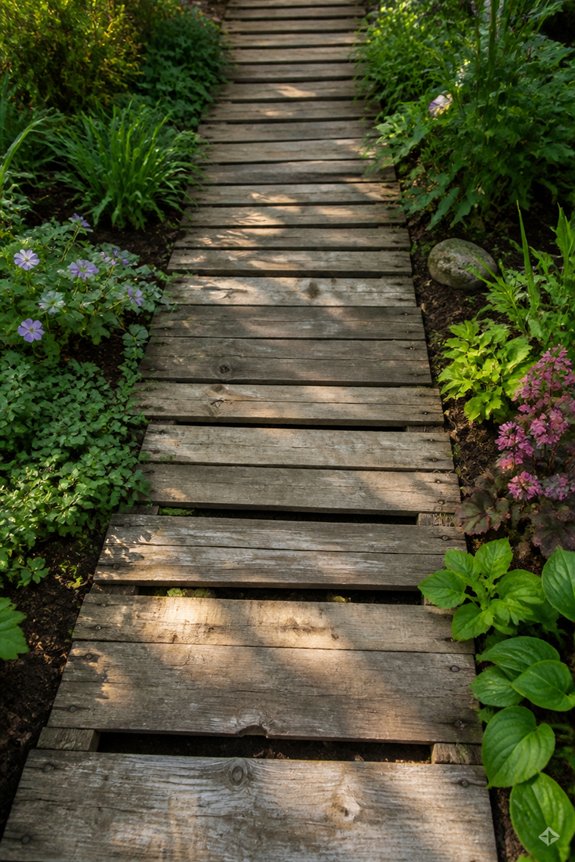
Reclaimed pallet wood provides a low-cost option for gardeners seeking a rustic, handmade appearance for their paths. Boards can be disassembled and laid flat, spaced apart, or arranged in sections to form a walkway across grass, gravel, or soil.
Builders often choose pallets treated for safe outdoor use, avoiding those marked with chemical codes unsuitable for garden settings. Wood should be sanded to remove splinters and sealed with a weatherproof stain to slow decay caused by moisture and insects.
Gaps between boards allow water drainage, reducing pooling during rain. Pairing pallet paths with gravel borders or mulch beds adds contrast and stability.
This approach suits casual garden areas, cottage-style yards, or temporary paths that may need future adjustment or replacement.
Recycled Material Garden Paths for Eco-Friendly Yards
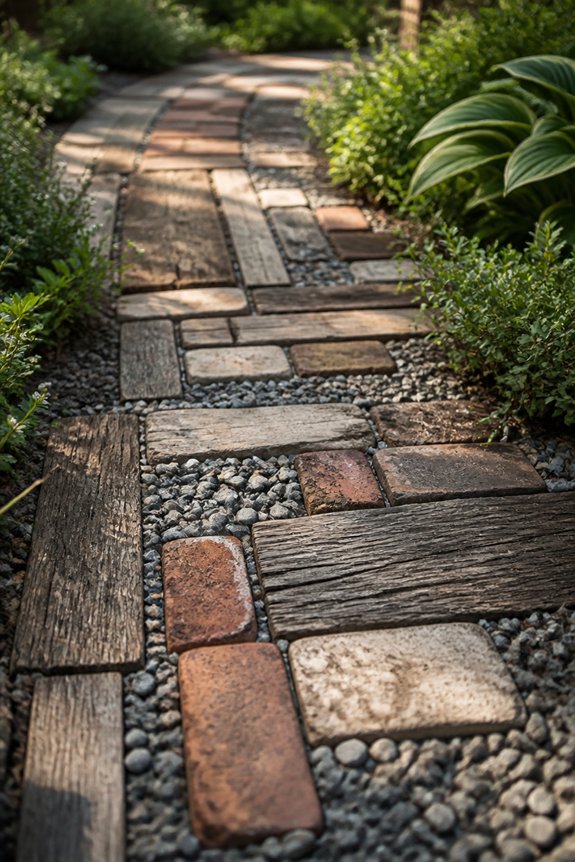
Since sustainability continues to shape landscaping choices, many gardeners turn to recycled materials for building durable, budget-friendly paths.
Broken concrete slabs, often called urbanite, can be arranged like flagstone, creating a textured surface while diverting waste from landfills. Crushed glass, tumbled to remove sharp edges, adds color and shine when used as a decorative topping layer. Old bricks, salvaged from demolished structures, provide a classic look and withstand heavy foot traffic.
Reclaimed wood planks or pallets, treated for outdoor use, offer a rustic base for casual walkways. Gravel mixed with recycled rubber can improve drainage and reduce erosion. Combining these materials allows homeowners to design paths that reduce waste, lower costs, and support environmentally responsible landscaping practices throughout the yard.
Bark Chip Paths for Shaded Woodland Corners
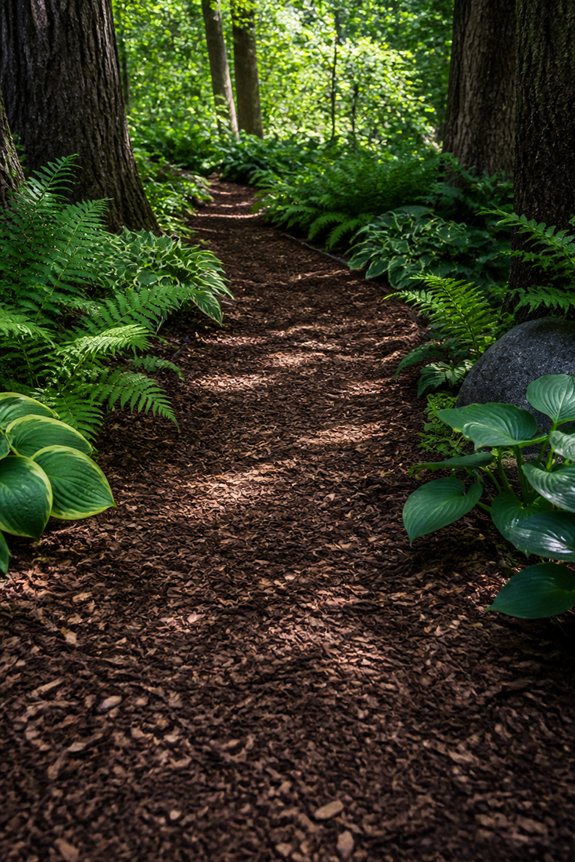
Shaded woodland corners often present challenges that recycled materials cannot fully solve, since damp, low-light areas require softer, more forgiving surfaces. Bark chips address this need by absorbing moisture, reducing slipperiness, and blending naturally into wooded settings. Cedar, fir, and hemlock varieties resist decay longer than softer woods, making them practical choices for humid or rain-prone zones.
A layer of landscape fabric beneath the chips helps prevent weed growth while allowing water to drain properly. Edging with stone or timber keeps the material contained, especially on sloped terrain where erosion is common. Bark paths also suit areas with heavy tree roots, since chips can be added or shifted without disturbing root systems. Periodic replenishment maintains consistent depth, as decomposition gradually thins the surface over time.
Grass Paths for a Seamless Lawn Transition
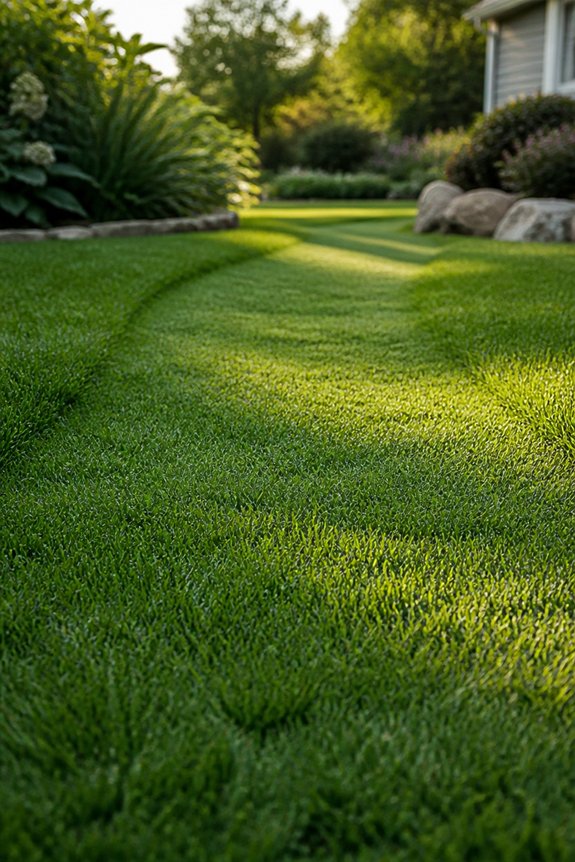
Where a yard calls for subtlety rather than contrast, grass paths offer a way to guide movement without interrupting the lawn’s continuity. These paths rely on mowed strips, stone accents, or slightly recessed lines to mark direction, rather than distinct materials like gravel or brick.
Homeowners often define the route with flat steppers set flush into the turf, allowing foot traffic while protecting the grass from wear. Edging with low plants, such as creeping thyme or dwarf mondo grass, can reinforce the path’s shape without breaking visual flow. Regular mowing keeps the path visible, while occasional aeration prevents soil compaction along frequently used sections.
This approach suits yards where uniformity matters more than decoration, offering a quiet, functional connection between garden zones.
River Rock Paths for Texture and Drainage
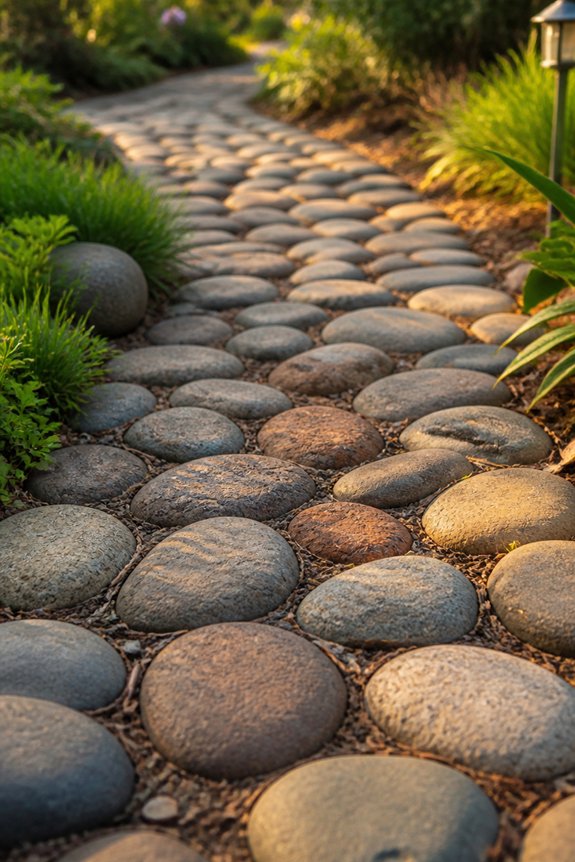
Two or three inches of smooth river rock can transform a plain walkway into a textured surface that also solves drainage problems in low-lying yards. The loose stones allow water to filter downward instead of pooling, making this option useful near downspouts, low patios, or shaded areas where grass struggles to grow. Edging materials, such as steel or plastic borders, keep the rocks contained and prevent them from spreading into garden beds or lawn areas over time.
River rock paths pair well with stepping stones placed intermittently, giving walkers a stable surface while retaining the visual texture of the stones. Sizes typically range from one to three inches in diameter, offering variation in color and shape. Landscape fabric beneath the rocks reduces weed growth and maintains long-term appearance.
Raised Boardwalk Paths for Wet or Uneven Terrain
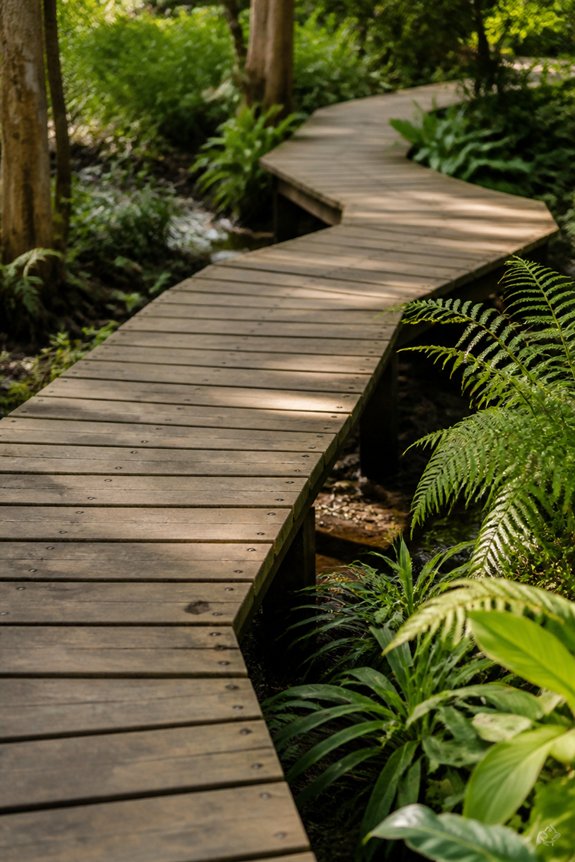
A raised boardwalk offers a practical solution for yards with soggy soil, seasonal flooding, or uneven ground that makes standard paths difficult to install. Built on posts or footings, the structure lifts the walking surface above the ground, allowing water to flow freely underneath without eroding the path. Pressure-treated lumber, cedar, and composite decking are common material choices, each offering different levels of durability and maintenance.
Boardwalks work well through marshy areas, low spots prone to pooling, or sections with exposed tree roots. Handrails can be added for safety on higher sections, while gaps between boards help with drainage. This path style suits naturalistic gardens, wetland edges, and yards bordering ponds or streams, blending function with a rustic visual appeal.
Circular Garden Path Pads for Reading Nook Access
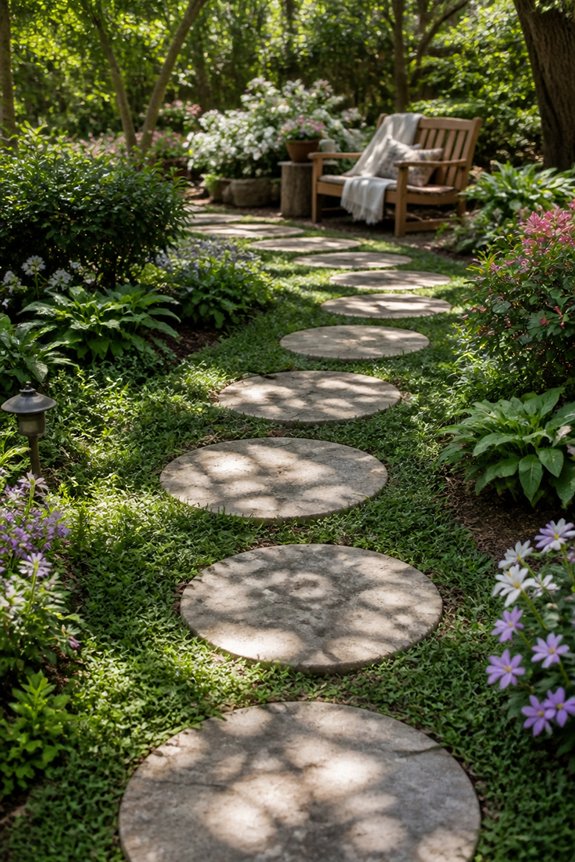
Shifting focus from elevated structures to smaller-scale design elements, circular path pads offer a simple way to guide movement toward a quiet reading nook without the cost or complexity of a full walkway. Concrete rounds, natural stone discs, or precast pavers can be arranged in a loose, staggered pattern, spaced to match a comfortable stride. Materials like flagstone, exposed aggregate, or tumbled bluestone blend easily into surrounding lawn or mulch beds.
Gaps between pads can be filled with gravel, moss, or low groundcover, softening the change and reducing maintenance. This layout suits informal gardens where a rigid path would feel out of place. Circular pads also allow flexibility, since spacing and direction can shift slightly to accommodate existing trees, shade patterns, or seating placement near the nook.
Lighted Garden Paths for Nighttime Strolls
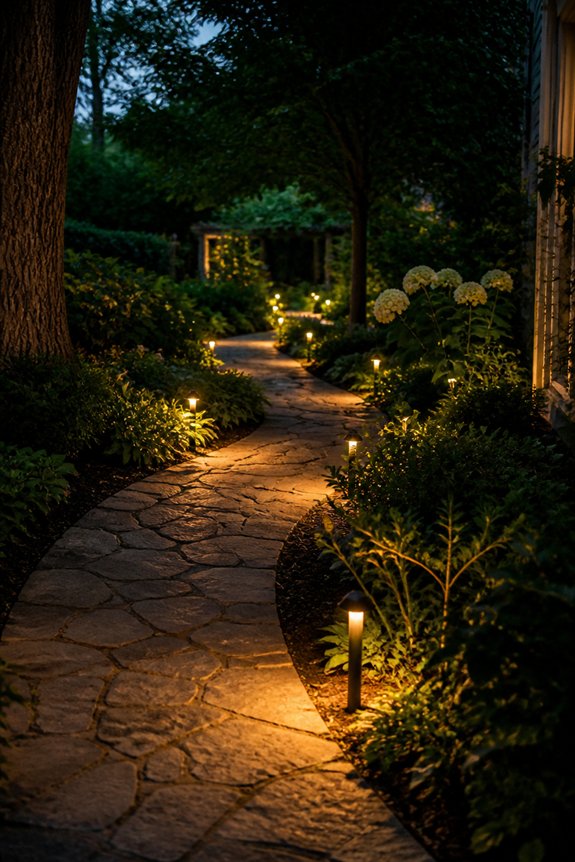
When darkness falls, illuminated paths serve both safety and style, guiding footsteps while highlighting garden features along the way. Solar-powered stake lights offer an easy, low-cost option, requiring no wiring and charging during daylight hours. Low-voltage LED systems provide brighter, more consistent illumination, connecting to a transformer for reliable nighttime use.
Placement matters, with fixtures spaced evenly along path edges to avoid dark gaps or overly bright clusters. Some homeowners embed lights directly into pavers or stones, creating a subtle glow at ground level. Others prefer taller lantern-style fixtures, which cast wider light and add visual interest during the day. Motion-sensor lighting near entry points adds convenience, activating automatically when guests approach the garden after sunset.
Mixed-Material Garden Paths Combining Stone, Wood, and Gravel
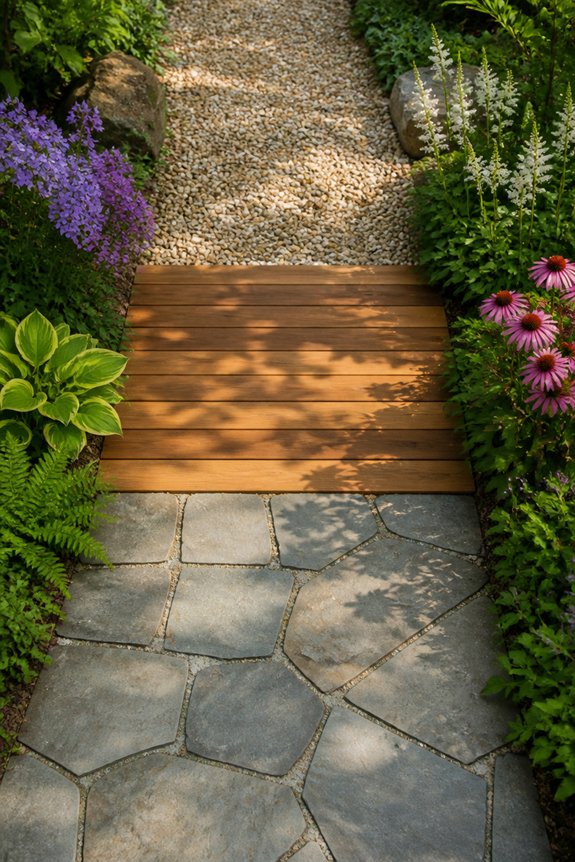
Beyond lighting choices, the materials chosen for a path shape its overall character just as much. Combining stone, wood, and gravel allows a single path to shift in texture and tone as it moves through different zones of a yard. Stone slabs can mark a formal entrance near the house, while wood planks or rounds create a softer shift through a garden bed, and gravel fills the spaces between, adding sound and drainage.
This mix also solves practical problems, since stone offers durability, wood adds warmth, and gravel allows water to pass through easily. Designers often use one material as a border and another as filler, creating contrast without appearing disorganized or overly complex.
Frequently Asked Questions
How Do I Choose the Right Path Material for My Yard’s Climate?
Climate determines material durability: gravel suits dry regions, permeable pavers handle heavy rain, textured stone prevents slipping in frost-prone areas, and sealed brick withstands humidity. Homeowners should match porosity and slip-resistance to local weather patterns for lasting, safe garden pathways.
What’s the Average Cost Difference Between DIY and Professionally Installed Paths?
DIY paths typically cost $3-8 per square foot; professionally installed paths typically cost $15-30 per square foot. Materials remain similar, but labor, equipment, and expertise account for the difference, with professional installation offering greater durability and warranty protection.
How Do I Prevent Weeds From Growing Through My Garden Path?
Landscape fabric or a compacted gravel base beneath pavers typically blocks weed growth effectively. Installers often add polymeric sand between joints, which hardens and resists infiltration. Periodic edging maintenance and occasional herbicide spot-treatment further reduce weeds pushing through path surfaces over time.
Can I Combine Multiple Path Materials Without Them Looking Mismatched?
Yes—mixing materials works when one element repeats throughout, such as edging, color tone, or spacing pattern. Designers often pair gravel with stone accents or brick borders, keeping changes intentional rather than random, so the overall look stays cohesive and deliberate.
How Much Maintenance Do Garden Paths Typically Require Each Season?
Like clockwork through the seasons, paths demand their tribute: spring sweeping, summer weeding between joints, autumn leaf clearing, winter ice-checking. Gravel needs replenishing, wood needs sealing, pavers need occasional releveling—small rituals sustaining beauty year-round.
Conclusion
Garden paths, regardless of material, serve as functional connectors between outdoor zones while adding visual structure. According to landscaping estimates, a well-designed path can increase usable yard space by up to 20%, making areas like reading nooks or garden beds more accessible. Whether choosing stepping stones, gravel, or mixed materials, homeowners can tailor paths to budget, terrain, and style. Thoughtful placement and material choice ultimately unify the garden, balancing practicality with aesthetic appeal across every season.