
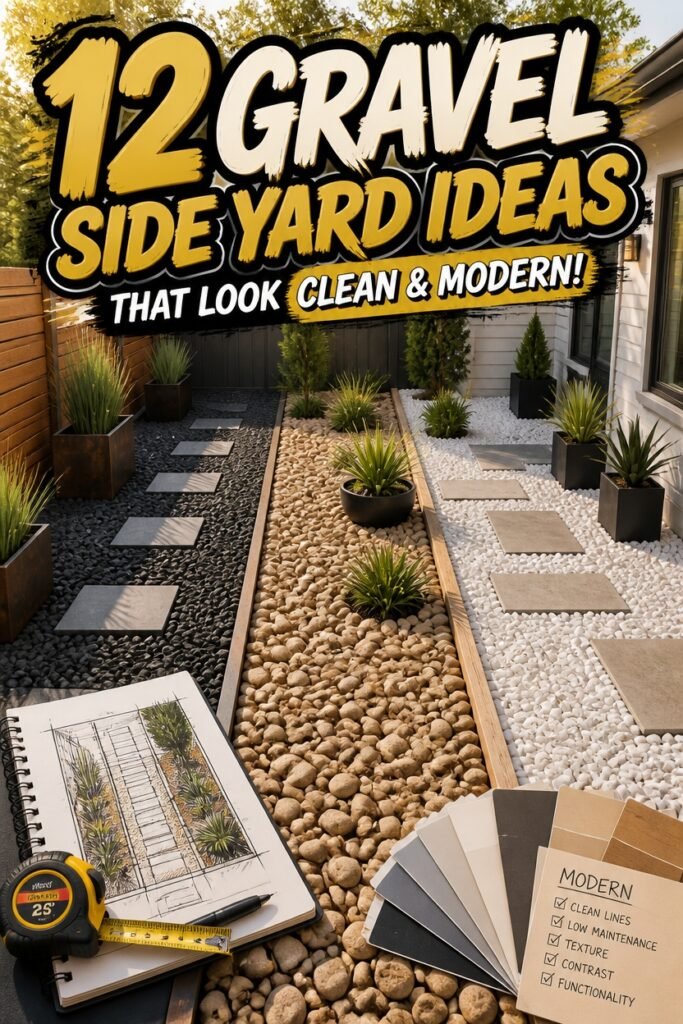
Rain turns your side yard into a swamp. The rest of the time, it’s just sad dirt and patchy weeds. Gravel fixes this. It’s cheap. It’s practical. And lately, it’s started looking genuinely stylish.
Modern designers are treating gravel like a feature, not a fallback. They rake it into crisp geometric patterns. They mix stone sizes for texture. Concrete pavers float on top like islands. Suddenly that forgotten strip of land feels like a real outdoor room.
Japanese gardens pioneered this look centuries ago. Minimal raked gravel. Strategic boulders. Clean lines that calm the eye. Now industrial spaces borrow the same approach—steel edging, crushed granite, nothing fussy.
Both styles skip the lawn mower entirely.
No watering. No muddy paw prints. No guilt about killing plants. Just a surface that drains well, stays neat, and actually improves with age.
Pick your gravel type, choose your layout, and that awkward side space becomes something you want to show off.
Minimalist Japanese Garden With Raked Gravel
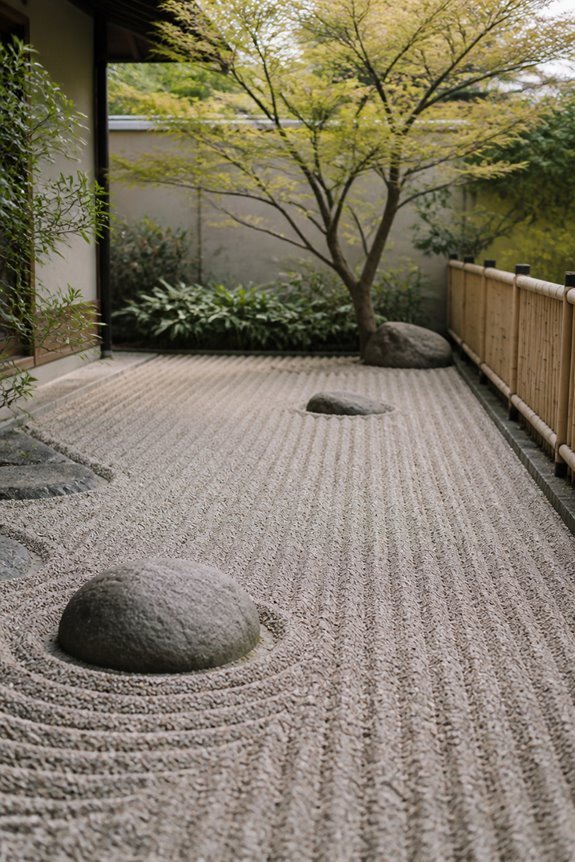
Imagine stepping into your side yard and feeling your shoulders drop instantly. You can create that calm with a minimalist Japanese garden built around raked gravel.
Start with smooth, light-gray pea gravel spread across about 4 by 8 feet. Nestle a few rocks into the surface like small islands. Add one simple wooden bench. That’s it. Your zen space is ready.
The raking itself becomes your meditation. Those clean lines in the gravel satisfy something deep in your brain. They signal order without demanding attention. No flowers competing for the spotlight here. Just gravel, rocks, and the quiet scrape of your rake. Your stress stays outside every time you enter.
Also read: 22+ SIDE YARD PRIVACY IDEAS Without Feeling Closed In!
Sleek Gravel Pathway With Modern Hardscaping
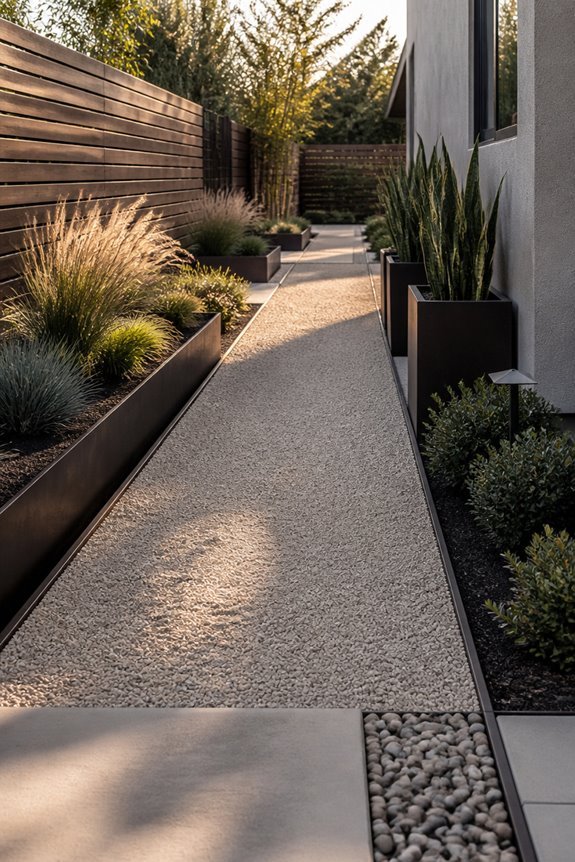
Want a garden that looks put-together without the fuss? A sleek gravel pathway with modern hardscaping might be your answer.
Start with a 3-foot-wide path of pea gravel in soft gray or tan. Add steel or composite edging to keep those clean lines crisp. No gravel creeping into your lawn. No messy edges. You can even weave in pavers or concrete strips for visual rhythm. The whole look says you have your act together. (Even if dinner was cereal. Again.)
Architectural Plants in Modern Gravel Settings
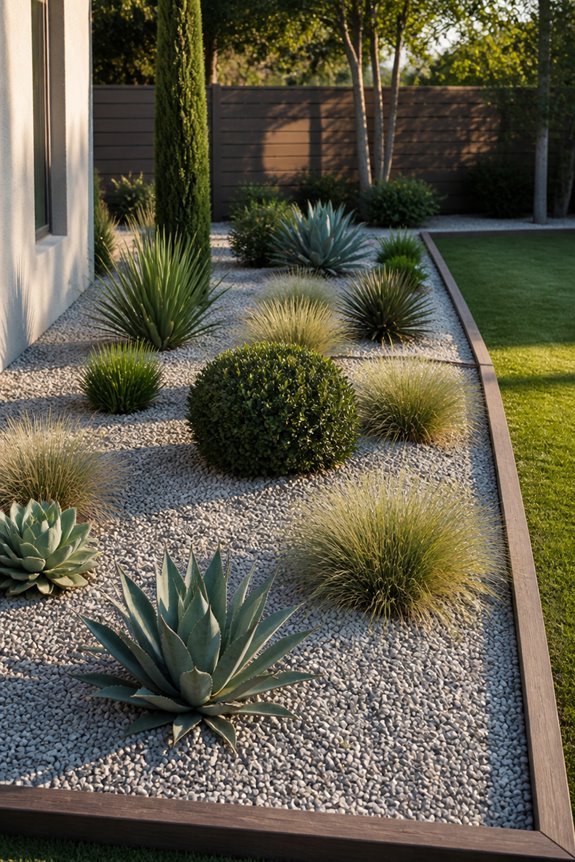
Gravel pathways can feel lonely without the right company. You need plants that show up and make a statement.
Start with height. Feather reed grass grows three to four feet tall and sways in the breeze. It asks for almost nothing, especially water. Yuccas work like living sculptures. They stand sharp and silent and never beg for attention. Sedums spread low across the stones like they own the place. You will never fuss over them.
Look for strong shapes. Silvery dusty miller pops against dark gravel. Purple smoke bush adds color without constant complaints. Agave varieties look like someone installed modern art by accident. These plants earn their keep. They stand tough against pale stones. They guard your yard like cool, unbothered bouncers.
Industrial Gravel Courtyard
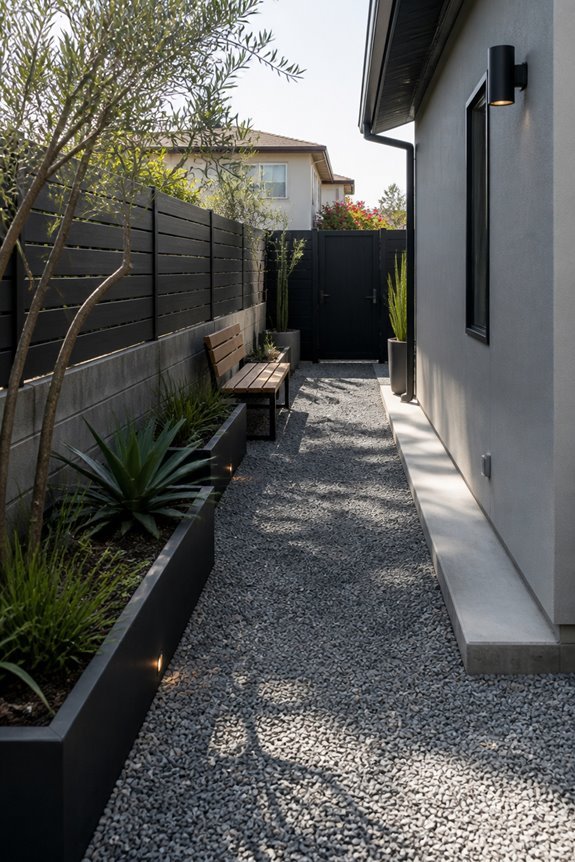
Tired of babying a lawn that never thanks you? You need a side yard that works as hard as you do. Start with exposed gravel beds. They drain fast, suppress weeds, and look sharp year-round. No mowing. No watering. Just crushed stone doing its job.
Layer charcoal and slate gravel for depth. Tuck in steel planters with angular edges. Bolt down a weathered metal bench. Let it rust. The more beat-up, the better the story. String bare bulb lights overhead. Add chain-link fencing if you need privacy. It reads industrial, not institutional, when paired with the right materials.
Pick plants that thrive on neglect. Ornamental grasses move in the wind and need one cut per year. Spiky succulents store their own water. Galvanized containers corral the spreaders. This is urbanwarehouse meets zen garden’s moodier cousin. Honest materials. Zero fluff. You get function that looks like art, and weekends back for actually using the space.
Mediterranean Stone and Gravel Garden
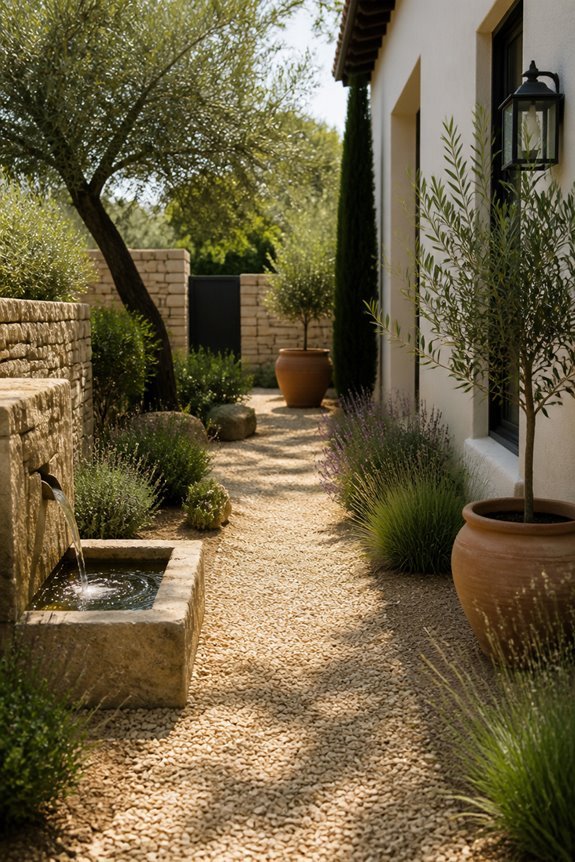
Trade the rust and steel for something warmer. The Mediterranean approach feels sunnier. It forgives you more too.
Start with cream or tan pea gravel. Lay down 2 to 3 inches as your base. Let the color remind you of sandy coastlines.
Scatter larger stones throughout. They add visual interest. They also keep your socks clean when you walk through.
Add terracotta pots and maybe an olive tree. Plant lavender, rosemary, and ornamental grasses. These plants handle dry spells without complaint.
Set a wooden bench or stone seating area somewhere shady. Sit with a glass of wine. Pretend you’re in Tuscany for a minute.
You water less here. You relax more. Your side yard becomes the escape you actually use.
Raised Planters Over Gravel Beds
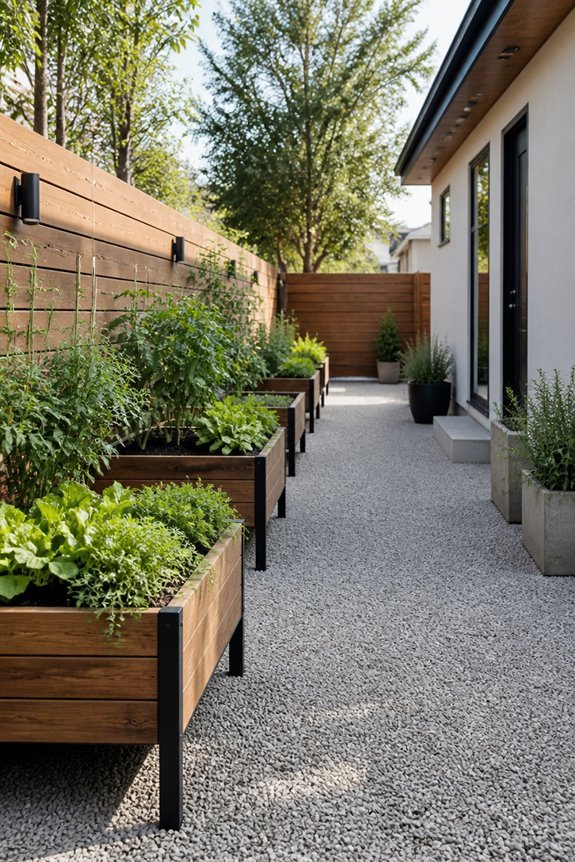
You walk outside and see weeds everywhere. Your yard looks tired. You want a fix that actually works.
Raised planters on gravel beds give you exactly that. Picture wooden boxes, about two feet by four, sitting clean on top of stone. The gravel blocks weeds before they start. Nothing grows where it shouldn’t. Your plants stay in their lanes. The look is sharp too. Earthy gray stone against bright green leaves catches the eye every time.
You skip the back pain as well. No bending to the ground. You tend your garden standing up or sitting on the edge. It feels like cheating, but it isn’t. You get order and ease together. Your yard looks intentional. People notice. You just smile and keep watering.
Drought-Tolerant Plants That Thrive in Gravel
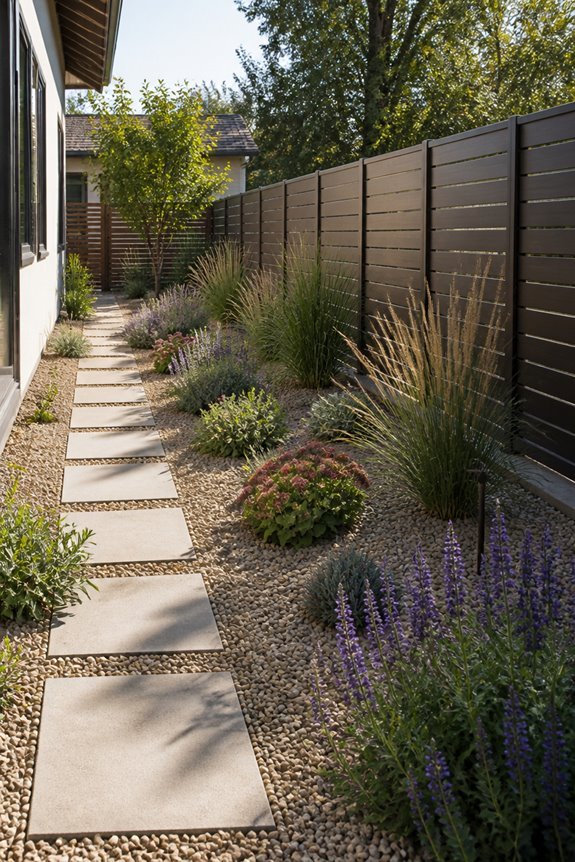
So your raised planters are in place. Now comes the fun part: choosing plants that barely need you.
Sedums are perfect starters. They look great all season and practically ignore drought. Lavender adds purple drama and pulls in bees with that incredible scent. Russian sage grows tall and soft, giving your yard that breezy, romantic feel. Ornamental grasses sway nonstop, moving with every little wind. Blanket flower throws reds and yellows everywhere like scattered paint.
These plants hate wet feet. Overwater them and they’ll sulk. Let the gravel do its job of keeping things dry. You’ll end up with a side yard that looks intentional but asks almost nothing of you. No expert skills needed. Just plant, step back, and enjoy.
Metal Edging for Defined Gravel Spaces
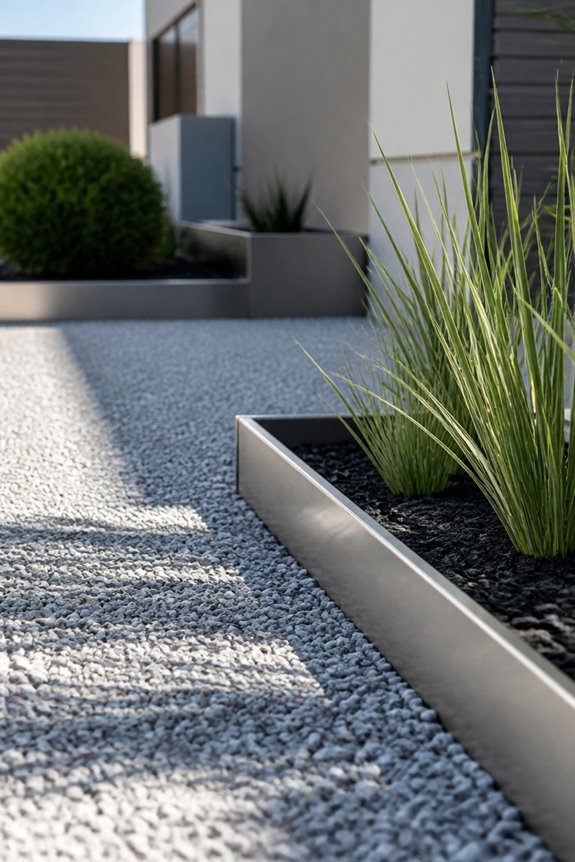
Your gravel side yard needs a boundary, or things get messy fast. That’s where metal edging comes in. Steel or aluminum strips, usually 4-6 inches tall, keep your gravel exactly where it belongs.
You’ll find these in dark gray or rustic copper finishes. They look sharp without trying too hard. Metal won’t rot like wood, so skip the soggy disappointment after two rainy seasons.
Here’s what to do: pound those stakes deep. You don’t want your edging doing the limbo every time someone walks by. Once it’s secured, your gravel stays put and your side yard looks intentional. It’s the kind of put-together look you’re probably not getting from your basement these days, right?
Creating Depth With Gravel Texture Variation
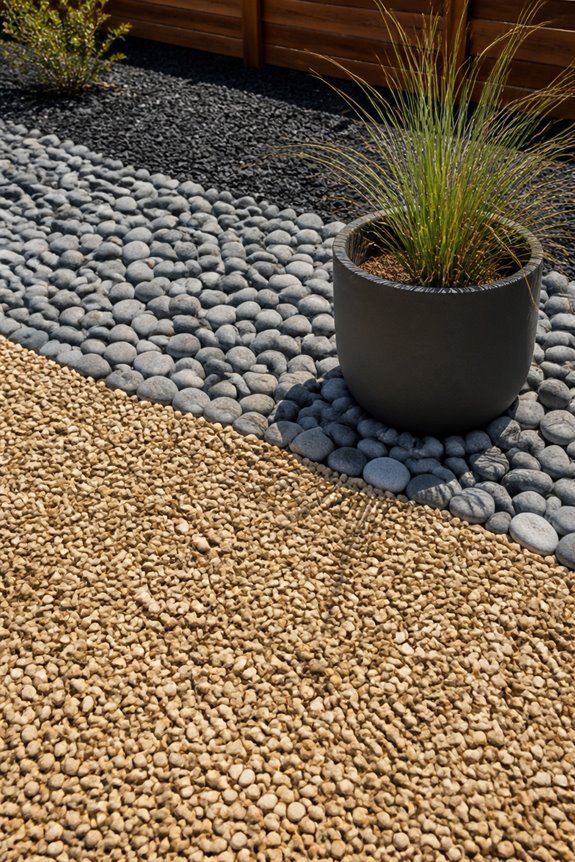
Imagine walking your side yard and seeing nothing but flat, same-colored gravel stretching on forever. Your eyes glaze over. You keep walking.
Now picture this instead. You mix chunky river rocks, about 2 inches across, with tiny pea gravel that crunches softly underfoot. Lay the big stones near your fence. Let the gravel get finer as you move toward your house. You have created a natural gradient without trying too hard.
Colors matter just as much as size. Blend warm tans, cool grays, and rusty reds across your space. Tuck some dark slate chips or mulch in a few corners for pop. Your side yard wakes up. People actually stop and notice.
Ambient Lighting in Gravel Gardens
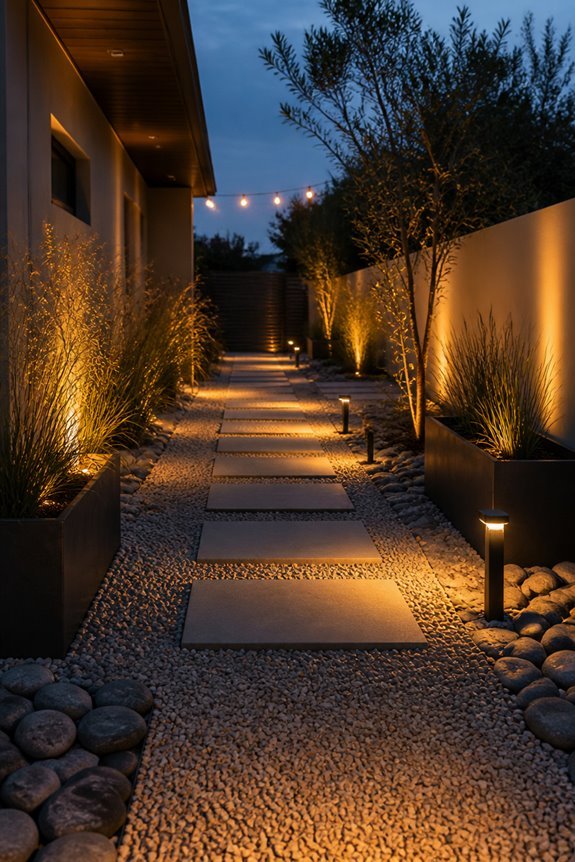
Most gravel side yards turn into dark voids once evening hits. You probably avoid yours after sunset. But ambient lighting changes everything.
Solar stake lights are your budget-friendly starting point. Space them about three feet apart along pathways. You get soft amber or white glows that feel cozy without draining your wallet. Want overhead drama? String lights do the trick beautifully.
Try uplighting on plants. You get dramatic shadows that read artistic, not haunted. Ground-level LED strips bring modern edge while saving you from tripping over rocks.
Warm 2700K lighting makes gravel look golden and welcoming. Cool lighting feels crisp and contemporary. You can mix both for layered visual interest.
Your side yard stops being an obstacle course. It becomes somewhere you actually want to spend time.
Permeable Gravel Systems for Drainage
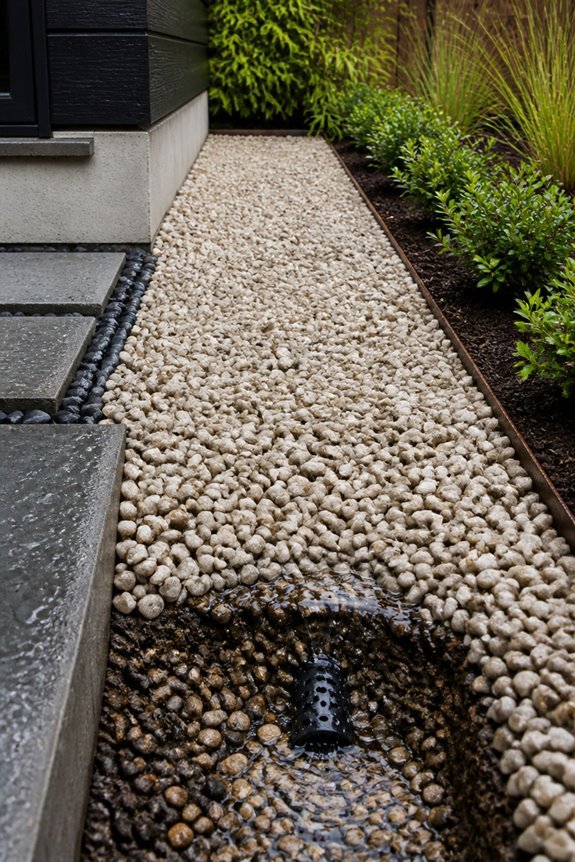
Tired of your gravel side yard turning into a muddy mess every time it rains? You can fix that with a permeable system that actually lets water escape.
Start by digging a trench about 4 inches deep. Lay a perforated drain pipe at the bottom and angle it toward a downspout or dry well. Cover the pipe with landscape fabric so gravel won’t clog the holes. Now add your 2-3 inches of crushed stone or pea gravel on top.
Water filters straight through instead of pooling around your shoes. Your side yard stays dry and sharp looking. Your neighbors might ask how you pulled it off. Just smile and tell them physics did the heavy lifting.
High-Impact Gravel Designs on a Budget
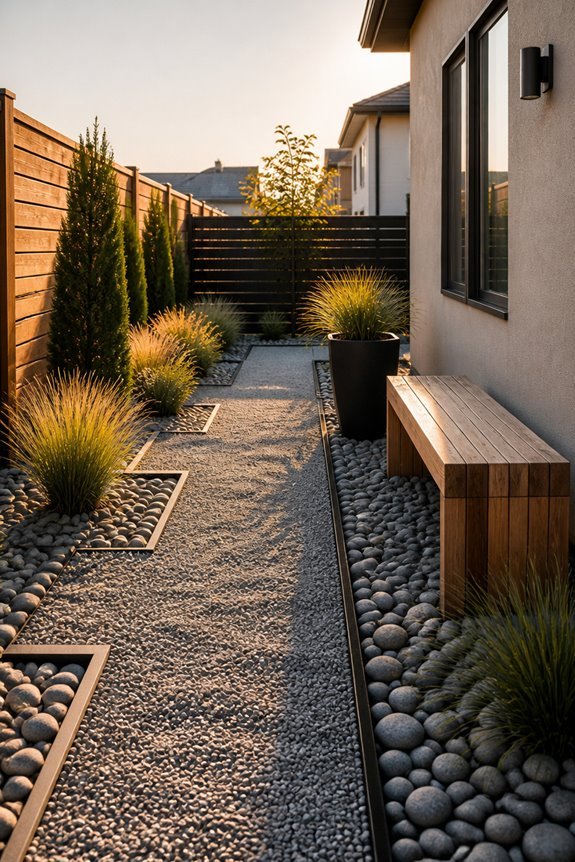
You know that sinking feeling? Your side yard works fine, but it looks flat. Lifeless. Like you gave up before you started.
Here’s the fix that won’t drain your wallet. Grab black metal edging. It runs about $2 per foot and does two jobs. It frames your space clean and tight. It stops gravel from wandering everywhere.
Now add some punch. Hunt down large boulders in charcoal or cream. Cluster them in threes or fives, spaced 3 to 4 feet apart. The odd numbers catch your eye. Tuck ornamental grasses between the clusters. These plants laugh at drought.
The yard you ignored becomes one you actually want to see.
Frequently Asked Questions
How Often Should Gravel Be Raked or Maintained in a Side Yard?
One should rake gravel side yards every two to four weeks, depending on foot traffic and weather conditions. Regular maintenance prevents weeds, redistributes displaced stones, and maintains a neat appearance. High-traffic areas may require more frequent raking.
What Is the Best Gravel Size and Type for Modern Landscaping Designs?
Like a blank canvas awaiting purposeful strokes, modern designs favor angular crushed granite or pea gravel in neutral tones. Sizes between half-inch and three-quarter inch create clean lines, while larger aggregate produces contemporary visual interest and minimizes maintenance demands effectively.
How Do You Prevent Weeds From Growing Through Gravel Landscaping?
One prevents weeds through gravel landscaping by installing landscape fabric beneath the gravel layer. This barrier blocks sunlight from reaching soil, inhibiting weed germination. Regular maintenance and occasional herbicide application further reduce unwanted growth effectively.
Can Gravel Side Yards Work in Areas With Heavy Rainfall?
Yes, gravel side yards function effectively in heavy rainfall areas when properly engineered. Installing adequate drainage systems, sloped grading, and permeable base layers allows water to drain efficiently, preventing pooling and erosion while maintaining the aesthetic appeal of the landscape.
How Much Does It Cost to Install a Gravel Side Yard?
The installation cost typically ranges from $300 to $1,500, depending on yard size, gravel type, and labor rates. Basic DIY projects cost less, while professional installation with proper drainage adds expense. Homeowners should budget accordingly.
Conclusion
Gravel side yards transform boring spaces into stunning outdoor rooms. Clean lines. Smooth textures. Strategic plants doing their thing. These designs work hard and look effortless—kind of like pretending you meant to trip. The best part? Your wallet stays happy, drainage stays dry, and you get a modern masterpiece. No green thumb required. Just gravel, vision, and a little elbow grease. Your side yard’s glow-up starts now.