

A 4×8 raised bed garden opens up more possibilities than its modest footprint suggests. Single-row layouts keep every plant within easy reach, making them ideal for gardeners with limited mobility or those who simply prefer a tidy, walk-around approach.
Three-row systems, meanwhile, split the difference between accessibility and output, letting sunlight hit each plant at a favorable angle while still boosting your overall harvest.
Square-foot gardening has earned its devoted following for good reason. By dividing the bed into one-foot grids, you can pack in diverse crops without the chaos of traditional row planting.
Succession planting takes that efficiency further, ensuring that no square foot sits empty for long as early crops give way to late-season replacements.
Some challenges call for more creative solutions. Vertical techniques train vining plants upward, freeing precious ground space for bush varieties and root crops.
The right choice among these nine foundational approaches hinges on what actually matters in your garden: keeping pests at bay, maximizing production, working with your local climate, or keeping maintenance manageable.
Matching layout to purpose makes all the difference between a bed that merely grows and one that truly thrives.
The Single-Row Layout for Easy Access

Simplicity defines the single-row layout, a straightforward approach to raised bed gardening that prioritizes accessibility. Gardeners plant vegetables in one continuous line, running the length of the 4×8 bed. This arrangement allows easy access from both sides without stepping over plants.
Tomatoes, beans, and peppers work well in this configuration. The method requires minimal planning and maintenance, making it ideal for beginners.
The Three-Row System for Balanced Yields
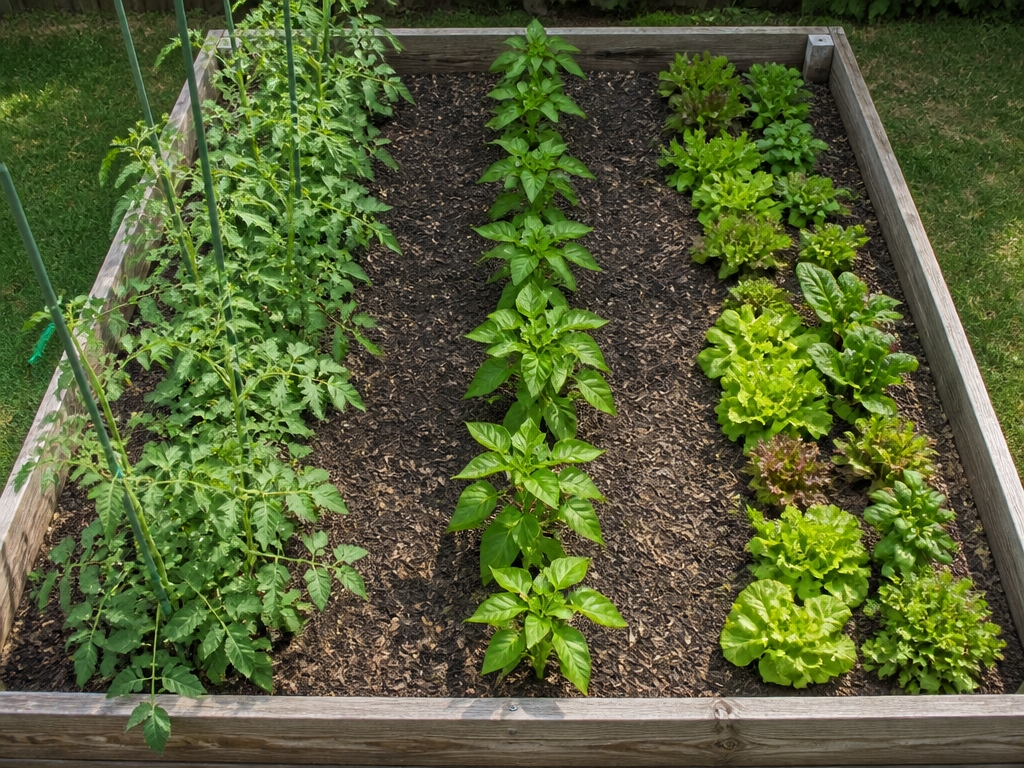
Three parallel rows running lengthwise across a 4×8 raised bed offer gardeners a moderate approach between single-row simplicity and complex multi-crop arrangements. Each row accommodates different plant types: tall varieties like tomatoes in back, medium plants like peppers in middle, and low-growing crops like lettuce in front.
This configuration maximizes sunlight exposure, improves air circulation, and simplifies harvesting and maintenance tasks throughout the growing season.
Square-Foot Gardening for High-Density Growing
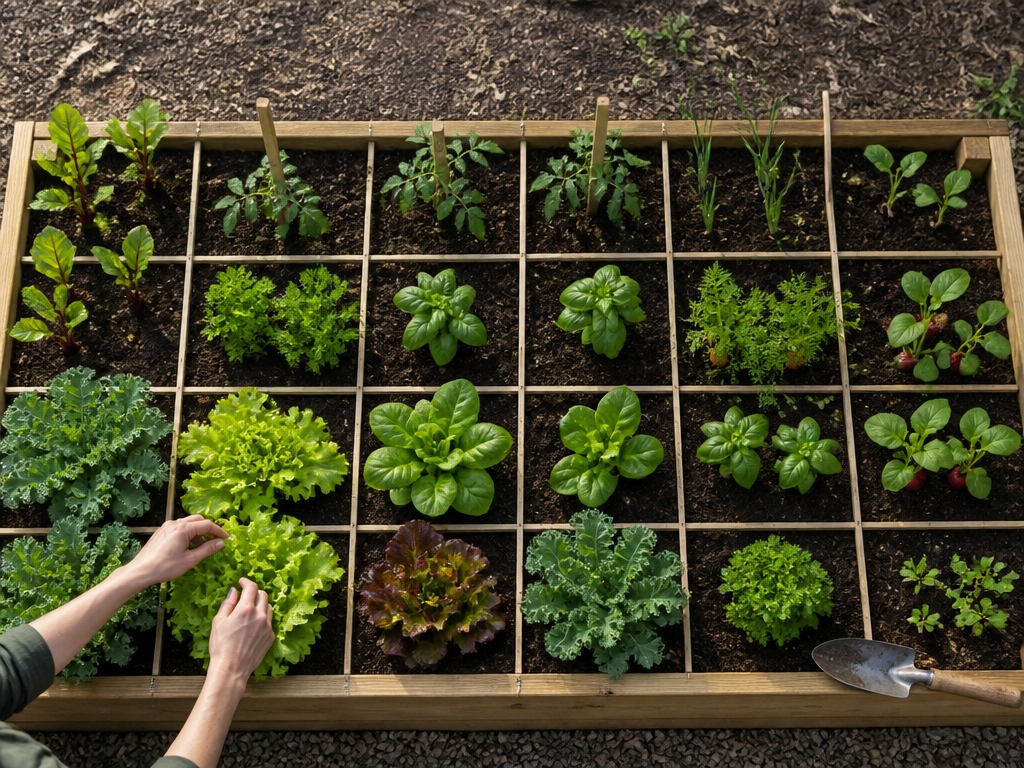
While the three-row system offers straightforward organization, square-foot gardening takes density to another level by dividing beds into small, equal sections. A 4×8 bed divides into thirty-two one-foot squares, allowing gardeners to plant lettuce, spinach, radishes, and carrots in individual squares.
This method maximizes space, reduces weeding, and simplifies watering needs through targeted irrigation to specific plant clusters.
Succession Planting for Year-Round Harvests
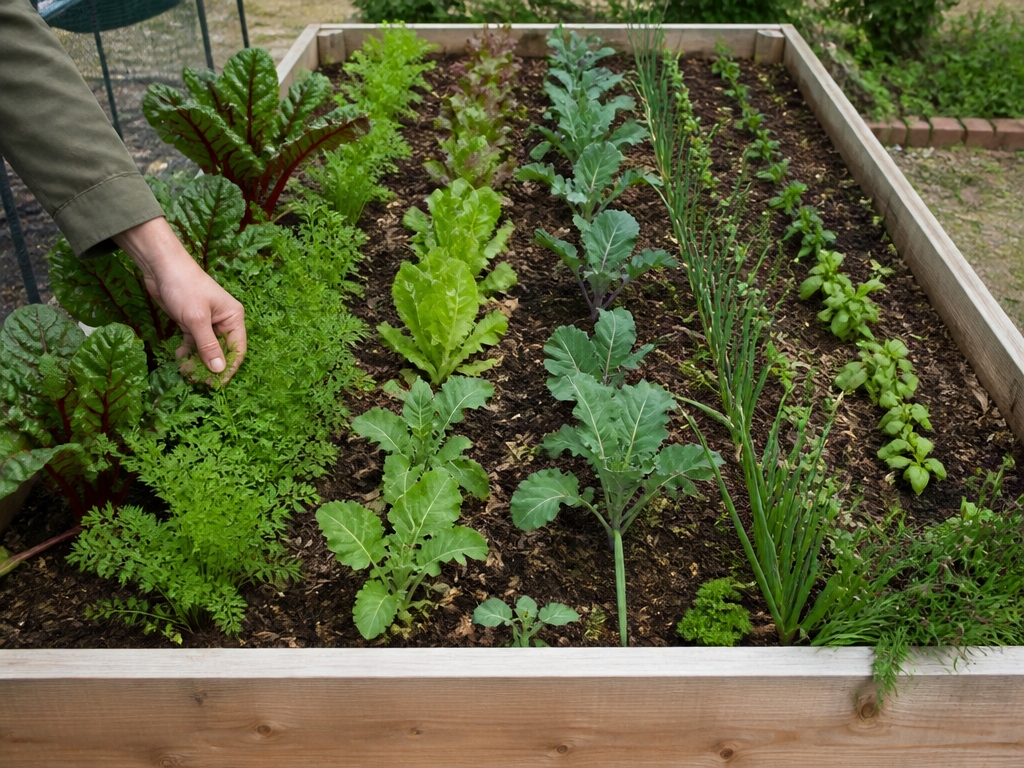
By planting crops at staggered intervals rather than all at once, gardeners extend their harvest season across multiple months. In a 4×8 bed, lettuce, spinach, and beans can be planted every two weeks. This approach prevents crop gluts, guarantees consistent yields, and maximizes bed productivity.
Cool-season vegetables shift to warm-season crops as temperatures change, maintaining continuous harvests throughout spring, summer, and fall. A succession planting layout helps keep the bed productive by replacing harvested crops with new ones throughout the season. Regularly checking for snowmelt damage can also help plants recover quickly if melting water leaves soil soggy.
Plant Tall-to-Short to Prevent Shading
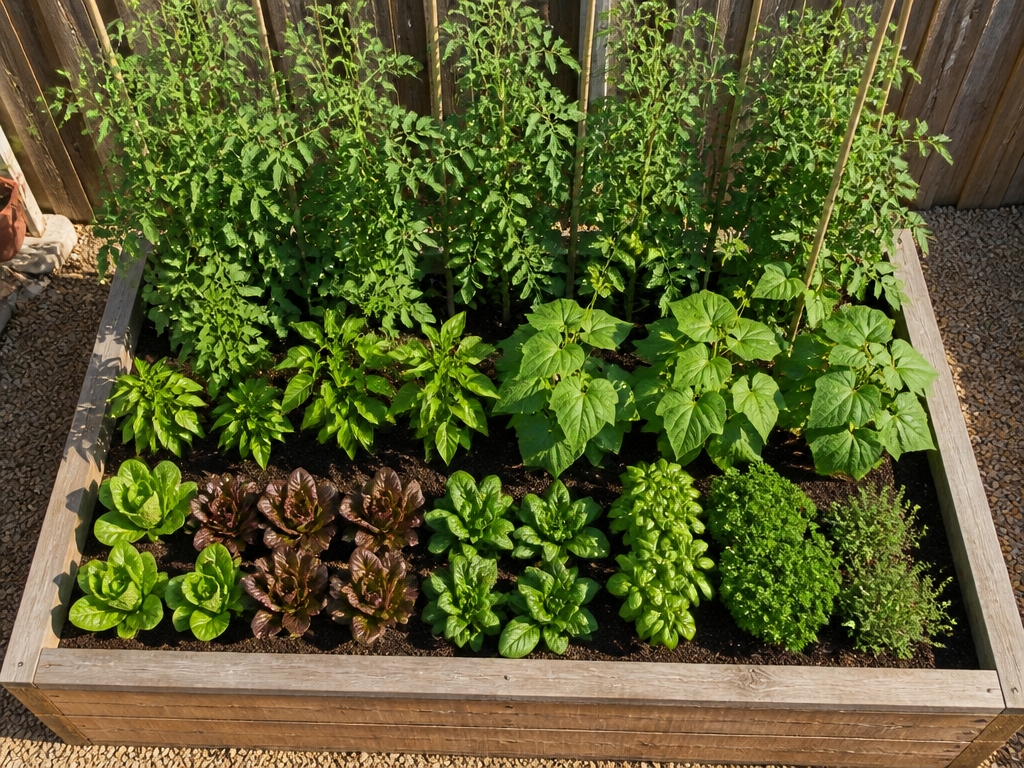
Maximizing light exposure requires strategic plant placement within raised beds, a consideration separate from timing but equally important for garden success. Gardeners should position tall plants, such as tomatoes and sunflowers, on the north side of beds. Medium-height vegetables like peppers belong in the middle, while short plants including lettuce and spinach occupy southern edges, ensuring each receives adequate sunlight.
Companion Planting for Natural Pest Control

Strategic plant pairings create natural barriers against common garden pests, reducing the need for chemical treatments in raised beds. Marigolds repel aphids and beetles when planted near vegetables. Basil deters flies and mosquitoes. Nasturtiums attract harmful insects away from crops. Garlic and onions discourage spider mites. These combinations work together, protecting the entire garden layout efficiently. Horseradish can also help suppress soil-borne diseases and improve drainage around potatoes.
Herbs and Vegetables Combined
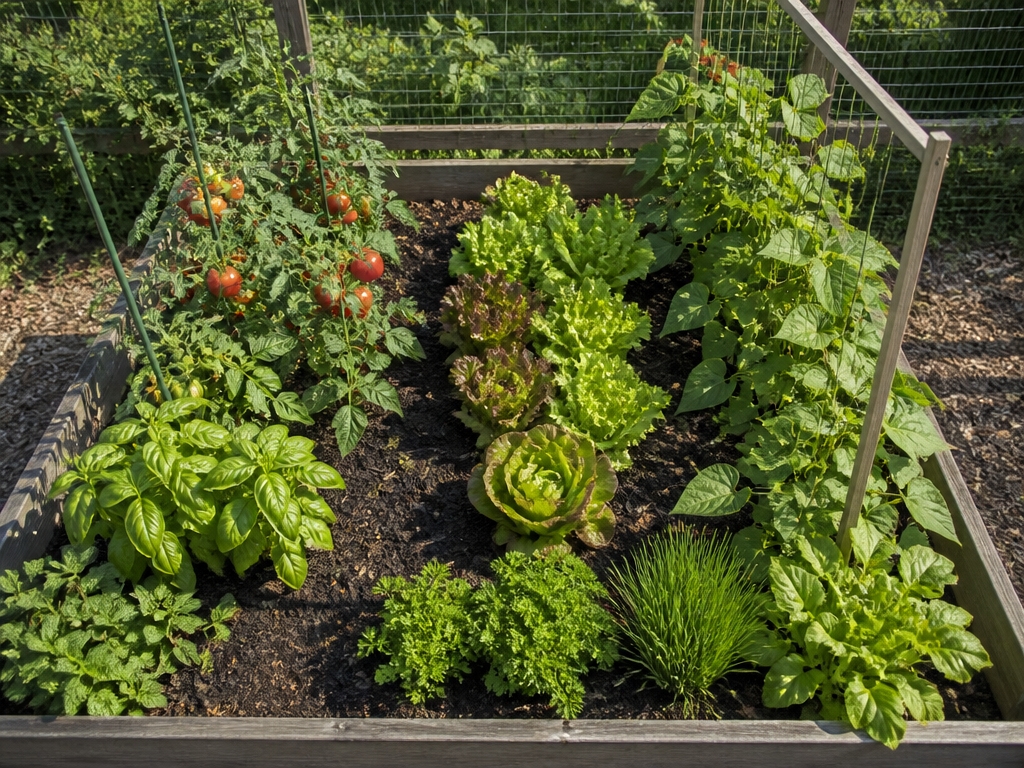
Combining herbs and vegetables in raised beds offers practical advantages for gardeners seeking efficient space use and improved plant health.
Basil planted near tomatoes repels pests while enhancing flavor. Parsley, chives, and dill grow well alongside carrots, lettuce, and beans. Thyme and oregano occupy corners, requiring minimal water and space. This arrangement maximizes productivity within a 4×8 bed’s limited area.
Greens-Only Layout for Continuous Salads

A raised bed dedicated exclusively to leafy greens provides consistent harvests throughout the growing season without competing for space with heavier vegetables. Lettuce, spinach, arugula, and kale grow well in dense rows, allowing gardeners to succession plant every two weeks for continuous supplies.
These crops tolerate partial shade and require minimal maintenance, making greens-only layouts practical for regular salad production.
Root Vegetable Layout: Spacing and Depth Guide
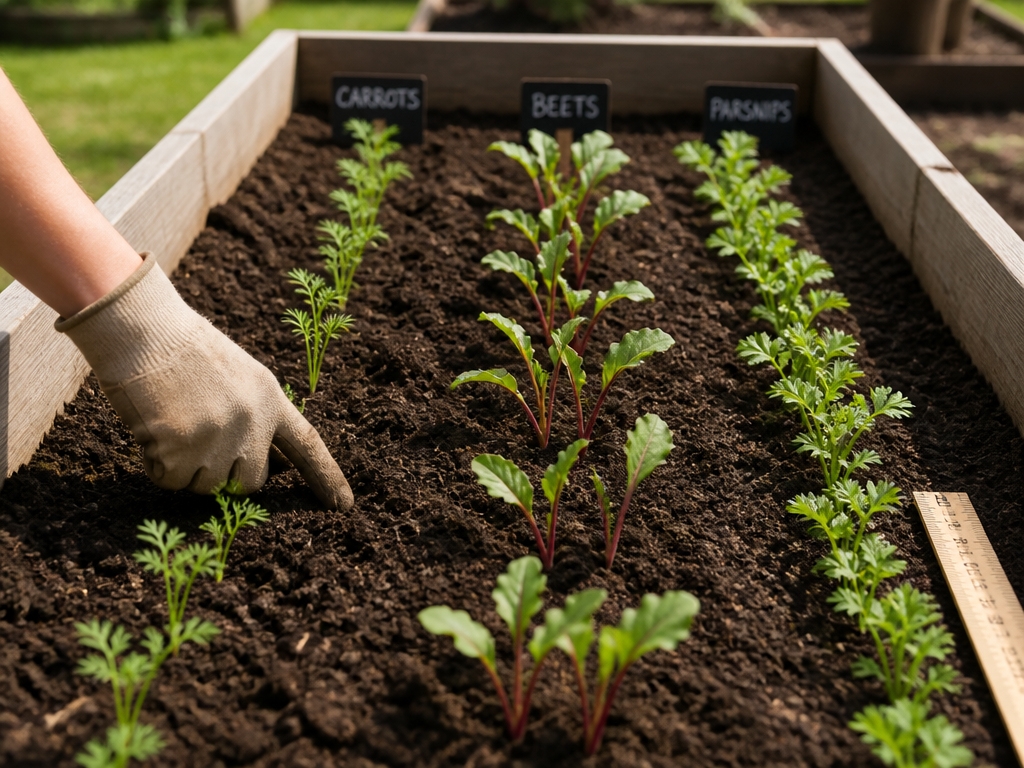
Root vegetables demand deeper soil and wider spacing than leafy greens, requiring gardeners to plan bed depth and plant distances carefully.
Carrots need 12 inches depth and 3-inch spacing. Beets require 8 inches depth and 4-inch spacing. Parsnips demand 14 inches depth and 6-inch spacing.
A 4×8 bed accommodates three rows of carrots, two rows of beets, or one parsnip row effectively.
Vertical Growing to Maximize Limited Space
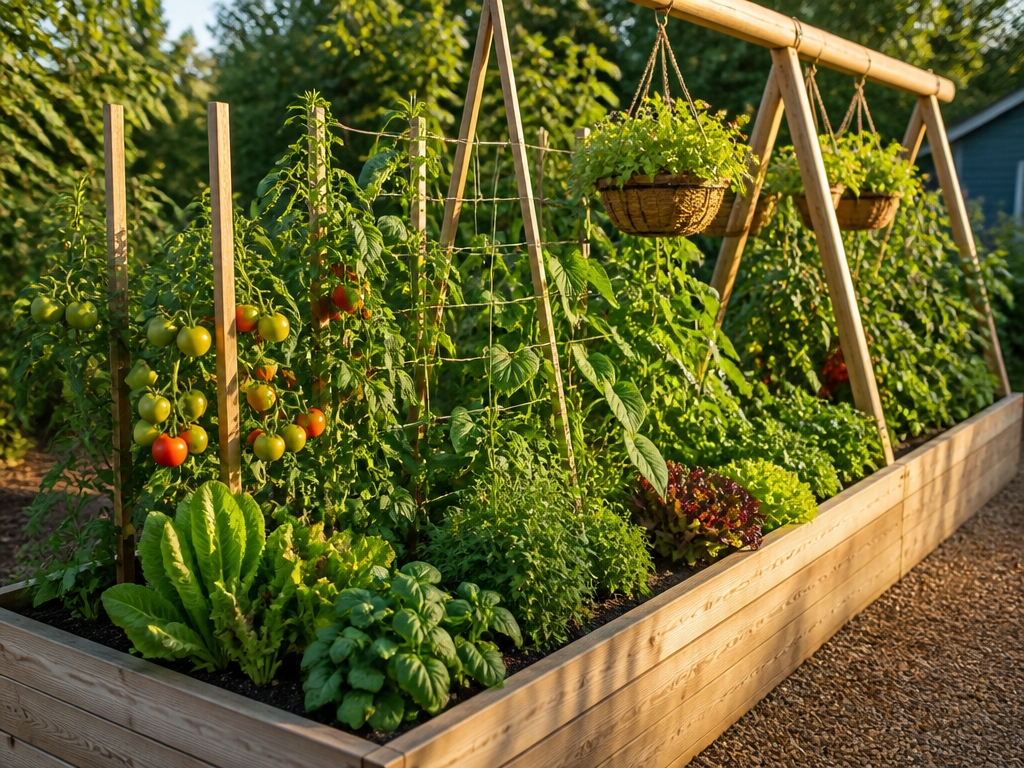
While traditional raised beds work well for root vegetables, gardeners with limited space can grow more plants by building upward instead of outward. Trellises, stakes, and cages support climbing plants like tomatoes, cucumbers, and beans. Hanging baskets hold trailing herbs and strawberries.
Vertical systems increase yield per square foot without expanding the bed’s footprint, making efficient use of available garden space.
Triangle Spacing for Professional-Density Yields
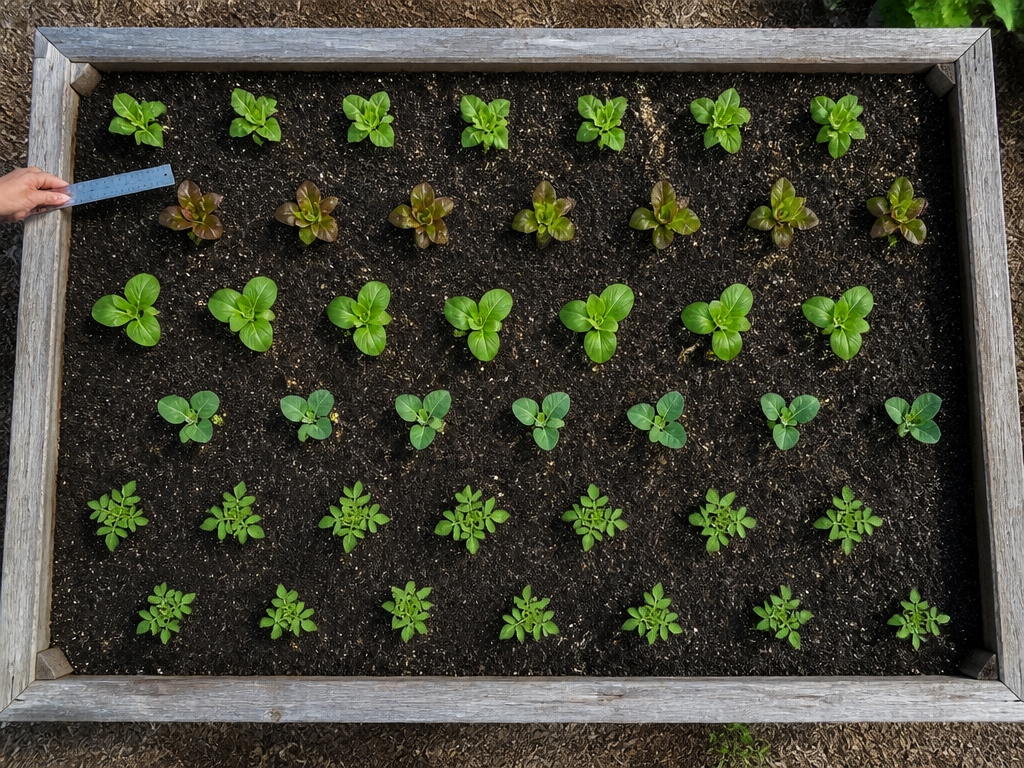
Many commercial growers use triangle spacing to fit more plants into raised beds while maintaining healthy growth. This method positions plants in offset rows, creating a hexagonal pattern.
For a 4×8 bed, gardeners can arrange lettuce, kale, or chard in triangular formations. The spacing increases air circulation, reduces disease, and improves yields compared to square grid layouts. This technique works particularly well for leafy greens and root vegetables requiring moderate space. Efficient drip irrigation can further support healthy growth by delivering water directly to roots with minimal waste.
Mix Fruit-Bearing Perennials With Annual Vegetables

Because perennial fruit plants occupy raised beds for multiple seasons, gardeners can strategically layer them with annual vegetables to maximize space and productivity. Strawberries, raspberries, and blueberries provide vertical growing areas beneath which lettuce, spinach, and beans thrive.
This approach uses available space efficiently while maintaining soil health through crop rotation among annual plantings.
Pollinator-Friendly Planting to Boost Production

Maximizing raised bed productivity extends beyond efficient spacing and crop rotation, requiring attention to the pollinator species that guarantee fruit and vegetable reproduction. Planting flowers like marigolds, zinnias, and borage attracts bees and butterflies essential for tomatoes, peppers, and squash.
Native wildflowers positioned at bed edges create habitat corridors. This integrated approach increases yields while supporting local pollinator populations through consistent nectar and pollen availability. For the fullest effect, use a step-by-step approach to fill in every gap in the planting layout.
Low-Maintenance Layout: Mulch, Space, and Water Less

Reducing garden workload requires strategic choices about mulch application, plant spacing, and irrigation methods.
A 4×8 bed benefits from three inches of wood mulch, which retains moisture and suppresses weeds. Spacing plants twelve inches apart prevents overcrowding and disease.
Drip irrigation systems deliver water directly to roots, minimizing evaporation and reducing manual watering frequency considerably. Mulching can also improve soil quality over time by returning organic matter to the garden. In colder months, pile size can also matter when managing compost nearby, since larger piles hold heat better and keep decomposition active.
Cold Climate vs. Long-Season Adjustments
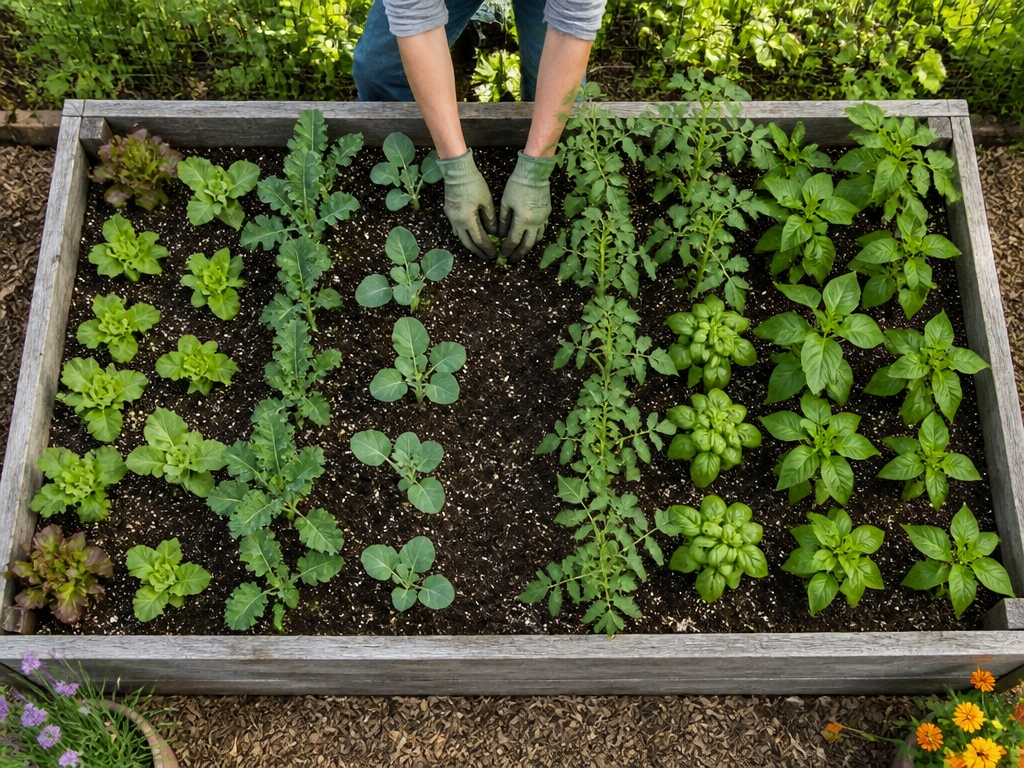
While low-maintenance practices reduce ongoing garden work, climate conditions determine which adjustments matter most for raised bed success. Cold climates require earlier spring planting dates and frost protection using row covers or cold frames.
Long-season regions benefit from staggered plantings every two weeks, extending harvests through fall. Soil depth, drainage, and mulch thickness shift based on temperature extremes in each zone.
Frequently Asked Questions
What Type of Soil Should I Use to Fill My 4×8 Raised Bed Garden?
A gardener should fill their raised bed with high-quality garden soil mixed with compost and peat moss or coconut coir. This combination provides excellent drainage, nutrient content, and water retention needed for healthy plant growth throughout the season.
How Do I Determine the Best Location for My Raised Bed Based on Sunlight?
One should observe the garden area throughout the day, noting sun patterns. Most vegetables require six to eight hours of direct sunlight. The gardener should position the raised bed in a location receiving adequate light while considering afternoon shade in hot climates.
What Is the Ideal Depth for a 4×8 Raised Bed for Most Vegetables?
Most vegetables thrive in raised beds with a minimum depth of 12 inches, though 18 inches is ideal for deeper-rooted crops like carrots and tomatoes. This depth guarantees adequate soil volume for nutrient retention and healthy root development throughout the growing season.
How Often Should I Water a 4×8 Raised Bed Garden During Growing Season?
Studies show that 90% of gardening failures stem from improper watering. A 4×8 raised bed typically requires deep watering two to three times weekly during growing season, depending on soil type, temperature, and rainfall conditions.
Can I Use a 4×8 Bed for Both Spring and Fall Gardening Seasons?
Yes, a 4×8 raised bed effectively accommodates both spring and fall gardening seasons. Gardeners can plant cool-season crops in spring, harvest them by early summer, then replant with fall vegetables. This succession planting maximizes the bed’s annual productivity and garden space utilization.
Conclusion
A 4×8 raised bed succeeds through thoughtful layout planning, intentional plant spacing, and strategic arrangement. Gardeners can maximize yields by choosing single-row, three-row, or square-foot systems. Planting tall crops to short ones prevents shading. Mixing perennials with annuals, incorporating companion planting, and adjusting for climate conditions optimize production. Succession planting guarantees continuous harvests. These approaches—combined with proper mulching and spacing—transform a standard bed into a productive growing space.